
What Causes Brake Fluid to Leak? Common Sources
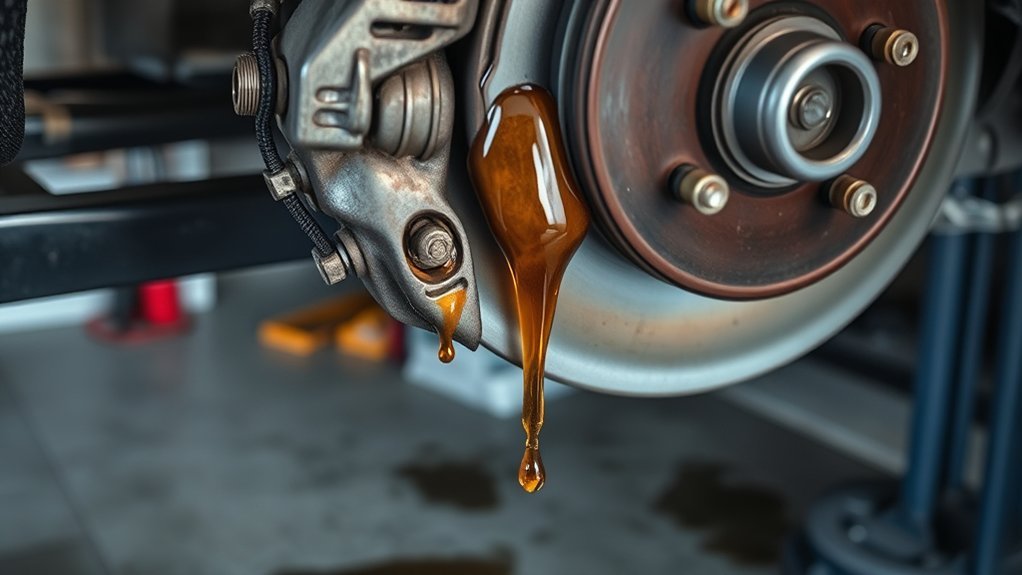
Brake fluid usually leaks when part of the sealed hydraulic brake system can no longer hold fluid and pressure. Common sources include corroded steel lines, damaged flexible hoses, leaking calipers or wheel cylinders, loose or damaged fittings, reservoir seals, and the master cylinder. A falling reservoir, wet brake components, a warning light, or a soft pedal deserves prompt attention.
Quick Answer
Brake fluid leaks most often come from corroded hard lines, damaged flexible hoses, leaking calipers or wheel cylinders, loose fittings or bleeders, or the master cylinder and reservoir. A falling fluid level, wet brake parts, a warning light, or a soft or sinking pedal needs immediate inspection because hydraulic pressure may be compromised.
Key Takeaways
- Corroded brake lines, cracked or damaged hoses, caliper seals, wheel cylinders, fittings, and master-cylinder components are common leak points.
- A soft or sinking pedal, visible wetness, a falling reservoir, or an illuminated brake warning light can signal a serious hydraulic problem.
- A gradual fluid-level change can also occur as brake pads wear, so low fluid alone does not prove that an external leak exists.
- Do not road-test a vehicle with a suspected active brake-fluid leak or abnormal brake-pedal feel.
- Use only the brake-fluid specification listed by the vehicle manufacturer, and bleed the system correctly after hydraulic repairs when required.
Warning: If the brake pedal feels unusually soft, sinks toward the floor, braking distance increases, the reservoir is materially low, or you can see an active brake-fluid leak, do not keep driving to “test” the problem. Park safely and arrange an inspection or tow. NHTSA has documented that brake-fluid loss can reduce braking performance and increase crash risk.
Common Causes of Brake Fluid Leaks
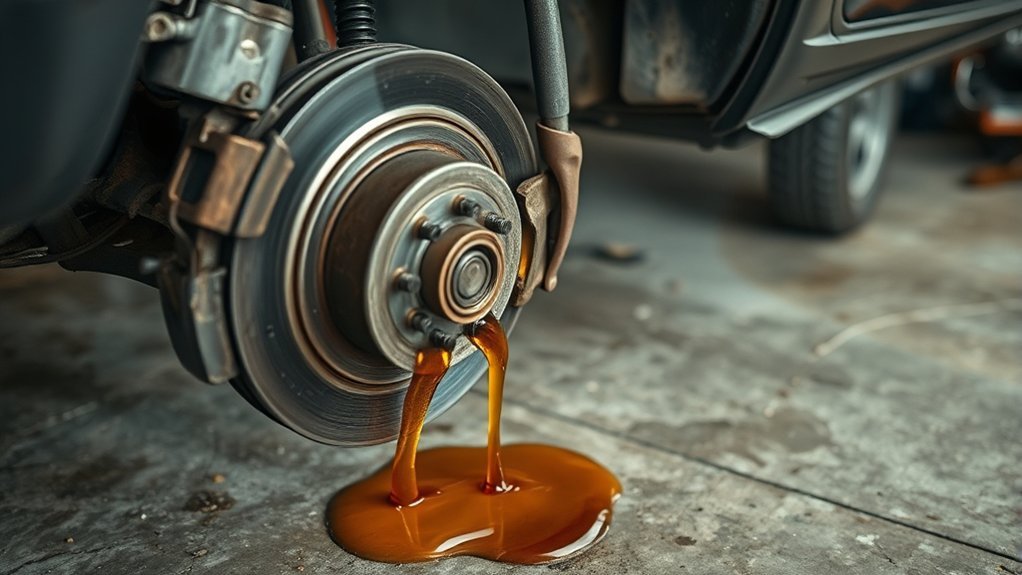
Brake fluid can escape anywhere the hydraulic circuit loses its seal. The most common places to inspect are the steel brake lines, flexible brake hoses, calipers, rear wheel cylinders, master cylinder, reservoir connections, bleeder screws, and hydraulic fittings. Bosch brake inspection guidance specifically includes the reservoir, master cylinder, pipes, hoses, calipers, wheel cylinders, line connections, corrosion, and leak-tightness among the items that should be checked.
Flexible hoses can age, crack, chafe, bulge, or fail near their crimped ends. Steel lines can corrode, especially around brackets, bends, clips, and areas exposed to road salt. Bosch also lists aging, incorrect installation, mechanical damage, humidity, road salt, ozone, and other environmental influences among factors that can damage brake hoses.
At the wheels, a damaged caliper piston seal or drum-brake wheel cylinder can allow fluid to leak onto the surrounding brake assembly. A master cylinder can leak externally around its body, reservoir connections, line fittings, or rear seal. A rear master-cylinder leak may send fluid toward the brake booster, where the loss can be harder to see.
Leaks can also start after brake service if a flare connection, banjo connection, bleeder screw, replacement hose, or other hydraulic connection is damaged or does not seat correctly.
[Products Worth Considering]

This professional wheel and rim brush kit makes it easy to lift brake dust, grime, and dirt from wheels and tires without scratching finishes. The brushes feature soft, metal-free wool heads and a flexible 360-degree rim brush design for reaching hard-to-clean areas. Includes multiple brush types plus accessories for thorough car, motorcycle, and general vehicle detailing.

Upgrade your Toyota tire setup with these corrosion-resistant, leak-proof valve stem caps designed to help protect the valve core from water, snow, and road grime. The caps feature a snug rubber seal and durable copper alloy construction to resist rust and oxidation while maintaining stable tire pressure. Ideal for replacing worn original caps and keeping your wheels looking clean and stylish.

This 1/2-inch drive breaker bar delivers powerful leverage for loosening and tightening stubborn lug nuts and automotive fasteners. The 180-degree flex head helps you reach tight spaces at the angle you need, making tire and brake jobs easier. A spring-loaded ball detent design holds 1/2-inch sockets securely while the chrome-moly head provides durable strength for everyday use.
Where Brake Fluid Leaks Usually Appear
| Where you find wetness | Likely areas to inspect | Typical clues |
|---|---|---|
| Inside one wheel | Caliper, wheel cylinder, flex hose, fitting | Wet backing plate or caliper, fluid near the inner wheel, contaminated brake parts |
| Along the frame or underbody | Steel brake line or line connection | Rust, damp clips, wet seams, fresh fluid along a hard line |
| Near a flexible hose | Hose body, crimp, banjo fitting | Cracks, bulges, chafing, dampness at the hose end |
| Around the master cylinder or booster | Master cylinder, line fittings, reservoir seals | Wet master-cylinder body, fluid below reservoir, unexplained reservoir drop |
| Around the ABS hydraulic unit | ABS hydraulic block or line connections | Wetness around the hydraulic unit while wheel areas remain dry |
| At a recently serviced connection | Bleeder, flare fitting, banjo bolt, hose or replaced component | Leak began soon after brake work |
How to Spot Brake Fluid Leaks Early
One of the easiest things to monitor is the brake-fluid reservoir. With the vehicle parked on level ground, compare the level with the markings on the reservoir and follow the procedure in your owner’s manual. A repeated or rapid drop deserves investigation.
Do not assume that every lower fluid level proves a leak. On many disc-brake systems, the reservoir level can gradually fall as the brake pads wear and the caliper pistons remain farther out in their bores. An owner manual hosted by NHTSA specifically notes that fluid level can fall as pads wear, while an unusually low level can also indicate leakage.
Other warning signs include visible wetness around hydraulic components, a soft or spongy pedal, a pedal that travels farther than normal, a pedal that sinks while steady pressure is applied, reduced braking response, or an illuminated brake warning light.
NHTSA recall documentation has linked brake-fluid loss with a soft or low pedal and increased braking distance, so these symptoms should be treated as a safety issue rather than something to monitor during normal driving.
- Check the reservoir against its marked operating range according to the owner’s manual.
- Look for fresh wetness around the master cylinder, ABS hydraulic unit, brake lines, hoses, calipers, wheel cylinders, fittings, and bleeders.
- Inspect the ground beneath the vehicle, but do not identify a fluid solely by puddle color.
- If the pedal already feels abnormal, do not perform a road test to confirm the problem.
If the fluid level keeps dropping, the red brake warning light remains illuminated after the parking brake is released, or braking feel changes, have the system inspected before driving again.
How to Tell Whether the Leak May Be Brake Fluid
New DOT 3, DOT 4, and DOT 5.1 brake fluids are required under FMVSS 116 to be colorless to amber. DOT 5 silicone-based brake fluid is purple. Used fluid can become darker, so color by itself is not a dependable diagnostic test.
Location is often more useful than color. Wetness beside a caliper, wheel cylinder, brake hose, hard line, master cylinder, or ABS hydraulic unit is more suspicious than a random puddle elsewhere under the vehicle.
Note: Dark brake fluid does not by itself prove excessive moisture content. Follow the manufacturer’s replacement interval and use the proper test or service procedure when fluid condition is in question.
Brake Lines and Hoses That Leak
Road salt, corrosion, abrasion, age, incorrect routing, and physical damage can weaken steel brake lines or flexible hoses. You should pay close attention to hard lines where brackets and clips can trap moisture and to hoses where steering or suspension movement can cause rubbing.
| Leak point | What you may see |
|---|---|
| Steel line | Heavy rust, damp seam, wet fitting, or pinhole leakage |
| Flex hose | Cracks, bulging, chafing, or dampness near a crimp |
| Fitting | Fresh fluid around a flare, banjo connection, or line nut |
| Mounting area | Fluid streaks on the frame, bracket, suspension, or nearby components |
A damaged brake line or hose can lose fluid each time hydraulic pressure rises. Bosch notes that defective hoses may show cracks, external damage or leakage and can contribute to reduced brake performance.
Replace damaged hydraulic lines or hoses using the correct vehicle-specific parts and repair procedures. After opening the hydraulic circuit, the system must be bled according to the manufacturer’s procedure before the vehicle returns to service.
Worn Caliper and Wheel Cylinder Seals
Caliper piston seals and drum-brake wheel-cylinder seals contain hydraulic pressure at each wheel. If a sealing surface, bore, piston, or seal is damaged or corroded, brake fluid can escape around the piston.
A leaking disc-brake caliper may leave fluid around the piston boot, caliper body, brake pad, rotor, or inner wheel. A leaking drum-brake wheel cylinder may wet the backing plate, brake shoes, or lower portion of the drum assembly.
During inspection, look for torn dust boots, corrosion, wetness and abnormal component movement. A torn dust boot alone does not prove that the hydraulic seal is leaking, but it can allow contamination to reach the piston and bore.
If hydraulic leakage is confirmed, the affected caliper or wheel cylinder should be replaced or rebuilt only as allowed by the vehicle/component manufacturer. Any brake pads or shoes contaminated with brake fluid generally require replacement rather than cleaning, and the hydraulic circuit must be bled after repair.
- Look for fresh fluid around the piston or wheel-cylinder boots.
- Inspect nearby friction material for contamination.
- Check hoses and fittings at the same wheel before blaming the caliper or wheel cylinder.
- Verify the repair and pedal condition before returning the vehicle to service.
Master Cylinder Leaks
The master cylinder converts pedal force into hydraulic pressure for the brake circuits. It can fail in more than one way, and those failure modes should not be confused.
An external master-cylinder leak can occur around the reservoir seals, hydraulic fittings, cylinder body, or rear seal. A rear-seal leak may allow brake fluid to collect where the master cylinder meets the brake booster, so fluid loss may occur without a puddle at a wheel.
An internal seal bypass is different. Fluid can move past worn internal seals inside the master cylinder instead of maintaining pressure. That can cause a pedal to sink under steady pressure even when the reservoir level is not visibly dropping.
A sinking pedal can indicate internal hydraulic bypass, while a falling reservoir points more strongly toward external fluid loss somewhere in the system.
If the pedal fades under steady pressure or the master-cylinder area is wet, do not continue driving. Proper diagnosis may require isolating the master cylinder from the rest of the hydraulic circuit, checking for fluid at the booster side, and following the manufacturer’s service procedure.
[Products Worth Considering]

Upgrade your wheels with MIKKUPPA M12x1.5 mag seat lug nuts built for secure, corrosion-resistant performance. These closed-end chrome lug nuts are a direct replacement for select Toyota models, including Camry, Corolla, RAV4, Sienna, Avalon, Highlander, Matrix, Venza, and Prius. Triple-chromium plating and cold-forged, heat-treated steel help deliver strength for daily driving and replacement needs.

Steelman white tire marking crayons provide high-contrast, semi-permanent marks for repairing and inspecting tires and equipment. They write on wet or dry, smooth or coarse surfaces including rubber, metal, glass, and wood, making them ideal for puncture location and damage outlining. The lead- and zinc-free crayons resist weather and fading yet wipe away when you no longer need the marks.

Cristal Products Untouchable Tire Shine Spray delivers a deep, wet-look gloss that enhances your vehicle’s tires. It’s quick-drying and spreads smoothly for consistent, streak-free coverage, while forming a protective coating against UV rays, road grime, and weather. Suitable for all tire types, it helps restore dull, faded tires to a showroom-quality finish.
ABS Hydraulic Unit and Post-Service Leaks
The ABS hydraulic control unit contains brake-fluid passages and multiple line connections. It is less commonly responsible for a leak than a hose, steel line, caliper, or wheel cylinder, but the hydraulic block or one of its connections can leak.
If the reservoir level falls while the wheel areas and master cylinder remain dry, inspect the accessible brake-line routing and ABS hydraulic-unit area for fresh wetness. Repairs involving ABS hydraulic components may require manufacturer-specific bleeding procedures or scan-tool activation, so this is often a technician-level repair.
A leak that appears soon after brake service should also raise suspicion around whichever connection was opened. Bleeder screws, flare nuts, banjo fittings, sealing washers, replacement hoses, calipers, wheel cylinders, and master-cylinder connections should all be checked for correct parts, seating and torque.
Leaking Bleeder Screws and Reservoir
A bleeder screw can leak when its tapered sealing seat is corroded, damaged, contaminated, improperly tightened, or unable to seat correctly because of damaged hardware. The threads provide the clamping action, but the sealing seat is the critical surface.
After brake bleeding, inspect each bleeder for fresh fluid. Do not simply keep tightening a leaking bleeder: excessive torque can damage the screw or seat and make the problem worse. Follow the component or vehicle manufacturer’s torque specification.
The reservoir deserves separate inspection. Look for cracks in the plastic body, damaged reservoir-to-master-cylinder grommets, loose connections where applicable, and wetness around the lower reservoir. Fluid around the cap can also result from overfilling or spillage and should not automatically be diagnosed as a pressurized hydraulic leak.
- Clean suspected areas so fresh leakage is easier to identify.
- Replace damaged, corroded, rounded, or pitted bleeder hardware as required.
- Replace cracked reservoirs or leaking reservoir seals with the correct parts.
- Do not use excessive tightening force as a substitute for fixing a damaged sealing surface.
Can Brake Fluid Be Low Without an External Leak?
Yes. A gradual reduction in reservoir level can occur as disc-brake pads wear. As the pads become thinner, caliper pistons sit farther outward and more fluid remains in the caliper bores.
That does not mean low fluid should be ignored. An OEM owner manual available through NHTSA notes both possibilities: fluid can fall as pads wear, but low fluid can also indicate a leak that needs inspection.
A rapid drop, repeated need to add fluid, visible wetness, a warning light, or a change in pedal feel is more concerning than a slow level change that corresponds with normal brake wear.
Pro Tip: Do not repeatedly top off a falling reservoir without finding out why the level is dropping. Adding fluid restores the level but does not repair a hydraulic leak.
What to Do If You Suspect a Brake Fluid Leak
If you suspect leakage, start with a stationary visual inspection rather than a road test. Park on level ground, secure the vehicle, check the reservoir without introducing dirt, and look for wetness around accessible hydraulic components.
Use only the brake-fluid type specified by the vehicle manufacturer. FMVSS 116 requires brake-fluid labeling to tell users to follow the vehicle manufacturer’s recommendation and to keep fluid clean and dry. Contamination with water, petroleum products, dirt, or other materials can impair brake-system performance or damage components.
If the system has an active leak, repair or replace the faulty component rather than relying on added fluid. Opening a hydraulic line, hose, caliper, wheel cylinder, master cylinder, or ABS component generally requires the system to be bled afterward according to the manufacturer’s procedure.
For suspected master-cylinder failure, severe corrosion, ABS hydraulic-unit problems, or any condition where you cannot confirm safe brake operation, use a qualified technician.
Frequently Asked Questions
How Often Should Brake Fluid Be Checked?
Follow the inspection schedule in your vehicle’s owner’s manual rather than a universal monthly rule. Check it promptly if the brake warning light comes on, braking feel changes, you see wetness around brake components, or the reservoir appears unusually low. Some manufacturers also call for checking the level during routine under-hood or brake service.
Can Brake Fluid Leaks Damage Tires?
An incidental brake-fluid splash is not, by itself, proof that a tire has suffered structural damage, so the tire should not automatically be condemned. However, any fluid on the tread can contaminate the contact surface and reduce grip until it is removed. Rinse the affected area promptly with water and mild soap. If a tire was soaked for an extended period or the rubber shows swelling, softening, cracking, or other visible change, have it inspected by a tire professional.
Is It Safe to Drive With Low Brake Fluid?
Do not keep driving if the low level may be caused by a leak, the pedal feels soft or sinks, braking performance has changed, or the brake warning light remains on after the parking brake is released. NHTSA notes that brake-fluid loss can reduce braking performance and increase crash risk. Have the cause inspected and use a tow when safe braking cannot be confirmed.
What Color Is Fresh Brake Fluid?
Under U.S. FMVSS 116, DOT 3, DOT 4, and DOT 5.1 non-silicone brake fluids are colorless to amber. DOT 5 silicone-based brake fluid is purple. Used fluid may darken, but color alone is not a reliable measurement of moisture content or remaining service life.
Does Weather Affect Brake Fluid Leaks?
Weather and environment can contribute indirectly. Road salt and moisture can accelerate corrosion of steel lines, while aging, ozone, temperature exposure, road contamination, and mechanical stress can contribute to deterioration of flexible hoses. Weather alone does not diagnose a leak, so the actual hose, line, seal, fitting, or cylinder still needs to be inspected.
Can Worn Brake Pads Make the Fluid Level Drop?
Yes. As disc-brake pads wear, the caliper pistons extend farther and additional fluid remains in the calipers, which can gradually lower the reservoir level. A rapid drop, repeated need for fluid, visible wetness, or abnormal pedal feel is different and should be checked for leakage.
Can a Master Cylinder Fail Without Leaking Fluid Onto the Ground?
Yes. Internal master-cylinder seal bypass can cause the pedal to sink without an external puddle. A rear master-cylinder seal can also leak fluid toward the brake booster, hiding the external loss from view. A sinking pedal or unexplained reservoir drop therefore needs proper diagnosis even when the wheels and ground look dry.
Conclusion
If you notice a soft or sinking pedal, unexplained brake warning light, visible hydraulic leakage, or a repeatedly dropping reservoir, do not assume the problem is minor. Brake fluid can escape from a steel line, flexible hose, caliper, wheel cylinder, master cylinder, reservoir connection, bleeder, fitting, or ABS hydraulic component.
Start with a stationary visual inspection and avoid road-testing a vehicle that already shows signs of hydraulic trouble. Find and repair the actual source, use the manufacturer-specified brake fluid, replace contaminated brake friction parts when required, and bleed the hydraulic system according to the correct service procedure before returning the vehicle to normal use.
Sources
- 49 CFR § 571.116 — Motor Vehicle Brake Fluids — U.S. requirements covering brake-fluid performance, color, labeling, contamination warnings, and manufacturer recommendations.
- National Highway Traffic Safety Administration — Recall 24V-674 — documents the safety consequences of low brake fluid and reduced braking performance.
- NHTSA / GM Brake Fluid Leak Recall FAQ — documents soft or low pedal feel, fluid leakage, and increased braking distance associated with brake-fluid loss.
- Bosch Brake Inspection Checklist — inspection points for the reservoir, master cylinder, brake pipes, hoses, calipers, wheel cylinders, corrosion, and leak-tightness.
- Bosch Brake Hose Maintenance Guide — hose deterioration factors, damage signs, corrosion, leakage, and installation considerations.
- SAE J1704_202510 — current SAE standard for glycol-, glycol-ether-, and borate-based motor-vehicle brake fluids and their intended brake-system elastomers.
[Products Worth Considering]

This TPMS relearn tool helps you quickly activate, match, and reset GM tire pressure sensors to keep the vehicle monitoring system working properly. It clears tire pressure alarms and dashboard warning lights after sensor replacement or tire rotation, and supports learning for common 315/433 MHz TPMS sensors. Designed for simple one-button operation, it can help you avoid unnecessary trips to repair shops.

Replace worn wheelchair rear tires with a universal 24x1 no-flat polyurethane foam option designed to mount tightly on 24-inch rims without the tire falling off. Installation is made easier with included tools and multiple methods, including using a pry bar or softening the tire in hot water to reduce resistance. The package includes two tires plus tie ropes for convenient fitting and handling.

This universal wheel alignment tool helps you accurately restore tire tilt angles after tire or suspension repairs using an adjustable camber gauge. It features a powerful magnetic base that firmly attaches to brake rotors for stationary, slip-free readings, improving consistency during measurement. Built from durable PC plastic, it resists wear and corrosion and is compact enough for car, truck, RV, and motorcycle alignment tasks.

Related Articles
Which Part of a Tire Can Be Patched Safely?
When can a tire be safely patched, and why do some punctures spell trouble?
Read More
What Are Tire Valve Stems and How Do They Work?
Mysterious tire valve stems quietly seal air in and dirt out, but what happens when they fail might surprise you.
Read More
Why Do Tires Lose Pressure? 9 Real Causes
Puzzled by tire pressure loss? Discover 9 real causes behind slow leaks, aging, and cold weather, and find out which one is affecting yours.
Read More