
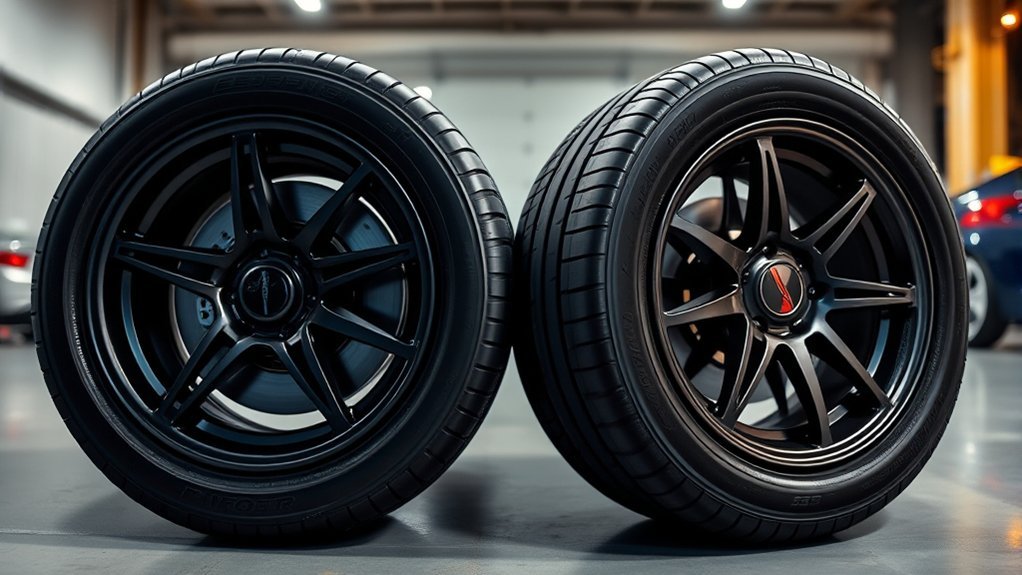
H-rated tires have a higher standardized speed capability than T-rated tires: H is rated up to 130 mph (210 km/h), while T is rated up to 118 mph (190 km/h). That does not automatically make an H-rated tire safer, grippier, stiffer, or better for every vehicle. For replacement tires, your vehicle’s tire placard and owner’s manual should come first, along with the correct size and load index.
Quick Answer
The main H vs T speed-rating difference is maximum standardized speed capability: T is rated to 118 mph (190 km/h), while H is rated to 130 mph (210 km/h). Choose the rating specified for your vehicle rather than choosing by speed alone. Tire model, load index, size, construction, weather rating, inflation, and condition also matter.
Key Takeaways
- T-rated tires have a maximum standardized speed rating of 118 mph (190 km/h); H-rated tires are rated to 130 mph (210 km/h).
- A higher speed rating does not automatically mean better overall tire quality, wet grip, snow traction, fuel economy, tread life, or ride comfort.
- Performance-oriented H-rated models often have firmer, more responsive designs, but actual handling and comfort depend on the individual tire.
- Replacement tires should meet the vehicle manufacturer’s requirements for size, load index, speed rating, construction, and inflation.
- Using a lower speed rating can reduce the vehicle’s permitted tire-speed capability; special guidance may apply to winter tires.
- If different speed ratings are fitted, the vehicle is limited by the lowest-speed-rated tire, and mismatched tires can change handling.
What Do H and T Speed Ratings Mean?
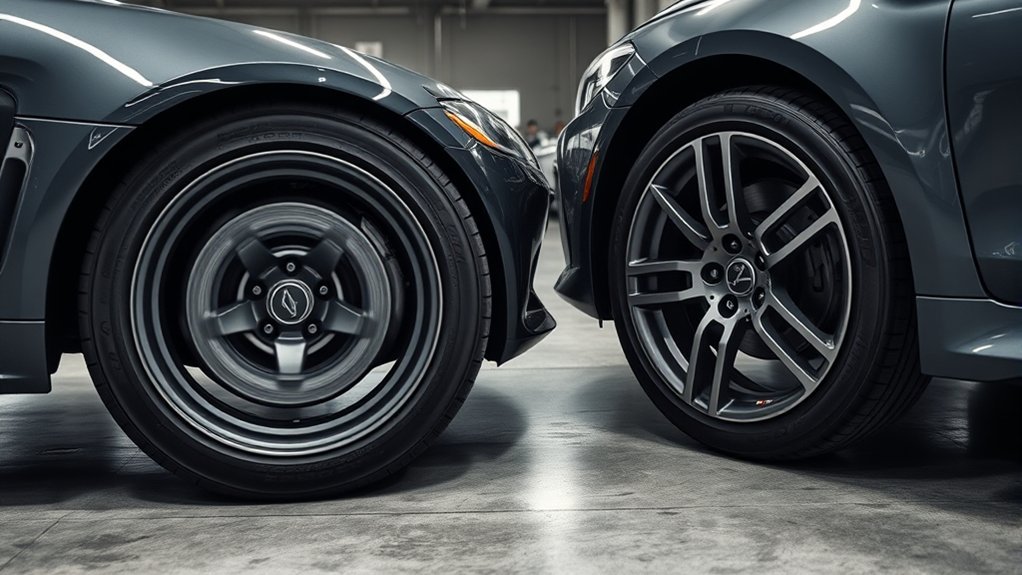
A tire’s speed rating is the letter in its service description that identifies the maximum speed capability established under specified test conditions. For example, in a size marked 215/60R16 95H, the number 95 is the load index and the letter H is the speed rating.
According to Continental’s speed-index chart, a T-rated tire corresponds to 118 mph (190 km/h), while an H-rated tire corresponds to 130 mph (210 km/h).
| Rating | Maximum Rated Speed | Metric Equivalent | Difference |
|---|---|---|---|
| T | 118 mph | 190 km/h | Lower standardized speed capability |
| H | 130 mph | 210 km/h | 12 mph (20 km/h) higher than T |
Warning: A tire’s speed rating is not a recommended driving speed. Legal limits, road and weather conditions, tire pressure, vehicle load, tread condition, damage, alignment, and sustained heat can all reduce the speed at which a tire can operate safely.
The speed symbol also does not replace the load index. A tire must have enough load capacity for the vehicle while also meeting the required speed rating. Michelin’s load and speed rating guidance recommends checking both specifications when choosing a replacement tire.
H vs T Speed Rating: Speed and Performance
The direct technical difference between H and T is their standardized speed capability. An H-rated tire is certified for a higher maximum speed than a T-rated tire under the applicable test conditions.
That does not mean an H tire is universally “better.” Speed rating is only one specification. Wet braking, dry grip, hydroplaning resistance, snow performance, noise, tread life, rolling resistance, and ride comfort depend on the complete tire design.
H indicates a higher standardized speed capability than T, but the speed-rating letter by itself is not an overall tire-quality score.
Higher-speed performance tires are often designed with compounds and structures aimed at stability, steering response, grip, and heat management. However, two tires carrying the same H rating can still behave very differently because they may use different tread patterns, compounds, casing designs, and intended-use targets.
Likewise, a T-rated premium touring tire can outperform an H-rated tire in certain areas such as ride comfort, winter traction, noise, or tread life. Compare the actual tire models rather than using the speed letter as a shortcut for overall performance.
H vs T Speed Rating: Ride Comfort and Handling
H-rated tires are often available in performance-oriented product lines that emphasize steering precision and stability, while many T-rated tires are sold in touring lines designed around everyday comfort and long mileage. That creates a common H-versus-T trend, but it is not a rule created by the speed rating itself.
Michelin’s tire-selection guidance notes that performance tires with higher speed ratings are often tuned for a firmer, more precise feel, while touring tires are commonly optimized for comfort. The individual tire model still determines the result.
- Steering response: Some performance-oriented H-rated tires use designs that reduce tread squirm and improve turn-in.
- Ride comfort: Touring-oriented T or H tires may use construction and tread tuning aimed at absorbing small impacts and reducing noise.
- Grip: Compound and tread design matter more than simply comparing the letters H and T.
- Vehicle tuning: Suspension, wheel diameter, tire profile, OE construction, inflation pressure, and vehicle weight can strongly affect how either tire feels.
Note: Do not assume that moving from T to H will automatically improve braking or handling. Compare tires within the correct size and load specification and review the performance characteristics of the exact models you are considering.
[Products Worth Considering]
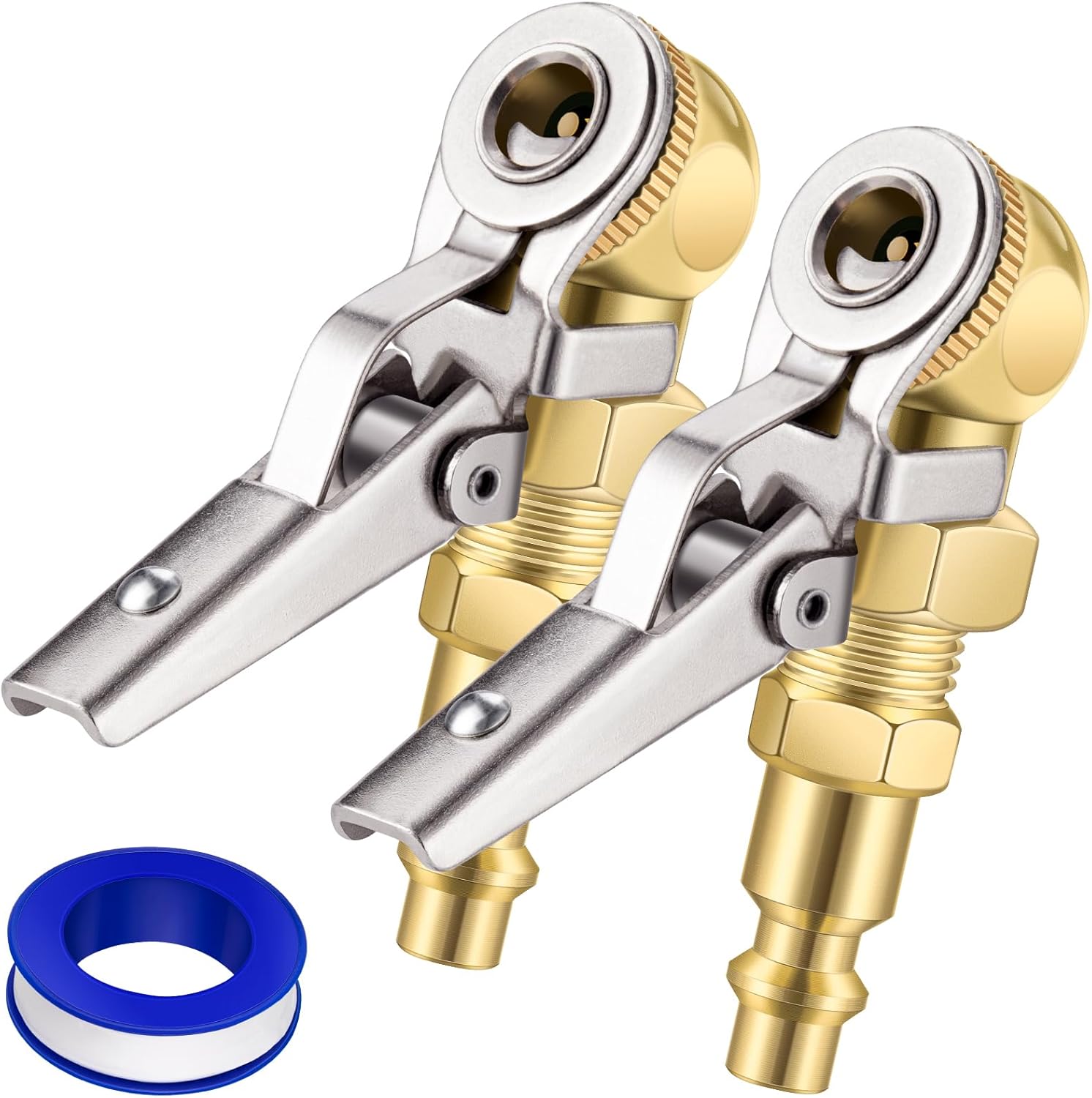
EVOULTES 2-pack closed ball tire chucks lock onto Schrader valves to help you inflate tires hands-free. The set includes both chucks with quick plug compatibility and a 2-way connection approach for easy setup to your air line or compressor. Durable metal construction supports reliable use for cars, trucks, RVs, bikes, and other Schrader-valve tires up to 250 PSI.

Steelman white tire marking crayons provide high-contrast, semi-permanent marks for repairing and inspecting tires and equipment. They write on wet or dry, smooth or coarse surfaces including rubber, metal, glass, and wood, making them ideal for puncture location and damage outlining. The lead- and zinc-free crayons resist weather and fading yet wipe away when you no longer need the marks.

Monitor tire tread wear with a smart, color-coded depth gauge that shows clear condition ranges at a glance. The bar is range marked for fast, easy readings, helping you maintain safer traction and performance. Each gauge is portable with a pocket clip, and the set includes 20 units for daily use and sharing.
How H vs T Ratings Affect Tire Wear
Speed rating alone does not determine how quickly a tire will wear. Tread compound, tread depth, alignment, inflation pressure, rotation schedule, vehicle weight, road surface, temperature, driving style, and suspension condition can have a larger effect.
Some higher-performance tires use compounds and designs that favor grip and response over maximum tread life. Michelin notes that moving to higher-performance, higher-speed-rated designs can involve trade-offs in tread life or comfort. That is a product-design trend, not proof that every H-rated tire will wear faster than every T-rated tire.
Likewise, there is no general rule that T-rated tires wear more evenly. Uneven wear usually points to operating or mechanical factors such as incorrect pressure, poor alignment, worn suspension parts, missed rotations, or repeated hard acceleration and braking.
Watch the tread for common wear patterns:
- Both shoulders wearing faster: often associated with underinflation or severe cornering use.
- Center wearing faster: can be associated with excessive inflation for the operating load.
- One-sided wear: may indicate alignment or suspension problems.
- Feathering or irregular wear: can point to toe alignment, balance, suspension, or rotation issues.
NHTSA TireWise recommends regular checks of inflation, tread wear and damage, along with appropriate rotation, balancing, and alignment service.
Do H and T Tires Affect Fuel Economy?
They can, but the speed letter alone cannot tell you which tire will use less fuel. Rolling resistance depends on the tire’s compound, tread pattern, casing, size, pressure, weight, temperature, and performance targets.
Some performance-focused tires use grippier compounds that can increase rolling resistance compared with efficiency-oriented touring tires. However, an H-rated low-rolling-resistance tire can still be more efficient than a particular T-rated tire. Compare the actual tire specifications and test data instead of assuming T automatically means better fuel economy.
Pro Tip: Keeping tires at the vehicle manufacturer’s recommended cold inflation pressure is more useful for everyday efficiency and tire life than choosing a speed rating solely in hopes of saving fuel.
Which Vehicles Use H vs T Tires?
Both T and H ratings appear on passenger vehicles. The correct rating depends on the specific vehicle, tire size, trim, original equipment specification, and intended operating characteristics.
T-rated sizes are common on many touring and family-vehicle applications. H-rated sizes are also common on sedans, crossovers, coupes, minivans, and vehicles whose manufacturers specify a higher speed capability or different handling characteristics.
Do not select a rating simply because your vehicle falls into a category such as “family sedan” or “sporty crossover.” Two trims of the same model can use different wheel sizes, load indexes, or speed ratings.
Check:
- The tire information placard, commonly located on the driver-side door jamb or door area.
- The vehicle owner’s manual.
- The full tire size and service description, including load index and speed symbol.
- Any special OE tire marking or front/rear fitment requirement.
[Products Worth Considering]

The Topeak SmartGauge D2 delivers precise digital tire pressure readings for bikes, motorcycles, and sports equipment up to 250 psi (17 bar). Its rotating SmartHead works with both Presta and Schrader valves, so you can check pressure quickly without adapters. The LCD display makes it easy to read results in psi, bar, or kg/cm² with an included CR2032 battery for immediate use.

Keep your tires properly inflated with this analog VONDIOR tire pressure gauge, designed for fast, easy readings without batteries. The swiveling, two-axis hose and large glow dial help you measure at any tire angle with instant visibility. Built with a protective rubber shield, it supports durable, low-maintenance use for cars and trucks.

Measure tire tread depth quickly and accurately with this LUMITECO dial gauge that reads in 1/32" increments up to 14/32". The color-coded green/yellow/red zones make it easy to judge tire wear and know when replacement is needed. A rugged, compact design with a protective pouch helps keep the gauge ready for use on cars, trucks, motorcycles, and more.
How to Choose the Right Tire Speed Rating
Start with the manufacturer’s tire specification rather than your normal driving speed. Even if you never approach 118 mph, the specified rating can be part of the vehicle’s engineered tire package and handling characteristics.
| Factor | What to Check |
|---|---|
| Speed rating | Use the manufacturer-specified rating or an approved alternative. |
| Load index | Meet or exceed the required load capacity unless the manufacturer specifies otherwise. |
| Tire size | Match an approved size for the vehicle and wheel. |
| Tire type | Choose summer, all-season, all-weather, or winter performance for your climate and use. |
| OE requirements | Check for staggered sizes, run-flat requirements, Extra Load/XL construction, or manufacturer-specific markings. |
Michelin’s replacement-tire guidance allows an equal or higher speed rating when the replacement is otherwise compatible. Moving to a lower speed rating requires more caution because the vehicle’s tire-speed capability becomes limited by the lower-rated tire and handling characteristics can change.
[Products Worth Considering]

A concentrated tire and tube mounting compound designed to help simplify mounting rubber tires and tubes on passenger, semi truck, construction, and OTR applications. Its ultra-thick formula packs beads effectively and includes rust inhibitors to help protect against corrosion during use.

Replace worn wheelchair rear tires with a universal 24x1 no-flat polyurethane foam option designed to mount tightly on 24-inch rims without the tire falling off. Installation is made easier with included tools and multiple methods, including using a pry bar or softening the tire in hot water to reduce resistance. The package includes two tires plus tie ropes for convenient fitting and handling.

Replace worn pool cleaner tires with this all-purpose C10 tire set made to fit compatible Polaris automatic pool cleaners. The tires are designed for maximum traction while helping protect your pool finish, and they match Polaris OEM size and material. Each pack includes three new tires in sealed bags.
When Can You Safely Switch Between Ratings?
You may be able to switch between H and T tires, but the correct answer depends on the vehicle manufacturer’s specification, the tire size and load index, the type of tire, and whether you are moving to a higher or lower speed capability.
Load and Speed Match
A replacement tire must have adequate load capacity as well as an appropriate speed rating. A higher speed symbol cannot compensate for an inadequate load index, incorrect tire size, unsuitable wheel, or wrong inflation pressure.
- Check the tire placard and owner’s manual.
- Confirm the approved tire size.
- Meet the required load index and construction specification.
- Check the required speed rating.
- Use the manufacturer’s recommended cold inflation pressure for the installed tire specification.
The speed rating identifies one part of the tire’s operating envelope. It is not a free upgrade or downgrade that can be considered separately from the rest of the tire specification.
Can You Replace T-Rated Tires With H-Rated Tires?
Often, yes. A compatible H-rated replacement has a higher speed capability than a T-rated tire. Tire manufacturers such as Michelin generally allow replacement tires with an equal or higher speed rating when the size, load capability, construction, and other vehicle requirements are satisfied.
However, moving from T to H does not guarantee better handling, shorter braking distances, or better durability. A higher-rated version can also have different ride, noise, tread-life, or rolling-resistance characteristics.
Can You Replace H-Rated Tires With T-Rated Tires?
A normal H-to-T downgrade should not be made simply because you drive slowly. T has a lower maximum speed capability than H, and a lower-rated replacement can change the vehicle’s handling characteristics and reduces the vehicle’s tire-speed capability to the lower rating.
Michelin recommends keeping the original-equipment speed rating for normal replacement use unless an approved exception applies. Check the owner’s manual and tire manufacturer guidance before installing a lower rating.
Seasonal Change Timing
Seasonal tire changes should be based primarily on the need for the correct tire type and traction characteristics, not on changing from H to T simply because the weather becomes colder or warmer.
Winter tires are an important exception. Some winter tires have a lower speed rating than the original summer or all-season tire. Michelin’s winter-tire guidance says a lower speed rating may be used in winter applications when appropriate, but the vehicle must then be operated within the lower tire’s speed capability.
A speed rating does not tell you how well a tire grips snow or ice. For severe-snow performance, look for the appropriate winter-tire specification, including the Three-Peak Mountain Snowflake (3PMSF) marking where applicable, rather than judging winter ability from H or T alone.
Manufacturer Guidance Limits
The vehicle manufacturer’s guidance sets the starting point for any H-to-T or T-to-H change. Check the tire placard, owner’s manual, approved sizes, load index, inflation specification, and any model-specific tire requirements.
Different trims can have different factory tire specifications, so do not assume that a rating approved for another version of the same vehicle automatically applies to yours.
If the required specification is unclear, a qualified tire professional or the vehicle manufacturer can confirm an approved replacement.
Can You Mix H- and T-Rated Tires?
For consistent handling, tire manufacturers generally recommend using matching tires in all four wheel positions unless the vehicle was engineered for a different front/rear setup. Matching size, construction, tread type, load index, and speed rating helps preserve predictable behavior.
Continental recommends matching tire specifications across the vehicle where possible. Michelin likewise notes that a vehicle fitted with different speed ratings is limited by the lowest-speed-rated tire.
If an approved mixed-speed setup cannot be avoided, follow the vehicle and tire manufacturers’ placement instructions. Do not improvise placement based only on whether the vehicle is front-, rear-, or all-wheel drive.
Warning: Never use the higher rating on one tire as permission to exceed the capability of the lower-rated tires. The vehicle’s tire-speed capability is limited by the lowest-speed-rated tire fitted.
How to Read the Speed Rating on a Tire Sidewall
The speed rating normally appears at the end of the tire’s service description, immediately after the load index.
For example:
215/60R16 95H
- 215 — nominal tire width in millimeters.
- 60 — aspect ratio.
- R — radial construction.
- 16 — wheel diameter in inches.
- 95 — load index.
- H — speed rating.
Do not compare only the final letter when shopping. The entire specification needs to be compatible with the vehicle.
Frequently Asked Questions
Can H-rated tires be used in winter conditions?
Yes, if the H-rated tire itself is designed for the winter conditions you expect. The H symbol describes speed capability, not snow or ice traction. Check whether the tire is a dedicated winter or appropriate all-weather tire and look for relevant winter markings such as 3PMSF.
Do H and T ratings affect fuel economy differently?
Not in a predictable way from the speed letter alone. Rolling resistance depends on the exact tire’s compound, construction, tread, size, pressure, temperature, and design goals. Some performance-oriented tires trade efficiency for grip, but an H-rated tire is not automatically less efficient than a T-rated tire.
Are H-rated tires more expensive than T-rated tires?
Not necessarily. Price depends on brand, tire line, size, tread technology, warranty, construction, seasonal capability, and market position. Performance-focused H tires can cost more than basic T tires, but the rating by itself does not determine price.
Can mixing H and T tires damage my vehicle?
The different speed letters alone do not normally cause mechanical damage, but mismatched tires can change grip, steering response, braking balance, and stability. Some AWD and performance vehicles also have strict requirements for matching tire dimensions and circumference. Follow the owner’s manual and tire manufacturer’s recommendations.
How do I read the speed rating on a tire sidewall?
Look at the service description near the end of the tire-size marking. In 215/60R16 95H, for example, 95 is the load index and H is the speed rating.
Is an H-rated tire better than a T-rated tire?
H has a higher maximum standardized speed capability, but that does not make every H tire better overall. A T-rated tire may outperform an H-rated model in comfort, winter traction, noise, tread life, or other areas. The correct choice is the tire that meets your vehicle specification and performance needs.
Can I replace T-rated tires with H-rated tires?
Usually, an equal or higher speed rating is acceptable when the replacement also has the correct size, load capacity, construction, and other required specifications. Check the vehicle owner’s manual and tire placard before making the change.
Can I replace H-rated tires with T-rated tires?
A lower rating should not be chosen simply because you normally drive below the tire’s maximum speed. It reduces the vehicle’s tire-speed capability and can change handling characteristics. Lower-rated winter tires can be an accepted exception for some vehicles and applications, but you must follow manufacturer guidance and the lower tire-speed limit.
Conclusion
The clearest H vs T speed-rating difference is simple: T is rated to 118 mph (190 km/h), while H is rated to 130 mph (210 km/h). Beyond that, avoid judging a tire by the letter alone. H-rated tires are often found in more performance-focused designs and T-rated tires often appear in touring applications, but actual comfort, grip, tread life, fuel economy, noise, and winter performance depend on the specific tire.
For replacement tires, start with the vehicle placard and owner’s manual. Match the approved size, load capacity, construction, and speed rating, and treat any move to a lower rating—especially an H-to-T change—as a fitment decision that requires manufacturer-approved guidance rather than simply a way to get a softer ride.
Sources
- Continental — Speed Index — H and T speed-rating values in mph and km/h.
- Michelin — Tire Load Rating & Speed Rating Explained — speed-rating meaning, load-index requirements, and replacement guidance.
- Michelin — Changing Tire Sizes and Specifications — replacement speed ratings, handling considerations, and mixing guidance.
- Michelin — Tire FAQs — lower speed ratings and winter-tire applications.
- NHTSA TireWise — inflation, tread, damage, rotation, balance, and alignment safety guidance.
- Continental — Mixing Tires — guidance on matching tire specifications and mixed fitments.
