
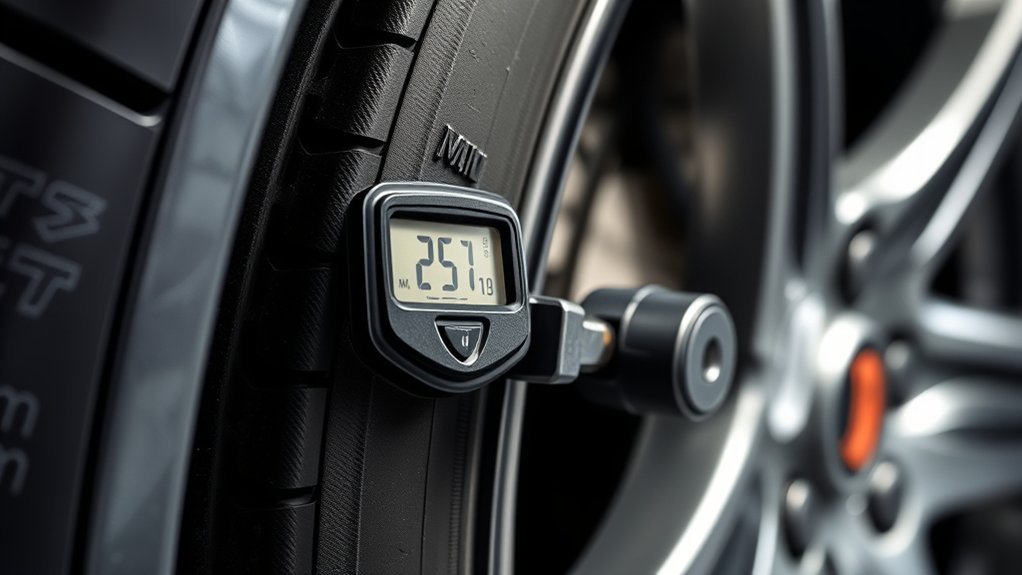
No, you generally should not fill your tires to the maximum PSI printed on the sidewall. That figure is the tire’s maximum permitted cold inflation pressure, not the normal pressure chosen for your specific vehicle. For everyday driving, use the vehicle manufacturer’s recommended cold tire pressure shown on the Tire and Loading Information label, certification label, or in the owner’s manual.
Quick Answer
Inflate your tires to the vehicle manufacturer’s recommended cold PSI, not automatically to the maximum PSI molded into the tire. Check the driver-door placard or owner’s manual, measure pressure when the tires are cold, and use the exact front and rear values listed for your vehicle.
Key Takeaways
- The PSI molded into the tire sidewall is a maximum limit, not your everyday inflation target.
- Use the cold inflation pressure on the vehicle’s tire placard or in the owner’s manual.
- Do not use a fixed rule such as staying 15 or 20 PSI below the sidewall maximum.
- Underinflation can increase tire flex and heat, while overinflation can create a harsher ride, abnormal center wear, reduced grip, and greater susceptibility to impact damage.
- Check all tires with a gauge at least monthly and before long trips, even if your vehicle has TPMS.
What Does Max PSI on Tires Mean?
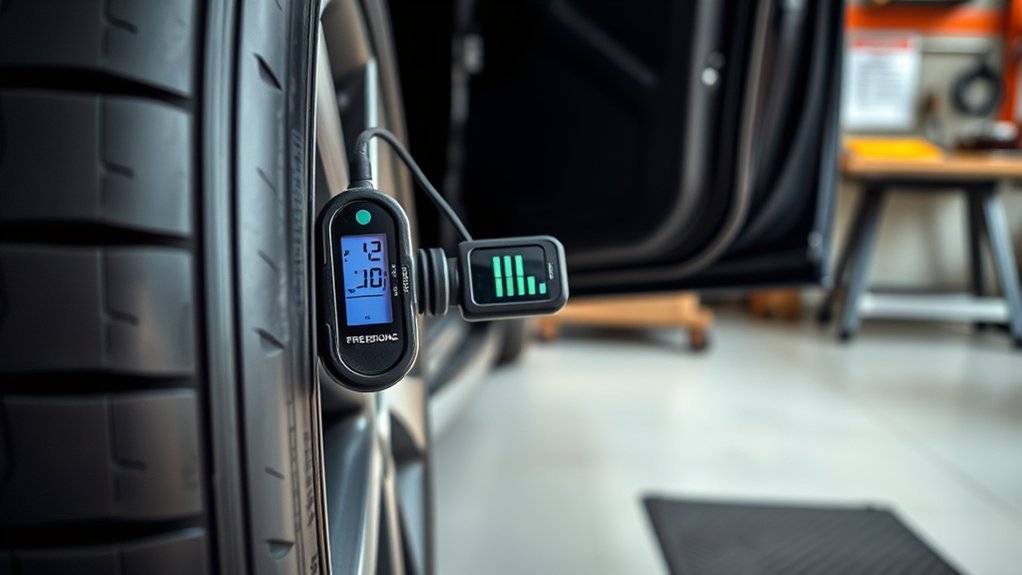
The maximum PSI shown on a tire identifies the tire’s maximum permitted cold inflation pressure. It is a tire specification, not a recommendation for every car, SUV, truck, or trailer that might use that tire.
The sidewall also carries load information. On many light-truck tires, the maximum load marking is paired with the cold pressure associated with that rated load. Load range letters therefore tell you about the tire’s load-and-inflation capability, but they do not tell you what pressure your particular vehicle should use in normal service.
For example, common LT-metric Load Range C, D, and E applications are often associated with progressively higher load/inflation capability, but you should never choose pressure from the load-range letter alone. Read the exact tire markings and follow the vehicle manufacturer’s pressure specification or approved load guidance.
NHTSA’s TireWise guidance specifically tells drivers to use the vehicle manufacturer’s recommended pressure rather than the pressure printed on the tire itself.
Warning: If the recommended cold pressure on your vehicle placard is higher than the maximum cold pressure marked on a replacement tire, do not simply add more air. The tire may be the wrong specification for the vehicle. Verify the tire size, load capacity, and fitment with the vehicle or tire manufacturer or a qualified tire professional.
Where to Find the Right Tire Pressure
For normal road use, start with the Tire and Loading Information label or certification label on the vehicle. On many vehicles it is on the driver’s door jamb or door edge. The same specification is normally listed in the owner’s manual.
The placard gives the vehicle manufacturer’s recommended cold inflation pressure for the tires fitted to the vehicle. Front and rear values may be different, so do not assume all four tires require the same PSI.
NHTSA advises using the pressure listed by the vehicle manufacturer and checking it when the tires are cold. In its consumer guidance, a cold tire is generally one that has not been driven for at least three hours.
Correct inflation helps the vehicle deliver the handling, braking response, tire life, and fuel consumption characteristics it was designed for. It also helps prevent abnormal wear caused by chronic overinflation or underinflation.
Note: Check the spare tire too. A compact spare can require a much higher pressure than the four road tires, so always use the separate spare-tire specification on the placard, tire, or owner’s manual.
How to Check Tire Pressure
Checking tire pressure takes only a few minutes and does not require advanced mechanical skills. Use an accurate tire-pressure gauge and, when adjustment is necessary, a suitable source of compressed air.
At a Glance
| Time Required | About 5–10 minutes |
| Difficulty | Easy |
| Tools Needed | Accurate tire-pressure gauge; air inflator or compressor if adjustment is needed |
| Cost | Usually no cost if you already own a gauge and inflator; otherwise equipment cost varies |
- Find the correct PSI. Read the driver’s-door tire placard or owner’s manual before measuring anything.
- Wait for cold tires. Ideally check the vehicle before driving or after it has been parked for at least three hours.
- Remove the valve cap. Keep it somewhere clean so dirt does not enter the valve.
- Press the gauge firmly onto the valve stem. Stop any hissing around the connection and read the pressure.
- Compare the reading with the placard. Remember that front and rear pressures may differ.
- Add or release air as needed. Bring each cold tire to the specified pressure rather than the sidewall maximum.
- Measure again. Recheck after adjustment so you know the final pressure is correct.
- Replace the valve cap and repeat for every tire. Include the spare when applicable.
NHTSA recommends checking tire pressure at least once a month and before long trips. A visual inspection is not enough because a radial tire can look normal while substantially underinflated.
Pro Tip: Keep a reliable pressure gauge in the vehicle. Using the same gauge each month also makes it easier to spot a slow leak or one tire that consistently loses more pressure than the others.
[Products Worth Considering]

The Topeak SmartGauge D2 delivers precise digital tire pressure readings for bikes, motorcycles, and sports equipment up to 250 psi (17 bar). Its rotating SmartHead works with both Presta and Schrader valves, so you can check pressure quickly without adapters. The LCD display makes it easy to read results in psi, bar, or kg/cm² with an included CR2032 battery for immediate use.

ETENWOLF’s tire pressure gauge helps you quickly and accurately check tire PSI across cars, trucks, motorcycles, bikes, and more. It’s manually calibrated to ANSI B40.1 Grade A for reliable readings, includes a large glow dial for easy nighttime viewing, and features a 360-degree swivel chuck for use at any valve angle. The gauge also works consistently in extreme hot or cold weather.

This tire inflator with pressure gauge delivers long-lasting performance with a durable rubber-protected gauge and sturdy build. The longer hose and 360 swivel air chuck help you seal the valve securely and keep your hands free while measuring, inflating, or deflating. It’s battery-free for reliable use and provides ±2 PSI accuracy in the mid-range for most typical tires, with universal compatibility for 1/4 NPT compressor outputs.
Max PSI vs. Recommended PSI
Maximum PSI and recommended PSI describe different things. The tire manufacturer determines the tire’s maximum permitted cold inflation pressure, while the vehicle manufacturer specifies the cold pressure appropriate for the vehicle’s weight, axle loading, suspension, tire fitment, and handling requirements.
| Value | What It Means | Where to Find It |
|---|---|---|
| Recommended cold PSI | Normal vehicle inflation specification | Vehicle placard or owner’s manual |
| Maximum tire pressure | Maximum permitted cold inflation pressure for that tire | Tire sidewall |
For ordinary road use with the correct tire size and specification, follow the vehicle placard. Do not create your own target by subtracting 10, 15, or 20 PSI from the tire’s maximum pressure.
Recommended Vs. Max PSI
The easiest rule is simple: the door placard is your operating target; the tire sidewall maximum is a limit. Inflating an otherwise correctly fitted passenger tire to its sidewall maximum can put it well above the pressure the vehicle was designed to use.
That can make the tire stiffer, transmit more road shock into the vehicle, alter handling, and contribute to abnormal center tread wear. Michelin identifies chronic overinflation as a common cause of accelerated center-tread wear.
For everyday driving, the correct PSI comes from the vehicle manufacturer—not from the largest pressure number molded into the tire.
Load Capacity Meaning
Inflation pressure allows a tire to support load, so pressure and load capacity are connected. However, that does not mean every vehicle should run a tire at the pressure associated with its maximum rated load.
- The tire sidewall identifies its load and inflation limits.
- The vehicle placard identifies the cold pressure required for the approved tire fitment on that vehicle.
- Front and rear pressures can differ because axle loads differ.
- Heavy-load or towing pressures should come from the vehicle manufacturer’s instructions, not from guesswork.
If the vehicle is modified, uses a non-original tire size, or carries an unusual load, confirm the correct size, load capacity, and inflation with the vehicle or tire manufacturer rather than assuming the original placard or sidewall maximum is automatically appropriate.
Safety Risks Of Overinflation
Overinflation means running above the pressure appropriate for the vehicle and load. It should not be confused with the normal pressure increase that occurs after a properly inflated tire warms during driving.
Excessive cold pressure can make the tire stiffer and less able to absorb potholes and other impacts. USTMA tire-care guidance warns that overinflated tires are more susceptible to cuts, punctures, or damage from sudden impacts.
Chronic overinflation can also concentrate wear toward the center of the tread and change the tire’s contact with the road. The result may be a harsher ride, less predictable grip, and shortened tire life.
Why Overinflation Hurts Performance
When tire pressure is too high for the vehicle and load, the tire flexes less than intended. That changes both ride quality and the way the tread contacts the road.
Harsh Ride Quality
An overinflated tire is stiffer, so it absorbs less of the small movement created by pavement joints, rough surfaces, and minor potholes. More of that movement reaches the suspension and cabin, making the ride feel sharper and less compliant.
- Reduced tire flex provides less cushioning.
- Road impacts feel sharper through the chassis.
- Grip can become less consistent on rough or uneven surfaces.
- Impact damage becomes a greater concern when pressure is excessive.
The solution is not to choose an arbitrary pressure below the tire maximum. Return the cold tire pressure to the vehicle manufacturer’s specification.
Uneven Tread Wear
Chronic overinflation can cause the center of the tread to carry more of the load and wear faster than the shoulders. Michelin lists accelerated center-tread wear as a recognizable overinflation pattern.
Pressure is not the only possible cause of irregular wear. Alignment problems, suspension wear, incorrect rim width, tire misapplication, rotation practices, and driving style can also create unusual patterns. If correcting pressure does not stop the wear pattern, have the tires and alignment inspected.
Michelin’s current tire-wear guidance recommends returning an overinflated tire to the vehicle manufacturer’s specified pressure rather than using the sidewall maximum as an operating target.
Why Underinflation Is Dangerous
Underinflation creates a different set of problems. When pressure is too low, the tire flexes excessively as it rolls. That flex generates heat and can damage the tire’s internal structure, especially during sustained higher-speed driving or heavy loading.
NHTSA warns that underinflation is a major cause of tire failure, while USTMA notes that excessive heat from underinflation can lead to internal structural damage.
- Excessive flex and heat: A low tire bends more with every rotation, raising internal temperature.
- Abnormal wear: Chronic underinflation commonly accelerates wear toward the shoulders.
- Higher rolling resistance: The vehicle requires more energy to keep the tire rolling.
- Changed handling: Steering response and stability can differ from the vehicle’s intended behavior.
Both underinflation and overinflation should therefore be corrected. The safest target is the pressure specified by the vehicle manufacturer for the approved tire fitment and operating condition.
How Temperature Changes Tire Pressure
Tire pressure changes with temperature even when there is no leak. As ambient temperature falls, pressure drops; when temperature rises or the tire warms during driving, pressure rises.
USTMA gives a practical rule of thumb of about 1–2 PSI for every 10°F change in temperature. Because of that seasonal effect, a tire that was correct during warm weather can be low after a strong temperature drop.
Pro Tip: Recheck cold pressure after major seasonal temperature changes instead of waiting for the TPMS warning light.
Should You Release Air From Hot Tires?
Normally, no. A correctly inflated tire naturally gains pressure as it warms during driving. Do not bleed that normal pressure increase away and then continue driving, because the tire can become underinflated after it cools.
Michelin advises against reducing pressure when tires are hot. Check and set the final pressure again when the tires are cold.
Warning: A rapidly rising pressure combined with unusual vibration, visible damage, severe overheating, or a tire that repeatedly loses pressure can indicate a tire problem. Stop in a safe place and have the tire inspected rather than repeatedly adding or releasing air.
Towing, Heavy Loads, and Replacement Tires
Do not automatically raise your tires to sidewall maximum just because you are towing or carrying cargo. Some manufacturers provide a different pressure for heavy-load operation, while others use the same placard pressure within the vehicle’s rated load limits.
Follow the vehicle owner’s manual for towing and maximum-load inflation instructions. Never exceed the vehicle’s payload, axle, wheel, or tire ratings.
If you have changed tire size, load range, wheels, or vehicle configuration, the original placard may no longer provide enough information by itself. USTMA recommends using vehicle- or tire-manufacturer-approved replacement specifications and maintaining adequate load-carrying capacity.
[Products Worth Considering]

The TYAMATE TM8 solar-powered wireless TPMS delivers real-time tire pressure and temperature monitoring with six alarm modes for safer driving. A vibrant color LCD display shows readings clearly while windshield mounting keeps it hands-free and easy to read. With a wide 0–87 PSI range, strong 433.92 MHz signal transmission, and quick sensor pairing, it’s ideal for RV, sedan, SUV, MPV, and truck use.

The Tymate TM12 RV TPMS delivers real-time tire pressure and temperature monitoring with a stable 433Hz display for safer long-distance driving. It supports simultaneous monitoring across vehicle and trailer zones, includes six alarm modes for pressure, temperature, leakage, battery, and signal loss, and features easy DIY installation with auto calibration. Power is supplied via USB-C charging or solar recharging, with a wide 0–144 PSI range and up to 50 ft signal coverage for RVs and towable trailers.

AstroAI’s heavy-duty digital tire pressure gauge delivers quick, accurate readings with 0.1 increments and a secure valve-stem seal. It features a green backlit LCD and built-in flashlight for easy use in low light, plus an ergonomic non-slip stainless-steel design. The wide 0–230 PSI range works across common vehicle tires, with unit selection and an auto shut-off to save battery.
Does TPMS Replace Manual Tire-Pressure Checks?
No. A Tire Pressure Monitoring System is a warning system, not a replacement for routine maintenance. NHTSA recommends checking tire pressure manually at least once a month even on TPMS-equipped vehicles.
A tire can be below its ideal pressure before the dashboard warning appears. Checking with a gauge also lets you compare all four tires, identify slow leaks, and confirm that front and rear pressures match the placard.
Note: Nitrogen-filled tires use the same vehicle-recommended cold pressure as air-filled tires. Whatever inflation gas is used, pressure still needs to be checked regularly.
[Products Worth Considering]

Milton S-921 pencil tire pressure gauge helps you maintain optimal tire pressure for passenger cars with accurate readings in PSI and kPa. It features a built-in deflator valve for convenient pressure adjustments, plus a single chuck head and nylon indicator bar for easy use on the go. Built from durable plated brass and designed for reliable performance, it’s a practical road trip and cold-weather maintenance tool.

The ETENWOLF T600 digital tire pressure gauge delivers precise, manually calibrated readings to ANSI B40.7 Grade 2A standards with ±0.5% PSI accuracy. Its 360° rotating nozzle and display hold make it easy to check pressures from any angle, while a bleed button helps dial tires to the perfect level. With a 0–250 PSI range and support for PSI, BAR, and KPA, it’s a convenient tool for maintaining tire performance across many vehicles and seasons.

The Big Rig Defense Tire Thumper is a truck tire pressure checker that lets you quickly check multiple tires by giving them a firm whack. Listen for a reassuring thump and feel the stick bounce when a tire is fully inflated, helping you get back on the road safely. It features a comfortable, glove-friendly handle and a secure wrist strap for confident use on busy routes.
Sources
- National Highway Traffic Safety Administration — TireWise — recommended pressure, cold-pressure checks, TPMS, and monthly maintenance.
- National Highway Traffic Safety Administration — Summer Driving Tips — vehicle-manufacturer pressure, cold checking, and underinflation safety.
- U.S. Tire Manufacturers Association — Tire Care and Service Guide — inflation, overinflation, underinflation, load, and replacement guidance.
- U.S. Tire Manufacturers Association — Know Your Roll — temperature-related pressure changes and hot-tire guidance.
- Michelin — What Tire Pressure Is Right for My Car? — recommended versus maximum pressure and inflation-related wear.
Frequently Asked Questions
Am I supposed to fill my tires to their max PSI?
Usually, no. Use the vehicle manufacturer’s recommended cold pressure on the door placard or in the owner’s manual. The tire’s sidewall maximum is a limit for the tire, not the normal pressure target for your vehicle.
Is 17 PSI a bad tire pressure?
For normal road use on most passenger vehicles, 17 PSI is severely below the specified pressure. Check the door placard, inflate the tire correctly, and inspect for a puncture or leak if the pressure dropped unexpectedly.
Is 70 PSI too high for tires?
It depends on the vehicle and tire. Seventy PSI is far above the normal placard pressure of many passenger cars, but some light-truck, commercial, trailer, or spare-tire applications use much higher pressures. Follow the exact vehicle and tire specifications rather than judging the number by itself.
Is 40 PSI too high for tires?
Forty PSI is correct if your vehicle placard specifies 40 PSI cold. If the placard specifies a lower pressure, do not raise the tires to 40 PSI simply because the sidewall allows it.
Should I let air out if tire pressure rises after driving?
Normally, no. Tire pressure naturally rises as the tire warms. Do not bleed a correctly inflated hot tire back to the cold placard number. Let it cool and verify the pressure again when cold.
Do I still need to check tire pressure if my car has TPMS?
Yes. TPMS is designed to warn you about significant pressure problems, but NHTSA still recommends checking all tires with a gauge at least monthly and before long trips.
Conclusion
So, should you fill your tires to max PSI? For normal driving, usually not. Treat the sidewall figure as the tire’s maximum permitted cold inflation pressure and use the vehicle manufacturer’s recommended cold PSI as your operating target. Check the pressure monthly with a reliable gauge, account for seasonal temperature changes, and avoid bleeding normally warmed tires. Correct inflation gives your tires the load support, handling, wear, and ride characteristics the vehicle was designed to use.

