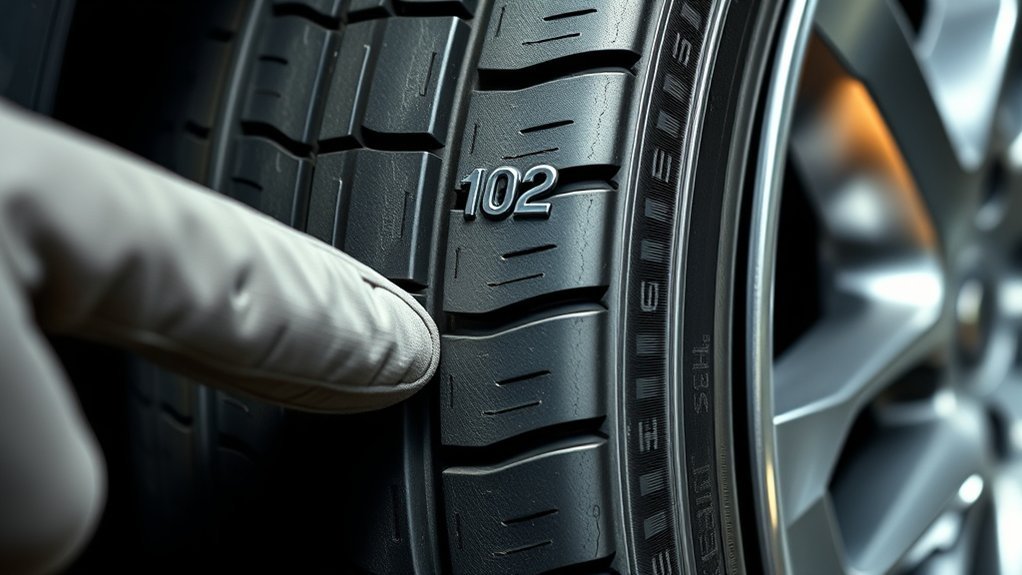
A tire marked 102H is showing its service description: the number tells you how much weight the tire can carry, and the letter tells you the tire’s tested speed capability. In plain terms, 102 is the load index and H is the speed rating. Reading both correctly helps you choose a replacement tire that matches your vehicle’s safety and handling requirements.
Quick Answer
A 102H tire can carry up to 1,874 lbs (850 kg) per tire when properly inflated, and the H speed rating means it is rated for sustained speeds up to 130 mph (210 km/h) under specified conditions. Always match or exceed your vehicle manufacturer’s required load index and speed rating.
Key Takeaways
- 102 is the tire load index, equal to 1,874 lbs (850 kg) per tire when properly inflated.
- H is the tire speed rating, equal to 130 mph (210 km/h) under rated load and test conditions.
- The full code, such as 225/65R17 102H, appears on the tire sidewall after the tire size.
- Use the vehicle tire placard, owner’s manual, or manufacturer specifications before buying replacement tires.
- Do not install tires with a lower load index or speed rating than your vehicle requires unless the vehicle manufacturer allows it.
What Does 102H Mean on a Tire?
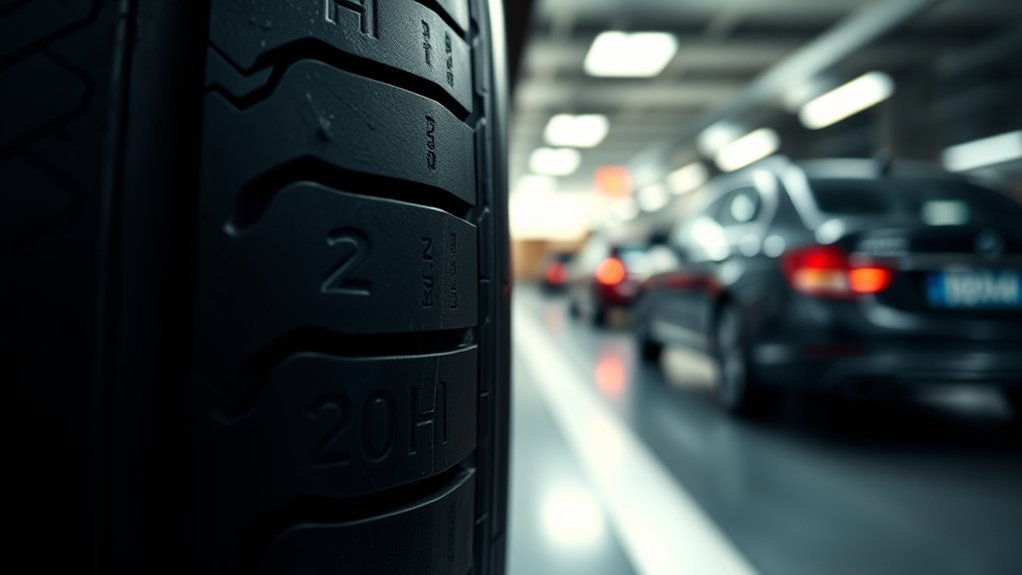
The marking 102H is a tire service description. It combines two safety-related ratings:
- 102 load index: the tire can support up to 1,874 lbs (850 kg) when properly inflated.
- H speed rating: the tire is rated for sustained speeds up to 130 mph (210 km/h) under specified load and operating conditions.
You will usually see this code after the tire size. For example, in 225/65R17 102H, the 225/65R17 describes the tire size, and 102H tells you the load and speed ratings.
These ratings matter because your vehicle’s suspension, braking, stability control, and weight capacity are designed around specific tire requirements. A tire that is too low in load index can run hotter, flex more, and fail under weight. A tire with too low a speed rating may not manage heat and stress as intended at highway speeds.
Warning: Never choose a replacement tire with a lower load index or speed rating than your vehicle manufacturer requires unless the manufacturer specifically approves it. When in doubt, check the tire placard or ask a qualified tire professional.
Where to Find 102H on the Sidewall
Look on the tire sidewall for the full tire size. The load index and speed rating normally appear immediately after the rim diameter. A common format looks like this:
225/65R17 102H
| Marking | What It Means | Example |
|---|---|---|
| 225 | Section width in millimeters | 225 mm wide |
| 65 | Aspect ratio | Sidewall height is 65% of width |
| R17 | Radial tire for a 17-inch wheel | Fits 17-inch rim |
| 102 | Load index | 1,874 lbs / 850 kg per tire |
| H | Speed rating | 130 mph / 210 km/h |
If the outer sidewall is dirty or the code faces inward, check the opposite side of the tire or turn the steering wheel to improve visibility on the front tires. Do not confuse 102H with the DOT date code, brand name, tire model, or maximum sidewall pressure.
How Tire Load Ratings Work
The load index is a numerical code that corresponds to the maximum load one tire can carry when it is properly inflated. The number itself is not the weight; it must be decoded with a load index chart.
For a 102 load index, the maximum load is 1,874 lbs (850 kg) per tire. On a four-tire vehicle, four 102-rated tires have a combined tire load capacity of 7,496 lbs, but that does not mean your vehicle can safely carry that much payload. Vehicle payload, gross vehicle weight rating, axle ratings, towing limits, and recommended tire pressure still come from the vehicle manufacturer.
Use the load index to confirm that the replacement tire meets or exceeds the load rating listed on your tire placard or in your owner’s manual. If your vehicle requires 102, you should not move down to 101 or 100 unless the vehicle manufacturer specifically approves it.
Note: The maximum pressure printed on the tire sidewall is not usually your vehicle’s recommended tire pressure. Use the driver’s door jamb placard or owner’s manual for the correct cold inflation pressure.
[Products Worth Considering]

The SAFELIFE dial tire tread depth gauge measures tread depth in 1/32 inch increments with clear, easy-to-read 2-inch dial face. Color zones using a traffic light system help you quickly judge whether tread is low, marginal, or ample for safer driving. Built with a durable zinc cast body and a metal detect probe for precise, comfortable use across cars, motorcycles, trucks, and buses.

Measure tire tread depth quickly and accurately with this LUMITECO dial gauge that reads in 1/32" increments up to 14/32". The color-coded green/yellow/red zones make it easy to judge tire wear and know when replacement is needed. A rugged, compact design with a protective pouch helps keep the gauge ready for use on cars, trucks, motorcycles, and more.

Monitor tire tread wear with a smart, color-coded depth gauge that shows clear condition ranges at a glance. The bar is range marked for fast, easy readings, helping you maintain safer traction and performance. Each gauge is portable with a pocket clip, and the set includes 20 units for daily use and sharing.
Why Load Index Matters for Safety
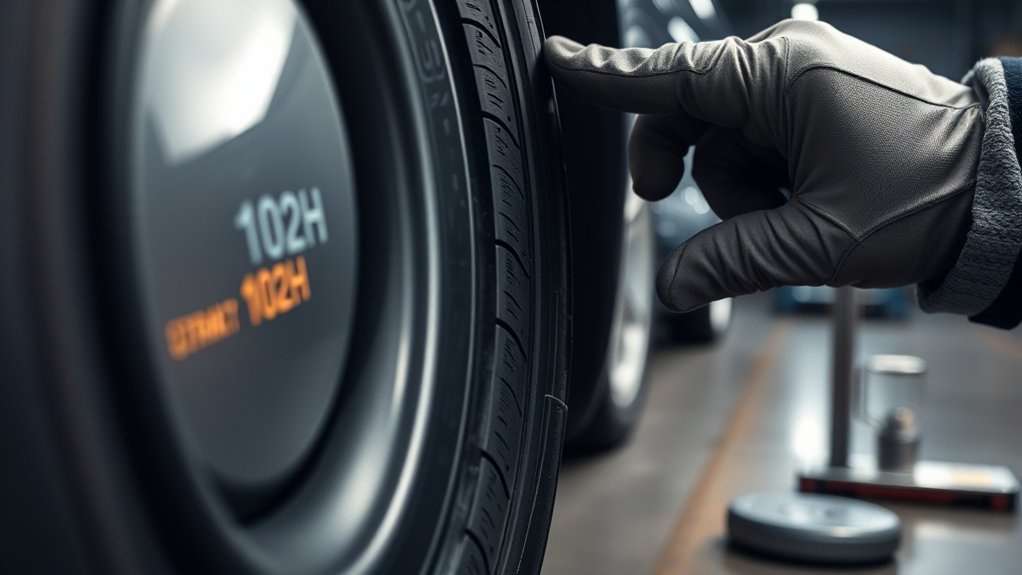
The load index helps protect the tire from being asked to carry more weight than it was designed to handle. When a tire is overloaded, it flexes more, builds heat faster, and becomes more vulnerable to internal damage or failure.
Correct load capacity is especially important when you carry passengers, luggage, tools, roof cargo, or towing tongue weight. SUVs, crossovers, EVs, vans, and light trucks can place extra demand on tires because of vehicle weight and load distribution.
| Load Index | Max Load Per Tire | What It Means |
|---|---|---|
| 99 | 1,709 lbs / 775 kg | Lower than 102; do not use if your vehicle requires 102 |
| 102 | 1,874 lbs / 850 kg | Common rating for many crossovers, sedans, and SUVs |
| 105 | 2,039 lbs / 925 kg | Higher load capacity, if the size and vehicle fitment are correct |
A higher load index can be acceptable when the tire size, construction, speed rating, and vehicle fitment are correct. A lower load index is the risky direction because it reduces the tire’s weight-carrying margin.
What the H Speed Rating Means
The H speed rating means the tire is rated for sustained speeds up to 130 mph (210 km/h) under specified load, inflation, and test conditions. It does not mean you should drive that fast, and it does not override posted speed limits, road conditions, tire wear, weather, or vehicle condition.
Speed ratings are also tied to heat resistance and structural capability. At higher speeds, tires flex quickly and generate heat. A tire with the correct speed rating is built to handle the demands expected by the vehicle manufacturer.
For many passenger cars, sedans, minivans, and crossovers, an H-rated tire offers a balanced mix of everyday comfort, highway stability, and speed capability. Performance vehicles may require V, W, Y, or another rating, while some everyday vehicles may specify S or T. The correct choice is the rating listed by the vehicle manufacturer.
The H rating is a capability limit under controlled conditions, not a recommendation to drive 130 mph.
102H vs Other Common Tire Ratings
When comparing tire ratings, read the number and letter separately. The number changes load capacity. The letter changes speed capability.
| Rating | Load Capacity | Speed Rating | Main Difference |
|---|---|---|---|
| 99H | 1,709 lbs / 775 kg | 130 mph / 210 km/h | Same speed as 102H, lower load capacity |
| 102T | 1,874 lbs / 850 kg | 118 mph / 190 km/h | Same load as 102H, lower speed rating |
| 102H | 1,874 lbs / 850 kg | 130 mph / 210 km/h | Balanced load and highway-speed capability |
| 102V | 1,874 lbs / 850 kg | 149 mph / 240 km/h | Same load as 102H, higher speed rating |
| 105H | 2,039 lbs / 925 kg | 130 mph / 210 km/h | Same speed as 102H, higher load capacity |
A higher speed rating is not automatically “better” for every driver. It may come with different ride comfort, tread life, cost, or performance characteristics depending on the tire model. The safest approach is to choose a tire that matches or exceeds the exact rating your vehicle requires.
[Products Worth Considering]

The 22800 wheel stud installer makes replacing wheel studs quick and secure, saving time and effort during tire service. It uses a ratchet or impact wrench to pull new studs firmly into place, helping when existing studs are too long. Compatible with most automotive wheels and light-duty truck wheel studs, it’s designed for easy, tool-assisted installation.

Accurately measure tire tread depth with a calibrated gauge marked from 0 to 1 inch in 1/32 inch increments. The color-coded bar helps you quickly identify tread condition ranges, supporting safe driving for trucks, motorcycles, automobiles, and passenger vehicles.
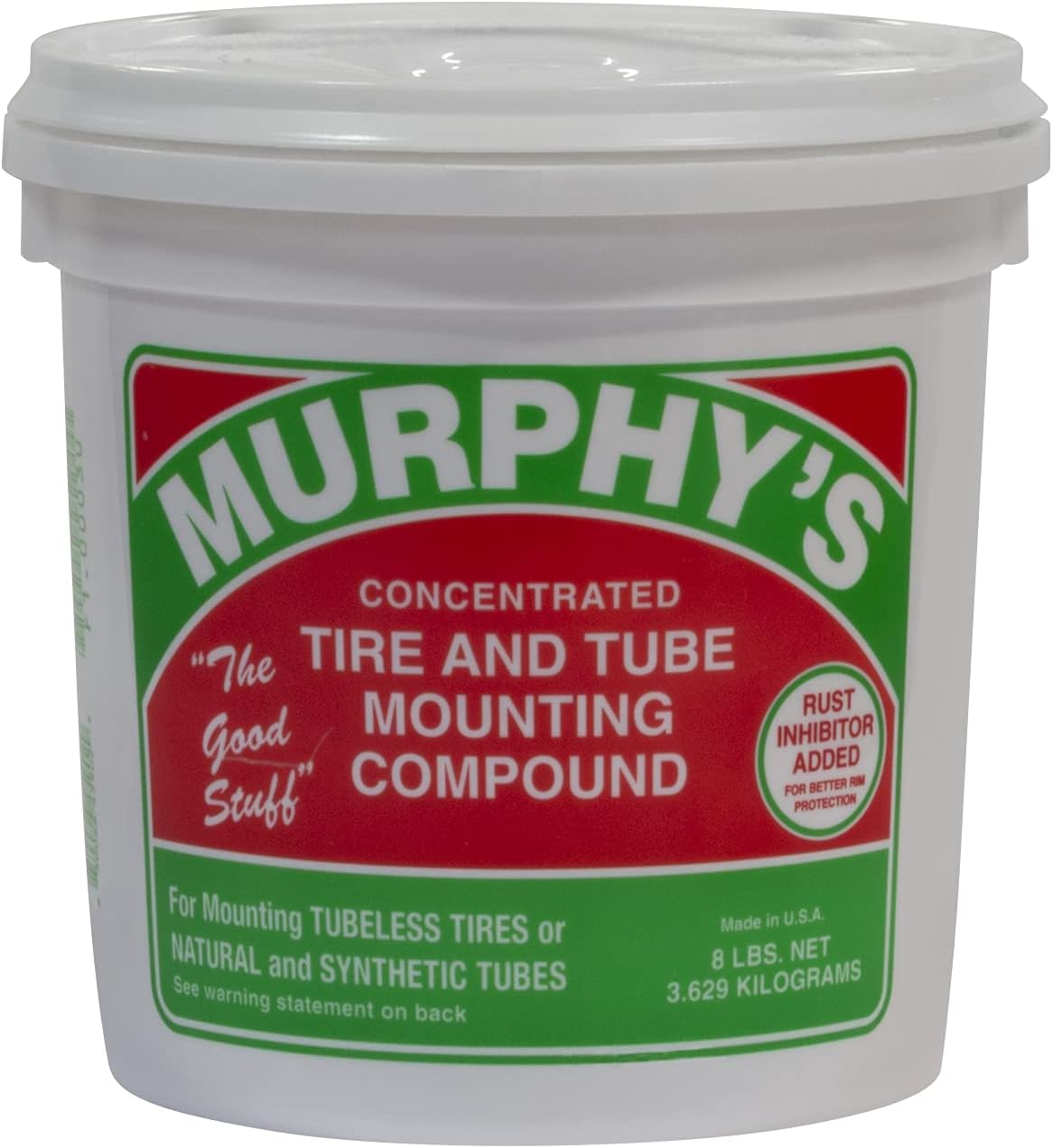
A concentrated tire and tube mounting compound designed to help simplify mounting rubber tires and tubes on passenger, semi truck, construction, and OTR applications. Its ultra-thick formula packs beads effectively and includes rust inhibitors to help protect against corrosion during use.
Can You Mix Different Tire Ratings?
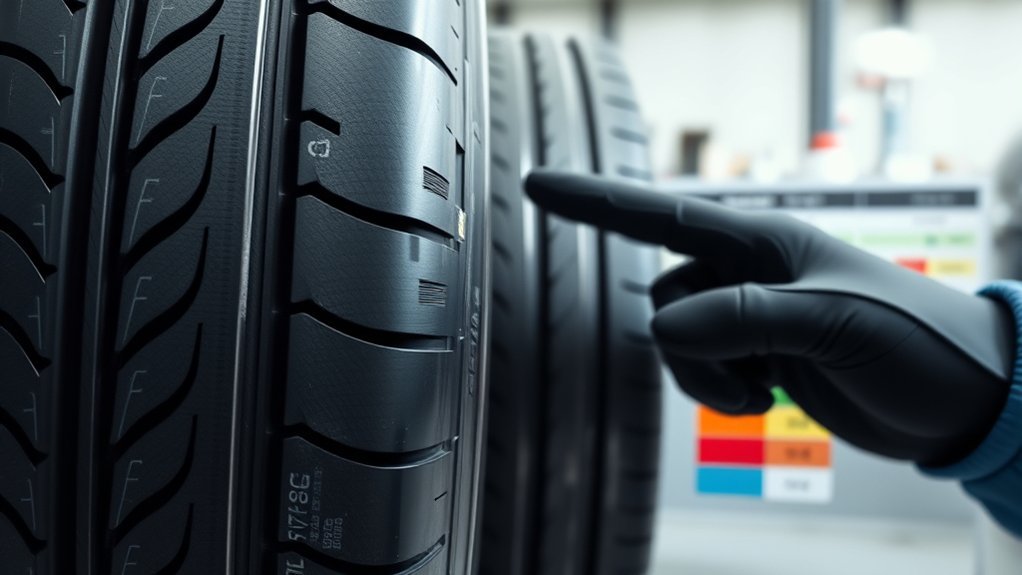
You should avoid mixing tires with different load indexes, speed ratings, tread designs, sizes, or constructions unless your vehicle manufacturer specifically allows it. A matched set helps the vehicle brake, steer, and respond predictably.
If different speed ratings are already on the vehicle, the vehicle’s safe speed capability is limited by the lowest-rated tire. Mixing ratings can also change handling balance, especially in wet conditions or during emergency maneuvers.
| Situation | Best Practice | Why It Matters |
|---|---|---|
| Replacing all four tires | Use the same size, load index, speed rating, type, and model if possible | Keeps handling and braking consistent |
| Replacing two tires | Match the remaining tires as closely as possible and follow manufacturer guidance | Reduces traction imbalance |
| Different speed ratings | Avoid when possible; the lowest speed rating limits the vehicle | Mismatched ratings can affect stability |
| AWD or 4WD vehicle | Check the owner’s manual for tread-depth and circumference limits | Mismatched tires can stress drivetrain components |
Pro Tip: Before ordering tires online, take a photo of the driver’s door jamb tire placard and your current sidewall code. Compare size, load index, speed rating, and any XL, HL, run-flat, or OE markings.
How to Check Tire Age and Condition
The load and speed rating only tell part of the story. A tire also needs enough tread, proper inflation, and a safe physical condition.
To check tire age, find the DOT code on the sidewall. For tires made after 2000, the last four digits show the week and year of manufacture. For example, a code ending in 2320 means the tire was made in the 23rd week of 2020.
Use this quick inspection checklist:
- Check tread depth. Replace tires at the legal minimum tread depth or sooner if wet/snow traction is poor.
- Look for damage. Bulges, bubbles, deep cuts, cracks, exposed cords, or sidewall punctures need professional inspection or replacement.
- Check inflation pressure cold. Use the vehicle placard pressure, not the sidewall maximum pressure.
- Read the DOT date code. Age matters even if the tread looks good.
- Inspect older tires more often. Many tire makers recommend annual professional inspection after about five years of service and replacement by ten years from manufacture, or sooner if condition demands it.
If you see vibration, pulling, uneven wear, repeated air loss, or a bubble in the sidewall, have the tire inspected before continuing normal driving.
Choosing the Right Replacement Tire
When replacing a 102H tire, match the complete tire specification as closely as possible. Do not shop by load index alone.
Check these items before buying:
- Size: Match the tire size listed on the vehicle placard or approved by the manufacturer.
- Load index: Use the required load index or higher, such as 102 or above if 102 is specified.
- Speed rating: Match or exceed the required speed rating, such as H or above if H is specified.
- Load range or construction: Match XL, HL, reinforced, run-flat, or OE-specific markings when required.
- Season and tire type: Do not mix summer, winter, all-season, all-weather, or all-terrain tires unless approved.
- Vehicle system needs: AWD, EV, performance, towing, and heavy-load vehicles may have stricter tire requirements.
If your current sidewall reads 102H, a tire with 102V may meet or exceed the speed rating if the size and fitment are correct. A 102T tire has the same load index but a lower speed rating, so it is not a safe replacement unless your vehicle manufacturer allows T-rated tires for that vehicle and use case.
[Products Worth Considering]
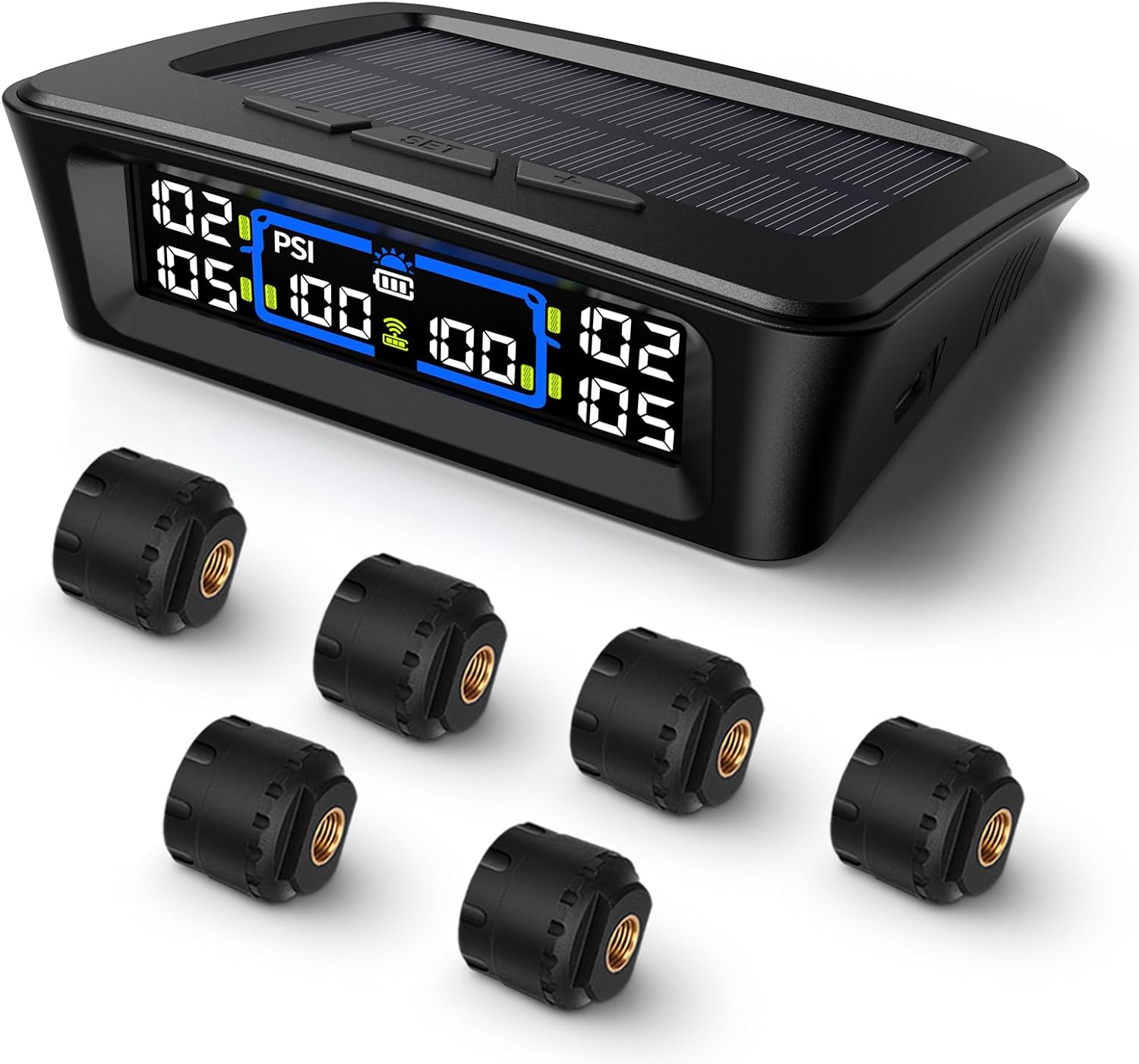
The Tymate TM12 RV TPMS delivers real-time tire pressure and temperature monitoring with a stable 433Hz display for safer long-distance driving. It supports simultaneous monitoring across vehicle and trailer zones, includes six alarm modes for pressure, temperature, leakage, battery, and signal loss, and features easy DIY installation with auto calibration. Power is supplied via USB-C charging or solar recharging, with a wide 0–144 PSI range and up to 50 ft signal coverage for RVs and towable trailers.

This universal wheel alignment tool helps you accurately restore tire tilt angles after tire or suspension repairs using an adjustable camber gauge. It features a powerful magnetic base that firmly attaches to brake rotors for stationary, slip-free readings, improving consistency during measurement. Built from durable PC plastic, it resists wear and corrosion and is compact enough for car, truck, RV, and motorcycle alignment tasks.

Steelman white tire marking crayons provide high-contrast, semi-permanent marks for repairing and inspecting tires and equipment. They write on wet or dry, smooth or coarse surfaces including rubber, metal, glass, and wood, making them ideal for puncture location and damage outlining. The lead- and zinc-free crayons resist weather and fading yet wipe away when you no longer need the marks.
Frequently Asked Questions
What does 102H mean on a tire?
102H means the tire has a 102 load index and an H speed rating. The 102 load index equals 1,874 lbs (850 kg) per tire when properly inflated. The H speed rating means the tire is rated up to 130 mph (210 km/h) under specified conditions.
Which is better, T or H speed rating?
H is the higher speed rating. A T-rated tire is rated up to 118 mph (190 km/h), while an H-rated tire is rated up to 130 mph (210 km/h). The better choice is the one your vehicle manufacturer requires. Do not move from H to T unless the vehicle manufacturer allows it.
What is the difference between 102T and 102H tires?
Both have the same load index, so both can carry 1,874 lbs (850 kg) per tire when properly inflated. The difference is the speed rating: 102T is rated up to 118 mph, while 102H is rated up to 130 mph.
Which is better, S or H speed rating?
H is higher than S. An S-rated tire is rated up to 112 mph (180 km/h), while an H-rated tire is rated up to 130 mph (210 km/h). Use the speed rating listed on your vehicle placard or in the owner’s manual.
Can I replace 102H tires with 102V tires?
Usually, a 102V tire meets or exceeds the speed capability of a 102H tire because V is rated higher than H. However, the tire must also match the correct size, load index, construction, tire type, and vehicle fitment requirements.
How long does a 100 treadwear tire last?
A 100 treadwear grade does not guarantee a fixed mileage. UTQG treadwear is a relative comparison against a control tire, and real tire life depends on tire design, alignment, inflation, rotation, road surface, climate, and driving style.
Conclusion
A 102H tire rating is a compact safety code. The 102 load index means the tire can support 1,874 lbs (850 kg) when properly inflated, and the H speed rating means it is rated up to 130 mph (210 km/h) under specified conditions. When replacing tires, match the full tire size, load index, speed rating, construction, and vehicle manufacturer requirements. If any rating is lower than the placard or manual requires, choose a different tire or ask a qualified tire professional before driving on it.
Sources
- Michelin USA — Tire Load Rating & Speed Rating Explained — supports load index and speed rating definitions.
- Michelin USA — Tire Markings Explained — supports sidewall marking, DOT date code, and replacement-spec guidance.
- Continental Tires — Tire Size Guide — supports matching vehicle manufacturer size, load index, and speed rating.
- Continental Tires — Mixing Tires — supports tire-mixing cautions and matching tire specifications.
- NHTSA TireWise — Tire Safety Ratings and Awareness — supports UTQG/treadwear safety context.
- Bridgestone — How Long Do Tires Last? — supports DOT date code and tire aging guidance.