
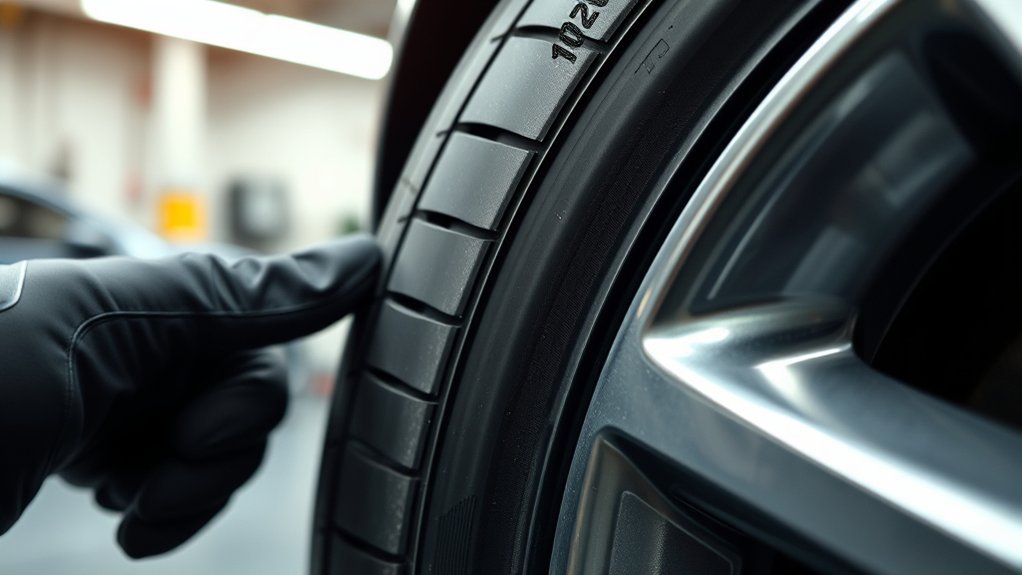
A tire marked 102V uses a short service description to tell you two important things: how much weight each tire can carry and the highest speed category the tire is rated for under proper conditions. In this case, 102 is the load index, and V is the speed rating. You still need to match both ratings to your vehicle’s door placard or owner’s manual before buying replacement tires.
Quick Answer
A 102V tire has a 102 load index, meaning it can carry up to 1,874 pounds (850 kg) per tire when properly inflated, and a V speed rating, meaning it is rated up to 149 mph (240 km/h) under specified conditions.
Key Takeaways
- 102 is the load index, equal to 1,874 lb (850 kg) per tire when the tire is properly inflated and used within its rating.
- V is the speed rating, equal to 149 mph (240 km/h) under specified test and service conditions.
- 102V is part of the tire’s service description, usually shown after the size, such as 245/50R20 102V.
- Use the vehicle placard or owner’s manual as the final authority for the required size, load index, speed rating, and cold tire pressure.
- You can usually choose a higher load index or speed rating, but avoid lower ratings unless the vehicle maker and local rules specifically allow it.
What Does 102V Mean on a Tire?
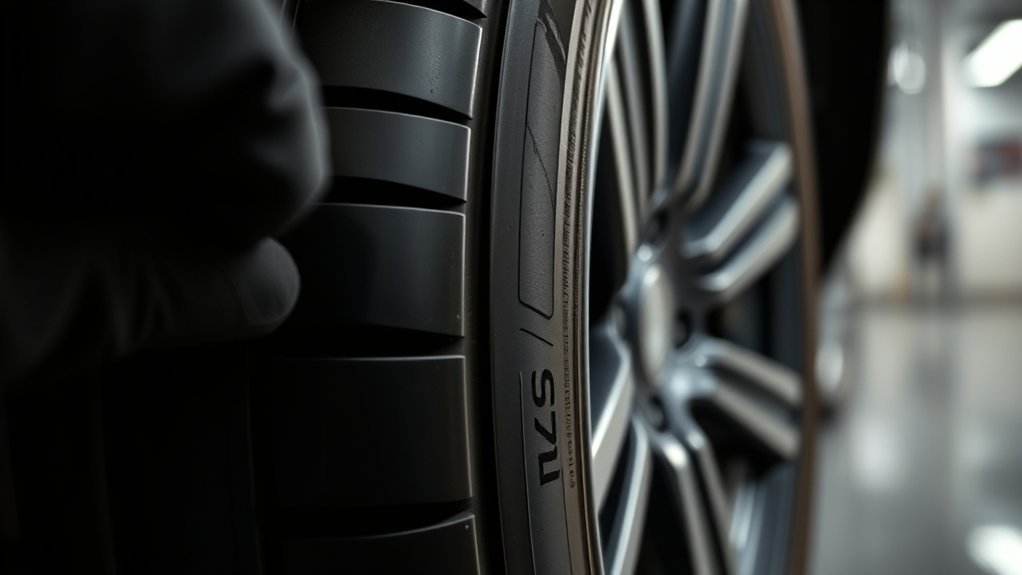
A tire marked 102V gives you two ratings in one code. The number 102 is the load index, which means the tire can support up to 1,874 pounds (850 kg) per tire when it is properly inflated. The letter V is the speed rating, which means the tire is rated up to 149 mph (240 km/h) under specified conditions.
That does not mean you should drive at that speed. It means the tire has been tested for that speed category when the tire is in good condition, correctly inflated, correctly loaded, and used within its design limits. Real-world safety still depends on road laws, weather, tread depth, tire age, load, inflation pressure, and your vehicle’s own limits.
102V at a Glance
| 102 | Load index: 1,874 lb / 850 kg per tire |
| V | Speed rating: up to 149 mph / 240 km/h under specified conditions |
| Where it appears | At the end of the tire size, such as 245/50R20 102V |
| Best replacement rule | Match or exceed the vehicle manufacturer’s required load index and speed rating |
What Does Load Index 102 Mean?
Load index 102 means the tire can carry a maximum load of 1,874 pounds (850 kg) per tire when it is properly inflated. This rating is per tire, not the total weight your vehicle can carry.
If all four tires have a 102 load index, their combined tire-load capacity is 7,496 pounds. That simple multiplication is only a reference point, not permission to load the vehicle that heavily. Your actual limit still depends on the vehicle’s Gross Vehicle Weight Rating, axle ratings, tire pressure, tire size, and the manufacturer’s loading instructions.
The load index must meet or exceed what your vehicle requires. A lower load index can make the tire run hotter, flex more, wear faster, and fail more easily under load.
Warning: Never install a tire with a lower load index than your vehicle requires unless the vehicle manufacturer specifically approves that tire for your exact vehicle and use case. Overloading or underinflating a tire can increase heat buildup and raise the risk of tire failure.
What Does a V Speed Rating Mean?
A V speed rating means the tire is rated for speeds up to 149 mph (240 km/h) under specified conditions. The speed rating is not a recommendation to drive that fast. It is a standardized category that describes the tire’s tested speed capability when the tire is properly inflated, properly loaded, undamaged, and used as intended.
A V-rated tire is common on many performance sedans, coupes, crossovers, and sporty trims. Compared with a lower speed rating, a V-rated tire may be built with construction and compounds suited for higher-speed heat resistance and response, but speed rating alone does not guarantee shorter stopping distances, better wet traction, or longer tread life. Those depend on the exact tire model.
When replacing tires, keep all four tires matched by size, type, load index, and speed rating whenever possible. Mixing ratings can affect handling, especially on performance vehicles, all-wheel-drive vehicles, or vehicles with staggered fitments.
Where to Find Tire Sidewall Markings
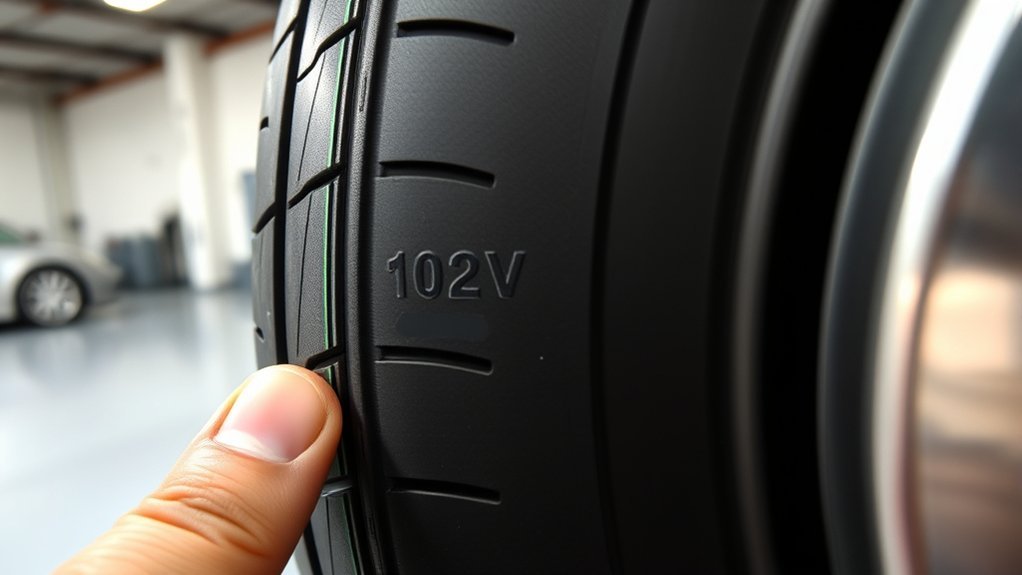
Look at the tire’s outer sidewall to find the molded markings that list the tire size, construction type, load index, speed rating, DOT code, maximum pressure, and other details. You usually do not need tools; just clean off dirt or brake dust and read the full code.
| Marking area | What you’ll see |
| Main size code | Width, aspect ratio, construction, and wheel diameter, such as 245/50R20 |
| Service description | Load index and speed rating, such as 102V |
| Vehicle reference | Driver-side door placard and owner’s manual for the required tire size and cold inflation pressure |
Use the sidewall to identify what is currently installed, then cross-check the vehicle placard or owner’s manual before buying replacements. The National Highway Traffic Safety Administration advises drivers to use the owner’s manual or Tire and Loading Information Label to find the correct tire size and inflation pressure for the vehicle.
Note: The pressure molded on a tire sidewall is not the same as your vehicle’s recommended cold tire pressure. Use the vehicle placard or owner’s manual for the correct cold PSI.
How Load and Speed Ratings Work
Load and speed ratings work together. The load index tells you how much weight the tire can carry. The speed rating tells you the tire’s tested speed category. A tire has to be right in both areas to be a good replacement.
Load Index Basics
A tire’s load index is a number that corresponds to a maximum load. For 102V, the load index is 102, which equals 1,874 pounds or 850 kg per tire. Higher load-index numbers generally mean higher carrying capacity, but the tire still has to match the correct size, type, and pressure requirements for your vehicle.
Do not judge load capacity by appearance. Two tires can look similar but have different load indexes, load ranges, or inflation requirements.
Speed Rating Meaning
The speed rating is the letter after the load index. In 102V, the speed rating is V. That rating corresponds to 149 mph or 240 km/h under specified conditions. The rating can be reduced in real life by tire damage, improper repairs, underinflation, overloading, uneven wear, mismatched tires, or excessive age.
For normal road use, the speed rating is mainly a replacement-spec requirement. It helps keep the vehicle’s handling and heat-resistance characteristics close to what the manufacturer intended.
Why Ratings Matter
Load and speed ratings are safety limits, not just shopping labels. A tire with the wrong service description can change how the vehicle carries weight, handles heat, steers, brakes, and responds in emergency maneuvers.
- Match the tire size, load index, and speed rating to the vehicle maker’s requirements.
- Do not overload the vehicle or run tires underinflated.
- Use the same rating across all four tires unless the manufacturer specifies a staggered setup.
- Replace damaged, aged, or unevenly worn tires even if the sidewall rating looks correct.
What Does 245/50R20 102V Mean?
A tire size such as 245/50R20 102V gives you the tire’s dimensions and service description in one line:
- 245 = tire section width in millimeters.
- 50 = aspect ratio, meaning the sidewall height is 50% of the tire’s width.
- R = radial construction.
- 20 = wheel diameter in inches.
- 102 = load index, equal to 1,874 lb / 850 kg per tire.
- V = speed rating, equal to 149 mph / 240 km/h under specified conditions.
For replacement tires, every part of that code matters. A tire with the same 102V rating but the wrong size may not fit the wheel, suspension, speedometer calibration, or load requirements correctly.
Can You Use Higher or Lower Tire Ratings?
You can usually use a tire with a higher load index or higher speed rating as long as the tire is the correct size, type, and fitment for your vehicle. For example, replacing a 102V tire with a correctly sized 102W or 106V tire may be acceptable if it meets the vehicle maker’s requirements and does not create ride, clearance, or handling issues.
You should avoid using a lower load index than required. A lower load index can reduce the tire’s ability to carry the vehicle safely, especially when passengers, cargo, towing load, or high temperatures are involved.
You should also avoid using a lower speed rating unless your vehicle manufacturer, tire professional, and local rules allow it for a specific use case, such as certain winter tires. If a lower speed-rated winter tire is used legally, the driver must obey the lower tire speed limit and any required dashboard label or owner-manual guidance.
Pro Tip: When comparing two tires, do not choose by speed rating alone. Check size, load index, speed rating, load range, UTQG, traction needs, weather use, warranty, and whether the tire is approved for your vehicle.
[Products Worth Considering]
Black Magic Intense Foam Wheel & Tire Cleaner uses a high-foaming action to lift away dirt, grime, and brake dust without scrubbing. The color-changing formula helps show contaminants being dissolved as foam turns from white to brown. Safe for all wheel types and even wheel wells, it leaves a like-new, slick finish with a fresh cherry scent.

Measure tire tread depth quickly and accurately with this LUMITECO dial gauge that reads in 1/32" increments up to 14/32". The color-coded green/yellow/red zones make it easy to judge tire wear and know when replacement is needed. A rugged, compact design with a protective pouch helps keep the gauge ready for use on cars, trucks, motorcycles, and more.

Measure tyre tread depth precisely with a digital gauge that reads in both MM and inches, helping you monitor safe driving conditions. The large LCD screen is easy to operate, and the compact tool fits for cars, trucks, and motorcycles. It provides high accuracy with a 0-25.4mm range and includes a 1-year warranty for added peace of mind.
What XL Tires Mean for Load Capacity
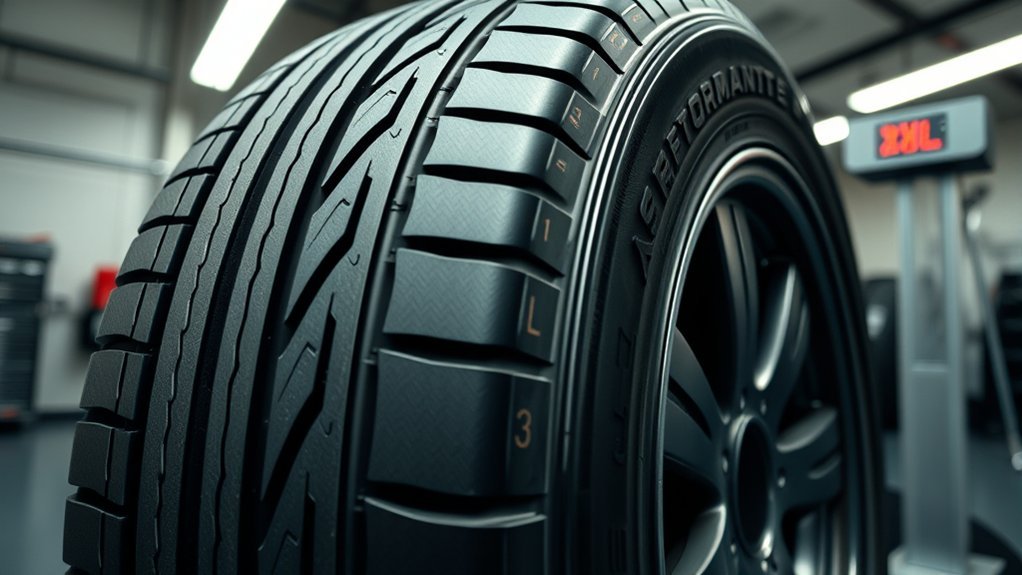
XL means Extra Load. XL tires are built to carry more load than standard-load versions of the same size when inflated to the proper higher pressure. You may also see RF for reinforced tires, and some newer tires may use an HL prefix for high-load applications.
XL is not just a marketing upgrade. If your vehicle placard calls for an XL tire, treat it as a requirement. Installing a standard-load tire with the wrong load rating can reduce load capacity and safety margin.
A higher load label only helps when the tire is the correct size, properly inflated, and matched to the vehicle’s required service description.
[Products Worth Considering]

The Topeak SmartGauge D2 delivers precise digital tire pressure readings for bikes, motorcycles, and sports equipment up to 250 psi (17 bar). Its rotating SmartHead works with both Presta and Schrader valves, so you can check pressure quickly without adapters. The LCD display makes it easy to read results in psi, bar, or kg/cm² with an included CR2032 battery for immediate use.

The SAFELIFE dial tire tread depth gauge measures tread depth in 1/32 inch increments with clear, easy-to-read 2-inch dial face. Color zones using a traffic light system help you quickly judge whether tread is low, marginal, or ample for safer driving. Built with a durable zinc cast body and a metal detect probe for precise, comfortable use across cars, motorcycles, trucks, and buses.

A concentrated tire and tube mounting compound designed to help simplify mounting rubber tires and tubes on passenger, semi truck, construction, and OTR applications. Its ultra-thick formula packs beads effectively and includes rust inhibitors to help protect against corrosion during use.
How to Choose the Right Tire Rating
Start with the vehicle, not the tire rack. Your vehicle manufacturer already specifies the size, load capacity, speed rating, and cold inflation pressure needed for safe operation.
[Products Worth Considering]

Vigorder rubber cement glue delivers superior adhesion and cures quickly within about 30 seconds for seamless rubber bonding. Once cured, it helps provide a strong, durable, waterproof seal that holds up to vehicle weight, pressure, and heat. Suitable for cars, motorcycles, trucks, bicycles, and off-road tires, it’s designed for emergency patch and maintenance repairs.

Monitor tire tread wear with a smart, color-coded depth gauge that shows clear condition ranges at a glance. The bar is range marked for fast, easy readings, helping you maintain safer traction and performance. Each gauge is portable with a pocket clip, and the set includes 20 units for daily use and sharing.

This 3-piece wheel and tire brush set makes it easy to clean light, medium, and heavy dirt from wheels, rims, tires, and exterior surfaces. It includes both soft and stiff bristle options for gentle scrubbing and tough grime removal, helping lift brake dust and road buildup. The long-handle design supports comfortable cleaning across cars, trucks, SUVs, RVs, motorcycles, and more, with simple care instructions to restore brush shape.
Match Vehicle Specs
- Read the driver-side door placard. Look for tire size and cold inflation pressure.
- Check the owner’s manual. This is especially important for optional wheel sizes, towing, winter tires, and performance trims.
- Match or exceed the load index. Do not go below the required load index.
- Match or exceed the speed rating. Keep the vehicle’s original performance and handling expectations in mind.
- Confirm the full size. A 102V rating does not guarantee the tire fits; the full size must match.
Balance Load and Speed
The right tire needs both adequate load capacity and the correct speed rating. Do not trade load capacity for a higher speed symbol. For most drivers, a tire that exactly matches the vehicle placard is better than a tire that looks more “performance” on paper but has the wrong size, load range, or seasonal design.
| If your vehicle requires… | Best replacement choice |
| 102V | Same size with 102V or higher approved service description |
| 102V XL | Same size with required XL/RF marking and equal or higher load/speed rating |
| Staggered front/rear sizes | Use the exact front and rear sizes listed by the manufacturer |
| AWD vehicle | Match size, type, tread depth, and ratings carefully to avoid drivetrain issues |
Frequently Asked Questions
What is the difference between a 102H and a 102V tire?
A 102H tire and a 102V tire have the same load index, so both are rated for 1,874 pounds per tire when properly inflated. The difference is speed rating: H is rated up to 130 mph, while V is rated up to 149 mph under specified conditions. Use the rating your vehicle requires.
What tire rating is better, H or V?
Neither rating is automatically “better” for every driver. V has a higher speed rating than H, but the best choice is the rating your vehicle manufacturer specifies. A higher speed rating may change ride feel, cost, and treadwear depending on the tire model.
What does 245/50R20 102V mean?
245/50R20 102V means the tire is 245 mm wide, has a sidewall height equal to 50% of that width, uses radial construction, fits a 20-inch wheel, has a 102 load index, and has a V speed rating.
What does 102 mean on tires?
102 is the tire’s load index. It means the tire can carry up to 1,874 pounds, or 850 kg, per tire when properly inflated and used within its rated conditions.
Can I replace 102V tires with 102W tires?
Usually, yes, if the tire is the correct size and type for your vehicle. W is a higher speed rating than V, and 102 keeps the same load index. Still, confirm the full tire size, load range, and fitment before buying.
Can I use a tire with a lower load index than 102?
Do not use a lower load index unless the vehicle manufacturer specifically approves it for your exact vehicle and tire size. A lower load index can reduce load capacity and increase heat stress.
Does 102V mean the tire is an XL tire?
No. 102V tells you the load index and speed rating. XL, RF, or HL is a separate marking that tells you the tire is built for a higher load-pressure category. Check the full sidewall and tire description.
Conclusion
When you see 102V on a tire, read it as a service description: 102 means the tire carries up to 1,874 pounds (850 kg) per tire, and V means it is rated up to 149 mph (240 km/h) under specified conditions. Those numbers only work as intended when the tire is the correct size, properly inflated, not overloaded, and suitable for your vehicle.
Before replacing tires, check the driver-side placard and owner’s manual. Match or exceed the required load index and speed rating, keep tire specs consistent across the vehicle, and ask a qualified tire professional if your vehicle has AWD, staggered sizes, towing needs, or winter-tire exceptions.
Sources
- Tire Rack — What Is Load Index? — backs the 102 load index value of 1,874 lb / 850 kg.
- Tire Rack — How Do I Check a Tire’s Speed Rating? — backs the V speed rating value of 149 mph / 240 km/h and rating-condition caveats.
- NHTSA TireWise — Tire Safety Ratings and Awareness — backs vehicle placard, owner’s manual, cold inflation, and tire safety guidance.
- Tire Rack — What Do Tire Sidewall Markings Mean? — backs sidewall marking and service description explanations.
- Tire Rack — What Are Load Ranges / Ply Ratings? — backs XL/RF/load-range explanations.

