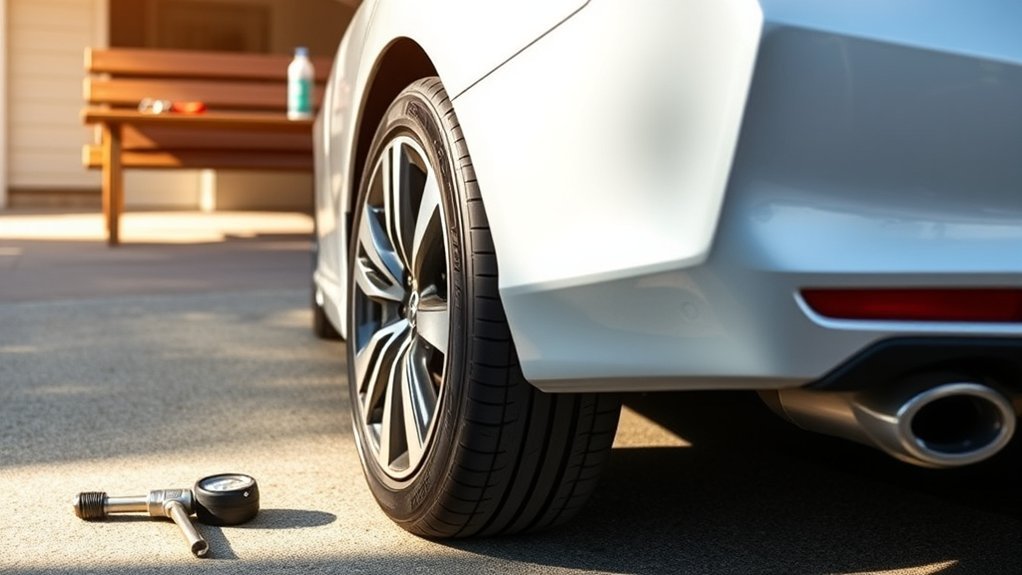
Getting more miles out of your Honda Accord tires comes down to a few repeatable habits: check cold tire pressure, rotate on schedule, watch tread depth, fix alignment problems early, and avoid extra heat from overloading or aggressive driving. You do not need special tools for most checks, but you do need consistency. A five-minute tire check once a month can help you spot problems before they shorten tire life or affect safety.
Quick Answer
To make Honda Accord tires last longer, check cold tire pressure monthly, rotate tires when the Maintenance Minder calls for it or about every 5,000 to 7,500 miles, inspect tread and sidewalls, balance new or reinstalled tires, fix alignment issues quickly, and avoid overloading or harsh driving.
Key Takeaways
- Use the PSI on your Accord’s driver-side doorjamb label, not the maximum pressure printed on the tire sidewall.
- Check tire pressure when the tires are cold, then recalibrate the TPMS after you adjust pressure or rotate tires.
- Treat 2/32 inch tread depth as the replacement minimum, but start shopping earlier around 4/32 inch if you drive often in rain.
- Have a professional inspect vibration, pulling, bulges, cracks, cord exposure, or uneven tread wear right away.
- Once tires reach five years old, inspect them more carefully each year; remove Accord tires from service after 10 years from the manufacture date.
At a Glance
| Time Required | 5 minutes for a monthly pressure and visual check; 20 to 30 minutes for a full tread, damage, and load check; longer if you rotate tires yourself. |
| Difficulty | Easy for pressure, tread, and damage checks; moderate for DIY rotation because the car must be lifted and supported safely. |
| Tools Needed | Tire pressure gauge, tread depth gauge or penny, flashlight, and your Accord’s doorjamb label. For DIY rotation, use proper jack stands, a lug wrench, and a torque wrench. |
| Cost | Usually free for basic checks. Rotation, balancing, and alignment costs vary by shop and may be included with some tire purchases or service plans. |
Tire Maintenance: Maintain Proper Tire Inflation for Longevity

Maintaining proper tire inflation is one of the easiest ways to extend the life of your Honda Accord tires. Honda says your tires need the proper type and size, enough tread, good condition, and correct inflation for safe operation. The correct PSI is listed on the driver’s doorjamb label or in your owner’s manual, not on the tire sidewall.
Check pressure when the tires are cold. Honda defines cold tires as tires on a vehicle that has been parked for at least three hours or driven less than 1 mile. If you check pressure after driving, the reading can be higher because the tires are warm. Add or release air until each tire matches the specified cold pressure.
Note: On many recent Accord models, Honda instructs you to recalibrate the TPMS after adjusting tire pressure. Recalibrate it again after tire rotation so the system can relearn the tires’ rolling characteristics.
Underinflated tires can wear unevenly, reduce handling and fuel economy, and run hotter. Overinflated tires can ride harshly, wear unevenly, and become more vulnerable to road hazards. At least once a month and before long trips, use a tire gauge to check all tires, including the spare if your Accord has one. Additionally, regular checks can prevent issues related to under-inflation and over-inflation, ensuring a safer driving experience.
Rotate Your Tires Regularly for Even Wear
To maximize the lifespan of your Honda Accord tires, rotate them regularly. A practical interval is every 5,000 to 7,500 miles, but you should also follow your Honda Maintenance Minder. On recent Accord models, Maintenance Minder sub-item 1 means tire rotation.
Rotation helps distribute wear because front and rear tires do different jobs. The front tires on most Accords handle steering and a large share of braking force, so they can wear differently than the rear tires. Rotating tires helps the full set wear more evenly and can delay replacement when the tires are otherwise in good condition.
Use the correct rotation pattern for your tire type. If your tires have a directional tread pattern, Honda says they should only be rotated front to back, not side to side. If the tires do not have rotation marks and are the same size, use the pattern shown in your Accord owner’s manual. Many dealerships, such as Carson Honda, even offer free tire rotations with tire purchases, making it an economical choice for maintenance. Additionally, ensuring proper tire pressure monitoring can further enhance tire longevity and safety.
Pro Tip: After every tire rotation, check pressure again and recalibrate the TPMS. This small step helps prevent a false warning and keeps the monitoring system useful.
How to Check Your Tire Tread Depth
Checking tire tread depth helps you know whether your Accord tires still have enough grip for wet roads, quick stops, and everyday driving. The fastest check is the penny test: place a penny into the tread groove with Lincoln’s head upside down and facing you. If you can see the top of Lincoln’s head, the tire is at or near 2/32 inch and should be replaced.
Treat 2/32 inch as the minimum replacement point, not the goal. If you drive often in heavy rain, start shopping earlier around 4/32 inch. AAA testing found that tires worn to 4/32 inch needed much more distance to stop on wet pavement than new tires. A tread depth gauge gives a more precise reading than a coin and is worth keeping in your glove box.
Measure several grooves across each tire: inner edge, center, and outer edge. If one area is much lower than the others, you may have an inflation, alignment, suspension, or rotation issue. Additionally, regular assessments help prevent hazards like blowouts or loss of traction during driving.
Warning: Do not keep driving on tires with exposed cords, sidewall bulges, deep cracks, or tread at 2/32 inch. Have the tire inspected or replaced before normal driving.
Get Your Wheels Aligned to Avoid Uneven Tire Wear
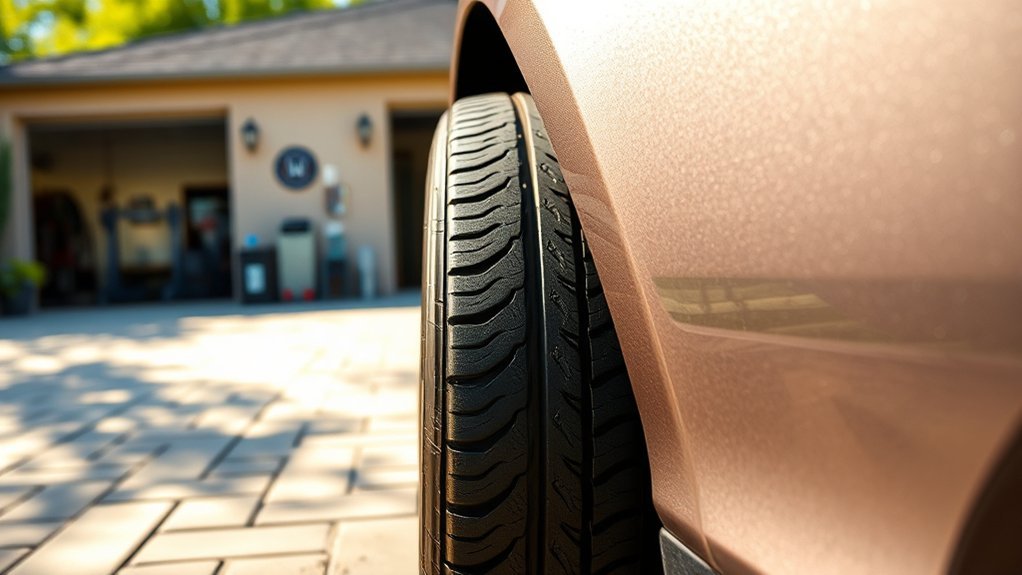
Getting your wheels aligned helps prevent uneven tire wear on your Honda Accord. Misalignment can make your tires scrub across the road instead of rolling cleanly. That extra friction can shorten tire life and make the car feel less stable.
You do not always need an alignment on a fixed calendar date, but an annual check is a smart habit if you drive on rough roads, hit potholes, or notice uneven tread wear. Honda’s tire inspection guidance says uneven tread wear should be checked by a dealer. Additionally, maintaining proper tire pressure management will further help in extending tire life and ensuring optimal performance.
[Products Worth Considering]

The SAFELIFE dial tire tread depth gauge measures tread depth in 1/32 inch increments with clear, easy-to-read 2-inch dial face. Color zones using a traffic light system help you quickly judge whether tread is low, marginal, or ample for safer driving. Built with a durable zinc cast body and a metal detect probe for precise, comfortable use across cars, motorcycles, trucks, and buses.

Monitor tire tread wear with a smart, color-coded depth gauge that shows clear condition ranges at a glance. The bar is range marked for fast, easy readings, helping you maintain safer traction and performance. Each gauge is portable with a pocket clip, and the set includes 20 units for daily use and sharing.

Measure tire tread depth quickly and accurately with this LUMITECO dial gauge that reads in 1/32" increments up to 14/32". The color-coded green/yellow/red zones make it easy to judge tire wear and know when replacement is needed. A rugged, compact design with a protective pouch helps keep the gauge ready for use on cars, trucks, motorcycles, and more.
Prevent Uneven Tire Wear
When you neglect wheel alignment, uneven tire wear can sneak up on you. You might notice feathered tread edges, excessive wear on one shoulder, or a steering wheel that sits crooked while you drive straight. These signs point to a tire or suspension issue that needs attention.
Pair alignment checks with tire rotations. Rotation spreads normal wear across all four tires, while alignment helps each tire meet the road at the correct angle. Together, they help your tires wear more evenly and keep your Accord tracking straight.
Enhance Vehicle Handling
To maintain ideal vehicle handling, pay attention to how your Accord feels on a straight, level road. Misaligned wheels can make the car pull to one side or leave you correcting the steering more often than usual. You may also feel vibration, especially if a tire is out of balance or has internal damage.
If you get a professional alignment, ask for the before-and-after printout. The printout shows camber, caster, and toe readings, which helps you track whether the same problem returns. That record also gives a tire shop useful information if you later need a warranty or wear-pattern inspection.
Extend Tire Lifespan
Maintaining proper wheel alignment helps extend tire lifespan by reducing uneven contact with the road. It also helps your Accord feel more predictable while braking, turning, and driving at highway speeds. Combine alignment checks with regular rotation, pressure checks, and balancing for the best result.
| When to Check Alignment | Why It Helps | Common Warning Sign |
|---|---|---|
| About once a year | Catches gradual wear issues | Uneven tread wear |
| After a hard pothole hit | Checks for knocked-out alignment | Pulling to one side |
| After suspension work | Confirms correct geometry | Crooked steering wheel |
| When tires wear on one edge | Prevents premature replacement | Feathered or shoulder wear |
| When vibration or shaking appears | Helps separate balance, tire, and alignment problems | Steering wheel vibration |
Balance Your Tires for a Smooth Ride
Balancing your tires is an essential step in keeping your Accord smooth and stable. When a tire and wheel assembly has uneven weight distribution, you may feel vibration through the seat, floor, or steering wheel. That vibration can make driving uncomfortable and may point to tire, wheel, or suspension problems.
Honda recommends proper balancing for new tires and tires that have been removed and reinstalled. If you feel a consistent vibration while driving, have the tires checked by a dealer or qualified tire shop. Regular tire balancing is especially important when you install new tires, repair a puncture, or notice shaking at highway speeds. Regularly balancing your tires can also enhance steering response and handling predictability, leading to a safer driving experience.
Using electronic spin balancers during service helps technicians find the right wheel-weight placement. Balanced tires reduce vibration, support even tread contact, and make your Accord feel more refined on long drives.
[Products Worth Considering]

Accurately measure tire tread depth with a calibrated gauge marked from 0 to 1 inch in 1/32 inch increments. The color-coded bar helps you quickly identify tread condition ranges, supporting safe driving for trucks, motorcycles, automobiles, and passenger vehicles.

The Ziopetru adjustable magnetic wheel alignment tool helps you check and restore camber and caster positioning after removing and reinstalling undercarriage components. With a clear leveling/bubble measurement system and an easy zeroing adjustment knob, it supports precise horizontal angle checking. The strong magnetic base mounts to metal surfaces for convenient use at home on cars, motorcycles, trucks, vans, and SUVs.

Steelman white tire marking crayons provide high-contrast, semi-permanent marks for repairing and inspecting tires and equipment. They write on wet or dry, smooth or coarse surfaces including rubber, metal, glass, and wood, making them ideal for puncture location and damage outlining. The lead- and zinc-free crayons resist weather and fading yet wipe away when you no longer need the marks.
Drive Smoothly to Extend Tire Life
Driving smoothly is not just about comfort. It also helps your Honda Accord tires last longer. Hard acceleration, quick braking, fast cornering, and constant high-speed driving create extra heat and friction. That stress can wear the tread faster and make existing tire problems worse.
Use smooth acceleration, gentle braking, and steady steering inputs. Avoid potholes and rough shoulders when you can do so safely. FuelEconomy.gov also notes that aggressive driving wastes fuel, and smooth driving is safer for you and others.
Regularly checking your tire pressure and keeping it within the recommended PSI enhances handling and longevity. Additionally, steer clear of potholes and rough surfaces, as they can damage tires and wheels over time. Monitoring road hazards can further help prevent potential damage to your tires.
A tire that lasts longer is usually not the result of one trick. It comes from correct PSI, even rotation, smooth driving, and quick action when wear patterns appear.
Check for Uneven Wear and Damage
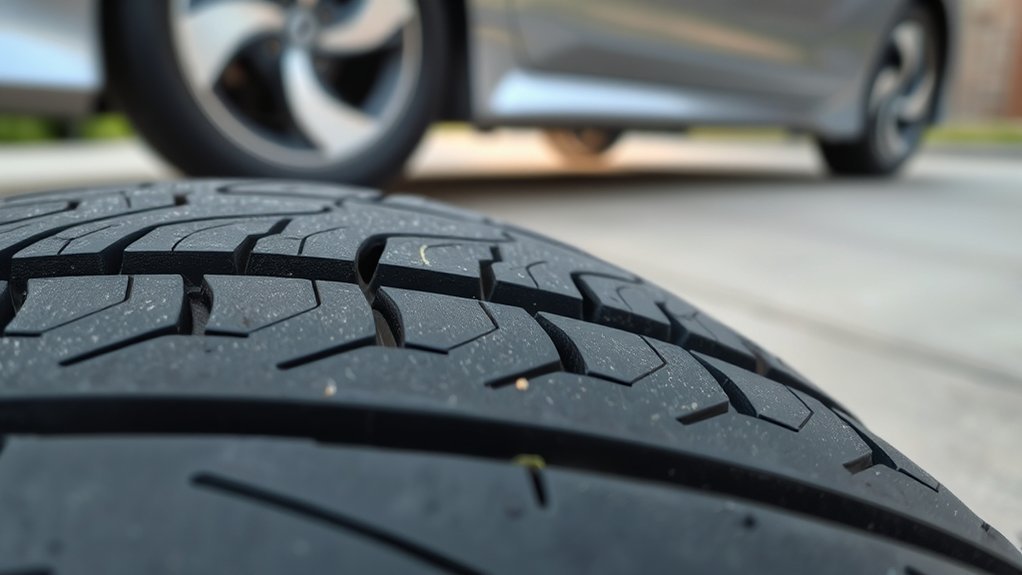
Regular inspections of your Honda Accord tires are crucial for spotting uneven wear and damage. Every time you check inflation, also examine the tires and valve stems. Look for bumps, bulges, cuts, splits, cracks, exposed fabric, punctures, missing valve caps, and objects stuck in the tread.
Check the inner shoulder, center tread, and outer shoulder of each tire. Center wear can point to overinflation. Both-edge wear can point to underinflation. One-edge wear can point to alignment or suspension issues. Cupped or scalloped wear may suggest balance, shock, strut, or suspension problems.
Use the penny test to assess tread depth; if Lincoln’s head is fully visible, it’s time for new tires to help maintain safety. For a more exact reading, use a tread depth gauge. Furthermore, be vigilant for signs of sidewall damage that can compromise tire integrity and safety.
Avoid Overloading Your Vehicle for Safety
Overloading your Honda Accord can lead to serious tire issues, including extra heat, accelerated wear, and a higher risk of failure. The Tire and Loading Information label on the driver’s doorjamb lists the combined weight limit for occupants and cargo. For example, the 2024 Accord owner’s manual lists a maximum load of 850 lb for that model, but you should always use the label on your own vehicle.
Maintaining proper tire pressure is essential for reducing blowout likelihood and ensuring your tires last longer. Load matters too. A properly inflated tire can still be overstressed if the vehicle carries more weight than Honda allows.
Check Weight Limits
To keep your Honda Accord tires in prime condition, know and respect your vehicle’s load limit. The doorjamb label shows how much total weight your Accord can carry, including passengers, cargo, accessories, and any trailer tongue load if towing applies. Do not exceed that number.
Overloading or improper loading can affect handling and stability. It can also increase heat in the tires, which shortens tire life and can raise the risk of a blowout. If you are packing for a road trip, subtract passenger weight first, then use the remaining capacity for luggage and cargo.
Distribute Load Evenly
While you might be tempted to load up your Honda Accord for a road trip, it is crucial to keep the weight distributed evenly. Proper cargo placement helps your vehicle handle predictably and reduces extra stress on one axle or corner. Put heavy items low and centered in the trunk when possible.
| Cargo Placement | Impact on Performance |
|---|---|
| Front Heavy | Can affect steering feel and braking balance |
| Rear Heavy | Can affect stability and rear tire load |
| Uneven Load | Can create handling and tire-wear issues |
| Balanced Load | Supports predictable handling and even stress |
| Overloaded | Raises risk of overheating, tire failure, and poor handling |
Remove Unnecessary Items
Clearing out unnecessary items from your Honda Accord is not just about tidiness; it is a smart move for safety, fuel economy, and tire health. FuelEconomy.gov says an extra 100 pounds in a vehicle can reduce MPG by about 1%, with the effect depending on the vehicle’s weight.
To reduce extra load, regularly remove items you do not need:
- Old sports equipment
- Unused tools
- Extra clothing or boxes
- Heavy emergency items you no longer use
Keep essential safety gear, but avoid turning the trunk into long-term storage. A lighter, properly loaded Accord puts less stress on its tires and can feel more responsive on the road.
Store Seasonal Tires Properly for Longevity
Properly storing seasonal tires is essential for maximizing their lifespan and maintaining performance when you need them again. Heat, sunlight, moisture, ozone, and poor storage positions can speed up rubber aging or distort the tire shape.
| Step | Action | Purpose |
|---|---|---|
| Clean Tires | Remove dirt, brake dust, and road grime before storage. | Helps reduce long-term rubber and wheel contamination. |
| Dry Completely | Let tires dry before bagging or covering. | Helps prevent trapped moisture. |
| Use Covers | Store in tire bags or covers. | Protects from dust, sunlight, and ozone exposure. |
| Choose the Right Place | Use a cool, dry, dark location away from electric motors and chemicals. | Slows rubber aging and contamination. |
| Check Before Reinstalling | Inspect tread, sidewalls, valve stems, and pressure. | Catches aging or storage damage before driving. |
Store your tires in a cool, dry place away from direct sunlight to help prevent rubber degradation. Additionally, ensure proper tire positioning to preserve their shape and performance. Avoid stacking heavy objects on top, as this can distort the tire or wheel assembly.
Replace Aging Tires Before They Fail
As time goes by, tire rubber naturally deteriorates, even when tread depth still looks acceptable. Age, heat, sunlight, storage conditions, road conditions, driving habits, loading, and maintenance history all affect tire life.
Honda recommends annual inspections once tires reach five years old. Honda also says all tires, including the spare, should be removed from service after 10 years from the date of manufacture, regardless of condition or tread wear. NHTSA also warns that older tires are more prone to failure and that some manufacturers recommend replacement at six to 10 years.
- Check the DOT Code: Locate the Tire Identification Number on the sidewall. The last four digits show the week and year of manufacture.
- Inspect Regularly: Look for cracks, discoloration, bulges, exposed cords, or unusual vibration.
- Schedule Annual Checks After Five Years: Have a tire professional inspect aging tires even if tread remains.
- Replace by 10 Years: Remove Accord tires from service after 10 years from the manufacture date, including the spare if equipped.
- Use Correct Replacements: Choose tires that match Honda’s required size, load range, speed rating, and cold pressure rating. Additionally, prioritize tread depth checks to ensure optimal traction and performance.
[Products Worth Considering]

The TYAMATE TM8 solar-powered wireless TPMS delivers real-time tire pressure and temperature monitoring with six alarm modes for safer driving. A vibrant color LCD display shows readings clearly while windshield mounting keeps it hands-free and easy to read. With a wide 0–87 PSI range, strong 433.92 MHz signal transmission, and quick sensor pairing, it’s ideal for RV, sedan, SUV, MPV, and truck use.

Keep your tires properly inflated with this analog VONDIOR tire pressure gauge, designed for fast, easy readings without batteries. The swiveling, two-axis hose and large glow dial help you measure at any tire angle with instant visibility. Built with a protective rubber shield, it supports durable, low-maintenance use for cars and trucks.
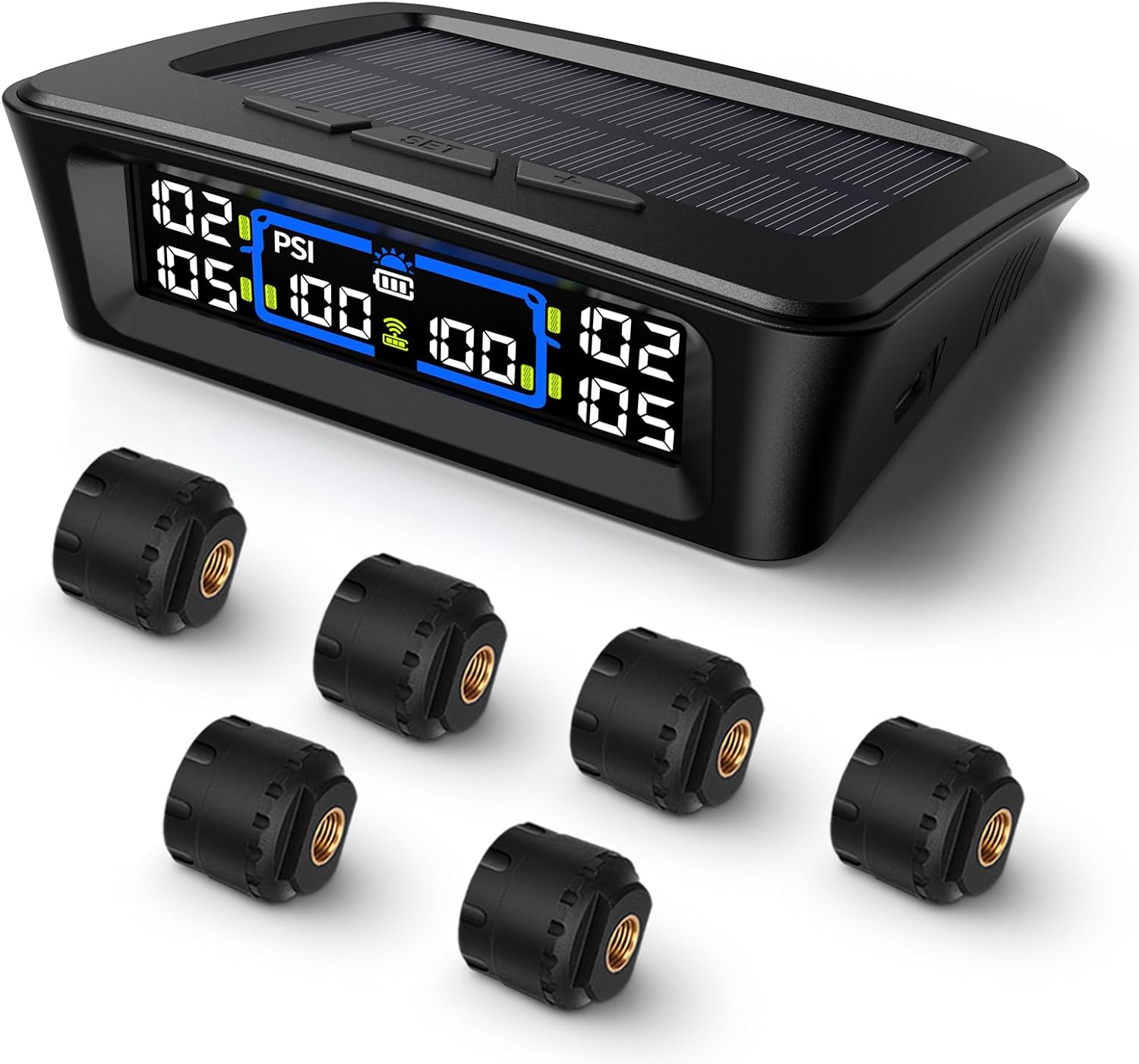
The Tymate TM12 RV TPMS delivers real-time tire pressure and temperature monitoring with a stable 433Hz display for safer long-distance driving. It supports simultaneous monitoring across vehicle and trailer zones, includes six alarm modes for pressure, temperature, leakage, battery, and signal loss, and features easy DIY installation with auto calibration. Power is supplied via USB-C charging or solar recharging, with a wide 0–144 PSI range and up to 50 ft signal coverage for RVs and towable trailers.
Frequently Asked Questions
How many miles do Honda Accord tires last?
Many all-season or touring tires on a Honda Accord may last about 40,000 to 60,000 miles, but the real number depends on the tire model, treadwear rating, road conditions, driving habits, inflation pressure, rotation, alignment, loading, and age. Check the warranty and maintenance guidance for your specific tires.
How often should I rotate Honda Accord tires?
Follow your Honda Maintenance Minder first. On recent Accord models, sub-item 1 means tire rotation. As a practical habit, many drivers rotate about every 5,000 to 7,500 miles, or sooner if uneven wear appears. Recalibrate the TPMS after rotating tires.
What tire pressure should I use for a Honda Accord?
Use the cold tire pressure listed on your Accord’s driver-side doorjamb label or owner’s manual. Do not use the maximum PSI printed on the tire sidewall as your target pressure. Pressure can vary by model year, trim, tire size, and load conditions.
When should I replace Honda Accord tires by tread depth?
Replace tires when tread reaches 2/32 inch, if wear indicators are flush with the tread, or if the tire fails the penny test. If you drive often in rain, start shopping earlier around 4/32 inch because wet braking and hydroplaning resistance decline before the legal minimum.
Do I need an alignment every year?
An annual alignment check is a smart preventive habit, especially if you drive on rough roads. You should also check alignment after hitting a pothole or curb, after suspension work, or whenever you notice pulling, a crooked steering wheel, vibration, or uneven tread wear.
How old is too old for Honda Accord tires?
Once tires reach five years old, have them inspected annually. Honda says all tires, including the spare, should be removed from service after 10 years from the manufacture date, regardless of tread depth or appearance.
Conclusion
Making your Honda Accord tires last longer is not complicated, but it does require regular attention. Check cold PSI every month, rotate tires on schedule, recalibrate TPMS after pressure changes or rotation, inspect tread and sidewalls, and fix vibration or pulling before it becomes expensive.
Also watch tire age, load limits, and driving habits. Smooth driving, proper cargo weight, good storage, and correct replacement tires all help your Accord stay safer, smoother, and more efficient. Treat tire care as routine maintenance, and you will get better value from every set of tires.
Sources
- Honda Accord Owner’s Manual: Checking Tires — cold pressure, monthly checks, inspection points, balancing, and TPMS calibration after pressure adjustment.
- Honda Accord Owner’s Manual: Tire Rotation — rotation guidance and TPMS calibration after rotation.
- Honda Accord Owner’s Manual: Maximum Load Limit — load label, cargo calculation, GVWR, and overloading warning.
- Honda Accord Owner’s Manual: Tire Service Life — annual inspections after five years and 10-year removal from service.
- NHTSA TireWise — tire pressure, tread depth, rotation, balance, alignment, and aging tire safety guidance.
- FuelEconomy.gov: Driving More Efficiently — smooth driving and extra cargo weight effects on fuel economy.
- AAA: Worn Tires Put Drivers at Risk — wet stopping-distance impact at 4/32 inch tread depth.