
Penny Test for Toyota RAV4 Tires: 2/32 Tread Guide
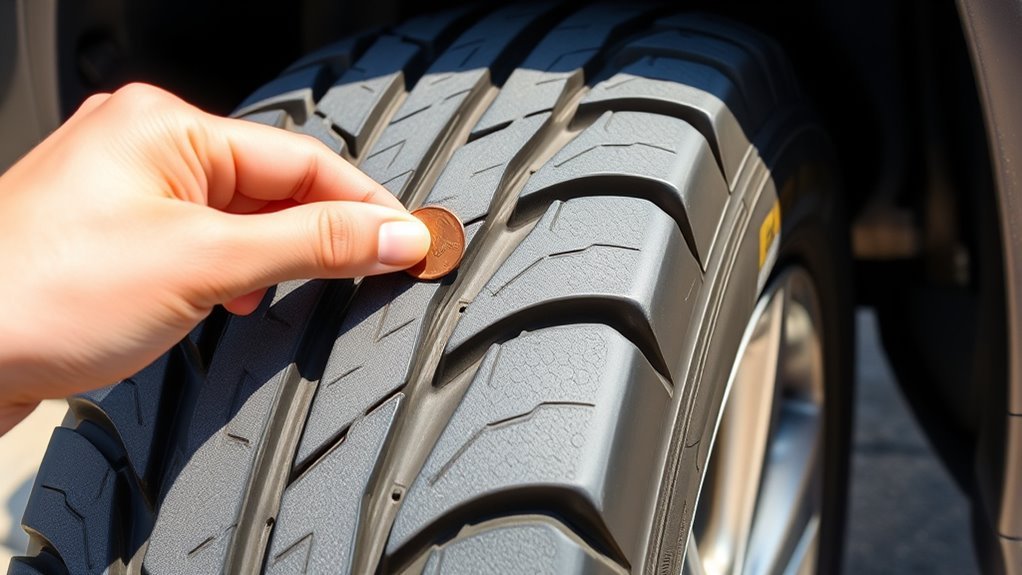
Low tire tread can turn a normal stop into a skid, especially in rain. The penny test gives you a fast way to spot worn tread on your Toyota RAV4 before traction drops too far. You’ll learn how to check each tire, what the result means, and when to replace or inspect your tires.
Quick Answer
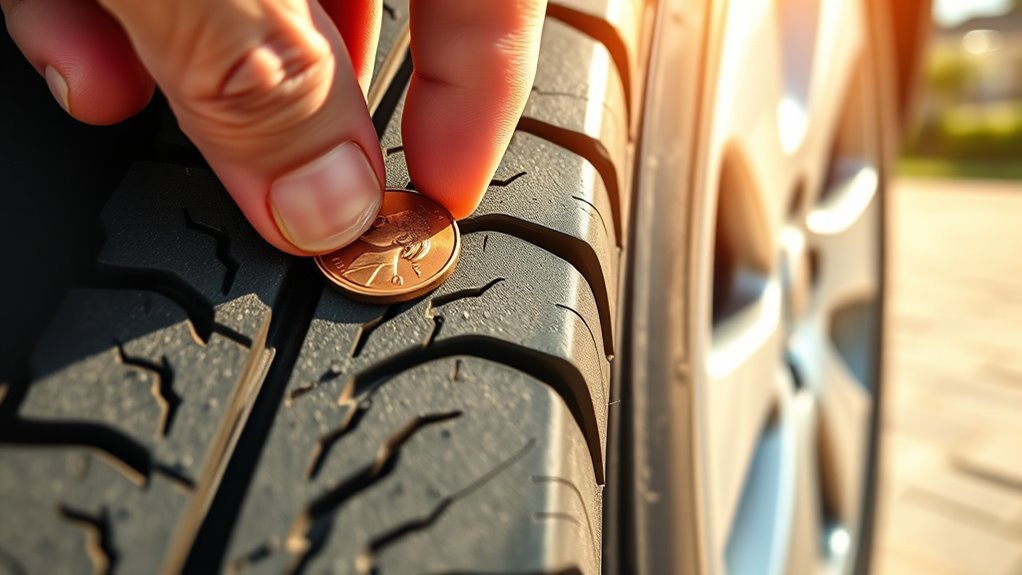
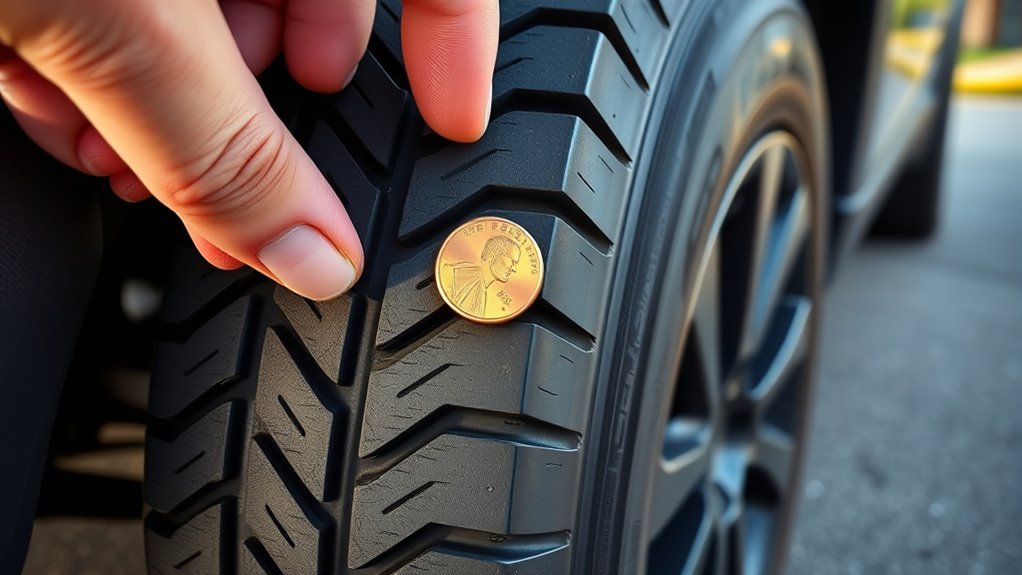
Place a penny upside down into a tire tread groove with Lincoln’s head facing down. If the tread covers part of Lincoln’s head, the tread is above the basic 2/32-inch replacement point. If you can see all of Lincoln’s head, replace the tire soon and avoid risky driving in wet conditions.
Key Takeaways
- Use the penny test as a quick screening tool, not a full tire inspection.
- Replace tires when tread reaches 2/32 inch, or sooner if wet grip feels poor.
- Check several grooves on each tire because tread can wear unevenly.
- Inspect cracks, bulges, age, pressure, and wear patterns along with tread depth.
- Ask a tire professional to inspect any tire that shows damage or uneven wear.
Why Checking Tire Tread Depth Matters for Your Toyota RAV4
Checking your tire tread depth helps your Toyota RAV4 keep steady grip, safe braking, and good control. Worn tread gives water less room to move away from the tire. That can raise the risk of hydroplaning on wet roads.
The National Highway Traffic Safety Administration (NHTSA) advises drivers to replace tires when tread reaches 2/32 inch. Many states also use 2/32 inch as the legal minimum tread depth for passenger tires.
Regular checks help you catch tire problems before they affect your drive. They can also reveal low pressure, poor alignment, suspension wear, or tires that need rotation.
[Products Worth Considering]

The JACO FlowPro Tire Inflator measures, inflates, and airs down tires up to 100 PSI with battery-free operation and ±2% accuracy after calibration. It features a glowing pressure dial for night visibility, a heavy-duty steel build with a hybrid hose, and a precision push-to-inflate thumb trigger. The patented Lightning Air Chuck locks on for a secure seal, and the kit includes quick-connect hardware for easy inline use with your air compressor.

This portable cordless tire inflator delivers fast, efficient inflation for cars, motorcycles, bikes, and sports balls with a digital pressure gauge. Use the one-click PSI preset with auto shut-off for accurate, hands-free topping to your target pressure up to 150 PSI. It’s compact and rechargeable with a built-in emergency LED light plus valve adapters and accessories for quick, ready-to-go use.

EVOULTES heavy duty tire inflator with an integrated gauge delivers accurate pressure readings from 10–120 PSI, helping you inflate, deflate, and check tires in one tool. The 16.5-inch extended dual-head air chuck with swivel base reaches hard-to-access dual wheel valves on trucks and RVs. A brass trigger core and side-mounted air release valve make operation smooth, with standard 1/4" NPT threading and quick-connect compatibility for easy setup.
What You’ll Need Before You Start
You only need a few simple items to check your tread depth. Park your RAV4 on level ground and wait until the tires are cool if you’ve just driven.
- A clean penny
- A safe, flat parking spot
- Good lighting
- A tire tread depth gauge, if you want a more exact reading
Estimated time: Plan on about 5 to 10 minutes to check all four tires.
How to Perform the Penny Test for Tire Tread Depth
The penny test helps you check whether your tire tread has reached the basic replacement point. It works best when you check more than one groove on each tire.
Materials Needed
Start with a penny and make sure you can see the tire grooves clearly. You can also use a tread depth gauge if you want a measured result in 32nds of an inch.
- A penny, held with Lincoln’s head facing down
- Your RAV4 tires, checked one at a time
- A safe, flat surface where the vehicle will not roll
Step-by-Step Instructions
- Park safely. Stop on a flat surface, shift into Park, and set the parking brake.
- Place the penny in a groove. Hold the penny upside down with Lincoln’s head pointing into the tread.
- Check Lincoln’s head. If the tread covers part of his head, that spot has more than 2/32 inch of tread.
- Repeat the test. Check the inner, center, and outer grooves on each tire.
- Act on the lowest reading. If any main groove shows all of Lincoln’s head, plan tire replacement.
Warning: Do not rely on one groove, since uneven wear can hide unsafe tread on another part of the tire.
Tips for Accuracy
Use the penny test the same way each time so your results stay clear. Check the tire surface where wear looks worst, but don’t stop there.
- Check several spots: Test the inner, middle, and outer tread grooves on each tire.
- Use the same coin position: Keep Lincoln’s head facing down for each check.
- Confirm with a gauge: Use a tread depth gauge if the result looks close.
- Check monthly: Add tread checks to your normal tire pressure routine.
What the Penny Test Result Means
If the tread covers part of Lincoln’s head, your tire has more than about 2/32 inch of tread in that groove. That does not always mean the tire performs well in rain, snow, or heavy braking.
If you can see all of Lincoln’s head, the tire has reached the common replacement threshold. Schedule tire replacement and limit wet-weather driving until you fix the issue.
A tread depth gauge gives a clearer reading than a coin. Many tire shops can also check tread depth, pressure, age, and wear patterns during a basic inspection.
Signs of Worn Tires Beyond the Penny Test
The penny test checks tread depth, but tire safety depends on more than tread alone. Look for cracks, bulges, age, vibration, and uneven wear.
Visible Cracks And Bulges
Inspect your tires for visible cracks and bulges each month. Cracks can point to aging rubber, while bulges can signal internal tire damage.
- Cracks: Check sidewalls and tread blocks for splits or dry, brittle rubber.
- Bulges: Look for raised areas on the sidewall or tread surface.
- Fast action: Replace or inspect tires with deep cracks, bulges, or exposed cords.
Uneven Wear Patterns
| Wear Pattern | Likely Cause | Recommended Action |
|---|---|---|
| Outer Edge Wear | Low inflation pressure | Check and correct tire pressure |
| Center Wear | High inflation pressure | Adjust pressure to the door-jamb label |
| One-Sided Wear | Misalignment | Schedule a wheel alignment |
| Patchy Wear | Suspension or balance issue | Ask a mechanic to inspect the vehicle |
Uneven wear often means the tire has a separate issue that the penny test cannot explain. Check tire pressure first, then inspect alignment, rotation history, and suspension parts.
Tire Age Indicators
Tire age matters even when the tread looks deep. Check the Department of Transportation (DOT) tire identification number on the sidewall. The last four digits show the week and year the tire was made.
For example, a code ending in 2424 means the tire was made in the 24th week of 2024. Many tire makers advise inspection as tires age and replacement when age, wear, or damage makes them unsafe.
- Inspect sidewalls for cracks, cuts, bulges, or dry rubber.
- Look for tread wear bars that sit level with the tread surface.
- Replace tires that show damage, repeated air loss, or unsafe tread depth.
Best Practices for Maintaining Tire Tread Depth and Longevity
Good tire habits help your tread wear evenly and last longer. They also help your RAV4 brake, turn, and ride the way it should.
| Best Practice | What To Do |
|---|---|
| Monthly Tread Checks | Use the penny test or a tread depth gauge once a month. |
| Proper Tire Inflation | Set pressure to the value on the driver’s door-jamb label. |
| Regular Tire Rotation | Follow your Toyota maintenance schedule for rotation intervals. |
| Alignment Checks | Check alignment when the vehicle pulls, shakes, or wears one side faster. |
Keep records of rotations, pressure checks, and tire replacements. Those notes can help a technician spot wear trends before they become costly.
[Products Worth Considering]

This portable cordless tire inflator delivers up to 160 PSI with fast 17 L/min airflow to help you quickly top up tires and get back on the road. It features dual power mode, running on a 21V rechargeable battery or a 12V DC adapter for convenient roadside use. An automatic shut-off with digital pressure gauge helps prevent overinflation, and a built-in LED light improves visibility in low-light conditions.
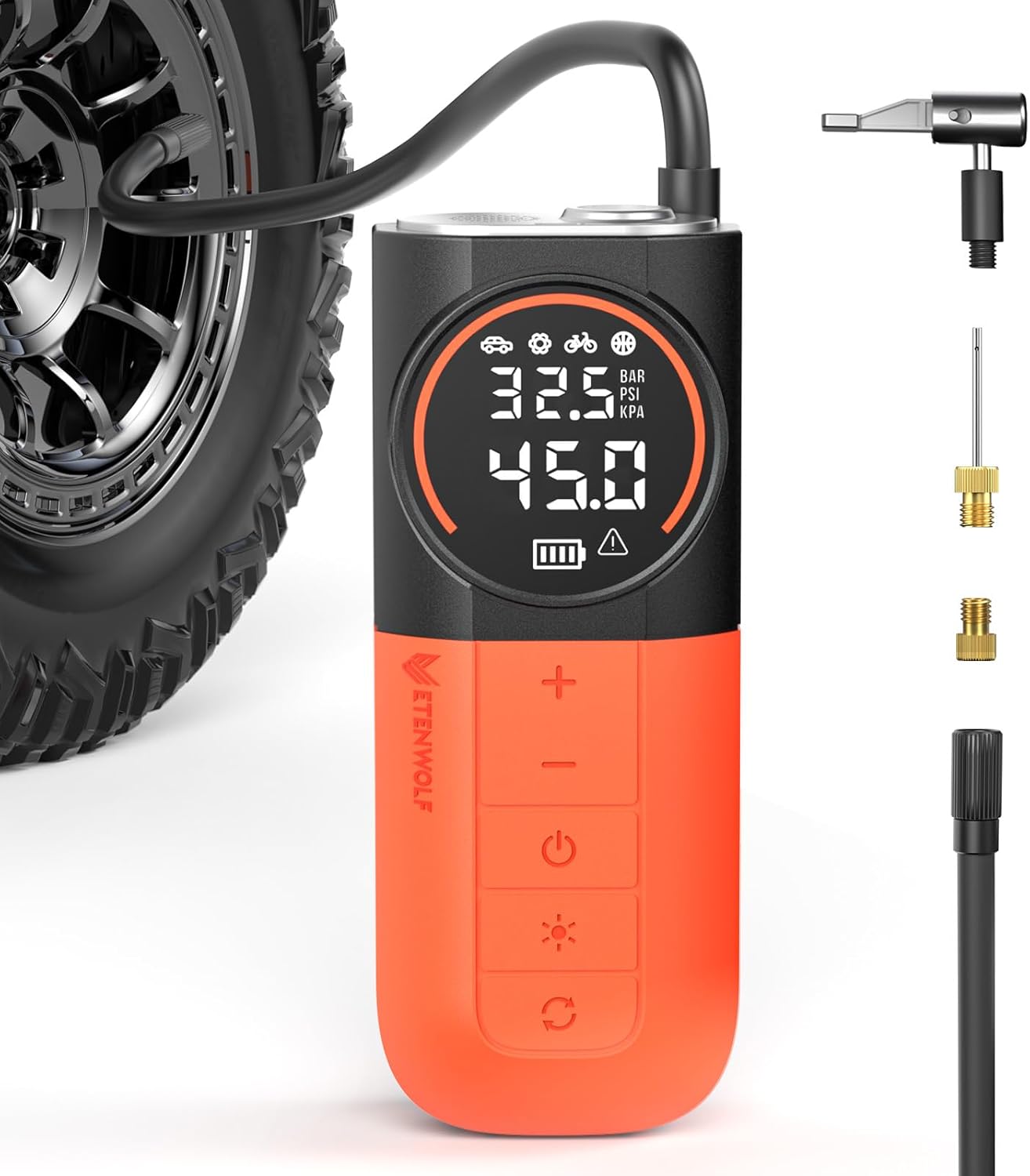
The ETENWOLF S1 cordless tire inflator delivers ultra-fast inflation with up to 160 PSI and a 20 L/min airflow for quicker tire top-offs. Its 5200mAh battery and cooling system support inflating many tires and sports balls on a single charge, while the digital pressure gauge and multi-unit display help you reach the right pressure accurately. With preset modes, pressure memory, an auto-stop feature, and an LED flashlight, it’s built for easy roadside and everyday use.
When and How Often Should You Check Your Tire Tread?
Check your tire tread depth at least once a month. Also check it before long trips, after hitting a pothole, and when your RAV4 starts pulling, shaking, or slipping.
Regular tread checks help you catch wear early and reduce the chance of poor traction in bad weather.
- Look for tread wear bars across the main grooves.
- Check for uneven wear that points to pressure, alignment, or suspension problems.
- Inspect tire age, sidewalls, valve stems, and repeated air loss.
Pro tip: Keep a small tread depth gauge in your glove box for a more exact check than the penny test.
What to Do If Your Tires Fail the Penny Test?
If your tires fail the penny test, do not ignore the result. Low tread can reduce grip, increase stopping distance, and make wet roads more dangerous.
Schedule a tire inspection with a tire shop, dealership, or qualified mechanic. Ask them to check tread depth, age, pressure, alignment, and any signs of sidewall damage.
If only one tire shows severe wear, the problem may involve alignment, pressure, rotation habits, or suspension parts. Fix the cause before it damages your next set of tires.
Common Mistakes to Avoid When Checking Tread Depth
Small errors can make the penny test less useful. Avoid checking only one tire or only the easiest groove to reach.
- Do not test only the outside edge of the tire.
- Do not ignore cracks, bulges, vibration, or repeated air loss.
- Do not assume deep tread means the tire is safe if the tire is old or damaged.
- Do not use the penny test as a substitute for a professional inspection after a hard impact.
Frequently Asked Questions
How Many 32nds Does the Penny Test Check?
The penny test checks whether tread has reached about 2/32 inch. If you can see all of Lincoln’s head, the tread is at or below the common replacement point.
Is the Penny Test Accurate Enough for a Toyota RAV4?
The penny test works as a quick warning sign, but it does not give an exact measurement. Use a tread depth gauge or ask a tire professional if the result looks close.
Should You Replace Tires Before They Reach 2/32 Inch?
You may need replacement before 2/32 inch if you drive often in rain, snow, or rough conditions. Many drivers choose earlier replacement for better wet-weather grip.
Can Uneven Tread Wear Make One Tire Fail the Test?
Yes. One groove or one tire can wear faster because of low pressure, misalignment, poor rotation habits, or suspension issues. Treat the lowest tread reading as the most important result.
Where Is the DOT Date Code on a Tire?
The DOT code appears on the tire sidewall. The last four digits show the manufacture week and year, such as 2424 for the 24th week of 2024.
Safety Disclaimer: This article is for informational purposes only and does not replace a professional tire inspection. Ask a qualified tire technician or mechanic to inspect any tire with low tread, sidewall damage, vibration, repeated air loss, or uneven wear.
Conclusion
The penny test gives you a fast way to spot tire tread that has reached the basic replacement point. Check all four tires monthly, and use a tread depth gauge when you want a clearer reading.
If any tire fails the test, schedule an inspection and plan replacement before wet roads raise the risk. A few minutes of tire care can help your Toyota RAV4 feel safer, smoother, and more ready for the next drive.
References
- Tires — National Highway Traffic Safety Administration
- Vehicle Safety: Tires — National Highway Traffic Safety Administration
- U.S. Department of Transportation — U.S. Department of Transportation
- Toyota Warranty and Owner’s Manuals — Toyota

Related Articles

Why These 10 Wheel Locks Are Perfect for Your RAV4
Protecting your RAV4 starts before you lock the doors. Wheel theft is an avoidable cost and a hassle that interrupts your routine, and choosing…
Read More
10 Best 80000 Mile Tires for Rav4
You want tires that last, keep you safe, and save you money over the long run. Choosing 80,000 mile tires for your RAV4 matters…
Read More
10 Long Warranty Tires That Will Transform Your RAV4 Experience
You spend a lot of time behind the wheel of your RAV4, and the right tires change everything from ride comfort to fuel economy…
Read More