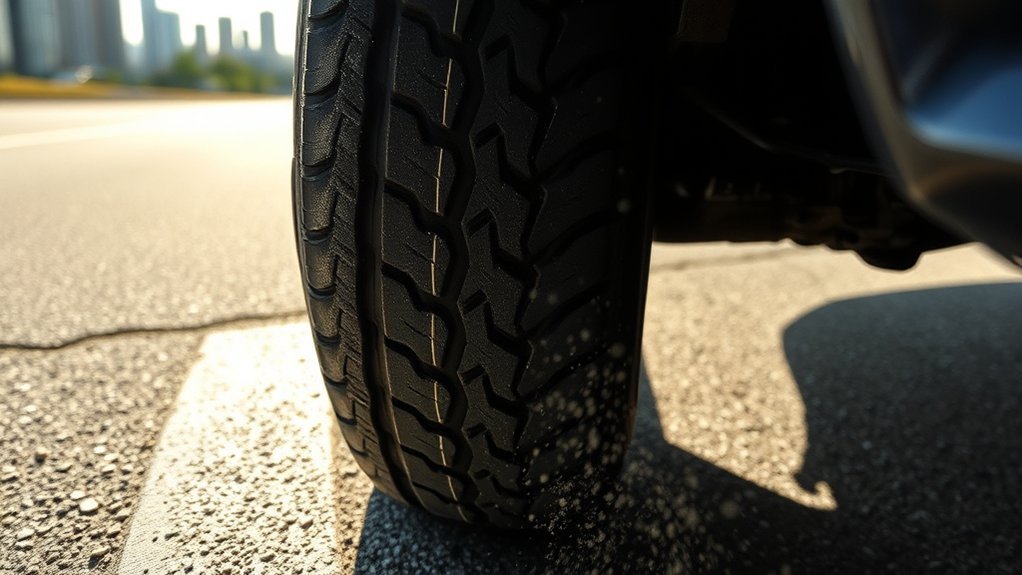
Your Honda Accord tires can last a long time, but mileage alone does not tell the whole story. Tire model, treadwear rating, pressure, rotation, alignment, road surface, climate, and driving style all affect how quickly the tread wears down. A careful owner may get many years from a good set, while aggressive driving or poor maintenance can shorten tire life fast.
Quick Answer
Honda Accord tires commonly last about 40,000 to 70,000 miles, but the real replacement point depends on tread depth, tire age, damage, pressure history, alignment, and driving conditions. Replace tires at 2/32 inch tread depth, sooner if they show cracks, bulges, uneven wear, vibration, or repeated pressure loss.
Key Takeaways
- Most Honda Accord tire life problems come from low pressure, skipped rotations, poor alignment, rough roads, heavy loads, or aggressive braking and cornering.
- Check tire pressure monthly when the tires are cold. Use the pressure on the driver-door tire label or your Honda owner’s manual, not the maximum PSI printed on the tire sidewall.
- Rotate tires about every 5,000 to 8,000 miles if your Accord tire setup allows it and the owner’s manual recommends it.
- Replace tires when tread reaches 2/32 inch, or earlier if you see cracks, bulges, exposed cords, sidewall damage, severe uneven wear, or old rubber.
At a Glance
| Time Required | 5 to 10 minutes for a monthly pressure and tread check |
| Difficulty | Easy for basic checks; professional help needed for alignment, balancing, bulges, vibration, and sidewall damage |
| Tools Needed | Tire-pressure gauge, tread-depth gauge or penny, flashlight, and your Accord tire label or owner’s manual |
| Cost | Usually free for basic checks; tire rotation, balancing, alignment, or replacement costs vary by shop and tire model |
Factors That Affect Honda Accord Tire Lifespan
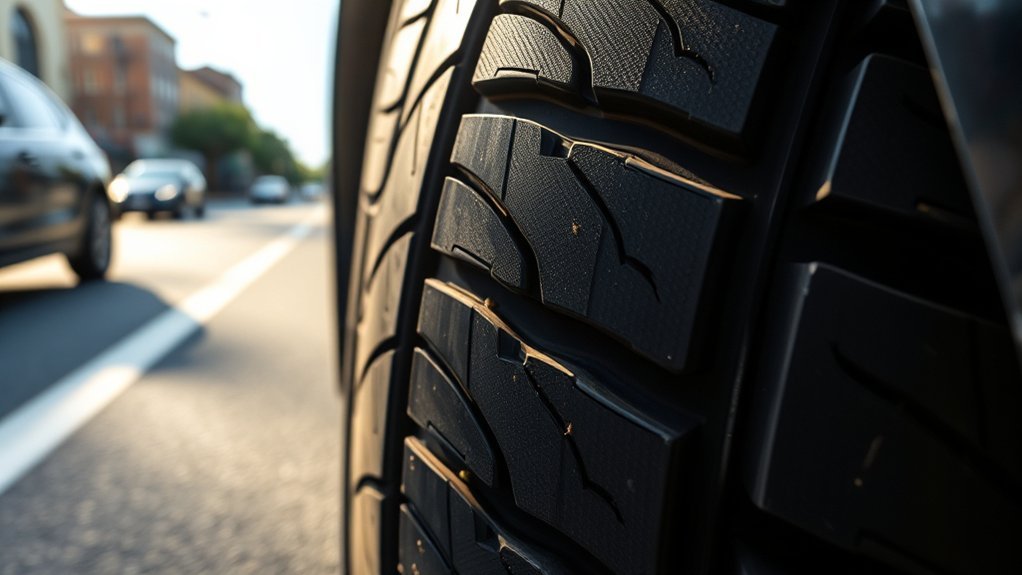
The biggest factors are tire quality, tire type, air pressure, wheel alignment, rotation schedule, tread depth, road conditions, climate, and the way you drive. A long-wearing touring tire may last longer than a sporty performance tire, but no mileage estimate is a guarantee. A tire with good tread can still be unsafe if it is old, cracked, damaged, or repeatedly losing air.
For the most accurate information, check the tire size, load rating, and inflation pressure listed on your Accord’s driver-door tire placard and in the official Honda owner’s manual search. Trim level, wheel size, and tire model can change the correct pressure and rotation guidance.
Note: The maximum PSI printed on a tire sidewall is not the recommended pressure for your Accord. Use the Honda tire label or owner’s manual for the correct cold inflation pressure.
How Many Miles Do Honda Accord Tires Last?
Many Honda Accord tires last about 40,000 to 70,000 miles, but the range can be lower or higher depending on the tire model and maintenance history. Some tires are built for comfort and fuel economy, some for all-weather traction, and some for sporty handling. Softer performance tires often wear faster than long-wear touring tires.
Instead of replacing tires by mileage alone, use these checks:
- Tread depth: Replace at 2/32 inch. Consider shopping earlier if wet traction feels poor or tread is wearing unevenly.
- Age: Check the DOT date code. Some vehicle and tire makers recommend replacement at 6 to 10 years, even if tread remains.
- Damage: Replace or have a tire inspected if you see cracks, bulges, cuts, exposed cords, sidewall damage, or repeated pressure loss.
- Ride feel: New vibration, pulling, thumping, or noise can point to imbalance, alignment trouble, belt damage, or uneven wear.
Warning: Do not keep driving on a tire with a bulge, exposed cord, deep sidewall cut, or sudden vibration. Have it inspected before highway driving, even if the tread still looks usable.
How Driving Habits Change Tire Life
Your driving style has a direct effect on how fast Accord tires wear. Smooth inputs spread force more evenly across the tread. Harsh inputs create heat, scrub the tread, and can make the front tires wear faster.
Aggressive Driving Impacts
Rapid acceleration, hard braking, sharp cornering, and frequent high-speed lane changes can wear the tread unevenly. The Accord is a front-wheel-drive car in many trims, so the front tires already handle much of the steering, braking, and pulling force. Hard driving adds even more stress to the front tires.
To extend tire life, accelerate gently, brake earlier, avoid late hard stops, and slow down before rough corners. These habits also help the tires run cooler and maintain better traction in wet weather.
Road Conditions Matter
Road surface matters as much as your driving style. Rough pavement, potholes, gravel, construction debris, sharp curbs, and broken road edges can damage the tire structure or knock the wheels out of alignment.
- Potholes: A hard hit can bend a wheel, damage the tire belt, or cause sidewall bubbles.
- Gravel roads: Sharp stones can chip tread blocks and increase puncture risk.
- Construction zones: Screws, nails, metal scraps, and sharp debris can cause slow leaks.
- Curbs: Sidewall impacts can cause hidden damage, even if the tire does not go flat right away.
Essential Tire Maintenance Practices for Longer Life
Good tire maintenance is simple, but it has to be consistent. The most important habits are monthly pressure checks, tread inspections, regular rotations, wheel balancing when needed, and alignment checks when symptoms appear.
[Products Worth Considering]
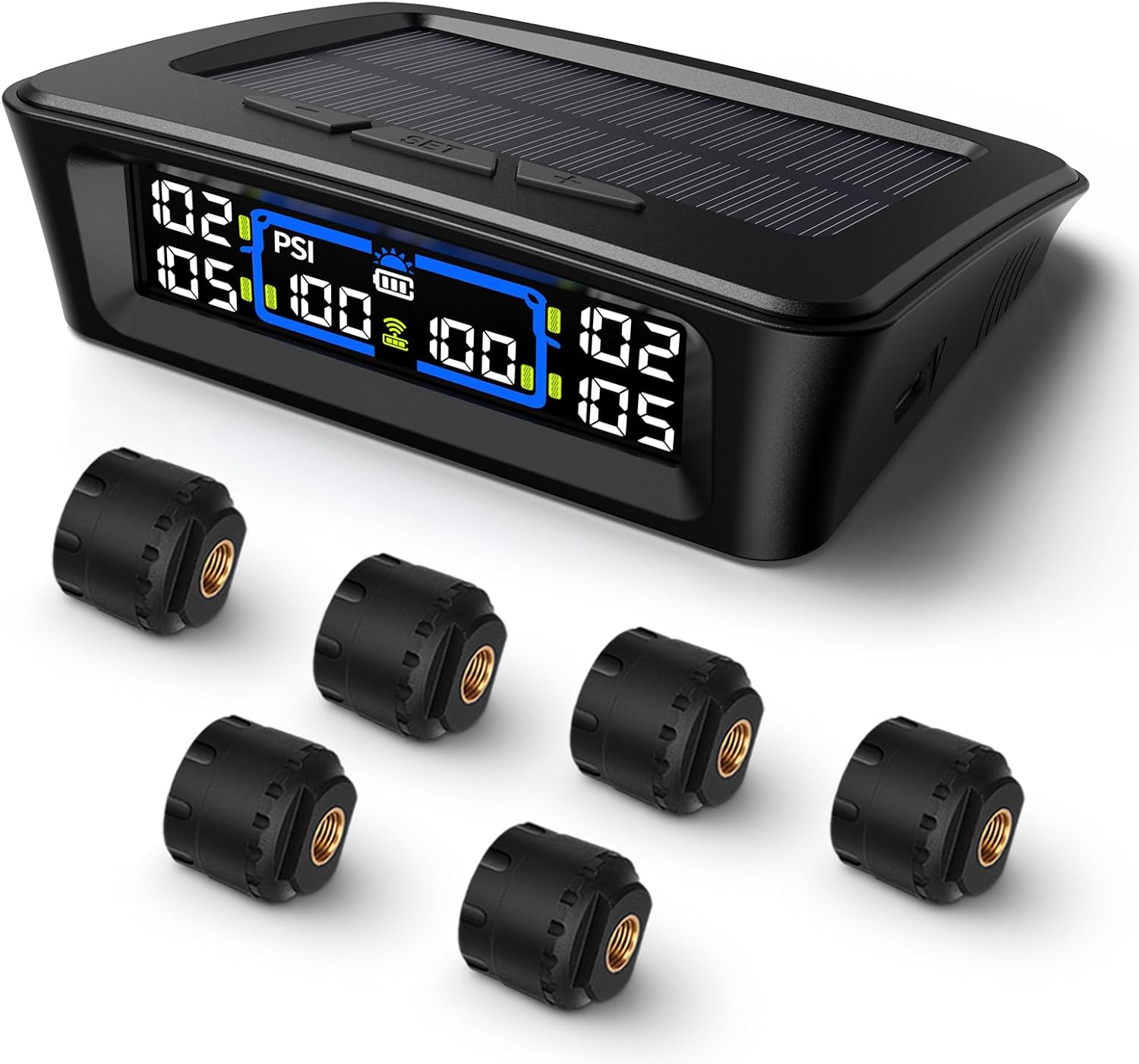
The Tymate TM12 RV TPMS delivers real-time tire pressure and temperature monitoring with a stable 433Hz display for safer long-distance driving. It supports simultaneous monitoring across vehicle and trailer zones, includes six alarm modes for pressure, temperature, leakage, battery, and signal loss, and features easy DIY installation with auto calibration. Power is supplied via USB-C charging or solar recharging, with a wide 0–144 PSI range and up to 50 ft signal coverage for RVs and towable trailers.

Monitor tire tread wear with a smart, color-coded depth gauge that shows clear condition ranges at a glance. The bar is range marked for fast, easy readings, helping you maintain safer traction and performance. Each gauge is portable with a pocket clip, and the set includes 20 units for daily use and sharing.

Measure tire tread depth quickly and accurately with this LUMITECO dial gauge that reads in 1/32" increments up to 14/32". The color-coded green/yellow/red zones make it easy to judge tire wear and know when replacement is needed. A rugged, compact design with a protective pouch helps keep the gauge ready for use on cars, trucks, motorcycles, and more.
Regular Tire Rotation
Rotating your Accord tires helps reduce irregular wear. The National Highway Traffic Safety Administration recommends checking your owner’s manual for the right rotation pattern and says tires should be rotated every 5,000 to 8,000 miles if the manufacturer recommends it.
- Even wear: Rotation helps each tire share front and rear axle duties over time.
- Better traction: More even tread depth helps the car stay balanced in rain.
- Lower long-term cost: Preventing one tire pair from wearing out early can delay replacement.
- Smoother ride: Regular rotation can reduce vibration caused by irregular tread wear.
Some tire setups need special handling. Directional tires, staggered wheel sizes, severe uneven wear, or damaged tires may limit how the tires can be rotated. When in doubt, follow the Honda manual and ask a tire shop to confirm the correct pattern.
Proper Tire Inflation
Proper tire inflation is one of the easiest ways to protect your Accord tires. NHTSA says tire pressure should be checked at least once a month when the tires are cold, meaning the car has not been driven for at least three hours. The correct pressure is on the driver-side tire label or in the owner’s manual.
Under-inflated tires flex too much, run hotter, wear faster at the edges, and can reduce fuel economy. FuelEconomy.gov says proper inflation can improve gas mileage by 0.6% on average and up to 3% in some cases, while under-inflation can lower gas mileage by about 0.2% for every 1 PSI drop in the average pressure of all tires.
Pro Tip: Check tire pressure in the morning before driving. If you check after a trip, the tires are warm and the reading may be higher than the true cold pressure.
How Seasons Impact Your Tires
Seasonal changes affect tire pressure, rubber flexibility, and traction. Cold weather can trigger low-pressure warnings because tire pressure changes with temperature. Hot weather, heavy loads, and long highway drives can increase heat buildup, especially if the tire is under-inflated.
- Cold weather: Check pressure more often during temperature drops. A tire that was correct in warm weather may be low on a cold morning.
- Rain: Shallow tread has less ability to move water away from the contact patch, which raises hydroplaning risk.
- Snow and ice: Winter tires are more effective than all-season tires in deep snow, while summer tires are not designed for snow, ice, or freezing conditions.
- Hot weather: Heat can make neglected pressure problems more serious, especially during long trips.
If you live where winter roads are common, choose tires based on your real climate. All-season tires can work for mild conditions, but dedicated winter tires or all-weather tires may be safer for frequent snow, slush, and ice.
Why Proper Tire Inflation Matters for Lasting Performance
Correct pressure helps the tire sit evenly on the road. Too little air makes the edges work too hard. Too much air can make the center tread carry more load and can make the ride harsher. Either problem can shorten tire life and reduce comfort.
| Pressure Check Result | What It Can Mean | Recommended Action |
|---|---|---|
| Below Honda’s cold PSI | More heat, more edge wear, lower fuel economy | Add air to the placard pressure and recheck cold |
| At Honda’s cold PSI | Best target for normal load and daily driving | Keep checking monthly and before trips |
| Above Honda’s cold PSI | Harsher ride and possible center wear | Release air slowly until it matches the placard pressure |
| One tire keeps dropping | Possible puncture, valve leak, bead leak, or wheel issue | Have the tire inspected and repaired or replaced |
Do not rely only on the Tire Pressure Monitoring System. TPMS is helpful, but NHTSA says it is not a substitute for regular tire maintenance. A tire may be low enough to wear poorly before the warning light turns on.
[Products Worth Considering]

The SAFELIFE dial tire tread depth gauge measures tread depth in 1/32 inch increments with clear, easy-to-read 2-inch dial face. Color zones using a traffic light system help you quickly judge whether tread is low, marginal, or ample for safer driving. Built with a durable zinc cast body and a metal detect probe for precise, comfortable use across cars, motorcycles, trucks, and buses.

Milton S-921 pencil tire pressure gauge helps you maintain optimal tire pressure for passenger cars with accurate readings in PSI and kPa. It features a built-in deflator valve for convenient pressure adjustments, plus a single chuck head and nylon indicator bar for easy use on the go. Built from durable plated brass and designed for reliable performance, it’s a practical road trip and cold-weather maintenance tool.

Accurately measure tire tread depth with a calibrated gauge marked from 0 to 1 inch in 1/32 inch increments. The color-coded bar helps you quickly identify tread condition ranges, supporting safe driving for trucks, motorcycles, automobiles, and passenger vehicles.
Signs of Uneven Tire Wear to Watch For
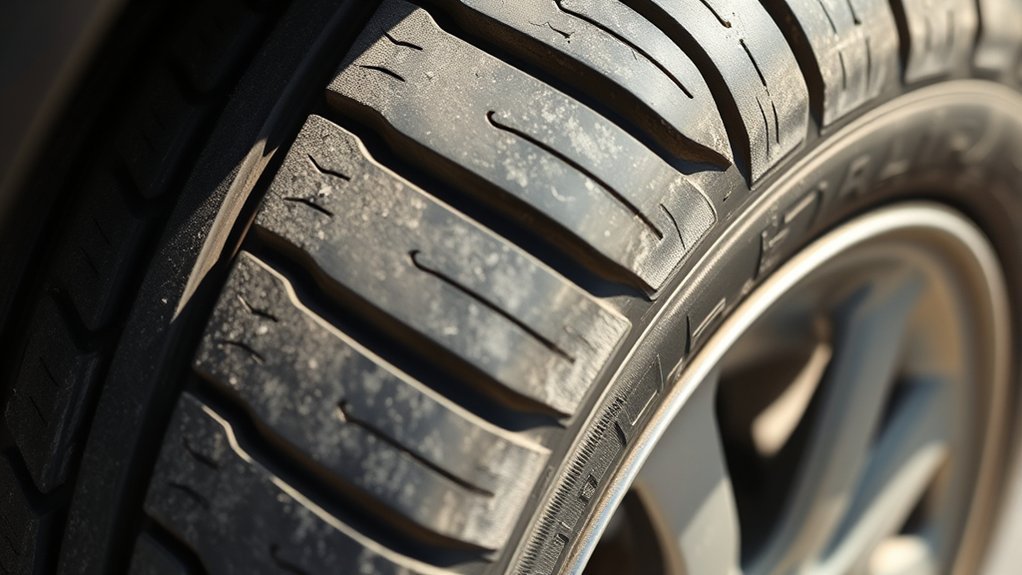
Uneven wear is a warning sign. It can mean the tire pressure is wrong, the alignment is off, the tire is out of balance, suspension parts are worn, or the tire has been damaged.
| Wear Pattern | Likely Cause | What To Do |
|---|---|---|
| Both outer edges worn | Under-inflation or hard cornering | Set cold pressure correctly and inspect tread |
| Center worn faster | Over-inflation or incorrect pressure setting | Adjust to placard pressure when cold |
| One edge worn | Alignment issue or worn suspension part | Schedule alignment and suspension inspection |
| Cupping or scalloping | Balance issue, worn shocks/struts, or suspension wear | Have the tire and suspension checked |
The Importance of Regular Wheel Alignment Checks
Wheel alignment affects how evenly the tires meet the road. If the alignment is off, one tire edge can scrub away faster than the rest of the tread. That can shorten tire life and make the Accord pull, wander, or feel unstable.
Schedule an alignment check if you notice:
- The car pulls left or right on a straight, level road.
- The steering wheel is off-center.
- One tire edge is wearing faster than the other.
- You recently hit a pothole, curb, or road debris hard.
- You replaced suspension or steering parts.
Balancing is different from alignment. Balancing corrects wheel and tire weight distribution to reduce vibration. Alignment corrects wheel angles so the tires track straight and wear evenly. Both can help your Accord tires last longer.
How Road Conditions Accelerate Tire Wear
Road conditions can shorten tire life even when your maintenance is good. Potholes, gravel, broken pavement, road salt, heat, and debris can all affect tread and sidewall health.
Your tires are the only part of your Accord that touches the road. Small pressure, tread, and alignment problems can become safety problems when roads are wet, rough, hot, or icy.
- Potholes: A sharp impact can damage the tire internally or bend a rim.
- Rough pavement: Constant vibration and abrasion can speed up tread wear.
- Gravel and debris: Sharp objects can cut rubber or cause slow leaks.
- Road salt and winter grime: Regular cleaning helps you spot cracks, bubbles, and sidewall damage sooner.
After a hard pothole hit, inspect the tire sidewall and wheel. If the steering wheel shakes, the car pulls, or the tire develops a bubble, get it checked before driving at highway speed.
Measuring Tire Tread Depth for Safety
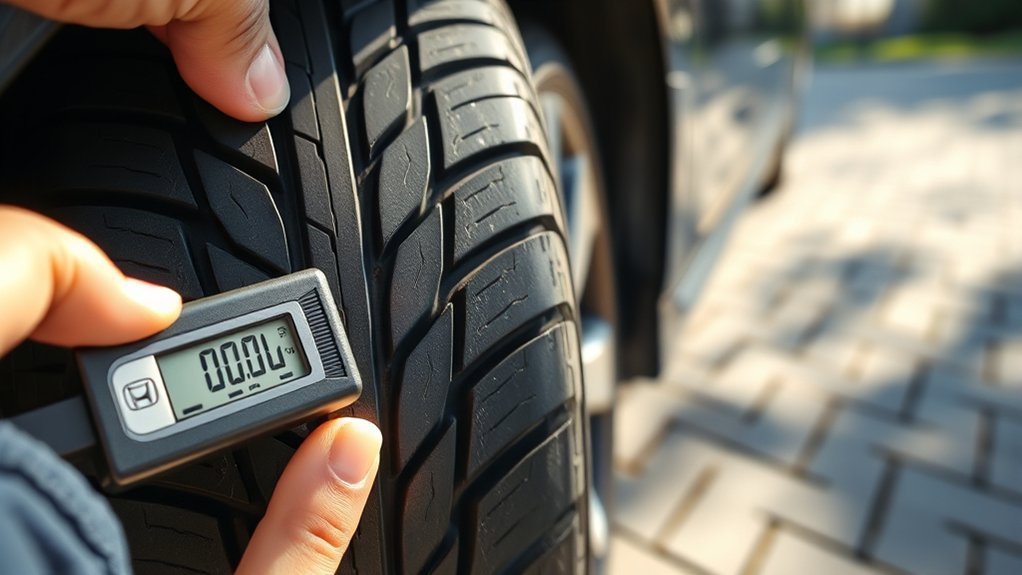
Tread depth is one of the clearest signs of tire life. New passenger tires often start with around 10/32 inch to 11/32 inch of tread, but the exact amount depends on the tire. NHTSA says tires are not safe and should be replaced when tread wears down to 2/32 inch.
The best tool is a tread-depth gauge. Measure the inner, center, and outer grooves on each tire. If one section is much lower than the others, you may have an alignment, pressure, or suspension issue.
You can also use the penny test. Place a penny into the tread with Lincoln’s head upside down and facing you. If you can see the top of Lincoln’s head, the tire is at or near the replacement point. A tread gauge is more accurate, especially when comparing all four tires.
Checking Tire Age and DOT Date Code
Tire age matters because rubber changes over time. Heat, sunlight, storage conditions, under-inflation, and road use can all age a tire. NHTSA says some vehicle and tire manufacturers recommend replacing tires that are 6 to 10 years old, regardless of treadwear.
To check age, look for the DOT Tire Identification Number on the tire sidewall. The last four digits show the week and year of manufacture. For example, a code ending in 2324 means the tire was made in the 23rd week of 2024. Check both sides of the tire because the full code may appear on only one side.
Also check the spare if your Accord has one. Spare tires can age even when they are rarely used.
Choosing the Right Tires for Your Driving Needs
The right tire for a Honda Accord depends on your climate, wheel size, driving style, and comfort goals. Do not choose tires by mileage warranty alone. A tire also needs the correct size, load rating, speed rating, and traction characteristics for your car.
- Commuting and comfort: Touring all-season tires are often a good fit for daily Accord driving.
- Rainy areas: Look for strong wet-traction ratings and good tread design for water evacuation.
- Cold and snowy areas: Consider winter tires or all-weather tires if you often drive on snow, slush, or ice.
- Sporty driving: Performance tires can improve steering response but may wear faster and ride firmer.
- Fuel economy: Low-rolling-resistance tires can help efficiency, but compare wet traction, comfort, and treadwear before buying.
Before buying, check the tire size on your existing tire sidewall and the tire placard. If the two do not match, confirm the correct size with the Honda manual or a tire professional.
[Products Worth Considering]

Keep your tires properly inflated with this analog VONDIOR tire pressure gauge, designed for fast, easy readings without batteries. The swiveling, two-axis hose and large glow dial help you measure at any tire angle with instant visibility. Built with a protective rubber shield, it supports durable, low-maintenance use for cars and trucks.

The TYAMATE TM8 solar-powered wireless TPMS delivers real-time tire pressure and temperature monitoring with six alarm modes for safer driving. A vibrant color LCD display shows readings clearly while windshield mounting keeps it hands-free and easy to read. With a wide 0–87 PSI range, strong 433.92 MHz signal transmission, and quick sensor pairing, it’s ideal for RV, sedan, SUV, MPV, and truck use.

The Topeak SmartGauge D2 delivers precise digital tire pressure readings for bikes, motorcycles, and sports equipment up to 250 psi (17 bar). Its rotating SmartHead works with both Presta and Schrader valves, so you can check pressure quickly without adapters. The LCD display makes it easy to read results in psi, bar, or kg/cm² with an included CR2032 battery for immediate use.
Monthly Honda Accord Tire Care Checklist
A monthly check can catch most tire problems early. Use this routine before long trips too.
- Check cold tire pressure on all four tires and the spare if equipped.
- Inspect tread depth across the inner, center, and outer grooves.
- Look for nails, screws, cuts, cracks, bubbles, and sidewall damage.
- Watch for uneven wear patterns.
- Check the tire date code if the tires are older or the car is driven lightly.
- Schedule rotation if you are near the recommended mileage interval.
- Get alignment checked if the car pulls or the steering wheel is off-center.
- Check for tire recalls through NHTSA if you suspect a tire defect or receive a notice.
Frequently Asked Questions
How many miles do Honda Accord tires last?
Honda Accord tires often last about 40,000 to 70,000 miles, but the actual life depends on tire model, pressure, alignment, rotation schedule, road surface, climate, and driving style. Use tread depth, tire age, and tire condition as your final replacement guide.
What are the biggest factors affecting tire life?
The biggest factors are air pressure, tire rotation, alignment, balancing, road conditions, driving habits, tire type, load, climate, and tire age. Low pressure, hard braking, potholes, and skipped rotations are common reasons tires wear out early.
How often should I rotate Honda Accord tires?
A common interval is about every 5,000 to 8,000 miles if the tire setup allows rotation and the owner’s manual recommends it. Check your Honda manual for the correct pattern, especially if your tires are directional, unevenly worn, or different sizes front to rear.
What tire pressure should a Honda Accord use?
Use the cold tire pressure listed on the driver-door tire placard or in your Honda owner’s manual. Do not use the maximum PSI printed on the tire sidewall as your normal pressure setting.
When should I replace Honda Accord tires even if the tread looks okay?
Replace or professionally inspect tires if they have cracks, bulges, exposed cords, sidewall cuts, severe uneven wear, repeated pressure loss, or vibration. Also check tire age. Some vehicle and tire manufacturers recommend replacement after 6 to 10 years regardless of tread depth.
Can I replace only two tires on a Honda Accord?
You can replace two tires if the other two are still safe and close enough in tread depth, but the new pair is often installed on the rear axle for better stability in wet conditions. Ask a tire professional if your tread depths are very different or if the car has unusual wear.
Conclusion
Honda Accord tire lifespan depends on more than mileage. A good set of tires can serve you well for thousands of miles, but only if pressure, rotation, alignment, tread depth, and tire age stay under control. Check pressure monthly, rotate tires on schedule, inspect tread and sidewalls, and replace tires when they reach 2/32 inch or show unsafe damage. Small checks can prevent early wear, improve fuel economy, and help keep your Accord safer in daily driving.
Sources
- NHTSA TireWise — tire pressure, tread depth, tire rotation, tire aging, TPMS, alignment, and tire safety guidance.
- FuelEconomy.gov: Keeping Your Vehicle in Shape — fuel economy effects of proper tire inflation.
- Honda Owner’s Manuals Search — official Honda manual lookup for trim-specific tire pressure, tire size, and maintenance guidance.
- NHTSA Recalls — tire and vehicle recall lookup.