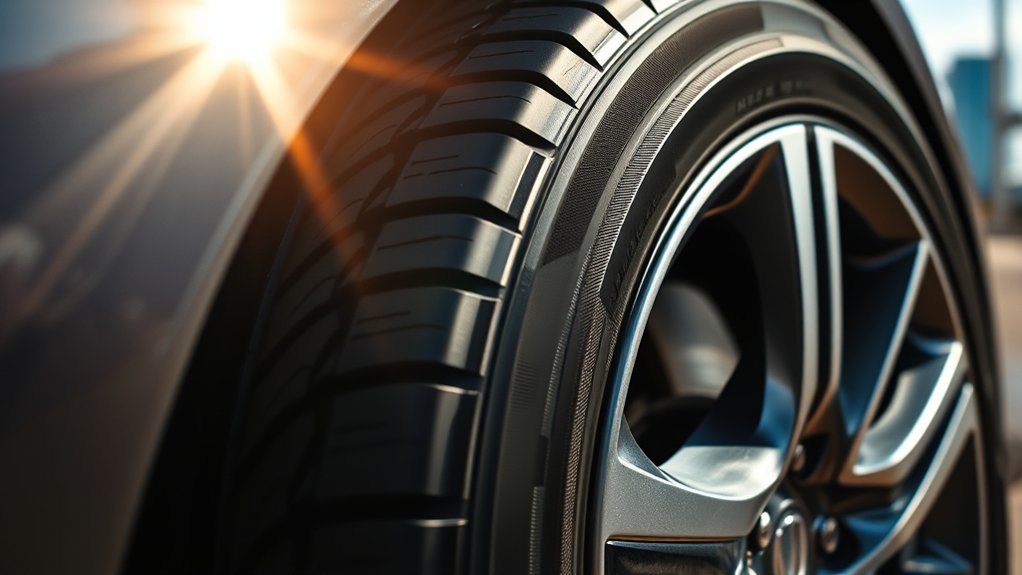
A radial tire is the standard tire construction used on modern Honda Accord models. You can identify it by the letter “R” in a tire size such as 225/50R17 or 235/40R19. For Accord owners, radial tires matter because the correct tire size, load rating, speed rating, pressure, and condition all affect ride comfort, braking, steering, tread life, and fuel efficiency.
Quick Answer
A radial tire has internal body cords that run from bead to bead across the tire, with reinforcing belts under the tread. Honda Accord models use radial tire sizes because this construction supports smoother ride quality, predictable handling, lower rolling resistance, and everyday durability when the tires match the vehicle placard and are properly maintained.
Key Takeaways
- The “R” in an Accord tire size means radial construction.
- Current U.S. 2026 Honda Accord examples include 225/50R17 and 235/40R19, depending on trim.
- Radial construction helps with comfort, stability, tread wear, and efficiency, but pressure, alignment, tire quality, tread depth, and driving habits still matter.
- Always match the tire size, load index, speed rating, and tire type listed on the driver-side door placard or owner’s manual for your specific Accord.
- Check tire pressure with a gauge every month; do not rely only on the TPMS warning light.
At a Glance
| Time Required | 5–10 minutes for a monthly pressure, tread, and sidewall check |
| Difficulty | Easy for inspection; professional help recommended for mounting, balancing, alignment, puncture repair, or damage diagnosis |
| Tools Needed | Tire-pressure gauge, tread-depth gauge or penny, flashlight, and the Accord tire placard or owner’s manual |
| Cost | Basic checks are free if you already have a gauge; tire rotation, balancing, repair, alignment, or replacement costs vary by shop and tire model |
What Is a Radial Tire?
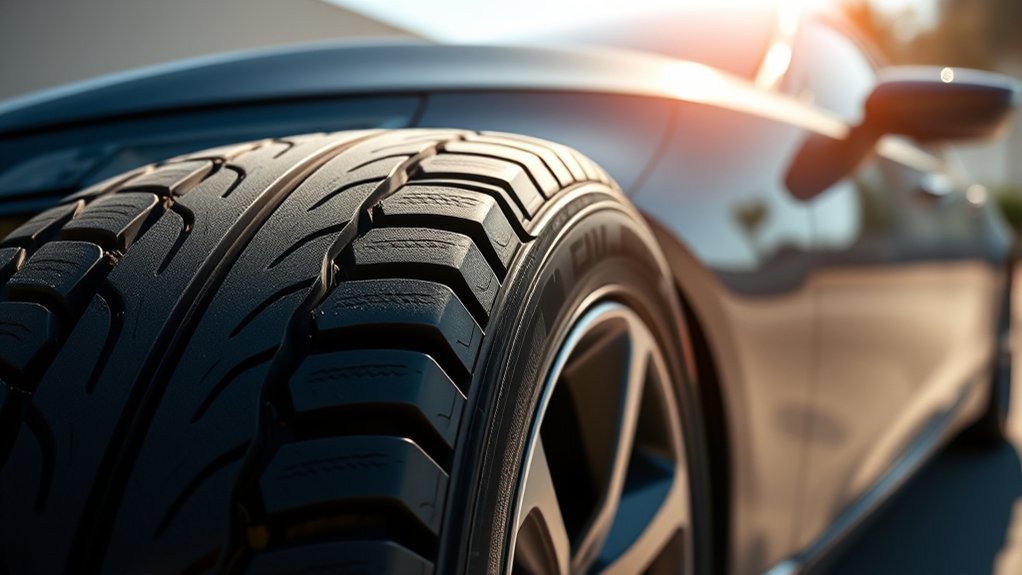
A radial tire is a pneumatic tire built with body plies that run radially from one bead to the other. In simple terms, the tire’s internal cords run across the tire rather than diagonally around it. Most modern passenger-vehicle tires also use reinforcing belts under the tread to help keep the contact patch stable.
That construction lets the sidewall and tread do different jobs. The sidewall can flex over bumps, while the tread stays more stable on the road. This is one reason radial tires are common on modern sedans like the Honda Accord.
Michelin’s tire-marking guide explains that the “R” in a tire size means radial construction. For example, in 225/50R17, the “R” tells you the tire is radial, and “17” tells you the wheel diameter in inches.
What 225/50R17 Means on a Honda Accord
A tire size is not just a random string of numbers. Each part tells you something about fit, construction, and compatibility.
| Code Part | What It Means | Why It Matters |
|---|---|---|
| 225 | Approximate tire width in millimeters | Affects fitment, clearance, steering feel, and contact patch. |
| 50 | Aspect ratio, or sidewall height as a percentage of tire width | Affects ride comfort, sidewall height, and wheel protection. |
| R | Radial construction | The correct construction type for modern Accord passenger-car tires. |
| 17 | Wheel diameter in inches | Must match the wheel diameter exactly. |
| 94V or similar | Load index and speed rating | Must meet the vehicle manufacturer’s requirement for safe load and speed capability. |
Pro Tip: The tire sidewall tells you what is currently installed. The driver-side door placard tells you what Honda recommends for the vehicle. When those two do not match, start with the placard and ask a qualified tire professional before buying replacements.
Why the Honda Accord Uses Radial Tires
The Honda Accord uses radial tires because they match what a modern midsize sedan needs: comfort, highway stability, predictable steering, efficient rolling, and reliable everyday grip. Honda’s current U.S. 2026 Accord tire listings show radial-size codes such as 225/50 R17 all-season tires and 235/40 R19 tires, depending on trim.
That does not mean every radial tire is automatically correct for every Accord. The replacement tire still needs to match the size, load index, speed rating, and tire type recommended for your specific model year, trim, wheel size, and market. The safest place to confirm this is the tire placard on the driver-side door jamb or the owner’s manual.
Current U.S. 2026 Honda Accord Tire Size Examples
| 2026 Accord Trim | Honda-Listed Tire Example |
|---|---|
| LX | 225/50 R17 all-season tires |
| SE | 235/40 R19 all-season tires |
| Sport Hybrid | 235/40 R19 tires |
| EX-L Hybrid | 225/50 R17 all-season tires |
| Sport-L Hybrid | 235/40 R19 tires |
| Touring Hybrid | 235/40 R19 all-season tires |
Note: Tire sizes can change by model year, trim, wheel package, and country. Use the table above as a current U.S. 2026 example, not as a universal fitment chart for every Accord.
How Radial Tires Differ From Bias-Ply Tires
The main difference between radial and bias-ply tires is the direction of the internal cords. Radial cords run from bead to bead across the tire. Bias-ply cords run diagonally and overlap in alternating layers. That design difference changes how the tire flexes, heats up, wears, and handles.
| Feature | Radial Tire | Bias-Ply Tire |
|---|---|---|
| Cord direction | Runs bead-to-bead across the tire | Runs diagonally in overlapping layers |
| Ride feel | Usually smoother and more flexible | Usually firmer and stiffer |
| Highway use | Best choice for modern passenger cars | Mostly specialty use today |
| Heat and wear | Generally runs cooler and wears more evenly when maintained | Can build more heat during sustained highway driving |
| Typical Accord use | Correct construction for modern Accord tires | Not appropriate as a normal Accord replacement |
Bias-ply tires still have uses in some classic-car, trailer, agricultural, and off-road applications. For a modern Honda Accord used on public roads, radial tires are the correct construction.
Warning: Do not mix radial and bias-ply tires on a Honda Accord. Mixing construction types can make steering, braking, and cornering unpredictable.
[Products Worth Considering]

This professional wheel and rim brush kit makes it easy to lift brake dust, grime, and dirt from wheels and tires without scratching finishes. The brushes feature soft, metal-free wool heads and a flexible 360-degree rim brush design for reaching hard-to-clean areas. Includes multiple brush types plus accessories for thorough car, motorcycle, and general vehicle detailing.

Monitor tire tread wear with a smart, color-coded depth gauge that shows clear condition ranges at a glance. The bar is range marked for fast, easy readings, helping you maintain safer traction and performance. Each gauge is portable with a pocket clip, and the set includes 20 units for daily use and sharing.

Measure tire tread depth quickly and accurately with this LUMITECO dial gauge that reads in 1/32" increments up to 14/32". The color-coded green/yellow/red zones make it easy to judge tire wear and know when replacement is needed. A rugged, compact design with a protective pouch helps keep the gauge ready for use on cars, trucks, motorcycles, and more.
Essential Components of Radial Tire Design
A radial tire is more than tread rubber. It is a layered structure built to hold air, carry weight, flex, grip, and stay seated on the wheel. The U.S. Tire Manufacturers Association explains that modern tire technology combines materials and engineering to meet comfort, performance, efficiency, reliability, and safety needs.
| Component | What It Does |
|---|---|
| Tread | Contacts the road and provides traction, braking grip, abrasion resistance, and water evacuation. |
| Belts | Reinforce the tread area and help stabilize the tire’s footprint. |
| Body plies | Provide tire structure and help contain inflation pressure. |
| Sidewall | Protects the body plies, flexes over bumps, and displays important markings such as size, load index, speed rating, and DOT date code. |
| Bead | Locks the tire to the wheel rim and helps maintain an airtight seal. |
Why Radial Tires Are Good for Daily Driving
Radial tires are well suited to daily driving because they balance comfort, control, tread life, and efficiency. On an Accord, that means the tire can absorb small road impacts while still keeping the tread steady enough for highway cruising, lane changes, and braking.
How Radial Tires Improve Fuel Efficiency
Radial tires can support fuel efficiency by reducing wasted energy as the tire rolls. Continental explains that rolling resistance affects how much energy a vehicle needs to move, which directly affects fuel consumption or electric range.
In simple terms, a tire flexes every time it rolls. Some of that flexing turns energy into heat. A well-designed radial tire helps manage that flexing so less energy is wasted. Tire pressure, tread compound, tire size, alignment, vehicle load, temperature, and driving style also affect how efficiently the car moves.
Note: Radial construction helps, but it cannot overcome poor maintenance. Underinflated tires, bad alignment, overloaded driving, and worn tread can reduce fuel economy and shorten tire life.
How Radial Tires Enhance Handling and Stability
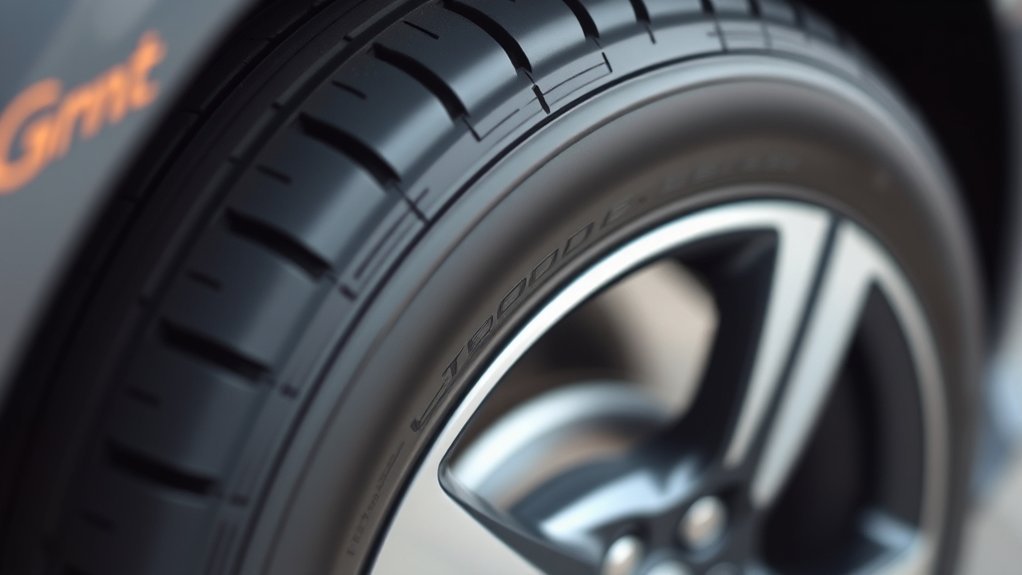
Radial tires improve handling because the tread area can stay more stable while the sidewall flexes. This helps the tire maintain a predictable contact patch during steering, braking, and cornering.
For a Honda Accord, that matters in everyday moments: merging onto the highway, braking in traffic, turning on wet pavement, or carrying passengers and cargo. The tire still needs enough tread depth, correct cold pressure, and even wear to perform well.
The tire is the only part of your Accord that touches the road, so construction, pressure, tread depth, and condition all affect ride, braking, and steering.
How to Tell If Your Tires Are Radial
You can usually confirm radial construction in less than a minute by reading the tire sidewall.
- Find the tire size molded into the sidewall. It may look like 225/50R17 or 235/40R19.
- Look for the letter “R.” This means the tire uses radial construction.
- Check the load index and speed rating. These appear after the size, such as “94V” or a similar service description.
- Compare the sidewall with the door placard. The placard tells you the correct size and cold tire pressure for your Accord.
- Check the DOT date code. The last four digits show the week and year the tire was made.
- Inspect the condition. Look for uneven wear, cracks, punctures, bulges, exposed cords, or repeated air loss.
Michelin notes that tire sidewall markings include size, construction, load rating, speed rating, pressure markings, date code, and wear indicators. That information helps you choose a replacement tire that matches the vehicle manufacturer’s requirements.
Tire Age and DOT Date Code
The DOT date code helps you identify when a tire was made. The last four digits show the week and year of manufacture. For example, a code ending in 2326 means the tire was made in the 23rd week of 2026.
Tire age alone does not automatically prove a tire is safe or unsafe. Tread depth, cracking, sidewall condition, puncture history, storage, heat exposure, and ride symptoms also matter. If a tire is older, visibly cracked, repeatedly losing air, or vibrating at speed, have it inspected before highway driving.
Choosing Replacement Radial Tires for a Honda Accord
When replacing Accord tires, do not shop by the word “radial” alone. Nearly all modern passenger-car replacement tires are radial. The important part is choosing the correct radial tire for your trim, wheel size, climate, and driving needs.
| What to Check | Why It Matters |
|---|---|
| Size | The tire must fit the wheel and vehicle clearance. Current U.S. 2026 Accord examples include 225/50R17 and 235/40R19. |
| Load index | The tire must safely carry the vehicle’s weight when properly inflated. |
| Speed rating | The rating should meet or exceed Honda’s requirement for your trim. |
| Season type | All-season tires suit many drivers; winter tires are safer in sustained snow, ice, and cold conditions. |
| Ride and noise | Touring tires usually favor comfort; performance tires usually favor sharper handling. |
| Tread depth and age | Old, worn, cracked, or unevenly worn tires can perform poorly even if the size is correct. |
| OE or equivalent fitment | A tire built for the Accord’s weight, suspension, and handling goals is more likely to feel correct. |
Warning: Do not install a different size, load rating, speed rating, or tire type just because it fits the wheel. A wrong tire can affect braking, steering, speedometer accuracy, ABS behavior, TPMS behavior, and tire clearance.
[Products Worth Considering]
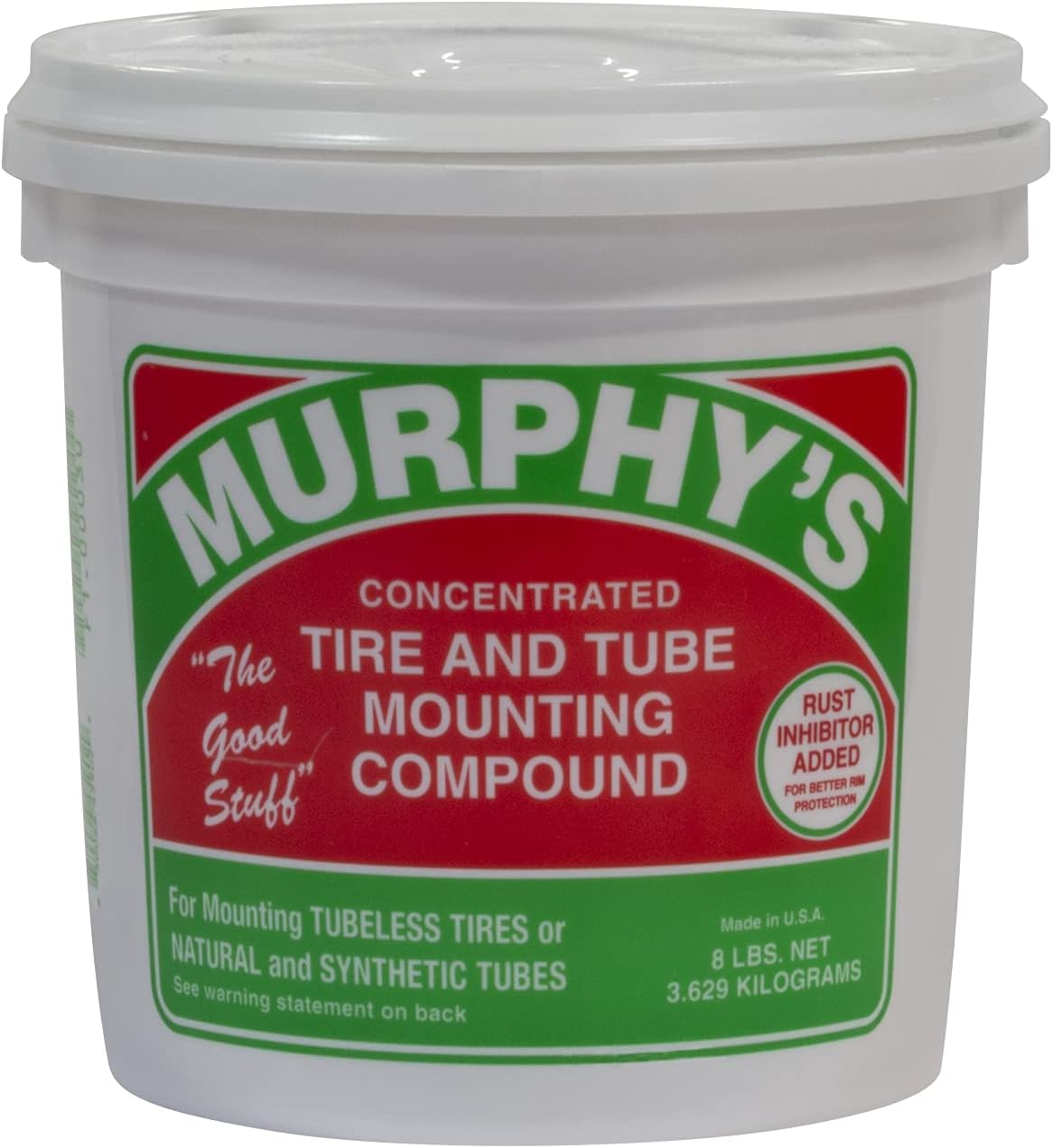
A concentrated tire and tube mounting compound designed to help simplify mounting rubber tires and tubes on passenger, semi truck, construction, and OTR applications. Its ultra-thick formula packs beads effectively and includes rust inhibitors to help protect against corrosion during use.
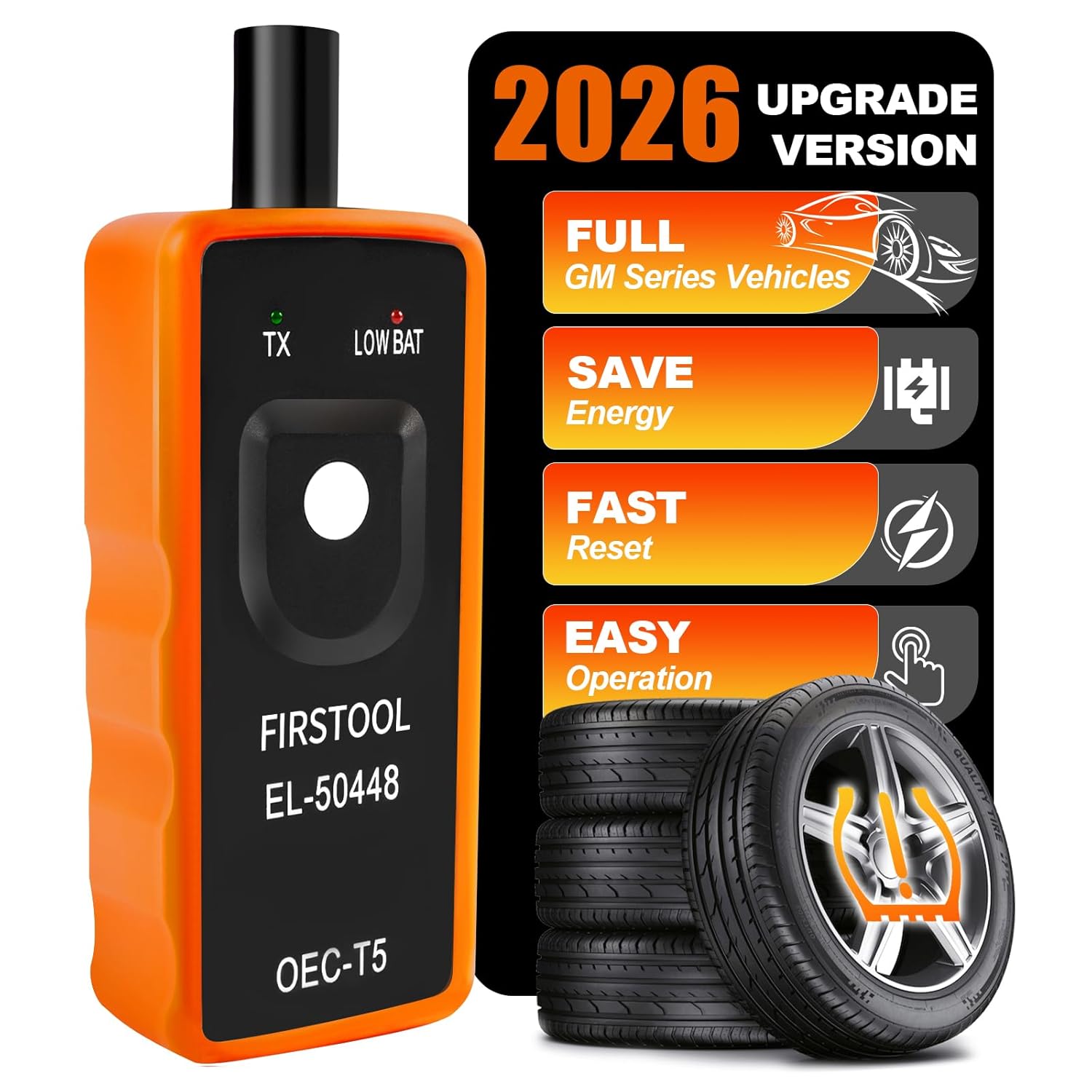
This TPMS relearn tool helps you quickly activate, match, and reset GM tire pressure sensors to keep the vehicle monitoring system working properly. It clears tire pressure alarms and dashboard warning lights after sensor replacement or tire rotation, and supports learning for common 315/433 MHz TPMS sensors. Designed for simple one-button operation, it can help you avoid unnecessary trips to repair shops.

Milton S-921 pencil tire pressure gauge helps you maintain optimal tire pressure for passenger cars with accurate readings in PSI and kPa. It features a built-in deflator valve for convenient pressure adjustments, plus a single chuck head and nylon indicator bar for easy use on the go. Built from durable plated brass and designed for reliable performance, it’s a practical road trip and cold-weather maintenance tool.
Radial, All-Season, Winter, Performance, and Run-Flat Are Different Choices
“Radial” describes the tire’s construction. It does not tell you whether the tire is all-season, summer, winter, touring, performance, low rolling resistance, or run-flat. A winter tire, all-season tire, and performance tire can all be radial, but they can feel very different on the same Accord.
For most Accord drivers, a quality all-season or grand-touring radial tire is the practical choice. Drivers who regularly face snow, ice, and long periods of cold weather should consider dedicated winter tires in the correct size and rating. Do not switch to run-flat tires unless they match the correct specifications and are appropriate for your vehicle and driving needs.
Can You Mix Radial Tires, Tire Sizes, or Tread Patterns?
For the best handling and braking, use four matching tires in the correct size and specification. At minimum, keep matching tires with similar tread depth on the same axle. Avoid mixing radial and bias-ply tires, different sizes, different load ratings, or very different tread patterns unless a qualified tire professional confirms the setup is safe and appropriate.
If you replace only two tires, ask the tire shop where they should be installed for your Accord and driving conditions. The best choice can depend on tire condition, tread depth, rotation pattern, and whether the vehicle has special fitment requirements.
Essential Maintenance Practices for Radial Tires
Good radial tires still need regular care. Maintenance is what keeps the tire’s benefits working over time.
- Check pressure when tires are cold. NHTSA says the correct tire pressure is the vehicle manufacturer’s recommended cold inflation pressure, not the maximum pressure printed on the tire sidewall.
- Inspect tread depth. Replace tires at or before the legal minimum wear point. Michelin notes that treadwear indicators show when a tire reaches 2/32 inch.
- Watch for uneven wear. Feathering, cupping, inner-edge wear, or one tire wearing faster than the others may point to alignment, suspension, pressure, or rotation problems.
- Rotate tires as recommended. Follow the Accord Maintenance Minder, owner’s manual, or tire manufacturer guidance.
- Do not rely only on TPMS. TPMS is a warning system for significant underinflation. Check pressure with a gauge and follow the Accord owner’s manual or on-screen prompts for any TPMS reset or calibration procedure after pressure adjustment, rotation, or tire replacement.
- Inspect for damage. Look for cuts, cracks, punctures, exposed cords, bubbles, or sidewall bulges.
Warning: A sidewall bulge, exposed cord, repeated air loss, or sudden vibration is not normal wear. Have the tire inspected before continuing highway driving.
Common Radial Tire Problems and What They Mean
| Symptom | Possible Cause | What to Do |
|---|---|---|
| TPMS light comes on | Low pressure, recent rotation, recent refill, recent tire replacement, or system needing reset/calibration | Check pressure with a gauge, inflate to placard pressure, and follow the Accord manual or display prompts. |
| Vibration at speed | Wheel imbalance, tire damage, bent wheel, or uneven wear | Have the tire and wheel inspected and balanced. |
| Vehicle pulls left or right | Low tire pressure, alignment issue, road crown, or tire wear pattern | Check pressure first, then schedule an alignment inspection if it continues. |
| Center tread wears quickly | Possible overinflation or driving pattern | Set cold pressure to the placard value and monitor wear. |
| Both outer edges wear quickly | Possible underinflation or aggressive cornering | Check cold pressure and inspect for damage. |
| One edge wears quickly | Possible alignment or suspension issue | Schedule alignment and suspension inspection. |
| Cracks, bulges, exposed cords, or repeated air loss | Age, impact damage, puncture, internal damage, or sidewall failure | Do not ignore it. Have the tire inspected before highway use. |
[Products Worth Considering]

This metal-free wheel and tire cleaning brush uses dense, fluffy synthetic wool to safely clean rims, spokes, fenders, and engine areas without worrying about damaging surfaces. Its flexible, comfortable design helps you reach detailed areas while maintaining durability, and the extra absorbent fibers work well with wheel spray cleaners for faster cleanup. Reusable and washable performance helps prevent grime and build-up for cleaner vehicles and easier maintenance at home.

The SAFELIFE dial tire tread depth gauge measures tread depth in 1/32 inch increments with clear, easy-to-read 2-inch dial face. Color zones using a traffic light system help you quickly judge whether tread is low, marginal, or ample for safer driving. Built with a durable zinc cast body and a metal detect probe for precise, comfortable use across cars, motorcycles, trucks, and buses.

Accurately measure tire tread depth with a calibrated gauge marked from 0 to 1 inch in 1/32 inch increments. The color-coded bar helps you quickly identify tread condition ranges, supporting safe driving for trucks, motorcycles, automobiles, and passenger vehicles.
Disadvantages of Radial Tires
Radial tires are the right choice for a modern Accord, but they are not perfect. Their flexible sidewalls can be vulnerable to damage from potholes, curbs, and sharp road debris. Low-profile radial tires, such as many 19-inch fitments, may also ride more firmly than taller-sidewall tires.
Another disadvantage is that not all radial tires are equal. A budget touring tire, a premium grand-touring tire, a winter tire, and an ultra-high-performance tire may all be radial, but they can feel very different in wet grip, road noise, tread life, steering response, and ride comfort.
Frequently Asked Questions
What does the “R” mean in an Accord tire size?
The “R” means the tire uses radial construction. In a size such as 225/50R17, “225” is the tire width in millimeters, “50” is the aspect ratio, “R” means radial, and “17” is the wheel diameter in inches.
Are Honda Accord tires radial?
Yes. Modern Honda Accord tire sizes use radial tire codes, such as 225/50R17 and 235/40R19 on current U.S. 2026 examples, depending on trim. Always confirm the exact size on your driver-side door placard.
Are radial tires better than bias-ply tires?
For modern passenger cars like the Honda Accord, radial tires are the better and correct choice. They usually provide better comfort, highway stability, tread wear, and efficiency. Bias-ply tires are mostly used for specialty applications today.
What are the disadvantages of radial tires?
Radial tires can suffer sidewall damage from potholes, curbs, and road hazards. Low-profile radial tires may also ride more firmly. Performance depends heavily on tire quality, tread design, pressure, alignment, driving conditions, and maintenance.
Can I mix radial and bias-ply tires on a Honda Accord?
No. A modern Honda Accord should use the correct radial tires in matching sizes and specifications. Mixing tire construction types can make handling unpredictable and should be avoided.
Do radial tires improve fuel economy?
Radial tire construction can help reduce rolling resistance, which can support better fuel economy. However, inflation pressure, alignment, tire model, tread wear, load, temperature, and driving habits also affect fuel use.
When should I replace radial tires on an Accord?
Replace tires when they reach the minimum tread depth, show sidewall damage, have exposed cords, develop bulges, lose air repeatedly, vibrate suddenly, or perform poorly in wet conditions. Have uneven wear inspected because it may point to alignment or suspension problems.
Do I need run-flat radial tires on a Honda Accord?
Do not choose run-flat tires unless they match the correct size, load index, speed rating, and vehicle requirements. If your Accord was not equipped for run-flat use, ask Honda or a qualified tire professional before switching.
Should I use winter radial tires on a Honda Accord?
Use winter tires if you regularly drive in sustained cold, snow, or ice. Most winter tires for passenger cars are radial, but the key is choosing the correct Accord size, load index, speed rating, and winter rating for your climate.
Conclusion
Radial tires are the correct tire construction for modern Honda Accord models because they support the Accord’s mix of comfort, handling, efficiency, and everyday safety. The easiest way to confirm them is to look for the “R” in the tire size on the sidewall. For the best results, choose the exact tire size and rating Honda recommends, keep pressure set to the cold placard value, rotate tires as required, and inspect tread and sidewalls regularly.
Sources
- Honda Info Center — 2026 Accord Wheels and Tires — backs current U.S. 2026 Accord tire-size examples.
- Michelin — Tire Markings Explained — backs the meaning of “R,” sidewall markings, load and speed ratings, DOT date code, and treadwear indicators.
- NHTSA TireWise — backs cold tire-pressure guidance, monthly pressure checks, tread-depth guidance, TPMS context, tire rotation, balancing, and alignment safety advice.
- U.S. Tire Manufacturers Association — Tires 101 — backs tire construction and component explanations.
- Continental Tires — Rolling Resistance of Car Tires — backs rolling-resistance and fuel-consumption explanation.