
Low rolling resistance tires can be a smart upgrade for a Honda Accord if your main goal is better fuel economy, lower energy use, and a quieter daily commute. They are not magic tires, though. The best choice depends on your Accord’s tire size, driving climate, wet-road needs, budget, and how much you value comfort and braking grip.
Quick Answer
Low rolling resistance tires can help a Honda Accord use less fuel by reducing the energy lost as the tires roll. The savings are usually modest, but they can add up for highway commuters. Choose a model that also scores well for wet traction, braking, comfort, and tread life.
Key Takeaways
- Low rolling resistance tires reduce energy loss at the tread and sidewall, which can improve fuel economy.
- Real-world savings vary by tire model, road speed, inflation pressure, alignment, temperature, and driving style.
- Do not choose a tire based on fuel economy alone. Compare wet braking, traction, treadwear, ride comfort, and noise.
- For a Honda Accord, always match the tire size, load index, speed rating, and pressure listed on the driver-door placard or owner information.
What Is Tire Rolling Resistance and Why Is It Important?
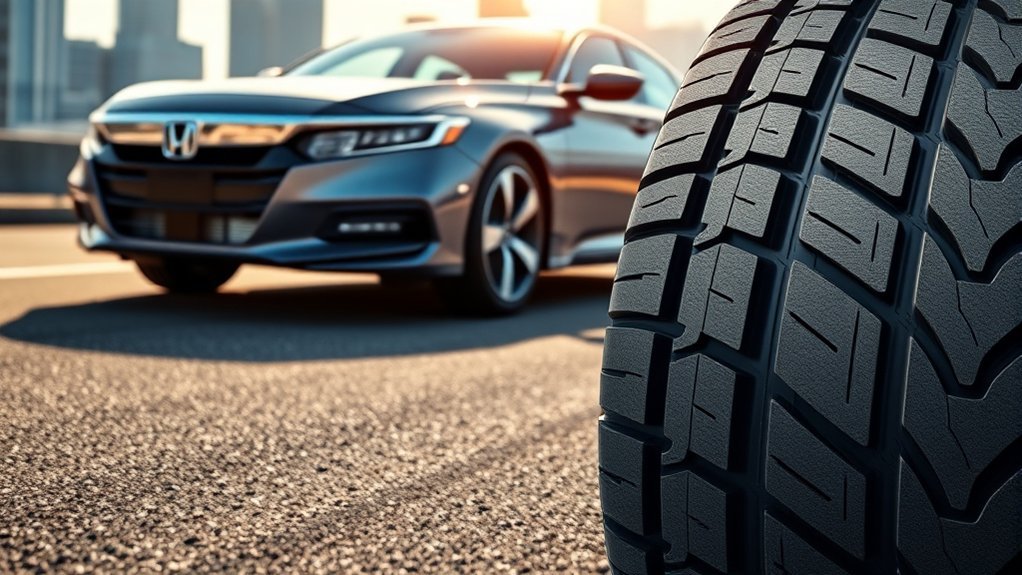
Tire rolling resistance is the force your Honda Accord must overcome to keep the tires rolling on the road. As a tire turns, the tread, sidewall, and internal materials flex. That flexing creates heat and wastes some energy that could otherwise move the car forward.
Lower rolling resistance matters because it can reduce fuel use. The U.S. Department of Energy notes that a 10% reduction in rolling resistance can reduce typical consumer fuel expenditures by about 1% to 2%. That does not mean every driver will see the same result, but it shows why tire design can affect long-term fuel cost.
A lower-rolling tire helps most on steady-speed driving, such as commuting and highway trips, because the tire spends more time rolling efficiently instead of constantly accelerating and braking.
For an Accord driver, the benefit is usually most noticeable if you drive many miles per year, keep your tires properly inflated, and replace old or inefficient tires with a well-rated touring or eco-focused model.
How Do Low Rolling Resistance Tires Work?
Low rolling resistance tires use tread designs, rubber compounds, internal belts, and sidewall construction that reduce wasted heat as the tire rolls. Many use silica-rich compounds and optimized tread blocks to lower drag while still keeping enough grip for daily driving.
Tire Design Features
Most low rolling resistance tires improve efficiency with a combination of:
- Optimized rubber compounds that flex with less heat buildup.
- Stiffer or more controlled sidewalls that reduce energy loss during rotation.
- Tread patterns designed for lower drag while still moving water away from the contact patch.
- Lower tire weight on some models, which can reduce energy needed to turn the wheel and tire assembly.
These features can help your Accord roll more easily, but they must be balanced with traction, braking, ride comfort, and tread life.
Energy Efficiency Benefits
The main benefit is lower energy use per mile. In a gasoline Accord, that can mean slightly better MPG. In an Accord Hybrid, it can also help preserve efficiency because the car needs less energy to keep moving once it is up to speed.
The biggest mistake is expecting one fixed MPG gain. Tire efficiency is only one part of fuel economy. Speed, traffic, weather, tire pressure, wheel alignment, cargo weight, and driving style can matter just as much.
Key Benefits of Low Rolling Resistance Tires for the Honda Accord
For the Honda Accord, low rolling resistance tires make the most sense when you want an efficient, comfortable daily-driver setup. They are especially useful for commuters, highway drivers, and Accord Hybrid owners who want to protect fuel economy when replacing the original tires.
The main benefits include:
- Better fuel economy potential: The tire wastes less energy as heat, so more engine or hybrid-system energy moves the car.
- Lower fuel cost over time: Savings are usually modest per tank, but can add up over tens of thousands of miles.
- Reduced CO2 emissions: Burning less fuel means lower tailpipe emissions from a gasoline vehicle.
- Smooth touring feel: Many LRR tires are built as touring tires, so they can be quiet and comfortable when chosen well.
- Good match for efficient trims: They pair well with Accord Hybrid and fuel-focused Accord trims, as long as traction is not sacrificed.
Note: If your Accord came with fuel-efficient original-equipment tires, replacing them with a heavier or more aggressive tire can reduce MPG even if the new tire has a long mileage warranty.
[Products Worth Considering]

Steelman white tire marking crayons provide high-contrast, semi-permanent marks for repairing and inspecting tires and equipment. They write on wet or dry, smooth or coarse surfaces including rubber, metal, glass, and wood, making them ideal for puncture location and damage outlining. The lead- and zinc-free crayons resist weather and fading yet wipe away when you no longer need the marks.

Monitor tire tread wear with a smart, color-coded depth gauge that shows clear condition ranges at a glance. The bar is range marked for fast, easy readings, helping you maintain safer traction and performance. Each gauge is portable with a pocket clip, and the set includes 20 units for daily use and sharing.

Milton S-921 pencil tire pressure gauge helps you maintain optimal tire pressure for passenger cars with accurate readings in PSI and kPa. It features a built-in deflator valve for convenient pressure adjustments, plus a single chuck head and nylon indicator bar for easy use on the go. Built from durable plated brass and designed for reliable performance, it’s a practical road trip and cold-weather maintenance tool.
Realistic Fuel Savings for a Honda Accord
Fuel savings depend on your baseline MPG, annual mileage, gas price, and the tire you choose. A safe way to estimate savings is to compare your current MPG with your expected MPG after the tire change.
Use this simple formula:
- Annual gallons used: annual miles ÷ MPG
- Annual fuel cost: annual gallons × fuel price
- Estimated savings: old annual fuel cost − new annual fuel cost
For example, if you drive 12,000 miles per year and improve from 32 MPG to 33 MPG, you would use about 375 gallons before and about 364 gallons after. At $3.50 per gallon, that is about $39 in yearly savings. If your MPG change is smaller, your savings will be smaller. If you drive more highway miles or fuel costs rise, the savings can be higher.
Pro Tip: Track MPG for two or three tanks before replacing your tires, then compare the same commute after installation. This gives you a more useful answer than relying on a generic percentage claim.
Choosing the Best Low Rolling Resistance Tires
The best low rolling resistance tire for your Honda Accord is not simply the tire with the lowest rolling resistance. It is the tire that fits your car correctly and gives you the right balance of efficiency, wet grip, comfort, noise, tread life, and price.
[Products Worth Considering]

Keep your tires properly inflated with this analog VONDIOR tire pressure gauge, designed for fast, easy readings without batteries. The swiveling, two-axis hose and large glow dial help you measure at any tire angle with instant visibility. Built with a protective rubber shield, it supports durable, low-maintenance use for cars and trucks.

The Big Rig Defense Tire Thumper is a truck tire pressure checker that lets you quickly check multiple tires by giving them a firm whack. Listen for a reassuring thump and feel the stick bounce when a tire is fully inflated, helping you get back on the road safely. It features a comfortable, glove-friendly handle and a secure wrist strap for confident use on busy routes.

The SAFELIFE dial tire tread depth gauge measures tread depth in 1/32 inch increments with clear, easy-to-read 2-inch dial face. Color zones using a traffic light system help you quickly judge whether tread is low, marginal, or ample for safer driving. Built with a durable zinc cast body and a metal detect probe for precise, comfortable use across cars, motorcycles, trucks, and buses.
Accord Tire Fitment Checklist
Before buying, check these items:
- Tire size: Match the size on your current tire or the driver-door tire placard.
- Load index: Use a tire with the required load capacity for your Accord.
- Speed rating: Match or exceed the rating recommended for your trim unless a qualified tire professional confirms an acceptable alternative.
- Season type: Choose all-season, grand touring, performance all-season, or winter tires based on your climate.
- Wet traction: Compare wet braking and traction data, not just fuel-efficiency claims.
- Treadwear warranty: A very efficient tire is less attractive if it wears much faster for your driving style.
- Noise and comfort reviews: The Accord is a comfortable sedan, so avoid tires known for harshness or road noise if ride quality matters.
The National Highway Traffic Safety Administration’s UTQG system helps compare treadwear, traction, and temperature resistance for many passenger tires. It is useful, but it should not be your only buying tool. Real-world wet-braking tests and owner reviews can reveal differences that a sidewall grade does not show clearly.
What Type of Driver Benefits Most?
Low rolling resistance tires are usually a good fit if you:
- Drive long commutes or frequent highway miles.
- Own an Accord Hybrid and want to preserve MPG.
- Prefer quiet touring comfort over sporty steering feel.
- Keep up with tire pressure, rotation, and alignment.
- Drive mostly in mild weather and on paved roads.
They may not be the best first choice if you drive aggressively, live where roads are icy or snow-covered for months, regularly drive on rough roads, or want maximum wet and dry performance.
Warning: Do not buy a tire only because it says “eco,” “fuel saver,” or “low rolling resistance.” A tire with poor wet braking or the wrong load rating can be a bad fit even if it saves fuel.
How to Keep Your LRR Tires in Great Shape

Low rolling resistance tires only work well when they are maintained correctly. Underinflation, poor alignment, and uneven wear can erase much of the efficiency benefit.
- Check tire pressure monthly. Honda owner information says to use a gauge at least once a month or before long trips. Use the pressure on the driver-door placard, not the maximum pressure printed on the tire sidewall.
- Check pressure when tires are cold. A cold reading is more accurate because pressure rises as tires heat up during driving.
- Rotate tires on schedule. Many drivers rotate every 5,000 to 7,500 miles, but follow your Accord’s maintenance minder or owner information for your model year.
- Inspect tread depth. Replace tires before they become unsafe, especially if wet braking feels worse or the tread is near the wear bars.
- Fix alignment problems early. Pulling, uneven wear, or a crooked steering wheel can increase rolling resistance and shorten tire life.
- Recalibrate TPMS if required. Some Accord models use an indirect TPMS that may need calibration after inflation, rotation, or tire replacement.
Even tires in good condition can lose air over time. If one tire repeatedly loses pressure, have it checked for a puncture, valve-stem leak, wheel damage, or bead leak.
Do Low Rolling Resistance Tires Affect Performance?
Yes, they can affect performance, but the effect depends on the specific tire. Modern low rolling resistance tires can be much better than older eco tires, but tire makers still have to balance efficiency against grip, tread life, comfort, and price.
Grip and Handling Trade-Offs
Some low rolling resistance tires may have less sharp steering feel or longer braking distances than a high-performance tire. That does not mean all LRR tires are unsafe. It means you should compare each model carefully.
Pay special attention to:
- Wet braking: This is one of the most important safety checks for daily driving.
- Hydroplaning resistance: Important if you drive in heavy rain.
- Snow and ice traction: Many LRR all-season tires are not a replacement for winter tires in severe winter areas.
- Ride comfort: Stiffer construction may feel firmer on rough pavement.
- Noise: Some efficient tread patterns are quiet, while others become louder as they wear.
Fuel Efficiency vs. Performance
If you use your Accord as a daily commuter, a quality LRR touring tire can be a strong choice. If you value fast cornering, sporty steering, or maximum wet-road grip, a performance all-season tire may be a better fit even if it gives up a little fuel economy.
The right tire is a balance. For most Accord owners, the best target is not the lowest rolling resistance possible. It is a tire with good rolling efficiency, strong wet braking, predictable handling, and dependable tread life.
When to Switch to Low Rolling Resistance Tires for Your Honda Accord
The best time to switch is when your current tires are near the end of their safe life or when you are already shopping for a full replacement set. Replacing good tires early usually does not make financial sense unless your current tires are unsafe, mismatched, noisy, damaged, or hurting efficiency badly.
Consider switching when:
- Your tread is worn: Replace tires before wet traction becomes unsafe.
- Your commute is fuel-sensitive: Highway commuters usually see the clearest benefit.
- You own an Accord Hybrid: Efficient tires can help maintain the MPG you expect from the hybrid system.
- You want a quieter touring tire: Many LRR options are designed for comfort-focused sedans.
- Fuel prices are high: Small efficiency gains matter more when fuel costs more.
Avoid switching to LRR tires if your main concern is deep-snow traction, aggressive handling, or maximum wet braking. In those cases, choose the tire category that best matches the driving risk first.
[Products Worth Considering]

Measure tire tread depth quickly and accurately with this LUMITECO dial gauge that reads in 1/32" increments up to 14/32". The color-coded green/yellow/red zones make it easy to judge tire wear and know when replacement is needed. A rugged, compact design with a protective pouch helps keep the gauge ready for use on cars, trucks, motorcycles, and more.

Measure tyre tread depth precisely with a digital gauge that reads in both MM and inches, helping you monitor safe driving conditions. The large LCD screen is easy to operate, and the compact tool fits for cars, trucks, and motorcycles. It provides high accuracy with a 0-25.4mm range and includes a 1-year warranty for added peace of mind.

Accurately measure tire tread depth with a calibrated gauge marked from 0 to 1 inch in 1/32 inch increments. The color-coded bar helps you quickly identify tread condition ranges, supporting safe driving for trucks, motorcycles, automobiles, and passenger vehicles.
Debunking Myths: What You Need to Know About Low Rolling Resistance Tires
Low rolling resistance tires are often misunderstood. Here are the most important myths to clear up before you buy.
Myth 1: Low Rolling Resistance Tires Are Always Unsafe
This is not true. Many modern LRR tires are safe, well-rounded touring tires. The key is choosing a model with strong wet traction and braking performance, not just a fuel-saving claim.
Myth 2: They Guarantee a Big MPG Increase
They do not. The MPG gain can be small, especially in city driving, cold weather, heavy traffic, or with poor tire pressure. Think of LRR tires as one part of an efficiency plan, not a guaranteed fuel-economy fix.
Myth 3: Tire Pressure Does Not Matter If You Buy Efficient Tires
Tire pressure still matters. Underinflated tires flex more, waste more energy, run hotter, wear faster, and can affect handling and stopping ability. Check pressure monthly and before long trips.
Myth 4: You Can Mix LRR and Regular Tires Without Any Issue
Mixing different tire types, tread patterns, or wear levels can create uneven handling and braking. For the most predictable performance, use a matching set of four tires. At minimum, keep matching tires on the same axle and follow professional tire-safety guidance.
Frequently Asked Questions
Can low rolling resistance tires improve my Honda Accord’s handling?
Sometimes, but handling improvement is not the main reason to buy them. A good LRR touring tire can feel stable and smooth, but a performance tire will usually feel sharper. Compare wet braking, steering response, and comfort before deciding.
Are low rolling resistance tires more expensive than regular tires?
They can be, but not always. Many mainstream touring tires now include fuel-saving construction. Compare the total cost: purchase price, expected tread life, fuel savings, wet traction, ride comfort, and warranty.
How long do low rolling resistance tires typically last?
Many last about as long as similar touring tires, but lifespan depends on the model, treadwear rating, alignment, rotation, pressure, road surface, and driving style. Do not assume every LRR tire will reach 50,000 miles; check the specific mileage warranty and reviews.
Do low rolling resistance tires perform well in wet conditions?
Some do, and some do not. Wet traction depends on the tire’s compound, tread pattern, tread depth, and design priorities. Choose a model with strong wet-braking test results if you often drive in rain.
Can I mix low rolling resistance tires with regular tires?
It is not ideal. Mixing tire types can affect braking, steering balance, traction control, and ride feel. A matching set of four tires is the safest and most predictable choice for your Accord.
Should I use the tire pressure on the sidewall?
No. The sidewall usually shows the tire’s maximum pressure, not the recommended pressure for your Accord. Use the tire placard on the driver-door jamb or Honda owner information for your model year and trim.
Are low rolling resistance tires good for an Accord Hybrid?
Yes, they can be a good match for an Accord Hybrid because the car is already tuned for efficiency. Just make sure the replacement tire also has good wet traction, correct fitment, and a comfortable ride.
Conclusion
Low rolling resistance tires can help your Honda Accord use less fuel, especially if you drive steady highway miles and keep the tires properly inflated. The best choice is not the tire with the boldest fuel-saving promise. It is the tire that fits your Accord correctly and balances efficiency with wet traction, braking, tread life, comfort, and noise.
If your current tires are worn and you want better efficiency, shop for a quality LRR touring tire with strong wet-road performance. If you drive in snow, heavy rain, or a sporty style, prioritize traction and safety first. With the right tire and proper maintenance, you can make your Accord more efficient without giving up the confident ride that makes it a good daily driver.
Sources
- U.S. Department of Energy — A Materials Approach to Fuel-Efficient Tires — supports rolling-resistance and fuel-savings context.
- FuelEconomy.gov — Gas Mileage Tips: Keeping Your Vehicle in Shape — supports tire inflation and fuel-economy maintenance guidance.
- NHTSA TireWise — Tire Safety Ratings and Awareness — supports UTQG ratings, traction, treadwear, temperature, and tire-safety guidance.
- Honda Owner Information — Checking Tires — supports monthly tire-pressure checks and tire inspection guidance for the Accord.
- 49 CFR § 575.106 — Tire Fuel Efficiency Consumer Information Program — supports U.S. consumer tire information rules for fuel efficiency, safety, and durability.