
Your Honda Accord can feel stable in rainy weather, but hydroplaning resistance is not a magic feature built into the Accord name. It comes from the exact tires installed on your trim, their tread depth, correct cold tire pressure, road water depth, and your speed. Use this guide to choose, check, and drive your Accord tires more safely in wet conditions.
Quick Answer
Honda Accord tires resist hydroplaning when their tread grooves, sipes, and rubber compound can move water away from the contact patch fast enough to keep rubber on the road. The biggest driver-controlled factors are tread depth, correct cold PSI, tire condition, and slowing down before standing water.
Key Takeaways
- Hydroplaning happens when water lifts the tire away from the road, reducing steering and braking control.
- For rainy driving, start shopping for replacement tires around 4/32 inch of tread; 2/32 inch is the replace-now minimum.
- Use the tire size, load rating, speed rating, and cold PSI listed on your Accord’s driver-side doorjamb label or owner’s manual.
- TPMS is helpful, but it is not a replacement for checking tire pressure monthly with a gauge.
- If your Accord hydroplanes, ease off the accelerator, keep the wheel steady, avoid panic braking, and steer gently where you want to go.
At a Glance
| Time Required | 5–10 minutes for a basic tire check |
| Difficulty | Easy |
| Tools Needed | Tire pressure gauge, tread depth gauge, or a quarter/penny for a quick check |
| Cost | $0–$15 for DIY checks; tire replacement cost varies by size and model |
Understanding Hydroplaning: Risks and Causes

Hydroplaning happens when your tires lose grip and ride on a film of water instead of staying in direct contact with the road. When that happens, steering and braking response can drop quickly.
The main risk factors are simple: too much speed, too much standing water, worn tread, incorrect tire pressure, and poor road drainage. Hydroplaning can happen at speeds as low as about 35 mph when the conditions are right, especially if your tires are worn or the road has pooled water.
Wet pavement is a major crash factor. The Federal Highway Administration reports that 75% of weather-related crashes occur on wet pavement and 47% happen during rainfall.
That is why tire condition matters so much on an Accord. Even a well-maintained sedan can lose traction if the tread cannot clear water quickly enough or if the driver enters standing water too fast.
How Honda Accord Tires Resist Hydroplaning
The right Accord tires reduce hydroplaning risk by pushing water away from the contact patch. This depends on the tire’s tread design, groove depth, siping, rubber compound, and how evenly the tire is wearing.
Honda Accord tire fitment also varies by trim and year. For example, Honda lists 225/50R17 all-season tires on some 2026 Accord trims and 235/40R19 all-season tires on others. The safest choice is to match the size, load rating, and speed rating shown on your vehicle’s tire label or owner’s manual, not to guess based on another Accord model.
- Circumferential grooves help move water straight through the tread.
- Lateral grooves move water outward toward the tire shoulders.
- Sipes create extra biting edges for wet-road grip.
- Even tread wear keeps all four tires working predictably.
- Correct cold tire pressure helps the tire keep the right contact shape on the road.
Note: Do not assume a wider tire automatically prevents hydroplaning. A wider tire can change the contact patch and may not improve wet safety if it is not an approved size for your Accord.
Why Tread Depth Matters in Wet Weather
Tread depth is one of the most important parts of wet-weather tire safety. NHTSA says tires are not safe and should be replaced when tread reaches 2/32 inch. That is the minimum replacement point, not the ideal target for rainy driving.
For wet roads, plan earlier. AAA testing found that tires worn to 4/32 inch increased wet stopping distance by 87 feet for a passenger car compared with new tires. AAA recommends replacing tires once tread reaches 4/32 inch because wet stopping and handling have already deteriorated.
| Tread Depth | Wet-Road Meaning |
| 8/32–10/32 inch | Typical strong wet-weather margin for many newer passenger tires |
| 6/32 inch | Generally usable in rain, but continue monitoring wear closely |
| 4/32 inch | Start shopping for replacement tires if you regularly drive in rain |
| 2/32 inch | Replace now; this is worn-out territory for safe road use |
A tread depth gauge gives the best quick measurement. The quarter test is useful for wet-road planning: place a quarter into the tread with Washington’s head down. If the top of his head is visible, you are near 4/32 inch and should start shopping. The penny test only checks the 2/32-inch replace-now point.
[Products Worth Considering]

Accurately measure tire tread depth with a calibrated gauge marked from 0 to 1 inch in 1/32 inch increments. The color-coded bar helps you quickly identify tread condition ranges, supporting safe driving for trucks, motorcycles, automobiles, and passenger vehicles.

Monitor tire tread wear with a smart, color-coded depth gauge that shows clear condition ranges at a glance. The bar is range marked for fast, easy readings, helping you maintain safer traction and performance. Each gauge is portable with a pocket clip, and the set includes 20 units for daily use and sharing.

Measure tire tread depth quickly and accurately with this LUMITECO dial gauge that reads in 1/32" increments up to 14/32". The color-coded green/yellow/red zones make it easy to judge tire wear and know when replacement is needed. A rugged, compact design with a protective pouch helps keep the gauge ready for use on cars, trucks, motorcycles, and more.
Tire Maintenance Tips to Enhance Hydroplaning Resistance
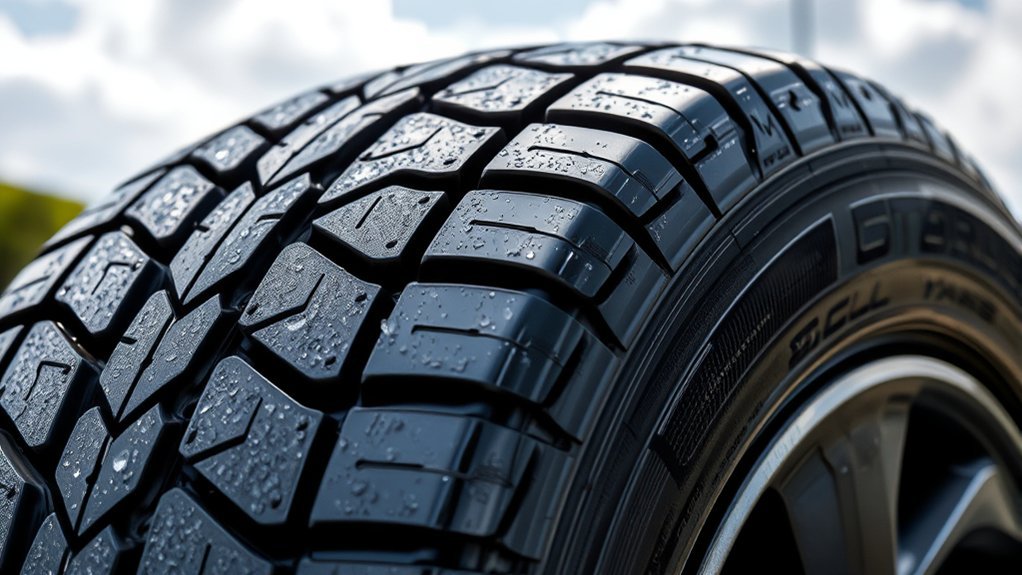
Maintenance is the part you control. A premium rain-ready tire will not perform well if it is underinflated, overinflated, worn unevenly, or left on the car past its safe service life.
[Products Worth Considering]

The SAFELIFE dial tire tread depth gauge measures tread depth in 1/32 inch increments with clear, easy-to-read 2-inch dial face. Color zones using a traffic light system help you quickly judge whether tread is low, marginal, or ample for safer driving. Built with a durable zinc cast body and a metal detect probe for precise, comfortable use across cars, motorcycles, trucks, and buses.

Milton S-921 pencil tire pressure gauge helps you maintain optimal tire pressure for passenger cars with accurate readings in PSI and kPa. It features a built-in deflator valve for convenient pressure adjustments, plus a single chuck head and nylon indicator bar for easy use on the go. Built from durable plated brass and designed for reliable performance, it’s a practical road trip and cold-weather maintenance tool.

AstroAI’s heavy-duty digital tire pressure gauge delivers quick, accurate readings with 0.1 increments and a secure valve-stem seal. It features a green backlit LCD and built-in flashlight for easy use in low light, plus an ergonomic non-slip stainless-steel design. The wide 0–230 PSI range works across common vehicle tires, with unit selection and an auto shut-off to save battery.
Regular Tread Depth Checks
Check tread depth at least once a month and before long trips. Look across the full width of each tire, not just one groove. Uneven wear can mean low pressure, overinflation, worn suspension parts, or alignment trouble.
- Replace tires immediately when wear bars are flush with the tread.
- Start planning replacement around 4/32 inch if you drive often in rain.
- Check for cuts, bulges, cracking, punctures, or exposed cords.
- Compare all four tires; one tire wearing faster than the others needs attention.
Optimal Tire Pressure Maintenance
Use the cold PSI listed on your Accord’s driver-side doorjamb tire and loading label. Honda says the Accord tire and loading label includes the original tire sizes and proper cold tire pressure. NHTSA also directs drivers to the door label or owner’s manual for the correct pressure.
USTMA recommends checking pressure at least monthly when tires are cold, meaning the vehicle has been parked for at least three hours. Check again before road trips, heavy loads, or major temperature swings.
Note: TPMS is not enough by itself. USTMA notes that many TPMS warnings appear only after a tire is about 25% underinflated, which may be too late to prevent tire damage or poor wet-road performance.
Rotation, Alignment, and Even Wear
Rotate tires according to your Accord owner’s manual. If no interval is listed, USTMA recommends a 5,000–8,000-mile rotation interval. Rotation helps keep tread depth more even, which matters because uneven tires can make the car feel unpredictable in rain.
Have alignment checked if your Accord pulls to one side, the steering wheel is off-center, or one shoulder of a tire wears faster. Misalignment reduces tire life and can weaken wet-road grip.
Pro Tip: Keep a small tread depth gauge and tire pressure gauge in the glove box. A two-minute check before a stormy commute can reveal problems before the road does.
Choosing Tires to Prevent Hydroplaning in Rain

When choosing replacement tires for your Honda Accord, start with fitment and safety labels before comparing brands. Honda lists different wheel and tire sizes across Accord trims, so the correct choice depends on your model year and trim.
[Products Worth Considering]

Measure tyre tread depth precisely with a digital gauge that reads in both MM and inches, helping you monitor safe driving conditions. The large LCD screen is easy to operate, and the compact tool fits for cars, trucks, and motorcycles. It provides high accuracy with a 0-25.4mm range and includes a 1-year warranty for added peace of mind.

Black Magic Tire Wet delivers a deep wet-look shine that makes tires appear dark, rich, and freshly detailed. Its long-lasting formula helps resist rain, dust, and road grime for weeks of glossy protection, not days. Apply by spraying onto clean, dry tires—no buffing or wiping required—with a low-sling design to reduce splatter on paint and wheels.

This heavy duty dual head tire pressure gauge helps you quickly check Schrader valve tires with clear ABS bar markings for both PSI and Bar readings. The straight and 30° reverse chuck designs make it easier to reach inner and outer wheels, while the zinc alloy/brass construction supports reliable use in tough conditions. No battery is required, making it a dependable tool for cars, trucks, RVs, and more.
Use the Correct Size, Load, and Speed Rating
Buy tires that match the size and specifications shown on the driver-side doorjamb label or in the owner’s manual. The tire sidewall maximum pressure is not your target driving pressure; your target is the vehicle’s recommended cold PSI.
Prioritize Wet Traction, Not Just Price
Look for tire models with strong wet braking and hydroplaning test results from reputable tire retailers, manufacturers, or independent testing. Price alone is not a reliable safety indicator. AAA found that tire performance varies by brand and that worn tires performed significantly worse across the tires tested.
Choose the Right Seasonal Tire Type
- All-season tires are common on many Accord trims and are suitable for many drivers in mild climates.
- All-weather tires can be a good choice if you need better cold-weather capability while keeping year-round usability.
- Summer tires may offer strong warm-weather wet grip, but they are not designed for freezing temperatures, snow, or ice.
- Winter tires are best for regular snow and ice, but they are not a cure for hydroplaning in deep standing water.
Avoid Common Tire Buying Mistakes
- Do not install an unapproved size just because it looks sportier.
- Do not mix different tire models on the same axle.
- Do not replace only one tire if the remaining tires are significantly worn unless a tire professional confirms it is safe.
- Do not assume high treadwear rating equals best wet traction.
How to Respond if You Hydroplane While Driving
If your Accord begins to hydroplane, stay calm and avoid sudden inputs. The goal is to let the tires regain contact with the road without adding more instability.
Warning: Do not slam on the brakes or jerk the steering wheel during hydroplaning. Sudden braking or steering can make the car slide or spin.
- Ease off the accelerator. Let the car slow down naturally.
- Keep the steering wheel steady. Look where you want the car to go.
- Steer gently. Small corrections are safer than sharp movements.
- Brake carefully only after traction starts to return. If your Accord has ABS and you must brake, use steady pressure rather than pumping the pedal.
- Do not use cruise control in heavy rain. Keep direct control of speed and throttle.
- Pull over safely if conditions are severe. Standing water, poor visibility, or repeated traction loss means it is time to wait it out.
Frequently Asked Questions
Is 40 PSI too much for tires labeled 32 PSI?
Yes, if 32 PSI is the cold pressure listed on your Accord’s tire and loading label, 40 PSI is too high for normal driving. Overinflation can reduce ride comfort, change the tire’s contact patch, and cause uneven wear. Check pressure when the tires are cold and adjust to the vehicle label, not the sidewall maximum.
What tread depth is safest for rain in a Honda Accord?
For rainy driving, 4/32 inch is a practical replacement planning point. Tires at 2/32 inch are worn out and should be replaced immediately, but wet stopping and hydroplaning resistance can decline before reaching that legal minimum.
Do Honda Accord tires prevent hydroplaning by themselves?
No tire can fully prevent hydroplaning in all conditions. Good wet-weather tires reduce risk, but speed, standing water, tread depth, tire pressure, road surface, and driver inputs all matter.
Is the penny test enough for wet-weather safety?
The penny test mainly tells you when a tire is near 2/32 inch, which is the replace-now point. For rain safety, use a tread depth gauge or the quarter test so you can start planning replacement around 4/32 inch.
Can hydroplaning happen below highway speeds?
Yes. Hydroplaning risk rises with speed, but it can happen around 35 mph when water is deep enough or tires are worn, underinflated, or poorly suited for wet roads.
Should I buy wider tires to stop hydroplaning?
Not automatically. Use the tire size Honda specifies for your Accord trim unless a qualified tire professional confirms an alternate size is safe. The tire’s wet traction, tread depth, and pressure usually matter more than simply going wider.
Conclusion
Your Honda Accord’s best defense against hydroplaning is a matched set of rain-capable tires with enough tread, correct cold pressure, even wear, and the right size for your trim. Check tread and pressure monthly, replace tires before rain performance collapses, and slow down before standing water. Good tires help, but safe wet-weather driving completes the system.
Sources
- NHTSA TireWise tire safety guidance — tread depth, tire pressure, tire labels, and replacement guidance
- U.S. Tire Manufacturers Association Tire Care Essentials — monthly pressure checks, cold tire checks, TPMS limitations, tread depth, and rotation
- AAA worn-tire wet-road testing — 4/32-inch tread depth, wet stopping distance, and handling findings
- Bridgestone hydroplaning guide — hydroplaning causes, low-speed risk, and recovery steps
- Honda Accord tire and loading information label — tire size and proper cold tire pressure location
- FHWA rain and flooding road-weather statistics — wet pavement and rainfall crash context