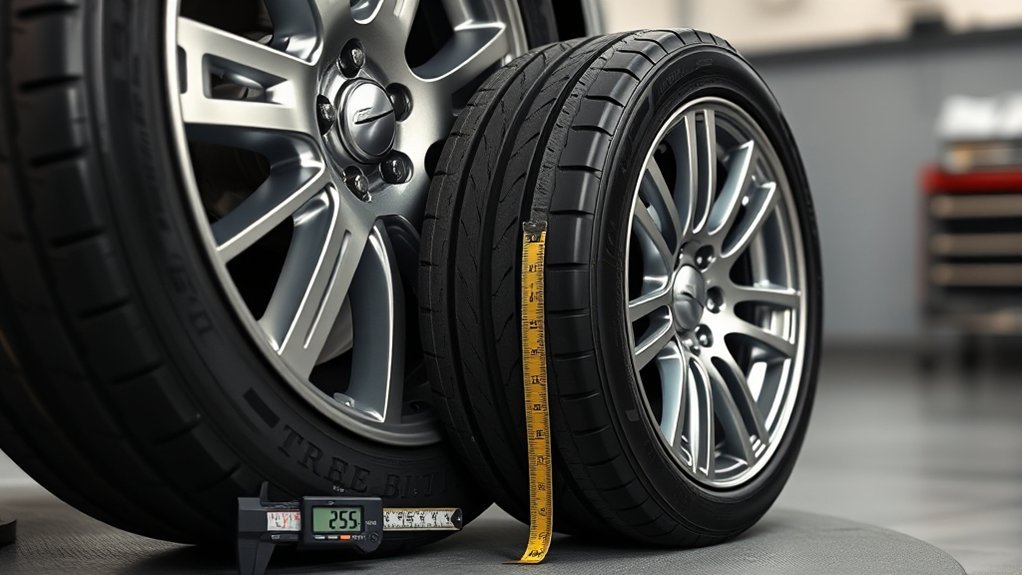
A 255 tire is a tire with a nominal section width of 255 millimeters, which equals about 10.04 inches. That number explains the tire’s width only. It does not tell you the tire’s sidewall height, overall diameter, load rating, speed rating, or whether it will clear your fenders.
Quick Answer
A 255 tire is nominally 255 mm wide, or about 10.04 inches from sidewall to sidewall. Actual mounted width can vary by tire model and rim width. Many 255/40R18 performance tires fit 8.5- to 10-inch wheels, but you must confirm the exact tire’s spec sheet and vehicle clearance.
Key Takeaways
- A 255 tire is about 10.04 inches wide because 255 mm divided by 25.4 equals 10.04 inches.
- The “255” is nominal section width, not tread width or overall tire diameter.
- A common 255/40R18 performance tire often works on 8.5- to 10-inch wheels, but approved rim width varies by tire model.
- An 18×9.5 wheel is usually a comfortable fit for many 255 tires; an 18×10 can work when the tire maker approves it and the car has enough clearance.
- Before changing tire size, check the vehicle placard, owner’s manual, load index, speed rating, wheel offset, inner clearance, and outer fender room.
What Does a 255 Tire Measure?
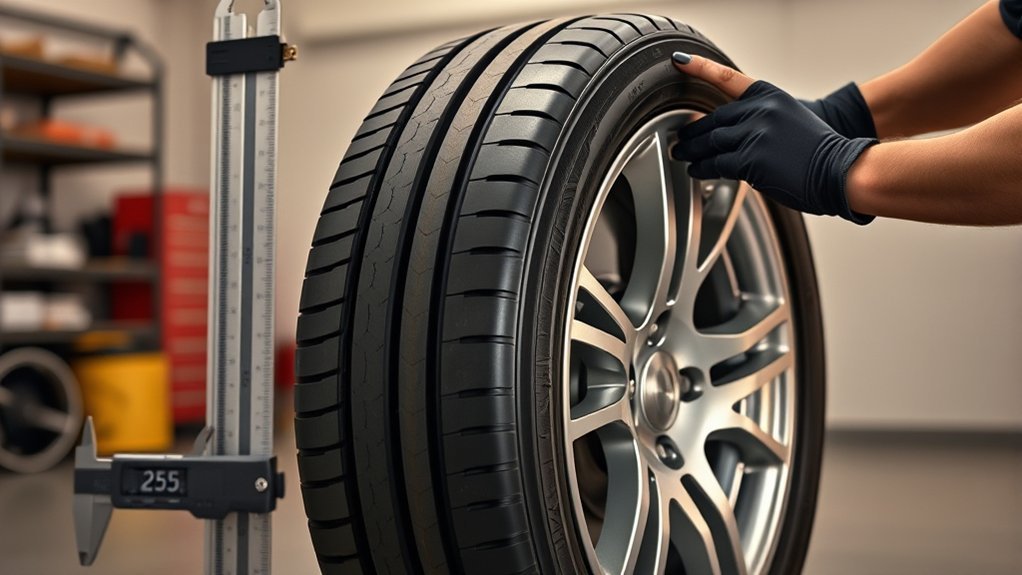
A 255 tire measures 255 millimeters in nominal section width. In inches, that is:
255 mm ÷ 25.4 = 10.04 inches
Section width is measured from the widest point of one sidewall to the widest point of the opposite sidewall after the tire is mounted and inflated on its specified measuring rim. That is different from tread width, which is the width of the rubber tread that contacts the road.
For example, a 255/40ZR18 Michelin Pilot Sport 4S is listed with a 10.2-inch section width and an 8.7-inch tread width when measured on its specified rim. Those numbers show why “255” should be treated as a size label, not a promise that every 255 tire has the same real-world footprint.
Note: Actual tire width changes slightly with rim width. Mounting the same tire on a wider wheel usually makes the section width a little wider; mounting it on a narrower wheel usually makes it a little narrower.
How Wide Is a 255 Tire?
A 255 tire is roughly 10 inches wide, but the exact installed width depends on the tire model, aspect ratio, wheel width, and construction. A summer performance tire, all-season tire, winter tire, and all-terrain tire can all have “255” in the size code while measuring differently once mounted.
That matters for fitment. Two tires labeled 255 may not clear the same suspension or fender space if one has a squarer shoulder, wider tread, reinforced sidewall, or different approved rim-width range.
How Tire Size Numbers Define a 255
The first number in a tire size code gives the nominal section width in millimeters. In a size such as 255/40R18, the code breaks down like this:
| Code | Meaning | What It Tells You |
|---|---|---|
| 255 | Nominal section width | About 10.04 inches wide |
| 40 | Aspect ratio | Sidewall height is 40% of the tire width |
| R | Radial construction | The tire uses radial construction |
| 18 | Wheel diameter | Fits an 18-inch wheel diameter |
For a 255/40R18, the sidewall height is 255 mm × 0.40 = 102 mm, or about 4.02 inches. Overall diameter is roughly 18 + 4.02 + 4.02 = 26 inches. That is why a 255/40R18 is not the same thing as a 33-inch tire.
What Rim Width Fits a 255 Tire Best?
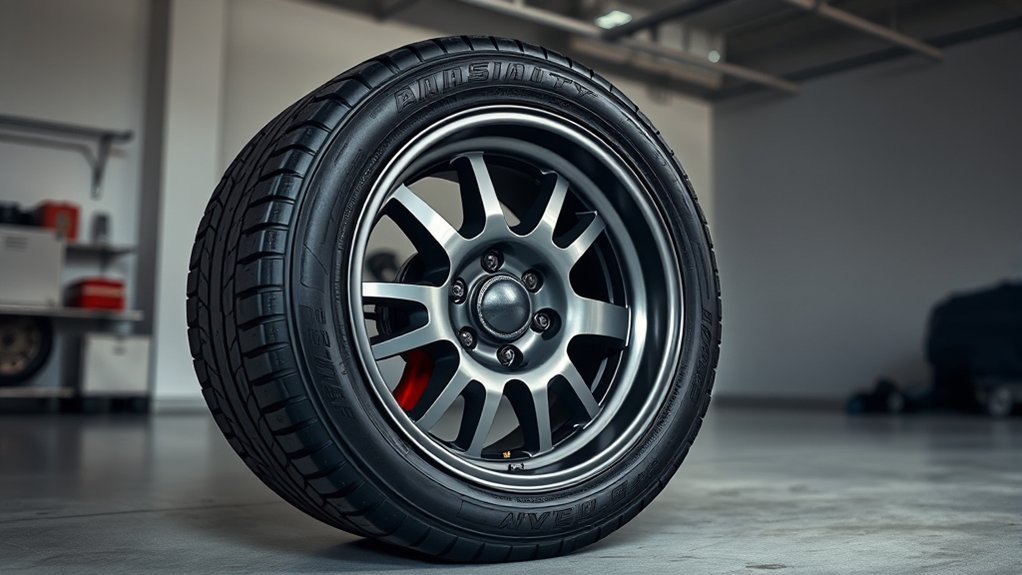
There is no single best rim width for every 255 tire. The correct range depends on the tire’s full size and the specific tire model. For many 255/40R18 performance tires, a wheel around 9 inches wide is common because it supports the sidewall without excessive bulge or stretch.
As a real example, the Michelin Pilot Sport 4S in 255/40ZR18 is listed with an approved rim-width range of 8.5 to 10 inches and a 9-inch measuring rim. That makes 18×9 and 18×9.5 very natural choices for many 255/40R18 setups, while 18×10 is often the upper edge of the approved range.
Pro Tip: Do not choose rim width from tire width alone. Look up the exact tire model and size, then check its approved rim-width range, measured rim width, section width, tread width, and overall diameter.
[Products Worth Considering]

The SAFELIFE dial tire tread depth gauge measures tread depth in 1/32 inch increments with clear, easy-to-read 2-inch dial face. Color zones using a traffic light system help you quickly judge whether tread is low, marginal, or ample for safer driving. Built with a durable zinc cast body and a metal detect probe for precise, comfortable use across cars, motorcycles, trucks, and buses.

These pre-assembled 15x6.00-6 front tire and wheel assemblies are designed for quick replacement on riding lawn mowers and lawn tractors. Built with natural rubber pneumatic tires and turf-friendly tread for solid traction and improved shock absorption. A thickened welded rim and 3/4" sintered iron bushing help provide stable, heavy-duty support for everyday mowing use.
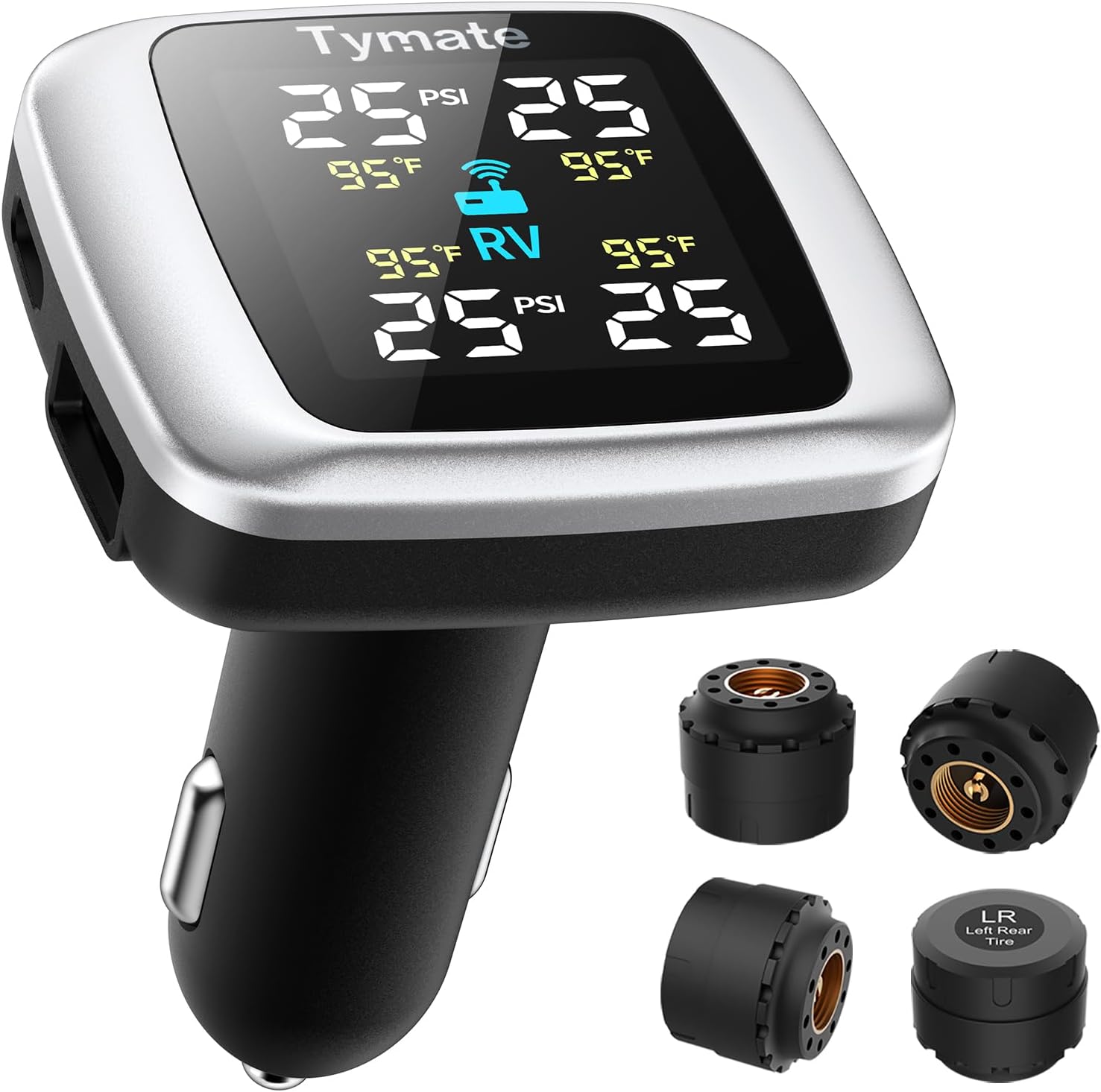
Tymate TM7 is a wireless tire pressure monitoring system that delivers real-time pressure and temperature readings for safer driving. It includes four external sensors, a bright color LCD display with adjustable backlight, and six alarm modes for high/low pressure, fast leakage, high temperature, and sensor signal or battery issues. The system covers a wide 0–144 PSI range and plugs into your vehicle’s cigarette lighter socket for quick DIY setup.
Does a 255 Tire Fit 18×9.5 or 18×10 Wheels?
A 255 tire can fit an 18×9.5 wheel very well when the tire maker approves that rim width for the exact size. For many 255/40R18 performance tires, 18×9.5 sits near the middle-to-upper part of the approved range, giving good sidewall support without looking extreme.
A 255 tire can also fit an 18×10 wheel in some cases, but that wheel width is often near the upper limit for a 255. That can make the tire look slightly stretched depending on the tire model. It can sharpen steering feel, but it can also reduce sidewall cushion and increase the need for precise pressure, camber, and clearance checks.
[Products Worth Considering]

Measure tire tread depth quickly and accurately with this LUMITECO dial gauge that reads in 1/32" increments up to 14/32". The color-coded green/yellow/red zones make it easy to judge tire wear and know when replacement is needed. A rugged, compact design with a protective pouch helps keep the gauge ready for use on cars, trucks, motorcycles, and more.

Clean grills, fenders, fender flares, bumpers, and wheel wells with a long-handled brush built for detailed car washing. The soft, triple-flagged bristles and dense scrub coverage help lift dirt gently while making coverage fast and easy. Use it with your favorite car wash soap for tires and exterior surfaces, and it also works for bike, motorcycle, boat, or RV cleaning.

Replace worn pool cleaner tires with this all-purpose C10 tire set made to fit compatible Polaris automatic pool cleaners. The tires are designed for maximum traction while helping protect your pool finish, and they match Polaris OEM size and material. Each pack includes three new tires in sealed bags.
18×9.5 Wheel Fitment
An 18×9.5 wheel is one of the most common pairings for a 255 performance tire. It usually supports the tread well and keeps the sidewall shape controlled. Still, you need to confirm four things before mounting:
- Approved rim width for the exact tire model and size.
- Inner clearance to the strut, spring perch, control arm, and liner.
- Outer clearance to the fender lip during compression.
- Offset compared with your current wheel setup.
18×10 Wheel Fitment
An 18×10 wheel can work with some 255 tires, especially when the tire’s approved range includes 10 inches. However, it leaves less margin for tire-model variation. A 255 on a 10-inch wheel may look more stretched than the same tire on a 9- or 9.5-inch wheel.
| Wheel Size | Typical 255 Fitment | What to Watch |
|---|---|---|
| 18×9 | Balanced on many 255/40R18 tires | Usually easy to fit, but still check offset |
| 18×9.5 | Strong performance fitment | Check inner and outer clearance carefully |
| 18×10 | Possible when approved by the tire maker | May create a mild stretch and clearance issues |
How to Check 255 Tire Clearance and Offset
A 255 tire is wide enough that fitment should be measured, not guessed. Clearance problems usually happen on the inside near suspension parts or on the outside near the fender lip. Wheel offset decides where the tire sits in the wheel well.
At a Glance
| Time Required | 10-20 minutes for basic measuring; longer if test-fitting wheels |
| Difficulty | Moderate; easy math, but clearance depends on the vehicle |
| Tools Needed | Tape measure, straightedge, current wheel specs, tire spec sheet, and optional fitment calculator |
| Cost | Free if measuring yourself; professional test-fit or alignment costs vary |
- Start with your current setup. Note your current tire size, wheel width, wheel offset, and any spacer size.
- Compare section width. A 255 is 10 mm wider than a 245 and 10 mm narrower than a 265 by nominal size.
- Check diameter change. Keep overall diameter close to the original size unless your vehicle and speedometer can handle the change.
- Measure inner clearance. Check the space to struts, springs, control arms, brake lines, and liners.
- Measure outer clearance. Check fender lip room at normal ride height and during suspension compression.
- Confirm load and speed rating. Do not install a tire with a lower load index or speed rating than your vehicle requires.
- Test before committing. If the fitment is aggressive, test-fit one wheel and tire before buying a full set.
Warning: Use the vehicle tire placard, owner’s manual, and tire manufacturer’s specs before changing sizes. A tire that physically mounts can still be wrong if the load index, speed rating, rim width, diameter, or clearance is unsafe.
255 Vs 245 on Track
A 255 tire is 10 mm wider than a 245 tire by nominal section width. On track, that extra width can help if the tire compound, wheel width, camber, pressure, and temperature are all working together. It is not an automatic lap-time upgrade.
Track Grip Difference
A 255 can offer more grip potential than a 245 because it may provide a wider tread and better heat capacity, depending on the tire model. That can improve cornering stability and braking consistency in dry conditions. However, a poor 255 setup can feel worse than a well-supported 245 if the tire is pinched, stretched, overheated, underheated, or rubbing.
Wheel Width Fitment
The wider tire only helps if the wheel supports it correctly. A 255 on a suitable wheel can feel more stable than a 245 on the same car, but you should verify the approved rim range, alignment needs, and suspension clearance.
Lap Time Impact
A 255 may reduce lap time compared with a 245 on a dry track, but the gain depends on compound, vehicle weight, suspension setup, driver consistency, and tire temperature. In heavy rain or standing water, a narrower tire can sometimes feel more predictable because it may cut through water more easily.
255 Vs 265 Tires
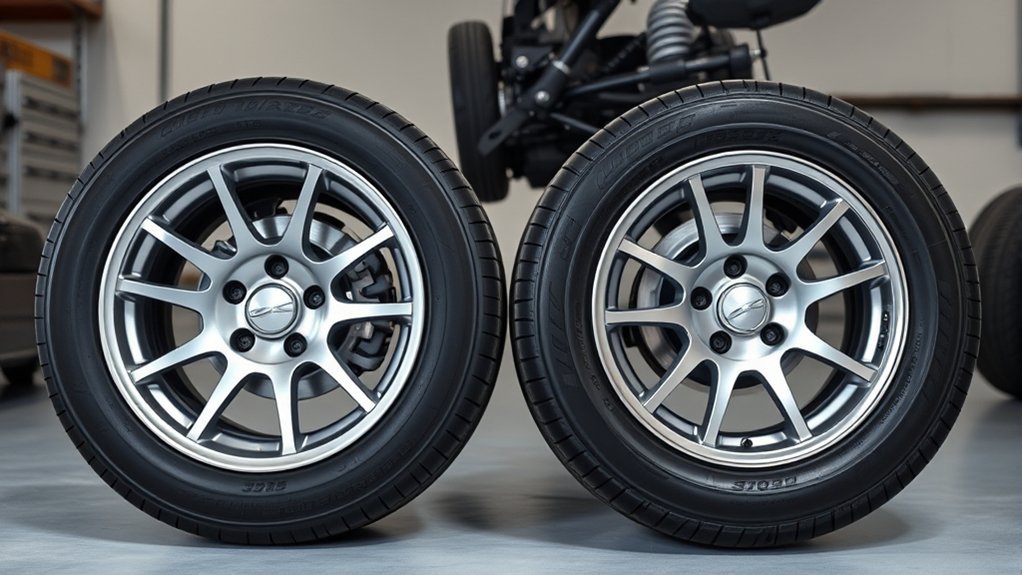
A 265 tire is 10 mm wider than a 255 tire by nominal section width. That is about 0.39 inches. The 265 may provide more grip potential on a properly matched wheel, but it also needs more room inside the wheel well.
Before moving from 255 to 265, check rim width, offset, fender clearance, suspension clearance, overall diameter, load index, and speed rating. Also remember that price differences vary by brand, tire line, size, and retailer. Do not assume a 255 will always be cheaper by a fixed percentage.
Best Applications for 255 Tires
255 tires are common on performance cars, sports sedans, powerful coupes, and some SUVs because they can balance traction, steering response, and daily drivability. They are wide enough to provide confident dry-road handling, but not so wide that fitment becomes extreme on many vehicles.
- Sports cars: A 255 can improve front or rear grip when the wheel and alignment support it.
- Performance sedans: It can add stability without making the setup too aggressive.
- SUVs and crossovers: It can work well when the load rating, diameter, and tire category match the vehicle.
- Track-day use: A 255 can be a strong step up from a 245 if class rules, wheel width, and clearance allow it.
Tread design still matters. A 255 summer tire, all-season tire, winter tire, and all-terrain tire will behave very differently in rain, snow, mud, and heat. Width is only one part of tire performance.
[Products Worth Considering]

Upgrade your wheels with MIKKUPPA closed-end lug nuts designed for reliable fit and corrosion resistance. The one-piece, cold-forged and heat-treated steel construction helps resist rust and stripping, while the integrated finish delivers a durable black appearance. Built to OEM standards with a conical 60-degree seat, these nuts provide a secure solution for compatible Ford, Honda, Jeep, and Chevrolet models.

These M14x1.5 closed-end chrome lug nuts are a one-piece replacement designed for secure fitment on compatible GM, Ford, and select Chrysler/Dodge models. Featuring a 60-degree conical seat and anti-rust chrome plating, they help resist corrosion and maintain a bright look for everyday driving. Built for long-term durability, they include OEM-style part references and are backed by 12 months of support.

Protect tire valves from water, dust, and sand to help prevent leaks and support safe driving. These universal stem caps install quickly by hand and feature durable aluminum alloy construction with an inner sealing ring for better air retention. Compatible with cars, SUVs, trucks, motorcycles, and bicycles for everyday convenience.
Frequently Asked Questions
Which tire is wider, 255 or 265?
A 265 tire is wider than a 255 tire by 10 mm, or about 0.39 inches. The wider tire may improve grip potential, but it also needs more rim width and wheel-well clearance.
Which is wider, 255 or 275?
A 275 tire is wider than a 255 tire by 20 mm, or about 0.79 inches. That is a noticeable jump, so you should check wheel width, offset, suspension clearance, and fender room before upgrading.
Is a 255 wider than a 245 tire?
Yes. A 255 tire is 10 mm wider than a 245 tire by nominal section width. That equals about 0.39 inches. The difference is small, but it can still affect rubbing, steering feel, and wheel fitment.
Is a 255 tire a 33?
Not by width alone. The 255 number means the tire is about 255 mm wide. A “33” usually means the tire is about 33 inches tall. Some 255-width tires can be close to 33 inches in diameter, but a common 255/40R18 is only about 26 inches tall.
What rim width is best for a 255 tire?
For many 255/40R18 performance tires, 9 to 9.5 inches is a strong fitment range, and some models approve 8.5 to 10 inches. Always check the exact tire model’s published rim-width range before mounting.
Will 255 tires rub?
They can rub if the wheel offset, tire shoulder shape, ride height, camber, or fender clearance is too aggressive. Measure inner and outer clearance before buying, especially if the vehicle is lowered or uses aftermarket wheels.
Conclusion
A 255 tire is about 10.04 inches wide, but width alone does not guarantee fitment. You still need the full tire size, approved rim-width range, wheel offset, overall diameter, load index, speed rating, and vehicle clearance. For many 255/40R18 performance tires, 18×9 to 18×9.5 is a balanced setup, while 18×10 can work when the tire maker approves it and the car has enough room. Measure first, confirm the specs, and you will get the grip and stance benefits without rubbing or unsafe fitment.
Sources
- Michelin — Tire Markings Explained — supports tire-size code definitions for width, aspect ratio, construction, wheel diameter, load rating, and speed rating.
- NHTSA — Tire Safety Brochure — supports replacement tire safety guidance, placard use, tire pressure, tread depth, and professional consultation.
- Tire Rack — How to Determine Section Width — supports the difference between section width, measuring rim width, and rim-width-related measurement changes.
- Tire Rack — Rim Width Range — supports approved rim-width range guidance and how rim width affects measured section width.
- Tire Rack — Michelin Pilot Sport 4S Specifications — supports example specs for 255/40ZR18, including rim-width range, measuring rim, section width, tread width, and diameter.
- Tire Industry Association — Tire Replacement — supports placard, load index, speed rating, and professional fitment safety guidance.