
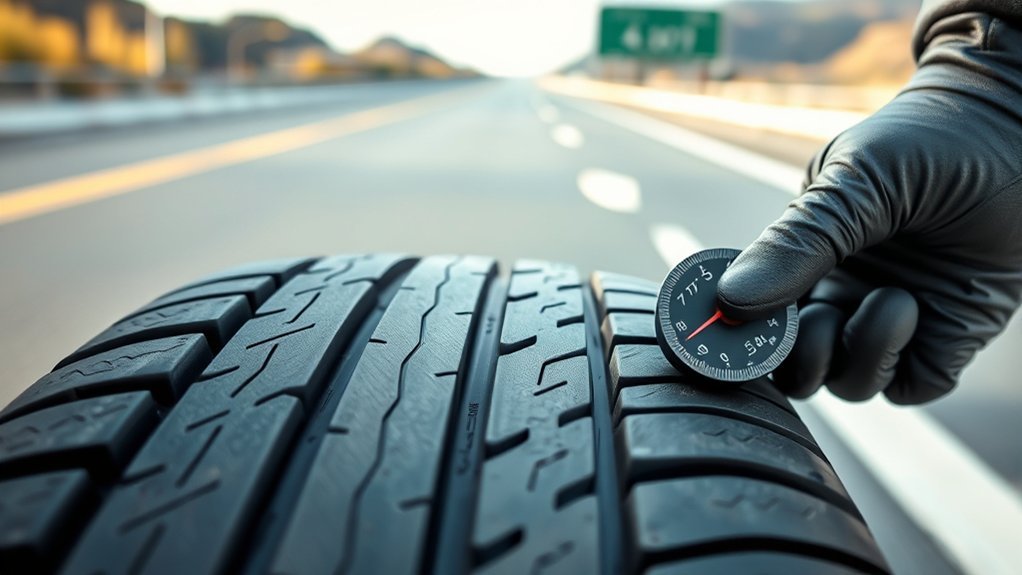
A good-quality all-season tire can last tens of thousands of miles, but mileage alone never tells the full story. Many daily-driver touring and all-season tires can reach about 50,000 miles or more with good pressure, rotation, alignment, and normal driving. Performance, winter, truck, SUV, EV, and heavy-use tires may wear sooner. Replace tires earlier if the tread reaches 2/32 inch, the sidewall cracks, a bulge appears, the tire keeps losing pressure, or the ride starts to vibrate.
Quick Answer
Most everyday tires last several years, and many maintained all-season or touring tires can reach about 50,000 miles or more. Replace them sooner if tread reaches 2/32 inch, age cracking appears, pressure loss repeats, a bulge forms, or the vehicle develops vibration, noise, pulling, or uneven wear.
Key Takeaways
- A tire’s useful life depends on tread depth, age, tire type, damage, maintenance, driving style, load, climate, and road surface.
- Replace a tire at 2/32 inch of tread, or sooner if it has cracks, bulges, exposed cords, repeated pressure loss, severe uneven wear, or vibration.
- Check tire pressure and tread at least monthly, and use the pressure on your vehicle placard or owner’s manual, not the tire sidewall maximum.
- Rotate tires according to your owner’s manual, often around 5,000 to 8,000 miles when the vehicle maker recommends rotation.
- Mileage warranties help you compare tires, but they are not a promise because inflation, alignment, rotation records, load, and road conditions affect real tire life.
At a Glance
| Time Required | 10 to 15 minutes for a basic tire-life check |
| Difficulty | Easy |
| Tools Needed | Tire pressure gauge, tread depth gauge or penny, flashlight, and your owner’s manual or door placard |
| Cost | Usually $0 if you already own a gauge; otherwise the cost of a basic tire gauge |
How Long Do Tires Last?
For many drivers, a good all-season or touring tire can last around 50,000 miles or more when it is properly inflated, rotated, aligned, balanced, and used in normal commuting or highway driving. Some long-wearing models carry higher treadwear warranties. For example, the Michelin Defender2 lists an 80,000-mile warranty on most sizes, and the Continental TrueContact Tour lists an up-to-80K limited warranty.
Those warranty numbers do not guarantee your exact tire life. Your actual replacement point comes from three checks together: mileage, tread depth, and tire age. A tire can still need replacement before the warranty mileage if it wears unevenly, ages out, gets damaged, loses air, or no longer gives safe wet-road traction.
If you drive mostly on smooth roads and keep up with maintenance, your tires may last close to the higher end of their expected range. If you drive aggressively, carry heavy loads, use rough roads, tow often, or skip inflation checks, the same tire may wear out much sooner. If you drive a Toyota RAV4 and want examples of long-wearing options, you can also compare high mileage tires before buying.
Tire mileage gives you a clue, but tread depth, age, pressure, damage, and wear pattern decide whether a tire is still safe.
How Long Tires Last by Tire Type
Different tire categories wear at different rates because they use different rubber compounds, tread designs, load ratings, and performance goals. A long-wearing touring tire usually aims for durability and comfort. A performance tire often trades some tread life for sharper handling and grip. Winter tires use cold-weather compounds that are not meant for year-round hot-weather use.
| Tire type | What to expect | Best way to judge replacement |
|---|---|---|
| All-season touring | Often the longest-lasting choice for normal commuting, errands, and highway use. | Track mileage, tread depth, age, pressure history, and rotation records. |
| Performance all-season or summer | Usually offers sharper response and stronger grip, but may wear faster than touring tires. | Watch tread depth, shoulder wear, alignment, and road noise closely. |
| Winter tire | Designed for cold, snow, and ice, not hot pavement or year-round driving. | Check tread depth, rubber condition, storage age, and seasonal wear. |
| Truck, SUV, or all-terrain | May handle heavier loads, rough roads, towing, gravel, and off-road use. | Use the correct load rating, pressure, alignment, rotation schedule, and damage checks. |
| EV tire | May face extra weight and strong instant torque, depending on the vehicle and tire design. | Check load rating, pressure, rotation interval, edge wear, and vehicle-specific guidance. |
For all-season shopping, match the tire to your weather, road surface, vehicle weight, and driving style instead of buying by mileage promise alone. A tire that fits your performance needs will usually serve you better than one chosen only for the biggest number on the warranty page.
[Products Worth Considering]

Accurately measure tire tread depth with a calibrated gauge marked from 0 to 1 inch in 1/32 inch increments. The color-coded bar helps you quickly identify tread condition ranges, supporting safe driving for trucks, motorcycles, automobiles, and passenger vehicles.

Monitor tire tread wear with a smart, color-coded depth gauge that shows clear condition ranges at a glance. The bar is range marked for fast, easy readings, helping you maintain safer traction and performance. Each gauge is portable with a pocket clip, and the set includes 20 units for daily use and sharing.

Measure tire tread depth quickly and accurately with this LUMITECO dial gauge that reads in 1/32" increments up to 14/32". The color-coded green/yellow/red zones make it easy to judge tire wear and know when replacement is needed. A rugged, compact design with a protective pouch helps keep the gauge ready for use on cars, trucks, motorcycles, and more.
Quick Tire Replacement Decision Guide
Use this table when you are trying to decide whether a tire is still usable, needs closer monitoring, or should come off the vehicle now. When in doubt, have a qualified tire professional inspect it before you keep driving at highway speed.
| What you see | Risk level | What to do |
|---|---|---|
| Even tread, good pressure, no cracks, no vibration | Low | Keep driving, but check pressure and tread monthly. |
| Tread getting low but still above 2/32 inch | Moderate | Measure with a tread gauge and plan replacement before heavy rain, snow, or a long trip. |
| One edge, center, or both shoulders wearing faster | Moderate to high | Check pressure, alignment, balance, rotation history, and suspension parts. |
| Tread at 2/32 inch, treadwear bars flush, exposed cords, bulge, deep crack, or repeated pressure loss | High | Do not keep using the tire for normal driving. Inspect or replace it immediately. |
| Older tire near six to 10 years from manufacture | Age-related risk | Check the DOT date code, owner’s manual, tire maker guidance, and have the tire inspected. |
[Products Worth Considering]

The SAFELIFE dial tire tread depth gauge measures tread depth in 1/32 inch increments with clear, easy-to-read 2-inch dial face. Color zones using a traffic light system help you quickly judge whether tread is low, marginal, or ample for safer driving. Built with a durable zinc cast body and a metal detect probe for precise, comfortable use across cars, motorcycles, trucks, and buses.

Measure tyre tread depth precisely with a digital gauge that reads in both MM and inches, helping you monitor safe driving conditions. The large LCD screen is easy to operate, and the compact tool fits for cars, trucks, and motorcycles. It provides high accuracy with a 0-25.4mm range and includes a 1-year warranty for added peace of mind.

AstroAI’s heavy-duty digital tire pressure gauge delivers quick, accurate readings with 0.1 increments and a secure valve-stem seal. It features a green backlit LCD and built-in flashlight for easy use in low light, plus an ergonomic non-slip stainless-steel design. The wide 0–230 PSI range works across common vehicle tires, with unit selection and an auto shut-off to save battery.
What Wears Tires Out the Fastest?
Tires wear out fastest when heat, friction, poor contact, and poor maintenance work together. Hard acceleration, sudden braking, fast cornering, potholes, rough pavement, heavy cargo, towing, and under-inflation all increase stress on the tread and internal structure.
Bad pressure is one of the biggest tire-life killers. Under-inflation makes the shoulders carry too much load and raises heat. Over-inflation can make the center tread wear faster. Use the pressure listed on your vehicle’s door placard or owner’s manual, not the maximum pressure molded on the tire sidewall. NHTSA tire guidance recommends checking all tires, including the spare, at least once a month when the tires are cold.
Alignment and balance also matter. Bad alignment can scrub one edge of the tread. Poor balance can create vibration and patchy wear. Missed rotations let one tire position wear faster than the others, especially on front-wheel-drive, all-wheel-drive, and heavy vehicles.
Warning: Do not keep driving on a tire with exposed cords, a sidewall bulge, deep cracking, repeated pressure loss, severe vibration, or tread worn to 2/32 inch. Have the tire inspected or replaced before normal driving.
How to Check Tire Tread and Age
You can check tire life with three simple checks: tread depth, age, and visible condition. Do this monthly, before long trips, and any time the vehicle starts pulling, shaking, humming, thumping, or warning you through TPMS.
| Check | What to look for | What it means |
|---|---|---|
| Tread depth | Use a tread depth gauge or penny test. | Replace at 2/32 inch. Consider replacing sooner for heavy rain, snow, or long highway trips. |
| Treadwear bars | Look for raised bars inside the grooves. | When tread sits level with the bars, the tire is worn out. |
| DOT date code | Find the last four digits of the DOT/TIN code on the sidewall. | The first two digits show the week, and the last two show the year of manufacture. |
| Sidewalls | Check for cracks, cuts, bulges, discoloration, exposed cords, or dry rot. | Damage or aging can make a tire unsafe even if tread remains. |
| Ride feel | Notice vibration, pulling, thumping, humming, or new tire noise. | You may need balancing, alignment, repair, suspension service, or replacement. |
| Recall status | Use the tire’s DOT/TIN and check for tire recalls. | A recalled tire may need replacement even if it looks normal. |
For the penny test, place a penny into the tread groove with Lincoln’s head upside down and facing you. If you can see the top of Lincoln’s head, the tread is too low and the tire should be replaced. For better accuracy, use a tread depth gauge because it shows the exact remaining depth.
When you read the DOT date code, a code ending in 2422 means the tire was made in the 24th week of 2022. Some tires show the full code on only one side, so you may need to check the inner sidewall. NHTSA notes that some vehicle and tire manufacturers recommend replacing tires at six to 10 years regardless of treadwear, so always check your owner’s manual and tire maker guidance.
Pro Tip: Write down three numbers after every rotation: odometer mileage, tread depth, and tire age. That small record helps you spot early wear and can also support a mileage-warranty claim.
Good tread depth also supports wet-road grip. If you are comparing replacement options for a RAV4, check tire size, load rating, climate fit, and traction performance before you buy.
When Should You Replace Tires?
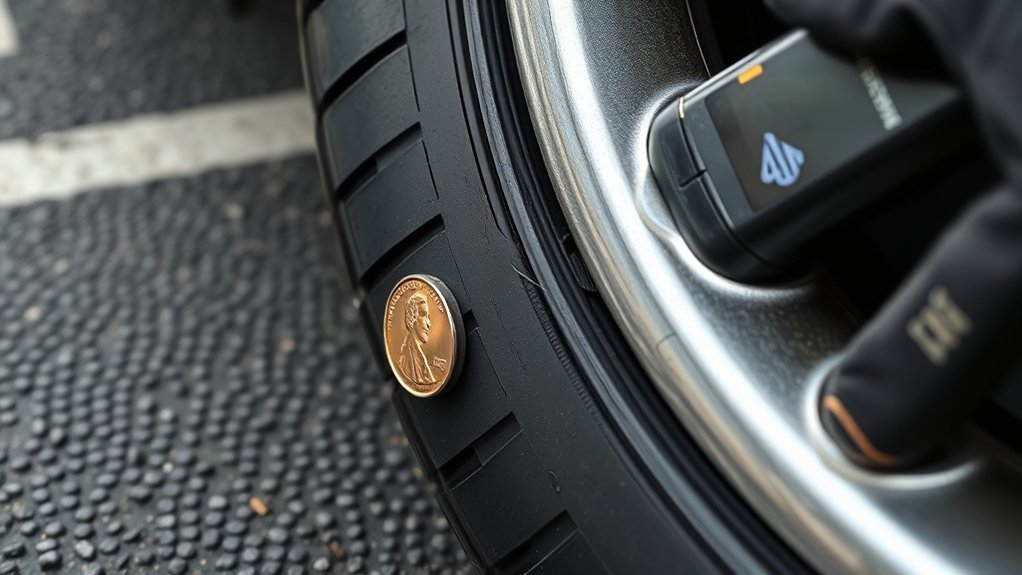
Replace tires when tread reaches 2/32 inch, when treadwear bars sit flush with the tread, or when the tire shows unsafe damage. Cracks, cuts, sidewall bulges, exposed cords, repeated air loss, severe uneven wear, and vibration all deserve immediate attention.
Age matters too. Rubber changes over time because of heat, sunlight, storage conditions, road exposure, and maintenance history. You cannot judge aging by tread depth alone. A lightly driven tire can still age out before it wears out, especially on a low-mileage vehicle, trailer, collector car, RV, or spare tire.
If your TPMS light turns on, check pressure as soon as possible. If the warning light flashes for 60 to 90 seconds and then stays on, the system may have a malfunction and needs inspection. TPMS helps, but it does not replace monthly pressure, tread, and sidewall checks with a gauge and visual inspection.
Tires can also be recalled. Use the DOT/TIN code on the tire sidewall and check recall information through NHTSA TireWise or your tire manufacturer if you suspect a defect, receive a recall notice, or find unusual cracking, separation, bulging, or vibration.
For severe winter driving, all-season tires may not be enough. NHTSA explains that winter tires are more effective than all-season tires in deep snow. If you drive in regular snow, ice, or freezing conditions, dedicated winter tires can improve cold-weather control. For RAV4 owners, a guide to dedicated winter tires can help narrow the search.
How Can You Make Tires Last Longer?
A few simple habits can add real mileage and help your tires wear evenly. The goal is to reduce heat, friction, impact damage, and uneven load across the tread.
| Action | Interval | Why it helps |
|---|---|---|
| Check pressure | At least monthly, when cold | Reduces heat, uneven wear, pressure-related failures, and wasted fuel. |
| Rotate tires | Follow your owner’s manual; often 5,000 to 8,000 miles when recommended | Helps all tire positions share wear more evenly. |
| Check alignment | When the vehicle pulls, after impacts, or when wear looks uneven | Stops one edge or tire position from wearing too quickly. |
| Balance tires | When installing tires or when vibration appears | Reduces shaking and patchy tread wear. |
| Drive smoothly | Every trip | Less hard braking, cornering, and acceleration means less tread scrub. |
| Avoid overload | Every trip | Reduces heat buildup, sidewall stress, and internal tire damage. |
According to NHTSA, proper tire maintenance such as inflation, rotation, balance, and alignment can help tires last longer. Michelin also recommends regular tire rotation, often every 5,000 to 7,000 miles as a standard recommendation, while still following the vehicle manufacturer’s schedule first.
Do not overload your vehicle, and do not ignore a tire that keeps losing pressure. A slow leak can overheat a tire, damage the internal structure, and shorten its life. If you use your vehicle for towing, hauling, delivery work, rough roads, or frequent highway trips, inspect your tires more often than a casual commuter would.
Regular rotations are one of the easiest ways to improve tread consistency and long-term durability, especially when paired with correct inflation and alignment.
How to Estimate Tire Life Before Buying
You can estimate tire life before buying, but you cannot predict it perfectly. Use the mileage warranty, UTQG treadwear grade, tire category, load rating, climate, and your driving habits together. A high-mileage warranty helps you compare similar tires, but it does not override poor maintenance, rough roads, heavy loads, or aggressive driving.
The UTQG treadwear number is a comparison rating, not a direct mileage promise. A higher treadwear grade usually suggests slower wear within the same testing system, but it is best used alongside real-world reviews, warranty terms, tire type, and your vehicle’s required size and load rating.
Before you buy, confirm the tire size, load index, speed rating, and pressure requirements from your owner’s manual or tire placard. Then check whether the warranty requires regular rotations, alignment checks, and proof of service. Keep receipts and tread-depth records because warranty coverage often depends on documented maintenance.
[Products Worth Considering]

Milton S-921 pencil tire pressure gauge helps you maintain optimal tire pressure for passenger cars with accurate readings in PSI and kPa. It features a built-in deflator valve for convenient pressure adjustments, plus a single chuck head and nylon indicator bar for easy use on the go. Built from durable plated brass and designed for reliable performance, it’s a practical road trip and cold-weather maintenance tool.
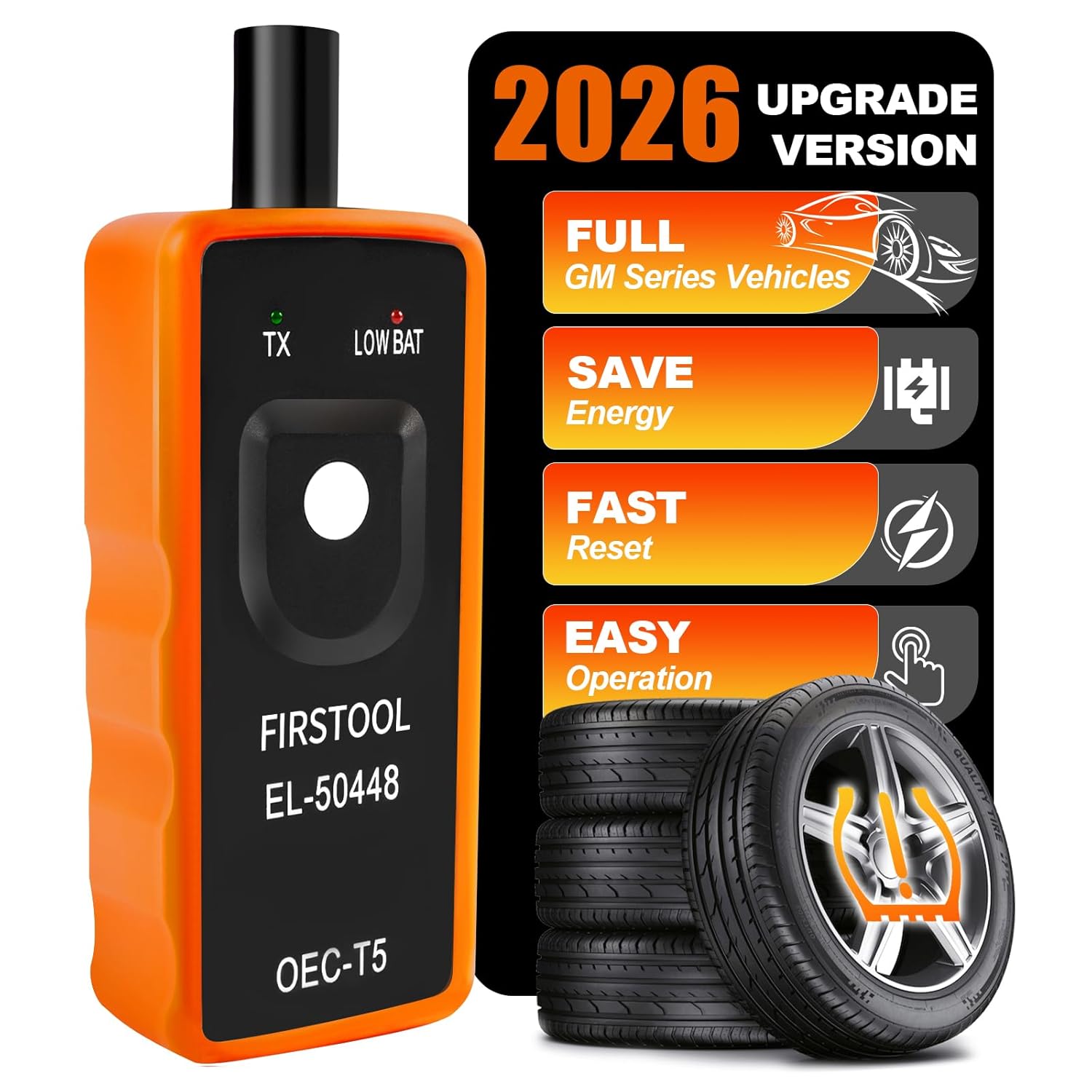
This TPMS relearn tool helps you quickly activate, match, and reset GM tire pressure sensors to keep the vehicle monitoring system working properly. It clears tire pressure alarms and dashboard warning lights after sensor replacement or tire rotation, and supports learning for common 315/433 MHz TPMS sensors. Designed for simple one-button operation, it can help you avoid unnecessary trips to repair shops.

The Trivd Frol 1/2" air impact wrench delivers high performance torque up to 1500 ft-lbs with a twin hammer impact mechanism for strong, balanced blows. It features an ergonomic grip, compact lightweight design, and quick-stop control with 3 forward speeds up to 8000 RPM plus a reverse speed. Built for demanding automotive repair and tire shop work, the rear exhaust helps keep debris away from the surface.
What Tire Mileage Warranties Really Mean
A mileage warranty is a useful comparison tool, but it is not the same as a guaranteed lifespan. A tire with an 80,000-mile treadwear warranty may still wear out sooner if it is under-inflated, misaligned, overloaded, used on rough roads, driven aggressively, or not rotated according to the warranty terms.
Use the mileage warranty to compare tire categories. Then check the real-world factors that affect your vehicle: climate, road surface, driving style, vehicle weight, rotation interval, tread depth, alignment, and pressure history. Keep receipts and rotation records if you want to preserve warranty coverage.
Note: If your front and rear tires are different sizes, directional, or staggered, your rotation options may be limited. Check the sidewall and owner’s manual before using a standard rotation pattern.
What Uneven Tire Wear Means
Uneven wear can tell you what is happening before a tire fails. Look across the tread, not just at the center. Compare all four tires because one bad corner can reveal an alignment, suspension, pressure, balance, or rotation problem.
| Wear pattern | Common cause | What to do |
|---|---|---|
| Both shoulders worn | Under-inflation, heavy cornering, or overload | Set cold pressure to the vehicle placard and inspect for damage. |
| Center worn | Over-inflation or load mismatch | Adjust pressure to the vehicle placard, not the tire’s maximum sidewall number. |
| One edge worn | Alignment or suspension issue | Schedule an alignment and inspect suspension parts. |
| Cupping or scalloping | Balance, shock, strut, wheel, or suspension problem | Have the tire, wheel, and suspension checked. |
| One tire wears faster | Missed rotation, alignment issue, pressure loss, or mechanical problem | Compare tread depths and inspect the vehicle before replacing only one tire. |
Frequently Asked Questions
Is 30,000 miles good for a set of tires?
Yes, 30,000 miles can be good for some tires, especially performance tires, winter tires, heavy-use tires, or tires driven on rough roads. For a long-wearing touring or all-season tire, 30,000 miles may be lower than expected. Check tread depth, wear pattern, age, pressure history, alignment, and rotation records before judging the tire.
Is a 40,000-mile tire good?
A 40,000-mile tire can be a solid result if the tire is designed for grip, heavy loads, rough roads, or performance driving. It may be disappointing for a long-warranty touring tire. Compare the tire’s warranty, treadwear rating, driving conditions, vehicle weight, and maintenance history before deciding whether 40,000 miles is good.
What is the #1 tire brand?
No single tire brand is best for every driver. Michelin, Continental, Bridgestone, Goodyear, Pirelli, Yokohama, Hankook, and other major brands all make strong tires in different categories. Choose by tire model, size, climate, test results, load rating, treadwear warranty, and the way you drive.
Is 20,000 miles on tires a lot?
No, 20,000 miles is not a lot for many daily-driver tires. It can be significant for soft performance tires, winter tires used in harsh conditions, overloaded vehicles, or tires that were not maintained well. If you see low tread, cracks, vibration, pressure loss, or uneven wear at 20,000 miles, inspect the vehicle and tires right away.
Should I replace tires by age even if the tread looks good?
Yes, age can matter even when tread looks good. Rubber and internal materials change over time because of heat, sunlight, storage, and road exposure. Check the DOT date code, follow your vehicle and tire manufacturer guidance, and have older tires inspected if they are approaching six to 10 years from manufacture.
Can tire rotation really make tires last longer?
Yes. Rotation helps spread wear across all tire positions, which can improve tread consistency, handling, and long-term tire life. Follow your owner’s manual because some directional, staggered, or different-size tire setups need special rotation patterns or may not rotate normally.
Can I replace only one tire?
Sometimes, but it depends on tread depth, vehicle type, drivetrain, tire size, and owner’s manual guidance. All-wheel-drive vehicles can be sensitive to mismatched tread depth. Directional, staggered, or different-size setups can also limit your options. Ask a qualified tire shop before replacing only one tire on a matched set.
Conclusion
So, how many miles should a tire last? For many daily drivers, a well-maintained all-season or touring tire can last tens of thousands of miles, often around 50,000 miles or more. Some long-warranty tires list higher mileage coverage, but your real replacement point depends on tread depth, age, damage, pressure, alignment, rotation, load, climate, and driving conditions.
Check pressure and tread monthly, read the DOT date code, rotate on schedule, and inspect sidewalls for cracks or bulges. Replace tires at 2/32 inch of tread, and do not ignore vibration, noise, pressure loss, uneven wear, or age-related damage. Good tire care helps you get more miles, but safe grip matters more than squeezing out one more season.
Sources
- NHTSA TireWise — tire pressure, tread depth, rotation, TPMS, aging, tire recalls, and tire safety guidance.
- Michelin Defender2 — current example of an all-season tire with an 80,000-mile warranty on most sizes.
- Continental TrueContact Tour — current example of a touring all-season tire with an up-to-80K limited warranty.
- Michelin Tire Rotation Guide — rotation interval guidance and rotation pattern considerations.

