
How to Remove Tire Shine From Tires: Easy Cleaning Methods
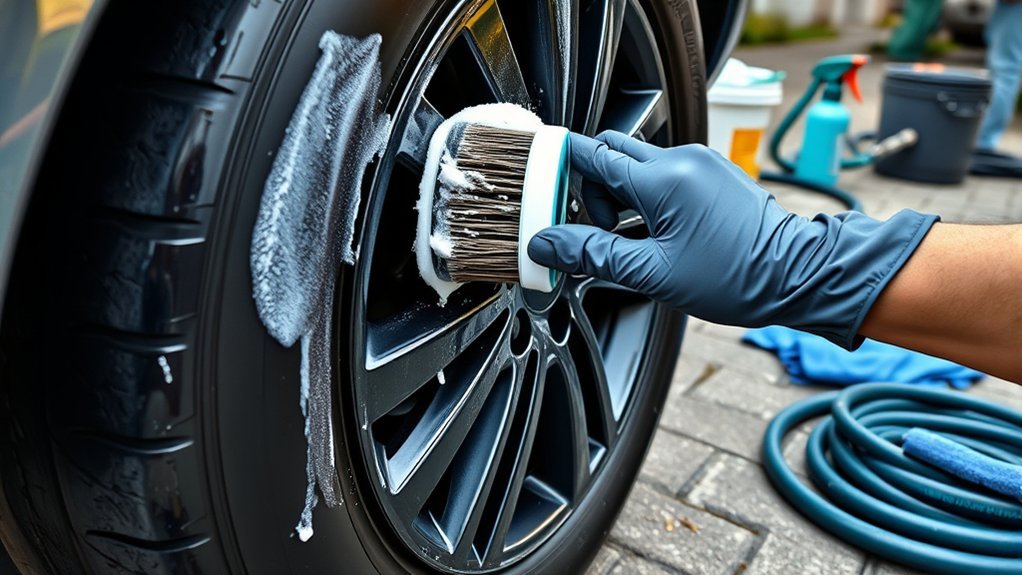
Old tire shine can leave a sidewall greasy, streaky, brown, or likely to sling onto the vehicle’s paint. The safest way to remove it is to use a tire-approved, non-petroleum cleaner, controlled brushing, and thorough rinsing. Work on cool tires, follow the cleaner’s label, and repeat gentle passes instead of reaching for harsh solvents.
Quick Answer
To remove tire shine, rinse the cool sidewall, apply a label-approved non-petroleum tire cleaner, let it dwell without drying, and scrub with a firm nylon tire brush. Rinse thoroughly and repeat only as needed. Stop when the sidewall looks even, no longer feels greasy, and leaves little residue on a clean cloth.
Key Takeaways
- Use a dedicated tire cleaner or another non-petroleum product specifically approved for tire rubber.
- Follow the product label for dilution, dwell time, protective equipment, and surface restrictions.
- Clean one cool tire at a time in the shade and never let the cleaner dry on the tire or wheel.
- Use a firm nylon tire brush and controlled pressure rather than a wire brush or aggressive high-speed tool.
- Keep cleaners and dressings off the tread, brake rotor, brake pads, and other friction surfaces.
- Normal brown tire blooming can return because protective compounds continue migrating through the rubber.
At a Glance
| Time Required | About 20–40 minutes for four tires, depending on buildup |
| Difficulty | Easy |
| Tools Needed | Hose or low-pressure sprayer, tire-approved cleaner, nylon tire brush, microfiber towels, gloves, and eye protection as required by the label |
| Cost | Approximately $0–$30, depending on supplies already owned |
Warning: Never mix tire cleaner with wheel cleaner, bleach, acids, solvents, or other chemicals. Keep cleaner and dressing off the tread and brake parts. Work on cool surfaces, follow the label and safety data sheet, and stop if you find a bulge, exposed cord, deep crack, or other structural damage.
Best Way to Remove Tire Shine
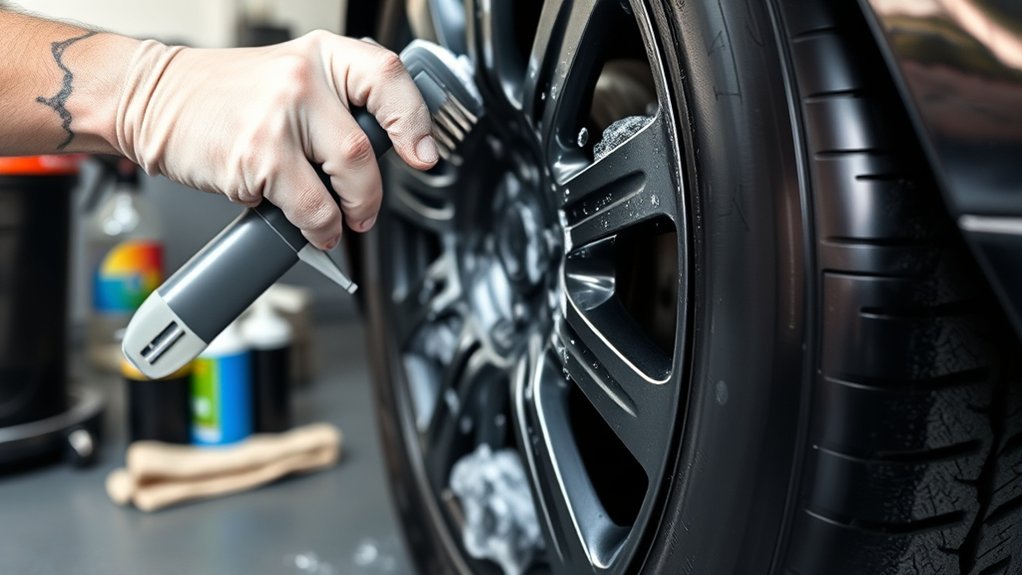
The best method is a controlled cleaning cycle: rinse, apply a rubber-safe cleaner, allow the labeled dwell time, brush the sidewall, and rinse thoroughly. Repeat only if the tire still feels greasy or has uneven glossy patches.
A dedicated tire cleaner is usually easier to control than a general-purpose solvent. Michelin advises using a non-petroleum cleaner or mild soap and water because petroleum-based tire-cleaning products may reduce the rubber’s protective weathering agents. See Michelin’s tire-care guidance.
If you use an all-purpose cleaner or degreaser that lists tires as an approved surface, follow the current bottle directions. Do not assume that one dilution ratio is correct for every formula. Product concentration, tire condition, wheel finish, and regional formulation can differ.
Note: Removing old dressing and removing brown blooming are related but not identical jobs. Old dressing often feels greasy or patchy. Blooming is usually a dry brown film caused partly by protective compounds migrating to the surface.
[Products Worth Considering]

Adam’s Pro Tire Hex Grip applicators are molded foam sponges designed for precise, even tire dressing application. The ergonomic grip helps you spread product without overapplying, reducing sling that can splash onto paint and helping keep your hands clean during wheel and trim detailing. They’re durable, washable, and reusable for repeated detailing sessions.

This oesee 8-piece wheel care kit helps you clean, scrub, and dry wheels safely with purpose-built brushes and towels. The scratch-free microfiber wheel brush lifts brake dust and grime, while the stiff pro-grip tire brush removes tire browning and embedded dirt. A twist loop microfiber drying towel and an applicator help achieve a streak-free finish and cleaner, more even product application.

This wheel brush kit delivers pro-level cleaning at home, lifting dirt, grime, and brake dust to help restore wheel appearance. It includes multiple brush styles and applicator pads for tackling different wheel surfaces, with gentle, metal-free bristles designed to reduce scratching risk. The flat and double-ended brushes are built for comfort and reach, making wheel care easier for cars, trucks, and RVs.
Before You Start
Inspect the tire before applying cleaner. Cleaning cannot repair a damaged sidewall, and a glossy product may hide defects that deserve attention.
- Check the sidewall: Look for cuts, bulges, exposed cords, deep cracking, or areas that appear separated.
- Let the tire cool: Do not spray cleaner on a hot tire or wheel.
- Move into shade: Direct sunlight can make cleaner dry too quickly.
- Read the label: Confirm that the cleaner is approved for tire rubber and the wheel finish beside it.
- Protect yourself: Use gloves, eye protection, and ventilation when required by the label or safety data sheet.
- Plan for runoff: Prevent dirty wash water from entering a storm drain. Follow local wastewater rules or use a commercial wash facility where appropriate.
The EPA notes that vehicle-washing runoff can carry soap and other contaminants into waterways. Its current guidance recommends using water sparingly and washing on a suitable surface or at a commercial facility when possible. See the EPA’s household runoff guidance.
Why Tires Turn Brown
A brown sidewall does not automatically mean that a tire is failing. Tire rubber contains antioxidants and antiozonants that help protect it from oxygen, ozone, temperature changes, and flexing. Some of these compounds can migrate toward the surface and react with the environment, creating a brown or dusty appearance commonly called blooming.
The U.S. Tire Manufacturers Association explains that antiozonants such as 6PPD help tires resist degradation and cracking. Michelin also notes that normal migration of an anti-ozone ingredient can leave a brownish surface film.
- Rubber formulations can bloom at different rates.
- Road film and brake dust can darken or intensify the visible discoloration.
- Old dressing may trap dirt and make the sidewall look patchy.
- Cleaning removes surface residue but does not permanently stop internal protective compounds from migrating.
Ordinary blooming is generally cosmetic. However, discoloration accompanied by deep cracking, a bulge, exposed cords, vibration, pressure loss, or an impact injury should be inspected by a qualified tire professional.
Tire Shine Removal Tools and Brushes
The right tools remove residue without adding unnecessary risk. A hand-held nylon tire brush offers more control than a wire brush or high-speed power tool.
| Tool | Best Use | Important Caution |
|---|---|---|
| Firm nylon tire brush | Routine sidewall agitation | Do not use it on paint or delicate wheel finishes |
| Drill brush attachment | Optional help with severe buildup | A hand brush is safer; if used, choose nylon, use low speed, and avoid damaged rubber and wheel surfaces |
| Microfiber towel | Drying and checking for greasy transfer | Keep tire towels separate from paint towels |
| Hose or low-pressure sprayer | Pre-rinsing and flushing cleaner away | Avoid a close, concentrated high-pressure jet |
Also keep a clean rinse bucket, the cleaner’s original labeled container, and any protective equipment required by the manufacturer nearby. Do not transfer chemicals into an unlabeled bottle.
How to Remove Tire Shine Step by Step
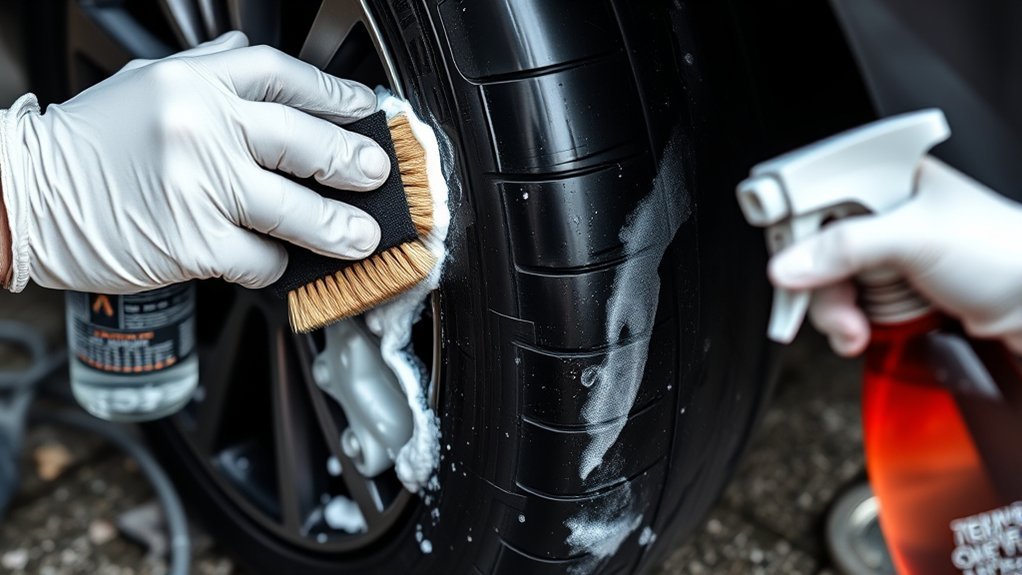
- Park safely and let the tires cool. Work in shade on a stable surface with the parking brake applied.
- Inspect the tire and wheel. Stop if you find structural tire damage. Check the cleaner label for restrictions involving polished, anodized, painted, or damaged wheel finishes.
- Rinse loose contamination away. Use water to remove grit, mud, and road film that could scratch the wheel during brushing.
- Apply the cleaner to one sidewall. Cover the rubber evenly without soaking the tread, wheel, or brake components.
- Allow the labeled dwell time. Super Clean’s tire instructions, for example, call for cool, dry tires out of direct sun and a short one- to two-minute dwell. Never let the product dry. See the manufacturer’s tire and wheel directions.
- Agitate with a nylon tire brush. Use overlapping strokes around the lettering, ribs, and textured sidewall areas. Apply enough pressure to lift residue without grinding the rubber.
- Rinse thoroughly. Flush away cleaner, loosened dressing, and dirty foam before moving to another tire.
- Repeat only if needed. A heavily coated sidewall may need a second or third controlled pass. Repeated short passes are preferable to one extreme pass.
- Dry and inspect. Use a dedicated tire towel and check the entire sidewall in good light.
Pro Tip: Work one tire at a time. This makes it easier to control dwell time and prevents cleaner from drying while you scrub another wheel.
How to Tell When Tire Shine Is Removed
The sidewall does not need to look perfectly black to be clean. Natural rubber color varies, and blooming may remain or return. Look for several signs together:
- The finish appears even rather than glossy in isolated patches.
- The rubber no longer feels oily or unusually slick.
- A clean microfiber towel picks up little greasy residue.
- A fresh cleaning pass produces much less dark or oily runoff.
- Water no longer forms unusual oily-looking patches on top of old dressing.
Do not keep scrubbing solely because the rubber is not jet black. Excessive cleaning can add risk without improving the result.
How to Remove Stubborn Residue
Old solvent-rich or heavily layered dressing may not come off in one pass. Reapply the same tire-approved cleaner, follow its dwell time again, and brush a small section at a time. Do not increase the concentration beyond the label or mix in another chemical to make the process “stronger.”
If the residue remains:
- Confirm that the cleaner is intended to remove tire dressing rather than only loose dirt.
- Use a clean brush; a brush loaded with old dressing can spread residue back onto the tire.
- Clean raised letters, decorative ribs, and the area close to the wheel lip carefully.
- Rinse between every pass instead of layering more cleaner over dirty foam.
- Allow the tire to dry before deciding whether another pass is necessary.
A drill brush can speed agitation, but it also reduces control. Avoid hard bristles, high speed, prolonged contact, and use near cracked, weathered, whitewall, or specialty sidewalls unless the tire and tool manufacturers approve it.
Why Tire Browning Comes Back
Browning can return after the tire is thoroughly cleaned. That does not necessarily mean old tire shine remains. The source may be renewed antiozonant migration, fresh road film, brake dust, or new dressing that was applied too heavily.
[Products Worth Considering]

Cristal Products Untouchable Tire Shine Spray delivers a deep, wet-look gloss that enhances your vehicle’s tires. It’s quick-drying and spreads smoothly for consistent, streak-free coverage, while forming a protective coating against UV rays, road grime, and weather. Suitable for all tire types, it helps restore dull, faded tires to a showroom-quality finish.

Blackline Blackout is a water-based trim and tire dressing that restores rubber, vinyl, and plastic with a rich satin, blackout look. Its no-sling formula dries quickly and helps prevent messy transfer onto paint. The coating repels water and offers UV protection to help prevent fading, cracking, and discoloration for a clean, long-lasting finish.
Antiozonants Rise Again
Protective compounds continue moving through the tire as it ages and flexes. Cleaning removes the material currently on the surface, but it cannot switch off the process inside the rubber. That is why a clean tire may gradually develop another brown film.
Dirt Buildup Returns
Road grime, dust, brake residue, and oily contamination can settle into the sidewall texture. These materials may combine with blooming and make the discoloration look darker or return faster.
| Cause | What You May Notice |
|---|---|
| Road film | Gray or brown grime that wipes onto a towel |
| Antiozonant bloom | Dry brown discoloration that gradually returns |
| Old dressing | Greasy, shiny, sticky, or patchy sections |
| Excess new dressing | Wet-looking surface, dust attraction, or sling |
| Physical damage | Cracks, bulges, cuts, exposed material, or pressure loss |
Dressings Break Down
Tire dressings weather, collect contamination, and wear unevenly. A thick application can remain wet longer, hold dust, or sling onto nearby bodywork. When applying a new dressing, use a thin coat on a completely dry sidewall, keep it off the tread, and remove excess product before driving.
Dressings are optional. Continental notes that tires do not require gloss or dressing products for storage because tire compounds are already designed to resist environmental stress. See Continental’s tire-storage guidance.
A clean tire does not have to look glossy or perfectly black. An even, dry, non-greasy sidewall is a better sign of successful cleaning.
Can Wheel Cleaners Make It Worse?
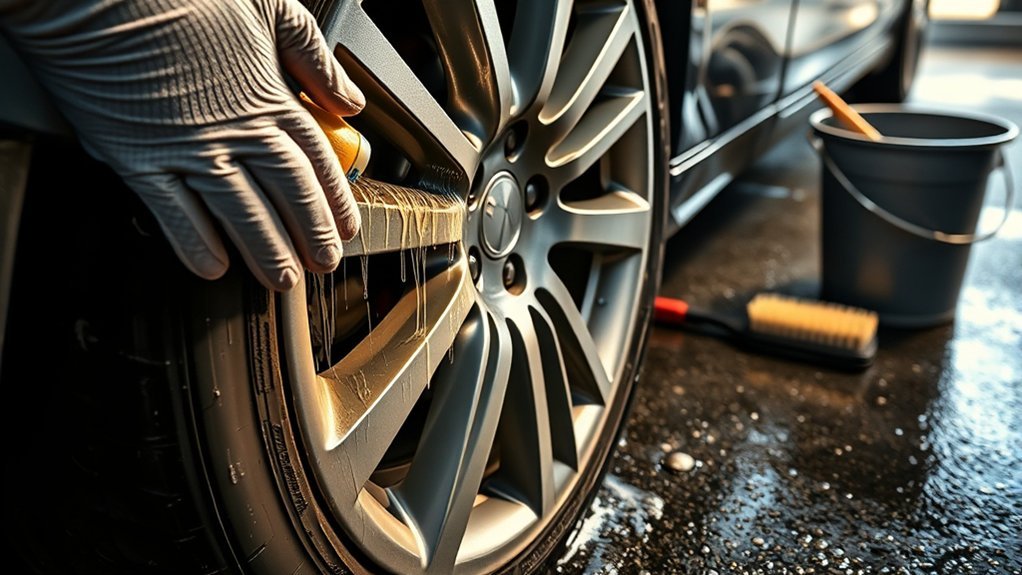
Yes, an unsuitable wheel cleaner can create problems if it is used on tire rubber or an incompatible wheel finish. Wheel cleaners may be designed for brake dust, iron deposits, or mineral contamination rather than old tire dressing. Some formulas are safe for both wheels and tires, while others are not.
Use the product only on surfaces named on its label. Do not assume that “non-acid,” “all-wheel,” or “heavy-duty” automatically means it is suitable for every tire, coating, polished wheel, or brake component.
| Product Type | Primary Job | Main Precaution |
|---|---|---|
| Dedicated tire cleaner | Remove sidewall grime and dressing | Follow dilution and dwell instructions |
| Wheel-and-tire cleaner | Clean approved wheel finishes and rubber | Confirm compatibility with both surfaces |
| Wheel-only cleaner | Remove wheel contamination | Do not use on rubber unless the label permits it |
| General-purpose degreaser | Clean multiple listed surfaces | Use only when tires are an approved application |
| Petroleum solvent or lubricant | Lubricate, penetrate, or clean other materials | Not recommended as a tire-sidewall cleaner |
What Not to Use on Tires
Avoid improvised products that are not approved for tire sidewalls. Stronger is not automatically safer or more effective.
- WD-40 Multi-Use Product: It is a lubricant, moisture displacer, and metal protectant rather than a dedicated tire cleaner. Michelin advises avoiding petroleum-based tire-cleaning products.
- Gasoline, kerosene, paint thinner, or mineral spirits: These petroleum solvents do not belong in a routine tire-cleaning process.
- Brake cleaner: It is intended for specific brake-service applications, not cosmetic tire cleaning.
- Bleach or acidic household mixtures: These may be incompatible with rubber, wheels, coatings, or nearby surfaces.
- Wire brushes: They are unnecessarily aggressive and can damage surrounding finishes.
- Undiluted chemicals contrary to the label: Never increase concentration beyond manufacturer instructions.
- Mixed cleaning chemicals: Combining products can create dangerous reactions or unpredictable surface damage.
How to Keep Tires Clean Longer
Regular light cleaning is safer and easier than repeatedly stripping heavy buildup. Rinse road salt, mud, and chemical contamination promptly, then wash the sidewall with a tire-safe product when needed.
- Use thin dressing coats rather than layering new product over old residue.
- Apply dressing only to a clean, completely dry sidewall.
- Use an applicator instead of overspraying the wheel, paint, or tread.
- Buff away excess dressing and allow the labeled drying or curing time.
- Do not drive until the product has set as directed.
- Keep a separate brush and towels for tires and wheels.
- Store cleaning products in their original labeled containers.
- Park out of prolonged direct sunlight when practical, but do not treat dressing as a substitute for normal tire inspection.
If you prefer a natural-looking tire, you can leave the sidewall clean and undressed. A tire does not need a wet gloss to be properly maintained.
Frequently Asked Questions
How can you get tire shine off tires quickly?
Work on one cool tire at a time. Rinse it, apply a tire-approved cleaner, follow the labeled dwell time, scrub with a firm nylon brush, and rinse thoroughly. A second controlled pass is safer than using an unapproved solvent or excessive brush pressure.
Will WD-40 clean your tires?
WD-40 may loosen some sticky residue, but it is not the recommended product for cleaning a tire sidewall. It is a lubricant and metal-protection product, and Michelin advises avoiding petroleum-based tire cleaners. Use a dedicated non-petroleum tire cleaner or mild soap and water instead.
How long does tire shine take to wear off?
There is no universal wear-off period. Water-based sprays, gels, solvent-rich products, and longer-lasting coatings behave differently. Weather, mileage, road conditions, preparation, application thickness, and washing frequency also affect durability. Follow the product label and remove it when the finish becomes uneven, greasy, or contaminated.
What home remedy can remove tire shine?
For light residue, mild automotive soap and water may be enough. Avoid unverified vinegar, baking-soda, bleach, solvent, or mixed-chemical recipes. Heavy old dressing is better handled with a non-petroleum cleaner specifically labeled for tire rubber.
Why does the cleaning foam turn brown?
Brown foam can contain road film, brake dust, old dressing, and surface bloom lifted from the sidewall. It is a useful sign that contamination is being removed, but foam color alone does not prove that the tire is perfectly clean.
Should you apply new tire shine immediately after cleaning?
Only after the tire is completely rinsed and dry. Apply a thin coat to the sidewall, keep it off the tread and brakes, remove excess product, and allow the labeled drying or curing time. Dressing is optional, so a clean tire may also be left untreated.
Conclusion
To remove tire shine safely, clean the sidewall rather than covering old product with another coat. Use a non-petroleum cleaner approved for tire rubber, follow its label, agitate with a nylon brush, rinse thoroughly, and repeat gentle passes only when needed.
Do not use WD-40, petroleum solvents, brake cleaner, mixed household chemicals, or uncontrolled high-speed brushing. Remember that a clean tire may still show natural brown blooming because protective compounds continue migrating through the rubber. Judge the result by an even, dry, non-greasy surface—not by whether the sidewall looks artificially glossy.
Sources
- Michelin USA Tire Care FAQ — supports non-petroleum tire cleaning and explains normal brown sidewall discoloration.
- U.S. Tire Manufacturers Association: 6PPD and Tire Manufacturing — explains the protective role of antioxidants and antiozonants.
- Super Clean Tire and Wheel Directions — supports cool-surface, shade, short-dwell, brushing, and rinsing precautions for that product.
- U.S. Environmental Protection Agency: What You Can Do in Your Home — supports responsible handling of vehicle-washing runoff.
- Continental Tire Storage Guidance — explains that tire dressing or gloss is not required.

Related Articles
AWD Tire Rotation Pattern: How Often and How to Do It
W**ondering the right AWD tire rotation pattern and timing? Discover the simple method, ideal schedule, and mistakes to avoid before your tires wear unevenly.
Read More
Wheel Damage: Types, Repair Options, and Costs
Many wheel damages look minor, but some hide costly safety risks—learn which repairs are worth it and when replacement is smarter.
Read More
Tire Balancing Weights: Types, Cost, and Why You Need Them
Precisely chosen tire balancing weights reduce vibration and wear, but which type fits your wheels and what it really costs may surprise you.
Read More