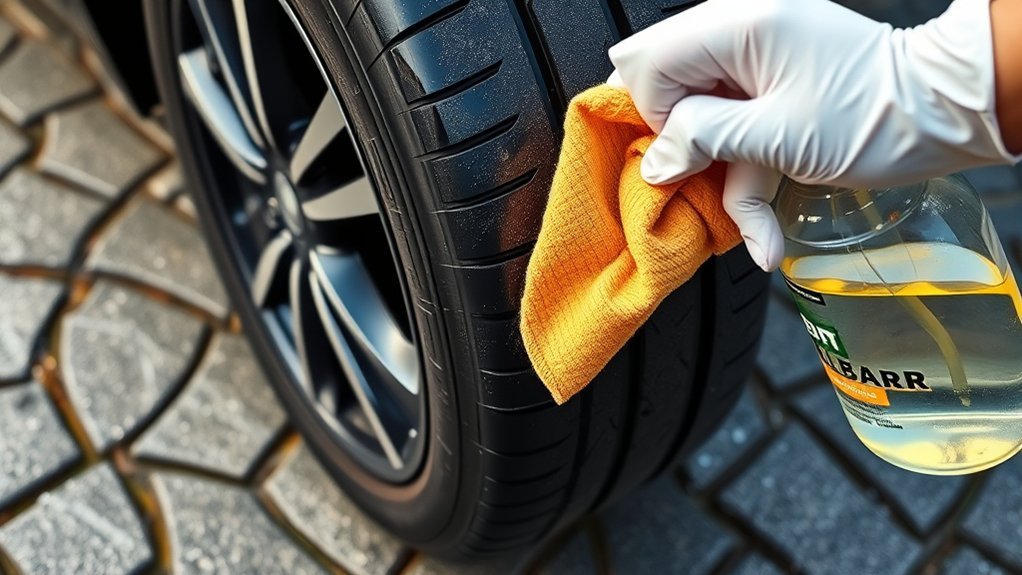
Road tar can stick to tire tread and sidewalls after you drive through fresh paving or roadwork. Most light splatter can be removed at home, but the safest method is to start with water and mild soap, use only tools that cannot cut the rubber, and avoid any solvent whose label does not specifically approve use on rubber.
Quick Answer
Let the tire cool, rinse away grit, and wash the tar with mild soap and water. Lift softened chunks from the tread with a plastic scraper held nearly flat. For residue, use only a cleaner whose current label says it is safe for rubber, then wash, rinse, dry, and inspect the tire.
Key Takeaways
- Begin with a cool tire, clean water, mild soap, and a nylon tire brush.
- Use a plastic scraper only on the tread; do not use a screwdriver, razor, wire brush, or other metal tool.
- A product that is safe for automotive paint is not automatically safe for tire rubber.
- Avoid gasoline, kerosene, heat, and petroleum-based tire cleaners.
- Stop and get a tire professional’s help if you find a cut, puncture, exposed cord, bulge, air loss, or tar packed too deeply to remove safely.
At a Glance
| Time Required | 20–45 minutes, depending on buildup |
| Difficulty | Easy for surface splatter; professional help may be needed for embedded tar or damage |
| Tools Needed | Gloves, hose or bucket, mild soap, nylon tire brush, microfiber cloths, and a plastic scraper |
| Cost | About $0–$20 if you already own basic washing supplies |
Warning: Never use gasoline, kerosene, an open flame, a heat gun, or a metal blade on a tire. Keep cleaners off brake rotors, pads, and calipers, work in a ventilated area, and follow the product label. Do not drive until all cleaner and oily residue have been washed away and the tire is dry.
How to Remove Tar From a Tire
1. Park Safely and Let the Tire Cool
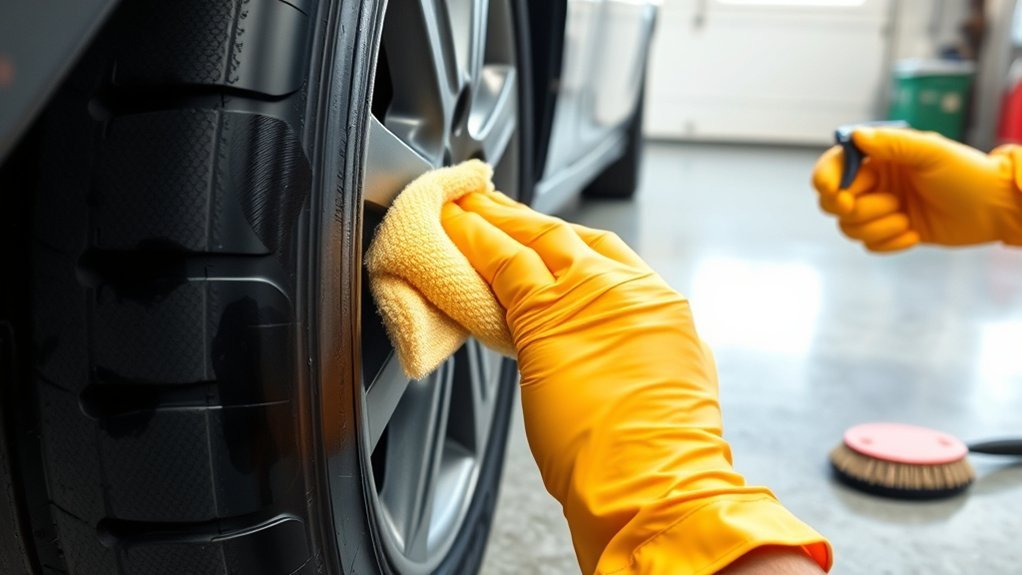
Park on a level surface away from traffic, set the parking brake, and wait until the tire and wheel are cool. Put on chemical-resistant gloves if you may use a cleaner. You normally do not need to remove the wheel. If removal is necessary, use the vehicle manufacturer’s lifting points and properly rated jack stands rather than relying on a jack alone.
2. Inspect the Tread and Sidewall
Check whether the tar is on the tread, inside a groove, or on the sidewall. Look for cuts, punctures, exposed cords, cracks, bulges, or unusual air loss before cleaning. The National Highway Traffic Safety Administration recommends regular checks for tread wear and physical damage. If the tire has a bulge, deep cut, exposed cord, or pressure loss, stop using it and have it inspected rather than trying to clean around the damage.
3. Rinse Away Loose Grit
Use cool or lukewarm water to remove loose gravel and dirt. This reduces the chance of grinding abrasive particles into the rubber. Do not pressure-wash at extremely close range, and do not aim a strong jet directly at a damaged area, valve stem, or wheel-weight adhesive.
4. Wash and Soften the Tar
Mix mild detergent or automotive wash soap with water according to its label. Apply it to the tarred area and let it stay wet for a few minutes. Scrub with a nylon tire brush using short, controlled strokes. Light tar and road film may release during this step, so repeat the soap-and-water wash before reaching for a stronger cleaner.
5. Lift Large Deposits With a Plastic Tool
When the tar softens, slide a plastic scraper or plastic putty knife under the edge of the deposit. Keep the tool nearly flat and work from the outside toward the center. Use this method on the tread only. Do not dig into a groove, carve the sidewall, or use the flat screwdriver suggested in the original method; a metal edge can cut or gouge the rubber.
6. Spot-Treat Only With a Rubber-Safe Cleaner
If a thin film remains, read the cleaner’s current label before it touches the tire. The label must specifically permit use on rubber; approval for paint, glass, wheels, vinyl, or plastic is not enough. Apply a small amount to a cloth rather than soaking the tire, test a hidden spot, use the shortest label-approved dwell time, and keep the product away from brakes and painted wheel finishes unless those surfaces are also listed as safe.
7. Wash, Rinse, Dry, and Reinspect
Wash the treated area again with soap and water, rinse thoroughly, and dry it with a clean cloth. The rubber should not feel oily or slick. Recheck the tread grooves and sidewall for damage that the tar may have hidden. If residue remains after two careful passes, a tire shop or professional detailer can remove it without aggressive scraping.
Pro Tip: Work on one small section at a time and keep it wet. Several gentle passes are safer than one long soak or forceful scrape.
Best Tar Removers for Stubborn Spots
The safest first choice is plain soap and water. Michelin advises using non-petroleum cleaners or plain soap and water on tires because petroleum-based tire cleaners can deplete protective compounds in the rubber and contribute to cracking. Read the Michelin tire-cleaner guidance before choosing a stronger product.
| Cleaner Type | Tire-Rubber Guidance |
|---|---|
| Mild soap or automotive wash soap | Best starting point for loose tar, grit, and oily residue. |
| Water-based cleaner whose label lists rubber | Reasonable for spot treatment when used at the labeled dilution and dwell time. |
| Paint-oriented tar or adhesive remover | Do not assume it is tire-safe. Confirm that the exact label lists rubber before use. |
| Gasoline, kerosene, petroleum cleaner, or oily penetrant | Avoid on tires because it may affect rubber and leave a slick residue. |
Several products named in the original article are designed for different surfaces. Goo Gone Original says not to use it on rubber. Tarminator directs users to painted exterior surfaces and warns against rubber trim. 3M Adhesive Remover is described for cured automotive paint, glass, and vinyl and is labeled for industrial or occupational use, not as a consumer tire cleaner. The same caution applies to Rust-Oleum wax-and-tar remover or any similar body-detailing solvent unless its current label specifically approves tire rubber.
Do not use a universal 50/50 all-purpose-cleaner mix unless the cleaner’s own label calls for that dilution on rubber. Concentration varies by formula. Linseed oil is also not a verified tire-cleaning method, and a 25- to 30-minute oil soak can leave residue that requires more cleaning. Use a label-approved rubber cleaner instead.
Note: Budget, road noise, tread life, and wet-weather traction matter when choosing replacement tires, but they do not determine whether a cleaner is safe. A cleaning product cannot improve a tire’s traction rating, and removable tar alone is not a reason to replace an otherwise sound tire.
[Products Worth Considering]
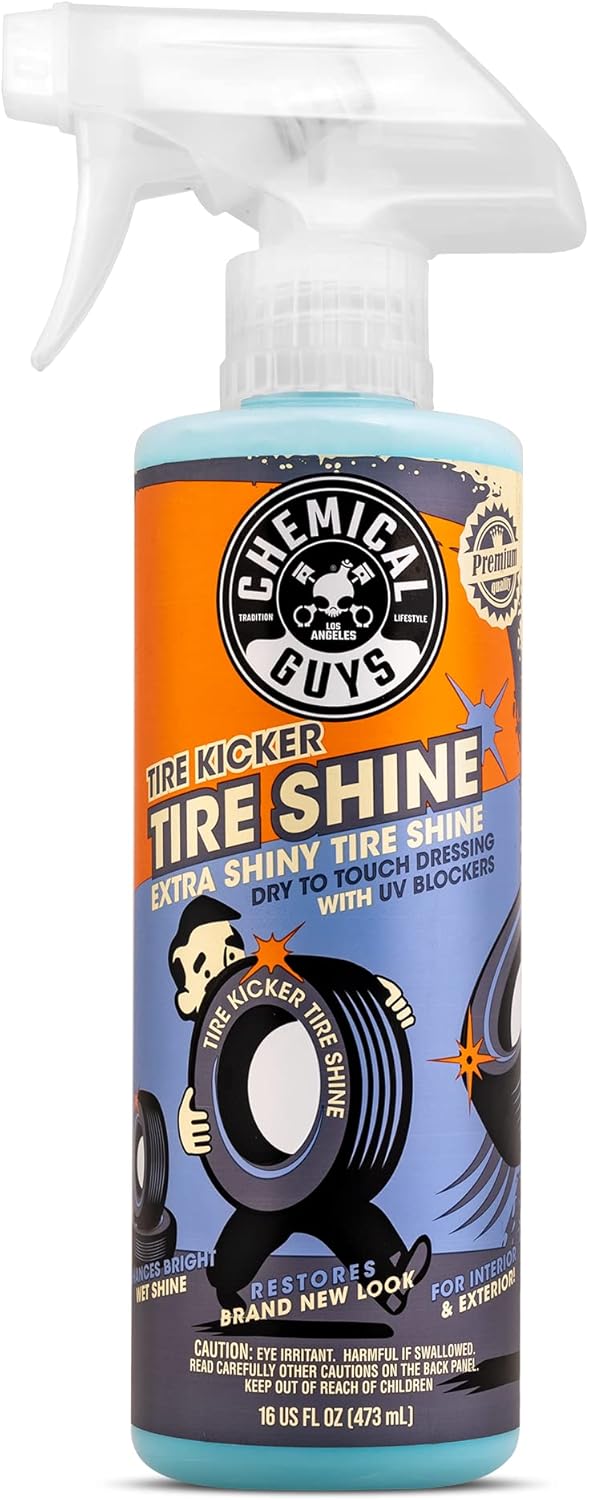
Chemical Guys Tire Kicker Sprayable Extra Glossy Tire Shine restores a deep, wet look on tires, rubber, vinyl, and plastic trim. It delivers a rich showroom shine that enhances color and luster while helping protect against fading, cracking, and discoloration. The spray application dries to the touch with a streak-free finish and no greasy sling, for fast results on cars, trucks, motorcycles, RVs, and boats.

This 62-inch extra-long car wash brush kit makes it easy to clean hard-to-reach areas on cars, trucks, SUVs, and RV roofs with lightweight, sturdy poles. It includes soft, non-scratch microfiber and bristles with protective bumpers to help prevent scratches while cleaning effectively. A rubber squeegee helps remove water stains quickly, plus a wheel/tire brush and absorbent towels for complete exterior detailing.

Suds Lab WB Premium Detailing Wheel Brush delivers a scratch-free clean using ultra-soft microfiber bristles that lift brake dust, dirt, and grime without swirling. The ergonomic non-slip handle helps you deep-clean rims, wheels, and tires with reduced hand fatigue while reaching tight contours. It’s reusable and machine washable for long-term detailing, and works across cars, trucks, SUVs, and motorcycles plus multi-purpose cleaning tasks.
Scrape Tar Off Without Damaging Rubber
Use only a plastic scraper, plastic putty knife, or a blunt plastic pick. Hold it at a low angle and lift the tar instead of pushing the tool into the rubber. A screwdriver may seem convenient, but even a flat edge can slip, puncture a tread groove, damage a sidewall, or expose reinforcing material.
If the tar resists, return to warm—not hot—soapy water and let the area stay wet for a few minutes. Do not warm the tire with a heat gun or flame, especially when any cleaner or solvent is nearby. Do not use a wire brush or abrasive pad. On raised sidewall lettering, use a cloth or soft nylon brush instead of scraping.
After the largest pieces are gone, scrub the remaining film with detergent and a nylon brush. Rinse between passes so loosened gravel does not scratch the wheel or become pressed back into the tread.
[Products Worth Considering]
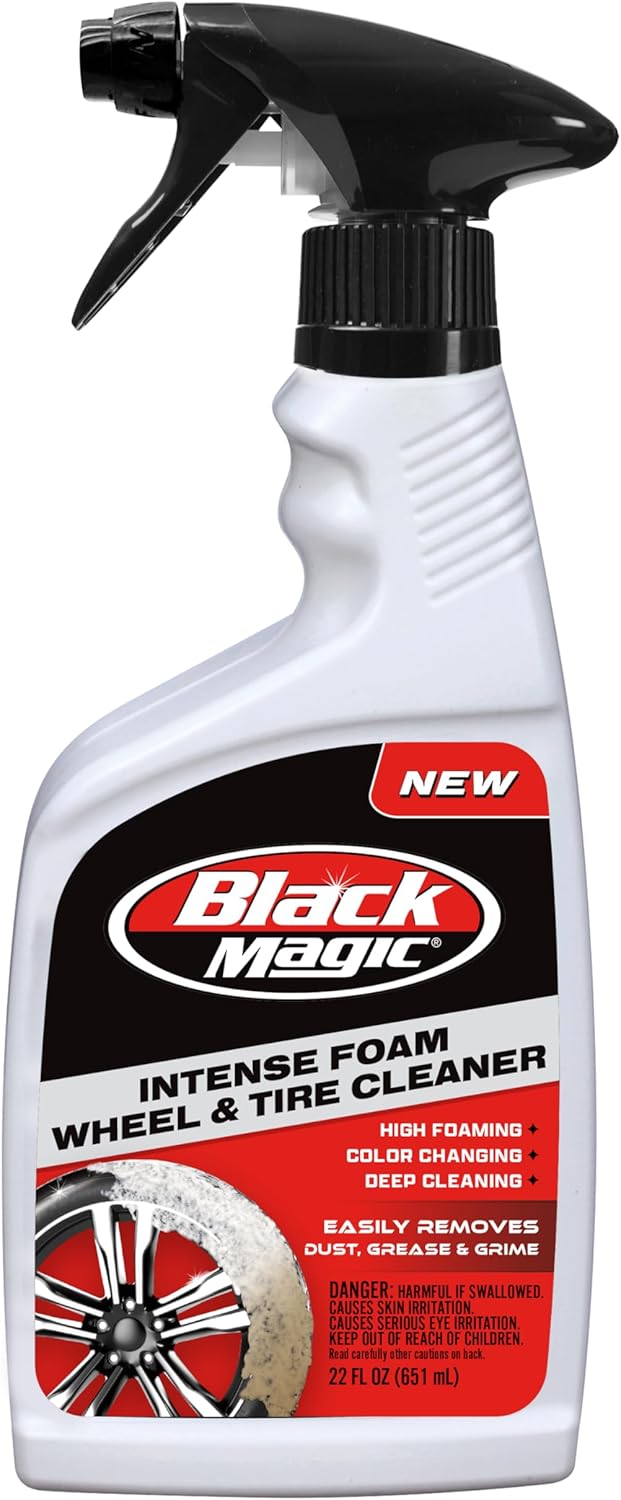
Black Magic Intense Foam Wheel & Tire Cleaner uses a high-foaming action to lift away dirt, grime, and brake dust without scrubbing. The color-changing formula helps show contaminants being dissolved as foam turns from white to brown. Safe for all wheel types and even wheel wells, it leaves a like-new, slick finish with a fresh cherry scent.

This 3-piece wheel and tire brush set makes it easy to clean light, medium, and heavy dirt from wheels, rims, tires, and exterior surfaces. It includes both soft and stiff bristle options for gentle scrubbing and tough grime removal, helping lift brake dust and road buildup. The long-handle design supports comfortable cleaning across cars, trucks, SUVs, RVs, motorcycles, and more, with simple care instructions to restore brush shape.

This professional wheel and rim brush kit makes it easy to lift brake dust, grime, and dirt from wheels and tires without scratching finishes. The brushes feature soft, metal-free wool heads and a flexible 360-degree rim brush design for reaching hard-to-clean areas. Includes multiple brush types plus accessories for thorough car, motorcycle, and general vehicle detailing.
Wash Away Tar Residue With Soap and Water
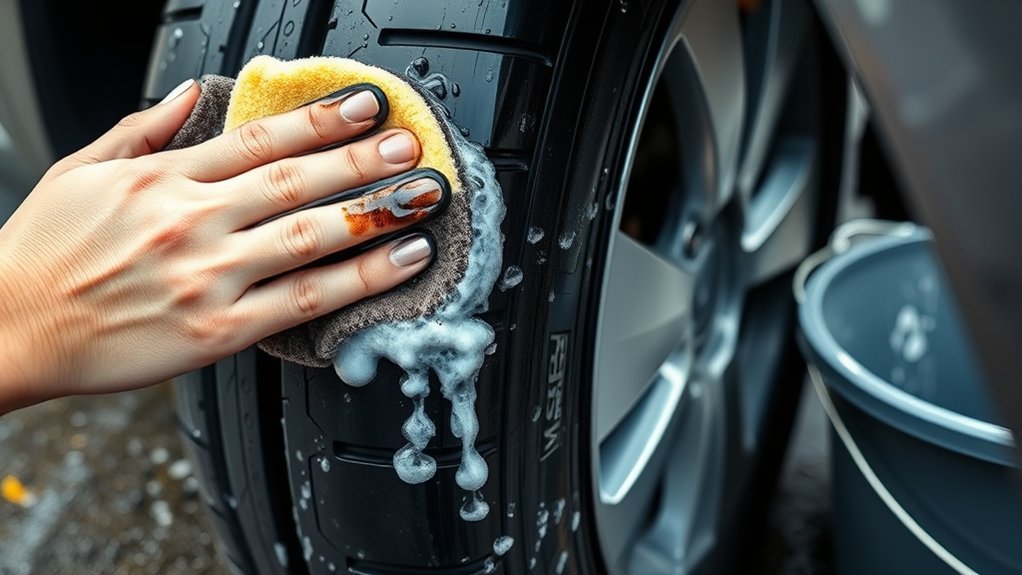
Apply mild detergent to the wet tire and work it into the tarred area with a nylon brush. Let the suds stay on the surface briefly, but do not allow soap or cleaner to dry. Scrub the tread in different directions so the bristles reach the groove edges, then rinse until the water runs clear and the rubber no longer feels slippery.
For a sidewall, use lighter pressure and avoid prolonged scrubbing over molded letters, date codes, and other markings. Repeat the wash if a thin film remains. A stiff nylon tire brush is suitable for tread blocks, but a softer brush or microfiber cloth is safer for the sidewall and painted wheel.
Dispose of used cloths and leftover solvent according to the product label and local rules. The U.S. Environmental Protection Agency advises against pouring household solvents or hazardous cleaners down drains, onto the ground, or into storm sewers.
[Products Worth Considering]

This metal-free wheel and tire cleaning brush uses dense, fluffy synthetic wool to safely clean rims, spokes, fenders, and engine areas without worrying about damaging surfaces. Its flexible, comfortable design helps you reach detailed areas while maintaining durability, and the extra absorbent fibers work well with wheel spray cleaners for faster cleanup. Reusable and washable performance helps prevent grime and build-up for cleaner vehicles and easier maintenance at home.

Measure tire tread depth quickly and accurately with this LUMITECO dial gauge that reads in 1/32" increments up to 14/32". The color-coded green/yellow/red zones make it easy to judge tire wear and know when replacement is needed. A rugged, compact design with a protective pouch helps keep the gauge ready for use on cars, trucks, motorcycles, and more.
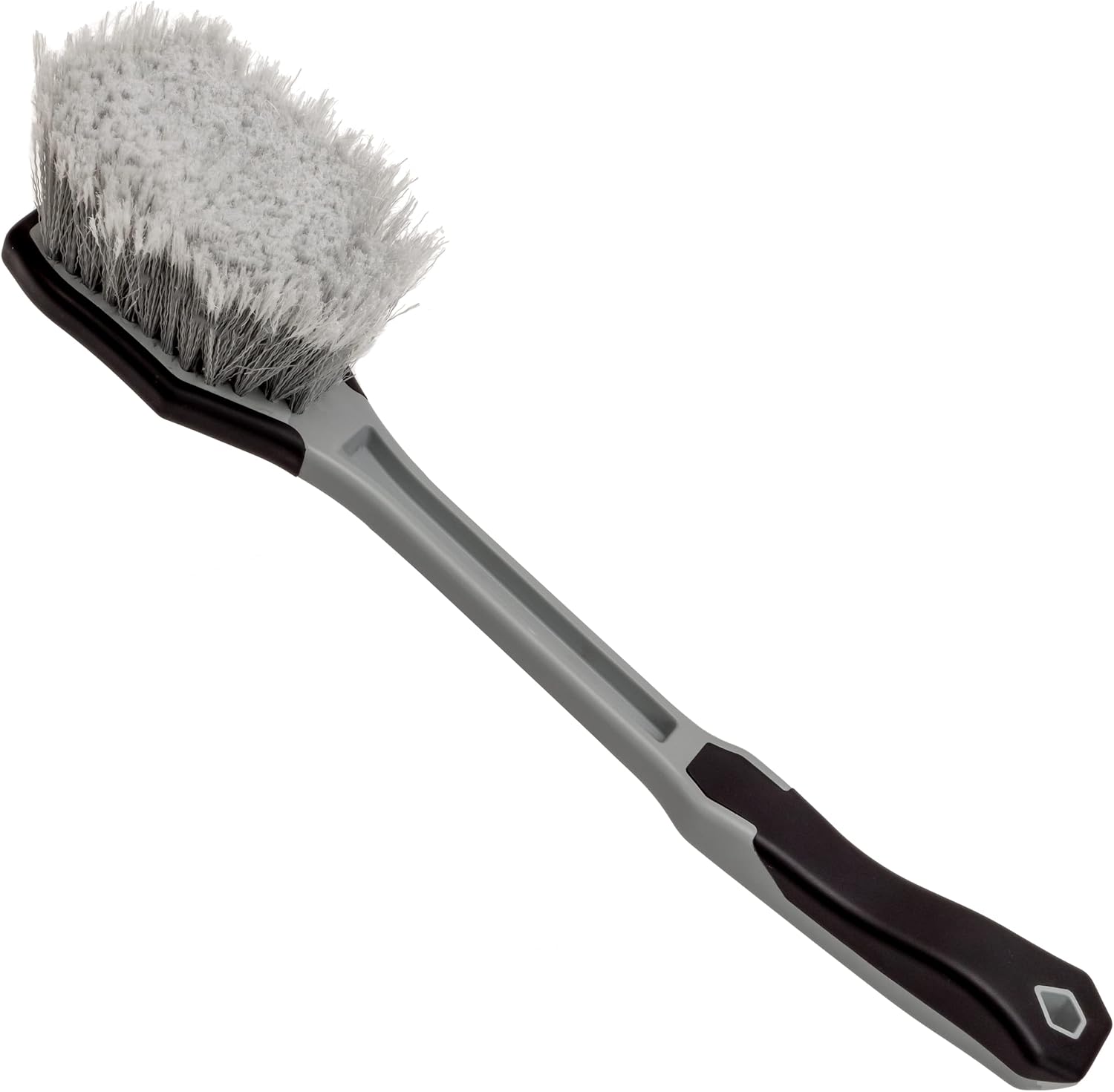
Clean grills, fenders, fender flares, bumpers, and wheel wells with a long-handled brush built for detailed car washing. The soft, triple-flagged bristles and dense scrub coverage help lift dirt gently while making coverage fast and easy. Use it with your favorite car wash soap for tires and exterior surfaces, and it also works for bike, motorcycle, boat, or RV cleaning.
When to Stop Cleaning and Get Professional Help
- Tar is deep in a tread groove: Do not dig toward the tire carcass. A tire shop can inspect and remove it safely.
- The tire loses pressure: Treat it as possible damage, not a cleaning problem.
- You see a cut, crack, bulge, exposed cord, or puncture: Stop using the tire and arrange a professional inspection.
- The tire still feels oily after repeated washing: Do not drive until the residue is removed.
- Cleaner reached a brake component: Do not drive if braking feels or sounds different; have the brake system inspected.
Prevent Tar Buildup on Tires
Inspect your tires after driving through fresh paving or active roadwork. Remove loose stones and wash light splatter before it hardens. Avoid hard launches, burnouts, and rapid acceleration on sticky pavement because they can throw more material onto the tread, wheel wells, and bodywork.
Do not pack sand or cornstarch into the tread as a substitute for cleaning. Those materials may reduce surface stickiness for handling during cleanup, but they do not remove tar and can hide residue in the grooves. Likewise, do not apply wax, dressing, or a “protective coating” to the tread. Use any appearance product only on surfaces listed by its manufacturer and keep it off the tread and brakes.
| Action | Benefit |
|---|---|
| Inspect tires after roadwork | Find tar and hidden damage early |
| Wash fresh splatter promptly | Reduces the need for stronger cleaners |
| Skip hard acceleration on sticky pavement | Limits tar spread across the tire and body |
| Keep dressings and coatings off the tread | Avoids leaving a slick film on the contact surface |
Keep this routine consistent, and later cleanup should be faster and less likely to require a strong chemical.
Frequently Asked Questions
What dissolves asphalt tar on a tire?
Start with mild soap and water. For residue that remains, use only a cleaner whose label specifically lists rubber as a safe surface. Citrus, adhesive, or paint-safe solvents may dissolve tar, but that does not make them safe for tire rubber. Avoid gasoline, kerosene, and other petroleum-based tire cleaners.
Does WD-40 remove tar from tires?
WD-40 Multi-Use Product may loosen sticky material, but it is a petroleum-based product and is not the preferred cleaner for tire rubber. Michelin advises avoiding petroleum-based tire cleaners. Do not confuse the multi-use lubricant with a separate water-based cleaner that may have different surface approvals; always follow the exact product label.
Can Dawn dish soap remove tar?
A mild dish soap can remove loose road film and some fresh, light tar, especially when paired with warm water and a nylon brush. Hardened deposits may need repeated washing and careful plastic scraping. Use a small amount, rinse completely, and switch only to a cleaner labeled safe for rubber if residue remains.
How do professionals remove tar from tires?
A professional first checks for damage, cools and rinses the tire, then uses a rubber-compatible cleaner and nonmetal tools. They avoid aggressive heat and do not rely on a plug-only repair if the tire has been punctured. When damage is suspected, the tire may need to be removed from the wheel for an internal inspection.
Can you drive with tar on a tire?
A small splash on the sidewall is usually a cleaning issue, but a thick deposit that fills tread grooves can interfere with the tread’s contact and water-clearing function. Remove heavy buildup before normal driving. Stop and seek help if the tire vibrates, loses pressure, handles differently, or shows physical damage.
Conclusion
To remove tar from a tire safely, begin with a cool tire, soap, water, and a nylon brush. Lift softened tread deposits with a plastic scraper, and use a stronger cleaner only when its current label specifically approves rubber. Avoid petroleum solvents, metal tools, and heat. Finish by washing away every trace of cleaner and checking the tire for hidden damage.
Sources
- Michelin USA: Tire Care and Maintenance FAQs — supports using soap, water, or non-petroleum tire cleaners.
- NHTSA TireWise: Tire Safety Ratings and Awareness — supports tread, pressure, and damage inspections.
- Goo Gone Original Product Directions — identifies rubber as a surface on which the product should not be used.
- Stoner Car Care Tarminator Directions — limits use to approved exterior surfaces and warns against rubber trim.
- 3M Adhesive Remover Product Information — describes approved automotive surfaces and occupational-use limitations.
- U.S. EPA: Household Hazardous Waste — supports safe handling and disposal of solvent-based cleaners.