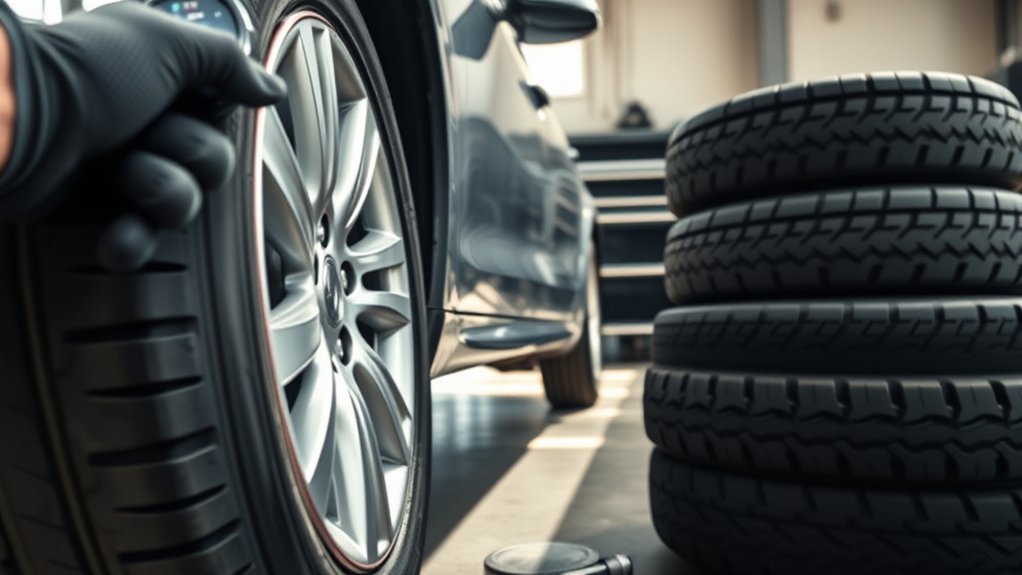
Getting more safe miles from your tires comes down to a few repeatable habits: keep them at the vehicle maker’s recommended pressure, rotate them on the correct schedule, catch alignment or balance problems early, and inspect the tread and sidewalls every month. Smooth driving, sensible loading, proper tire selection, and careful seasonal storage also help prevent premature wear.
Quick Answer
To make your tires last longer, check their cold pressure monthly, follow your vehicle’s tire-rotation schedule, correct alignment or vibration problems promptly, inspect tread and sidewalls, avoid aggressive driving and overloading, and store seasonal tires correctly. Replace tires that are worn, damaged, or too old to use safely.
Key Takeaways
- Check all tire pressures, including the spare when applicable, at least once a month and before long trips.
- Use the cold PSI on the vehicle’s Tire and Loading Information label or in the owner’s manual, not the maximum pressure printed on the tire.
- Follow the vehicle manufacturer’s rotation schedule; many vehicles fall near the 5,000–8,000-mile range, but not every tire setup can be rotated the same way.
- Treat vibration, pulling, an off-center steering wheel, and uneven tread wear as signs that the tires, wheels, alignment, or suspension need inspection.
- Do not try to extend the life of a tire with unsafe tread depth, a bulge, exposed cords, serious cuts, persistent pressure loss, or other structural damage.
At a Glance
| Time Required | About 10–15 minutes for a monthly pressure, tread, and damage check; shop service takes additional time as needed. |
| Difficulty | Easy for inspection and pressure checks; rotation, balancing, alignment, and tire repairs are usually best handled with proper equipment. |
| Tools Needed | Accurate tire-pressure gauge, tread-depth gauge or penny, flashlight, and access to an air source when adjustment is needed. |
| Cost | Low for DIY checks; rotation, balancing, alignment, repairs, and replacement costs vary by vehicle, tire size, and service shop. |
Check Tire Pressure to Reduce Tire Wear
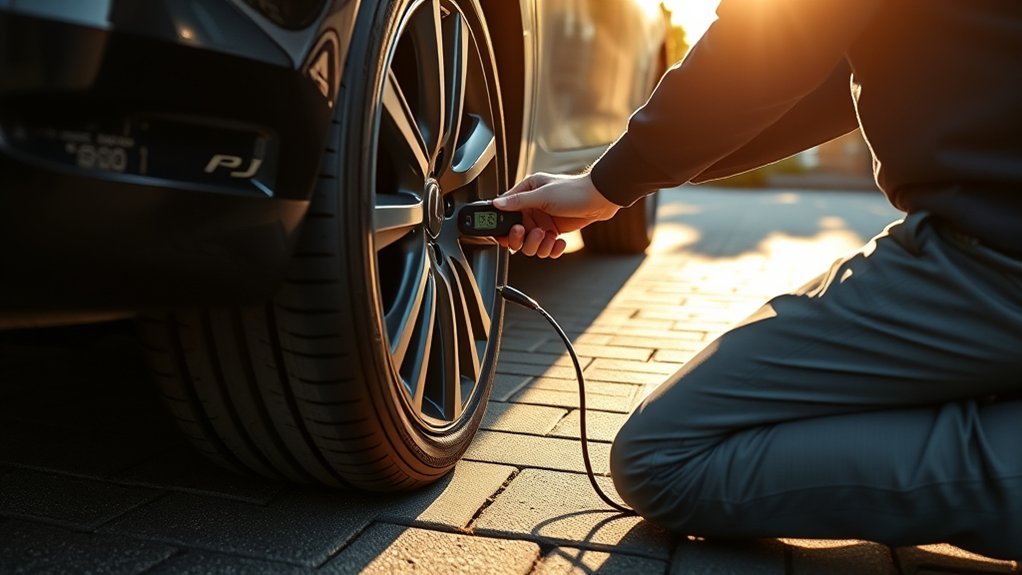
Checking tire pressure regularly is one of the simplest ways to reduce uneven wear and protect handling. The National Highway Traffic Safety Administration (NHTSA) recommends checking all tires, including the spare when applicable, at least once a month.
Check pressure when the tires are cold. NHTSA defines a cold tire as one that has not been driven for at least three hours. Driving warms the tire and increases its pressure, which can make a warm reading misleading.
Use the recommended cold PSI on your vehicle’s Tire and Loading Information label, usually on the driver-side doorjamb, or in the owner’s manual. The pressure molded onto a tire sidewall is not the normal inflation target for your vehicle.
Underinflation increases tire flex and heat buildup and can contribute to rapid or irregular wear. Too much pressure can also change how the tread contacts the road. Keeping pressure at the vehicle manufacturer’s specification supports more predictable steering, braking, fuel efficiency, and tread wear.
Warning: Do not reduce a hot tire to the vehicle’s cold-pressure specification simply because its reading has risen after driving. Check and adjust it again when the tire is cold. Also, never use the maximum pressure printed on the tire sidewall as a substitute for the vehicle manufacturer’s recommended PSI.
NHTSA reports that proper tire inflation can extend the average life of a tire by about 4,700 miles.
Rotate Tires to Extend Tire Life
Tires do not always wear at the same rate in every wheel position. Steering, braking, weight distribution, and the driven axle can make some tires wear faster than others. Regular tire rotation moves eligible tires to different positions so tread wear stays more even.
Follow your vehicle owner’s manual first. NHTSA says that, when the vehicle manufacturer recommends rotation, a typical interval is about 5,000 to 8,000 miles. Michelin currently gives a general recommendation of about 5,000 to 7,000 miles, while also telling drivers to follow the vehicle manufacturer’s guidance.
Follow your vehicle’s specified rotation pattern and interval rather than treating one mileage number as correct for every car.
Rotation is also a useful inspection opportunity. Check tread depth, pressure, cuts, bulges, and unusual wear each time the wheels are moved.
Note: Some staggered vehicles use different tire sizes front and rear, and directional tires have restrictions on where they can be moved. Some vehicles may not permit a normal four-tire rotation at all. Use the pattern specified by the vehicle and tire manufacturers.
Get Your Wheels Aligned
Wheel alignment controls the angles at which the wheels meet the road. Incorrect alignment can cause rapid or uneven tread wear and may change how the vehicle tracks or steers.
There is no universal rule requiring an alignment every 5,000 or 6,000 miles. Follow your vehicle’s maintenance information and have the alignment inspected when symptoms appear.
Common warning signs include:
- Uneven wear on the inner or outer part of a tire.
- The vehicle consistently pulling or drifting to one side on a level road.
- A steering wheel that remains noticeably off-center when traveling straight.
- A change in steering behavior after hitting a pothole, curb, or other road hazard.
A qualified shop can measure camber, caster, and toe with alignment equipment and compare the results with the vehicle manufacturer’s specifications. Ask for the before-and-after alignment printout if the shop provides one.
Pro Tip: If one tire develops unusual wear, correcting the alignment does not restore the tread that has already worn away. Fix the cause early, then continue monitoring all four tires.
[Products Worth Considering]
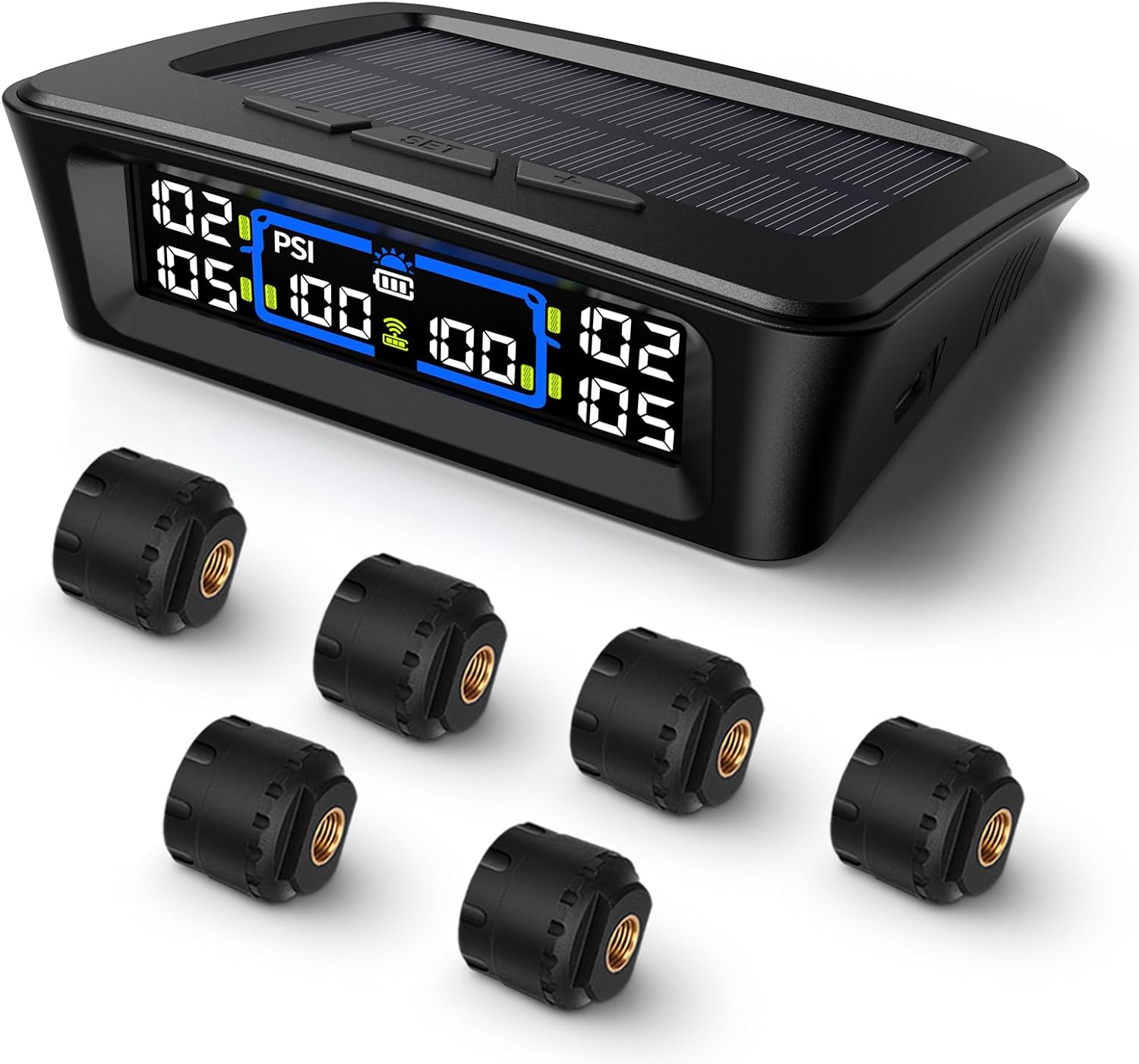
The Tymate TM12 RV TPMS delivers real-time tire pressure and temperature monitoring with a stable 433Hz display for safer long-distance driving. It supports simultaneous monitoring across vehicle and trailer zones, includes six alarm modes for pressure, temperature, leakage, battery, and signal loss, and features easy DIY installation with auto calibration. Power is supplied via USB-C charging or solar recharging, with a wide 0–144 PSI range and up to 50 ft signal coverage for RVs and towable trailers.

Monitor tire tread wear with a smart, color-coded depth gauge that shows clear condition ranges at a glance. The bar is range marked for fast, easy readings, helping you maintain safer traction and performance. Each gauge is portable with a pocket clip, and the set includes 20 units for daily use and sharing.

Measure tire tread depth quickly and accurately with this LUMITECO dial gauge that reads in 1/32" increments up to 14/32". The color-coded green/yellow/red zones make it easy to judge tire wear and know when replacement is needed. A rugged, compact design with a protective pouch helps keep the gauge ready for use on cars, trucks, motorcycles, and more.
Balance Tires When You Feel Vibrations
Balancing and alignment solve different problems. Wheel balancing corrects uneven weight distribution in a tire-and-wheel assembly. Alignment adjusts the angles of the wheels relative to the vehicle and road.
According to NHTSA, new tires should be balanced when they are installed. Michelin also recommends balancing when tires are first mounted or remounted after certain repairs.
If you feel a new vibration or shimmy, especially at road or highway speeds, have the vehicle inspected. An out-of-balance tire is one possible cause, but tire damage, wheel damage, alignment problems, and steering or suspension faults can produce similar symptoms.
Do not assume every tire rotation automatically requires balancing. If the vehicle remains smooth and the wheel-and-tire assemblies have not been disturbed, follow the service guidance for your vehicle and tires.
[Products Worth Considering]

The SAFELIFE dial tire tread depth gauge measures tread depth in 1/32 inch increments with clear, easy-to-read 2-inch dial face. Color zones using a traffic light system help you quickly judge whether tread is low, marginal, or ample for safer driving. Built with a durable zinc cast body and a metal detect probe for precise, comfortable use across cars, motorcycles, trucks, and buses.

Steelman white tire marking crayons provide high-contrast, semi-permanent marks for repairing and inspecting tires and equipment. They write on wet or dry, smooth or coarse surfaces including rubber, metal, glass, and wood, making them ideal for puncture location and damage outlining. The lead- and zinc-free crayons resist weather and fading yet wipe away when you no longer need the marks.

Keep your tires properly inflated with this analog VONDIOR tire pressure gauge, designed for fast, easy readings without batteries. The swiveling, two-axis hose and large glow dial help you measure at any tire angle with instant visibility. Built with a protective rubber shield, it supports durable, low-maintenance use for cars and trucks.
Check Tread Depth and Uneven Wear
Inspect tread depth at least monthly along with tire pressure. Tires have built-in treadwear indicators, and NHTSA says tires should be replaced when tread reaches 2/32 inch.
You can also use the penny test. Place a penny into a main tread groove with Lincoln’s head upside down. If the top of Lincoln’s head remains visible, the tread is at or below the replacement point.
| Indicator | What to Do |
|---|---|
| Top of Lincoln’s head visible in the penny test | Replace the tire |
| Tread level with wear bars | Replace the tire |
| One-sided or feathered wear | Inspect alignment, steering, and suspension |
| Wear on both shoulders | Check for chronic underinflation or other causes |
| Unusual center wear | Verify inflation and have the tire inspected |
| Cupping or scalloped wear | Inspect balance, suspension, and wheel condition |
Check several grooves and several points around every tire rather than relying on one measurement. Uneven wear can leave one section unsafe even when another part of the tread looks healthy.
Check Tire Age and Physical Damage
Tread depth is not the only reason a tire may need replacement. Rubber and internal materials also age over time, and heat, sunlight, storage conditions, maintenance, and use all affect that aging process.
NHTSA notes that some vehicle and tire manufacturers recommend replacing tires that are approximately six to 10 years old regardless of remaining tread. There is no single age limit that replaces your vehicle and tire manufacturers’ instructions.
You can identify a tire’s manufacturing date from the final four digits of its DOT Tire Identification Number. For example, a code ending in 2325 means the tire was manufactured in the 23rd week of 2025.
Inspect the tread and sidewalls for:
- Bulges or bubbles.
- Deep cuts or cracks.
- Exposed cord or fabric.
- Punctures or embedded objects.
- Persistent pressure loss.
- Severe irregular wear.
Warning: Extending tire life never means continuing to use a structurally damaged tire. If you find a bulge, exposed reinforcement, serious cut, rapid air loss, or other major damage, stop treating it as a normal wear issue and have it inspected by a qualified tire professional.
Drive Smoothly to Prevent Tire Wear
Smooth driving can reduce unnecessary tread scrub and heat. Hard acceleration, panic braking, wheelspin, and fast cornering place greater forces on the tires and can contribute to faster or less even wear.
Use gradual acceleration, leave enough following distance to avoid repeated hard braking, and slow down before sharp turns. Reducing speed before potholes and rough pavement can also lower the chance of impact damage.
Gradual acceleration, controlled braking, and sensible cornering reduce unnecessary stress on the tread.
Smoother driving also helps fuel economy. The U.S. Department of Energy reports that aggressive driving can lower fuel economy by roughly 15–30% at highway speeds and 10–40% in stop-and-go traffic. Those figures describe fuel use; they are not a promise that smooth driving will extend tire life by the same percentage.
Avoid Overloading Your Vehicle
Extra weight places more load on the tires. When a tire carries more load than it is designed to support, increased flex and heat can accelerate damage and raise the risk of tire failure.
Check the Tire and Loading Information label on the vehicle. It normally states the maximum combined weight of occupants and cargo. Your owner’s manual also provides loading information.
The Gross Vehicle Weight Rating (GVWR) is important, but it should not replace the vehicle’s specific passenger-and-cargo loading instructions. You must also use tires with the correct size and sufficient load-carrying capacity for the vehicle.
Spread cargo sensibly and secure heavy items. Before a road trip, towing trip, or heavy haul, verify vehicle loading and cold tire pressure according to the vehicle manufacturer’s instructions.
Protect Tires From Potholes, Curbs, and Road Hazards
A hard pothole or curb strike can damage a tire, wheel, alignment, or suspension even when the tire does not immediately go flat.
Slow down when you can safely avoid rough pavement, and do not repeatedly scrape the sidewall against curbs while parking. After a substantial impact, inspect the tire for cuts, bulges, pressure loss, wheel damage, or a change in steering and vibration.
If the vehicle begins pulling, shaking, or losing pressure after the impact, have it inspected instead of continuing to drive until the tread visibly wears.
Store Seasonal Tires Properly
Seasonal tires need proper storage to limit unnecessary aging while they are off the vehicle. Store them indoors in a cool, dry, clean area away from direct sunlight, excessive heat, moisture, and ozone-producing equipment such as some electric motors.
Clean road grime, salt, and brake dust from the tires and let them dry completely before storage. Sealed individual plastic bags can help limit exposure to moisture and air during storage.
Storage position depends on whether the tires are mounted on wheels. Michelin’s current tire-storage guidance recommends stacking or hanging tires that are mounted on wheels. Unmounted tires should be stored standing upright rather than stacked or hung.
Label the previous wheel position before storage so you can follow the appropriate rotation plan when the set goes back on the vehicle. Before reinstalling seasonal tires, inspect their age, tread, sidewalls, and pressure.
Choose the Right Tires for Your Driving
Choosing tires that match your vehicle and driving conditions can improve both performance and wear. Use a tire size approved by the vehicle manufacturer and make sure the replacement tire has appropriate load and speed capabilities.
The correct original tire size and cold inflation pressure are listed on the Tire and Loading Information label or in the owner’s manual. If you plan to change tire size, wheel size, load rating, or another major specification, confirm compatibility with qualified tire guidance rather than assuming any tire that physically fits is suitable.
Choose the tire category for the conditions you actually face. All-season, summer, winter, touring, performance, and all-terrain tires use different tread designs and compounds, so their grip, noise, comfort, and wear characteristics differ.
A long treadwear warranty can be useful when comparing products, but it does not guarantee that every driver will receive the stated mileage. Vehicle condition, alignment, rotation, inflation, climate, roads, loads, and driving style all influence actual service life.
[Products Worth Considering]

The Ziopetru adjustable magnetic wheel alignment tool helps you check and restore camber and caster positioning after removing and reinstalling undercarriage components. With a clear leveling/bubble measurement system and an easy zeroing adjustment knob, it supports precise horizontal angle checking. The strong magnetic base mounts to metal surfaces for convenient use at home on cars, motorcycles, trucks, vans, and SUVs.

The TYAMATE TM8 solar-powered wireless TPMS delivers real-time tire pressure and temperature monitoring with six alarm modes for safer driving. A vibrant color LCD display shows readings clearly while windshield mounting keeps it hands-free and easy to read. With a wide 0–87 PSI range, strong 433.92 MHz signal transmission, and quick sensor pairing, it’s ideal for RV, sedan, SUV, MPV, and truck use.

Accurately measure tire tread depth with a calibrated gauge marked from 0 to 1 inch in 1/32 inch increments. The color-coded bar helps you quickly identify tread condition ranges, supporting safe driving for trucks, motorcycles, automobiles, and passenger vehicles.
Clean Tires to Prevent Damage
Cleaning removes salt, brake dust, mud, oil residue, and road debris while giving you another chance to inspect the tire closely.
Use mild soap and water or a cleaner intended for automotive tires. Avoid harsh petroleum-based solvents or chemicals that the tire or cleaning-product manufacturer warns against.
There is no need to follow an arbitrary cleaning interval such as exactly every two months. Clean tires as conditions require, especially after heavy road-salt, mud, or chemical exposure.
While cleaning, check the tread and sidewalls for cuts, cracking, bulges, embedded objects, and uneven wear. Catching a problem during a wash is much better than discovering it after a pressure loss or highway-speed vibration.
Follow a Simple Tire Maintenance Schedule
A repeatable schedule makes tire care easier to remember:
| When | What to Check or Do |
|---|---|
| At least monthly | Check cold pressure, tread depth, sidewalls, tread damage, and the spare tire when applicable. |
| Before a long trip | Check pressure, damage, tread, vehicle load, and spare-tire readiness. |
| At the vehicle’s rotation interval | Rotate eligible tires using the specified pattern and inspect all four tires. |
| When new tires are mounted | Have the wheel-and-tire assemblies balanced. |
| When vibration develops | Inspect balance, tires, wheels, steering, and suspension rather than assuming one cause. |
| When the vehicle pulls or wear becomes uneven | Check alignment and inspect steering, suspension, inflation, and tire condition. |
| After a hard pothole or curb impact | Inspect the tire and wheel and watch for pressure loss, vibration, pulling, or visible damage. |
| Before seasonal storage or reinstallation | Clean, inspect, store correctly, and recheck condition and pressure before use. |
Frequently Asked Questions
How to Get the Most Miles Out of Your Tires?
Maintain the vehicle manufacturer’s cold tire pressure, rotate eligible tires on schedule, correct alignment or vibration problems promptly, inspect tread and sidewalls monthly, avoid overloading, and drive smoothly. The goal is to get the full safe service life from the tires, not to keep using them after they become worn, damaged, or excessively aged.
How Can I Make My Engine Last 300,000 Miles?
That is a separate maintenance topic from extending tire life. For an engine, follow the vehicle manufacturer’s oil, coolant, filter, belt, spark-plug, transmission, and inspection schedules rather than relying on a universal oil-change interval. Driving smoothly and addressing warning lights, leaks, overheating, and unusual noises early can also help reduce unnecessary mechanical stress.
Is 30,000 Miles on Tires a Lot?
Mileage alone cannot tell you whether a tire is near the end of its life. At 30,000 miles, one tire may still have substantial usable tread while another may be worn out because of its design, vehicle, alignment, inflation history, roads, climate, or driving conditions. Check actual tread depth, age, damage, and wear instead of judging the tire only by odometer mileage.
What Is the 7/7 Rule for Tires?
There is no universal NHTSA or industry-standard “7/7 rule” requiring every tire to be rotated at exactly 7,000 miles. Some people use 7,000 miles as an easy reminder, but your vehicle manufacturer’s specified rotation interval and pattern should come first. NHTSA notes that 5,000–8,000 miles is common when rotation is recommended.
How Often Should I Check Tire Pressure?
Check all tires at least once a month and before long trips. Check them when cold and use the pressure listed on the vehicle’s Tire and Loading Information label or in the owner’s manual.
Does TPMS Mean I Can Skip Manual Tire-Pressure Checks?
No. A Tire Pressure Monitoring System is an important warning system, but NHTSA still recommends monthly pressure checks with a gauge. A TPMS warning generally appears only after pressure has already fallen significantly below the recommended level.
Do Tires Need Balancing Every Time They Are Rotated?
Not automatically. New tires should be balanced when installed, and balancing may be needed after remounting or when vibration or another symptom appears. A normal tire rotation by itself does not prove that the wheel-and-tire assemblies have become unbalanced.
How Old Is Too Old for a Tire?
There is no single federal replacement age for every passenger tire. NHTSA notes that some vehicle and tire manufacturers recommend replacing tires at about six to 10 years regardless of tread. Check the DOT date code and follow the age guidance from your vehicle and tire manufacturers.
Conclusion
If you want more safe miles from your tires, focus on consistency rather than shortcuts. Check cold pressure monthly, rotate eligible tires according to the vehicle manufacturer’s schedule, and investigate uneven wear, pulling, vibration, or pressure loss before they become larger problems.
Inspect tread and tire age as well as sidewall condition, stay within the vehicle’s load limits, drive smoothly, avoid unnecessary impacts, and store seasonal tires correctly. Most importantly, never trade safety for a few extra miles: a tire that is worn to its limit or structurally damaged should be repaired or replaced as appropriate instead of being stretched beyond safe use.
Sources
- National Highway Traffic Safety Administration — TireWise — tire pressure, tread depth, rotation, balancing, alignment, tire age, TPMS, and replacement guidance.
- NHTSA — Summer Driving and Tire Safety — cold pressure checks, tire inspection, tread depth, penny test, and road-trip safety.
- Michelin USA — Tire Rotation Guide — rotation intervals, even tread wear, and manufacturer-specific rotation guidance.
- Michelin USA — Storing Tires — seasonal tire storage conditions and mounted versus unmounted storage positions.
- U.S. Department of Energy — Efficient Driving — effects of aggressive acceleration, braking, and speeding on fuel economy.