
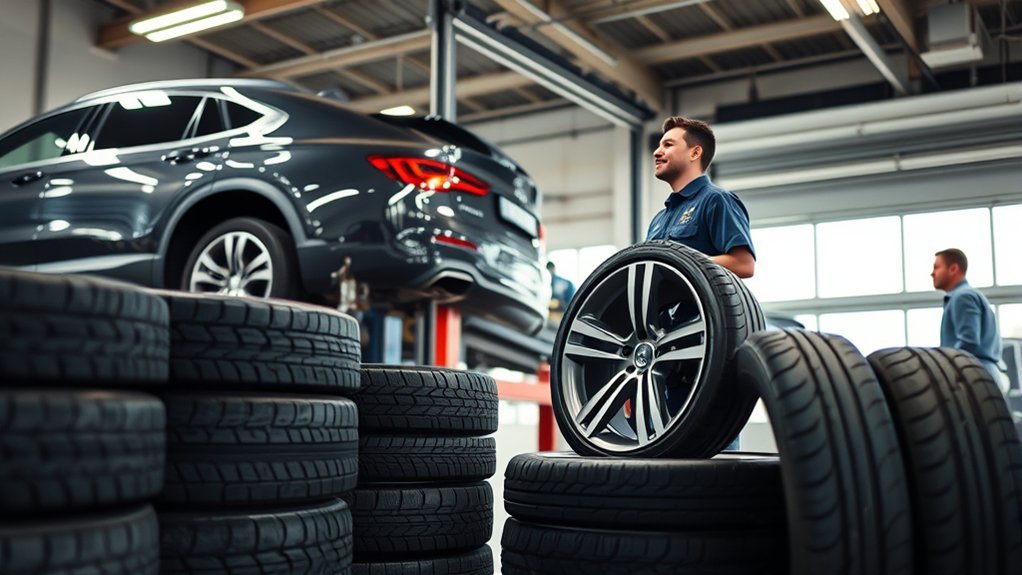
Buying tires from a dealership can be worth it when you value vehicle-specific fitment help, one-stop installation, and convenient service records. But the dealer is not automatically the cheapest option, and a tire is not automatically better simply because a dealership sells it. Compare the exact tire specification, the full installed price, warranty terms, and services included before you decide.
Quick Answer
Dealership tires are worth considering when the installed price is competitive and you want convenient fitment support or an exact OE-spec replacement. Independent shops and online sellers may offer more choices or lower prices. Compare the same tire, installation charges, warranty coverage, and final out-the-door total before buying.
Key Takeaways
- Dealership tire prices can be higher or lower depending on the tire, promotion, installation package, and price-match policy, so compare actual quotes rather than assuming.
- Compare the exact tire model, size, load capability, speed rating where applicable, and any vehicle-specific OE marking.
- Ask whether mounting, balancing, valve or TPMS service, disposal, taxes, alignment, and road-hazard protection are included or charged separately.
- A dealership purchase does not automatically provide a stronger tire warranty; compare manufacturer, road-hazard, and workmanship coverage separately.
- Independent tire shops and online retailers may offer broader selection, while a dealer can be attractive when convenience and vehicle-specific service matter most.
Are Dealership Tires Worth the Cost?
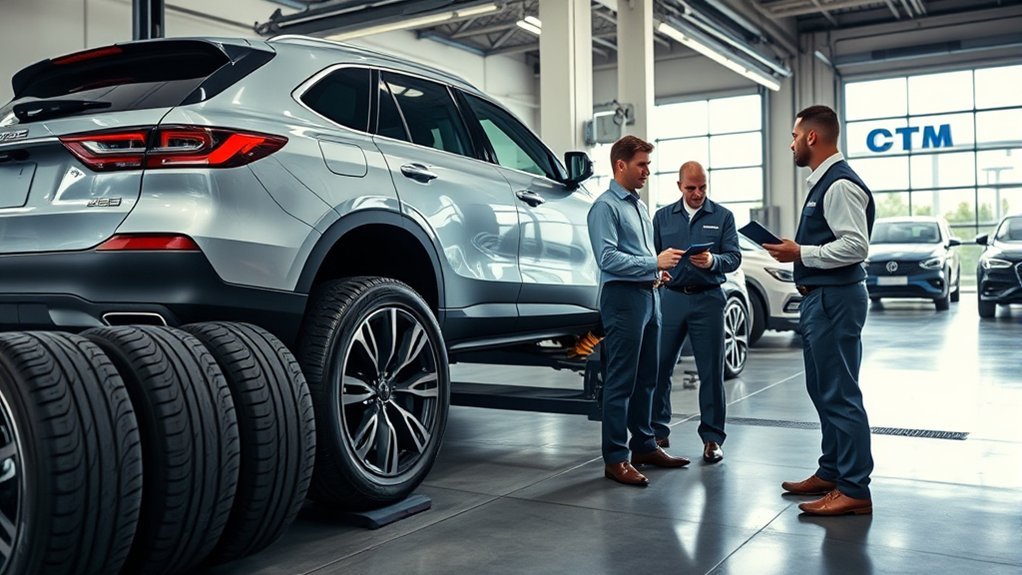
Whether dealership tires are worth the cost depends on what you are getting for the final price. A franchised dealer can offer convenient scheduling, vehicle-specific parts information, service history in one place, and access to tires recommended for your model. Those advantages can be useful if you want a straightforward replacement without researching dozens of alternatives.
The important distinction is that the dealership itself does not make a tire better. If two sellers offer the exact same tire specification, the tire’s basic construction does not improve because one came from a dealership. What can differ is the price, inventory age, installation package, warranty handling, and service experience.
The best place to buy tires is the seller that gives you the right tire, competent installation, clear warranty terms, and the best total value—not simply the lowest advertised tire price.
A dealership becomes especially attractive when its installed price is close to competing quotes, it has the exact OE-developed version you want, or you are already having other service performed. If another qualified seller offers the same correct tire and comparable installation for substantially less, there may be little reason to pay a dealer premium.
[Products Worth Considering]

These aluminum alloy tire valve stem caps protect the valve core from corrosion and help prevent air leakage for more stable tire pressure. The rubber ring design helps support a secure, safe seal while adding a stylish look to your Honda wheels. Easy to install by hand, these caps are ideal for everyday driving and weather exposure.

Malco tire mounting and demounting lubricant is a ready-to-use tire lube formulated to reduce friction during tire installation for passenger cars, light trucks, farm tires, and heavy-duty equipment. It provides rust-inhibiting protection to help reduce corrosion on rims and wheels, and helps support proper tire bead seating during inflation to reduce air leakage. The silicone-free, soap-free formula is whitewall safe to help prevent discoloration on whitewall tires and sensitive sidewall markings.

Steelman white tire marking crayons provide high-contrast, semi-permanent marks for repairing and inspecting tires and equipment. They write on wet or dry, smooth or coarse surfaces including rubber, metal, glass, and wood, making them ideal for puncture location and damage outlining. The lead- and zinc-free crayons resist weather and fading yet wipe away when you no longer need the marks.
What the Dealership Tire Price Includes
A dealership tire quote may include more than the tire itself, but there is no universal package. Some shops bundle services into one installed price while others list each charge separately.
Your estimate may include:
- The tires themselves
- Mounting
- Wheel balancing
- Valve stems or TPMS-related service parts when needed
- Old-tire disposal or recycling
- Shop supplies
- Applicable taxes and government fees
- Alignment, if recommended and authorized
- Optional road-hazard protection
The National Highway Traffic Safety Administration says new tires should be balanced when installed and advises drivers to follow their vehicle manufacturer’s tire-pressure and replacement-size guidance.
Pro Tip: Ask every seller for a written, itemized installed total for the same four tires. A low tire-only price can stop looking inexpensive once mounting, balancing, disposal, shipping, TPMS service, and optional protection are added.
Also check current promotions. Some manufacturers and dealership service programs run rebates or price-match offers that can narrow a price difference. For example, GM Certified Service publishes a Tire Price Match Guarantee for eligible tires subject to its current terms.
How Dealership Tire Brands Compare
Dealerships commonly sell major tire manufacturers such as Michelin, Bridgestone, Goodyear, Continental, Pirelli, and Hankook, depending on the automaker, dealership, and local inventory. Independent tire stores may carry many of the same brands plus a broader range of budget, performance, all-terrain, winter, or specialty alternatives.
Brand name alone is not enough for an accurate comparison. Two tires from the same manufacturer can differ in tread design, load capability, speed rating, run-flat construction, warranty, and vehicle-specific tuning.
[Products Worth Considering]

A concentrated tire and tube mounting compound designed to help simplify mounting rubber tires and tubes on passenger, semi truck, construction, and OTR applications. Its ultra-thick formula packs beads effectively and includes rust inhibitors to help protect against corrosion during use.

The Kurgo Seasonal Tire Tote helps protect your car interior, clothes, and garage from tire grime, brake dust, and residue during seasonal tire changes. Its universal design fits most passenger tires between 22" and 31" in diameter, making storage and transport simpler with less mess. Built for rugged, repeated use, it’s machine washable for easy care and comes with a lifetime warranty.

This manual duck head tire changer kit makes tire installation and removal simpler by letting you embed the duck head into the tire with applied pressure. The integrated design and durable steel construction help reduce friction and improve efficiency and safety during use. Suitable for 16–21 inch wheels, it’s convenient for cars, trucks, SUVs, and ATV tires, with 24-hour after-sales support.
Are Dealership Tires Different From Tires Sold Elsewhere?
Sometimes the exact tire is the same, but you need to compare more than the model name. Certain tires are developed for specific automakers and carry an OE marking on the sidewall. Michelin, for example, documents markings such as ★ for BMW, MO for Mercedes-Benz, AO for Audi, Porsche N-series markings, TPC for some GM applications, and T0/T1-series markings for Tesla applications.
According to Michelin’s replacement-tire guidance, these markings identify versions developed and approved for particular manufacturers or vehicles. That means two tires with a similar product name and size may not always be identical versions.
If matching the factory setup matters to you, compare the complete sidewall specification and OE marking instead of asking only for “the same brand.” If your vehicle does not require or benefit from an OE-specific version, a suitable replacement tire from another qualified retailer may perform well while offering a different balance of price, tread life, noise, or seasonal traction.
Check the Tire Manufacturing Date
You can also compare inventory age. NHTSA explains that the final four digits of the DOT Tire Identification Number show the week and year a tire was manufactured. For example, a code ending in 2525 indicates production during the 25th week of 2025.
A newer manufacturing date does not automatically make one seller better, but checking the code is useful when comparing tires that may have spent different amounts of time in storage. NHTSA also recommends following the tire and vehicle manufacturers’ age-related replacement guidance.
When Dealership Tires Make Sense
Dealership tires make the most sense when the total value—not merely the location—works in your favor.
A dealer can be a practical choice when:
- You want the exact tire specification or OE-developed version fitted to your vehicle.
- The dealer’s installed price is competitive after rebates or price matching.
- You want tires installed while other scheduled service is being completed.
- You prefer one location for maintenance records and future service questions.
- Your vehicle uses an uncommon staggered, run-flat, performance, or other specialized tire setup.
- You have a dealer-specific tire or wheel protection plan whose benefits you intend to use.
[Products Worth Considering]
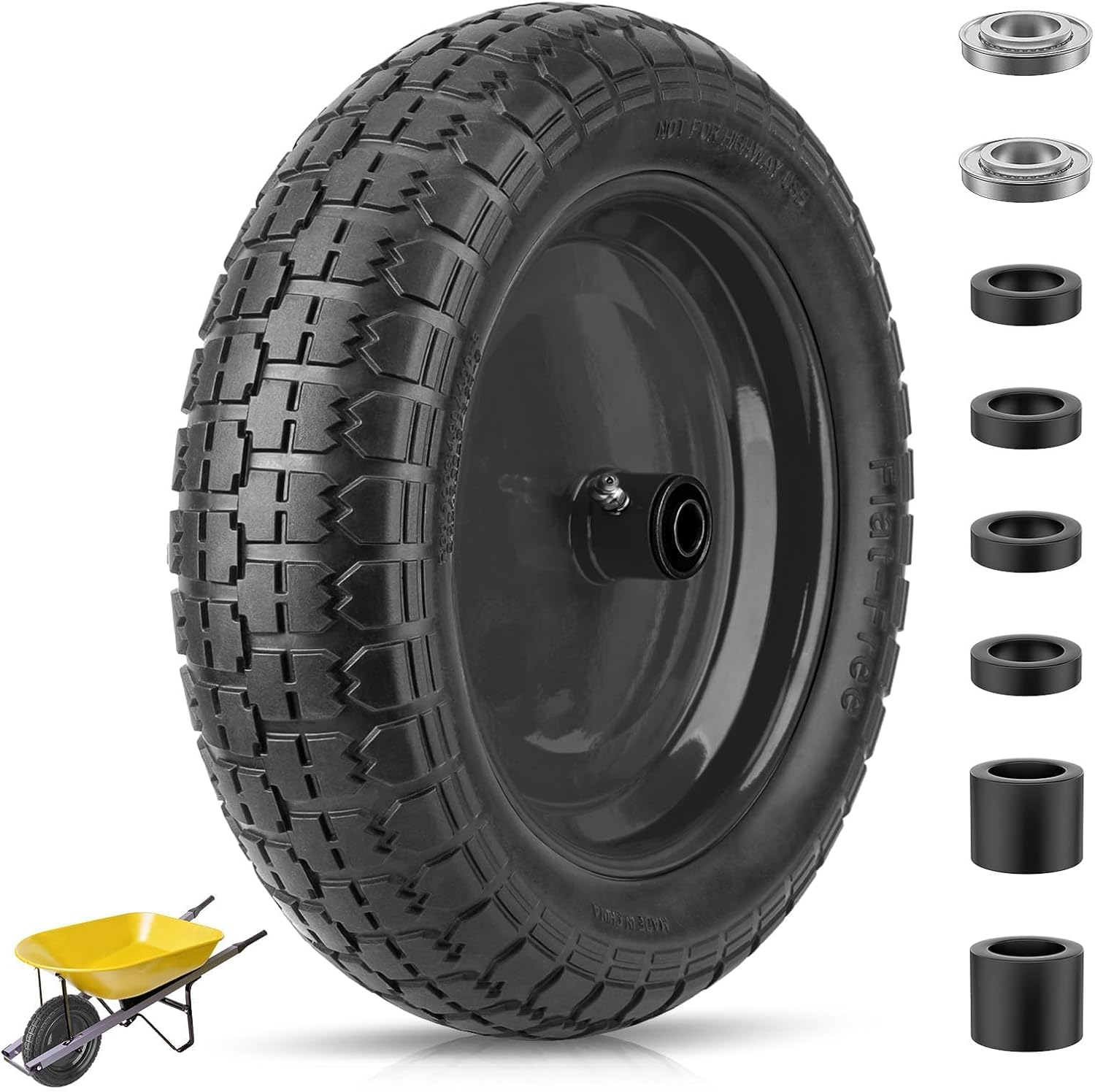
This flat-free TICONN wheelbarrow tire features durable polyurethane foam construction that never needs inflation, helping prevent punctures and reducing maintenance on rough outdoor terrain. With a 300 lb max load capacity and stable steel rim design, it supports safer transport for yard work and hauling tasks. An adapter kit with ball bearings and nylon spacers is included for easier fit and customization across common wheelbarrow and cart axle setups.

The Trivd Frol 1/2" air impact wrench delivers high performance torque up to 1500 ft-lbs with a twin hammer impact mechanism for strong, balanced blows. It features an ergonomic grip, compact lightweight design, and quick-stop control with 3 forward speeds up to 8000 RPM plus a reverse speed. Built for demanding automotive repair and tire shop work, the rear exhaust helps keep debris away from the surface.

The 22800 wheel stud installer makes replacing wheel studs quick and secure, saving time and effort during tire service. It uses a ratchet or impact wrench to pull new studs firmly into place, helping when existing studs are too long. Compatible with most automotive wheels and light-duty truck wheel studs, it’s designed for easy, tool-assisted installation.
Warranty Coverage Benefits
Warranty support can be convenient at a dealership, but do not assume the dealer automatically gives you better coverage. Ask what type of warranty is actually included.
There are three different protections buyers often mix together:
- Tire manufacturer warranty: Covers eligible manufacturing defects and, on some replacement tires, specified treadwear conditions subject to the manufacturer’s terms.
- Road-hazard coverage: May cover certain punctures or impact damage. It can be included, optional, or unavailable depending on the seller and program.
- Installation or workmanship coverage: Covers problems related to the seller’s installation work and varies by shop.
These protections are not interchangeable. Michelin’s warranty information, for example, lists separate documentation for replacement tires and original-equipment passenger and light-truck tires and notes that conditions and exclusions apply.
Before buying, compare the warranty period, exclusions, tread requirements, labor charges, transfer rules, required maintenance records, and claim process.
OEM Fitment Assurance
A dealership can make fitment research easier because its service department can look up specifications for your vehicle. Still, you should verify what is being installed.
NHTSA recommends replacing tires with the original size or another size recommended by the vehicle manufacturer. Your owner’s manual and the Tire and Loading Information label on the vehicle are the best starting points.
Warning: Do not choose a replacement tire based only on wheel diameter or appearance. Confirm the vehicle manufacturer’s requirements for tire size, load capability, inflation, and other applicable specifications. Vehicles with staggered tires, run-flats, high-performance setups, or special OE requirements need extra care.
Correct fitment matters for carrying capacity, handling, braking, ride quality, and tire clearance. Where you buy the tire is secondary to choosing the correct specification and having it installed properly.
When Tire Shops or Online Stores Win
An independent tire shop or online retailer may be the better choice when you want more brands, more performance categories, or a lower installed total.
Independent shops can also provide hands-on advice and installation in the same visit. Online retailers make it easy to compare many tires at once, but you need to account for shipping, installation, returns, and who will handle warranty claims.
| Buying Source | Main Advantage | Watch For |
|---|---|---|
| Dealership | Vehicle-specific lookup, convenient service integration, possible OE-spec inventory | Higher quote, narrower selection, optional add-ons |
| Independent tire shop | Broad selection and dedicated tire expertise | Warranty and service packages vary by shop |
| Online retailer | Easy model and price comparison with a wide inventory | Shipping, installer charges, returns, and claim coordination |
If you already know the exact tire specification you need, comparing the same product across all three channels is usually more useful than comparing brand names alone.
How Dealership Tire Installation and Warranties Work
At a dealership, the service department normally handles mounting and balancing and should torque the wheels to the vehicle manufacturer’s specification. TPMS-related service may also be needed depending on the vehicle, sensors, wheels, and work being performed.
| Step | What Happens | Why It Matters |
|---|---|---|
| Mounting | Tires are fitted to compatible wheels | Correct mounting is essential for safe operation |
| Balancing | Weights correct wheel-and-tire imbalance | Helps reduce vibration and irregular wear |
| Torque check | Wheel fasteners are tightened to specification | Protects wheels, studs, and mounting security |
| TPMS check | Sensors and warnings are checked as applicable | Helps maintain accurate pressure warnings |
| Warranty review | Written coverage and exclusions are identified | Prevents confusion if a claim is needed |
Keep your invoice and maintenance records. The Federal Trade Commission recommends keeping maintenance records because warranty companies may request them when reviewing a claim.
What Fees Can Raise the Final Price?
The tire price advertised online or quoted over the phone may not equal what you actually pay. Possible additional charges include mounting, balancing, valve stems, TPMS service kits, old-tire disposal, shop supplies, alignment, road-hazard protection, shipping, and taxes.
Which charges apply—and how they are taxed—depends on the seller and jurisdiction. Do not assume a service is included unless the quote says so.
Alignment deserves special attention. It is different from wheel balancing and is not automatically required simply because you bought new tires. However, an alignment inspection or adjustment may be appropriate when the vehicle pulls, the steering wheel is off-center, suspension work has been performed, or existing tires show abnormal wear.
Road-hazard plans also deserve a separate line-item check. They can be useful for some drivers, but read the repair limits, replacement calculation, exclusions, labor charges, geographic restrictions, and claim procedure before paying extra.
How to Compare Dealership Tire Quotes
An accurate tire-price comparison requires each seller to quote the same thing.
Ask each seller to identify:
- Exact manufacturer and tire model
- Complete tire size
- Load index or required load capability
- Speed rating where applicable
- OE marking, if relevant
- Run-flat or conventional construction
- Quantity
- Price per tire
- Mounting and balancing charges
- Valve or TPMS service charges
- Disposal or recycling charges
- Alignment charge, if proposed
- Road-hazard coverage and whether it is optional
- Manufacturer rebates or seller discounts
- Applicable taxes and fees
- Final installed total
Then verify the quote expiration date and whether the tires are physically in stock. If they must be ordered, ask for an estimated arrival date before scheduling installation.
Price matching can also change the result. Some dealership programs publish formal guarantees, while others may match competitors at the dealer’s discretion. Read the eligibility rules carefully because they may require an identical tire, a competing local retailer, or proof of a current advertised price.
How to Decide Where to Buy Tires
You can decide where to buy tires by weighing correct fitment, total cost, installation quality, convenience, selection, and warranty support.
Choose the dealership when its price is competitive and you value easy vehicle-specific service or an exact factory-style replacement. Choose a dedicated tire shop when you want to compare more brands with an installer who works with tires every day. Consider an online retailer when selection and easy price comparison matter and you have a qualified local installer.
- For a newer luxury or performance vehicle: Verify whether the existing tire carries an OE marking and whether you want to preserve that specification.
- For a budget-focused commuter: Compare several suitable replacement tires rather than paying automatically for the original model.
- For winter or all-terrain use: A specialist tire retailer may offer more choices for the conditions you actually drive in.
- For a lease: Check the lease-return requirements before selecting a materially different tire specification.
- For a road trip or urgent replacement: In-stock availability and same-day installation may matter more than saving a small amount.
The goal is not to find the “best type of seller” for everyone. It is to find the seller offering the right tire and service package for your vehicle and budget.
Questions to Ask Before Buying Dealership Tires
Before authorizing the work, ask the service advisor or tire retailer these questions:
- What is the exact tire model and full sidewall specification?
- Is this the same OE-marked tire currently on my vehicle, or a different replacement version?
- What is the total installed price for all tires?
- Are mounting and balancing included?
- Are valve stems or TPMS service parts extra?
- Is an alignment included, recommended, or optional?
- What manufacturer warranty applies to this exact tire?
- Is road-hazard protection included or sold separately?
- Who handles a warranty claim if I have a problem?
- Are there current rebates or price-match programs?
- Are the tires in stock, and what is the expected installation date?
Getting these answers in writing makes it much easier to compare a dealership with a tire shop or online purchase on equal terms.
Frequently Asked Questions
Can I Bring My Own Tires to the Dealership?
Possibly. Installation policies vary by dealership. Some will install customer-supplied tires, while others may restrict what they will mount or apply different labor and workmanship-warranty terms. Ask before ordering the tires and confirm the complete installation price.
Do Dealerships Match Tire Prices From Other Stores?
Some do. Price-match policies are not universal and usually have eligibility rules. For example, GM Certified Service publishes a Tire Price Match Guarantee for eligible tires under its current program terms. Ask your dealership whether the tire, competing seller, distance, quote date, and installation charges qualify.
How Long Does Dealership Tire Ordering Usually Take?
There is no reliable universal timeframe. A common tire that is already in stock may be installed quickly, while an uncommon size, seasonal tire, or OE-specific version may need to come from a distributor or warehouse. Ask whether the tire is physically in stock and request an estimated arrival date before booking.
Can Dealership Tires Be Financed With My Car Loan?
Tires or optional products purchased as part of the original vehicle transaction may sometimes be included in the financed purchase amount if you agree to them in the contract. Replacement tires bought later are normally a separate transaction rather than something added to an existing auto loan. A dealership may offer a separate service-financing or payment option, so review the interest rate, fees, and total cost before using it.
Will Dealership Tires Affect My Vehicle Lease Agreement?
The purchase location usually matters less than whether the tires meet your lease-return requirements. Check your lease agreement for acceptable tire condition and specifications. Ford Credit, for example, lists tires that are not an appropriate match for the vehicle among potential excess wear and use concerns. Your leasing company may use different rules.
Will Buying Tires Somewhere Else Void My Vehicle Warranty?
Not simply because you bought replacement tires from an independent retailer. FTC guidance says a vehicle warranty remains in effect when aftermarket parts are used. However, if an incorrect or defective part or improper installation actually causes damage, warranty coverage for that resulting damage may be denied. Use the correct tire specification and keep your purchase and maintenance records.
Are Dealership Tires Better Quality Than Tires From Other Sellers?
Not automatically. If two sellers offer the exact same tire specification, buying one at a dealership does not inherently make the tire higher quality. However, some tire lines have vehicle-specific OE versions with different markings or tuning, so compare the full specification rather than only the brand and model name.
Conclusion
So, should you buy tires from the dealership? Sometimes. A dealer can be a strong choice when you want convenient vehicle-specific service, an exact OE-spec replacement, or a competitive installed price. But there is no reason to assume the dealership is automatically cheaper, more expensive, or better.
Compare the same tire specification, the complete installed cost, warranty terms, available rebates, and the quality of the installer. Independent tire shops may give you more choices, while online retailers can make price shopping easier. The best value is the option that gives your vehicle the correct tires, competent installation, and support you are comfortable using.
Sources
- National Highway Traffic Safety Administration — TireWise — tire sizing, inflation, balancing, TPMS, maintenance, and tire-age guidance.
- Federal Trade Commission — Auto Warranties and Auto Service Contracts — aftermarket parts, warranty rights, and maintenance-record guidance.
- Michelin USA — Choosing the Right Tire Size — vehicle-specific tire sizing and OE manufacturer markings.
- Michelin USA — Warranty Information — replacement and original-equipment tire warranty distinctions.
- GM Certified Service — Tires and Parts — dealership tire services and current price-match program information.
- Ford Credit — Vehicle Wear and Use — lease-return guidance concerning tires that are not an appropriate match for the vehicle.

