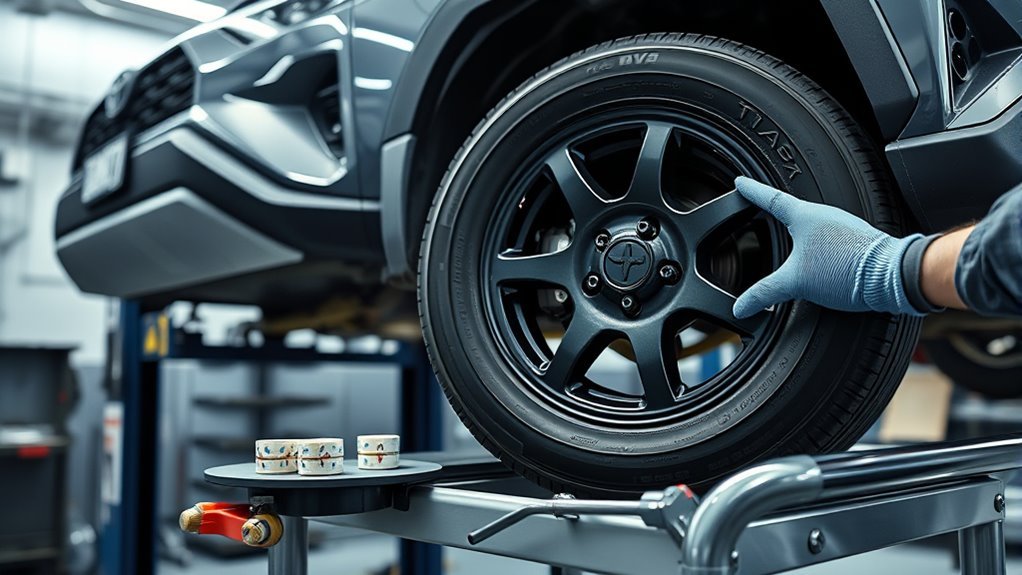
You do not have to balance your Toyota RAV4 tires on one fixed Toyota mileage rule, but you should have the balance checked regularly. The easiest habit is to check balance when the tires are rotated, when new tires are installed, after a tire repair, or any time you feel speed-related vibration, see cupped tread wear, or hit a pothole hard.
Quick Answer
For a Toyota RAV4, check tire balance at each rotation and rebalance when needed. Many late-model RAV4 maintenance schedules rotate tires about every 5,000 miles or 6 months, but balancing is usually symptom- or service-based: new tires, vibration, uneven wear, tire repair, seasonal tire changes, or pothole impact.
Key Takeaways
- Toyota schedules tire rotation, but a fixed RAV4-only tire-balancing mileage is not the same thing as a manufacturer rotation interval.
- Balance your RAV4 tires when new tires are mounted, after a tire repair, after a strong pothole or curb impact, or when vibration appears.
- Steering-wheel vibration at highway speed often points to a front wheel/tire balance issue; seat or floor vibration may come from the rear.
- Check tire pressure monthly and inspect tread for cupping, one-sided wear, bulges, cracks, embedded objects, or exposed cord.
At a Glance
| Time Required | About 30–60 minutes for a shop to balance four wheels, depending on wheel condition and wait time. |
| Difficulty | Easy for the owner to schedule; professional equipment is needed for accurate dynamic balancing. |
| Tools Needed | Tire pressure gauge for owner checks; tire shop balancing machine, wheel weights, and torque wrench for the service. |
| Cost | Varies by shop, region, wheel type, and tire package. Ask for the all-in price for all four wheels before authorizing service. |
How Often Should You Balance RAV4 Tires?
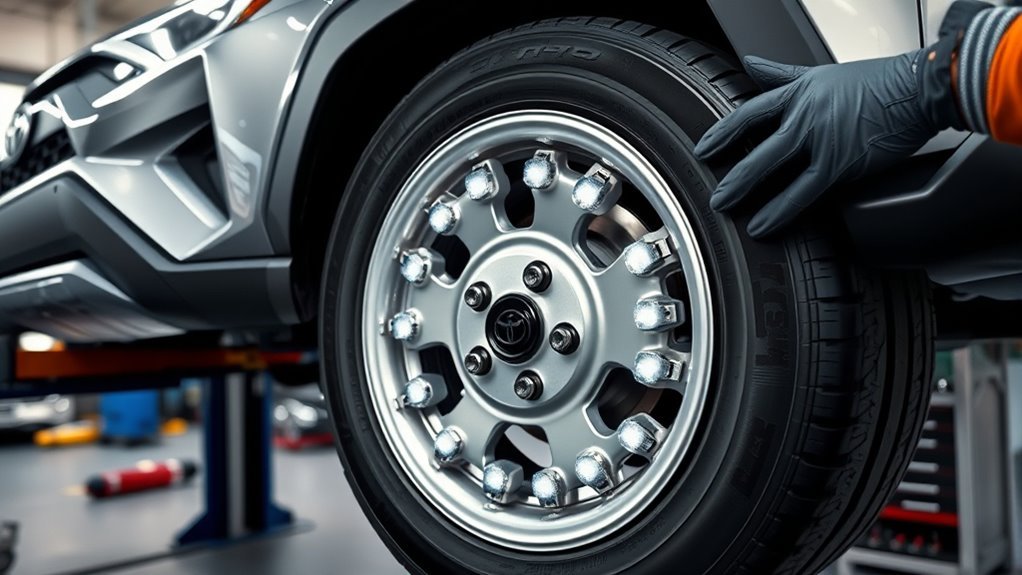
Use this practical schedule for most RAV4 owners:
- At every tire rotation: ask the shop to check for vibration complaints, missing weights, bent wheels, cupping, and uneven tread wear.
- When new tires are installed: balance all new tire-and-wheel assemblies before driving away.
- After a tire repair: rebalance if the tire was removed from the wheel or if a vibration starts afterward.
- After a hard pothole, curb strike, or off-road impact: have the wheel, tire, and balance checked.
- Immediately: schedule service if you feel speed-related shaking, notice cupped tread, or hear a rhythmic thump.
Many late-model Toyota RAV4 maintenance guides call for tire rotation at regular maintenance visits, often around every 5,000 miles or 6 months. Check your exact year’s Toyota RAV4 Warranty & Maintenance Guide, because the official rotation schedule can vary by model year, region, trim, and driving conditions.
Note: Tire rotation and tire balancing are related, but they are not the same service. Rotation changes tire positions to even out wear. Balancing corrects uneven weight distribution in the tire-and-wheel assembly so it spins smoothly at speed.
Why Tire Balancing Matters for Safety and Ride Quality
A balanced tire-and-wheel assembly spins evenly. When a wheel is out of balance, the tire can bounce, wobble, or vibrate at speed. That can make the RAV4 feel rough, wear the tread unevenly, and add stress to steering and suspension parts.
Improved Steering Response
When the front tires are properly balanced, the steering wheel feels steadier at highway speeds. You should not have to fight a shimmy, buzz, or shake just to keep the RAV4 tracking straight. If the steering wheel vibrates mostly between about 45 and 70 mph, a tire balance check is a smart first step.
Reduced Vibrations and Wear
Balancing helps reduce vibration and may prevent cupped or scalloped tread wear. It also helps the tire maintain more consistent road contact. If vibration remains after balancing, the shop should also check for a bent wheel, tire runout, uneven tire wear, worn suspension parts, brake rotor problems, or alignment issues.
A tire balance problem often shows up as vibration that changes with road speed. A brake vibration usually shows up most when you press the brake pedal.
Recommended Intervals: Normal Driving vs. Severe Use
There is no single balancing interval that fits every RAV4, because tires can lose balance from normal tread wear, lost wheel weights, pothole hits, tire repairs, or wheel damage. Use the table below as a practical owner guide.
| Situation | What to Do |
| Normal commuting | Check balance at tire rotations; rebalance if vibration, cupping, uneven wear, or a missing wheel weight appears. |
| New tires installed | Balance all four tires as part of installation. |
| Tire repair or seasonal tire change | Balance any wheel assembly that was removed, remounted, or now vibrates. |
| Rough roads, heavy loads, towing, or off-road use | Inspect tires more often and check balance after strong impacts or new vibration. |
Normal Driving Interval
For normal driving, pair balance checks with your RAV4 tire rotations. If your Toyota maintenance guide calls for rotation every 5,000 miles or 6 months, that is a convenient time to ask the technician to inspect for uneven wear, missing weights, and wheel damage. You may not need to pay for a full rebalance every time if the tires are wearing evenly and the ride is smooth.
Severe Use Frequency
If you often drive on rough roads, carry heavy loads, tow, use a roof carrier, or take your RAV4 off pavement, inspect the tires more often. Severe use can speed up tread wear and can knock a wheel weight loose. Check the tire balance sooner if the RAV4 starts shaking after an impact or rough trip.
Adjusting for Conditions
Cold weather, load changes, tire wear, and pothole damage can all change how the RAV4 feels. Do not assume every shake is a balance issue. Start with tire pressure, visible tire condition, tread wear, and wheel damage, then have a shop check balance, alignment, brakes, and suspension if needed.
Signs Your RAV4 Needs Balancing Now
Schedule a tire balance check if you notice any of these symptoms:
- Steering wheel vibration at highway speed: often linked to a front tire or wheel assembly.
- Seat or floor vibration: may point to a rear tire or wheel assembly.
- Cupped or scalloped tread wear: can come from imbalance, worn shocks, or suspension issues.
- Rhythmic thumping: can be caused by tire damage, flat spots, belt separation, or balance problems.
- New vibration after a pothole: could be a bent wheel, damaged tire, lost weight, or alignment shift.
Warning: Do not keep driving on a tire with a bulge, exposed cord, deep sidewall cut, rapid air loss, or sudden severe vibration. Slow down carefully, avoid hard braking or sharp steering, and have the tire inspected by a qualified tire professional.
[Products Worth Considering]

The 22800 wheel stud installer makes replacing wheel studs quick and secure, saving time and effort during tire service. It uses a ratchet or impact wrench to pull new studs firmly into place, helping when existing studs are too long. Compatible with most automotive wheels and light-duty truck wheel studs, it’s designed for easy, tool-assisted installation.

Monitor tire tread wear with a smart, color-coded depth gauge that shows clear condition ranges at a glance. The bar is range marked for fast, easy readings, helping you maintain safer traction and performance. Each gauge is portable with a pocket clip, and the set includes 20 units for daily use and sharing.

Steelman white tire marking crayons provide high-contrast, semi-permanent marks for repairing and inspecting tires and equipment. They write on wet or dry, smooth or coarse surfaces including rubber, metal, glass, and wood, making them ideal for puncture location and damage outlining. The lead- and zinc-free crayons resist weather and fading yet wipe away when you no longer need the marks.
How Rotation, Alignment, and Tire Balancing Work Together
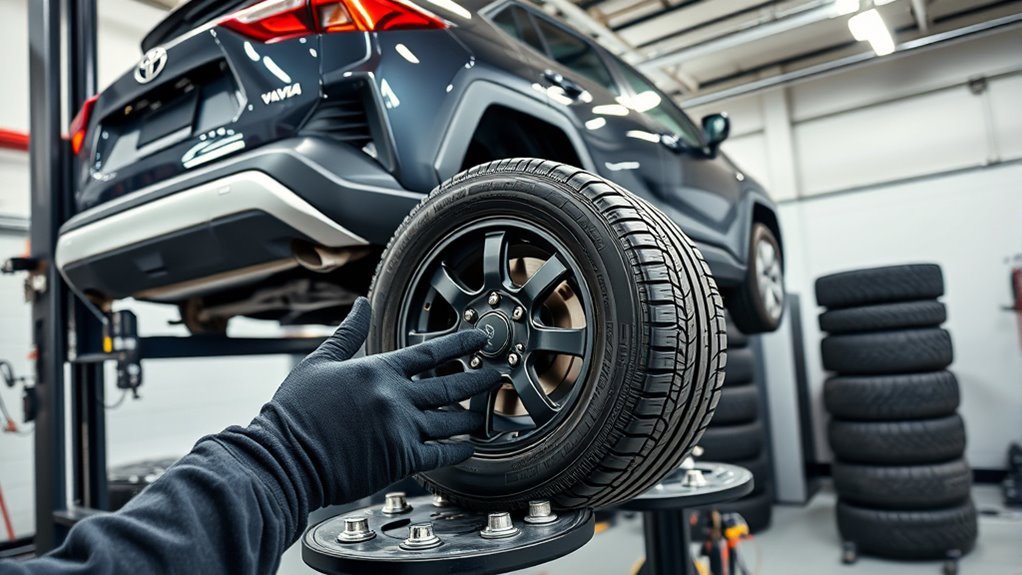
Rotation, alignment, balancing, and tire pressure all protect your tires, but each one solves a different problem.
- Rotation: moves tires to different positions so the tread wears more evenly.
- Balancing: adds small weights so the tire-and-wheel assembly spins smoothly.
- Alignment: adjusts wheel angles so the tires meet the road correctly and the vehicle tracks straight.
- Tire pressure: keeps the tire properly supported for load, handling, braking, and fuel economy.
According to Michelin’s alignment and balancing guidance, balancing controls how the tire rotates, while alignment controls how the tire contacts and points toward the road. A RAV4 can be aligned correctly and still vibrate if a wheel is out of balance. It can also be balanced correctly and still wear unevenly if the alignment is off.
Pro Tip: Tell the shop exactly when the vibration happens. “It shakes at 60 mph,” “it shakes only while braking,” and “it started after a pothole” point to different checks.
What a Professional Tire Balance Includes
A professional tire balance starts with removing the wheel from the RAV4 and mounting the tire-and-wheel assembly on a balancing machine. The machine spins the assembly, measures the imbalance, and tells the technician where to add or adjust wheel weights.
A standard balance service may include:
- Inspecting the tire, wheel, valve stem, and existing weights.
- Mounting the assembly on a dynamic spin balancer.
- Spinning the wheel to measure static and dynamic imbalance.
- Adding clip-on or adhesive weights in the correct locations.
- Rechecking the balance after weights are installed.
- Installing the wheel back on the RAV4 and tightening the lug nuts with the correct torque procedure.
If the RAV4 still vibrates after a normal balance, ask about road-force balancing, match-mounting, tire runout, wheel runout, and suspension inspection. Those checks can find problems a basic balance may not solve.
[Products Worth Considering]

Keep your tires properly inflated with this analog VONDIOR tire pressure gauge, designed for fast, easy readings without batteries. The swiveling, two-axis hose and large glow dial help you measure at any tire angle with instant visibility. Built with a protective rubber shield, it supports durable, low-maintenance use for cars and trucks.

The SAFELIFE dial tire tread depth gauge measures tread depth in 1/32 inch increments with clear, easy-to-read 2-inch dial face. Color zones using a traffic light system help you quickly judge whether tread is low, marginal, or ample for safer driving. Built with a durable zinc cast body and a metal detect probe for precise, comfortable use across cars, motorcycles, trucks, and buses.

Measure tire tread depth quickly and accurately with this LUMITECO dial gauge that reads in 1/32" increments up to 14/32". The color-coded green/yellow/red zones make it easy to judge tire wear and know when replacement is needed. A rugged, compact design with a protective pouch helps keep the gauge ready for use on cars, trucks, motorcycles, and more.
Cost and Options: Shop, Mobile Service, or DIY
Most RAV4 owners should use a tire shop, Toyota dealer, or qualified mobile tire service for balancing. Accurate dynamic balancing requires equipment most owners do not have at home.
- Tire shop or dealer: best for most owners because the shop can balance, rotate, inspect tires, check alignment symptoms, and torque the wheels correctly.
- Mobile tire service: convenient if the provider has proper balancing equipment and can safely work at your location.
- DIY: not recommended for most RAV4 owners unless you already have the right balancing equipment, training, and torque tools.
Ask whether balancing is included with new-tire installation, a tire warranty package, or a rotation package. Also ask whether the quote is per wheel or for all four wheels.
[Products Worth Considering]

This universal wheel alignment tool helps you accurately restore tire tilt angles after tire or suspension repairs using an adjustable camber gauge. It features a powerful magnetic base that firmly attaches to brake rotors for stationary, slip-free readings, improving consistency during measurement. Built from durable PC plastic, it resists wear and corrosion and is compact enough for car, truck, RV, and motorcycle alignment tasks.

Milton S-921 pencil tire pressure gauge helps you maintain optimal tire pressure for passenger cars with accurate readings in PSI and kPa. It features a built-in deflator valve for convenient pressure adjustments, plus a single chuck head and nylon indicator bar for easy use on the go. Built from durable plated brass and designed for reliable performance, it’s a practical road trip and cold-weather maintenance tool.

This TPMS relearn tool helps you quickly activate, match, and reset GM tire pressure sensors to keep the vehicle monitoring system working properly. It clears tire pressure alarms and dashboard warning lights after sensor replacement or tire rotation, and supports learning for common 315/433 MHz TPMS sensors. Designed for simple one-button operation, it can help you avoid unnecessary trips to repair shops.
Simple RAV4 Tire Maintenance Plan and Checklist

Use this simple RAV4 tire-care routine to reduce vibration, avoid premature wear, and catch tire damage early.
- Monthly: check cold tire pressure with a gauge, including the spare if equipped. Use the pressure on the driver-door placard or owner’s manual, not the maximum pressure printed on the tire sidewall.
- Monthly: inspect tread and sidewalls for uneven wear, cracks, cuts, bulges, nails, glass, or exposed cord.
- At rotation: inspect tread pattern, check for missing wheel weights, and ask whether a balance check is needed.
- After tire service: confirm the wheels were torqued correctly and that the TPMS warning light is off after pressure is adjusted.
- After impacts: check for vibration, steering pull, tire bulges, wheel bends, and pressure loss.
- Before road trips: check pressure cold, inspect tread depth, and look for tire damage.
The National Highway Traffic Safety Administration tire safety checklist recommends checking tire pressure at least monthly, inspecting for uneven wear and damage, and checking pressure before long trips. Proper tire pressure also matters for efficiency: FuelEconomy.gov notes that properly inflated tires can improve gas mileage and help tires last longer.
Frequently Asked Questions
Is it absolutely necessary to balance RAV4 tires?
Yes, tires should be balanced when they are mounted, and they should be rebalanced when symptoms or service events call for it. Driving on unbalanced tires can cause vibration, uneven tread wear, and extra stress on steering and suspension parts.
Do I need to balance my RAV4 tires at every rotation?
Not always. It is smart to have the balance checked at rotation, but a full rebalance may not be needed if the ride is smooth, the tread is wearing evenly, and no weights are missing. Rebalance if vibration, cupping, impact damage, or tire service suggests a problem.
Do I really need an alignment every year?
You do not automatically need a paid alignment every year, but an annual alignment check is reasonable for many drivers. Get an alignment check sooner if the RAV4 pulls, the steering wheel is off-center, you see one-sided tire wear, or you hit a pothole or curb hard.
Can an alignment fix tire vibration?
Sometimes, but not usually by itself. Speed-related vibration is often a balance, tire, wheel, or suspension issue. Pulling, off-center steering, and one-sided wear are more typical alignment clues. A good shop should inspect both if the symptoms overlap.
Why does my RAV4 shake after getting new tires?
The new tires may be out of balance, mounted incorrectly, not seated evenly, or paired with a bent wheel. Go back to the installer and ask them to recheck balance, tire seating, wheel runout, lug torque, and tire condition.
Conclusion
For a Toyota RAV4, the best rule is simple: rotate tires on the Toyota maintenance schedule, check tire pressure monthly, and have balance checked whenever tires are rotated or serviced. Rebalance sooner if you feel highway-speed vibration, see cupped tread wear, install new tires, repair a tire, lose a wheel weight, or hit a pothole hard. That approach protects tread life, ride comfort, steering feel, and safety without paying for unnecessary balancing when the tires are already smooth.
Sources
- Toyota 2024 RAV4 Warranty & Maintenance Guide — RAV4 maintenance schedule, tire rotation, and special operating-condition checks.
- Toyota 2024 RAV4 Owner’s Manual: Tires — tire inspection, rotation, treadwear, and owner tire-care guidance.
- NHTSA Tire Safety Checklist — monthly tire pressure checks, tread inspection, load reminders, and tire safety basics.
- USTMA/TIA Care and Service of Passenger and Light Truck Tires — tire inspection, vibration response, balancing, treadwear, and damaged-tire safety.
- FuelEconomy.gov Gas Mileage Tips — proper inflation and fuel-economy guidance.
- Michelin Wheel Alignment and Balancing Explained — differences between alignment and balancing, imbalance symptoms, and when to check them.