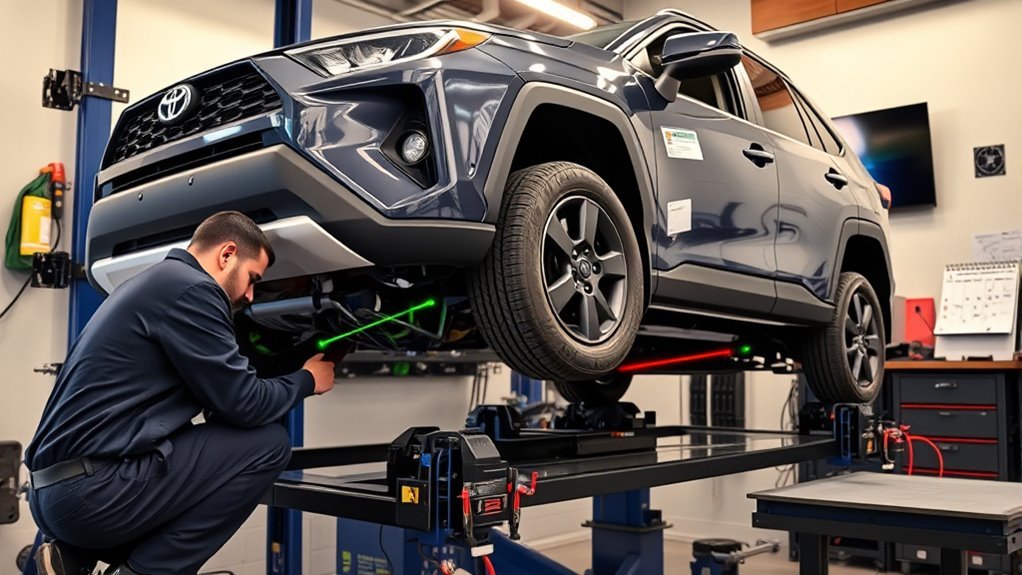
If your RAV4 starts pulling, vibrating, or wearing tires unevenly, the alignment may already be off. A small change in wheel angle can make steering feel loose and shorten tire life. This guide explains when to check alignment, what signs to watch for, and what to expect during service.
Quick Answer
Have your RAV4’s wheel alignment checked during routine tire service, after a hard curb or pothole hit, and any time you notice pulling, vibration, off-center steering, squealing, or uneven tire wear. Many drivers pair alignment checks with tire rotations because that timing makes wear problems easier to spot. A technician will measure toe, camber, and caster, then recommend a 2-wheel or 4-wheel alignment based on your drivetrain, tire wear, and suspension condition.
Key Takeaways
- Check alignment during tire rotations or whenever steering feel changes.
- Schedule an inspection after hitting a curb, pothole, or road debris hard.
- Watch for pulling, vibration, off-center steering, squealing, and uneven tread wear.
- Ask for a 4-wheel alignment if your RAV4 has all-wheel drive or uneven rear tire wear.
- Keep tire pressure, rotations, and suspension checks on schedule to protect alignment.
When Should a RAV4 Get a Wheel Alignment?

When should you have your RAV4’s wheel alignment checked? Schedule checks during routine tire service, especially when you rotate tires or inspect tread wear. This habit helps you catch small changes before they affect steering, fuel use, or tire life.
Don’t rely only on reactive care. Proactive alignment helps preserve suspension geometry, supports steady handling, and reduces accelerated tire wear.
After hitting a pothole or curb, get an alignment inspection right away. Impact forces can change toe, camber, or caster and make the vehicle harder to control.
If you fit new tires, ask the shop to check alignment before you drive many miles. That helps the new tread wear evenly from the start.
[Products Worth Considering]

Upgrade your wheels with MIKKUPPA M12x1.5 mag seat lug nuts built for secure, corrosion-resistant performance. These closed-end chrome lug nuts are a direct replacement for select Toyota models, including Camry, Corolla, RAV4, Sienna, Avalon, Highlander, Matrix, Venza, and Prius. Triple-chromium plating and cold-forged, heat-treated steel help deliver strength for daily driving and replacement needs.

The Ziopetru adjustable magnetic wheel alignment tool helps you check and restore camber and caster positioning after removing and reinstalling undercarriage components. With a clear leveling/bubble measurement system and an easy zeroing adjustment knob, it supports precise horizontal angle checking. The strong magnetic base mounts to metal surfaces for convenient use at home on cars, motorcycles, trucks, vans, and SUVs.

This universal wheel alignment tool helps you accurately restore tire tilt angles after tire or suspension repairs using an adjustable camber gauge. It features a powerful magnetic base that firmly attaches to brake rotors for stationary, slip-free readings, improving consistency during measurement. Built from durable PC plastic, it resists wear and corrosion and is compact enough for car, truck, RV, and motorcycle alignment tasks.
Common Signs Your RAV4 Needs an Alignment
After regular alignment checks or a road impact, watch for clear driving and tire symptoms. Your RAV4 may need service if the vehicle pulls to one side while you hold the wheel straight. An off-center steering wheel on a straight road can also point to an alignment problem.
Inspect the tires as part of basic tire care. Uneven wear patterns, such as bald spots, feathering, or heavy wear on one edge, can signal misalignment and shorten tire life.
Squealing tires during normal driving may also point to excess friction from poor toe or camber settings. Steering-wheel vibration at speed can come from alignment, balance, tire, or suspension issues, so have a technician diagnose it.
- Check tread depth and wear patterns on all four tires.
- Confirm the steering wheel sits straight on a level road.
- Note any pull, vibration, squeal, or loose steering feel.
Act quickly when these signs appear. Correct alignment helps restore precise steering, extend tire life, and keep your RAV4 predictable on the road.
Recommended Alignment Schedule for a RAV4
Check your RAV4’s wheel alignment during routine tire rotations or regular maintenance visits. You should also schedule a check sooner if you notice symptoms like pulling, vibration, or uneven wear.
Some shops suggest alignment checks every 6,000 to 8,000 miles, especially if you drive on rough roads. Toyota maintenance schedules can vary by model year and driving conditions, so use your owner’s manual as the main guide.
Don’t wait for visible damage. Regular assessments can catch gradual alignment drift before it causes higher tire and suspension costs.
If an inspection shows toe, camber, or caster outside manufacturer tolerances, schedule corrective service. Keep records of alignment checks and adjustments so you can track wear trends over time.
Note: Alignment checks and tire rotations are related, but they are not the same service.
After Repairs or Impacts: When to Realign

If you hit a curb or sustain a heavy impact, have your RAV4’s alignment checked soon. A technician can verify camber, caster, and toe angles before small changes cause bigger wear problems.
After any suspension or steering repair, ask for a full alignment. Replaced parts can change wheel angles even when the repair looks clean.
Warning: Don’t ignore pulling or vibration after an impact because damaged suspension parts can affect braking and control.
After Hitting a Curb
When you hit a curb or pothole, get your RAV4’s alignment checked if the impact felt hard or the steering changes afterward. Technicians use specialized equipment to measure toe, camber, and caster. They can also check whether suspension parts bent or shifted.
- Watch for pulling, vibration, or a crooked steering wheel.
- Ask the technician to confirm toe, camber, and caster values.
- Correct misalignment early to reduce uneven tire wear.
- Have the shop inspect suspension parts before adjusting alignment.
Act quickly after any significant impact. A prompt check can help protect tire life and steering control.
After Suspension Repairs
You should have a wheel alignment performed after suspension or steering work. The service restores correct toe, camber, and caster settings and helps keep handling predictable.
Schedule an alignment after replacing control arms, tie rods, struts, ball joints, or steering parts. New parts can shift geometry and cause uneven tire wear or poor fuel efficiency.
Do not trust a visual check alone. Alignment equipment measures angles against manufacturer tolerances and confirms the repair left the vehicle tracking straight.
Does My RAV4 Need a 2-Wheel or 4-Wheel Alignment?
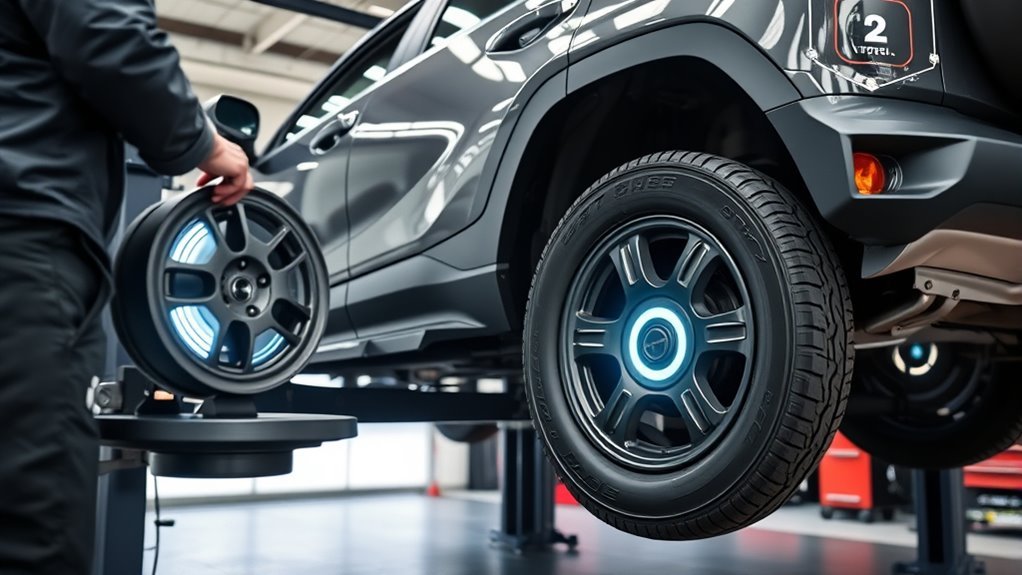
Wondering whether your RAV4 needs a 2-wheel or 4-wheel alignment? Many RAV4s benefit from a 4-wheel alignment because it checks all four corners for proper tracking. That matters more if your vehicle has all-wheel drive, rear tire wear, or recent suspension work.
A front-only alignment may fit some front-wheel-drive RAV4s when the rear suspension remains within spec. But you should let the technician measure all angles before choosing the service.
- Uneven tire wear: Choose a full check when wear appears on more than one tire.
- Vehicle pull or vibration: Ask for a diagnosis before the shop adjusts the angles.
- Routine maintenance: Pair alignment checks with tire and suspension inspections.
- Impact damage: Check all-wheel geometry after hard pothole or curb hits.
When in doubt, get a professional assessment at a Toyota dealer or qualified alignment shop. Precise diagnostics will confirm the right procedure.
[Products Worth Considering]

Monitor tire tread wear with a smart, color-coded depth gauge that shows clear condition ranges at a glance. The bar is range marked for fast, easy readings, helping you maintain safer traction and performance. Each gauge is portable with a pocket clip, and the set includes 20 units for daily use and sharing.

Measure tire tread depth quickly and accurately with this LUMITECO dial gauge that reads in 1/32" increments up to 14/32". The color-coded green/yellow/red zones make it easy to judge tire wear and know when replacement is needed. A rugged, compact design with a protective pouch helps keep the gauge ready for use on cars, trucks, motorcycles, and more.

These aluminum alloy tire valve stem caps with an O-ring seal help protect valve stems from corrosion while adding a clean, stylish look to your vehicle. The universal fit works across cars, trucks, motorcycles, bicycles, and more, making them an easy upgrade for everyday driving and off-road use. Installation is quick, and the included four-pack keeps all your tires dressed and protected.
What to Expect at a Toyota Dealer Alignment
When you bring your RAV4 to a Toyota dealer, a certified technician will inspect the suspension, steering, and tires before making adjustments. The technician may also check tire pressure and look for worn parts that could prevent a proper alignment.
The shop will use calibrated alignment equipment to measure toe, camber, and caster. Then the technician will adjust the angles that Toyota allows for your model and trim.
You should receive a report with before-and-after readings, recommended repairs, and cost details. Ask the service advisor to explain any value that falls outside factory specifications.
[Products Worth Considering]

Accurately measure tire tread depth with a calibrated gauge marked from 0 to 1 inch in 1/32 inch increments. The color-coded bar helps you quickly identify tread condition ranges, supporting safe driving for trucks, motorcycles, automobiles, and passenger vehicles.

Steelman white tire marking crayons provide high-contrast, semi-permanent marks for repairing and inspecting tires and equipment. They write on wet or dry, smooth or coarse surfaces including rubber, metal, glass, and wood, making them ideal for puncture location and damage outlining. The lead- and zinc-free crayons resist weather and fading yet wipe away when you no longer need the marks.

Black Magic Tire Wet delivers a deep wet-look shine that makes tires appear dark, rich, and freshly detailed. Its long-lasting formula helps resist rain, dust, and road grime for weeks of glossy protection, not days. Apply by spraying onto clean, dry tires—no buffing or wiping required—with a low-sling design to reduce splatter on paint and wheels.
Technician Inspection and Diagnostics
Expect a structured inspection when you bring your RAV4 in for alignment. Technician training and calibrated alignment tools matter because worn parts can make accurate adjustment impossible.
The technician will inspect tires and suspension for wear or damage. Then they will use diagnostic readouts to find toe, camber, and caster deviations.
After adjustments, the technician should center the steering wheel and verify the vehicle tracks straight. A road test may help confirm that the RAV4 feels stable.
- You gain confidence when the shop finds worn parts before adjustment.
- You avoid guesswork when measurements replace visual estimates.
- You reduce uneven wear when angles return to specification.
- You leave with clear recommendations for future checks.
Alignment Equipment and Process
After inspection, the technician mounts your RAV4 on an alignment rack and attaches sensors to each wheel. The equipment measures toe, camber, and caster against Toyota specifications.
The process usually starts with a systems check, then moves to sensor-based measurements and steering wheel centering. The technician completes the service by adjusting the angles and verifying the final readings.
You should leave with a report showing before-and-after values. Keep that report with your service records so you can compare future tire wear and alignment trends.
| Step | Purpose |
|---|---|
| Inspection | Identify worn or damaged parts |
| Measurement | Capture wheel angles |
| Centering | Set the steering wheel straight |
| Verification | Confirm final specifications |
Recommended Adjustments and Estimates
A typical Toyota dealer alignment session checks and corrects toe, camber, and caster when the vehicle allows those adjustments. Some angles may need parts or repairs before the technician can bring them back into range.
Alignment prices vary by location, shop type, and whether you need a 2-wheel or 4-wheel service. Ask for a written estimate before work starts, especially if the inspection finds worn suspension parts.
- Expect steadier steering after the shop corrects pull.
- Ask for verified specs and a printed alignment report.
- Compare repair recommendations before approving extra work.
- Use the final report to guide future tire and suspension checks.
Good alignment can improve tire contact, handling, and long-term wear. It can also help protect suspension parts from added stress.
How Driving Habits and Road Conditions Affect RAV4 Alignment
Your driving style and local roads affect how often your RAV4 needs alignment checks. Frequent city driving, tight turns, and stop-and-go traffic can stress steering and suspension parts.
Rough surfaces, potholes, and uneven pavement can create sudden shock loads. Those hits may change caster, camber, or toe and make the vehicle pull or wear tires faster.
Off-road driving and heavy loads can also shift suspension geometry. If you often carry cargo or drive on gravel roads, check alignment more often than a driver who mostly uses smooth highways.
Aggressive habits, such as hard braking and fast curb turns, can speed up wear. Monitor steering feel, tire wear, and tracking so you can adjust your maintenance schedule.
RAV4 Maintenance Tips to Protect Alignment and Tires
Keep tire pressure within the manufacturer’s range and rotate tires on schedule. These habits reduce uneven wear that can hide or worsen alignment drift.
Check inflation when the tires are cold, and correct low or high pressure promptly. Poor pressure can cause wear patterns that look like alignment trouble.
- Inspect tire pressure regularly and adjust it to the door-jamb label.
- Rotate tires based on your owner’s manual and tire manufacturer guidance.
- Check shocks, bushings, tie rods, and ball joints during service visits.
- React to pulling, vibration, or uneven wear by scheduling alignment service.
Good suspension care helps your RAV4 stay aligned, responsive, and safe. It also helps you get more value from each set of tires.
How Long Does a RAV4 Wheel Alignment Take?
A basic RAV4 alignment often takes about one hour when the suspension is in good condition. The visit can take longer if the shop finds worn parts, seized adjustment bolts, or tire damage.
Ask the service advisor whether the estimate includes inspection, adjustment, and a road test. Also ask for the printed alignment report before you leave.
Frequently Asked Questions
Does a RAV4 Need a 4-Wheel Alignment?
Many RAV4 models benefit from a 4-wheel alignment, especially all-wheel-drive versions. A full alignment checks how all four tires track together, which helps handling and tire wear.
Is Toyota Alignment Under Warranty?
Toyota’s standard warranty may not cover alignment as normal maintenance. Coverage can vary by model year, mileage, dealer policy, and service plan, so confirm the terms with your Toyota dealer.
How Much Is a Wheel Alignment for a Toyota RAV4?
The cost depends on your area, shop type, and whether your RAV4 needs a 2-wheel or 4-wheel alignment. Ask for an estimate that separates alignment labor from any needed suspension repairs.
Can Bad Alignment Damage New Tires?
Yes, poor alignment can wear new tires unevenly in a short time. Check alignment before or soon after installing new tires, especially if the old tires showed edge wear or feathering.
Should I Align My RAV4 After Replacing Tires?
You do not always need an alignment only because you bought tires. But you should check alignment if the old tires wore unevenly, the vehicle pulls, or you recently hit a curb or pothole.
Conclusion
Your RAV4’s alignment matters most when steering feel, tire wear, or road impact tells you something changed. Watch for pulling, vibration, off-center steering, and uneven tread. Schedule an inspection during tire service or right after a hard impact. A precise alignment helps your RAV4 track straight, protect its tires, and stay ready for the road ahead.