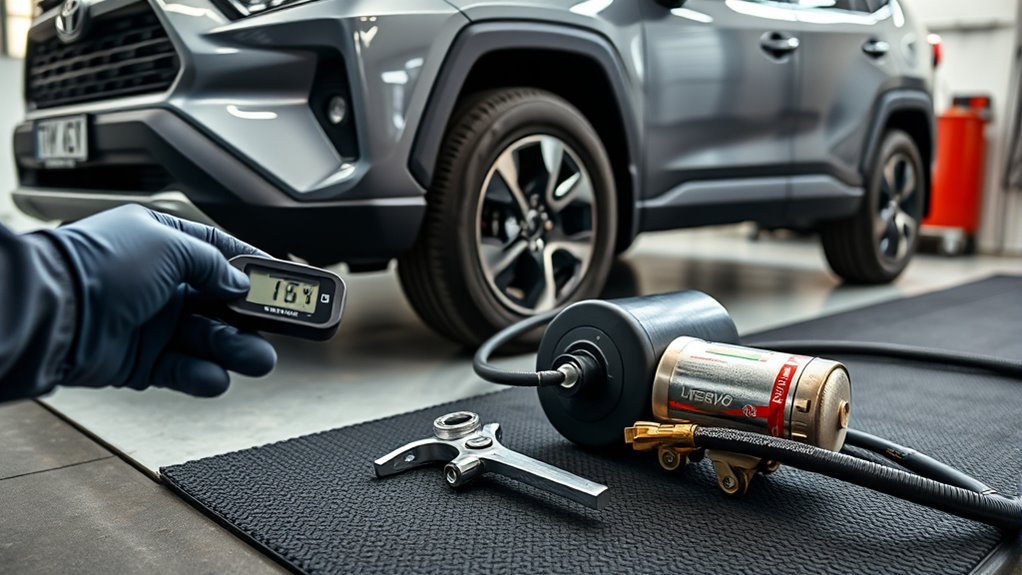
Extending the tire life on your Toyota RAV4 comes down to a few repeatable habits: use the correct cold tire pressure, rotate on schedule, inspect tread and sidewalls, keep the wheels aligned, and choose tires that match your RAV4’s size, load rating, and driving conditions. These simple checks help your tires wear evenly, maintain safe traction, and delay premature replacement.
Quick Answer
To maximize Toyota RAV4 tire life, check cold tire pressure monthly using the driver-door placard, rotate tires every 5,000 miles or 6 months, inspect tread and sidewalls, correct alignment problems early, and buy tires that match your RAV4’s original size and driving needs.
Key Takeaways
- Use the tire pressure listed on your RAV4’s driver-door placard or owner’s manual, not the maximum PSI printed on the tire sidewall.
- Rotate tires at Toyota’s recommended maintenance interval, commonly every 5,000 miles or 6 months for many RAV4 models.
- Replace tires before they become unsafe; the U.S. minimum tread depth standard is 2/32 inch, but wet or winter driving may justify earlier replacement.
- Fix pulling, vibration, uneven wear, or an off-center steering wheel quickly because alignment and balance issues can shorten tire life.
- RAV4 AWD models benefit from closely matched tire wear, so regular rotation and matching replacement tires matter even more.
At a Glance
| Time Required | 10–15 minutes per month for pressure and tread checks; 30–60 minutes for a shop rotation. |
| Difficulty | Easy for inspections and pressure checks; moderate if rotating tires yourself. |
| Tools Needed | Tire pressure gauge, air compressor or air pump, tread depth gauge or penny, flashlight, and service records. |
| Cost | $0–$30 for basic DIY tools; professional rotation, balancing, or alignment costs vary by shop and location. |
Check the Correct Tire Pressure for Your RAV4
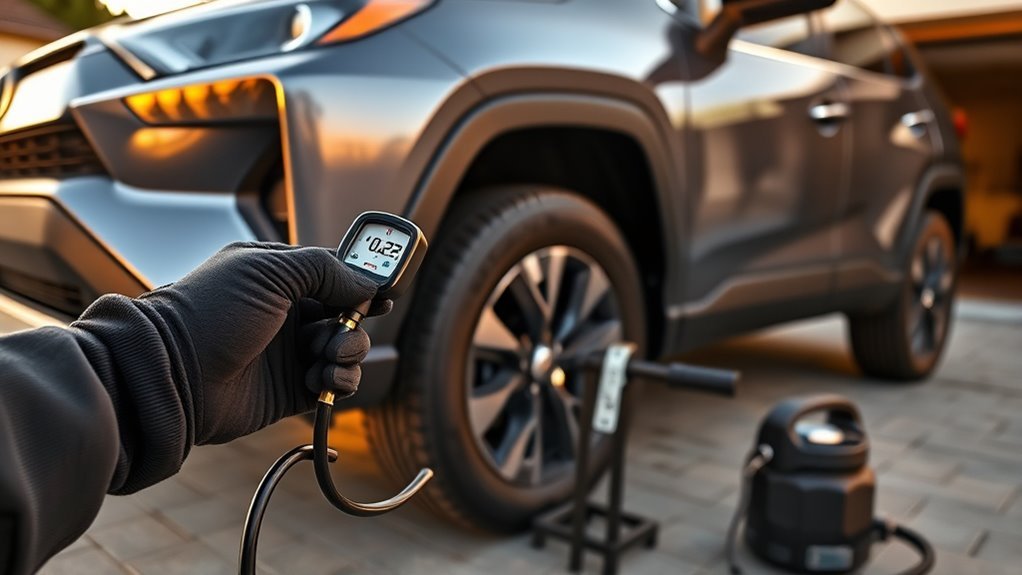
Proper tire pressure is one of the easiest ways to extend RAV4 tire life. Underinflated tires flex more, build extra heat, and wear unevenly. Overinflated tires can ride harshly and may be more vulnerable to damage from potholes or road debris.
Do not guess the PSI. For the correct number, check the Tire and Loading Information label on the driver-side door edge or door jamb, or confirm it in your Toyota owner’s manual. The correct pressure is the vehicle manufacturer’s recommended cold tire pressure, not the maximum pressure printed on the tire sidewall. NHTSA explains this pressure guidance in its TireWise tire safety guide.
Warning: Do not inflate your RAV4’s tires to the sidewall maximum unless that number exactly matches the vehicle placard. The sidewall number is a tire limit, not your RAV4’s recommended operating pressure.
How to Check RAV4 Tire Pressure the Right Way
- Park the RAV4 for at least three hours so the tires are cold.
- Find the recommended cold PSI on the driver-door placard.
- Remove the valve cap and press a reliable gauge firmly onto the valve stem.
- Add air if the reading is low, or release air slowly if it is too high.
- Recheck the pressure after adjusting.
- Repeat for all four tires and the spare tire if your RAV4 is equipped with one.
- Reinstall valve caps to help keep dirt and moisture out of the valve stems.
According to FuelEconomy.gov, keeping tires properly inflated can improve gas mileage by 0.6% on average and up to 3% in some cases. The bigger benefit for tire life is that correct pressure helps the tread contact the road evenly.
Note: Your tire pressure monitoring system is helpful, but it is not a replacement for monthly gauge checks. The U.S. Tire Manufacturers Association notes that TPMS warnings may not appear until a tire is significantly underinflated.
Inspect Tread Depth and Tire Condition Monthly
Good tread helps your RAV4 grip the road, channel water, and brake predictably. Once tread gets too low, the tire becomes more vulnerable to hydroplaning and longer stopping distances, especially in rain or slush.
Use the Penny Test or a Tread Depth Gauge
The quickest home check is the penny test. Place a penny upside down into a main tread groove. If the tread does not cover part of Lincoln’s head, the tire is at or near replacement time. A tread depth gauge is more accurate and is worth keeping in your glove box or garage.
For U.S. passenger vehicles, 49 CFR §570.9 lists 2/32 inch as the minimum tread depth standard. Do not treat that as a performance target. If you drive often in rain, snow, gravel, or mountain roads, start shopping before the tires reach the legal minimum.
Look for Uneven Wear Patterns
| Wear Pattern | Likely Cause | What to Do |
|---|---|---|
| Center tread wearing faster | Possible overinflation or tire/load mismatch | Set cold PSI to the placard and inspect tire fitment. |
| Both outer edges wearing faster | Possible underinflation or frequent heavy cornering | Correct pressure and inspect for damage from heat buildup. |
| One edge wearing faster | Possible alignment issue | Schedule an alignment check. |
| Cupping, scalloping, or vibration | Possible balance, suspension, or worn component issue | Have the tires, wheels, and suspension inspected. |
Inspect the Sidewalls Too
Tread depth is only one part of tire health. Look for cracks, bulges, knots, exposed cords, embedded objects, missing chunks, or sidewall cuts. A tire with a bulge or exposed cord should not be driven on except in an emergency to move to a safe location.
Warning: If a tire is rapidly losing air, has a sidewall bulge, shows exposed cords, or vibrates suddenly at speed, stop driving and have it inspected before continuing.
Rotate Your Tires on Schedule
Tire rotation moves each tire to a different position so the tread wears more evenly. On a RAV4, the front tires often carry extra steering and braking stress. AWD models also benefit from consistent tread depth across all four tires.
Toyota’s 2023 RAV4 Warranty & Maintenance Guide lists scheduled maintenance every 5,000 miles or 6 months, and the 5,000-mile maintenance checklist includes tire rotation. If your tire manufacturer or tire shop recommends a different interval for your exact tire model, follow the more specific guidance.
Pro Tip: Rotate your tires whenever your RAV4 gets its 5,000-mile service. Pairing rotation with routine maintenance makes it easier to stay on schedule.
Which Rotation Pattern Should You Use?
The best pattern depends on your drivetrain, tire type, and whether all four tires are the same size and direction.
- FWD RAV4 with non-directional tires: A common pattern is front tires straight to the rear and rear tires crossed to the front.
- AWD RAV4 with non-directional tires: Many shops use a cross pattern to keep tread depth as even as possible.
- Directional tires: These usually stay on the same side of the vehicle and move front to rear only.
- Different tire sizes front and rear: Follow the tire manufacturer and owner’s manual because some tires may not be rotatable front to rear.
- Compact spare tire: Do not include a temporary compact spare in a normal rotation unless Toyota’s manual specifically allows it.
After rotation, confirm the pressure in each tire because front and rear pressures may differ on some vehicles. Also reset or relearn the TPMS if your RAV4 model requires it after service.
Keep the Wheels Aligned and Balanced
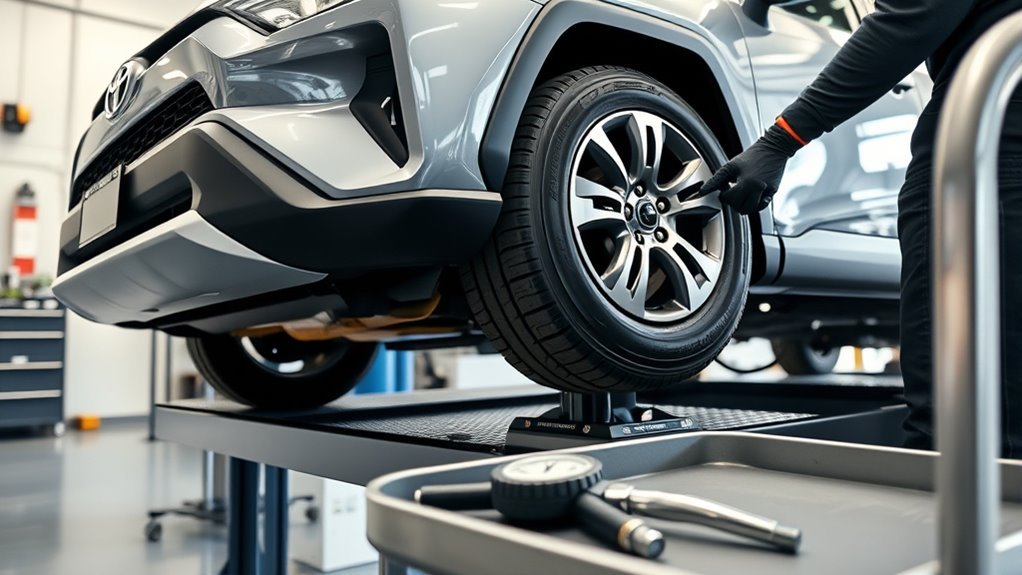
Wheel alignment adjusts the suspension angles so the tires contact the road correctly. When alignment is off, the tire can scrub against the road instead of rolling cleanly, causing fast and uneven tread wear. The U.S. Tire Manufacturers Association recommends checking alignment when you notice trouble signs such as pulling and periodically as specified by the owner’s manual.
[Products Worth Considering]

This TPMS sensor training and relearn reset tool is customized for Ford, Lincoln, and Mercury vehicles to help activate tire pressure programming after sensor replacement or tire rotation. It can activate individual tire pressure sensors with one-button operation, helping prevent TPMS warning light illumination. It is not a sensor programming tool and cannot program replacement sensors—use it to trigger/activate sensors only.

Measure tire tread depth quickly and accurately with this LUMITECO dial gauge that reads in 1/32" increments up to 14/32". The color-coded green/yellow/red zones make it easy to judge tire wear and know when replacement is needed. A rugged, compact design with a protective pouch helps keep the gauge ready for use on cars, trucks, motorcycles, and more.

Monitor tire tread wear with a smart, color-coded depth gauge that shows clear condition ranges at a glance. The bar is range marked for fast, easy readings, helping you maintain safer traction and performance. Each gauge is portable with a pocket clip, and the set includes 20 units for daily use and sharing.
Signs Your RAV4 May Need an Alignment
- The vehicle pulls left or right on a straight, level road.
- The steering wheel is off-center while driving straight.
- One tire edge is wearing faster than the other.
- The RAV4 feels less stable after hitting a pothole or curb.
- You notice squealing, wandering, or unusual steering feel.
Do Not Ignore Wheel Balance
Balancing is different from alignment. A balanced wheel-and-tire assembly spins smoothly without heavy spots. If the steering wheel shakes at highway speed or a tire develops cupped wear, ask a technician to check balance, wheel damage, and suspension parts. Balancing problems can make a good tire wear badly long before the tread should be gone.
Choose Tires That Match Your RAV4 and Driving Conditions
The right tire depends on your RAV4’s size, load rating, speed rating, climate, road surfaces, and how you drive. Start with the tire size and specifications shown on the driver-door placard or owner’s manual. NHTSA advises buying tires in the original size or another size recommended by the vehicle manufacturer.
[Products Worth Considering]

Keep your tires properly inflated with this analog VONDIOR tire pressure gauge, designed for fast, easy readings without batteries. The swiveling, two-axis hose and large glow dial help you measure at any tire angle with instant visibility. Built with a protective rubber shield, it supports durable, low-maintenance use for cars and trucks.

The TYAMATE TM8 solar-powered wireless TPMS delivers real-time tire pressure and temperature monitoring with six alarm modes for safer driving. A vibrant color LCD display shows readings clearly while windshield mounting keeps it hands-free and easy to read. With a wide 0–87 PSI range, strong 433.92 MHz signal transmission, and quick sensor pairing, it’s ideal for RV, sedan, SUV, MPV, and truck use.

Milton S-921 pencil tire pressure gauge helps you maintain optimal tire pressure for passenger cars with accurate readings in PSI and kPa. It features a built-in deflator valve for convenient pressure adjustments, plus a single chuck head and nylon indicator bar for easy use on the go. Built from durable plated brass and designed for reliable performance, it’s a practical road trip and cold-weather maintenance tool.
What to Compare Before Buying Tires
- Size: Match the RAV4’s required tire size unless a qualified tire professional confirms an approved alternative.
- Load rating: Choose tires that can safely support the vehicle and typical cargo.
- Speed rating: Use a rating appropriate for the vehicle and manufacturer requirements.
- Season: All-season tires work for many drivers; winter tires are better for consistent snow, ice, and cold conditions.
- Treadwear warranty: A longer warranty can be useful, but it still depends on rotation, alignment, inflation, and records.
- Driving style: Aggressive braking, hard cornering, gravel roads, and heavy loads can shorten tire life.
Original equipment tires may prioritize ride comfort, fuel economy, road noise, or handling. Replacement tires can shift that balance. If you want longer tread life, compare touring or highway all-season options with strong treadwear ratings rather than choosing only by price.
Adjust Your Tire Habits for Weather, Loads, and Road Conditions
Temperature changes affect tire pressure. As weather cools, pressure usually drops; as weather warms, pressure rises. That is why a RAV4 tire that looked fine in September may be underinflated on a cold November morning.
Check pressure more often when:
- temperatures swing sharply;
- you are taking a long road trip;
- you are carrying heavy cargo;
- you are driving on rough roads, gravel, potholes, or construction zones;
- you recently repaired or replaced a tire;
- the TPMS light appears.
Loads also matter. Extra passengers, cargo boxes, roof racks, towing, and repeated short trips can increase tire stress. Always stay within Toyota’s load limits and follow the placard or owner’s manual for pressure guidance.
A tire can look normal and still be several PSI low. A monthly cold-pressure check is one of the cheapest ways to protect tread life, fuel economy, and safety.
Why Professional Tire Maintenance Is Worth It
You can handle pressure checks and basic inspections at home, but professional tire service is still valuable. A trained technician can spot uneven wear, bent wheels, suspension problems, improper repairs, and alignment issues before they ruin a set of tires.
[Products Worth Considering]

The SAFELIFE dial tire tread depth gauge measures tread depth in 1/32 inch increments with clear, easy-to-read 2-inch dial face. Color zones using a traffic light system help you quickly judge whether tread is low, marginal, or ample for safer driving. Built with a durable zinc cast body and a metal detect probe for precise, comfortable use across cars, motorcycles, trucks, and buses.

Replace worn or malfunctioning GM TPMS sensors with this 433MHz pre-programmed sensor set designed for compatibility with many Chevrolet, Buick, GMC, and Cadillac models. It includes guidance for proper OBDII relearning/pairing after installation and supports reliable long-term operation with a high-performance CR2032 battery. Quality tested for durability and performance to help restore accurate tire pressure monitoring.

Upgrade your Toyota tire setup with these corrosion-resistant, leak-proof valve stem caps designed to help protect the valve core from water, snow, and road grime. The caps feature a snug rubber seal and durable copper alloy construction to resist rust and oxidation while maintaining stable tire pressure. Ideal for replacing worn original caps and keeping your wheels looking clean and stylish.
Ask for These Checks During Service
- tire rotation and pressure adjustment;
- tread depth measurement on all four tires;
- sidewall and tread damage inspection;
- wheel balance check if vibration is present;
- alignment check if there is pulling or uneven wear;
- valve stem and TPMS sensor inspection;
- documentation for tire warranty records.
Keep receipts for rotations, alignments, and pressure checks. Many treadwear warranties require proof that the tires were maintained properly. Good records also make it easier to diagnose recurring wear problems.
Frequently Asked Questions
How many miles do stock RAV4 tires typically last?
Many original-equipment RAV4 tires last roughly 40,000 to 60,000 miles, but the real number depends on tire model, rotation history, alignment, road surface, driving style, climate, and load. Aggressive driving, low pressure, and missed rotations can shorten tire life quickly.
How often should I rotate Toyota RAV4 tires?
For many RAV4 models, Toyota schedules maintenance every 5,000 miles or 6 months, and tire rotation is included in the maintenance checklist. Follow your specific owner’s manual and tire manufacturer guidance, especially if your tires are directional or your driving conditions are severe.
What PSI should I use for my RAV4 tires?
Use the cold tire pressure printed on the driver-side door placard or listed in your Toyota owner’s manual. Many RAV4 trims use pressures in the low-30s PSI range, but the exact value can vary by model year, trim, tire size, and load.
When should I replace my RAV4 tires?
Replace tires when they reach 2/32 inch of tread depth, show tread wear bars, have unsafe damage, or can no longer provide the traction you need. Consider replacing earlier if you often drive in heavy rain, snow, or mountain conditions.
Does an AWD RAV4 need special tire care?
Yes. AWD systems work best when all four tires are closely matched in size, type, and tread depth. Rotate regularly, avoid mixing tire models on the same axle, and ask a tire professional before replacing only one tire on an AWD RAV4.
Conclusion
To maximize your Toyota RAV4’s tire life, build a simple routine: check cold pressure monthly, rotate tires on schedule, inspect tread and sidewalls, correct alignment or balance symptoms early, and buy tires that match your RAV4’s specifications. These habits cost very little compared with replacing tires early, and they also support safer handling, better traction, and more predictable fuel economy.
Sources
- NHTSA TireWise — tire pressure, placard guidance, tire size, TPMS, and tire safety basics.
- Toyota 2023 RAV4 Warranty & Maintenance Guide — RAV4 maintenance interval and tire rotation checklist.
- U.S. Tire Manufacturers Association Tire Care Essentials — monthly pressure checks, tread depth, rotation, alignment, and TPMS limitations.
- FuelEconomy.gov: Keeping Your Vehicle in Shape — fuel economy impact of proper tire inflation.
- 49 CFR §570.9 Tires — U.S. tread depth minimum and tire condition inspection language.