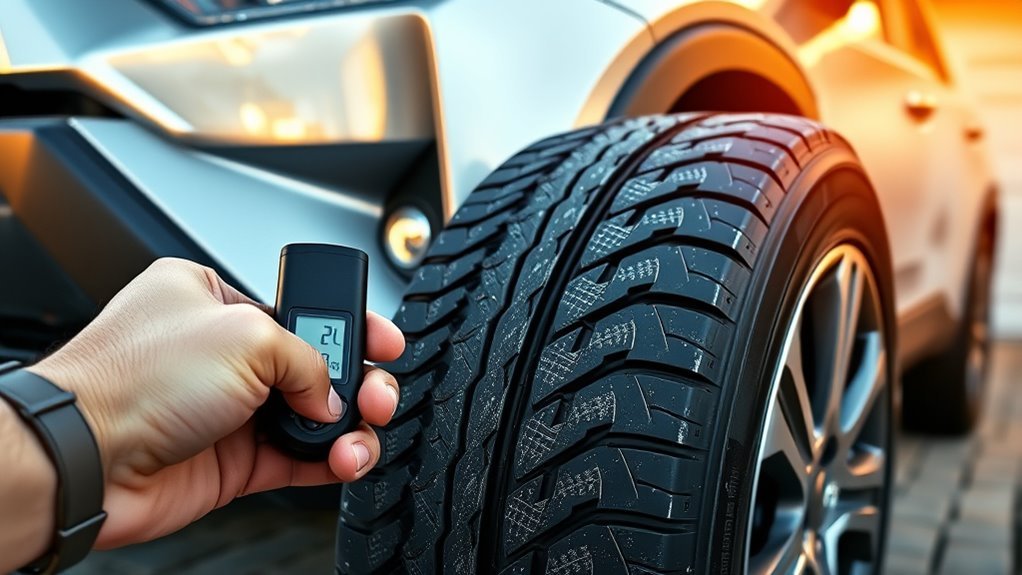
Keeping your Toyota RAV4’s tire pressure correct is one of the easiest ways to protect handling, fuel economy, tire life, and safety. The best routine is simple: check the tires when they are cold, compare each reading with the PSI shown on the driver’s door placard or owner’s manual, and adjust before long trips or big temperature swings.
Quick Answer
Check your RAV4 tire pressure every two weeks if possible, and at least once a month. Always measure when the tires are cold and inflate to the cold PSI listed on your driver’s door placard or in the owner’s manual—not the maximum PSI printed on the tire sidewall.
Key Takeaways
- Toyota recommends checking tire inflation pressure every two weeks, or at least once per month.
- Use the cold PSI on the RAV4’s tire and loading information label, usually found on the driver’s door jamb.
- Do not use the tire sidewall maximum as your normal driving pressure.
- Check pressure before road trips, after major temperature changes, and whenever the TPMS light comes on.
- If one tire keeps losing air, have it inspected for a puncture, valve leak, bead leak, or wheel damage.
At a Glance
| Time Required | 5–10 minutes |
| Difficulty | Easy |
| Tools Needed | Quality tire pressure gauge, air compressor or service-station air pump, valve caps, and your door placard or owner’s manual |
| Cost | Usually free if you already have a gauge; about $10–$30 for a basic gauge |
How Often Should You Check RAV4 Tire Pressure?
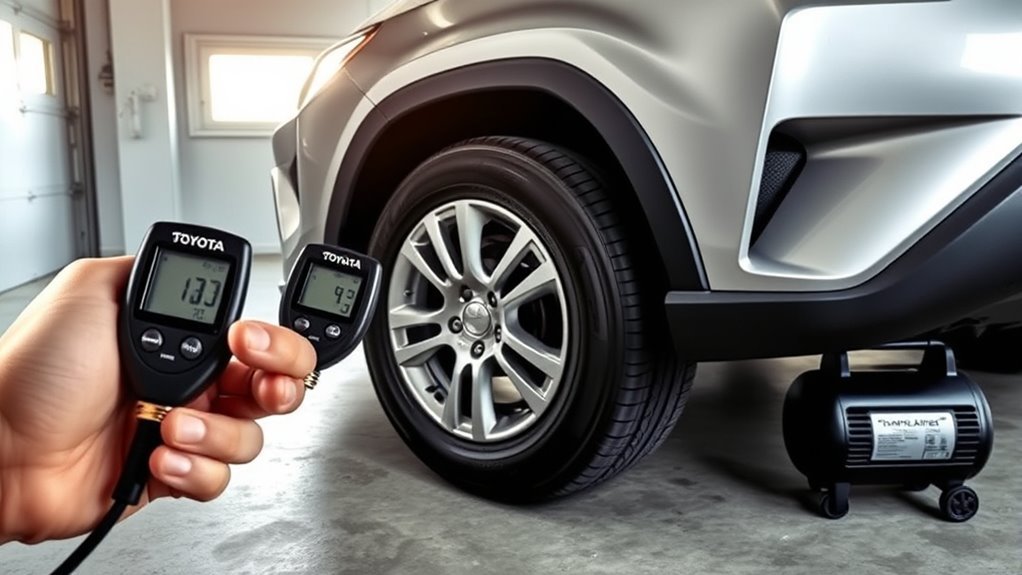
Check your RAV4’s tire pressure every two weeks if you can, and at least once a month. Toyota’s owner-manual guidance says tire inflation pressure should be checked every two weeks, or at least monthly, and the same routine should include the spare tire if your RAV4 has one.
That schedule matters because tires naturally lose a small amount of air over time. Temperature changes, potholes, heavy cargo, valve-stem leaks, and small punctures can also change pressure before the tire looks obviously low.
Use a reliable gauge instead of judging by appearance. A tire can be several PSI low and still look normal, especially on a crossover like the RAV4.
Pro Tip: Tie your tire-pressure check to a habit you already have, such as the first fuel stop of the month, the first weekend of the month, or the day before a long drive.
How to Check Your RAV4’s Tire Pressure Step by Step
You do not need special mechanical skill to check tire pressure. You only need a good gauge, the correct cold PSI target, and a few minutes.
Gather Tools First
Before you start, gather these items:
- A digital or pencil-style tire pressure gauge
- An air compressor or access to a gas-station air pump
- Your RAV4’s driver-door tire placard or owner’s manual
- A phone note, notebook, or maintenance app to record readings
Open the driver’s door and look for the tire and loading information label on the door edge or door jamb. That label lists the correct cold tire inflation pressure for the original tire size on your RAV4.
Check When Tires Are Cold
For the most accurate reading, check tire pressure when the tires are cold. A cold tire means the vehicle has been parked for at least three hours or has been driven only a short distance at low speed.
- Remove the valve cap from the first tire.
- Press the tire pressure gauge firmly onto the valve stem until the hissing stops.
- Read the PSI on the gauge.
- Compare the reading with the cold PSI listed on the door placard or owner’s manual.
- Add air if the reading is low, or release a small amount of air if it is high.
- Recheck the tire after adjusting.
- Replace the valve cap securely.
- Repeat for all four tires and the spare tire if your RAV4 has one.
Warning: Do not drive on a visibly flat tire or a tire with sidewall damage. Pull over safely and use the spare, repair kit, roadside assistance, or a tire professional.
Adjust and Recheck
If a tire is below the recommended PSI, add air in short bursts and recheck with the gauge. If it is above the recommended PSI, press the center pin inside the valve stem briefly to release air, then recheck.
After adjusting, make sure every tire matches the pressure listed for its position. Some vehicles use the same PSI front and rear; others may list different front and rear pressures. Follow the label on your RAV4.
What PSI Should My RAV4 Use and Where to Find It
Many Toyota RAV4 models use a cold tire pressure in the general 30–35 PSI range, but you should not rely on a generic number. The exact PSI depends on model year, trim, tire size, wheel package, and original equipment specification.
The best source is the tire and loading information label on the driver’s door jamb. The second-best source is your RAV4 owner’s manual, available through Toyota Owners Manuals and Warranties.
Use the PSI on the RAV4’s door placard or owner’s manual. The number molded into the tire sidewall is the tire’s maximum pressure, not your normal driving target.
Use this quick hierarchy:
- Best source: Driver’s door jamb tire and loading information label.
- Also reliable: The owner’s manual for your exact model year.
- Not your target PSI: The maximum pressure printed on the tire sidewall.
Monthly vs. Biweekly Checks: Choose by Mileage and Conditions
If you drive a normal commute in mild weather, a monthly tire pressure check is the minimum routine. If you drive long distances, carry cargo often, park outside in changing weather, or see frequent TPMS alerts, check every two weeks.
Biweekly checks are also smart during seasonal transitions. Tire pressure changes as outside temperature changes, and pressure often drops when cold weather arrives. Bridgestone notes that tire pressure changes by about 1 PSI for every 10°F change in ambient temperature, so a big temperature swing can make a noticeable difference.
Correct pressure also helps fuel economy. FuelEconomy.gov says proper tire inflation can improve gas mileage by 0.6% on average and up to 3% in some cases, while underinflation can reduce mileage by about 0.2% for every 1 PSI drop in the average pressure of all tires.
When to Check Immediately: Cold Tires, Long Trips, and Temperature Swings
Some situations call for an immediate pressure check, even if your normal monthly reminder is not due yet.
- Before a long trip: Check cold pressure before loading the vehicle and leaving home.
- After a major temperature drop: Cold weather can lower tire pressure enough to trigger the TPMS light.
- Before carrying heavy cargo: Confirm all tires are at the correct cold PSI and that the vehicle is not overloaded.
- After hitting a pothole or curb: Check pressure and inspect the sidewall for bulges, cuts, or damage.
- When the TPMS light comes on: Check all tires with a manual gauge as soon as it is safe.
Note: If you must add air when the tires are warm, inflate to the placard PSI as a temporary safety step, then recheck and fine-tune the pressure when the tires are cold.
Seasonal and Load Adjustments for RAV4 Tire Pressure
Seasonal changes and cargo weight affect tire pressure, but the safest target is still the cold PSI listed on your RAV4’s placard or owner’s manual. Avoid adding a fixed extra amount of air just because it is cold or because you are carrying cargo.
[Products Worth Considering]

The Big Rig Defense Tire Thumper is a truck tire pressure checker that lets you quickly check multiple tires by giving them a firm whack. Listen for a reassuring thump and feel the stick bounce when a tire is fully inflated, helping you get back on the road safely. It features a comfortable, glove-friendly handle and a secure wrist strap for confident use on busy routes.

Keep your tires properly inflated with this analog VONDIOR tire pressure gauge, designed for fast, easy readings without batteries. The swiveling, two-axis hose and large glow dial help you measure at any tire angle with instant visibility. Built with a protective rubber shield, it supports durable, low-maintenance use for cars and trucks.

The TYAMATE TM8 solar-powered wireless TPMS delivers real-time tire pressure and temperature monitoring with six alarm modes for safer driving. A vibrant color LCD display shows readings clearly while windshield mounting keeps it hands-free and easy to read. With a wide 0–87 PSI range, strong 433.92 MHz signal transmission, and quick sensor pairing, it’s ideal for RV, sedan, SUV, MPV, and truck use.
Cold-Weather Pressure Adjustments
Cold air lowers tire pressure. If your RAV4 was set correctly in warm weather, it may read low after the first cold snap. The fix is not to guess. Check the tires cold and restore them to the placard PSI.
Cold mornings can also trigger the TPMS light when a tire is near the low-pressure threshold. If the light comes on, check all tires with a gauge instead of assuming the warning will disappear after driving.
Hot-Weather Pressure Checks
Hot weather and highway driving can raise tire pressure temporarily. Do not bleed air from a hot tire just because it reads above the placard number after driving. Let the tires cool, then check again when cold.
Load and Cargo Effects
Before carrying heavy cargo, check the tire pressure cold and confirm your RAV4 is within its load limit. The tire and loading information label lists important load information, and the owner’s manual gives model-specific guidance.
| Situation | What to Do | Why It Matters |
| Normal driving | Set cold tires to the door placard PSI | Maintains handling, wear, and fuel economy |
| Cold snap | Recheck cold pressure and restore to placard PSI | Prevents underinflation and TPMS warnings |
| Heavy cargo | Follow the placard/manual and do not exceed vehicle load limits | Helps protect tire structure and handling |
| Hot tires after driving | Wait for a cold reading before fine-tuning | Avoids accidentally underinflating warm tires |
Seasonal Check Frequency
During mild, stable weather, monthly checks are usually enough for most drivers. During winter, heat waves, or sharp day-to-night temperature swings, check every two weeks until readings stay consistent.
TPMS, Gauges, and Apps: Easy Ways to Monitor RAV4 Tire Pressure
Your RAV4’s tire pressure monitoring system is helpful, but it should not replace manual pressure checks. NHTSA explains that TPMS warnings activate when a tire is significantly underinflated, so a tire can be low before the warning appears.
- Solid TPMS light: At least one tire may be significantly underinflated. Check all tires with a gauge as soon as it is safe.
- Light comes on during a cold morning: Pressure may have dropped with temperature. Check cold pressure and inflate to the placard PSI.
- Light flashes for about a minute, then stays on: The TPMS may have a malfunction. Have the system inspected by a Toyota dealer or qualified shop.
- Light stays on after adding air: Recheck all tires with a gauge. Some systems may need driving time or a reset procedure listed in the owner’s manual.
A tire pressure app or maintenance log is useful for reminders, but the gauge reading is what matters. Record each tire’s PSI, date, and outside temperature so you can spot slow leaks early.
[Products Worth Considering]

Milton S-921 pencil tire pressure gauge helps you maintain optimal tire pressure for passenger cars with accurate readings in PSI and kPa. It features a built-in deflator valve for convenient pressure adjustments, plus a single chuck head and nylon indicator bar for easy use on the go. Built from durable plated brass and designed for reliable performance, it’s a practical road trip and cold-weather maintenance tool.

ETENWOLF’s tire pressure gauge helps you quickly and accurately check tire PSI across cars, trucks, motorcycles, bikes, and more. It’s manually calibrated to ANSI B40.1 Grade A for reliable readings, includes a large glow dial for easy nighttime viewing, and features a 360-degree swivel chuck for use at any valve angle. The gauge also works consistently in extreme hot or cold weather.

This AUTOWN flat tire repair kit is designed for quick, reliable puncture repairs using a plug kit and spiral probe tool to simplify installation. Built for durability and safe handling, it offers strong adhesion and flexibility to help maintain tire air tightness. With a portable storage case and a multi-vehicle approach, it’s suitable for cars, motorcycles, ATVs, tractors, lawn mowers, RVs, jeeps, and trucks.
What to Do If One Tire Keeps Losing Pressure
If the same tire is repeatedly low, do not keep topping it off without inspection. A slow leak can come from a nail, screw, cracked valve stem, leaking valve core, damaged wheel, bead leak, or tire damage.
Use this quick check:
- Look for nails, screws, cuts, bulges, or uneven tread wear.
- Make sure the valve cap is present and tight.
- Listen for air escaping near the valve stem.
- Compare the low tire with the other three tires after the vehicle has been parked overnight.
- Visit a tire shop if the tire loses more than a small amount of pressure repeatedly.
Warning: A tire with a sidewall bulge, exposed cords, severe cracking, or rapid air loss should be replaced or professionally inspected before more driving.
[Products Worth Considering]

The Topeak SmartGauge D2 delivers precise digital tire pressure readings for bikes, motorcycles, and sports equipment up to 250 psi (17 bar). Its rotating SmartHead works with both Presta and Schrader valves, so you can check pressure quickly without adapters. The LCD display makes it easy to read results in psi, bar, or kg/cm² with an included CR2032 battery for immediate use.
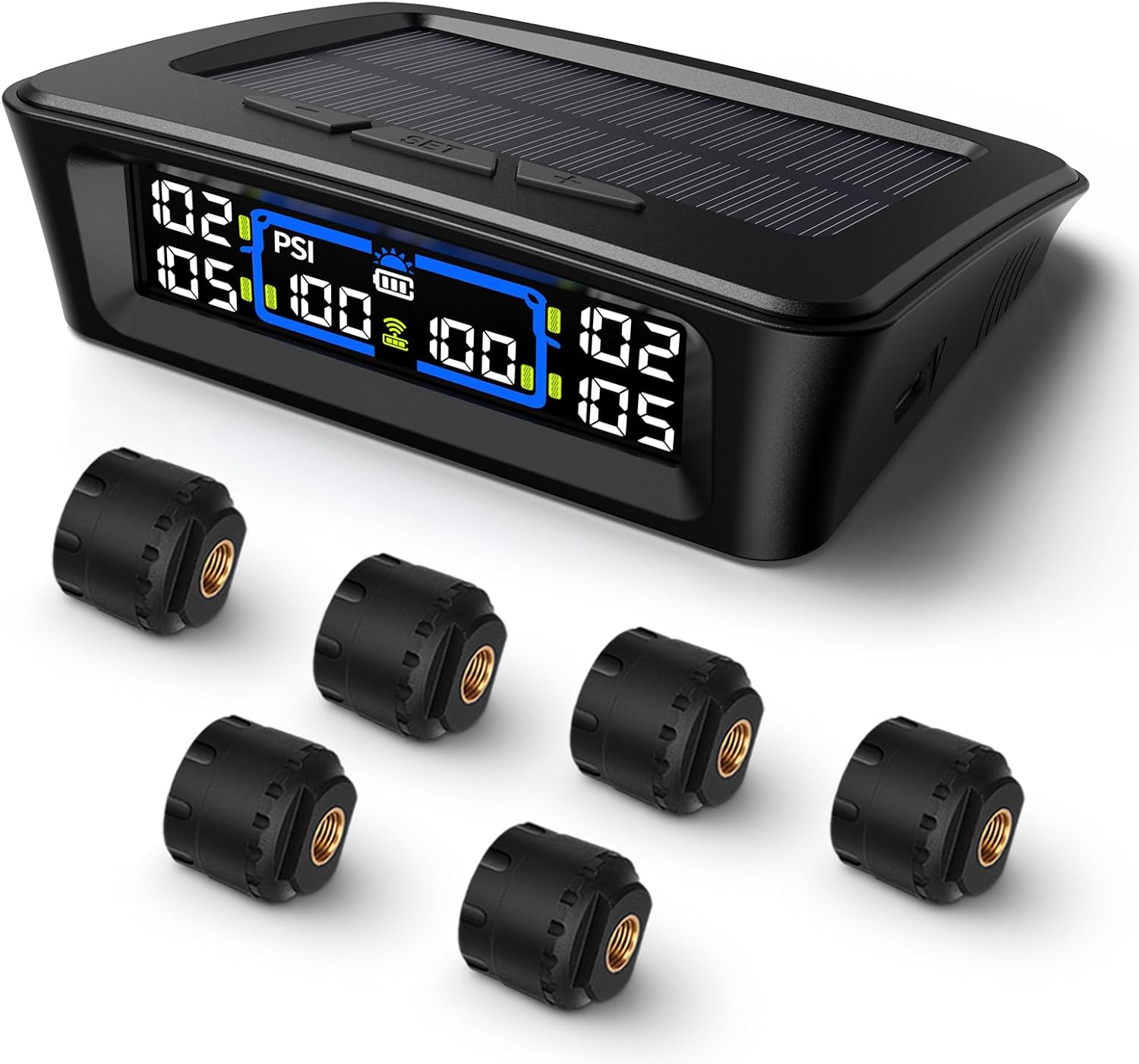
The Tymate TM12 RV TPMS delivers real-time tire pressure and temperature monitoring with a stable 433Hz display for safer long-distance driving. It supports simultaneous monitoring across vehicle and trailer zones, includes six alarm modes for pressure, temperature, leakage, battery, and signal loss, and features easy DIY installation with auto calibration. Power is supplied via USB-C charging or solar recharging, with a wide 0–144 PSI range and up to 50 ft signal coverage for RVs and towable trailers.

Upgrade your Toyota’s wheels with durable aluminum alloy valve stem caps that help protect valve cores from corrosion and direct exposure to road grime, clay, water, and snow. Rubber rings improve sealing to help prevent air leakage and maintain stable tire pressure for safer driving. These caps are easy to install or remove without tools and add a unique, stylish look to your car.
Common RAV4 Tire Pressure Mistakes to Avoid
- Using the sidewall number as the target: The sidewall shows the tire’s maximum cold pressure, not your RAV4’s recommended operating pressure.
- Checking only when the TPMS light comes on: TPMS is a backup warning, not a maintenance schedule.
- Bleeding air from hot tires: Hot tires normally read higher after driving. Check again when cold.
- Forgetting the spare: If your RAV4 has a spare tire, include it in your monthly or biweekly check.
- Ignoring tire-size changes: If you installed a non-original tire size, ask a tire professional for the correct inflation guidance.
- Skipping valve caps: Valve caps help keep dirt and moisture out of the valve stem.
Frequently Asked Questions
Can low tire pressure void my RAV4 warranty?
Low tire pressure does not automatically void your entire RAV4 warranty. However, if tire, wheel, suspension, or related damage is caused by neglect, misuse, overloading, or failure to maintain proper inflation, that specific damage may not be covered. Keep pressure records and service receipts if you want extra documentation.
Can incorrect tire pressure cause uneven brake wear?
Incorrect pressure can contribute to uneven tire wear and reduced stability, which may affect how the vehicle feels while braking. Uneven brake pad wear is more often caused by brake hardware, calipers, alignment, driving habits, or suspension issues, so inspect both tires and brakes if braking feels uneven.
How does altitude affect tire pressure readings?
Altitude can slightly affect gauge readings because outside air pressure changes, but most RAV4 owners do not need to make a special altitude adjustment. Check the tires cold and use the PSI listed on the door placard or owner’s manual. If you travel from a low elevation to a mountain area with a big temperature change, recheck pressure when the tires are cold.
Are run-flat tires available for the RAV4?
Some aftermarket run-flat tires may be available in RAV4-compatible sizes, but they are not automatically the right choice for every RAV4. Confirm the correct tire size, load rating, speed rating, wheel compatibility, TPMS compatibility, and ride-quality tradeoffs with a qualified tire retailer before switching.
Can I use nitrogen instead of air in RAV4 tires?
Yes, you can use nitrogen if it is available, but it does not eliminate the need for regular pressure checks. Tires can lose pressure whether they are filled with air or nitrogen. If a nitrogen-filled tire is low and nitrogen is not available, adding regular compressed air is better than driving underinflated.
Should I check the spare tire too?
Yes. If your RAV4 has a spare tire, check it at least monthly or before long trips. Spare tires are easy to forget, but an underinflated spare may be useless when you need it. Use the pressure listed in the owner’s manual or on the spare-tire label.
Why did my TPMS light come on after a cold night?
Cold air can lower tire pressure enough to trigger the TPMS light, especially if one or more tires were already near the low-pressure threshold. Check all tires cold with a gauge and inflate them to the placard PSI.
Do I need to reset the TPMS after adding air?
It depends on your RAV4 model year and system. After setting all tires to the correct cold PSI, drive normally and see whether the light turns off. If it stays on, check your owner’s manual for the reset or initialization procedure, or have the system inspected.
Conclusion
Check your RAV4’s tire pressure every two weeks if possible, and at least once a month. Use a reliable gauge, measure when the tires are cold, and inflate to the PSI listed on the driver’s door placard or owner’s manual. Recheck before long trips, after big temperature swings, when carrying heavy cargo, and anytime the TPMS light appears. A few minutes of pressure maintenance can help your RAV4 drive safer, wear tires more evenly, and use fuel more efficiently.
Sources
- Toyota Owners — 2025 RAV4 Tire Inflation Pressure — Toyota guidance on checking tire inflation pressure and using the tire/loading label.
- Toyota Owners Manuals and Warranties — official Toyota owner-manual lookup.
- NHTSA Tire Safety — cold tire checks, TPMS limitations, tire pressure steps, tread, and safety guidance.
- FuelEconomy.gov — Keeping Your Vehicle in Shape — fuel-economy effects of proper tire inflation and underinflation.
- Bridgestone Americas — Tire Inflation — tire pressure changes with ambient temperature and cold-check guidance.
- AAA — Nitrogen Tire Inflation Myths vs. Facts — nitrogen versus air and the need to keep checking pressure.