Matching tires to driving conditions in your RAV4 starts with one simple rule: choose tires for the roads you actually drive most, then confirm the size, load rating, speed rating, and cold tire pressure on your driver-door tire placard or owner’s manual. A city commuter, highway cruiser, snow-belt driver, and gravel-road adventurer may all need different tire priorities.
Quick Answer
For most RAV4 drivers, a quality touring all-season tire is the best everyday match. Choose all-weather or winter tires for regular cold, snow, and ice; all-terrain tires for gravel, dirt, and light trails; and performance tires only if warm-weather handling matters more than ride comfort or tread life.
Key Takeaways
- Start with the RAV4 tire placard, not the tire sidewall, when checking the correct cold PSI and original tire size.
- City and highway drivers usually benefit most from quiet touring all-season tires, while snowy climates need winter or 3PMSF-rated all-weather tires.
- If your RAV4 has AWD, keep all four tires closely matched by size, brand, model, tread pattern, and tread depth.
- Replace tires before they become unsafe for your conditions: legal minimum is not the same as best wet- or snow-road safety.
At a Glance
| Time Required | 15–30 minutes to inspect your tire size, tread depth, PSI, and driving needs before shopping |
| Difficulty | Easy for choosing a category; moderate if changing wheel size or replacing only one or two AWD tires |
| Tools Needed | Tire pressure gauge, tread-depth gauge or coin, flashlight, owner’s manual or driver-door tire placard |
| Cost | Varies by size and tire type; budget for mounting, balancing, valve stems/TPMS service, alignment if needed, and road-hazard coverage |
Importance of Tire Selection for Your RAV4
The right tires affect how your RAV4 stops, steers, rides, handles rain, and grips loose surfaces. They also affect road noise, fuel economy, tread life, and AWD driveline stress. That is why tire selection should not begin with the most aggressive tread or the lowest price. It should begin with your real driving conditions.
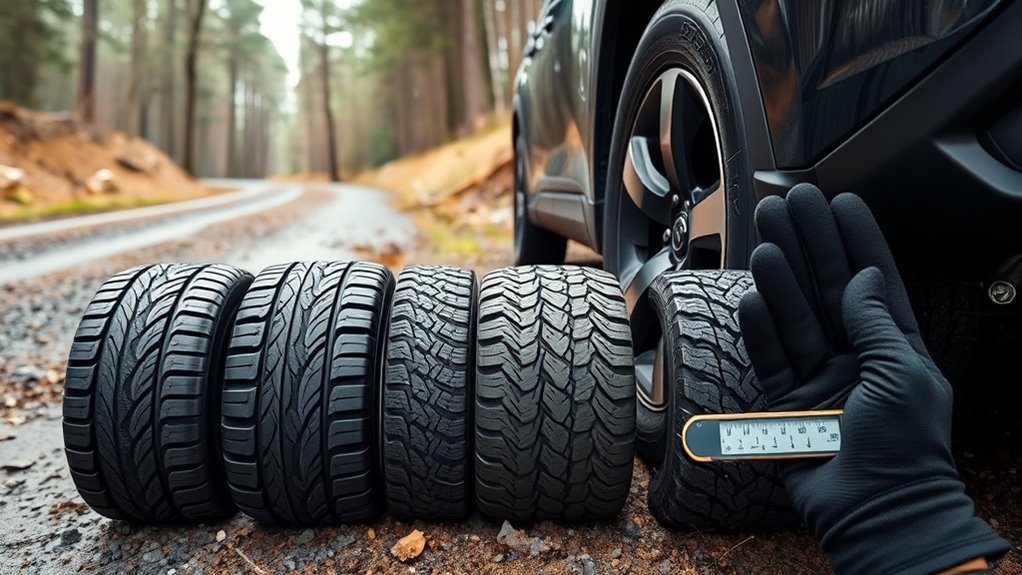
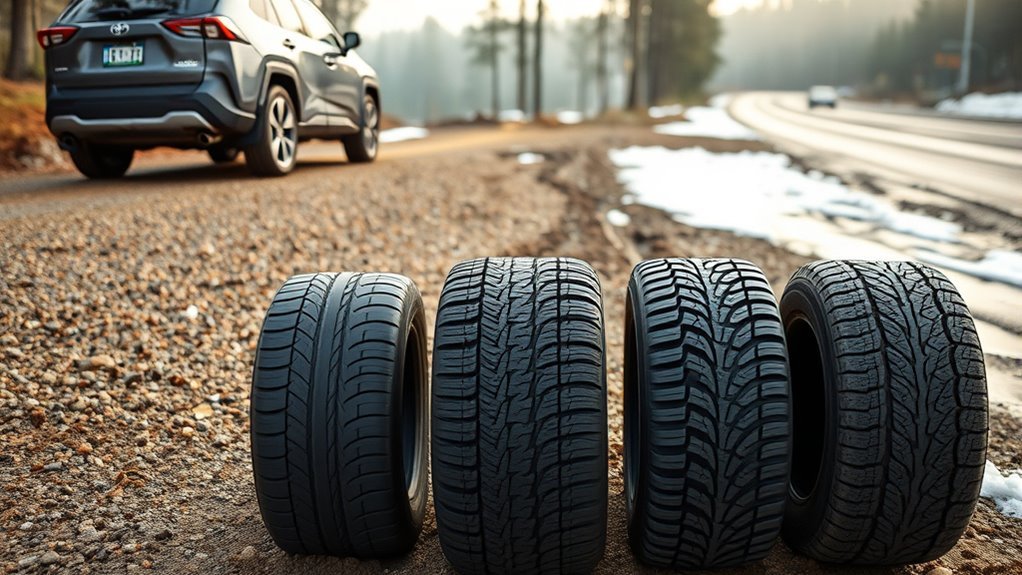
For everyday city and suburban use, a quiet touring all-season tire is usually the most balanced choice. For frequent highway trips, look for stability, wet braking, treadwear warranty, and low road noise. For winter climates, choose dedicated winter tires or all-weather tires with the Three-Peak Mountain Snowflake symbol. For gravel roads, campsites, farm roads, or light trails, an all-terrain tire may be worth the extra tread noise and fuel penalty.
Before buying, check the original tire size and cold inflation pressure on the RAV4 tire-and-loading information label. Toyota says the recommended cold tire pressure and tire size are displayed on that label, and tire pressure should be checked at least monthly, preferably every two weeks.
Warning: Do not use the maximum PSI printed on the tire sidewall as your normal inflation target. The sidewall shows the tire’s maximum cold pressure, not the RAV4’s recommended operating pressure. Use the driver-door placard or owner’s manual.
Start With Your RAV4 Tire Size and Placard
Your tire sidewall tells you what is currently installed. Your RAV4 tire placard tells you what Toyota specified for that vehicle. You need both.
A common RAV4 tire size may look like 225/65R17. Here is what that means:
- 225 is the tire width in millimeters.
- 65 is the aspect ratio, meaning the sidewall height is 65% of the tire width.
- R means radial construction.
- 17 is the wheel diameter in inches.
Many recent RAV4 models use sizes such as 225/65R17, 225/60R18, or 235/55R19, depending on trim and wheel package. Do not assume your neighbor’s RAV4 uses the same size. Check your own placard, especially if your vehicle has aftermarket wheels or you bought it used.
Also check the load index and speed rating. A replacement tire should meet or exceed Toyota’s required load capacity and speed rating unless a tire professional confirms a safe alternative. Michelin’s RAV4 fitment guidance also recommends using a qualified tire dealer to confirm load rating, speed rating, and pressure requirements when using alternative sizes.
How to Identify Your Driving Conditions: City, Highway, or Off-Road?
The easiest way to choose RAV4 tires is to match your tire category to your main driving pattern, then adjust for climate.
| Driving Condition | Best Tire Type | What to Prioritize |
| City and suburbs | Touring all-season | Comfort, quiet ride, wet braking, tread life |
| Long highway trips | Highway/touring all-season | Straight-line stability, low noise, fuel economy, wet traction |
| Frequent rain | All-season or all-weather with strong wet ratings | Hydroplaning resistance, wet braking, tread depth |
| Cold, snow, ice | Winter tire or 3PMSF all-weather tire | Cold-weather compound, snow traction, braking control |
| Gravel, dirt, light trails | All-terrain | Stronger tread blocks, puncture resistance, loose-surface grip |
| Warm-weather spirited driving | Performance all-season or summer tire | Steering response and dry/wet grip, with comfort tradeoffs |
Common City Challenges
City driving creates repeated stop-and-go heat cycles, pothole impacts, curb scrapes, sharp turns, and wet pavement surprises. For most city RAV4 owners, the best match is a touring all-season tire with good wet braking, low noise, and a comfortable sidewall.
Avoid choosing an aggressive all-terrain tire only for appearance if you rarely leave pavement. It can add road noise, reduce fuel economy, and make the ride feel firmer.
Highway Performance Needs
For highway cruising, do not jump straight to a “performance” tire unless you truly want sharper handling. Most RAV4 highway drivers are better served by a highway or touring all-season tire with strong wet traction, good treadwear coverage, and a quiet tread pattern.
Highway tires should also match your driving speed and load. Check the speed rating and load index, especially if you carry passengers, luggage, rooftop cargo, bikes, or towing tongue weight.
Rain, Snow, and Cold-Weather Needs
Rainy climates need tires with strong water evacuation and enough tread depth to resist hydroplaning. Snowy climates need more than AWD. AWD helps the RAV4 move, but tires help it stop and turn.
If daily temperatures often drop below about 45°F, consider dedicated winter tires or all-weather tires with the Three-Peak Mountain Snowflake symbol. Michelin notes that the best time to switch to winter tires is when average daily temperatures fall below 45°F.
Off-Road Terrain Considerations
For gravel roads, dirt tracks, rocky camp roads, and muddy parking areas, all-terrain tires can give your RAV4 stronger loose-surface grip and more durable tread blocks. They are a good match for RAV4 Adventure, TRD Off-Road, Woodland Edition, or any RAV4 that regularly sees unpaved roads.
There is a tradeoff. All-terrain tires can be heavier, louder, and less efficient than touring tires. If your off-road use is occasional and light, choose a mild all-terrain rather than a heavy, aggressive tire built for trucks.
How Tire Size Affects Performance and Comfort
Tire size changes how your RAV4 feels. A taller sidewall usually improves ride comfort and pothole absorption. A shorter sidewall can sharpen steering response but may feel firmer and leave the wheel more exposed to damage.
Tire Profile Influence
Higher-profile tires, such as many 17-inch RAV4 setups, usually provide more sidewall cushion. This helps on rough city streets, gravel roads, and broken pavement. Lower-profile 19-inch setups can feel more responsive, but they may ride firmer and cost more to replace.
For comfort, potholes, and rough roads, a smaller wheel with a taller sidewall is often the better real-world choice. For sharper road feel and appearance, a larger wheel with a lower-profile tire may appeal more.
Diameter Impact on Performance
Overall tire diameter affects speedometer accuracy, ride height, gearing feel, and AWD operation. Small changes may be acceptable, but large changes can create clearance problems, inaccurate speed readings, and drivetrain stress.
If you want to change wheel or tire size, have a tire professional confirm overall diameter, load rating, speed rating, clearance, and recommended pressure before buying. This is especially important for AWD RAV4 models.
Ride Comfort Considerations
Comfort is not only about tire size. Tread design, tire weight, sidewall stiffness, and inflation pressure all matter. A tire that is excellent for sharp handling may feel noisy or stiff on daily commutes. A tire that is excellent for comfort may not feel as precise during fast cornering.
Pro Tip: If you are unsure between two tire types, choose the tire that fits 80% of your driving. Occasional gravel does not require a loud all-terrain tire, and one annual snow trip does not replace the need for true winter tires in a cold climate.
Choosing the Best Tire Type for Your RAV4

Choose by tire type first, then compare specific models that fit your RAV4 size and driving conditions.
[Products Worth Considering]

Keep your tires properly inflated with this analog VONDIOR tire pressure gauge, designed for fast, easy readings without batteries. The swiveling, two-axis hose and large glow dial help you measure at any tire angle with instant visibility. Built with a protective rubber shield, it supports durable, low-maintenance use for cars and trucks.

Monitor tire tread wear with a smart, color-coded depth gauge that shows clear condition ranges at a glance. The bar is range marked for fast, easy readings, helping you maintain safer traction and performance. Each gauge is portable with a pocket clip, and the set includes 20 units for daily use and sharing.

Measure tire tread depth quickly and accurately with this LUMITECO dial gauge that reads in 1/32" increments up to 14/32". The color-coded green/yellow/red zones make it easy to judge tire wear and know when replacement is needed. A rugged, compact design with a protective pouch helps keep the gauge ready for use on cars, trucks, motorcycles, and more.
All-Season Tires
All-season tires are the best default for many RAV4 owners. They balance tread life, comfort, light snow capability, wet traction, and year-round convenience. Choose this category if your driving is mostly city, suburbs, and highways in a mild or moderate climate.
All-Weather Tires
All-weather tires are a step between all-season and dedicated winter tires. Many carry the Three-Peak Mountain Snowflake symbol, meaning they meet a snow-traction standard. They are a strong option if you see regular cold rain, slush, and moderate snow but do not want to swap tires seasonally.
Winter Tires
Choose winter tires if your RAV4 regularly faces freezing temperatures, ice, packed snow, or mountain winter driving. Winter tires use rubber compounds and tread designs built for cold-road grip. AWD can help you accelerate, but winter tires help you brake and steer.
All-Terrain Tires
All-terrain tires are best for drivers who regularly use gravel, forest roads, dirt, sand, or muddy access roads. Look for a tire that still behaves well on pavement, because a RAV4 spends most of its time on the road even when it has adventure-focused trim.
Performance Tires
Performance all-season or summer tires can improve steering response and grip in warm conditions. They are not the best choice for most RAV4 owners who prioritize comfort, tread life, winter traction, or fuel economy.
Top Tire Brands for Quality and Performance
The best brand depends on the exact size, trim, climate, and budget. Do not buy by brand alone; compare test results, warranty, wet braking, winter rating, road noise, and fitment.
- Michelin: A strong choice for touring and long tread life. The Michelin Defender LTX M/S2 is marketed for modern trucks and SUVs and is worth comparing if it is available in your RAV4 size.
- Bridgestone: Offers highway, touring, winter, and SUV tire lines. Compare Dueler, Alenza, Turanza, WeatherPeak, and Blizzak options based on your climate and size.
- Yokohama: Good to compare for all-terrain use. The Yokohama GEOLANDAR A/T G015 is an all-terrain tire designed for on- and off-road SUV use.
- Pirelli: Strong SUV and all-weather options. The Pirelli Scorpion WeatherActive is built for CUVs, SUVs, and pickups and carries the 3PMSF rating.
- Continental, Goodyear, Falken, Toyo, and Firestone: Also offer RAV4-compatible touring, all-weather, winter, and all-terrain choices. Compare by size and use case instead of assuming one “best” tire fits every RAV4.
Note: A tire model may be excellent in one size and unavailable or less ideal in another. Always confirm exact fitment for your RAV4 year, trim, wheel size, load index, and speed rating before ordering.
[Products Worth Considering]

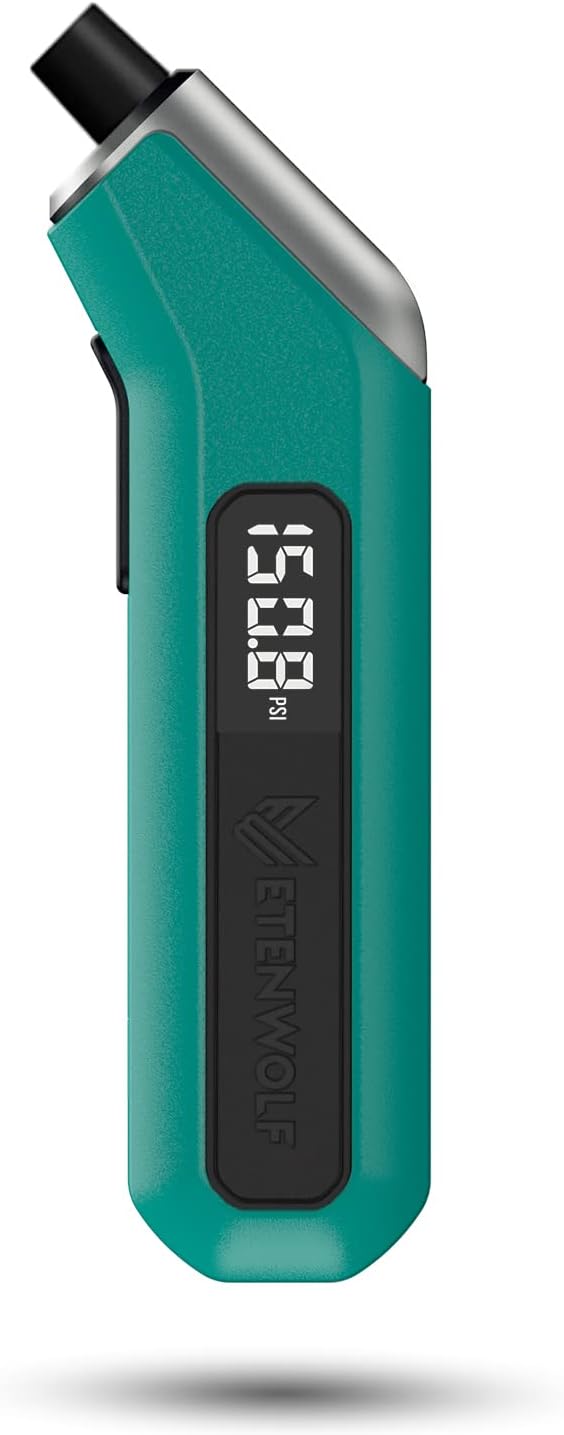
This digital tire pressure gauge with built-in inflator helps you accurately check and adjust tire pressure for safer driving and better fuel efficiency. It supports multiple units (PSI, KPA, BAR, KG/CM²) and reads within 1% for reliable results. The 3-in-1 design inflates, deflates, and measures, with a quick-connect air chuck and compatible hose setup for cars, trucks, SUVs, RVs, and motorcycles.

These universal tire valve stem caps help protect valve cores from dust, debris, and moisture while helping maintain stable tire pressure. The corrosion-resistant metal construction and sealed design provide reliable protection in road grime, mud, and winter conditions. Twist-on installation makes them quick to fit on cars, SUVs, trucks, and motorcycles.

Milton S-921 pencil tire pressure gauge helps you maintain optimal tire pressure for passenger cars with accurate readings in PSI and kPa. It features a built-in deflator valve for convenient pressure adjustments, plus a single chuck head and nylon indicator bar for easy use on the go. Built from durable plated brass and designed for reliable performance, it’s a practical road trip and cold-weather maintenance tool.
Matching Tires on AWD RAV4 Models
If your RAV4 has AWD, tire matching matters more than many owners realize. AWD systems work best when all four tires roll at nearly the same rate. A tire with a different size, tread design, inflation pressure, or tread depth can have a different rolling circumference.
Tire Rack explains that AWD and 4WD vehicles should use closely matched tires because mismatched tire brands, tread designs, and tread depths can strain driveline components.
For an AWD RAV4, use these rules:
- Use the same tire size on all four corners unless Toyota specifies otherwise.
- Keep all four tires the same brand, model, and tread pattern whenever possible.
- Measure tread depth before replacing only one or two tires.
- Replace all four tires if the remaining tires are too worn to match a new tire safely.
- Ask about tire shaving only if one tire is damaged and the other three still have usable tread.
- Keep all four tires inflated to the correct cold pressure to avoid rolling-diameter differences.
Warning: On AWD RAV4 models, replacing only one tire without checking tread depth can create a rolling-circumference mismatch. Measure first, then confirm with a qualified tire shop or Toyota service department.
Why Tire Pressure Matters for Performance and Safety
Correct tire pressure helps your RAV4 ride comfortably, brake predictably, steer properly, and avoid excess heat buildup. Underinflation can reduce fuel economy, wear tires unevenly, and increase the risk of tire damage.
FuelEconomy.gov says underinflated tires can lower gas mileage by about 0.2% for every 1 PSI drop in the average pressure of all tires. Properly inflated tires are also safer and last longer.
Check tire pressure when the tires are cold. Toyota defines a cold reading as after the vehicle has been parked for at least three hours or driven less than 1 mile / 1.5 km. Pressure normally rises after driving because heat builds in the tire, so do not bleed air from a hot tire just because the reading is higher than the placard number.
How to Check RAV4 Tire Pressure
- Find the recommended cold PSI on the driver-door tire placard.
- Park for at least three hours before checking pressure.
- Remove the valve cap and press a quality tire gauge straight onto the valve stem.
- Compare the reading with the placard PSI.
- Add air if low; release a small amount if overinflated while cold.
- Recheck with the gauge.
- Replace the valve cap to keep dirt and moisture out.
- Check the spare tire if your RAV4 has one.
When to Replace Your Tires?

Replace your RAV4 tires when tread depth, age, damage, or performance tells you they are no longer safe for your driving conditions.
| Condition | What It Means | Action |
| 2/32 inch tread | U.S. minimum tread depth for passenger car tires under federal inspection criteria | Replace immediately |
| Around 4/32 inch tread | Wet-road performance is reduced compared with deeper tread | Plan replacement if you drive in frequent rain |
| Around 5/32 inch tread | Snow traction margin is shrinking | Plan replacement before winter driving |
| Cracks, bulges, exposed cords, vibration, or repeated air loss | Possible structural damage, aging, puncture, or wheel issue | Stop using the tire until inspected |
The legal minimum is not the same as the safest replacement point for rain or snow. Federal inspection criteria list 2/32 inch as the minimum tread depth for passenger car tires, while Tire Rack recommends replacing around 4/32 inch for wet roads and 5/32 inch for snow.
Essential Maintenance Tips for Your RAV4 Tires
Good tire maintenance helps you get the value you paid for and keeps your RAV4 predictable in bad weather.
- Check pressure cold: Toyota recommends checking every two weeks or at least once a month.
- Rotate on schedule: Follow your Toyota maintenance guide; many RAV4 service schedules use 5,000-mile / 8,000-km tire-rotation intervals.
- Measure tread depth: Check more than one groove and more than one spot on each tire.
- Inspect sidewalls: Look for cuts, cracks, bubbles, nails, screws, and uneven wear.
- Align when needed: If the RAV4 pulls, the steering wheel is off-center, or tire wear is uneven, have alignment checked.
- Balance after installation: New tires should be mounted and balanced to prevent vibration and uneven wear.
- Reset or initialize TPMS when required: Follow your manual or shop procedure after rotations, pressure adjustments, or tire replacement.
Cost Considerations: Getting the Best Value for Your Tires
The cheapest tire is not always the best value. A tire that wears out early, rides loudly, or performs poorly in rain can cost more over time than a better-matched tire.
When comparing RAV4 tires, include these costs:
- Tire price: Compare the same size, load index, and speed rating.
- Mounting and balancing: Usually charged per tire.
- Valve stems or TPMS service kits: Often needed during installation.
- Alignment: Not always required, but smart if wear is uneven or the vehicle pulls.
- Road-hazard coverage: Useful if you drive pothole-heavy city streets or gravel roads.
- Seasonal storage: Consider this if you run winter tires and all-season tires on separate wheels.
For AWD RAV4 models, replacing all four tires together may cost more upfront but can be the safest and most drivetrain-friendly choice if the existing tires are worn. If only one tire is damaged, have the remaining tread depths measured before deciding whether one tire, two tires, or a full set makes sense.
The best-value RAV4 tire is the one that matches your climate, your roads, your AWD system, and your maintenance habits—not simply the tire with the deepest tread or lowest price.
[Products Worth Considering]

Steelman white tire marking crayons provide high-contrast, semi-permanent marks for repairing and inspecting tires and equipment. They write on wet or dry, smooth or coarse surfaces including rubber, metal, glass, and wood, making them ideal for puncture location and damage outlining. The lead- and zinc-free crayons resist weather and fading yet wipe away when you no longer need the marks.

Add style while helping protect your tire valve stems with handmade crystal rhinestone caps and a durable plastic insert. These caps resist corrosion and help keep out rain, snow, and muddy water, extending tire life. Textured non-slip design makes them easy to grip for quick install and removal when checking tire pressure.

These aluminum alloy tire valve stem caps with an O-ring seal help protect valve stems from corrosion while adding a clean, stylish look to your vehicle. The universal fit works across cars, trucks, motorcycles, bicycles, and more, making them an easy upgrade for everyday driving and off-road use. Installation is quick, and the included four-pack keeps all your tires dressed and protected.
Frequently Asked Questions
How do I know which tire needs air on a Toyota RAV4?
Use a tire pressure gauge on all four tires when they are cold, then compare each reading with the PSI on the driver-door tire placard. If your RAV4 display shows individual tire pressures, use it as a helpful clue, but confirm with a gauge. Also inspect for nails, valve leaks, or sidewall damage if one tire keeps losing air.
How do you match pairs of tires on an AWD RAV4?
For an AWD RAV4, the safest approach is to keep all four tires the same size, brand, model, tread pattern, and closely matched tread depth. Before replacing only one or two tires, measure the tread depth on all four and ask a tire professional whether the new tire will match closely enough for AWD use.
Are all-season tires enough for a RAV4 in winter?
All-season tires can work in mild winter conditions, but they are not the best choice for regular ice, packed snow, or long periods below freezing. If you drive in true winter weather, choose dedicated winter tires or all-weather tires with the Three-Peak Mountain Snowflake symbol.
Can I put all-terrain tires on a RAV4?
Yes, as long as the tire fits your RAV4’s size, load rating, speed rating, clearance, and AWD requirements. All-terrain tires make sense for gravel, dirt, and light trails, but they can add road noise, weight, and rolling resistance for daily pavement driving.
Should I replace two tires or all four on a RAV4?
On a front-wheel-drive RAV4, replacing two tires may be acceptable if the other two are in good condition, but the new pair is typically installed on the rear for stability. On an AWD RAV4, measure tread depth first. If the old tires are too worn to match the new tires closely, replacing all four is usually the better choice.
Conclusion
Choosing the right tires for your RAV4 is about matching the tire to your real driving conditions. Start with your tire placard, confirm the correct size and cold PSI, then choose the category that fits your roads: touring all-season for everyday driving, all-weather or winter tires for cold and snow, all-terrain tires for gravel and light trails, and performance tires only when handling is the priority.
Keep all four tires matched on AWD models, check pressure cold, rotate on schedule, and replace tires before tread depth or age becomes a safety problem. With the right tire choice and basic maintenance, your RAV4 will ride better, stop more confidently, and stay ready for the roads you actually drive.
Sources
- Toyota Owners — 2024 RAV4 Tire Inflation Pressure — backs up cold PSI, tire placard, and pressure-check guidance
- Toyota Owners — 2025 RAV4 Tires — backs up tire inspection, treadwear indicators, and replacement conditions
- NHTSA TireWise — backs up tire safety, maintenance, labeling, and consumer tire-care guidance
- eCFR 49 CFR § 570.9 Tires — backs up the 2/32-inch minimum tread-depth inspection rule for passenger car tires
- FuelEconomy.gov — Keeping Your Vehicle in Shape — backs up fuel-economy impact of underinflated tires
- Tire Rack — Matching Tires on AWD and 4WD Vehicles — backs up AWD tire-matching guidance