
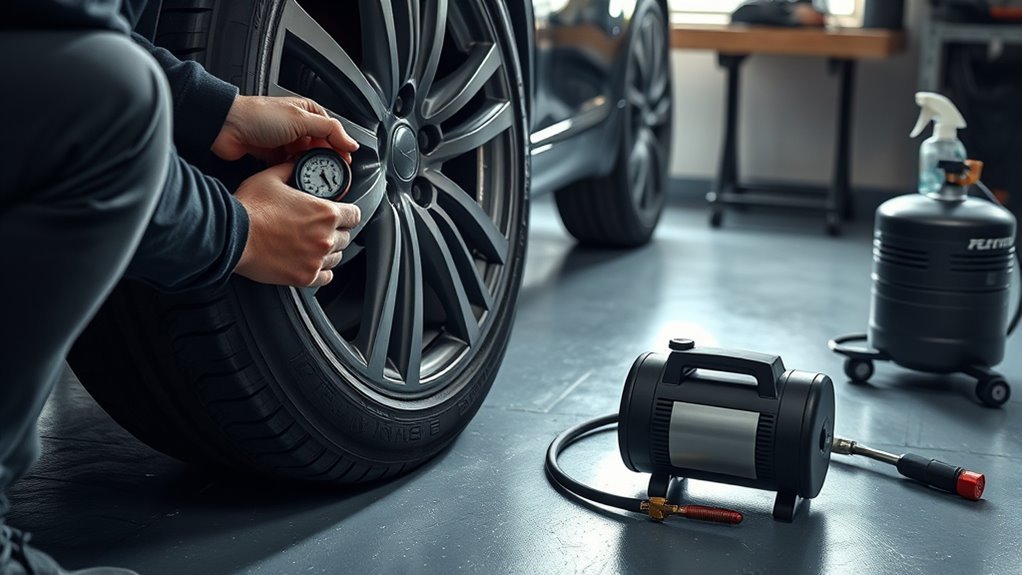
Flat tires are not always avoidable, but most are preventable with a simple maintenance routine. The biggest causes are underinflation, worn tread, road debris, pothole impacts, valve leaks, overloading, and old or damaged rubber. Check your tires monthly, inspect them before long trips, and fix small problems before they turn into roadside emergencies.
Quick Answer
To prevent flat tires, check tire pressure monthly when tires are cold, inspect tread and sidewalls for damage, rotate tires every 5,000–7,000 miles, avoid potholes and debris, stay within your vehicle’s load limit, and keep your spare tire or repair kit ready.
Key Takeaways
- Use the PSI listed on the driver’s door placard or owner’s manual, not the number printed on the tire sidewall.
- Check tires when they are cold, and recheck after big temperature swings.
- Replace tires with bulges, cracks, exposed cords, repeated pressure loss, or tread worn to 2/32 inch.
- Rotate tires on schedule and watch for uneven wear, which can point to alignment, suspension, or inflation problems.
- Inspect your spare, jack, lug wrench, and tire repair kit before you need them.
At a Glance
| Time Required | 10–20 minutes per month |
| Difficulty | Easy |
| Tools Needed | Tire pressure gauge, tread depth gauge or penny, flashlight, valve caps, and air compressor or air pump |
| Cost | Usually $0–$20 for basic checks; more if a tire needs repair, rotation, alignment, or replacement |
Quick Action Checklist: Prevent Flat Tires
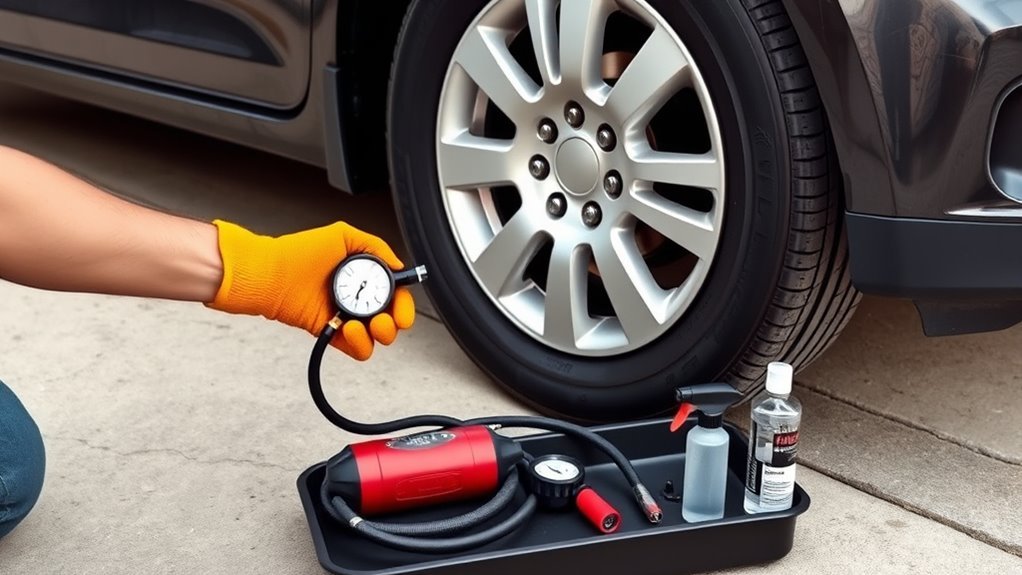
Start with a quick monthly routine: check tire pressure, scan the tread and sidewalls for cuts, bulges, cracks, nails, screws, glass, or embedded debris, and make sure your vehicle is not overloaded. These few minutes can help you spot slow leaks, aging rubber, and damage before the tire fails on the road.
- Check tire pressure at least once a month and before long trips.
- Inflate tires to the vehicle manufacturer’s recommended cold PSI.
- Inspect tread depth and sidewalls for damage.
- Rotate tires every 5,000–7,000 miles, or as your owner’s manual recommends.
- Avoid potholes, construction debris, sharp shoulders, and hard curb impacts.
- Replace damaged, bald, or repeatedly leaking tires promptly.
- Check your spare tire, jack, lug wrench, and repair kit.
Warning: Do not keep driving on a tire with a visible bulge, exposed cords, deep sidewall cut, or rapid pressure loss. Stop in a safe place and use a spare, roadside assistance, or professional tire service.
Check and Maintain Tire Pressure Monthly
Because tire pressure affects safety, handling, tread life, and fuel economy, check it monthly with a reliable gauge. The correct PSI is listed on your vehicle’s tire information placard, usually on the driver’s door jamb, or in the owner’s manual. Do not use the maximum pressure printed on the tire sidewall as your normal inflation target.
For the most accurate reading, check pressure when the tires are cold. According to NHTSA TireWise, “cold” means the vehicle has not been driven for at least three hours. If the tire is warm, the reading may be higher than the true cold pressure.
Do not rely only on the tire pressure monitoring system. TPMS is designed to warn about significant underinflation, but it may not alert you to every slow leak early enough. A manual gauge check helps you catch a tire that is losing a few PSI between checks.
Pro Tip: Keep a digital or dial tire gauge in your glove box. Gas station gauges can be damaged or inaccurate, so your own gauge gives you a more consistent reading.
[Products Worth Considering]

Keep your tires properly inflated with this analog VONDIOR tire pressure gauge, designed for fast, easy readings without batteries. The swiveling, two-axis hose and large glow dial help you measure at any tire angle with instant visibility. Built with a protective rubber shield, it supports durable, low-maintenance use for cars and trucks.

TireJect Off-Road Tire Sealant Kit provides 5-in-1 sealing to help fix tread punctures up to 3/8", sidewall punctures up to 3/8", bead leaks, slow leaks, and minor dry rot on low-speed tires. It permanently seals with liquid rubber, recycled tire particles, and Aramid fibers, making it ideal for flats caused by thorns, nails, and screws. The included dispensing cap attaches to the valve stem for a no-mess installation, along with a metal valve core remover tool and valve stem cap. This kit is for off-road use only.

Measure tire tread depth quickly and accurately with this LUMITECO dial gauge that reads in 1/32" increments up to 14/32". The color-coded green/yellow/red zones make it easy to judge tire wear and know when replacement is needed. A rugged, compact design with a protective pouch helps keep the gauge ready for use on cars, trucks, motorcycles, and more.
How to Check Tire Pressure Correctly
- Find the recommended PSI on the driver’s door placard or in the owner’s manual.
- Check pressure before driving, or wait at least three hours after driving.
- Remove the valve cap and press the gauge firmly onto the valve stem.
- Compare the reading with the recommended cold PSI.
- Add air if the tire is low, or release a small amount if it is overinflated.
- Recheck the PSI, then reinstall the valve cap tightly.
- Repeat for all four tires and the spare if your vehicle has one.
Watch for Slow Leaks
A tire that repeatedly loses pressure may have a nail, leaking valve stem, cracked wheel, bead leak, or previous repair failure. If one tire drops more than the others, do not just keep topping it off. Have it inspected and repaired before the leak gets worse.
Rotate and Inspect Tires Every 5,000–7,000 Miles
Rotate your tires every 5,000–7,000 miles, or at the interval listed in your owner’s manual. The Tire Industry Association recommends regular rotation to help tires wear evenly and last longer. Rotation also gives you a good chance to inspect each tire closely.
During each rotation, check tread depth, sidewalls, valve stems, and wear patterns. Look for feathering, cupping, bald shoulders, or one tire wearing faster than the others. These signs can point to underinflation, overinflation, worn suspension parts, or poor alignment.
Check Tread Depth
Tread gives your tires grip, especially on wet roads. A tread depth gauge is best, but a penny can give you a quick check. Insert a penny into the tread with Lincoln’s head facing down. If you can see the top of Lincoln’s head, the tread is about 2/32 inch or less and the tire should be replaced.
The U.S. Tire Manufacturers Association notes that tires should be replaced when tread reaches 2/32 inch. Many drivers choose to replace tires earlier if they often drive in heavy rain, snow, or poor road conditions.
Read Tire Wear Patterns
| Wear Pattern | Possible Cause | What to Do |
|---|---|---|
| Both outer edges worn | Underinflation | Check PSI and inspect for leaks |
| Center tread worn | Overinflation | Set pressure to vehicle spec |
| One edge worn | Alignment issue | Schedule an alignment check |
| Cupping or scalloping | Suspension or balance issue | Have suspension and balance inspected |
| Random bald spots | Locked braking, damage, or internal tire problem | Get professional inspection |
Avoid Road Hazards and Weather That Cause Flats
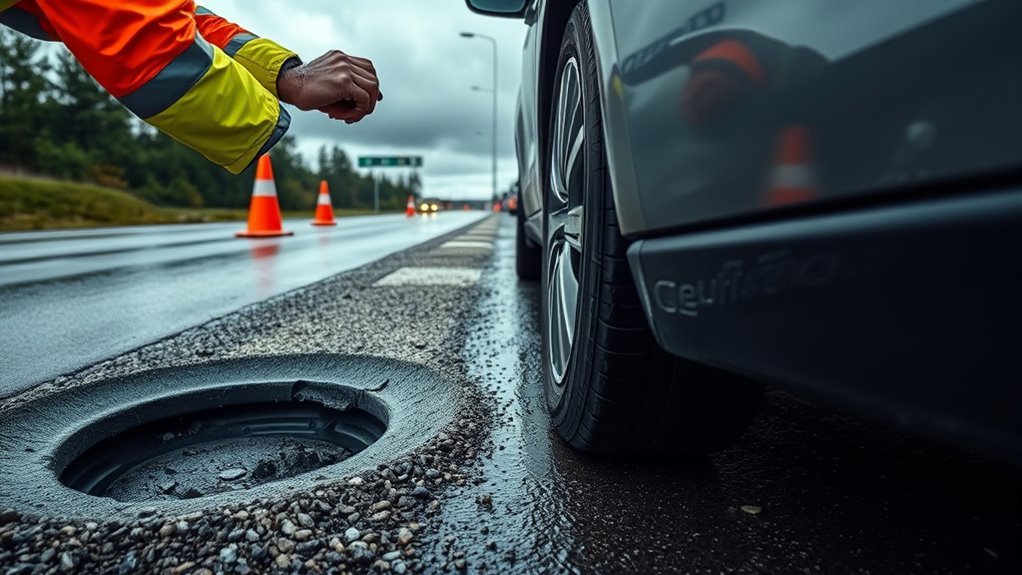
Road hazards cause many punctures and impact breaks. Watch for nails, screws, glass, metal scraps, potholes, sharp gravel, broken pavement, and debris near construction zones. When it is safe, slow down and steer around hazards instead of hitting them directly.
Watch for Road Debris
Stay alert in areas where punctures are more likely, such as construction zones, alleys, parking lots, road shoulders, and areas with storm debris. If you must drive through debris, go slowly and inspect your tires afterward.
| Action | Indicator | Response |
|---|---|---|
| Visual scan | Debris ahead | Avoid or maneuver safely |
| Post-impact check | Bulge, vibration, leak, or steering pull | Stop safely and inspect |
| Inflation check | Low PSI or repeated pressure loss | Inflate, monitor, and repair |
Account for Temperature Changes
Tire pressure changes with temperature. AAA explains that tire pressure typically drops about 1 PSI for every 10°F decrease and rises at roughly the same rate when temperatures increase. That means a tire that was correctly inflated during warm weather may become underinflated during a cold snap.
- Check tire pressure after major temperature swings.
- Check pressure more often during seasonal changes.
- Inflate to the vehicle-recommended cold PSI, not by visual judgment.
- Inspect tires after driving through potholes, ice-damaged pavement, or construction zones.
Note: A tire can look normal and still be underinflated. Always use a gauge instead of judging pressure by appearance.
Pick the Right Tires and Keep Your Spare Ready
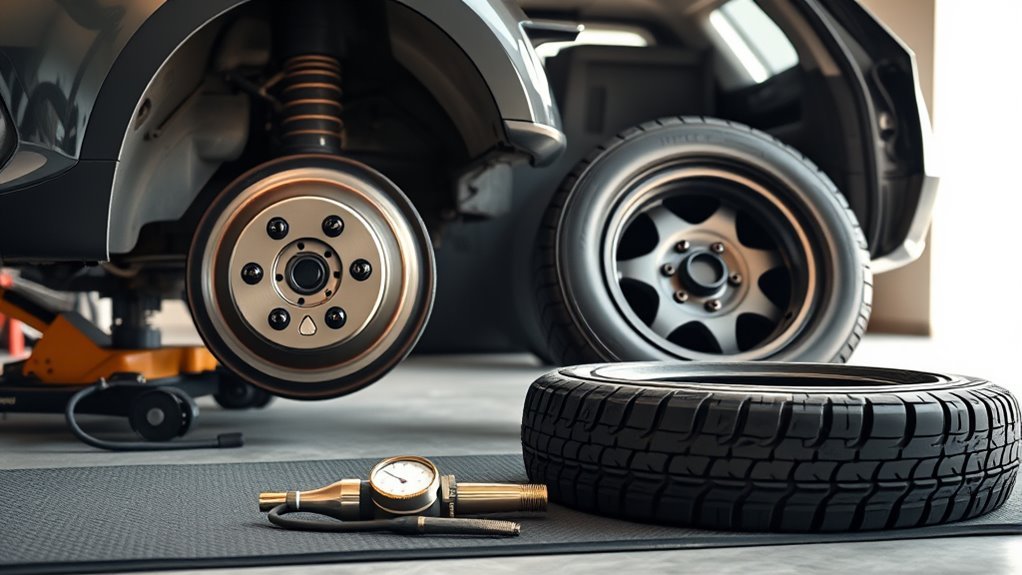
Choose tires that match your vehicle’s size, load rating, speed rating, and driving conditions. The right tire helps protect handling, braking, ride comfort, and puncture resistance. The wrong tire can wear faster, reduce control, or place extra stress on the vehicle.
[Products Worth Considering]

Monitor tire tread wear with a smart, color-coded depth gauge that shows clear condition ranges at a glance. The bar is range marked for fast, easy readings, helping you maintain safer traction and performance. Each gauge is portable with a pocket clip, and the set includes 20 units for daily use and sharing.

The SAFELIFE dial tire tread depth gauge measures tread depth in 1/32 inch increments with clear, easy-to-read 2-inch dial face. Color zones using a traffic light system help you quickly judge whether tread is low, marginal, or ample for safer driving. Built with a durable zinc cast body and a metal detect probe for precise, comfortable use across cars, motorcycles, trucks, and buses.

Milton S-921 pencil tire pressure gauge helps you maintain optimal tire pressure for passenger cars with accurate readings in PSI and kPa. It features a built-in deflator valve for convenient pressure adjustments, plus a single chuck head and nylon indicator bar for easy use on the go. Built from durable plated brass and designed for reliable performance, it’s a practical road trip and cold-weather maintenance tool.
Choose the Correct Tire Type
Use the tire size and specifications listed in your owner’s manual or on the driver’s door placard. Match the load index and speed rating to your vehicle’s requirements. If you regularly drive on rough roads, gravel, construction areas, or debris-prone streets, consider tires with stronger construction or reinforced sidewalls when they are appropriate for your vehicle.
- Check tire size, load index, and speed rating before buying.
- Choose tread patterns that match your climate and road surfaces.
- Use winter tires where snow and ice are common.
- Use all-season or touring tires for typical mixed driving.
- Replace tires in pairs or full sets when needed to keep handling balanced.
Inspect the Spare Regularly
A spare tire is only useful if it is inflated and safe. Check the spare’s pressure, tread, sidewalls, and age at least monthly or before long trips. Also confirm that the jack, lug wrench, wheel lock key, and tire repair kit are in the vehicle and usable.
Compact temporary spares often require a higher PSI than regular tires, so always follow the vehicle manufacturer’s instructions. Many temporary spares also have speed and distance limits, commonly printed on the spare tire itself.
Keep Matching Tire Size
Make sure your replacement tires match the size, load capacity, and speed rating specified for your vehicle. Tires on the same axle should match in size and construction. Mismatched tires can affect braking, traction control, anti-lock brakes, all-wheel drive systems, and overall handling.
- Record the tire size and specs for all four tires and the spare.
- Buy matching tires in axle pairs when replacing only two.
- Follow the owner’s manual for rotation patterns and AWD tire requirements.
- Verify your spare’s size, load rating, pressure, and use limits.
Prevent Flats Before Long Trips
Long trips put more heat, speed, and load on tires. Before a road trip, inspect all tires carefully and give yourself time to repair or replace a problem tire before leaving.
- Check cold tire pressure on all four tires and the spare.
- Inspect tread depth across the full width of each tire.
- Look for nails, screws, cracks, bulges, and sidewall cuts.
- Make sure valve caps are installed.
- Confirm your vehicle is not overloaded.
- Check that luggage weight is balanced and secured.
- Verify your jack, lug wrench, wheel lock key, inflator, and repair kit.
- Know whether your vehicle has a spare, run-flat tires, or only a sealant kit.
A five-minute tire check before a long drive can prevent hours of roadside stress later.
When to Get Professional Help or Replace a Tire
Some tire problems need professional attention right away. If you spot uneven tread wear, bald spots, frequent pressure loss, vibration, pulling, cracking, bulges, or sidewall damage, have the tire inspected before driving far. A tire shop can check for punctures, internal damage, valve leaks, bead leaks, bent wheels, and alignment issues.
| Sign | Action |
|---|---|
| Uneven wear | Inspect tires, alignment, and suspension |
| Bald spots or tread at 2/32 inch | Replace the tire |
| Frequent pressure loss | Repair leak or replace tire if unsafe |
| Vehicle pulls or steering feels off | Check alignment, tire damage, and suspension |
| Cracks, bulges, exposed cords, or sidewall cuts | Replace immediately |
[Products Worth Considering]

MetFun’s 40-piece tire repair screw plugs kit provides a fast DIY fix for tubeless punctures with two tubes of black tire sealant glue. The rubber repair screws are pre-coated and designed for a secure grip and double seal to help stop air leaks. With 2 screw sizes for small and larger punctures, it’s suitable for cars, motorcycles, trucks, tractors, lawnmowers, ATVs, and more—so you’re prepared for road trips and emergencies.

Stay on top of tire pressure with a factory-calibrated digital gauge accurate to ±1 PSI and readable in 0.1 increments. It features a bright backlit LCD plus a illuminated nozzle for easy readings in low light, with auto-off power saving for longer battery life. Switch quickly between PSI, Bar, Kgf/cm², and KPA using a single button, and cover most everyday vehicles with a 0–150 PSI range.

Accurately measure tire tread depth with a calibrated gauge marked from 0 to 1 inch in 1/32 inch increments. The color-coded bar helps you quickly identify tread condition ranges, supporting safe driving for trucks, motorcycles, automobiles, and passenger vehicles.
What Not to Do When Preventing Flat Tires
- Do not drive on a tire that is visibly flat or severely underinflated.
- Do not ignore a TPMS warning light.
- Do not plug a tire sidewall or shoulder puncture.
- Do not mix tire sizes unless the vehicle manufacturer specifically requires staggered sizes.
- Do not exceed the vehicle’s load limit.
- Do not use old, cracked, or damaged tires just because they still hold air.
- Do not assume a spare is ready without checking its pressure and condition.
Frequently Asked Questions
What are the four most important tire maintenance tips?
Check tire pressure monthly, inspect tread and sidewalls for damage, rotate tires every 5,000–7,000 miles, and replace tires that are worn, cracked, bulging, or repeatedly losing air.
How do I prevent tires from going flat?
Keep tires inflated to the recommended cold PSI, inspect them for punctures and sidewall damage, avoid road debris and potholes, rotate them regularly, and repair slow leaks early. Also keep your spare tire or repair kit ready.
How often should I check tire pressure?
Check tire pressure at least once a month, before long trips, and after major temperature changes. Always check when tires are cold for the most accurate reading.
Can I drive with a nail in my tire if it is not flat?
You should not ignore it. A nail can cause a slow leak or sudden pressure loss. Check the pressure, avoid long or high-speed driving, and have the tire inspected and repaired as soon as possible.
When should a tire be replaced instead of repaired?
Replace the tire if the puncture is in the sidewall or shoulder, the tire has a bulge, cords are exposed, tread is at 2/32 inch, the tire has major cracking, or a professional says the damage is not safely repairable.
Conclusion
Preventing flat tires comes down to consistent checks and quick action. Keep tires inflated to the correct cold PSI, inspect tread and sidewalls, rotate on schedule, avoid road hazards, choose the right tires, and keep your spare ready. If you notice repeated pressure loss, bulges, cracks, bald spots, or uneven wear, get professional help before the tire leaves you stranded.
Sources
- NHTSA TireWise — tire pressure, cold inflation, tire placard guidance, and tire safety basics.
- NHTSA Tire Safety Checklist — monthly pressure checks, spare tire checks, inspection points, and overloading warning.
- Tire Industry Association: Tire Rotation — tire rotation interval and even-wear guidance.
- U.S. Tire Manufacturers Association: Tire Care Essentials — tread depth, wear bars, monthly inspections, and tire care basics.
- AAA: How Temperature Changes Affect Tire Pressure — temperature-related PSI changes.
- 49 CFR § 571.138 — federal TPMS performance standard and purpose.


1 thought on “How to Prevent Flat Tires on a Car: Maintenance Tips”