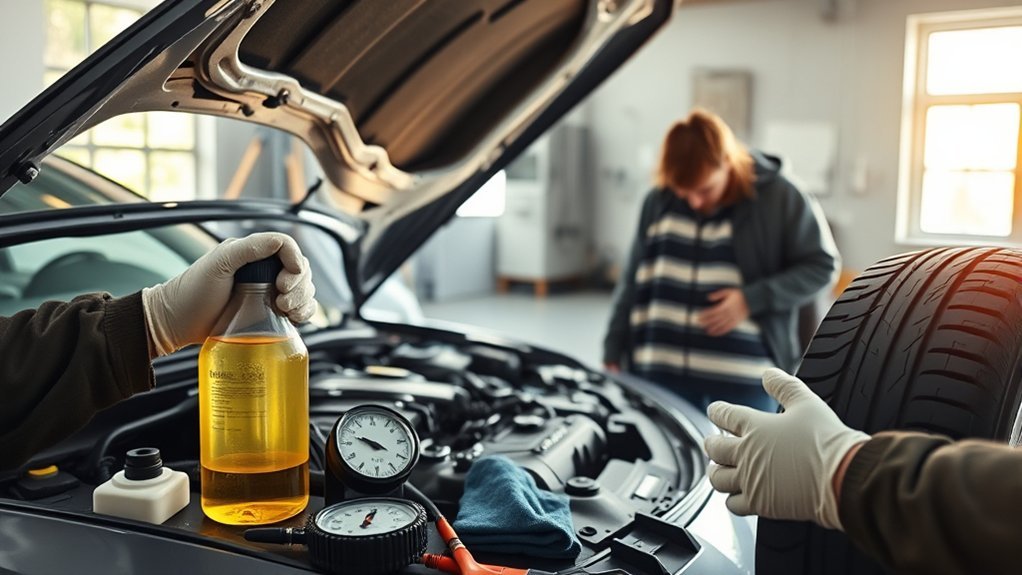
To make your car last longer, follow the manufacturer’s service schedule, maintain fluids, inspect important components, and fix small problems before they become expensive repairs. Regular oil changes, tire care, battery checks, smooth driving habits, and timely replacement of worn parts help protect your engine and major systems for many years.
Quick Answer
The best way to make your car last longer is to follow the maintenance schedule in your owner’s manual, change fluids on time, keep tires properly maintained, drive smoothly, and inspect warning signs early. Consistent preventive care reduces wear and helps avoid major repairs.
Key Takeaways
- Follow your manufacturer’s maintenance schedule for fluids, filters, and inspections.
- Keep tires inflated correctly and rotate them regularly.
- Check battery health and fluid levels before problems appear.
- Drive smoothly to reduce stress on brakes, tires, and drivetrain components.
- Repair small issues early to avoid larger failures.
At a Glance
| Time Required | Regular checks: monthly; scheduled services: based on mileage |
| Difficulty | Easy for basic checks; professional help for complex repairs |
| Tools Needed | Owner manual, tire gauge, flashlight, maintenance records |
| Cost | Varies by vehicle and required service |
Routine Maintenance That Extends Car Life

Routine maintenance is the foundation of long-term vehicle reliability. Treat maintenance as a system rather than a chore.
Start by following the service schedule in your owner’s manual. Different engines, driving conditions, and vehicle designs require different service intervals.
Keep records of oil changes, inspections, repairs, and replaced parts. A maintenance history helps you track what your vehicle needs and identify patterns before failures happen.
Pro Tip: Keep receipts and mileage notes in one place. Accurate records make future maintenance decisions easier.
[Products Worth Considering]

Protect tire valves from water, dust, and sand to help prevent leaks and support safe driving. These universal stem caps install quickly by hand and feature durable aluminum alloy construction with an inner sealing ring for better air retention. Compatible with cars, SUVs, trucks, motorcycles, and bicycles for everyday convenience.

Monitor tire tread wear with a smart, color-coded depth gauge that shows clear condition ranges at a glance. The bar is range marked for fast, easy readings, helping you maintain safer traction and performance. Each gauge is portable with a pocket clip, and the set includes 20 units for daily use and sharing.

The SAFELIFE dial tire tread depth gauge measures tread depth in 1/32 inch increments with clear, easy-to-read 2-inch dial face. Color zones using a traffic light system help you quickly judge whether tread is low, marginal, or ample for safer driving. Built with a durable zinc cast body and a metal detect probe for precise, comfortable use across cars, motorcycles, trucks, and buses.
How to Maintain Your Battery and Fluids
Your battery and fluids protect essential systems. Check battery terminals for corrosion, make sure connections are secure, and replace an aging battery before it leaves you stranded.
Inspect engine oil, coolant, brake fluid, and other fluids according to your vehicle manufacturer’s recommendations. Low or contaminated fluids can contribute to overheating, poor performance, or component damage.
Do not rely only on oil color to decide when an oil change is needed. Mileage, time, driving conditions, and manufacturer recommendations are more reliable indicators.
- Check battery terminals and clean corrosion when needed.
- Verify fluid levels using the correct markings.
- Replace fluids according to the owner’s manual.
- Investigate leaks quickly.
[Products Worth Considering]

Measure tire tread depth quickly and accurately with this LUMITECO dial gauge that reads in 1/32" increments up to 14/32". The color-coded green/yellow/red zones make it easy to judge tire wear and know when replacement is needed. A rugged, compact design with a protective pouch helps keep the gauge ready for use on cars, trucks, motorcycles, and more.

Keep your tires properly inflated with this analog VONDIOR tire pressure gauge, designed for fast, easy readings without batteries. The swiveling, two-axis hose and large glow dial help you measure at any tire angle with instant visibility. Built with a protective rubber shield, it supports durable, low-maintenance use for cars and trucks.

Accurately measure tire tread depth with a calibrated gauge marked from 0 to 1 inch in 1/32 inch increments. The color-coded bar helps you quickly identify tread condition ranges, supporting safe driving for trucks, motorcycles, automobiles, and passenger vehicles.
What to Replace and When
Wear items need regular inspection because they directly affect reliability and safety.
- Oil filters: Replace according to your oil-change schedule.
- Air filters: Replace when dirty or according to manufacturer recommendations.
- Spark plugs: Replace based on plug type and vehicle specifications.
- Transmission fluid: Follow the manufacturer’s service recommendation.
- Brake pads: Replace when worn beyond safe limits.
Warning: Never ignore brake problems, overheating, fluid leaks, or dashboard warning lights. Small issues can become expensive repairs.
[Products Worth Considering]

AstroAI’s heavy-duty digital tire pressure gauge delivers quick, accurate readings with 0.1 increments and a secure valve-stem seal. It features a green backlit LCD and built-in flashlight for easy use in low light, plus an ergonomic non-slip stainless-steel design. The wide 0–230 PSI range works across common vehicle tires, with unit selection and an auto shut-off to save battery.

This manual duck head tire changer kit makes tire installation and removal simpler by letting you embed the duck head into the tire with applied pressure. The integrated design and durable steel construction help reduce friction and improve efficiency and safety during use. Suitable for 16–21 inch wheels, it’s convenient for cars, trucks, SUVs, and ATV tires, with 24-hour after-sales support.

Universal magnetic jack pad with aluminum grooved design to protect vehicle pinch welds during lifting. Durable nylon pad inserts are upgraded and secured with screws to resist damage and keep in place. Designed to fit most single vehicle pinpoint welds for safer, stable jacking when changing tires, repairs, or performing oil changes.
Driving Habits That Reduce Wear
Your driving style affects how quickly many vehicle components wear. Smooth acceleration, gentle braking, and avoiding unnecessary stress can help reduce wear.
- Maintain a safe following distance to avoid repeated hard braking.
- Use steady speeds when possible to reduce unnecessary engine load.
- Keep tires properly inflated for better handling and efficiency.
- Avoid aggressive acceleration and hard cornering.
Consistent preventive maintenance is one of the simplest ways to protect your vehicle’s long-term reliability.
How to Catch Car Problems Early
Early detection prevents small problems from becoming major repairs. Pay attention to dashboard lights, unusual sounds, vibrations, leaks, and changes in handling.
If something feels different, record when it happens and have the vehicle inspected. A technician can diagnose problems before they damage other components.
Frequently Asked Questions
What is the 30-60-90 rule for car maintenance?
The 30,000-, 60,000-, and 90,000-mile milestones are common maintenance checkpoints. The exact services depend on your vehicle, so always confirm with your owner’s manual.
How can I make my car last 20 years?
Long vehicle life requires regular maintenance, careful driving, rust prevention, inspections, and repairing problems before they become severe.
How can I make my engine last 300,000 miles?
High mileage is possible when you maintain engine oil, cooling systems, filters, ignition components, and follow recommended service intervals.
Conclusion
If you want your car to last longer, treat maintenance as a regular responsibility instead of waiting for problems. Follow the service schedule, protect your tires, monitor fluids, and respond quickly to warning signs. Consistent care can help your vehicle remain reliable and reduce unexpected repair costs.
Sources
- National Highway Traffic Safety Administration — Tires — tire safety and maintenance guidance.
- National Highway Traffic Safety Administration — Vehicle Maintenance — general vehicle safety information.
- U.S. Environmental Protection Agency — Vehicle Information — vehicle efficiency and emissions resources.