

Yes—lighter wheels can be worth it when you want sharper response, especially if you can remove several pounds from each corner without sacrificing strength, load capacity, or correct fitment. The benefit comes from reducing both unsprung mass and rotational inertia. For normal street driving, though, the improvement is usually refinement rather than a dramatic transformation.
Quick Answer
Lighter wheels are most worthwhile when they remove meaningful weight without compromising load rating, strength, or fitment. They can improve suspension response and slightly reduce the energy needed for acceleration and braking. The gains are usually modest on the street, so compare the complete wheel-and-tire assembly before spending more.
Key Takeaways
- Lighter wheels reduce unsprung mass, which can help the suspension react more quickly to bumps and surface changes.
- They also reduce rotational inertia, but the benefit depends on how much weight is removed and where that mass was located.
- There is no universal rule that one pound of wheel weight equals four, six, or ten pounds of body weight.
- Stopping distance, fuel economy, and ride quality may improve slightly, but tire grip, suspension tuning, pressure, and road conditions often matter more.
- A lightweight wheel is only a good upgrade if its load rating, dimensions, offset, brake clearance, and durability suit your vehicle.
What Lighter Wheels Change on the Road
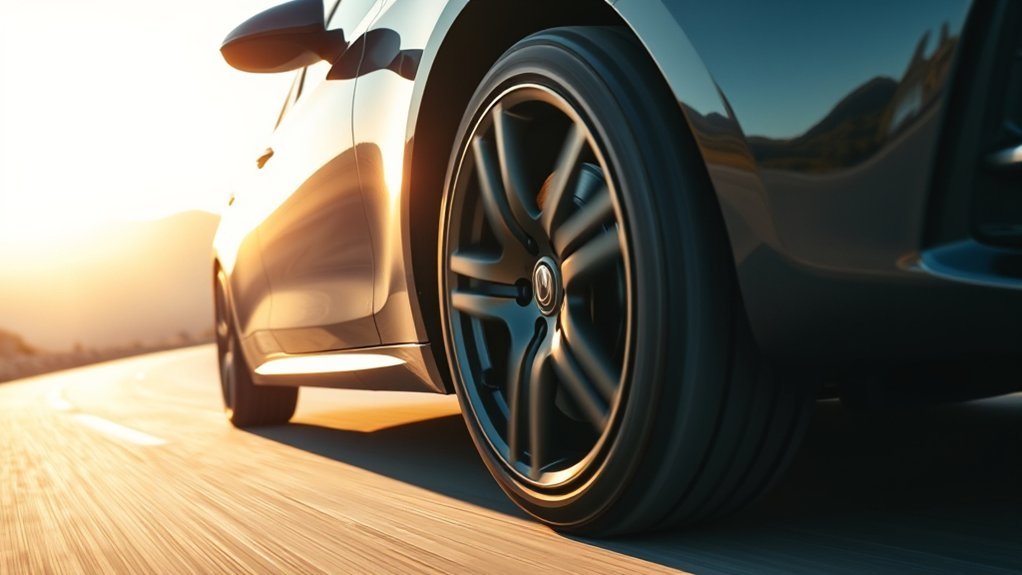
A wheel affects vehicle behavior in two ways. First, most of its mass is unsprung mass, meaning it moves with the wheel and tire rather than being fully supported by the suspension. Second, the wheel rotates, so its mass also contributes to rotational inertia.
Reducing unsprung mass can make it easier for the spring and damper to control wheel movement over bumps. Vehicle-dynamics research has long shown that unsprung mass influences ride comfort, tire contact, and suspension behavior. More recent research continues to study the same relationship, especially as heavy in-wheel motors increase unsprung mass in electric vehicles.
You may notice a lighter setup as cleaner steering response, less secondary movement after sharp bumps, or a suspension that feels slightly more controlled on uneven pavement. The effect depends heavily on the vehicle. A light sports car with firm suspension may reveal the change more clearly than a large SUV with soft bushings and tall-sidewall tires.
A lighter wheel offers two separate benefits: less mass moves with the suspension, and less rotational inertia has to be accelerated or slowed.
Wheel weight by itself does not improve aerodynamics. A wheel with an aerodynamic face or smoother spoke design may reduce airflow disturbance, but that is a separate design feature rather than a direct benefit of lower mass.
Why Lighter Wheels Improve Acceleration
When the car accelerates, the engine must accelerate the vehicle forward while also spinning the wheels and tires faster. A lighter rotating assembly can require less energy to reach a given road speed.
The physics is governed by moment of inertia. As OpenStax explains, rotational kinetic energy is related to moment of inertia and angular speed, while moment of inertia depends on both mass and how far that mass sits from the axis of rotation.
Reduced Rotational Mass
Removing weight from a rotating wheel can therefore help more during acceleration than removing the same amount of non-rotating mass from a location near the vehicle’s center. However, there is no single conversion factor that applies to every wheel.
The effect changes with wheel diameter, wheel design, tire construction, gearing, vehicle weight, and where the removed material was located.
| Weight Saved per Wheel | Total Saved Across Four Wheels | What to Expect |
|---|---|---|
| 2 lb | 8 lb | Small reduction in unsprung and rotating mass |
| 4 lb | 16 lb | More meaningful change on a responsive vehicle |
| 6 lb | 24 lb | Potentially noticeable if tire weight stays similar |
| 8 lb | 32 lb | Substantial assembly-weight reduction |
These figures describe weight removed, not guaranteed acceleration gains. A 6 lb saving on one wheel design does not produce a fixed improvement in 0–60 mph time.
Faster Throttle Response
Lower rotational inertia can make the drivetrain feel a little more willing to change speed, particularly in lower gears where acceleration is strongest. You may notice this during launches, gear changes, autocross transitions, or corner exits.
Do not expect the engine itself to gain horsepower. Lightweight wheels simply reduce part of the load that the engine must accelerate.
Note: Claims such as “1 pound of wheel weight equals 4 pounds of body weight” are shortcuts, not universal physics rules. The real effect depends on the wheel-and-tire assembly’s moment of inertia.
Why Lighter Wheels Sharpen Handling
Lighter wheels can make the car feel more responsive because the suspension has less unsprung mass to control. That can help the tire follow uneven pavement and let the chassis settle more quickly after a bump or steering input.
| Metric | Possible Effect of Lower Wheel Mass |
|---|---|
| Unsprung mass | Less mass for the spring and damper to control |
| Steering response | Potentially quicker transient feel |
| Road contact | Suspension may follow rough surfaces more effectively |
| Yaw response | Small benefit from removing mass near the vehicle’s corners |
Do not confuse this with additional tire grip. A lighter wheel does not automatically raise the tire’s maximum friction. Tire compound, temperature, pressure, alignment, road surface, and suspension geometry remain major factors.
Static steering effort is also not determined simply by wheel weight. Tire width, scrub radius, caster, steering geometry, and power-steering assistance usually have much larger effects. The change you may feel is primarily in transient response rather than the effort needed to turn the steering wheel while parking.
Do Lighter Wheels Improve Ride Quality?
They can. Lower unsprung mass gives the suspension less mass to accelerate vertically as the tire encounters bumps. That can improve the suspension’s ability to control wheel motion and may reduce some harshness or secondary vibration.
Research into vehicle suspension dynamics supports the general relationship between unsprung mass and ride behavior. A 2026 study on unsprung-mass effects, for example, examines how increases in unsprung mass influence ride comfort, suspension travel, and road holding.
The actual result on your car may still be small. Tire sidewall height, tire pressure, damper tuning, spring rate, bushings, seat design, and road surface can all overpower the effect of a few pounds of wheel weight.
A common mistake is to install a lighter but much larger-diameter wheel with a lower-profile tire. Even if the wheel itself is lighter, the shorter sidewall may make the ride harsher. Always compare the complete wheel-and-tire package, not the wheel alone.
What You Give up With Lighter Wheels
The main trade-offs are usually cost, impact tolerance, repairability, and application-specific durability. A light wheel does not automatically have to be weak. Modern forged and flow-formed wheels can achieve strong strength-to-weight ratios, while some heavier wheels may be poorly engineered.
The important questions are how the wheel was designed, what material and manufacturing process were used, what load it is rated to carry, and whether it has passed meaningful durability testing.
SAE J2530 covers performance requirements and test procedures for aftermarket passenger-car and light-truck wheels. A reputable manufacturer should also provide clear load-rating and fitment information.
Potholes and curb strikes remain a concern, particularly with low-profile tires that provide less cushioning between the road and wheel rim. Rough-road drivers may therefore be better served by a slightly heavier, robust wheel than by chasing the lowest possible number on a scale.
Warning: Never choose a wheel only because it is light. Verify its load rating, diameter, width, offset, bolt pattern, center bore, brake clearance, tire compatibility, and installation requirements for your exact vehicle.
Lighter Wheels vs. Lightweight Tires
Both wheel weight and tire weight matter because both are part of the unsprung rotating assembly. The important distinction is not simply whether the weight comes from the wheel or tire. It is how much total mass is removed and where that mass is located relative to the hub.
Wheel Mass Benefits
A lightweight wheel can provide a useful reduction because wheels often offer several pounds of savings compared with heavy factory or oversized aftermarket designs. A lighter wheel also gives you an opportunity to reduce mass without changing tire construction or tread depth.
- Less wheel mass reduces total unsprung mass.
- Lower moment of inertia can reduce acceleration and deceleration energy.
- A well-designed wheel can remain stiff while reducing unnecessary material.
- Savings multiply across four corners.
Wheel design matters as much as the number on the scale. Two wheels of equal weight can have different rotational inertia if one concentrates more material near the outer barrel.
Tire Weight Effects
Tire weight can be just as important per pound—and sometimes more important rotationally—because much of a tire’s mass lies near the outside of the rotating assembly. Since moment of inertia rises as mass is located farther from the axis, weight near the tread can have a strong effect.
| Change | Unsprung-Mass Effect | Rotational Effect |
|---|---|---|
| Lighter wheel | Reduces unsprung mass | Depends on where wheel material was removed |
| Lighter tire | Reduces unsprung mass | Can be significant because tire mass sits far from the hub |
| Heavier tire or wheel | Adds unsprung mass | Adds rotational inertia |
Do not select a tire primarily by weight. Grip, wet braking, load index, speed rating, durability, temperature range, and correct sizing are far more important safety considerations.
Unsprung Weight Differences
A 1 kg reduction from a wheel and a 1 kg reduction from a tire each remove roughly 1 kg from the unsprung wheel assembly. The rotational benefit may differ because the mass is distributed differently.
- Both wheel and tire savings reduce unsprung mass.
- Mass farther from the hub contributes more strongly to rotational inertia.
- Total wheel-and-tire assembly weight is more useful than wheel weight alone.
- Tire choice should never sacrifice load capability, grip, or correct fitment merely to save weight.
How Much Weight Savings Matters Most
There is no threshold where a lightweight wheel suddenly becomes worthwhile. The value grows as the weight difference becomes larger, but vehicle design determines how noticeable that change feels.
A reduction of 1 to 3 lb per wheel removes 4 to 12 lb across the vehicle. That is real weight, but the improvement may be difficult to isolate during normal commuting. Saving 5 to 8 lb per wheel creates a much larger change in the complete assembly and is more likely to be noticeable on a responsive car.
Where the mass is removed also matters. A pound removed near the wheel’s outer barrel changes moment of inertia more than a pound removed close to the hub.
Compare actual wheel-and-tire assembly weights instead of relying on a universal “rotating weight multiplier.”
For daily driving, focus on meaningful savings that do not compromise durability or tire choice. For autocross or track use, smaller gains may justify more money because repeated acceleration, braking, and direction changes make every reduction more valuable.
Wheel Size Can Cancel the Benefit
A lighter wheel is not automatically a lighter package. If you move from a 17-inch wheel to a lightweight 19-inch wheel, the new wheel may weigh less but require a different tire that changes total assembly weight and ride behavior.
Larger diameters can also place more wheel material farther from the hub, increasing rotational inertia even when total weight remains similar. At the same time, lower-profile tires can reduce sidewall compliance and make pothole impacts harsher.
Pro Tip: Weigh or look up the weight of the complete wheel-and-tire package you have now and the package you plan to install. A lighter wheel can be offset by a heavier tire.
Cast, Flow-Formed, and Forged Wheels
Construction method affects how manufacturers balance weight, strength, price, and durability.
| Construction | Typical Character | Best For |
|---|---|---|
| Cast | Usually affordable; weight varies widely by design | Daily driving and value-focused upgrades |
| Flow-formed | Can reduce barrel weight while maintaining useful strength | Street performance and track-day use |
| Forged | Often offers a high strength-to-weight ratio but costs more | Performance builds where low mass justifies the price |
These are general tendencies, not guarantees. A reputable, well-tested cast wheel can be a better choice than a poorly engineered forged wheel. Judge the specific product by its specifications, load rating, quality control, and testing.
[Products Worth Considering]

This metal-free wheel and tire cleaning brush uses dense, fluffy synthetic wool to safely clean rims, spokes, fenders, and engine areas without worrying about damaging surfaces. Its flexible, comfortable design helps you reach detailed areas while maintaining durability, and the extra absorbent fibers work well with wheel spray cleaners for faster cleanup. Reusable and washable performance helps prevent grime and build-up for cleaner vehicles and easier maintenance at home.

This professional wheel and rim cleaning brush set lifts brake dust, grime, and dirt with soft, scratch-free microfiber and synthetic wool fibers. The rim brush bends up to 360 degrees for easy access to hard-to-reach areas around spokes, lips, and faces. Ideal for thorough cleaning of car, truck, motorcycle, bicycle, RV, and more wheel and tire surfaces.

Upgrade your wheels with MIKKUPPA closed-end lug nuts designed for reliable fit and corrosion resistance. The one-piece, cold-forged and heat-treated steel construction helps resist rust and stripping, while the integrated finish delivers a durable black appearance. Built to OEM standards with a conical 60-degree seat, these nuts provide a secure solution for compatible Ford, Honda, Jeep, and Chevrolet models.
How to Choose Lightweight Wheels Safely
Before buying, make sure the new wheel fits the vehicle mechanically and can safely support its load.
- Load rating: The wheel and tire must be suitable for the vehicle and axle loads.
- Diameter and width: They must support an appropriate tire size without unwanted rubbing or clearance problems.
- Bolt pattern: It must match the hub.
- Center bore: Confirm correct hub fit or an appropriate hub-centric solution when specified by the wheel maker.
- Offset: Excessive change can alter clearance, steering geometry, bearing loads, and tire position.
- Brake clearance: Confirm the barrel and spoke shape clear the calipers.
- Tire size and load index: Follow the vehicle manufacturer’s approved sizing or a properly engineered alternative.
- TPMS: Confirm that the wheel accepts the correct sensor system where required.
- Fasteners and torque: Use the correct lug nuts or bolts and follow the specified torque procedure.
For U.S. vehicles, FMVSS 110 contains tire and rim loading requirements for applicable vehicles. NHTSA TireWise also recommends checking the owner’s manual or Tire and Loading Information Label for correct tire sizing and cold inflation pressure.
[Products Worth Considering]

This professional wheel and rim brush kit makes it easy to lift brake dust, grime, and dirt from wheels and tires without scratching finishes. The brushes feature soft, metal-free wool heads and a flexible 360-degree rim brush design for reaching hard-to-clean areas. Includes multiple brush types plus accessories for thorough car, motorcycle, and general vehicle detailing.

Measure tire tread depth quickly and accurately with this LUMITECO dial gauge that reads in 1/32" increments up to 14/32". The color-coded green/yellow/red zones make it easy to judge tire wear and know when replacement is needed. A rugged, compact design with a protective pouch helps keep the gauge ready for use on cars, trucks, motorcycles, and more.

Keep your tires properly inflated with this analog VONDIOR tire pressure gauge, designed for fast, easy readings without batteries. The swiveling, two-axis hose and large glow dial help you measure at any tire angle with instant visibility. Built with a protective rubber shield, it supports durable, low-maintenance use for cars and trucks.
Do Lighter Wheels Help Braking?
Lower rotational inertia means the brakes have slightly less rotational kinetic energy to remove during deceleration. That is a real physical benefit.
However, it does not mean a predictable reduction in stopping distance. During hard braking, tire grip, road surface, ABS behavior, brake condition, vehicle weight transfer, and temperature can dominate the result.
Wheel weight alone also does not guarantee better brake cooling. Cooling depends heavily on spoke shape, airflow, wheel geometry, brake size, ducts, and vehicle speed.
Do Lighter Wheels Improve Fuel Economy?
They can reduce the energy required during acceleration, so a small efficiency benefit is physically possible, especially in stop-and-go driving. At a steady cruising speed, however, aerodynamic drag, rolling resistance, drivetrain losses, and accessory loads dominate much of the energy demand.
For that reason, do not buy expensive wheels expecting a large fuel-economy payback. Tire choice and pressure can have a larger practical effect. NHTSA identifies correct tire inflation as important for both tire safety and fuel consumption.
Are Lighter Wheels Worth the Cost?
Lighter wheels are most worthwhile when you value responsiveness and can achieve a meaningful reduction without giving up safety or durability.
| Use Case | Value of Lighter Wheels |
|---|---|
| Autocross or track driving | High if the wheel is strong, correctly sized, and meaningfully lighter |
| Performance street car | Often worthwhile for response and feel |
| Normal commuting | Usually a modest refinement rather than a major upgrade |
| Very rough roads | Durability and tire sidewall protection may matter more than minimum weight |
| Heavy SUV, truck, or loaded vehicle | Load capacity and durability should take priority |
For a street car, the best wheel is rarely the absolute lightest wheel available. It is the lightest suitable wheel that meets your budget, fitment needs, load requirements, and durability expectations.
[Products Worth Considering]

These M14x1.5 closed-end chrome lug nuts are a one-piece replacement designed for secure fitment on compatible GM, Ford, and select Chrysler/Dodge models. Featuring a 60-degree conical seat and anti-rust chrome plating, they help resist corrosion and maintain a bright look for everyday driving. Built for long-term durability, they include OEM-style part references and are backed by 12 months of support.
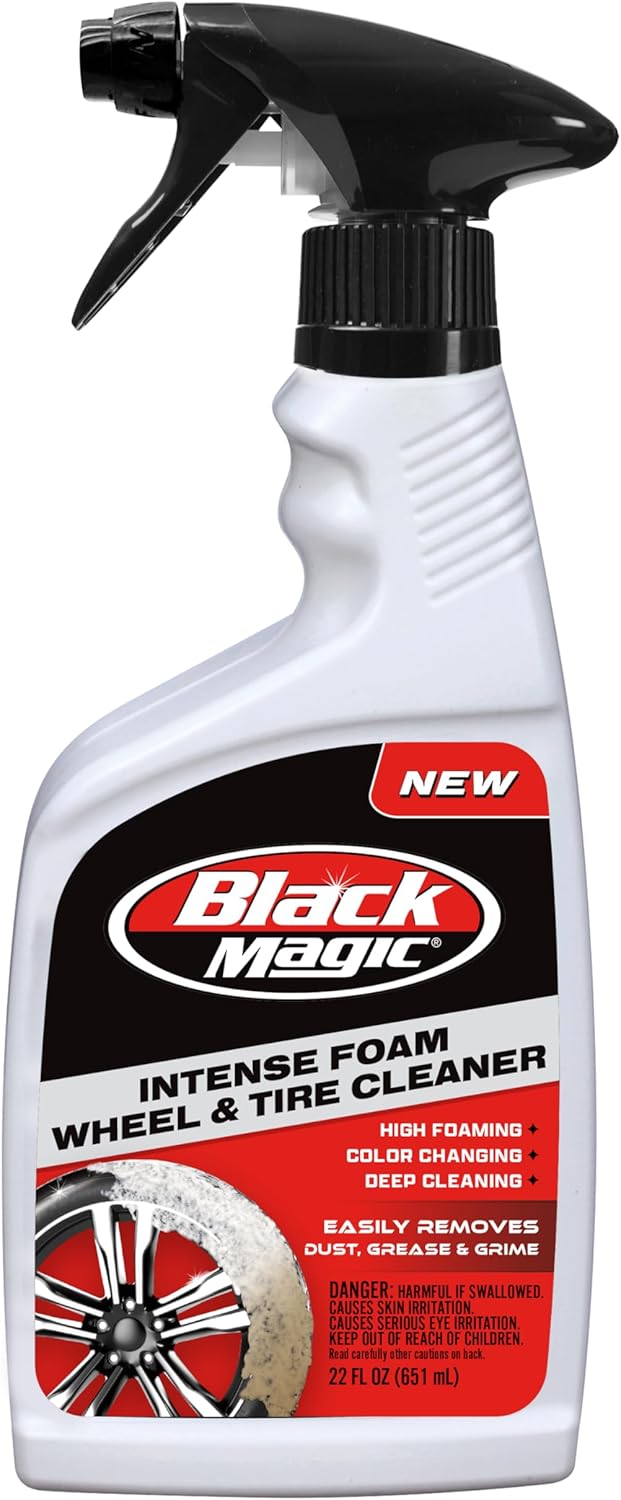
Black Magic Intense Foam Wheel & Tire Cleaner uses a high-foaming action to lift away dirt, grime, and brake dust without scrubbing. The color-changing formula helps show contaminants being dissolved as foam turns from white to brown. Safe for all wheel types and even wheel wells, it leaves a like-new, slick finish with a fresh cherry scent.

This 3-piece wheel and tire brush set makes it easy to clean light, medium, and heavy dirt from wheels, rims, tires, and exterior surfaces. It includes both soft and stiff bristle options for gentle scrubbing and tough grime removal, helping lift brake dust and road buildup. The long-handle design supports comfortable cleaning across cars, trucks, SUVs, RVs, motorcycles, and more, with simple care instructions to restore brush shape.
Frequently Asked Questions
Do lighter wheels affect braking performance?
Yes, but usually by a small amount. Lower rotational inertia means the brakes have less rotating energy to remove. That can improve response, but it does not guarantee a shorter stopping distance because tire grip, ABS, road conditions, brake temperature, and vehicle setup remain major factors.
Are lighter wheels more prone to damage?
Not automatically. Strength depends on material, design, manufacturing quality, testing, load rating, tire sidewall protection, and impact severity. A properly engineered lightweight wheel can be very strong, while an improperly designed heavier wheel can still fail.
Will lighter wheels improve fuel economy?
Possibly, but expect a small change. Less rotating and total mass can reduce the energy needed during acceleration, especially in city driving. At steady speed, rolling resistance and aerodynamic drag are usually more important, so lightweight wheels should not be treated as a major fuel-saving modification.
Can lighter wheels reduce suspension wear?
Lower unsprung mass can reduce some dynamic loads and make wheel movement easier for the suspension to control, but it does not guarantee longer suspension-component life. Potholes, tire pressure, alignment, damping, vehicle load, driving style, and component design also affect wear.
Do lighter wheels require special maintenance?
Usually not. Follow the wheel manufacturer’s cleaning, inspection, fastener, and torque guidance. Check wheels after severe pothole or curb impacts, maintain correct tire pressure, and have the wheel-and-tire assemblies properly balanced.
Is 1 pound of wheel weight equal to 4 pounds of normal vehicle weight?
No fixed multiplier works for every vehicle. A rotating wheel needs both translational and rotational energy, but the rotational portion depends on moment of inertia. Mass near the outer radius matters more than mass near the hub, so the equivalent effect changes with wheel and tire design.
How much lighter should an aftermarket wheel be to make a difference?
There is no universal cutoff. A few pounds per wheel is a genuine reduction, while a larger saving is more likely to be noticeable. Compare all four wheels and the complete wheel-and-tire assembly, then balance the weight saving against price, strength, load rating, and fitment.
Conclusion
In the end, lighter wheels can make your car feel sharper and more responsive, but the improvement is not magic. Lower unsprung mass can help the suspension control wheel movement, while lower rotational inertia can reduce the energy needed to accelerate and slow the rotating assembly.
The size of the benefit depends on how much mass you remove, where that mass is located, the weight of the tire, and the vehicle itself. For performance driving, a meaningful reduction can be worthwhile. For everyday commuting, expect a smaller refinement.
Most importantly, do not sacrifice proper fitment, load rating, tire capability, or durability simply to reach the lowest wheel weight. The best choice is a properly engineered wheel that is lighter and appropriate for the way you actually drive.
Sources
- OpenStax — Moment of Inertia and Rotational Kinetic Energy — supports the explanation of rotational inertia, mass distribution, and rotational kinetic energy.
- Actuators — Frequency-Domain Mechanism Analysis for the Adverse Effects of Unsprung Mass — supports discussion of unsprung mass, ride comfort, suspension movement, and road holding.
- SAE International — SAE J2530_202412 Aftermarket Wheels — supports aftermarket-wheel performance and testing considerations.
- Electronic Code of Federal Regulations — 49 CFR §571.110 — supports applicable U.S. tire and rim loading requirements.
- National Highway Traffic Safety Administration — TireWise — supports tire sizing, inflation, balancing, alignment, load, and general tire-safety guidance.
