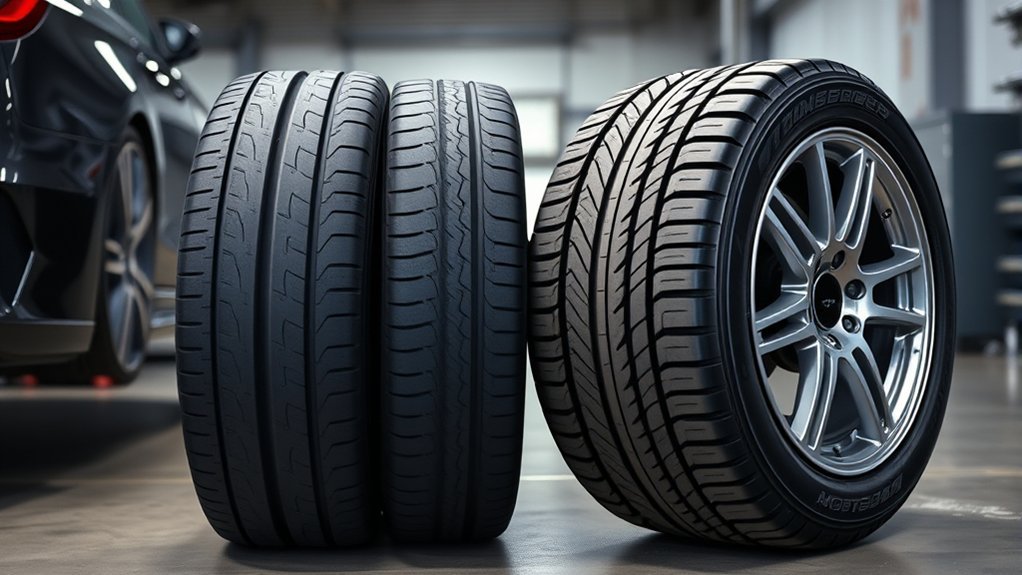
OE tires are the tires fitted to a vehicle at the factory and approved by the automaker for that application. Aftermarket replacement tires give you a much wider choice of brands, tread designs, warranties, prices, and performance priorities. Neither category is automatically better for every driver. The right choice depends on whether you want to preserve the vehicle’s original tuning or adjust traits such as wet grip, winter capability, tread life, ride comfort, noise, or efficiency.
Quick Answer
Choose OE-spec tires when you want the closest match to your vehicle’s factory handling, comfort, noise, and efficiency targets. Choose aftermarket tires when you want different performance, tread-life, weather, or price options. Either way, match the vehicle manufacturer’s required size, load capacity, speed rating, and other fitment specifications.
Key Takeaways
- OE tires are approved for the vehicle’s original performance targets and may carry manufacturer-specific sidewall markings.
- Aftermarket tires can provide different combinations of wet grip, winter traction, comfort, tread warranty, efficiency, noise, and price.
- A non-OE tire is not automatically unsafe or lower quality; correct fitment matters more than the OE label alone.
- There is no universal mileage or price advantage for OE or aftermarket tires. Compare actual models rather than relying on category averages.
- Before replacing tires, check the door-jamb placard or owner’s manual for size and other required specifications.
What Are OE and Aftermarket Tires?
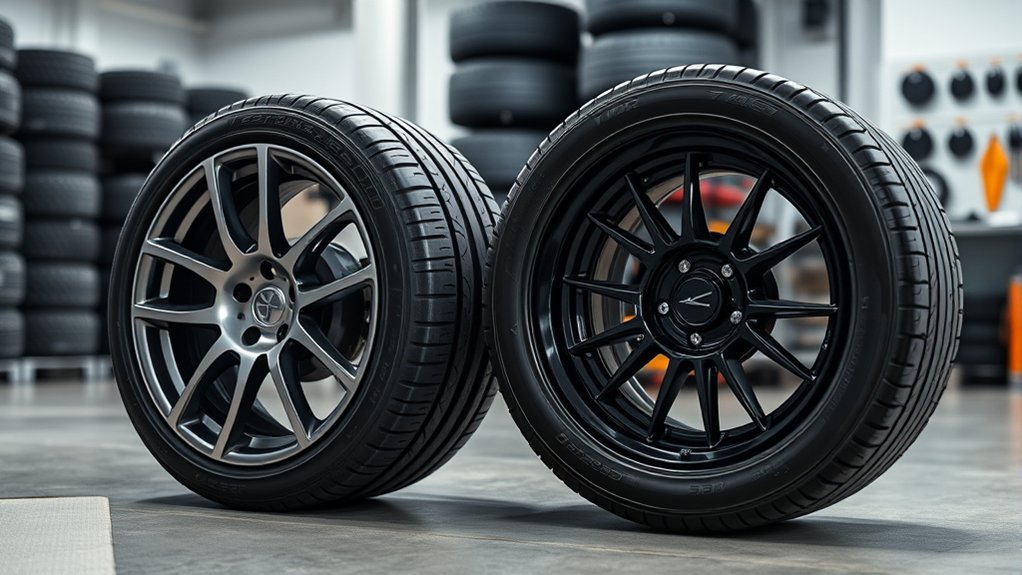
OE means original equipment. An OE tire is a tire approved by the vehicle manufacturer and fitted when the vehicle leaves the factory. In some applications, the tire manufacturer and automaker work together to tune a particular tire version for the vehicle’s weight distribution, suspension, power, noise targets, handling, and efficiency.
OE tires provide the factory benchmark, but the best replacement tire is the one that meets your vehicle’s specifications and matches how and where you drive.
Some vehicle-specific tires carry an OE marking on the sidewall. Michelin, for example, documents markings such as AO for some Audi applications, MO for some Mercedes-Benz applications, the BMW star, Porsche N-series markings, and T-series markings for some Tesla applications. These markings indicate additional vehicle-specific development and approval.
Aftermarket tires, as the term is used in this comparison, are replacement tires that were not specifically selected as the original factory tire for your exact vehicle application. They may still be high-quality tires and can meet the correct size, load, speed, and regulatory requirements.
It is also important to understand that an OE-spec tire can be purchased later as a replacement. “OE” describes the tire’s relationship to the vehicle specification; it does not mean the tire is available only on a new vehicle.
| Factor | OE-Spec Tire | Aftermarket Alternative |
|---|---|---|
| Vehicle tuning | Designed or approved around factory targets | May emphasize different priorities |
| Selection | Usually narrower | Usually much broader |
| Ride and handling | Closest reference point to factory behavior | Can feel softer, firmer, quieter, or more responsive |
| Tread life | Varies by tire and use | Varies widely; some models emphasize long warranties |
| Price | Varies by model, size, and retailer | Wide range from value to premium |
| Best fit for | Drivers who want original vehicle characteristics | Drivers who want to change or prioritize specific traits |
How Carmakers Choose OE Tires
When an automaker selects an original equipment tire, it is not simply choosing a tire that fits the wheel. Vehicle manufacturers set performance targets that can include handling, ride comfort, noise, braking, efficiency, durability, and high-speed behavior.
Tire makers may then work with the automaker through design selection, testing, validation, and fine-tuning. The exact development process and number of tests vary by manufacturer, vehicle, and tire program, so there is no universal “100-test” rule that applies to every OE tire.
Vehicle characteristics such as weight distribution, suspension tuning, power output, wheel size, intended use, and noise targets can influence the final tire specification. A performance car, luxury sedan, pickup, crossover, or EV may therefore require very different compromises even when two vehicles use similar tire sizes.
Michelin describes manufacturer-marked tires as products developed and approved jointly with automakers to match vehicle-specific requirements. That extra approval is separate from the basic regulatory requirements that tires sold for road use must meet.
Why OE Tires Match Vehicle Performance
OE tires often feel closely matched to the vehicle because preserving that balance is part of their purpose. The tire’s construction, compound, tread, and sometimes even noise characteristics can be selected around the vehicle’s steering, suspension, mass, powertrain, and efficiency targets.
- Vehicle-specific development can target steering response and handling.
- Ride comfort and cabin noise may be part of the original specification.
- Rolling resistance may be tuned around fuel economy or EV-range goals.
- Load and speed requirements are matched to the intended application.
- Manufacturer-specific markings may identify an approved vehicle-specific version.
That makes the OE tire a useful reference point when you like the way the vehicle behaved when new and do not want to change its character.
It does not mean every non-OE tire will produce worse handling or safety. A properly specified replacement can perform very well and may improve a characteristic that matters more to you, such as winter traction, wet braking, comfort, or tread warranty.
How to Identify an OE-Spec Tire
Start with the tire already fitted to the vehicle and the manufacturer’s documentation. Some OE-developed tires have a small manufacturer-specific code or symbol molded into the sidewall.
Examples documented by Michelin include AO for certain Audi applications, MO variations for Mercedes-Benz, a star symbol for BMW, N-series codes for Porsche, and T-series codes for some Tesla applications. Not every vehicle uses a special marking, and the exact code depends on the automaker and tire.
Pro Tip: If your current tire has an unfamiliar code beside the size or model name, check the owner’s manual, automaker information, or tire manufacturer’s OE-marking guide before assuming that another version of the same tire is identical.
A manufacturer-approved marking represents additional vehicle-specific development. It is not the same thing as basic regulatory compliance, and its importance varies by vehicle. High-performance, luxury, and some EV applications may be more sensitive to differences between marked and non-marked versions.
Aftermarket Tire Trade-Offs: Grip, Comfort, and Life
Aftermarket replacement tires give you more freedom to change the priorities built into the original setup. One tire may focus on wet grip, another on quiet highway comfort, another on winter traction, and another on long treadwear.
Those benefits involve trade-offs. A tire with a firmer construction may sharpen steering response but transmit more road texture. A soft performance compound may provide excellent grip but wear differently from a touring tire. A long-wearing touring tire may feel less responsive than a performance-focused model.
There is no reliable rule that OE tires last only a certain number of miles or that aftermarket tires always last longer. Tire life depends on design, inflation, alignment, rotation, climate, roads, vehicle weight, driving style, and maintenance.
Some replacement models do offer long treadwear warranties. For example, Michelin currently lists an 80,000-mile warranty on most Defender2 sizes. That is a product-specific warranty, not an expected lifespan for every aftermarket tire.
Note: A treadwear warranty is not a guarantee that every driver will reach the stated mileage. Warranty eligibility and actual wear depend on the manufacturer’s terms, maintenance, vehicle setup, and operating conditions.
OE vs Aftermarket Tires for EVs
EV tire selection deserves extra attention because electric vehicles can place different demands on tires. Battery packs can increase vehicle weight, while immediate motor torque can contribute to wear. Rolling resistance can also have a noticeable effect on energy use and driving range.
Continental identifies increased vehicle weight, instant torque, load capacity, rolling resistance, grip, and low noise as important EV tire considerations. Lower rolling resistance can support efficiency, while an adequate load index is essential for carrying the vehicle safely.
- Check the required load index, especially on heavier EVs.
- Use the vehicle-specified tire size and inflation pressure.
- Consider rolling resistance if maximizing range matters to you.
- Consider cabin noise because tire noise is more noticeable without engine noise.
- Compare tread durability if your vehicle’s weight and torque produce faster wear.
An OE-spec EV tire is the easiest reference if you want to preserve the vehicle’s original balance of range, noise, comfort, and response. A suitable aftermarket tire can also be a good choice if it meets the required specifications and better matches your priorities.
Do not choose an EV replacement based on sidewall size alone. Confirm load capacity, speed rating, intended application, and any manufacturer-specific requirements.
OE vs Aftermarket Handling and Ride Comfort
OE tires are tuned around a particular vehicle’s intended handling profile. If you liked the original steering effort, ride, cabin noise, and highway stability, replacing worn tires with the same OE specification is the most direct way to stay close to that feel.
Aftermarket tires let you change the balance. A performance-oriented replacement may provide faster steering response or stronger dry grip. A touring tire may focus more heavily on comfort, low noise, or tread life. A winter tire may sacrifice some warm-weather response to gain cold-weather traction.
The important point is that tire behavior comes from the individual tire design, not simply from the words “OE” or “aftermarket.” Compare actual tire models and independent performance information whenever possible.
If you replace only two tires or mix tire models, follow the vehicle manufacturer’s instructions. Differences in tread depth, construction, traction, or tire type can affect how the vehicle behaves, particularly in wet conditions and on AWD or performance vehicles.
Tread Life and Rolling Resistance Compared
Tread life and rolling resistance are important, but neither category has an automatic winner.
Some OE tires are tuned to support fuel economy or EV range, so rolling resistance may receive high priority during development. Other OE applications emphasize grip, handling, load capacity, or high-speed performance instead. Likewise, aftermarket tires range from efficiency-focused products to high-grip performance tires.
- Tread life varies by design, vehicle, maintenance, road conditions, and driving habits.
- Long mileage warranties are available on some replacement tires, but warranty mileage is not an exact lifespan forecast.
- Lower rolling resistance can improve energy efficiency, but the tire must still meet traction, load, and handling needs.
- Performance tires may prioritize grip and response over maximum treadwear.
- Seasonal tires should be selected for their intended temperatures and road conditions rather than mileage alone.
The U.S. Uniform Tire Quality Grading system can also provide useful comparison information for many passenger tires. Its treadwear grade indicates relative wear compared with a control tire; it should not be read as a promise that a tire will last a specific number of miles.
There is no single mileage rule for tire life. The individual tire, vehicle, maintenance, climate, roads, and driving style matter more than whether the tire is labeled OE or aftermarket.
OE vs Aftermarket Tire Cost Differences
Price can differ between OE-spec and aftermarket tires, but there is no dependable rule that aftermarket tires are always a fixed percentage cheaper.
An OE-marked performance or luxury tire may be expensive because it uses a vehicle-specific specification, but premium aftermarket tires can also cost as much as or more than an OE option. At the other end of the market, many replacement lines offer lower-cost choices.
Compare the total installed price, not only the advertised tire price. Depending on the seller and vehicle, your final cost can include mounting, balancing, valve or TPMS service, disposal fees, taxes, and an alignment if needed.
Also compare what you receive for the money:
- wet and dry performance
- seasonal capability
- ride comfort and noise
- treadwear warranty
- road-hazard coverage, if offered
- fuel-efficiency or EV-range priorities
- manufacturer-specific OE approval, when relevant
That gives you a much more useful value comparison than assuming one category is always cheaper.
When OE Tires Make the Most Sense
OE tires make the most sense when you are satisfied with the vehicle’s original behavior and want a straightforward replacement that preserves the manufacturer’s intended balance.
They are especially worth considering on vehicles with specialized performance requirements, manufacturer-marked tires, unusual staggered fitments, high-performance packages, or EV-specific tuning.
Choosing OE tires is about maintaining the factory specification—not about protecting a warranty simply because the tire carries the original brand or marking.
Note: Under FTC consumer guidance, using an aftermarket part does not by itself void a vehicle warranty. A manufacturer may deny coverage for damage if it can show that a defective aftermarket part or improper installation caused that damage.
Factory-Matched Performance
For drivers who want the vehicle to feel as close as possible to the original setup, an OE-spec tire provides a known reference point.
You typically get:
- vehicle-specific manufacturer approval where applicable
- handling and ride characteristics developed around the original vehicle
- appropriate load and speed capability for that application
- noise and efficiency characteristics considered during development
- a simpler choice if you do not want to retune the vehicle’s tire behavior
This does not make the OE tire objectively superior in every category. It means its performance compromises were selected around the manufacturer’s original objectives.
Preserving Original Dynamics
When preserving original vehicle dynamics is your main goal, staying with the same approved tire specification removes much of the uncertainty involved in switching products.
| OE consideration | Benefit | Why it matters |
|---|---|---|
| Vehicle-specific approval | Known factory reference | Helps preserve intended vehicle feel |
| Specified load and speed capability | Correct application | Supports safe fitment |
| Original ride/noise targets | Predictable character | Reduces unwanted changes in comfort or response |
If you already like the steering, ride, braking feel, and cabin noise of the original tires, there may be little reason to change. If one of those characteristics disappoints you, however, a carefully selected aftermarket alternative may be more useful.
When Aftermarket Tires Make More Sense
An aftermarket tire can make more sense when your priorities differ from the compromises selected for the factory tire.
- Long-distance driving: You may prefer a touring tire with a strong treadwear warranty.
- Cold or snowy winters: A dedicated winter tire may be more appropriate than the original all-season or summer tire.
- Heavy rain: Wet braking and hydroplaning resistance may matter more than matching the original steering feel.
- Performance driving: You may want stronger grip or sharper response.
- Comfort: A quieter or more compliant touring tire may improve daily driving.
- Budget: A correctly specified replacement may offer a better price for the features you actually need.
Do not assume an aftermarket tire is an “upgrade” just because it has a longer warranty or a higher price. Every tire combines multiple compromises, so evaluate the qualities that matter for your vehicle and conditions.
How To Choose the Right Replacement Tire
Choosing the right replacement tire starts with the vehicle specification, then moves to your climate, driving habits, and performance priorities.
- Read the vehicle tire placard. NHTSA recommends checking the Tire and Loading Information label, usually on the driver’s door area, or the owner’s manual for the correct tire size.
- Confirm load capacity. The replacement tire must safely support the vehicle’s required load. This is particularly important for heavier EVs, pickups, SUVs, towing applications, and heavily loaded vehicles.
- Check the speed rating. Follow the manufacturer’s specification. A lower speed-rated replacement can change vehicle behavior and limits the vehicle to the capability of the lowest-rated tire.
- Check for an OE marking. If the original tire carries a manufacturer-specific marking, determine whether your automaker recommends keeping that approved specification.
- Choose the right tire category. Match all-season, summer, winter, all-weather, or other tire types to the conditions in which you actually drive.
- Decide which traits matter most. Compare wet braking, dry handling, snow performance, comfort, noise, tread warranty, rolling resistance, and price.
- Keep the set compatible. Follow the owner’s manual before mixing tire models, sizes, constructions, or substantially different tread depths.
- Compare total installed cost. Include mounting, balancing, TPMS service, disposal fees, taxes, and any alignment work.
- Set the correct pressure after installation. Use the vehicle manufacturer’s specified cold inflation pressure, not the maximum pressure molded on the tire sidewall.
Warning: Do not choose a replacement tire only because it physically fits the wheel. An incorrect size, inadequate load capacity, unsuitable speed rating, incompatible tire type, or improper inflation can affect handling, tire durability, and safety. Follow the vehicle placard and owner’s manual or have a qualified tire professional confirm the fitment.
NHTSA also recommends using the original tire size or another size recommended by the vehicle manufacturer. That is a much more important safety check than simply asking whether the tire is OE or aftermarket.
Frequently Asked Questions
Are OEM tires the same as aftermarket tires?
No. OE or OEM tires are tires approved for the vehicle’s original factory application. Aftermarket tires are alternative replacement choices. However, an OE-spec tire can also be purchased later through the replacement market, so “replacement tire” and “non-OE tire” do not always mean the same thing.
What brand of tires should you stay away from?
Do not reject a tire solely because its brand is unfamiliar. Instead, avoid products with questionable sourcing, incorrect specifications, unresolved safety recalls, visible age or damage, or inadequate information about regulatory compliance and warranty support. Buy from a reputable seller and verify that the tire is appropriate for your vehicle.
How long do OE tires last?
There is no universal OE tire lifespan. Actual tread life depends on the tire design, vehicle, inflation, wheel alignment, rotation schedule, road conditions, climate, load, and driving style. Inspect tread and tire condition regularly rather than replacing tires based on a generic mileage figure.
Is it better to buy OEM or aftermarket tires?
Buy OE-spec tires when preserving the vehicle’s factory behavior is your main goal. Consider aftermarket tires when you want a different mix of wet grip, winter performance, comfort, noise, tread warranty, efficiency, or price. In either case, the replacement must meet the vehicle’s required specifications.
Do aftermarket tires void the vehicle warranty?
Not simply because they are aftermarket. FTC consumer guidance says an aftermarket part does not by itself void warranty coverage. A manufacturer may deny coverage for damage if it can show that a defective aftermarket part or improper installation caused the problem. Always follow the vehicle manufacturer’s tire specifications and maintenance requirements.
Can you replace an OE-marked tire with a non-OE tire?
Often yes, provided the replacement is suitable for the vehicle and meets the required size, load, speed, and other manufacturer specifications. However, switching away from a vehicle-specific OE marking can change ride, noise, handling, or efficiency. Check the owner’s manual or automaker guidance when the vehicle uses a special approved tire specification.
Conclusion
So, are OE tires always better than aftermarket tires? No. OE tires provide the factory benchmark and are a sensible choice when you want to preserve the vehicle’s original handling, comfort, noise, and efficiency characteristics. Aftermarket tires give you more freedom to prioritize qualities such as winter traction, wet grip, tread warranty, comfort, performance, or price.
The most important decision is not the label on the tire. Check the vehicle manufacturer’s required size, load capacity, speed rating, inflation pressure, and any special fitment or OE-marking requirements. Then compare individual tire models based on the conditions in which you actually drive.
Sources
- National Highway Traffic Safety Administration — TireWise — tire sizing, tire types, treadwear ratings, inflation, maintenance, and replacement safety.
- Michelin — Michelin-Developed Marked Tires — OE development, manufacturer-specific markings, vehicle approval, and replacement considerations.
- Michelin — Tire Buying Guide — size, load index, climate, tire mixing, replacement decisions, and variable tire lifespan.
- Continental — Electric Vehicle Tires — EV weight, torque, load capacity, rolling resistance, efficiency, noise, and tire wear.
- Federal Trade Commission — Auto Warranties and Auto Service Contracts — aftermarket parts and vehicle-warranty coverage.
- Michelin Defender2 — current example of an 80,000-mile replacement-tire treadwear warranty on most sizes.