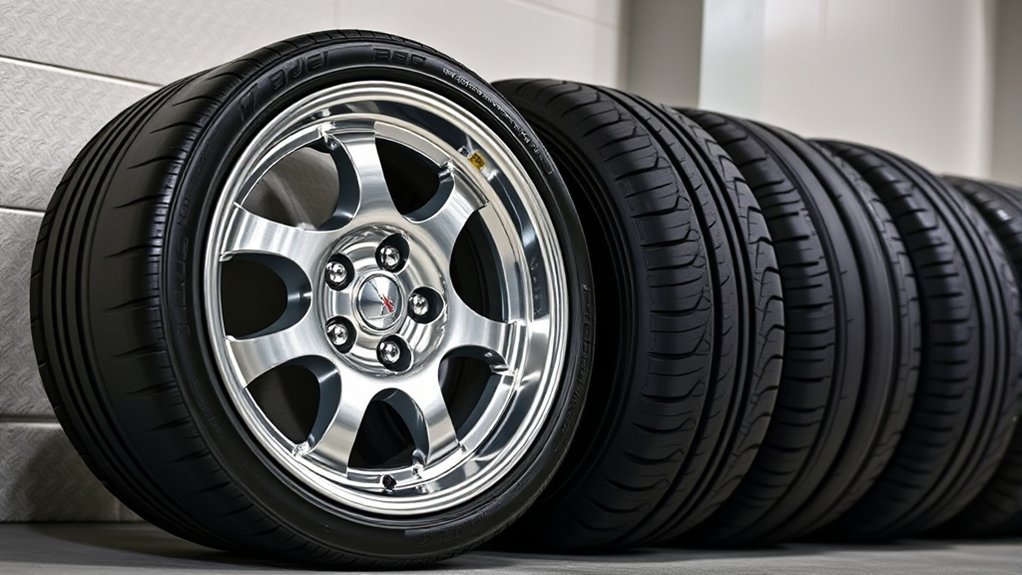
A 15×8 wheel can work with many different tire sizes, but there is no single safe width range that applies to every tire. The most important check is the approved rim-width range published for the exact tire model. After that, compare overall diameter, load rating, wheel offset, suspension clearance, and your vehicle’s original tire specifications before you buy.
Quick Answer
A 15×8 wheel can accept many 15-inch tires, but compatibility depends on the exact tire. Verified examples include some 225/45R15, 245/40R15, 255/70R15, and 275/60R15 tires. Always confirm that 8.0 inches appears inside the tire manufacturer’s approved rim-width range before ordering.
Key Takeaways
- Do not choose a tire for a 15×8 wheel by section width alone; check the exact tire’s approved rim-width range.
- A nominal size such as 235/75R15 may fit one manufacturer’s 15×8 application but be too wide a wheel for another tire with the same size marking.
- Verified performance examples include 225/45R15 and 245/40R15 tires whose published rim ranges include 8 inches.
- Some 255/70R15 and 275/60R15 tires are also approved for 8-inch wheels, making them useful examples for taller street, classic-car, SUV, or light-truck applications.
- Offset, backspacing, overall diameter, load capacity, brakes, steering clearance, and suspension travel still determine whether the complete package fits your vehicle.
What Tire Sizes Fit a 15×8 Wheel?
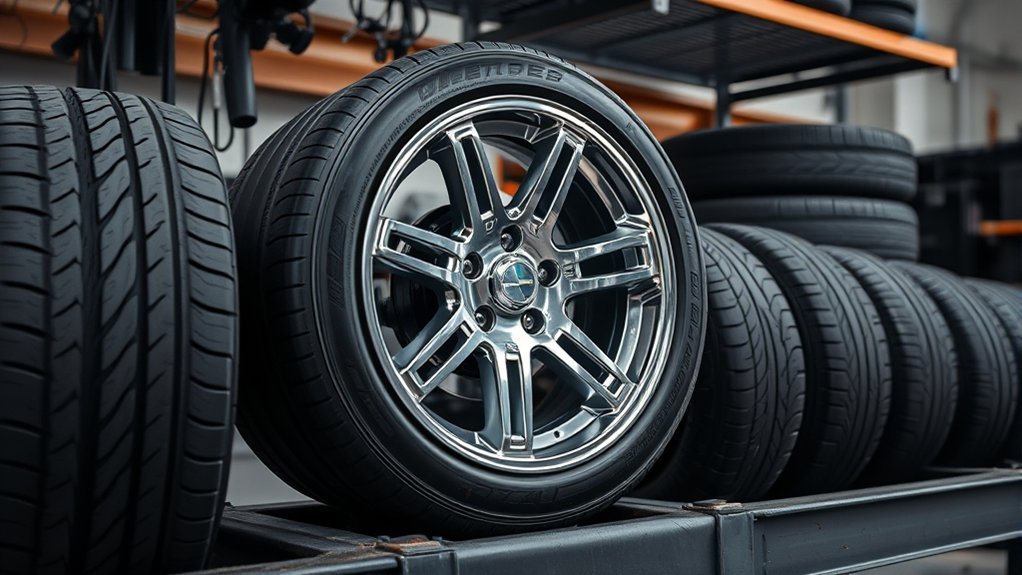
A 15×8 wheel is 15 inches in bead-seat diameter and 8 inches wide between its bead seats. A tire must have a 15-inch rim diameter, but the section-width number alone does not tell you whether that tire is approved for an 8-inch-wide wheel.
The reliable method is to find the exact tire on the manufacturer’s specification sheet and look for terms such as Approved Rim Width, Permitted Rim Width, or Rim Width Range. The number 8.0 must fall inside that range.
Warning: Do not assume that every tire with the same nominal size uses the same approved rim range. Current manufacturer data shows that one 235/75R15 tire may accept an 8-inch rim while another 235/75R15 tire may not.
For example, Goodyear currently publishes 235/75R15 tires with different rim-width limits. One specification lists a 6.0–7.0-inch approved range, while another lists 6.0–8.0 inches. That makes 235/75R15 a possible 15×8 size, not a universal one.
Other verified examples show how broad the possibilities can be. A Goodyear 255/70R15 is listed for 6.5–8.5-inch rims, while a Cooper 275/60R15 is listed for 7.5–9.5-inch rims. Both ranges include an 8-inch wheel.
| Example Size | Published Example | 15×8? |
| 205/50R15 | Nexen N’Fera Sport R: 5.5–7.5 in. | No for this tire |
| 225/45R15 | Nexen N’Fera Sport R: 7.0–8.5 in. | Yes for this tire |
| 235/75R15 | Published ranges vary by exact tire | Maybe; verify model |
| 245/40R15 | Nexen N’Fera Sport R: 8.0–9.5 in. | Yes for this tire |
| 255/70R15 | Goodyear example: 6.5–8.5 in. | Yes for this tire |
| 275/60R15 | Cooper example: 7.5–9.5 in. | Yes for this tire |
You should also compare overall diameter, actual section width, load index, speed rating, and tire construction with your vehicle’s requirements. A tire that is approved for an 8-inch rim can still be wrong for the vehicle because it is too tall, too short, too heavily built, too lightly rated, or too wide for the available space.
Tire pressure should come from the vehicle manufacturer’s placard or owner’s manual for normal road use. Do not use the maximum pressure molded into the tire sidewall as the default operating pressure.
Tread design also matters. Highway, all-season, all-terrain, mud-terrain, winter, and competition tires can behave very differently even when their dimensions look similar.
Finally, check wheel clearance at full steering lock and through suspension travel. Tire-to-strut, control-arm, liner, fender, brake, and spring clearance all matter.
Pro Tip: Check the specification sheet for the exact tire part number, not just the size printed in a retailer’s search filter. That one step prevents many wheel-width mistakes.
[Products Worth Considering]

The Ziopetru adjustable magnetic wheel alignment tool helps you check and restore camber and caster positioning after removing and reinstalling undercarriage components. With a clear leveling/bubble measurement system and an easy zeroing adjustment knob, it supports precise horizontal angle checking. The strong magnetic base mounts to metal surfaces for convenient use at home on cars, motorcycles, trucks, vans, and SUVs.

This universal wheel alignment tool helps you accurately restore tire tilt angles after tire or suspension repairs using an adjustable camber gauge. It features a powerful magnetic base that firmly attaches to brake rotors for stationary, slip-free readings, improving consistency during measurement. Built from durable PC plastic, it resists wear and corrosion and is compact enough for car, truck, RV, and motorcycle alignment tasks.

This 3-piece wheel and tire brush set makes it easy to clean light, medium, and heavy dirt from wheels, rims, tires, and exterior surfaces. It includes both soft and stiff bristle options for gentle scrubbing and tough grime removal, helping lift brake dust and road buildup. The long-handle design supports comfortable cleaning across cars, trucks, SUVs, RVs, motorcycles, and more, with simple care instructions to restore brush shape.
Ideal Tire Widths for 15×8 Wheels
There is no universal ideal tire width for every 15×8 wheel. An 8-inch rim can appear in small performance-car setups, classic muscle cars, SUVs, pickups, and off-road builds, so the correct tire may be very different from one vehicle to another.
Instead of choosing a width such as 235, 255, or 265 mm first, use this order:
- Confirm the exact tire approves an 8-inch rim.
- Match overall diameter closely enough to the vehicle’s required range.
- Meet or exceed the required load capacity and appropriate speed rating.
- Check offset, backspacing, brakes, suspension, and body clearance.
- Choose the tire construction and tread for street, track, off-road, or winter use.
A 225 mm performance tire can be an excellent match when its specification includes an 8-inch rim. A 255 or 275 mm tire can also be correct in a taller classic-car or truck application. Neither is automatically better just because it is wider.
Always verify the manufacturer’s rim-width limits before buying or mounting the tire.
If you match wheel approval, profile, overall diameter, load capacity, and clearance correctly, you will get a more predictable and safer setup than you would by choosing section width alone.
How Tire Width Changes Fitment and Handling
Tire width changes both fitment and driving behavior, but the effect is more complicated than “wider equals more grip.”
A narrower tire may give you more body and suspension clearance and can reduce steering effort. Depending on the tire and rim combination, however, going too narrow can pull the sidewalls outward toward the bead seats and leave the wheel less protected.
A wider tire usually creates a wider footprint shape and may improve dry lateral grip when the compound, construction, temperature, pressure, and suspension are also suited to the job. It can also increase steering effort, mass, aerodynamic drag, hydroplaning sensitivity, and the chance of rubbing.
Total contact-patch area does not rise in direct proportion to section width. Vehicle load, inflation pressure, tire construction, and operating conditions also affect the footprint. Width is only one part of the grip equation.
Tread pattern matters too. Groove design, tread-block stiffness, compound, and water evacuation can make two tires of identical size behave very differently.
Inflation pressure changes footprint shape and casing deflection as well. For normal road use, begin with the cold pressure specified by the vehicle manufacturer rather than lowering pressure simply to create a larger footprint.
For best fitment, match the tire to the wheel manufacturer’s and tire manufacturer’s limits, then choose the handling characteristics you want within those limits.
Best 15×8 Tire Sizes by Use Case
Your best 15×8 tire size depends on whether you need street comfort, off-road sidewall and ground clearance, or track response. The tire must first be approved for an 8-inch rim; the use case comes second.
Street setups usually prioritize road manners, diameter compatibility, wet grip, noise, and tread life. Off-road setups put more emphasis on sidewall height, load range, casing strength, terrain grip, and clearance. Track setups focus on compound, heat behavior, steering response, and tire-specific pressure targets.
[Products Worth Considering]

Measure tire tread depth quickly and accurately with this LUMITECO dial gauge that reads in 1/32" increments up to 14/32". The color-coded green/yellow/red zones make it easy to judge tire wear and know when replacement is needed. A rugged, compact design with a protective pouch helps keep the gauge ready for use on cars, trucks, motorcycles, and more.
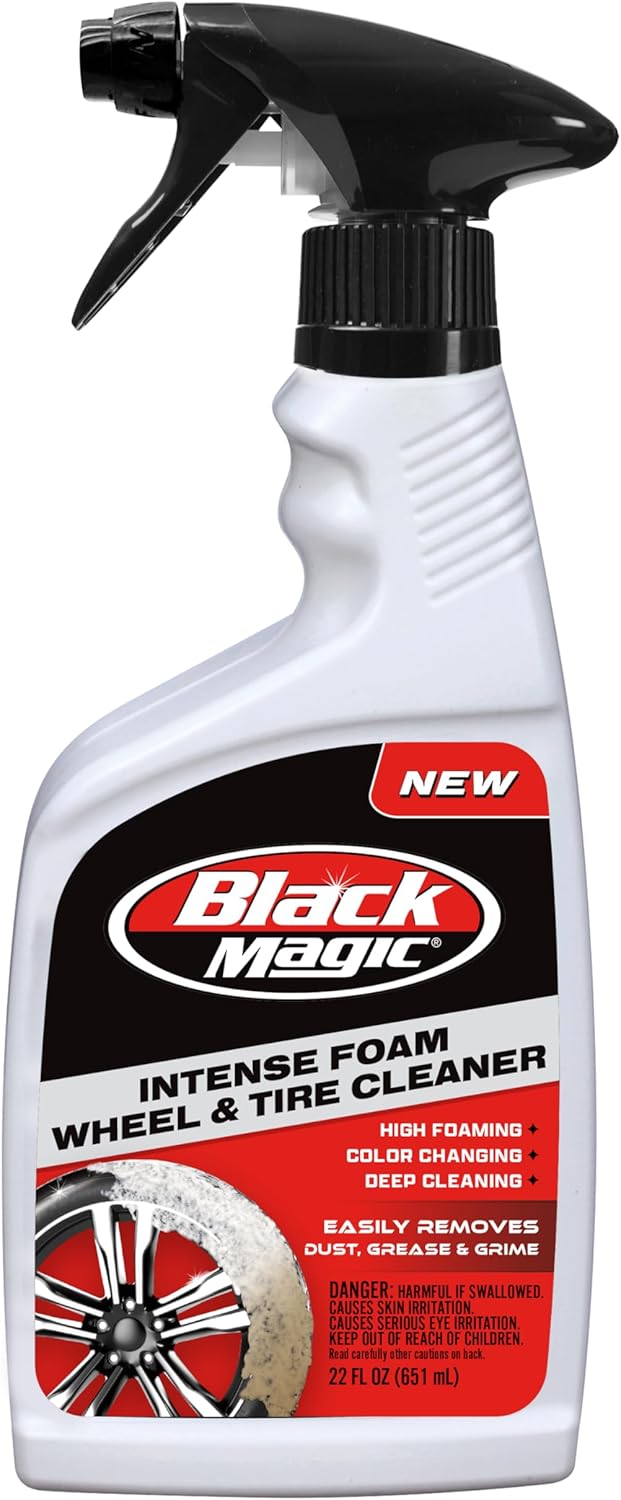
Black Magic Intense Foam Wheel & Tire Cleaner uses a high-foaming action to lift away dirt, grime, and brake dust without scrubbing. The color-changing formula helps show contaminants being dissolved as foam turns from white to brown. Safe for all wheel types and even wheel wells, it leaves a like-new, slick finish with a fresh cherry scent.

This professional wheel and rim cleaning brush set lifts brake dust, grime, and dirt with soft, scratch-free microfiber and synthetic wool fibers. The rim brush bends up to 360 degrees for easy access to hard-to-reach areas around spokes, lips, and faces. Ideal for thorough cleaning of car, truck, motorcycle, bicycle, RV, and more wheel and tire surfaces.
Street Driving Sizes
Street 15×8 setups vary widely because an 8-inch wheel can be used on both lightweight sports cars and larger classic vehicles.
A verified 225/45R15 performance tire can be a good low-profile street or enthusiast option when the vehicle needs roughly that diameter. Nexen, for example, lists its N’Fera Sport R in 225/45R15 for 7.0–8.5-inch rims.
235/60R15, 245/60R15, 255/60R15, 255/70R15, and 275/60R15 are examples of taller sizes found in classic-car, SUV, and light-truck applications, but each tire needs its own specification check.
- 225/45R15: verified 15×8-compatible performance example from some manufacturers
- 235/60R15: taller street size; check exact tire approval and vehicle diameter
- 245/60R15: useful in some classic-car applications when approved
- 255/70R15: verified example with an approved range that can include an 8-inch rim
- 275/60R15: verified example for some tires, but needs substantial vehicle clearance
Do not assume that 205/60R15, 205/50R15, or 215/55R15 automatically belongs on an 8-inch wheel. Some tires in those widths have maximum approved rim widths below 8 inches.
Avoid oversizing if it creates rubbing, reduces required load capacity, or changes overall diameter enough to affect the vehicle’s gearing, speedometer, ABS, stability control, or drivability.
Off-Road Tire Picks
When you move a 15×8 wheel off pavement, tire height, construction, load range, tread design, and sidewall strength become especially important.
245/75R15 can be useful where an exact tire is available and approved for an 8-inch wheel. 31×10.50R15 is another common light-truck/off-road size, and many tires in that size have published ranges that include 8-inch wheels. Always check the exact model before mounting.
For mixed dirt, gravel, and rocks, an all-terrain tire usually provides a compromise between road behavior and off-road traction. For mud, a mud-terrain pattern uses larger voids and more aggressive tread features to clear loose material.
If you haul equipment or tow, prioritize the required load capacity, axle ratings, and manufacturer pressure guidance rather than choosing the largest tire that physically fits.
If you are considering a size such as 33×10.50R15, check current model availability, published rim limits, overall diameter, lift requirements, steering clearance, brake clearance, and body interference first. A 33-inch tire can require meaningful suspension or body clearance changes even when the wheel itself fits.
Track Performance Fits
If your 15×8 setup is headed to the track, use the specification sheet for the exact competition or performance tire rather than a generic width rule.
A current Nexen example shows why. Its 225/45R15 N’Fera Sport R is approved for 7.0–8.5-inch wheels, so an 8-inch rim is inside the range. Its 245/40R15 is approved for 8.0–9.5 inches, putting the 15×8 at the narrow end of the approved range. In contrast, its 205/50R15 is approved only for 5.5–7.5 inches, so that particular tire should not be installed on a 15×8.
A size such as 235/40R15 should likewise be treated as tire-specific. If you find a competition tire in that size, confirm that its manufacturer explicitly approves an 8-inch wheel.
- 205/50R15: not a universal 15×8 choice; some current tires stop at 7.5 inches
- 225/45R15: verified 15×8-compatible example
- 235/40R15: verify exact competition tire before use
- 245/40R15: verified 15×8-compatible example for some performance tires
- Pressure tuning: follow the tire maker or race-tire supplier and log pressures after each session
Note: Track pressure is tire-specific. Set an appropriate cold starting pressure, then measure hot pressure and tire behavior after a session. Do not use a universal “hot only” target for every track tire.
Street Vs. Off-Road Vs. Track Fitments
On a 15×8 wheel, street fitment usually favors predictable ride quality, wet performance, reasonable noise, correct overall diameter, and enough fender and suspension clearance for normal driving.
For off-road use, you may choose a taller tire for sidewall compliance and ground clearance, but added diameter and mass can affect acceleration, braking, gearing, steering load, and rubbing.
Track fitment usually prioritizes a suitable performance compound, stable sidewall support, heat management, and precise steering. A lower-profile tire can improve response, but only when the exact tire is approved for the wheel and appropriate for the vehicle.
Street Tire Fitment
For street use, sizes such as 225/50R15, 235/50R15, or 245/50R15 may work on an 8-inch wheel when the tire manufacturer approves that rim width and the vehicle has the necessary clearance.
Do not select them by appearance alone. First compare the proposed tire’s overall diameter with the OE tire. Then confirm load capacity, speed rating, wheel load rating, and cold inflation requirements.
- 225/50R15: can provide a responsive street setup when the exact tire approves an 8-inch rim
- 235/50R15: may offer a fuller sidewall profile where available and approved
- 245/50R15: can suit some larger or classic-car applications but needs clearance verification
- Check inner clearance at full steering lock
- Confirm tire and wheel load ratings before you buy
A proper street fit keeps ride quality predictable and protects handling without forcing the tire outside its approved wheel-width range.
Off-Road And Track Use
Off-road and track fitments demand different priorities, but both require the same basic rule: the exact tire must approve an 8-inch rim.
For off-road driving, a 235/75R15 may work if that specific tire lists 8 inches in its approved range. A 31×10.50R15 is another common 15×8 candidate. Check load capacity, sidewall construction, overall diameter, and the tire maker’s recommendations if you plan to lower pressure off pavement.
For track use, choose a tire designed for the event and temperature range rather than simply selecting the widest size. Compound, tread depth, construction, camber, wheel alignment, and pressure can matter as much as nominal width.
Also consider electronic systems. A meaningful change in rolling diameter can affect wheel-speed-based systems such as ABS, traction control, and stability control on vehicles that depend on calibrated tire diameter.
How Offset and Clearance Affect Fitment
Even when a tire is approved for a 15×8 wheel, offset and available clearance can decide whether the package fits the vehicle.
Wheel offset is the distance between the wheel centerline and its hub-mounting surface. More positive offset generally moves the wheel farther inward toward suspension and brake components. Less positive or more negative offset generally moves it outward toward the fender.
Backspacing describes the distance from the mounting surface toward the inner wheel edge. Two 15×8 wheels with different offset or backspacing can place the same tire in very different positions.
- Check inner clearance to the strut, shock, spring, control arm, and steering components.
- Check outer clearance to the fender lip and liner.
- Turn the steering from lock to lock.
- Check clearance through suspension compression and droop where practical.
- Confirm brake-caliper clearance.
- Compare the new wheel’s offset with the original setup.
- Confirm the wheel’s load rating, bolt pattern, center bore, and lug-seat compatibility.
Small position changes can make the difference between clean fitment and rubbing. Measure the complete wheel-and-tire package on the vehicle rather than relying on wheel width alone.
How to Avoid Rubbing and Tire Bulge
To avoid rubbing and excessive sidewall bulge on a 15×8 wheel, start by confirming the tire’s approved rim range. Then measure the space the complete tire needs at normal ride height, steering lock, and suspension compression.
Check inner and outer clearance. If the tire contacts the fender lip, liner, strut, spring, control arm, sway-bar link, or another component, the setup needs to change.
A tire that mounts onto the wheel is not automatically a correct fit. Rim approval, load capacity, diameter, and chassis clearance all have to work together.
You can reduce interference by choosing a different tire size, correcting an unsuitable wheel offset, or using a wheel/tire combination that better matches the vehicle. Suspension modifications or spacers should not be used simply to force an otherwise incompatible package to fit.
Keep tire pressure at the vehicle manufacturer’s recommended cold setting for normal road use unless the vehicle or tire manufacturer specifies otherwise. Underinflation increases casing deflection and heat and should not be used as a cosmetic way to change tire shape.
Also inspect suspension condition. Worn bushings, weak springs, damaged components, or unusual alignment settings can move the wheel and tire farther than a static garage measurement suggests.
After installation, inspect for witness marks, unusual noises, scuffing, or fresh contact after careful low-speed steering and a short drive. Any evidence of contact needs to be corrected.
Choose the Right 15×8 Tire Size
The right 15×8 tire size is the one that meets both the tire manufacturer’s wheel-width limits and your vehicle’s requirements. There is no universal “best” 235, 255, 265, or 275 mm answer.
If you want a low-profile performance setup, a manufacturer-approved 225/45R15 or 245/40R15 may be suitable. If you are working with a classic car, SUV, pickup, or off-road build, taller sizes such as 255/70R15, 275/60R15, or 31×10.50R15 may make more sense when their specifications and vehicle clearance allow them.
Match the tire’s load capacity to the vehicle and axle requirements. Do not reduce the required load index merely to make a preferred size fit.
Before ordering, work through this checklist:
- Confirm the exact tire lists 8.0 inches inside its approved rim-width range.
- Confirm the tire uses a 15-inch rim diameter.
- Compare new and OE overall diameter.
- Verify load index, load range, and speed rating.
- Check wheel load rating.
- Check wheel offset and backspacing.
- Measure inner and outer clearance at full steering lock.
- Confirm suspension travel and fender clearance.
- Verify brake-caliper clearance.
- Confirm bolt pattern, center bore, lug-seat style, and fastener compatibility.
- Use the vehicle placard pressure for normal road use unless the manufacturer specifies otherwise.
[Products Worth Considering]

The Topeak SmartGauge D2 delivers precise digital tire pressure readings for bikes, motorcycles, and sports equipment up to 250 psi (17 bar). Its rotating SmartHead works with both Presta and Schrader valves, so you can check pressure quickly without adapters. The LCD display makes it easy to read results in psi, bar, or kg/cm² with an included CR2032 battery for immediate use.

Protect tire valves from water, dust, and sand to help prevent leaks and support safe driving. These universal stem caps install quickly by hand and feature durable aluminum alloy construction with an inner sealing ring for better air retention. Compatible with cars, SUVs, trucks, motorcycles, and bicycles for everyday convenience.
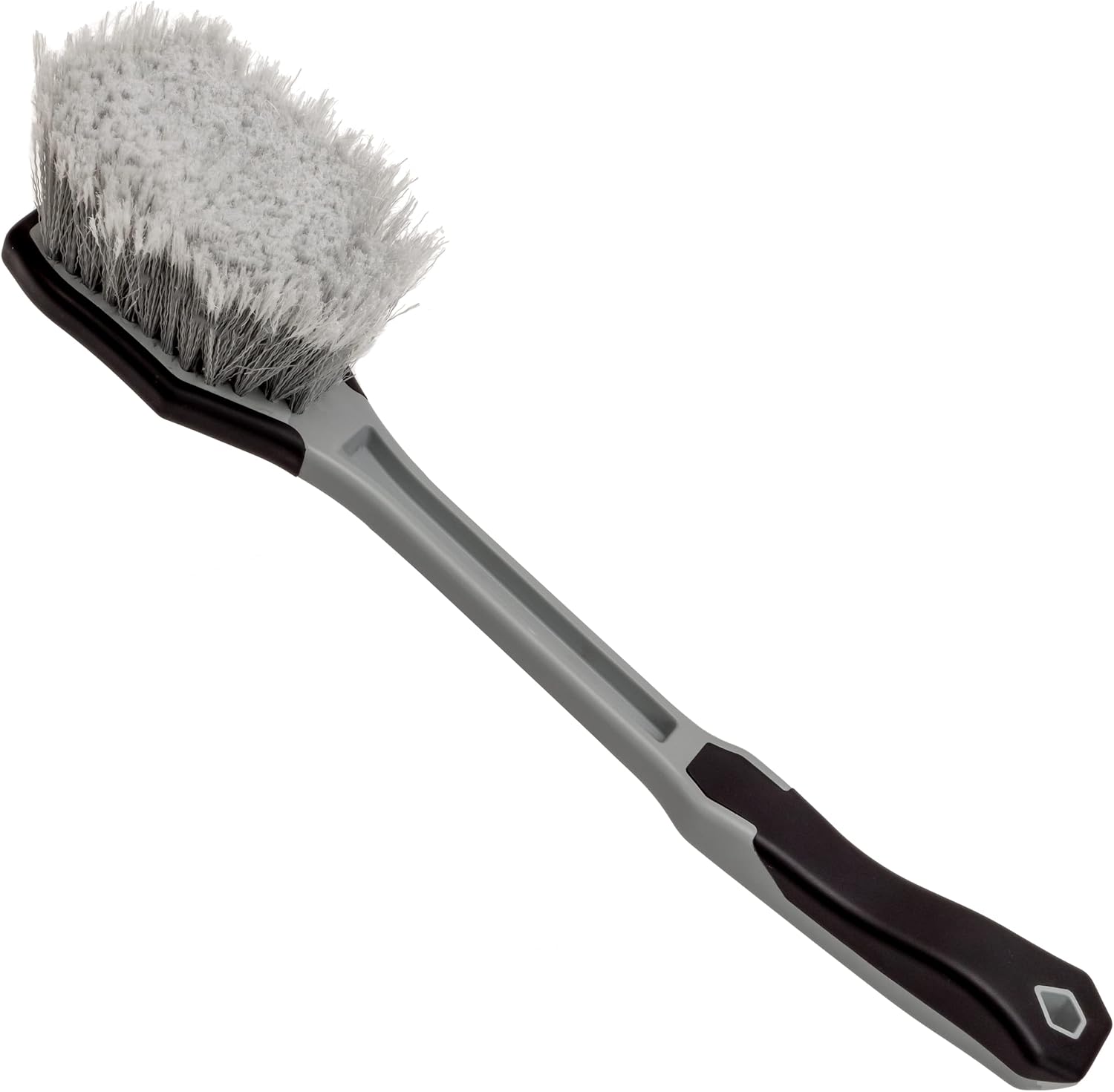
Clean grills, fenders, fender flares, bumpers, and wheel wells with a long-handled brush built for detailed car washing. The soft, triple-flagged bristles and dense scrub coverage help lift dirt gently while making coverage fast and easy. Use it with your favorite car wash soap for tires and exterior surfaces, and it also works for bike, motorcycle, boat, or RV cleaning.
Frequently Asked Questions
Can I Use a 15×8 Wheel With a Spacer?
Possibly, but a spacer changes wheel position and effective offset. Use only hardware designed for your vehicle and wheel, verify adequate fastener engagement or the spacer’s supplied studs, confirm hub and center-bore compatibility, check brake and suspension clearance, and follow the spacer and wheel manufacturers’ torque and installation instructions. A spacer should not be used to make an unsafe tire-to-rim combination acceptable.
Do 15×8 Tires Affect Speedometer Accuracy?
Wheel width itself does not change speedometer accuracy, but changing the tire’s overall diameter can. A taller tire travels farther per revolution and can make the speedometer read lower than actual road speed; a shorter tire does the opposite. Compare the proposed tire diameter with the original tire and recalibrate the vehicle if required.
What Air Pressure Should I Run on 15×8 Tires?
For normal road driving, use the vehicle manufacturer’s recommended cold tire pressure shown on the door placard or in the owner’s manual unless the vehicle or tire manufacturer specifies a different approved pressure for your replacement setup. Do not use the maximum pressure molded into the tire sidewall as your routine target. Track and off-road pressures require application-specific guidance.
Will a 15×8 Wheel Work With My Factory Suspension?
It can, but wheel width alone cannot answer the question. Check offset, backspacing, tire section width, overall diameter, brake clearance, strut and control-arm clearance, fender space, and clearance at full steering lock and suspension compression. A 15×8 that fits one trim or vehicle may rub on another.
Are 15×8 Wheels Suitable for Winter Driving?
They can be if the wheel fits the vehicle and you can use a winter tire whose approved rim-width range includes 8 inches. A narrower approved winter package is often preferred for snow and slush because it can cut through loose material more easily, but tire design is critical. For severe-snow use, look for an appropriate winter tire carrying the three-peak mountain snowflake marking.
Conclusion
A 15×8 wheel gives you a wide range of tire possibilities, but the safe choice starts with the exact tire manufacturer’s approved rim-width range, not a generic section-width rule. A 225/45R15 performance tire, 255/70R15 SUV tire, or 275/60R15 classic-car tire may all be legitimate 15×8 combinations when their published specifications include an 8-inch rim.
After confirming rim approval, check overall diameter, load capacity, wheel offset, brakes, steering clearance, suspension travel, and cold inflation requirements. That process gives you a cleaner fit and more predictable handling while reducing the chance of rubbing, incorrect loading, speedometer error, or an improperly supported tire.
Sources
- Goodyear 235/75R15 tire specifications — demonstrates that some 235/75R15 tires do not approve an 8-inch rim.
- Goodyear 255/70R15 specifications — supports the 6.5–8.5-inch approved rim-width example.
- Cooper 275/60R15 specifications — supports the 7.5–9.5-inch approved rim-width example.
- Nexen N’Fera Sport R specifications — supports the 205/50R15, 225/45R15, and 245/40R15 rim-width examples.
- National Highway Traffic Safety Administration tire safety guidance — supports using the vehicle manufacturer’s recommended cold tire pressure instead of the tire sidewall maximum.
- Tire Rack speedometer accuracy guidance — explains how changing overall tire diameter affects speedometer readings.