
A Service ESC light on a Chevy Traverse means the vehicle has detected a problem that may limit its Electronic Stability Control or Traction Control functions. The Traverse may still feel normal, but the system may not be able to help as intended during wheel slip, sudden steering inputs, or loss of traction. The safest next step is to check the other warning lights, read ABS/ESC diagnostic codes, and diagnose the specific fault instead of replacing parts at random.
Quick Answer
A steady Service ESC warning on a Chevy Traverse usually means the stability-control system has detected a fault and may not provide normal assistance. Check for ABS or brake warnings, restart the gasoline-powered vehicle after a brief shutdown, then scan the ABS/ESC modules for codes before testing sensors, wiring, battery voltage, or other components.
Key Takeaways
- A steady TCS/ESC warning can indicate a fault; a flashing indicator usually means the system is actively working.
- Do not assume the battery or a wheel-speed sensor is automatically the cause. Read ABS/ESC diagnostic trouble codes first.
- Possible fault areas include wheel-speed circuits, ABS components, steering or vehicle-motion sensors, wiring, power supply, brake-related inputs, and control modules.
- If the red brake-system warning stays on, braking feels abnormal, steering becomes difficult, or the vehicle behaves unpredictably, stop driving and arrange professional service.
- Use repair information for your exact Traverse model year because components and diagnostic procedures differ between generations.
At a Glance
| Time Required | About 15–30 minutes for basic checks; full diagnosis can take longer depending on the stored codes |
| Difficulty | Basic inspection: easy; electrical and ABS diagnosis: intermediate to professional |
| Tools Needed | ABS/chassis-capable scan tool, digital multimeter, basic hand tools, flashlight |
| Cost | Varies widely with the model year and failed component; diagnosis should come before parts replacement |
What Service ESC Means on a Chevy Traverse

Electronic Stability Control helps you maintain directional control when the vehicle starts moving differently from the direction you are steering. It works with the braking and traction-control systems and uses information from several sensors to determine whether intervention is needed.
If the TCS/ESC light stays on instead of flashing, the system may have detected a malfunction and may not be able to provide normal stability assistance. That is different from a light that flashes briefly while you accelerate on a slippery surface or make a maneuver that causes the system to intervene.
Note: Chevrolet Traverse systems differ by model year and generation. Always use the owner’s manual and service information for your exact year rather than assuming a repair that worked on another Traverse applies to yours.
Service ESC vs. Flashing ESC vs. ESC Off
| What you see | What it generally means | What to do |
|---|---|---|
| ESC/TCS light flashes | The system is actively responding to wheel slip or vehicle instability. | Ease off aggressive acceleration or steering and drive for the road conditions. |
| ESC/TCS light stays on | The system may have a fault and may not provide normal assistance. | Check related warning lights and diagnose the system as soon as practical. |
| ESC Off / Traction Off | The system may have been intentionally switched off. | Turn it back on if you did not intend to disable it. |
| Service ESC message plus ABS light | The systems may share a fault or unavailable input. | Scan the ABS/electronic brake control system for diagnostic trouble codes. |
| Service ESC plus red brake warning | A braking-system problem may also be present. | Stop safely and follow the brake-warning guidance for your vehicle. |
Why Your Traverse Shows ESC Warnings
A Service ESC warning does not identify one failed part by itself. The message tells you that the stability-control system has detected a problem or cannot operate normally. The diagnostic trouble codes stored in the vehicle provide the next clue.
Areas that may be involved include:
- Wheel-speed sensor circuits: ESC and ABS depend on accurate wheel-speed information. A damaged sensor, wiring problem, connector issue, or related hub/bearing problem can create an implausible signal.
- ABS/electronic brake control system: ESC works closely with the antilock braking system, so faults in the shared braking electronics can affect both systems.
- Steering and vehicle-motion inputs: Depending on model year, steering-angle, yaw-rate, lateral-acceleration, or related sensor information can be part of stability-control calculations.
- Brake-related inputs: Certain brake switches, pressure signals, wiring, or module faults may cause related stability-control warnings.
- Power, grounds, and connectors: Loose, corroded, damaged, or poorly seated electrical connections can cause module or sensor communication faults.
- Battery or charging-system problems: Low or unstable system voltage can affect electronic modules, but the battery should be tested rather than automatically replaced.
- Module calibration or software: Programming may be involved in some model-specific faults, but updates should only be performed when the proper GM diagnostic procedure calls for them.
Battery and Wiring Issues
Battery voltage is worth checking when the Service ESC warning appeared after a jump-start, battery replacement, difficult starting, charging-system warning, or other signs of low voltage.
Inspect the battery terminals, major grounds, accessible connectors, and wiring for looseness, corrosion, moisture, chafing, or physical damage. If voltage is questionable, test the battery and charging system using the correct procedure for your Traverse.
Do not replace the battery merely because the Service ESC message appears. A healthy electrical system can still have an ESC fault elsewhere.
Sensor and Brake Faults
Wheel-speed, steering, vehicle-motion, and brake-related signals are important because the system needs to compare the driver’s intended direction with what the vehicle is actually doing.
A scan tool that can communicate with the ABS or electronic brake control module can show stored codes and, on suitable tools, live sensor data. This is much more useful than guessing which sensor may have failed.
Check the Warning Lights Before Replacing Parts
Look at the entire instrument cluster before troubleshooting the Service ESC message. Related warnings can change the urgency and point toward the affected system.
- ABS light only: Normal foundation braking may still work, but antilock braking is unavailable and the vehicle needs service.
- Service ESC / TCS light: Stability and traction assistance may be limited or unavailable.
- Red brake-system warning: Treat this more seriously because a regular braking-system problem may exist.
- Charging-system warning: Check the electrical system because power-supply problems may affect multiple modules.
- Check-engine or reduced-power message: Scan all relevant modules because an engine or communication fault may be contributing to multiple warnings.
Warning: If the red brake-system warning stays on, the brake pedal becomes unusually hard or soft, stopping distance increases, steering feels unsafe, or the vehicle behaves unpredictably, pull over safely. Do not keep driving simply because the Service ESC message itself appears to be the only problem.
How to Check the ESC System
Use a code-first process. It is faster and reduces the chance of replacing a good battery, sensor, hub, or control module.
[Products Worth Considering]

Make hard-to-reach areas easier to access with the MAXXHAUL truck tire service step featuring an adjustable width and height. The foldable design stores compactly, while the serrated non-slip platform provides secure footing for tire-related maintenance. It fits most stock tire sizes up to 31-inch diameter with a 300-lb capacity.

The 22800 wheel stud installer makes replacing wheel studs quick and secure, saving time and effort during tire service. It uses a ratchet or impact wrench to pull new studs firmly into place, helping when existing studs are too long. Compatible with most automotive wheels and light-duty truck wheel studs, it’s designed for easy, tool-assisted installation.

Replace your worn or missing TPMS sensors with pre-programmed, direct-fit sensors for compatible Ford, Lincoln, and select Mazda models. Each sensor comes ready to activate with a scan tool, helping restore accurate tire pressure monitoring and trouble-free installation. Built with a long-life CR2032 battery and tested before factory release, this set provides dependable performance with a one-year warranty.
1. Restart and Recheck the Warning
If you have a gasoline-powered Traverse and the vehicle otherwise feels normal, shut it off safely, leave it off briefly, then restart it. Some transient warnings can disappear after an ignition cycle.
If the Service ESC message immediately returns or comes back while driving, continue with diagnosis rather than repeatedly restarting the vehicle.
2. Scan the Correct Modules
Use a scan tool that can access ABS, chassis, or electronic brake control data. A basic reader designed only for emissions-related engine codes may show no useful fault even when the ESC system has stored a chassis code.
Pro Tip: Record every code and its module before clearing anything. A stored code gives you a specific circuit, sensor, communication path, or operating condition to test and can save substantial diagnostic time.
3. Inspect Power and Connections
If codes or symptoms suggest low voltage or communication trouble, inspect the battery terminals, grounds, charging system, fuses, harnesses, and accessible connectors.
Pay particular attention to anything recently disturbed during battery work, brake repairs, wheel-bearing replacement, suspension work, collision repair, or other service.
4. Check Wheel-Speed Data
If the stored codes point to a wheel-speed circuit, inspect that wheel’s sensor, connector, harness, and related hardware. Live wheel-speed data can help identify a signal that drops out or disagrees with the other wheels.
Do not automatically replace a wheel-speed sensor based only on the Service ESC message. Wiring, connectors, tone/encoder components, bearings, or module inputs can produce similar symptoms depending on the vehicle design.
5. Follow Steering, Brake, or Motion-Sensor Codes
If the code points to a steering-angle, yaw, acceleration, brake-input, or related sensor, follow the model-year-specific diagnostic procedure. Some repairs may require calibration or setup after a component is replaced.
6. Repair, Clear, and Verify
Repair the actual failed circuit or component, clear the diagnostic codes with the proper scan tool, then verify that the warning stays off.
A road test may be needed to confirm that the code does not return and that wheel-speed and steering-related data remain consistent.
The Service ESC message is a symptom, not a diagnosis. Read the stored ABS/ESC codes before deciding which part to replace.
Can You Keep Driving With Service ESC On?
If the Service ESC warning is the only warning, braking and steering feel normal, and the vehicle is otherwise operating normally, you may be able to drive cautiously to a safe location or repair facility. However, you should assume that some traction or stability assistance may be unavailable.
Reduce risk while the fault is active:
- Slow down on wet, icy, snowy, gravel, or loose surfaces.
- Avoid abrupt steering and aggressive acceleration.
- Increase following distance.
- Avoid towing or demanding driving until the cause is known.
- Get the system diagnosed as soon as practical.
Do not use a fixed distance as the rule. Whether continued driving is reasonable depends on the additional warning lights, braking performance, steering behavior, road conditions, and the fault itself.
When You Should Stop Driving
Pull over safely and arrange professional help if:
- the red brake-system warning stays illuminated;
- braking distance increases or the pedal feels abnormal;
- steering becomes unusually heavy or unpredictable;
- the vehicle pulls strongly, loses braking confidence, or behaves erratically;
- you receive severe reduced-power or other warnings that make normal driving unsafe; or
- you are not confident the vehicle can be driven safely.
Repairs That Can Fix a Traverse ESC Warning
The correct repair depends on the DTC and testing results. Possible fixes include:
- repairing damaged wiring or terminals;
- cleaning and securing corroded electrical connections;
- repairing a wheel-speed sensor circuit;
- replacing a failed sensor, hub-related component, or connector when testing confirms the fault;
- repairing an ABS or brake-control problem;
- correcting a battery, charging, power, or ground problem;
- performing a required sensor calibration after repair; or
- performing module programming or replacement when the GM diagnostic procedure specifically identifies it.
Do not install several parts at once and hope the message disappears. That can make diagnosis more expensive and may leave the original fault unresolved.
[Products Worth Considering]
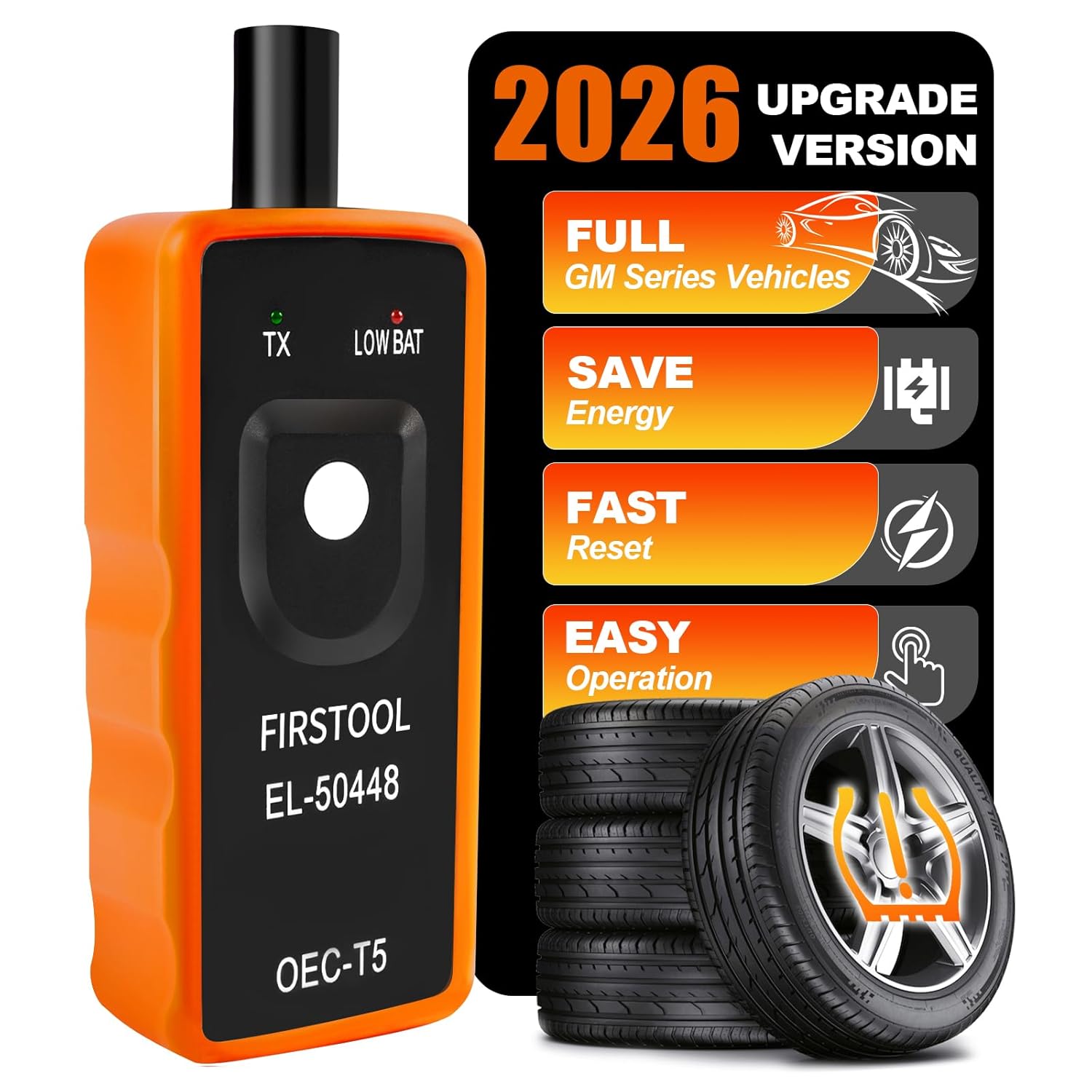
This TPMS relearn tool helps you quickly activate, match, and reset GM tire pressure sensors to keep the vehicle monitoring system working properly. It clears tire pressure alarms and dashboard warning lights after sensor replacement or tire rotation, and supports learning for common 315/433 MHz TPMS sensors. Designed for simple one-button operation, it can help you avoid unnecessary trips to repair shops.

This 1/2-inch drive breaker bar delivers powerful leverage for loosening and tightening stubborn lug nuts and automotive fasteners. The 180-degree flex head helps you reach tight spaces at the angle you need, making tire and brake jobs easier. A spring-loaded ball detent design holds 1/2-inch sockets securely while the chrome-moly head provides durable strength for everyday use.

The Big Rig Defense Tire Thumper is a truck tire pressure checker that lets you quickly check multiple tires by giving them a firm whack. Listen for a reassuring thump and feel the stick bounce when a tire is fully inflated, helping you get back on the road safely. It features a comfortable, glove-friendly handle and a secure wrist strap for confident use on busy routes.
Does Disconnecting the Battery Reset Service ESC?
Disconnecting the battery may temporarily clear some warnings or reset module memory, but it does not repair a failed sensor, damaged wire, poor connection, brake-system problem, or other active fault.
It can also erase useful diagnostic information. Read and record the codes before clearing them whenever possible.
If the warning started immediately after battery replacement or other electrical work, inspect the connections and verify that the vehicle’s required setup or calibration procedures were completed correctly.
When a Mechanic Should Step In
Professional diagnosis is a good choice when the Service ESC warning repeatedly returns, multiple warning lights appear together, or your scan tool cannot access the ABS/electronic brake control system.
A qualified technician can:
- read manufacturer-specific chassis codes;
- view live wheel-speed and sensor data;
- test circuits under operating conditions;
- check module power, grounds, and communication networks;
- perform calibrations and programming when required; and
- follow the diagnostic flow for your exact Traverse model year.
This is particularly important when diagnosis points toward the ABS/electronic brake control module or when braking performance is affected.
Check for Recalls and Service Information
Before paying for a major repair, check your Traverse’s 17-character VIN for open safety recalls. Recall coverage applies to specific vehicles rather than every Traverse from the same model year.
Technicians can also consult GM Service Information for current service manuals, diagnostic procedures, campaigns, and bulletins that apply to the exact vehicle.
A forum post or repair that solved another owner’s Service ESC warning can provide an idea, but it should not replace the diagnostic procedure for your VIN, model year, and stored codes.
How Much Does Service ESC Repair Cost?
There is no reliable single price for a Service ESC repair because the dashboard message does not identify the failed component.
A loose connector or damaged section of wiring can be very different from replacing a sensor, wheel hub, brake-control component, or electronic module. Diagnostic labor, calibration, programming, parts prices, model year, and local labor rates also affect the total.
The best way to avoid unnecessary cost is to obtain the actual diagnostic codes and test the indicated circuit before approving parts replacement.
[Products Worth Considering]

AstroAI’s heavy-duty digital tire pressure gauge delivers quick, accurate readings with 0.1 increments and a secure valve-stem seal. It features a green backlit LCD and built-in flashlight for easy use in low light, plus an ergonomic non-slip stainless-steel design. The wide 0–230 PSI range works across common vehicle tires, with unit selection and an auto shut-off to save battery.

This GM TPMS relearn and reset tool (EL-50448) helps you activate and reset OE/OEM compatible tire pressure sensors for many Chevrolet, GMC, Buick, and Cadillac vehicles. It includes a pre-installed 9V alkaline battery for ready-to-use performance and features a one-button design for quick DIY TPMS relearn. Use it to clear the TPMS warning light, set the correct dashboard tire pressure, and test sensor operation.

The AICEL TPMS relearn tool helps you quickly reset or relearn tire pressure sensors after replacement, tire rotation, or resolving tire pressure alarms. It provides an activation reset function so your vehicle’s TPMS can operate optimally, saving time and money on frequent visits to an auto shop. Designed for easy use on most vehicles, it works by placing the tool near the valve stem and using the learn button.
How to Prevent ESC Problems Later
You cannot prevent every electronic or sensor failure, but good vehicle maintenance can reduce avoidable electrical and mechanical problems.
- Keep battery terminals and major electrical connections clean and secure.
- Address charging-system warnings and starting problems promptly.
- Repair damaged wheel-area wiring or connectors instead of leaving them exposed.
- Use the correct tire sizes and maintain tire pressure because stable tire grip helps ESC perform as designed.
- Have ABS or brake warnings diagnosed rather than ignoring them.
- After wheel-bearing, brake, suspension, steering, or collision repairs, investigate any new ESC warning that appears immediately afterward.
- Use software updates or module programming only when called for by the correct GM service procedure.
Frequently Asked Questions
Can I Fix Service ESC Myself?
You can perform basic checks such as inspecting terminals, visible wiring, connectors, and related warning lights. Diagnosis becomes harder when you need ABS-module codes, live sensor data, circuit testing, calibration, or programming. Use a scan tool that supports ABS/chassis systems rather than relying only on a basic engine-code reader.
How Much Does It Cost to Fix an ESC?
The cost depends on the actual fault. Wiring repairs, sensors, hub-related parts, brake-control components, modules, calibration, and programming can involve very different amounts of labor and parts. Read the stored codes and confirm the failed component before estimating the repair.
Can I Drive My Car if It Says Service ESC?
If ESC is the only warning and braking, steering, and engine operation feel normal, cautious driving to a safe place or repair facility may be possible. Avoid slippery conditions and aggressive maneuvers. Stop driving if a red brake warning remains on, braking or steering changes, or the vehicle becomes difficult to control.
How Do You Fix the ESC Service Light?
Start by reading ABS/ESC diagnostic trouble codes. Then test the circuit or component identified by the code, such as wheel-speed wiring, sensor inputs, electrical power, grounds, brake-related circuits, or the electronic brake control system. Repair the confirmed fault, clear the codes, and verify that the warning does not return.
Why Are the ABS and Service ESC Lights On Together?
ABS and ESC share braking hardware, electronic controls, and vehicle-speed information. A fault affecting a shared sensor, circuit, module, or input can therefore disable or limit both systems. Scan the ABS/electronic brake control module to identify the stored fault.
Will Disconnecting the Battery Clear the Service ESC Light?
It may temporarily reset a warning, but it will not repair an active electrical, sensor, brake, wiring, or module fault. Disconnecting power can also erase useful diagnostic information, so read and record the codes first whenever possible.
Conclusion
If your Chevy Traverse displays a Service ESC light, treat the message as a request for diagnosis rather than proof that one particular sensor or the battery has failed. Check the other warning lights, use an ABS/ESC-capable scanner, and follow the stored codes to the affected circuit or component.
If braking and steering remain normal and ESC is the only warning, cautious driving to a safe place or repair facility may be possible. If the brake-system warning stays on or braking, steering, or vehicle control changes, stop driving and arrange service. A code-based repair is the best way to restore the Traverse’s stability-control system without replacing unnecessary parts.
Sources
- Chevrolet Support — Warning Lights and Informational Icons in Your Vehicle — supports TCS/ESC, ABS, brake-system, and charging-system warning behavior.
- Chevrolet Support — Manuals and Guides — supports using the owner’s manual for the exact Traverse year and configuration.
- General Motors Service Information — supports model-specific diagnostic procedures, service manuals, campaigns, and bulletins.
- National Highway Traffic Safety Administration — FMVSS No. 126 Electronic Stability Control Systems — supports the function and safety role of ESC.
- National Highway Traffic Safety Administration — Vehicle Recall Lookup — supports checking a specific VIN for open safety recalls.