Driving a Hyundai Sonata on icy roads is safest when you prepare before the temperature drops, slow down before traction disappears, and know how your Sonata’s ABS, Electronic Stability Control, and traction-control systems behave on slick pavement. Black ice can look like wet or dry pavement, so treat shaded roads, bridges, overpasses, and refrozen meltwater as high-risk areas.
Quick Answer
To drive a Hyundai Sonata safely on icy roads, use winter tires where winter conditions are common, check cold tire pressure, slow down early, avoid cruise control, steer and brake smoothly, and leave extra following distance. Keep ESC/traction control on unless you are briefly freeing a stuck vehicle.
Key Takeaways
- Black ice is often clear and hard to see, especially on bridges, overpasses, shaded roads, and areas where melted snow refreezes overnight.
- Winter tires improve cold-weather grip, but they do not make ice safe at normal speeds.
- Check tire pressure when tires are cold and use the Sonata’s door-jamb placard or owner’s manual, not the number molded into the tire sidewall.
- Use firm, steady brake pressure if your Sonata has ABS; do not pump ABS brakes.
- If you slide, look where you want the car to go, ease off the accelerator, and steer gently without slamming the brakes.
At a Glance
| Time Required | 20–45 minutes for a winter readiness check; longer if tires, battery, wipers, or fluids need service. |
| Difficulty | Easy for basic checks; use a tire shop or mechanic for tire damage, battery testing, coolant testing, or tire installation. |
| Tools Needed | Tire-pressure gauge, tread-depth gauge or penny, ice scraper, snow brush, winter washer fluid, flashlight, phone charger, and emergency kit. |
| Cost | $0–$50 for basic supplies if you already own them; winter tires, battery service, or wiper replacement vary by vehicle year and tire size. |
Understanding Black Ice: What You Need to Know
Black ice is a thin, clear layer of ice that can blend into dark pavement. The National Weather Service describes it as patchy ice on roadways or other transportation surfaces that cannot easily be seen. That is why a road can look only damp, glossy, or even dry while still having very little grip.
Black ice often forms when moisture freezes after sunset, when melted snow refreezes overnight, or when rain falls and temperatures drop below freezing. The risk is highest during early morning, late evening, and after rapid temperature changes.
Warning: Do not rely on appearance alone. If the temperature is near or below freezing and the road looks shiny, shaded, or unusually smooth, assume traction may be limited and slow down before you reach the patch.
Identifying Black Ice Conditions on the Road
Black ice is easiest to avoid when you know where and when to expect it. In a Hyundai Sonata, the smooth ride and quiet cabin can make icy patches feel less obvious until the tires start to lose grip, so watch the road surface and the weather instead of waiting for the car to warn you.
Recognizing Black Ice Indicators
Look for pavement that appears darker, glossier, smoother, or more reflective than the surrounding road. A sudden absence of tire spray from vehicles ahead can also be a warning sign when roads were recently wet. If your Sonata’s outside temperature display is near 32°F (0°C), treat wet-looking surfaces as possible ice.
Common Black Ice Locations
Bridges and overpasses freeze sooner than regular pavement because cold air can pass above and below the road surface. Shaded roads, tree-lined streets, tunnel entrances, low spots, ramps, and areas near lakes, rivers, or melting snowbanks can also hold ice longer than open pavement.
Weather Conditions to Monitor
Check the forecast and local road reports before you leave. Black ice is more likely after freezing rain, light snow, fog, melting snow followed by a freeze, or a sunny winter day that turns cold after sunset. If conditions are changing fast, plan extra time or postpone nonessential driving.
According to the Federal Highway Administration, 24% of weather-related vehicle crashes occur on snowy, slushy, or icy pavement.
General Winter Driving Tips for Your Hyundai Sonata
Your Sonata can be stable in winter when it is maintained well and driven gently, but no safety system can overcome physics on ice. The goal is to avoid asking the tires to brake, turn, and accelerate hard at the same time.
- Clear snow and ice from all windows, mirrors, headlights, taillights, hood, roof, and sensors before driving.
- Turn on your headlights in snow, rain, freezing rain, or low visibility.
- Accelerate slowly so the front tires do not spin.
- Brake earlier than usual and avoid last-second stops.
- Make one input at a time: slow first, then turn, then gently accelerate after the car is straight.
- Avoid cruise control on wet, snowy, slushy, or icy roads.
- Do not crowd snowplows; stay well back and pass only when it is legal and clearly safe.
Note: If your Sonata is a hybrid or newer model with driver-assistance features, keep the windshield, camera area, radar area, and sensors clean. Ice, slush, or heavy snow can reduce how well those systems work.
Why Winter Tires Make a Big Difference
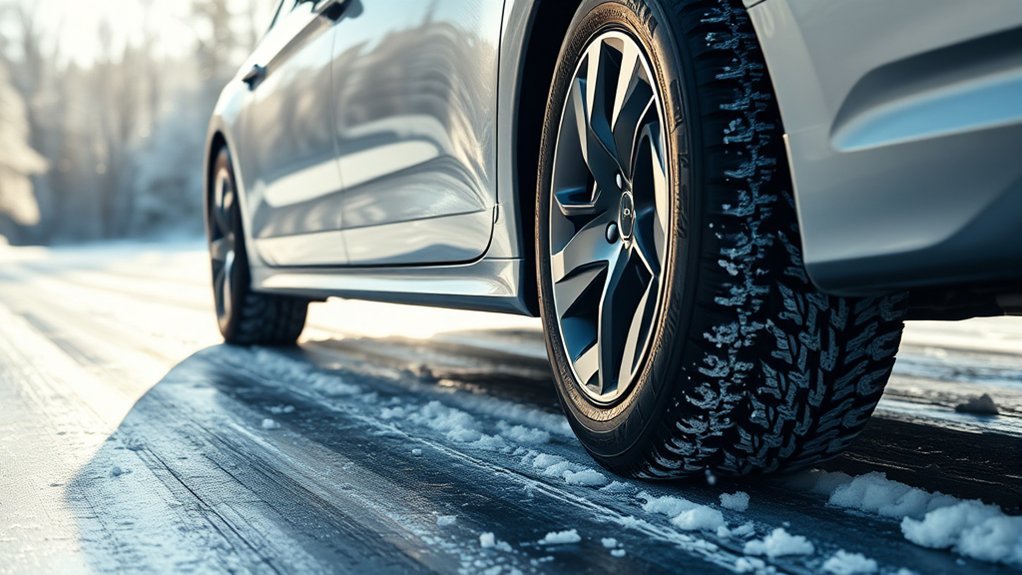
Winter tires use cold-weather rubber compounds and tread designs made for snow, slush, and icy pavement. In testing shown by Transport Canada, all-season tires required extended stopping distance in icy conditions compared with winter tires. That difference can matter when a light changes, traffic stops, or a hidden ice patch appears.
For a Hyundai Sonata, install four matching winter tires when your area regularly sees freezing temperatures, snow, or ice. Mixing tire types can reduce stability and make the car respond unevenly. Look for winter tires with the three-peak mountain snowflake symbol and use the tire size recommended for your Sonata’s model year and trim.
Pro Tip: Install winter tires before the first storm, not after. Tire shops become busy once snow is already in the forecast.
Winter tires help, but they do not remove the need to slow down. Ice can still cause long stopping distances even with good tires, ABS, and traction control.
[Products Worth Considering]

Milton S-921 pencil tire pressure gauge helps you maintain optimal tire pressure for passenger cars with accurate readings in PSI and kPa. It features a built-in deflator valve for convenient pressure adjustments, plus a single chuck head and nylon indicator bar for easy use on the go. Built from durable plated brass and designed for reliable performance, it’s a practical road trip and cold-weather maintenance tool.

This car emergency kit keeps essential roadside tools organized in a durable, portable bag so you can respond quickly during common driving emergencies. It includes battery jumper cables, a bright LED headlight, first aid supplies, a tire pressure gauge, and safety essentials like gloves and an emergency poncho. Designed for trunk or storage use, it helps you be prepared for dead batteries, minor malfunctions, and unexpected roadside issues.
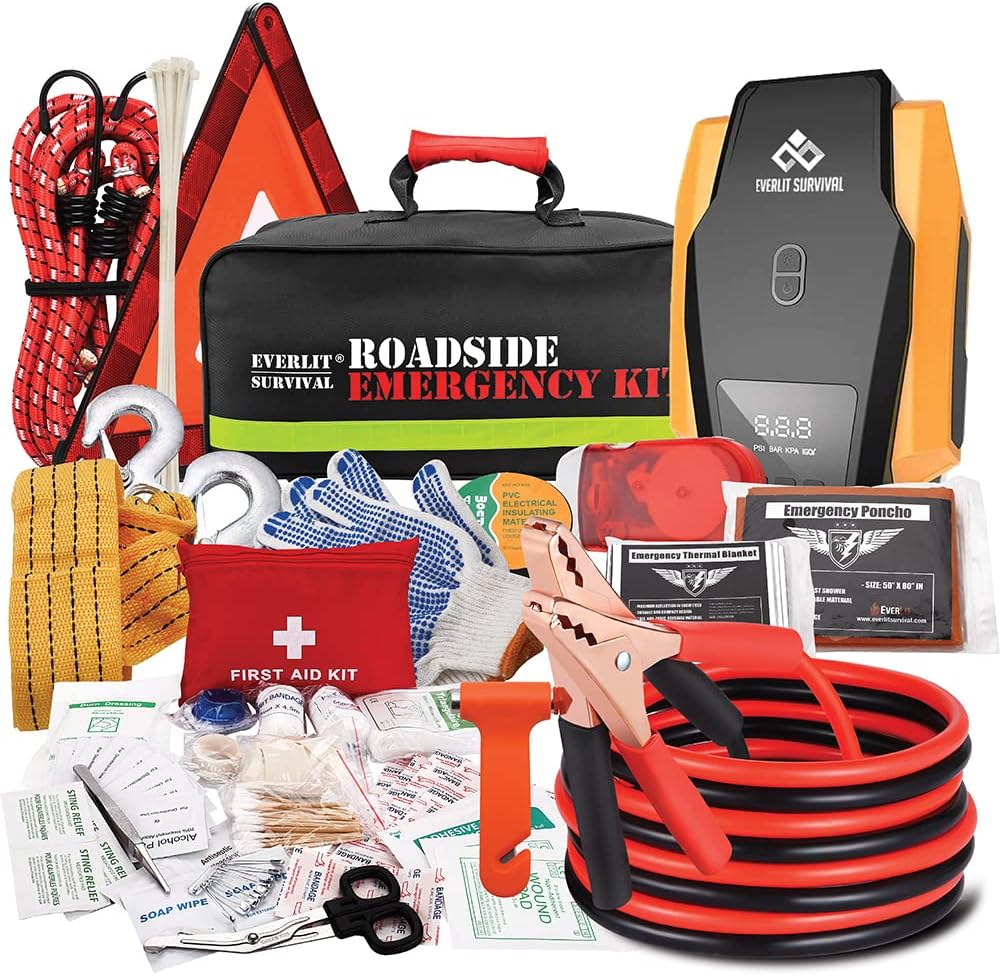
The Everlit Road Guardian emergency kit is designed for roadside breakdowns, combining essential safety gear and roadside tools in one compact bag. It includes a digital 12V auto tire inflator with preset and auto shutoff, plus 12-foot 8-gauge jumper cables to get you moving again. You also get a full 108-piece first aid kit, reflective warning tools, safety gloves, and emergency convenience items for safer travel.
Maintaining Tire Health for Winter Performance
Tires are your Sonata’s only contact with the road, so winter safety starts with pressure, tread, and condition. The National Highway Traffic Safety Administration recommends checking tires at least once a month and before long trips, inspecting tread and sidewalls, and using the vehicle manufacturer’s recommended pressure.
- Check pressure cold: Measure tire pressure after the car has been parked for at least three hours.
- Use the right PSI: Follow the driver-side door-jamb placard or owner’s manual, not the maximum PSI printed on the tire sidewall.
- Expect pressure loss: As a rule of thumb, tires can lose about 1 PSI for every 10°F temperature drop, according to Bridgestone’s tire maintenance guide.
- Inspect tread: The legal minimum is commonly 2/32 inch, but winter traction can become poor before that. Replace worn tires before winter if tread is low or uneven.
- Watch for damage: Cuts, bulges, punctures, cracking, or vibration should be checked by a tire professional.
- Rotate on schedule: Follow Hyundai’s maintenance schedule or your tire professional’s guidance to promote even wear.
Essential Driving Techniques for Icy Roads
On ice, the safest move is usually to do less: less speed, less steering angle, less throttle, and less brake force. Make every change early and smoothly.
Adjust Speed Accordingly
Slow down before you reach bridges, curves, intersections, hills, and shaded areas. Posted speed limits are for good conditions, not ice. If traffic is moving faster than feels safe, stay in the right lane where possible and let faster drivers pass.
Maintain Safe Distance
Leave a much larger gap than you would on dry pavement. The National Weather Service says stopping distances can increase two to six times on snow and ice. In real driving, aim for at least 6–8 seconds behind the vehicle ahead, and increase that gap when visibility is poor or traffic is downhill.
Use ABS Brakes Correctly
Most modern Hyundai Sonata models have an anti-lock braking system. If ABS activates, you may feel vibration or pulsing through the brake pedal. Keep firm, steady pressure on the brake and continue steering. Do not pump ABS brakes; the system is already modulating brake pressure for you.
Keep ESC and Traction Control On
Hyundai’s Electronic Stability Control guidance explains that ESC can reduce engine power or apply braking control to help maintain stability and traction. For normal icy driving, leave ESC and traction control on.
Use ESC OFF only briefly if you are stuck in snow or mud and need a little wheel movement to rock the car free. Turn ESC back on once you are moving again. ESC does not make it safe to drive too fast for road conditions.
Make Turns Gently
Brake before the curve while the Sonata is still straight. Ease off the brake as you turn, keep both hands on the wheel, and accelerate only after the car is pointed where you want to go. Sharp steering can overload the front tires and cause understeer, where the car keeps sliding straight.
Climb and Descend Hills Carefully
Build only enough momentum before a hill to keep moving. Do not floor the accelerator on the incline. When descending, slow before the hill, use gentle brake pressure, and leave extra room at the bottom in case the road is polished or icy.
What to Do if Your Sonata Hits Black Ice
If your Hyundai Sonata suddenly feels light, quiet, or disconnected from the road, you may be on black ice. Stay calm and avoid abrupt inputs.
- Ease off the accelerator. Do not jab the brake or throttle.
- Look where you want to go. Your hands tend to follow your eyes.
- Keep the steering smooth. Avoid quick corrections.
- If braking is necessary, brake gently. With ABS, use firm steady pressure if you must stop hard.
- Wait for traction to return. Once the tires grip again, continue at a lower speed.
- Move to a safe place if needed. If conditions are worse than expected, turn around or stop somewhere safe.
Warning: Do not brake hard, accelerate hard, or yank the steering wheel while sliding on ice. Sudden inputs can turn a small slide into a spin.
Preparing Your Hyundai Sonata for Winter Conditions
Before winter weather arrives, give your Sonata a basic cold-weather inspection. Small issues that are easy to ignore in fall can become serious when temperatures drop.
- Battery: Cold weather reduces battery power. Have an older or weak battery tested before the first hard freeze.
- Coolant: Make sure the cooling system has the correct antifreeze mixture for your climate.
- Washer fluid: Use winter-grade washer fluid with de-icer and keep the reservoir full.
- Wipers: Replace streaking or torn blades. Consider winter blades if you drive in heavy snow or freezing rain.
- Lights: Check headlights, brake lights, turn signals, hazard lights, and interior lights.
- Defrosters: Confirm front and rear defrosters clear glass effectively.
- Recalls: Use NHTSA’s recall lookup or Hyundai owner resources to check for open safety recalls by VIN.
Also keep your fuel tank close to full when storms are expected. If you drive a Sonata Hybrid, keep the battery charged and expect cold weather to reduce efficiency.
[Products Worth Considering]

The Airmoto portable tire inflator quickly and accurately fills car, truck, SUV, motorcycle, and bicycle tires up to 120 PSI with auto shut-off when your target pressure is reached. Its large LCD, multi-unit pressure display, and digital gauge make it easy to dial in settings and verify readings, while the built-in LED flashlight helps in low light. The included polyurethane hard carrying case and storage mesh pocket keep the inflator and accessories protected and organized.

Vigorder rubber cement glue delivers superior adhesion and cures quickly within about 30 seconds for seamless rubber bonding. Once cured, it helps provide a strong, durable, waterproof seal that holds up to vehicle weight, pressure, and heat. Suitable for cars, motorcycles, trucks, bicycles, and off-road tires, it’s designed for emergency patch and maintenance repairs.

The GOOLOO A3 3000A 12V jump starter delivers fast, reliable starts for dead vehicles while also providing a built-in 150 PSI cordless tire inflator. It supports gas and diesel engines up to 9.0L/6.5L and includes multiple inflation modes with smart shutoff and an LED display for convenient pressure control. A high-efficiency BMS provides 10 safety protections, and the unit also functions as a flashlight and device-charging power bank.
Essential Emergency Kit Items for Your Hyundai Sonata
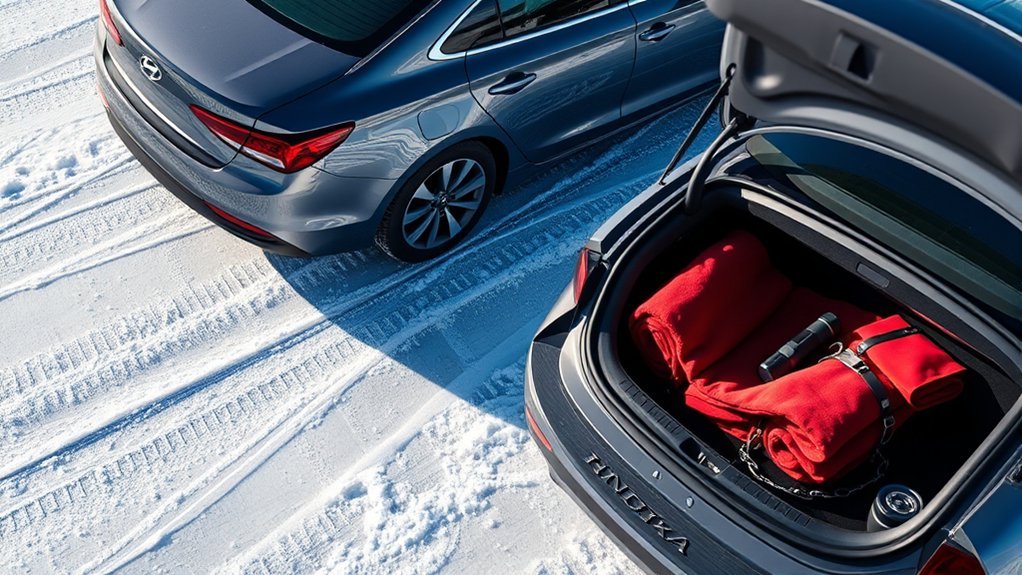
A winter emergency kit matters because a short trip can become a long delay if traffic stops, a storm worsens, or your Sonata gets stuck. Pack the kit before you need it.
- Ice scraper and snow brush
- Small snow shovel
- Blanket, gloves, hat, and extra warm layers
- Flashlight with extra batteries
- Jumper cables or a charged jump starter
- Phone charger and power bank
- Water and non-perishable snacks
- First aid kit and necessary medicine
- Warning triangles, flares, or emergency markers
- Sand, kitty litter, or traction mats for a stuck vehicle
- Basic tire-pressure gauge
Warning: If you are stranded and run the engine for heat, first make sure the exhaust pipe is clear of snow. Run the engine only intermittently and crack a window slightly to reduce carbon monoxide risk.
[Products Worth Considering]

This roadside assistance kit helps drivers and passengers in urgent situations after an accident or breakdown, providing practical support while waiting for help. It includes a lightweight, compact tire inflator for fast inflation of standard vehicle tires, plus reinforced jumper cable protection for safer handling. Ideal for winter weather, road trips, camping, and travel, with everything stowed neatly in a trunk bag.

This manual duck head tire changer kit makes tire installation and removal simpler by letting you embed the duck head into the tire with applied pressure. The integrated design and durable steel construction help reduce friction and improve efficiency and safety during use. Suitable for 16–21 inch wheels, it’s convenient for cars, trucks, SUVs, and ATV tires, with 24-hour after-sales support.

The Big Rig Defense Tire Thumper is a truck tire pressure checker that lets you quickly check multiple tires by giving them a firm whack. Listen for a reassuring thump and feel the stick bounce when a tire is fully inflated, helping you get back on the road safely. It features a comfortable, glove-friendly handle and a secure wrist strap for confident use on busy routes.
When to Stay Home or Turn Around
The safest way to handle ice is sometimes not to drive. Postpone nonessential trips when freezing rain, ice storms, snow squalls, or untreated roads are expected. If you are already on the road and conditions deteriorate, find a safe place to stop instead of pushing through.
Turn around or delay travel if you notice vehicles sliding, emergency crews blocking roads, plows struggling to keep up, or repeated icy patches. A Hyundai Sonata with winter tires and stability control is still limited by tire grip and visibility.
Frequently Asked Questions
How do I improve traction on ice in a Hyundai Sonata?
Use four matching winter tires, keep them inflated to the Sonata’s recommended cold PSI, replace worn tires before winter, and drive gently. Avoid sudden throttle, braking, or steering inputs. Traction control can help manage wheelspin, but it cannot create grip where the road is pure ice.
How should I drive a Hyundai Sonata in snow?
Clear the car fully, turn on headlights, accelerate slowly, brake early, and leave extra following distance. Use winter tires in areas with regular snow or ice. Avoid cruise control, avoid quick lane changes, and slow before curves instead of braking hard during the turn.
Should I keep traction control on in ice?
Yes. Keep traction control and ESC on during normal icy driving. Turn ESC OFF only briefly if the car is stuck in snow or mud and you need to rock it free. Once the Sonata is moving, turn ESC back on.
How do I avoid slipping on an icy road?
Slow down before icy areas, keep a large following distance, avoid cruise control, and use smooth steering, throttle, and braking. Watch for glossy pavement, bridge decks, shaded curves, and refrozen meltwater. If the car starts to slide, ease off the accelerator and steer gently where you want to go.
Do winter tires matter if my Sonata has ABS and ESC?
Yes. ABS and ESC help manage braking and stability, but they depend on tire grip. Winter tires provide the cold-weather traction those systems need to work more effectively on snow, slush, and ice.
What should I do if my Sonata gets stuck in snow?
Clear snow from around the tires and exhaust pipe, sprinkle sand or kitty litter near the drive tires, straighten the wheels, and gently rock the car forward and backward. If needed, turn ESC OFF briefly while freeing the car, then turn it back on once you are moving.
Conclusion
Staying safe on icy roads in a Hyundai Sonata comes down to preparation, patience, and smooth control. Understand where black ice forms, use proper winter tires when conditions call for them, check tire pressure and tread, keep ESC on for normal driving, and leave far more room than you think you need. If the road looks questionable, slow down early—or skip the trip until conditions improve.
Sources
- National Highway Traffic Safety Administration: Winter Weather Driving Tips — winter driving, tire checks, emergency kit, ABS, and vehicle preparation guidance.
- National Weather Service: Ice Storms and Black Ice — black ice definition, formation, and bridge/overpass risk.
- Federal Highway Administration: Snow and Ice Road Weather Impacts — weather-related crash statistics and road-weather impacts.
- Hyundai Owner’s Manual: Electronic Stability Control — ESC/traction-control behavior and ESC OFF use.
- Transport Canada: Testing the Benefit of Winter Tires — winter-tire braking demonstration on icy conditions.
- Bridgestone Tire Maintenance and Safety Manual — cold-weather tire-pressure loss and tire-care guidance.