

If your check engine light is on but no codes appear, first confirm the light stays on with the engine running and make sure you are scanning the engine or powertrain system in generic OBD-II mode. A steady MIL normally has diagnostic information behind it, so “no codes” can point to a scan-tool, communication, module, or instrument-panel issue rather than simply a pending fault.
Quick Answer
A check engine light that stays on while the engine runs normally should have OBD-II diagnostic information associated with it. If your reader shows zero codes, verify MIL command status, scan current, pending, and permanent DTCs, avoid clearing anything, inspect the gas cap and electrical connections, and try a better scan tool or professional diagnostic scan.
Key Takeaways
- Brief check-engine-light illumination with the key on and engine off is normally a bulb or function check. Diagnose a light that remains on with the engine running.
- A pending DTC usually does not explain a steady MIL by itself. When a qualifying malfunction is confirmed, OBD-II normally stores a confirmed fault code and illuminates the MIL.
- Read the scanner’s MIL commanded ON/OFF status as well as current, pending, permanent, freeze-frame, and readiness information.
- Check the gas cap, battery connections, grounds, wiring, connectors, and scan-tool communication before replacing sensors.
- Do not clear codes or disconnect the battery just to turn the light off because you can erase useful diagnostic evidence and reset readiness monitors.
- If the check engine light is flashing or the engine is shaking, misfiring, stalling, or losing power, minimize driving and have the vehicle diagnosed promptly.
At a Glance
| Time Required | About 10–30 minutes for basic checks; deeper diagnosis can take longer |
| Difficulty | Easy to moderate for initial checks |
| Tools Needed | OBD-II scan tool, flashlight, and optionally a digital multimeter |
| Cost | No added cost if you already own the tools; professional diagnostic fees vary by shop and vehicle |
What a Check Engine Light Means
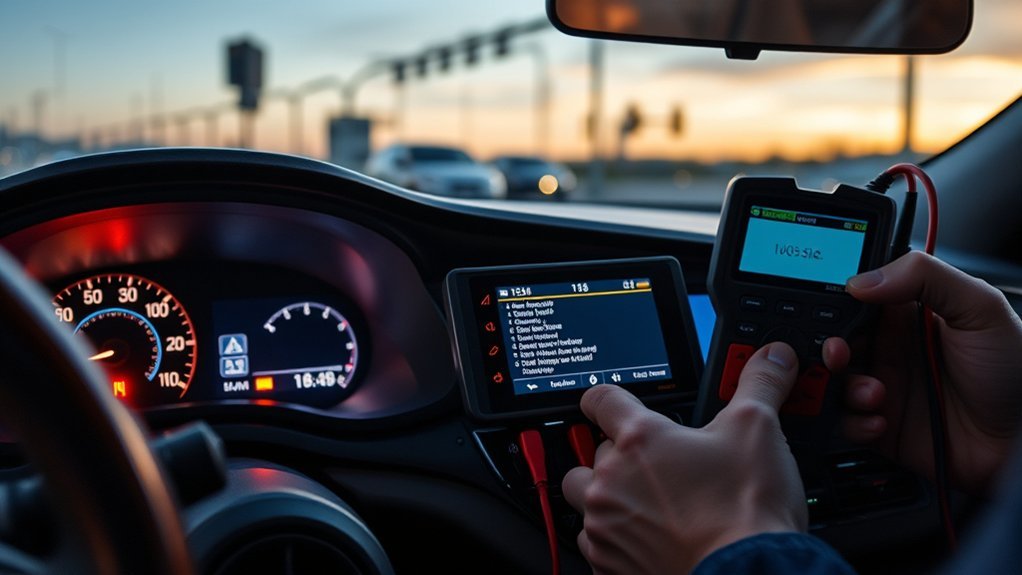
The Check Engine Light, also called the Malfunction Indicator Light (MIL), is part of the vehicle’s onboard diagnostic system. On OBD-II vehicles, the system monitors emission-related components and other powertrain conditions and records diagnostic information when qualifying faults are detected.
The California Air Resources Board’s OBD-II guidance explains that the system illuminates a warning lamp when it detects a malfunction and stores information that can help a technician diagnose the problem.
You should treat the light as a diagnostic alert, not as proof that a specific sensor or component has failed. A trouble code identifies the system or condition the computer detected; it does not automatically prove which part should be replaced.
It is also important to separate normal bulb-check behavior from a real warning. When you switch the ignition on without starting the engine, the MIL normally illuminates briefly to show that the lamp works. The concern is a light that remains illuminated after the engine starts.
A dashboard MIL that is physically on and a scanner reporting “MIL commanded on” are related checks, but they are not always the same thing.
EPA OBD inspection guidance recognizes unusual cases where the instrument-panel MIL can remain illuminated even when the OBD computer has not commanded the light on or stored a normal MIL-triggering DTC. A communication problem between the powertrain computer and instrument cluster is one possible reason.
Note: Make sure you are looking at the actual check-engine/MIL symbol. A maintenance reminder, service reminder, ABS light, traction-control light, transmission warning, or other dashboard message may use a different diagnostic system and may not produce a standard engine DTC.
Common Causes of No-Code CELs
If the Check Engine Light is on but your scanner shows no codes, do not assume the fault simply disappeared before it could be stored. A steady MIL normally has diagnostic information associated with the OBD-II fault logic.
The first possibility is that the light is only illuminated during the normal key-on/engine-off check. If it goes out after the engine starts, you may not have an active CEL problem at all.
If the light remains physically illuminated while the engine runs, check the scanner’s MIL commanded status. This is one of the most useful clues:
- Physical MIL ON + scanner says MIL commanded ON: the OBD system believes a qualifying fault exists. Recheck current or confirmed DTCs and make sure the reader is communicating correctly.
- Physical MIL ON + scanner says MIL commanded OFF: the lamp may be illuminated because of an instrument-cluster, serial-data, or module-communication problem rather than a normal MIL-triggering powertrain DTC.
- MIL OFF + pending DTC present: the system has detected a condition that has not necessarily matured into a confirmed MIL-on fault.
- MIL OFF + historical or permanent DTC present: the original condition may no longer be commanding the lamp, but diagnostic information can remain in memory.
A basic OBD-II reader may also provide less information than an enhanced professional tool. Generic OBD mode should still be used to check emissions-related MIL status and DTC information, while an enhanced scanner may provide additional manufacturer-specific data, network codes, transmission information, and other module details.
Electrical or communication faults can also interfere with the scan. Loose terminals, damaged wiring, connector corrosion, missing module power or ground, or a data-network problem can produce confusing results even when a sensor itself is not defective.
Pro Tip: Before clearing anything, photograph or record the physical MIL status, commanded-MIL status, current/confirmed DTCs, pending DTCs, permanent DTCs, freeze-frame information, and readiness-monitor status. That snapshot can be more valuable than repeatedly rescanning after information has been erased.
Check the Gas Cap, Battery, and Wiring First
Start with simple checks that do not require replacing parts. Make sure the gas cap is fully secured and inspect its seal for obvious cracks or damage. The U.S. EPA’s Check Engine Light guidance specifically lists a loose or missing gas cap as one condition OBD-II can detect.
Next, inspect the battery terminals and major grounds for looseness or corrosion. A weak electrical supply or poor connection can interfere with module operation or scan communication, but do not assume that a weak battery is automatically the reason for a CEL with no codes. Test the charging and starting system according to the vehicle manufacturer’s specifications if you suspect a voltage problem.
Then inspect accessible wiring and connectors around the engine, emissions components, powertrain control module, and data link connector. Look for chafed insulation, moisture, corrosion, loose terminals, damaged pins, disconnected plugs, or evidence of previous repairs.
| Component | What to Inspect | Possible Result |
|---|---|---|
| Gas cap | Seal, fit, correct tightening | Evaporative-system leak fault |
| Battery | Condition, terminals, connections | Low-voltage or communication problems |
| Wiring | Fraying, chafing, moisture, corrosion | Signal, power, ground, or network fault |
| Connectors | Tightness, pins, corrosion, debris | Intermittent electrical or communication problem |
You can reduce repeat electrical problems by maintaining secure battery connections, protecting wiring from abrasion and moisture, and repairing damaged connectors correctly instead of repeatedly clearing warning lights.
[Products Worth Considering]

The Big Rig Defense Tire Thumper is a truck tire pressure checker that lets you quickly check multiple tires by giving them a firm whack. Listen for a reassuring thump and feel the stick bounce when a tire is fully inflated, helping you get back on the road safely. It features a comfortable, glove-friendly handle and a secure wrist strap for confident use on busy routes.

This TPMS relearn tool helps you quickly activate, match, and reset GM tire pressure sensors to keep the vehicle monitoring system working properly. It clears tire pressure alarms and dashboard warning lights after sensor replacement or tire rotation, and supports learning for common 315/433 MHz TPMS sensors. Designed for simple one-button operation, it can help you avoid unnecessary trips to repair shops.

Keep your tires properly inflated with this analog VONDIOR tire pressure gauge, designed for fast, easy readings without batteries. The swiveling, two-axis hose and large glow dial help you measure at any tire angle with instant visibility. Built with a protective rubber shield, it supports durable, low-maintenance use for cars and trucks.
How to Diagnose a CEL With No Codes
If the check engine light stays on while the engine is running but your scanner shows no codes, work through the following checks in order. Do not start by replacing sensors or resetting the ECU.
- Confirm when the light is actually on. Turn the ignition on and observe the bulb check, then start the engine. Brief KOEO illumination is normal. Continue troubleshooting if the MIL remains on while the engine runs.
- Confirm it is the real MIL. Check the owner’s manual if the symbol or wording is unclear. Do not confuse a maintenance reminder or another system warning with the check-engine lamp.
- Connect the scanner and verify communication. Use generic OBD-II or powertrain mode first. If the scanner cannot identify the vehicle or communicate normally, inspect the data link connector, related fuses, power, ground, and network communication.
- Read MIL command status. Look for a parameter such as “MIL status,” “MIL commanded,” or similar. EPA inspection procedures use this status as a key OBD diagnostic check.
- Read every relevant DTC category. Check current or confirmed DTCs, pending DTCs, and permanent DTCs. Also save freeze-frame information when available.
- Check readiness monitors. Multiple “not ready” monitors can indicate that codes were recently cleared, the battery was disconnected, or the vehicle has not completed enough operating conditions for its self-tests.
- Do not clear anything yet. EPA guidance recommends preserving DTCs and freeze-frame information for diagnosis. Clearing memory can remove evidence and reset readiness status.
- Inspect the gas cap. Make sure it is correctly tightened and the seal is not obviously damaged.
- Inspect battery connections, grounds, wiring, and connectors. Look for poor electrical connections or damage that could affect either the monitored system or communication between modules.
- Try a capable second scan tool. If MIL status is commanded ON but a simple reader still reports zero DTCs, verify the result with another SAE-compatible tool or an enhanced professional scanner.
- Scan other modules when appropriate. An enhanced tool can reveal manufacturer-specific or network information that a basic code reader may not display.
- Recheck after normal operation only if the vehicle is safe to drive. Record whether the light appears during cold start, acceleration, cruising, idle, or another repeatable condition. Do not perform a drive-cycle experiment if the MIL is flashing or the engine is running badly.
The EPA’s OBD inspection guidance specifically calls for checking vehicle readiness, commanded MIL status, and DTCs in generic OBD mode and advises against clearing diagnostic information before repair work.
Warning: If the check engine light is flashing, especially with shaking, misfiring, major power loss, or a strong abnormal odor, minimize driving and arrange prompt diagnosis. A flashing MIL can indicate a malfunction severe enough to damage the catalytic converter. Do not continue a test drive simply to make a code appear.
[Products Worth Considering]

The GOOLOO A3 3000A 12V jump starter delivers fast, reliable starts for dead vehicles while also providing a built-in 150 PSI cordless tire inflator. It supports gas and diesel engines up to 9.0L/6.5L and includes multiple inflation modes with smart shutoff and an LED display for convenient pressure control. A high-efficiency BMS provides 10 safety protections, and the unit also functions as a flashlight and device-charging power bank.

Replace your worn or missing TPMS sensors with pre-programmed, direct-fit sensors for compatible Ford, Lincoln, and select Mazda models. Each sensor comes ready to activate with a scan tool, helping restore accurate tire pressure monitoring and trouble-free installation. Built with a long-life CR2032 battery and tested before factory release, this set provides dependable performance with a one-year warranty.

Upgrade your Toyota tire setup with these corrosion-resistant, leak-proof valve stem caps designed to help protect the valve core from water, snow, and road grime. The caps feature a snug rubber seal and durable copper alloy construction to resist rust and oxidation while maintaining stable tire pressure. Ideal for replacing worn original caps and keeping your wheels looking clean and stylish.
When a Mechanic Should Scan It
Have a mechanic perform a deeper diagnostic scan when the Check Engine Light remains on with the engine running but a basic reader continues to report no useful DTC information.
A technician with an enhanced scan tool can compare the physical warning lamp with commanded MIL status, scan additional control modules, examine live data, inspect network communication, retrieve manufacturer-specific information, and perform circuit testing that a simple handheld reader cannot.
A professional diagnosis is especially useful when the scanner reports MIL commanded ON but does not display the associated code, because standardized OBD-II operation normally provides diagnostic information for MIL-triggering faults.
If the CEL turns off and later returns, document what the vehicle was doing when it reappeared. Intermittent problems can be easier to isolate when you record engine temperature, speed, load, weather, fuel level, rough idle, stalling, fuel odor, shifting problems, or other symptoms.
You should also report any performance loss, rough shifting, poor fuel economy, difficult starting, misfiring, or stalling. These symptoms help the technician decide which circuits, sensors, fuel or ignition systems, and control modules need testing.
A flashing check engine light deserves faster attention than a steady light. The California Air Resources Board notes that blinking can indicate a malfunction capable of damaging the catalytic converter.
With the right equipment and a methodical test plan, a technician can determine whether the problem is a circuit, sensor, module, communication network, instrument cluster, or another system rather than guessing and replacing parts.
[Products Worth Considering]

Steelman white tire marking crayons provide high-contrast, semi-permanent marks for repairing and inspecting tires and equipment. They write on wet or dry, smooth or coarse surfaces including rubber, metal, glass, and wood, making them ideal for puncture location and damage outlining. The lead- and zinc-free crayons resist weather and fading yet wipe away when you no longer need the marks.

The Trivd Frol 1/2" air impact wrench delivers high performance torque up to 1500 ft-lbs with a twin hammer impact mechanism for strong, balanced blows. It features an ergonomic grip, compact lightweight design, and quick-stop control with 3 forward speeds up to 8000 RPM plus a reverse speed. Built for demanding automotive repair and tire shop work, the rear exhaust helps keep debris away from the surface.

Keep your Milwaukee M18 inflator 2848-20 and accessories protected with a custom-fit, foam-insert hard case. The weatherproof IP67 design helps guard against water, dust, and debris for jobsite durability and safer storage. Includes organized space for the inflator, multiple batteries, charger, and essential tools for quick roadside readiness.
Frequently Asked Questions
Why Is My Check Engine Light on but No Codes and I Have No Symptoms?
A vehicle can have an emissions-related problem without obvious drivability symptoms. However, if the MIL stays on while the engine runs and your scanner shows no codes, verify commanded MIL status and make sure the reader is checking the engine or powertrain in generic OBD-II mode. If necessary, confirm the result with a better scan tool before assuming the light is false.
Why Do I Get Codes but My Engine Light Is Not On?
The computer can store diagnostic information without currently commanding the MIL on. A pending DTC may represent an initial fault detection that has not matured into a confirmed MIL-on fault. Historical or permanent diagnostic information can also remain after the warning light has gone out.
How Do I Get Rid of a False Check Engine Light?
Do not assume the light is false and immediately erase it. First confirm that the actual MIL stays on with the engine running, read commanded MIL status and all available DTC information, inspect simple causes such as the gas cap, and diagnose any electrical or communication problem. Clear diagnostic memory only after you have recorded the information and completed the appropriate repair.
Will a Check Engine Light Go Away on Its Own if You Fix the Problem?
Yes. Depending on the fault and the vehicle’s OBD strategy, the MIL can turn itself off after the malfunction stops recurring for the required operating cycles. EPA guidance notes that a light can go out after a problem such as a loose gas cap is corrected. Stored or permanent diagnostic information may remain even after the lamp turns off.
Can a Weak Battery Cause a Check Engine Light With No Codes?
A weak battery, loose terminal, bad ground, or unstable electrical supply can interfere with vehicle electronics or scan communication, so checking the electrical system is reasonable. However, a weak battery should not automatically be blamed for a steady MIL with zero codes. Verify the scan results and diagnose the charging, power, ground, and communication circuits as needed.
Can I Drive With the Check Engine Light On but No Codes?
If the light is steady, the vehicle runs normally, and there are no serious symptoms, arrange diagnosis soon rather than ignoring it. If the light is flashing or the vehicle is shaking, misfiring, stalling, overheating, losing substantial power, or otherwise running poorly, minimize driving and seek prompt professional help.
Conclusion
If your check engine light is on but no codes appear, start by confirming that the MIL actually remains on with the engine running. Then check the scanner’s commanded-MIL status, current or confirmed codes, pending codes, permanent codes, freeze-frame information, and readiness monitors before clearing anything.
Inspect the gas cap, battery connections, grounds, wiring, connectors, and scan communication next. If the physical MIL remains on but commanded status is off, an instrument-cluster or communication problem becomes more likely. If MIL status is commanded on but your basic reader still shows zero DTCs, confirm the result with a better scanner or professional diagnostic equipment.
Do not replace parts simply because the light is on, and do not erase diagnostic information just to make the warning disappear. A methodical scan and electrical inspection gives you a much better chance of finding the actual fault without unnecessary repairs.
Sources
- U.S. EPA — Performing Onboard Diagnostic System Checks as Part of a Vehicle Inspection and Maintenance Program — supports KOEO bulb-check behavior, generic OBD scanning, MIL command status, DTC retrieval, readiness checks, and preserving diagnostic information.
- U.S. EPA — What To Do With the Check Engine Light — supports loose-gas-cap guidance, flashing-MIL precautions, professional diagnosis, and automatic MIL extinguishing after a fault stops recurring.
- California Air Resources Board — OBD II Systems Fact Sheet — supports the purpose of OBD-II, warning-light behavior, diagnostic information storage, and flashing-MIL catalyst-damage risk.
- California Air Resources Board — OBD II Malfunction and Diagnostic System Requirements — supports pending-versus-confirmed fault-code logic and MIL illumination requirements.
