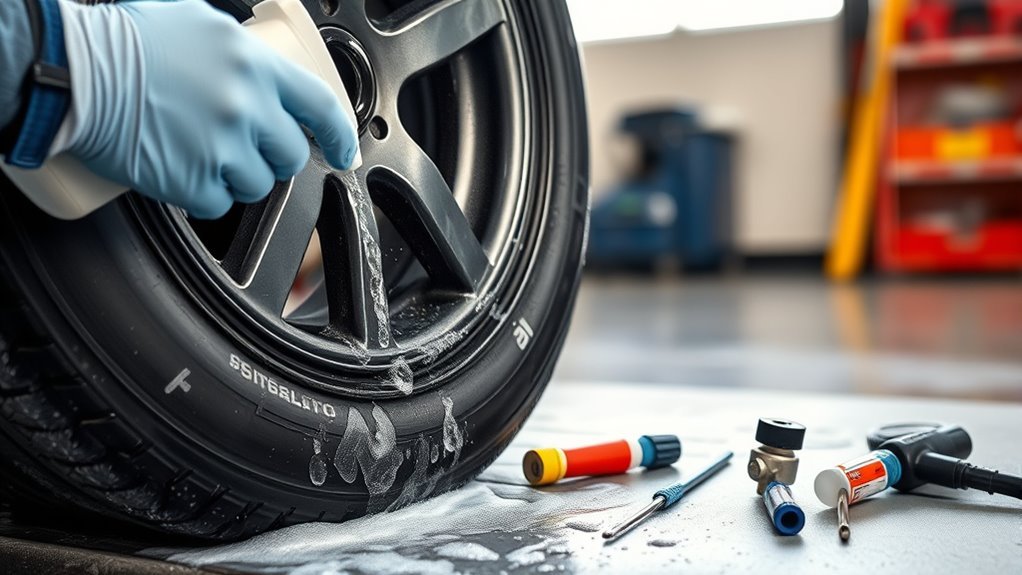
A slow tire leak can turn a short drive into a roadside problem if you ignore it for too long. You may only lose a few pounds per square inch each month, but that steady drop can harm handling, tire life, and safety. Start with a cold pressure check, inspect the valve, tread, bead, and rim, then use soapy water to find the leak and choose the right repair.
Quick Answer
You can often fix a slow tire leak if it comes from a valve stem, small tread puncture, bead leak, or minor rim corrosion. Check cold tire pressure, spray soapy water on likely leak points, and watch for bubbles. Use a plug or patch only for safe tread punctures, and see a tire technician for sidewall damage, large punctures, cracked rims, or leaks that return.
Key Takeaways
- Check tire pressure when the tire feels cold so heat does not skew the reading.
- Use soapy water on the valve, tread, bead, and rim to find bubbles from escaping air.
- Repair only safe tread punctures, and avoid plugging sidewalls or large holes.
- Use tire sealant as a short-term aid, not as a permanent repair.
- Call a tire professional if the leak returns or you see rim damage, cracks, or bulges.
How to Tell a Slow Tire Leak From Normal Pressure Loss
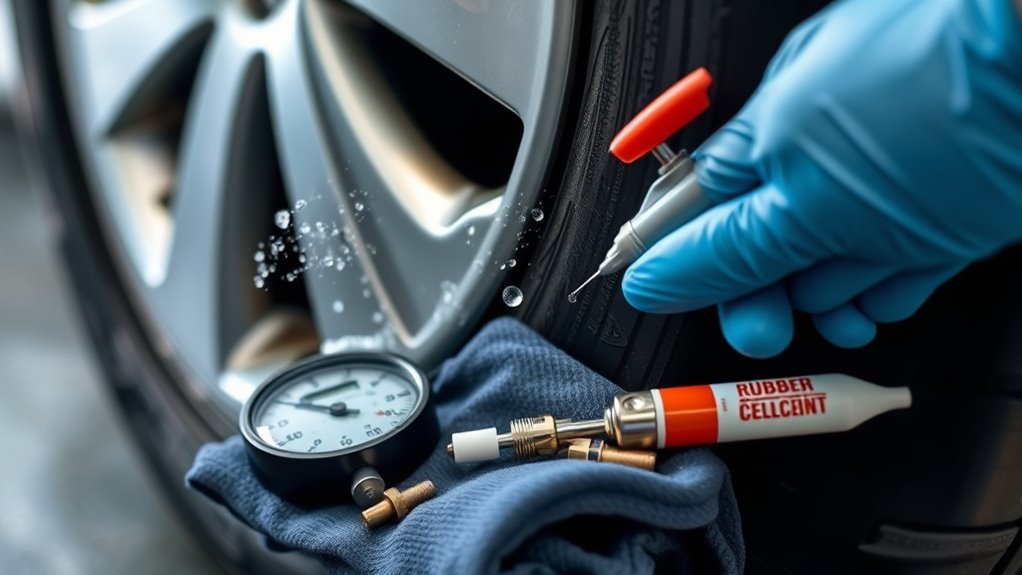
You can spot a slow leak by tracking tire pressure with a reliable gauge and your tire pressure monitoring system (TPMS). A true slow leak often shows a steady drop, such as about 1 to 3 PSI per month, instead of a one-time change from temperature.
Inspect the tire for nails, cuts, valve-stem damage, bead gaps, and rim corrosion. Spray soapy water on suspect areas and watch for bubbles, which show air escaping.
Warning: Do not drive far on a tire that sits about 25% below the recommended pressure, because it can overheat and fail.
If the TPMS warning light keeps coming back, investigate it instead of treating it as normal pressure drift. Consistent measured drops point to a leak that needs repair.
What You’ll Need Before You Inspect the Tire
Gather the right tools before you touch the tire. Wear gloves and safety goggles, then park on a flat, stable surface and set the parking brake.
- Tire pressure gauge
- Soapy water solution in a spray bottle
- Valve stem tool
- Portable air compressor or access to an air pump
- Flashlight for checking the tread, bead, and rim
Confirm that the tire feels cool before you measure pressure. Heat can raise the reading and make the leak look smaller than it is.
Compare the current pressure with the vehicle maker’s recommended pressure, usually listed on the driver-side door placard. Record the baseline so you can track any drop after inspection or repair.
Note: Use the pressure on the vehicle placard, not the maximum pressure molded into the tire sidewall.
Locate the Leak: Valve, Tread, Bead, Rim
Check four common leak sources before you start repairs: the valve, tread, bead, and rim. This order helps you find simple causes first and avoid extra work.
- Check the valve first. Look for corrosion, cracks, loose cores, or damage around the valve stem.
- Inspect the tread second. Look for nails, screws, glass, cuts, or small punctures in the main tread area.
- Check the bead next. Spray the area where the tire meets the rim and look for bubbles.
- Inspect the rim last. Look for bends, cracks, curb damage, or corrosion that can break the air seal.
Spray soapy water on each area and wait a few seconds. New bubbles that keep forming show the leak point.
[Products Worth Considering]

The TYAMATE TM8 solar-powered wireless TPMS delivers real-time tire pressure and temperature monitoring with six alarm modes for safer driving. A vibrant color LCD display shows readings clearly while windshield mounting keeps it hands-free and easy to read. With a wide 0–87 PSI range, strong 433.92 MHz signal transmission, and quick sensor pairing, it’s ideal for RV, sedan, SUV, MPV, and truck use.

TireJect Off-Road Tire Sealant Kit provides 5-in-1 sealing to help fix tread punctures up to 3/8", sidewall punctures up to 3/8", bead leaks, slow leaks, and minor dry rot on low-speed tires. It permanently seals with liquid rubber, recycled tire particles, and Aramid fibers, making it ideal for flats caused by thorns, nails, and screws. The included dispensing cap attaches to the valve stem for a no-mess installation, along with a metal valve core remover tool and valve stem cap. This kit is for off-road use only.
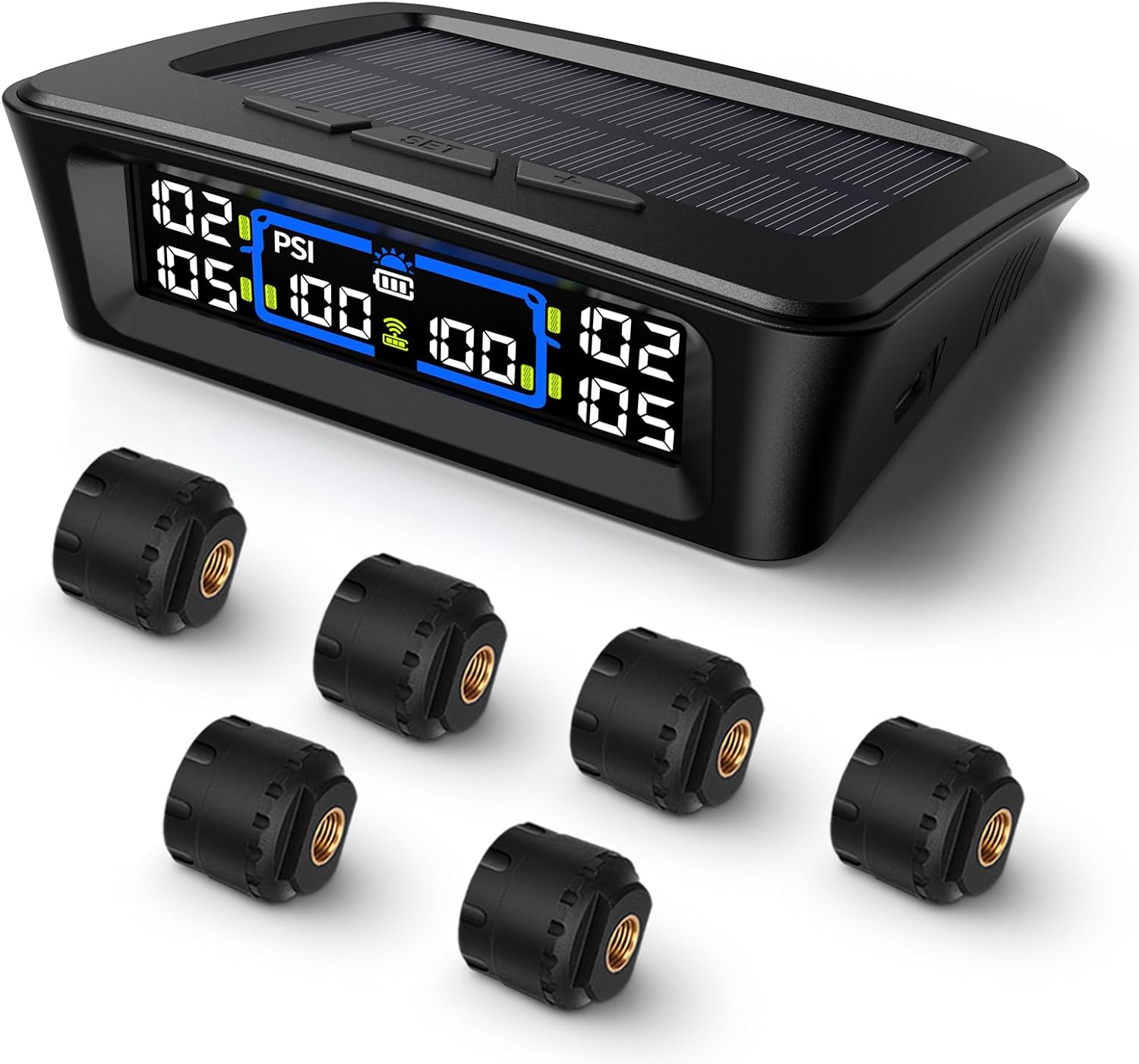
The Tymate TM12 RV TPMS delivers real-time tire pressure and temperature monitoring with a stable 433Hz display for safer long-distance driving. It supports simultaneous monitoring across vehicle and trailer zones, includes six alarm modes for pressure, temperature, leakage, battery, and signal loss, and features easy DIY installation with auto calibration. Power is supplied via USB-C charging or solar recharging, with a wide 0–144 PSI range and up to 50 ft signal coverage for RVs and towable trailers.
Fixing Slow Tire Leaks: Valve, Puncture, Bead and Rim Repairs
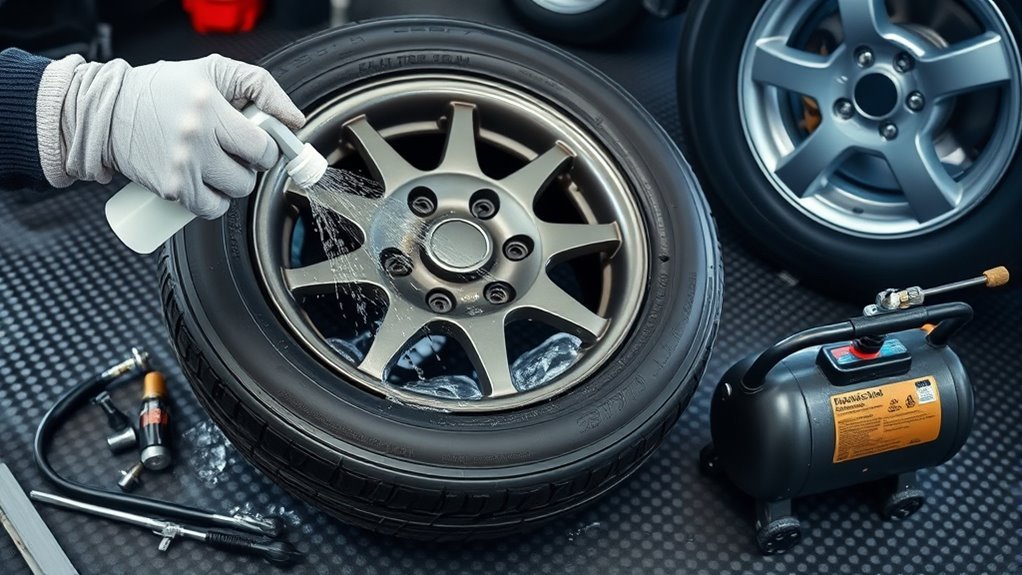
Once you find the leak source, match the repair to the part that failed. Use a repair that suits the tire location and damage size.
| Component | Action | When to seek pro |
|---|---|---|
| Valve stem | Replace | Corrosion or repeated leaks |
| Puncture | Patch or plug | Over ¼ inch or sidewall damage |
| Bead seal | Clean and apply sealer | Persistent seepage |
| Rim damage | Reseat or replace | Cracks or major bends |
Replace a cracked, corroded, or leaking valve stem. For a small tread puncture under ¼ inch, remove the object, clean the hole, and use a proper patch or plug kit.
Do not repair a sidewall puncture or a large tread hole at home. Those failures need a trained technician, and the tire may need replacement.
Clean the bead area if bubbles form where the tire meets the rim. Remove debris and corrosion, then use bead sealer only for minor leaks.
Inspect rim damage with care. Minor corrosion may allow reseating and sealing, but cracks or major bends call for wheel replacement.
[Products Worth Considering]

Protect tire valves from water, dust, and sand to help prevent leaks and support safe driving. These universal stem caps install quickly by hand and feature durable aluminum alloy construction with an inner sealing ring for better air retention. Compatible with cars, SUVs, trucks, motorcycles, and bicycles for everyday convenience.

This TPMS relearn tool helps you quickly activate, match, and reset GM tire pressure sensors to keep the vehicle monitoring system working properly. It clears tire pressure alarms and dashboard warning lights after sensor replacement or tire rotation, and supports learning for common 315/433 MHz TPMS sensors. Designed for simple one-button operation, it can help you avoid unnecessary trips to repair shops.
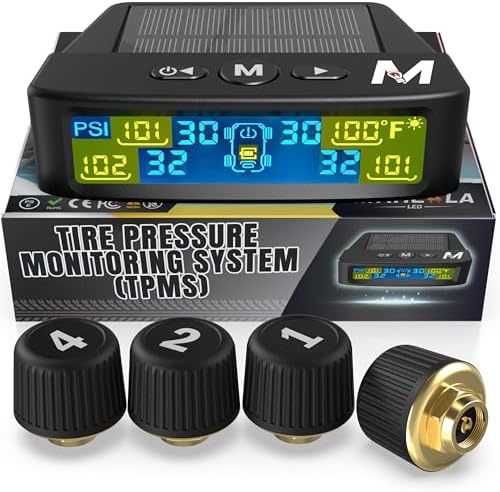
Marcala’s TPMS set of four sensors helps you monitor tire pressure and temperature in real time while driving, with updates every second. The bright color LCD uses auto-dimming for easy viewing, powered by dual solar and USB charging, and offers six alarm modes. Built for trailers, RVs, campers, trucks, and towing setups, the sensors support monitoring 1-4 wheels up to 98 PSI with IP67 waterproof protection.
Temporary Sealants, Spare Tires, and When to See a Pro
A temporary sealant can help with some small tread punctures, but it should not replace a proper repair. Follow the sealant maker’s directions, re-inflate the tire, and drive only as needed to reach a shop.
Sealant may not work on large punctures, sidewall damage, bead leaks, or cracked rims. It can also make later repair messier, so tell the technician that you used it.
- Use sealant only as the product label directs.
- Monitor pressure after sealant use and stop driving if pressure drops fast.
- Switch to a spare tire if the tire loses air quickly or looks unsafe.
- Repair or replace the tire professionally if leakage continues.
- Inspect your spare tire regularly so it works when you need it.
See a pro if you can’t find the leak, the same tire keeps losing air, or you notice vibration after repair. You should also get help for rim damage, sidewall cuts, bulges, or punctures near the tire shoulder.
[Products Worth Considering]

Measure tire tread depth quickly and accurately with this LUMITECO dial gauge that reads in 1/32" increments up to 14/32". The color-coded green/yellow/red zones make it easy to judge tire wear and know when replacement is needed. A rugged, compact design with a protective pouch helps keep the gauge ready for use on cars, trucks, motorcycles, and more.

Mosconly tire repair glue and nail kit delivers an elastic, waterproof bond for quick sidewall puncture repairs. The adhesive cures securely to help prevent peeling, flaking, and tearing, while the included nails support a strong, seamless repair. Designed for easy roadside use, it works on car, motorcycle, bike, and other tire types, with full curing within 24 hours.

AUTOWN’s 68-piece tire repair kit helps you fix punctures and plug flats quickly and effectively. It includes a T-handle and spiral probe tool for easy insertion, while the steel patch and plug materials are designed for strong adhesion and long-lasting airtight performance. The compact case makes it convenient for roadside repairs across a wide range of vehicles.
Common Mistakes When Fixing a Slow Tire Leak
Avoid guessing at the leak source. You can waste time and still miss the real problem if you skip the soapy water test.
- Do not check pressure right after a long drive.
- Do not plug a sidewall puncture.
- Do not ignore corrosion around the bead or valve stem.
- Do not rely on sealant as a long-term fix.
- Do not drive on a tire that keeps dropping pressure after repair.
Small leaks often return when the repair does not match the cause. Recheck pressure the next day and again after a few normal drives.
Frequently Asked Questions
Can a Very Slow Tire Leak Be Fixed?
Yes, you can often fix a very slow tire leak. A valve leak, small tread puncture, bead leak, or minor rim corrosion may only need a targeted repair. Sidewall damage, large punctures, cracks, or repeat leaks need professional service.
What Can I Put in My Tire for a Slow Leak?
You can use tire sealant options like Slime or Fix-a-Flat as short-term aids for some small tread punctures under ¼ inch. Check compatibility with your tire and tire pressure monitoring system before use. Monitor pressure and plan a proper repair as soon as you can.
How Much Does It Cost to Get a Slow Tire Leak Fixed?
You may pay about $10 to $150, depending on the cause, shop rates, and tire condition. A valve stem or tread patch often costs less than rim repair. Ask the shop for a diagnosis before you approve a full tire replacement.
Can You Drive With a Slow Tire Leak?
You can drive a short distance only if the tire still holds the recommended pressure and shows no visible damage. Reinflate it before driving and watch for pressure loss. Do not keep driving if the tire drops fast, looks low, or triggers repeated TPMS warnings.
How Do You Know if the Rim Causes the Leak?
Spray soapy water around the rim edge and valve area. If bubbles form where the tire bead meets the rim, corrosion, dirt, or damage may break the seal. A bent or cracked rim needs professional inspection.
Conclusion
A slow tire leak needs quick attention because a small pressure drop can become a safety problem. Start with a cold pressure check, use soapy water to find the leak, and repair only damage that fits safe repair limits. Replace the tire or wheel when the damage sits in the sidewall, looks structural, or keeps coming back. A steady tire keeps your car safer, smoother, and ready for the next drive.
References
- Tires — National Highway Traffic Safety Administration
- Tire Safety: Everything Rides on It — National Highway Traffic Safety Administration
- Buying and Maintaining Tires — National Highway Traffic Safety Administration