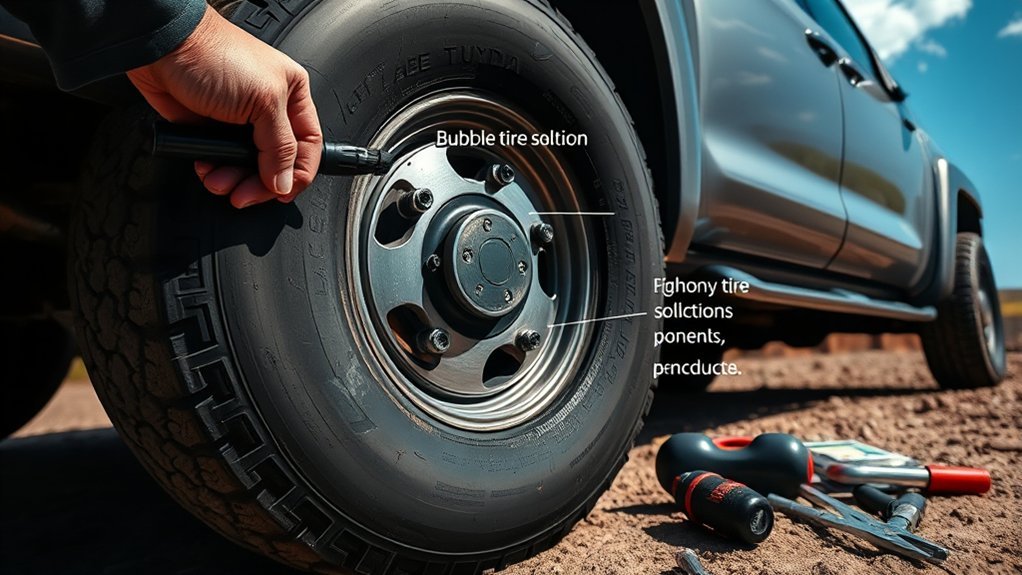
A slow tire leak on your Toyota Tundra usually comes from a small tread puncture, leaking valve core, damaged valve stem, bead-seat leak, rim corrosion, or sidewall damage. Start with a cold tire-pressure check, inspect the tire closely, and use soapy water to find bubbles. Then choose the right repair based on where the air is escaping.
Quick Answer
To fix a slow tire leak in a Tundra, find the leak with cold-pressure checks and soapy water, then repair the exact source. Valve-core leaks may be simple to fix. Bead leaks usually need wheel cleaning. Tread punctures need a proper plug-patch repair, while sidewall or shoulder damage means tire replacement.
Key Takeaways
- Use the PSI on your Tundra’s door-jamb tire label or owner’s manual, not the maximum PSI printed on the tire sidewall.
- Soapy water is the fastest way to confirm leaks at the tread, valve stem, bead, rim, or TPMS sensor area.
- A plug alone is not a proper permanent tire repair; a safe tread puncture repair uses a plug and inner patch after the tire is removed and inspected.
- Do not repair punctures in the sidewall, shoulder, or belt-edge area. Replace the tire or ask a tire shop to inspect it.
- After any repair, inflate the tire cold, retest for bubbles, reset TPMS if your model requires it, and recheck pressure the next day.
At a Glance
| Time Required | 15–30 minutes to diagnose; longer if the tire must be removed or repaired by a shop. |
| Difficulty | Easy for leak diagnosis; moderate to advanced for wheel removal or valve work. |
| Tools Needed | Tire pressure gauge, spray bottle, dish soap and water, chalk or tape, valve-core tool, air compressor, jack and jack stands if removing the wheel. |
| Cost | Low for diagnosis if you already have basic tools; repair cost varies by leak source, tire condition, and shop labor. |
Warning: Do not keep driving on a tire that is visibly low, has sidewall bulges, shows exposed cords, loses air quickly, or triggers repeated TPMS warnings. Install the spare or call roadside help if the tire cannot hold pressure safely.
Common Causes of Slow Tire Leaks in Tundra Vehicles
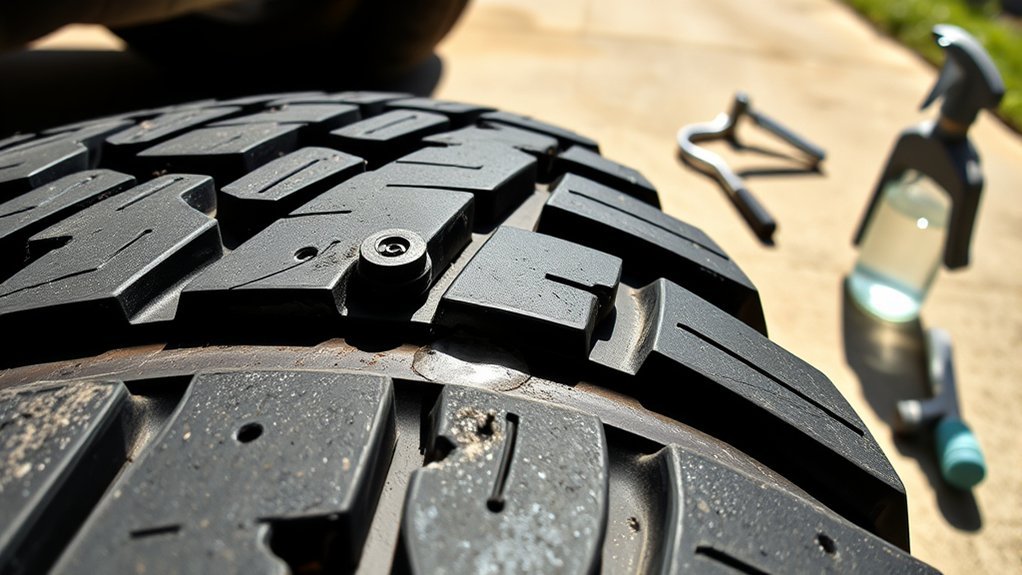
Slow tire leaks in Tundra vehicles often start in places you cannot see at first glance. A small nail, screw, glass shard, or metal fragment can sit deep in the tread and leak only under load. A valve core can loosen, a rubber valve stem can crack, and a metal TPMS valve stem can corrode around the seal.
Bead-seat leaks happen where the tire seals against the wheel. They are common when the rim has corrosion, dirt, old bead sealer, or impact damage from potholes. A bent wheel can also stop the bead from sealing evenly.
Sidewall damage is more serious. Cracks, cuts, bubbles, and bulges can mean the tire structure is damaged. You should not patch or plug sidewall damage because that area flexes heavily while driving.
| Leak Source | What You May Notice | Best Next Step |
|---|---|---|
| Tread puncture | Nail, screw, slow bubbles from tread | Have the tire removed and inspected for a proper plug-patch repair if repairable. |
| Valve core or valve stem | Bubbles at valve opening or stem base | Tighten or replace the valve core; replace the stem or TPMS service kit if the base leaks. |
| Bead or rim | Bubbles around the edge of the wheel | Clean the bead seat and inspect the rim for corrosion or bends. |
| Sidewall or shoulder | Cut, crack, bulge, impact mark, or bubbles outside the tread area | Replace the tire or have it professionally inspected before driving. |
Symptoms of a Slow Tire Leak
A slow tire leak may show up before the tire looks flat. You may see a TPMS warning, repeated pressure loss, uneven tread wear, or a tire that looks slightly lower than the others after the truck sits overnight.
Use a reliable gauge and check pressure when the tires are cold. The National Highway Traffic Safety Administration recommends checking all tires, including the spare, at least once a month when they are cold.
Common Symptoms Noted
Common signs include needing to refill the same tire often, a TPMS light that returns after inflation, visible nails or screws in the tread, bubbles during a soapy-water test, or a hiss near the valve stem. Uneven wear can also appear when a tire runs low for too long.
Do not rely only on appearance. A Tundra tire can lose enough pressure to affect handling and still look normal from a few feet away, especially on larger light-truck tires.
Pressure Drop Patterns
Any repeatable pressure loss deserves attention. A tire that drops a few PSI over several days may have a small leak. A tire that loses pressure overnight, keeps triggering TPMS, or needs air every drive may have a larger puncture, bead leak, or valve problem.
| Observation | Likely Meaning | What to Do |
|---|---|---|
| Slow pressure loss over days | Small tread puncture, valve leak, or bead seep | Perform a soapy-water test and mark the leak location. |
| Pressure drops quickly after inflation | Larger leak or damaged tire | Do not drive far; install the spare or seek service. |
| Vibration or pulling | Low pressure, tire damage, or uneven wear | Check pressure and inspect the tread and sidewall before driving. |
Underinflation is a major tire safety concern because it builds heat, increases stress, and can lead to tire failure.
Diagnosing Slow Tire Leaks in Your Tire
Start with the simple checks before removing the wheel. Check the tire when cold, compare it with the other tires, and confirm the correct PSI from your Tundra’s Tire and Loading Information Label on the driver’s door area or your owner’s manual. NHTSA notes that the correct pressure is the vehicle manufacturer’s recommended pressure, not the maximum pressure printed on the tire sidewall.
- Set the correct cold PSI: Inflate the tire to the placard pressure, then write down the reading.
- Inspect the tread: Look for nails, screws, metal shards, glass, or fresh cuts. Do not pull an object out until you are ready to repair or visit a shop.
- Mix soapy water: Add dish soap and water to a spray bottle. Spray the tread, valve stem, bead area, and any suspicious spots.
- Watch for bubbles: Growing bubbles mean air is escaping. Mark the spot with chalk or tape before you move the tire.
- Check the valve: Spray inside the valve opening and around the stem base. Bubbles at the opening may mean a loose or damaged valve core.
- Check both bead edges: Spray where the tire meets the wheel on both sides if possible.
- Inspect the sidewall: Replace the tire or get professional inspection if you find bulges, deep cuts, exposed cords, or bubbles outside the tread area.
Pro Tip: Roll the truck forward half a tire rotation and repeat the soapy-water test. Some punctures only bubble when the damaged spot is not pressed against the ground.
How to Fix Bead Leaks: A Step-by-Step Guide
A bead leak forms where the tire edge seals against the wheel. On a Tundra, bead leaks can happen after off-road driving, winter salt exposure, pothole hits, or old tire mounting work.
- Confirm the leak: Inflate the tire to the correct cold PSI and spray soapy water around the bead on both sides of the wheel. Bubbles along the rim edge confirm the leak area.
- Inspect the wheel: Look for corrosion, flaking paint, old sealant, dirt, or a bent rim lip.
- Do not smear sealer on the outside: External sealer may hide the problem and fail again.
- Break down the tire if equipped: The best repair requires removing the tire bead from the rim, cleaning the bead seat, and inspecting the wheel surface.
- Clean the bead seat: A tire shop can remove corrosion and old residue without damaging the wheel.
- Remount and retest: After the tire is remounted, inflate it to the correct PSI and repeat the soapy-water test.
If the rim is bent, cracked, badly corroded, or leaking around a welded or damaged area, cleaning alone will not solve the problem. Replace or repair the wheel before trusting the tire on the road.
[Products Worth Considering]

The Tymate TM12 RV TPMS delivers real-time tire pressure and temperature monitoring with a stable 433Hz display for safer long-distance driving. It supports simultaneous monitoring across vehicle and trailer zones, includes six alarm modes for pressure, temperature, leakage, battery, and signal loss, and features easy DIY installation with auto calibration. Power is supplied via USB-C charging or solar recharging, with a wide 0–144 PSI range and up to 50 ft signal coverage for RVs and towable trailers.

TireJect Off-Road Tire Sealant Kit provides 5-in-1 sealing to help fix tread punctures up to 3/8", sidewall punctures up to 3/8", bead leaks, slow leaks, and minor dry rot on low-speed tires. It permanently seals with liquid rubber, recycled tire particles, and Aramid fibers, making it ideal for flats caused by thorns, nails, and screws. The included dispensing cap attaches to the valve stem for a no-mess installation, along with a metal valve core remover tool and valve stem cap. This kit is for off-road use only.

The VEHLIVE SU-50448 II TPMS relearn tool provides a fast activation reset to restore accurate tire pressure monitoring after sensor replacement or tire rotation. It supports 315 MHz and 433 MHz GM series sensors and helps clear dashboard pressure warnings. With simple two-button operation and horn-confirmed relearning order, you can reprogram sensors conveniently at home.
Fixing Valve Stem Problems
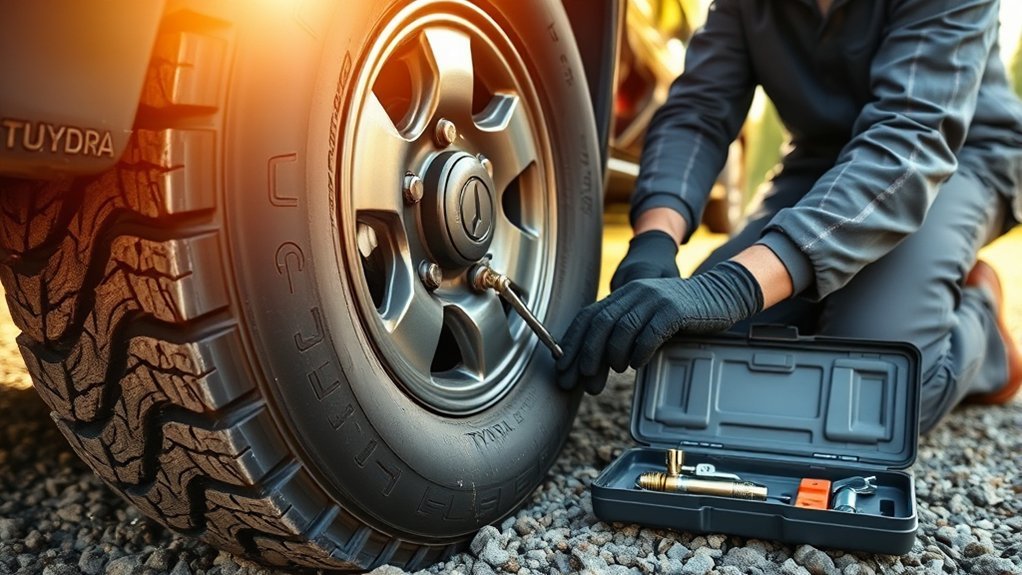
Valve problems are common because the valve stem sits exposed to water, salt, dirt, and impact. A leak can come from the removable valve core, the rubber stem, the metal TPMS stem, or the seal where the stem passes through the wheel.
[Products Worth Considering]
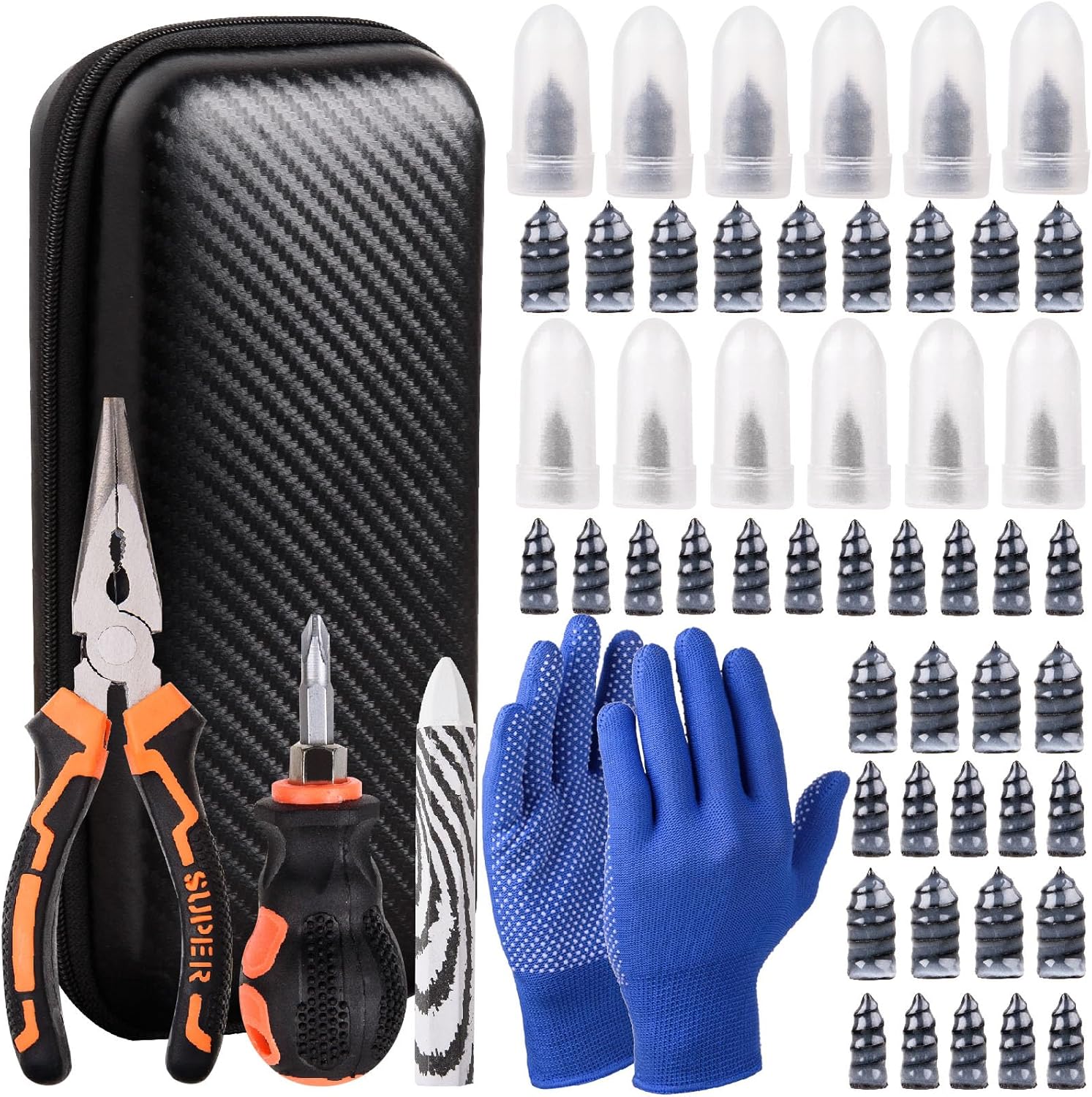
This tire sidewall puncture repair kit fixes flats fast without removing the tire, helping you get back on the road in minutes. It includes self-tapping repair nails, essential tools, gloves, and a portable storage bag for convenient roadside use. Designed for tubeless tires, it helps create a tight, leak-resistant seal for cars, motorcycles, trucks, SUVs, and ATVs.

Vigorder rubber cement glue delivers superior adhesion and cures quickly within about 30 seconds for seamless rubber bonding. Once cured, it helps provide a strong, durable, waterproof seal that holds up to vehicle weight, pressure, and heat. Suitable for cars, motorcycles, trucks, bicycles, and off-road tires, it’s designed for emergency patch and maintenance repairs.

This TPMS relearn tool helps you quickly activate, match, and reset GM tire pressure sensors to keep the vehicle monitoring system working properly. It clears tire pressure alarms and dashboard warning lights after sensor replacement or tire rotation, and supports learning for common 315/433 MHz TPMS sensors. Designed for simple one-button operation, it can help you avoid unnecessary trips to repair shops.
Common Valve Stem Issues
If bubbles form at the valve opening, the valve core may be loose or damaged. If bubbles form around the stem base, the stem seal or TPMS service kit may be leaking. If the stem is cracked, dry, bent, or corroded, replace it instead of trying to seal it from the outside.
Many Tundra wheels use TPMS sensors mounted at or near the valve stem. Handle the stem carefully because forcing it can damage the sensor or seal.
Replacement Procedure Steps
Use the smallest safe repair first. If the valve core leaks, you may be able to replace the core without removing the tire from the wheel. If the stem base leaks, the tire usually must be unseated from the rim.
- Check the valve core: Remove the cap and spray soapy water into the valve opening. If bubbles form, tighten the core gently with a valve-core tool.
- Replace the core if needed: Deflate the tire safely, remove the old core, install a new core, reinflate, and retest.
- Replace the cap: Use a good valve cap to keep dirt and moisture out of the valve opening.
- Inspect the stem base: If bubbles form around the base, have the tire demounted so the valve stem, grommet, nut, or TPMS service kit can be replaced correctly.
- Reinflate and retest: Inflate to the cold PSI shown on the door-jamb label or owner’s manual, then check again with soapy water.
Note: If the TPMS warning light flashes for about a minute and then stays on, Toyota advises taking the vehicle to a Toyota dealer or qualified service provider because the system may have a fault.
Maintenance Tips for Longevity
Small valve maintenance habits can prevent slow leaks. Keep valve caps installed, replace damaged caps, and check the stem any time you rotate tires, replace tires, or drive through mud, salt, or gravel.
| Maintenance Task | Frequency | Purpose |
|---|---|---|
| Check cold pressure | Monthly and before long trips | Catch air loss early. |
| Inspect valve stems | Monthly | Find cracks, corrosion, loose cores, or missing caps. |
| Rotate tires | Use your Tundra maintenance schedule or tire maker guidance | Promote even wear and spot damage sooner. |
| Inspect tread and sidewalls | Monthly and before towing or hauling | Find punctures, cuts, bulges, and uneven wear. |
Repairing Tire Punctures: DIY Methods and When to Seek Professional Help
A tread puncture can be repairable, but only under the right conditions. The U.S. Tire Manufacturers Association says a proper repair requires removing the tire from the wheel, inspecting it inside and out, filling the puncture injury with a rubber stem or plug, and sealing the inner liner with a patch.
A rope plug inserted from the outside may help in an emergency, but you should treat it as temporary. It does not let you inspect the inner liner, and it does not meet the same standard as a proper plug-patch repair.
[Products Worth Considering]

The TYAMATE TM8 solar-powered wireless TPMS delivers real-time tire pressure and temperature monitoring with six alarm modes for safer driving. A vibrant color LCD display shows readings clearly while windshield mounting keeps it hands-free and easy to read. With a wide 0–87 PSI range, strong 433.92 MHz signal transmission, and quick sensor pairing, it’s ideal for RV, sedan, SUV, MPV, and truck use.

Milton S-921 pencil tire pressure gauge helps you maintain optimal tire pressure for passenger cars with accurate readings in PSI and kPa. It features a built-in deflator valve for convenient pressure adjustments, plus a single chuck head and nylon indicator bar for easy use on the go. Built from durable plated brass and designed for reliable performance, it’s a practical road trip and cold-weather maintenance tool.

Malco tire mounting and demounting lubricant is a ready-to-use tire lube formulated to reduce friction during tire installation for passenger cars, light trucks, farm tires, and heavy-duty equipment. It provides rust-inhibiting protection to help reduce corrosion on rims and wheels, and helps support proper tire bead seating during inflation to reduce air leakage. The silicone-free, soap-free formula is whitewall safe to help prevent discoloration on whitewall tires and sensitive sidewall markings.
Safe Puncture Repair Limits
- Repairable area: Only the tread area may be repairable.
- Maximum injury size: The puncture should not be larger than 1/4 inch or 6 mm.
- Do not repair: Sidewall, shoulder, belt-edge, large cuts, bulges, run-flat damage, overlapping repairs, or tires with existing improper repairs.
- Inspection required: The tire should be removed from the wheel to check for hidden inner-liner damage.
Warning: Never repair a sidewall puncture, shoulder puncture, bulge, exposed cord, or tire that has been driven flat. Replace the tire or have it inspected by a qualified tire professional.
Temporary Emergency Plug Use
If you are stranded and the puncture is in the tread, a tire plug kit may help you reach a tire shop at low speed. Follow the kit directions exactly, inflate the tire to the correct cold pressure, and check for bubbles before driving. Avoid towing, hauling heavy loads, highway speeds, or long trips on a temporary plug.
After an emergency plug, schedule a proper internal inspection and plug-patch repair as soon as possible. If the shop finds sidewall damage, inner-liner damage, a large puncture, or a damaged belt area, replace the tire.
Tundra TPMS and Correct Tire Pressure After Repair
After you fix a slow leak, set pressure when the tire is cold. Use the Tire and Loading Information Label on the driver’s door area or the exact owner’s manual for your model year. Toyota’s owner-manual portal lets you select your vehicle year and model for the correct instructions.
Some Tundra model years let you initialize or reset the Tire Pressure Monitoring System after adjusting pressures, rotating tires, or replacing tires. Procedures vary by year. Newer Tundras may use the multi-information display and a “Set Pressure” menu, while older models may use a TPMS set button. Check the Toyota owner’s manual page for your exact truck before resetting the system.
TPMS helps catch pressure loss, but it does not replace manual checks. A tire can be underinflated before the warning light appears, especially during heavy loads, towing, off-road driving, or cold weather changes.
After-Repair Safety Check
Do not assume the repair worked until you verify it. A slow leak can disappear during a quick test and return after the tire warms up, flexes, or carries weight.
- Inflate cold: Set the tire to the placard PSI when the tire has been parked for at least three hours.
- Retest with soapy water: Spray the repaired area, valve stem, bead, and nearby tread.
- Check the valve cap: Reinstall a clean cap to keep debris and water out.
- Test drive carefully: Drive a short route, then check pressure again.
- Recheck the next day: If pressure drops again, the leak is not fixed or there is a second leak.
- Watch TPMS: Reset or initialize only as your owner’s manual directs.
Preventing Future Tire Leaks: Maintenance Tips
Preventing slow leaks starts with regular pressure checks and visual inspections. NHTSA recommends checking tire pressure when the tires are cold and inspecting tires for cuts, punctures, bulges, scrapes, cracks, bumps, and uneven wear before long trips.
Before towing, hauling, or off-road driving, inspect all four tires and the spare. Tundras often carry heavy loads, and low pressure can increase heat buildup, tire stress, and uneven wear.
- Check cold tire pressure monthly and before road trips.
- Inspect tread and sidewalls for embedded objects, cuts, bulges, and uneven wear.
- Keep valve caps installed.
- Clean mud, salt, and debris from wheels after off-road or winter driving.
- Rotate tires according to your Tundra maintenance schedule or tire manufacturer guidance.
- Have alignment checked if you see uneven wear, pulling, or vibration.
- Replace aging, cracked, or damaged tires before they become a roadside failure.
Frequently Asked Questions
Can I use regular glue for tire repairs?
No. Regular glue is not designed for tire pressure, heat, flexing, or road loads. A repairable tread puncture needs approved tire repair materials, and a permanent repair should use a proper plug-patch method after the tire is removed and inspected.
How often should I check my Tundra’s tire pressure?
Check tire pressure at least once a month, before long trips, and before towing or hauling. Check pressure when the tires are cold and use the PSI listed on your Tundra’s door-jamb label or owner’s manual.
What tools do I need to find a slow tire leak?
You need a tire pressure gauge, spray bottle, dish soap and water, chalk or tape, and an air compressor. A valve-core tool helps with valve leaks. If you remove the wheel, use the correct jack points and support the truck safely with jack stands.
Is it safe to drive with a slow tire leak?
It is not safe to ignore a slow leak. If the tire holds pressure long enough, you may drive carefully to a tire shop after inflating it to the correct PSI. Do not drive on a visibly low tire, sidewall damage, bulges, or a tire that loses air quickly.
How long does a tire repair usually last?
A proper internal plug-patch repair in the tread area can last for the remaining usable life of the tire if the tire is otherwise healthy. A temporary rope plug should only be used to reach service and should not be treated as a permanent repair.
Can I repair a Tundra tire sidewall puncture?
No. Sidewall and shoulder punctures should not be repaired because those areas flex heavily and carry high stress. Replace the tire or ask a qualified tire professional to inspect it before driving.
Why does my Tundra TPMS light come back after I add air?
The tire may still have a leak, the pressure may not match the placard PSI when cold, or the TPMS may need initialization after tire service. If the TPMS light flashes for about a minute and then stays on, the system may need professional diagnosis.
Conclusion
A slow tire leak in your Tundra is fixable once you identify the source. Use cold-pressure checks and soapy water to locate the leak, then match the repair to the problem. Valve-core leaks may be simple, bead leaks often need wheel cleaning, and tread punctures need a proper plug-patch repair if they meet safe repair limits.
Do not gamble with sidewall damage, repeated pressure loss, or a tire that has been driven flat. Repair the leak correctly, verify the tire holds pressure, and follow your Tundra owner’s manual for PSI and TPMS reset steps.
Sources
- NHTSA Tire Safety Ratings and Awareness — backs cold tire pressure checks, door-jamb pressure label guidance, and tread inspection.
- NHTSA Summer Driving & Road Trip Tips — backs tire damage inspection, underinflation risk, and long-trip tire checks.
- USTMA Tire Repair Basics — backs plug-patch repair guidance and the warning that plug-only repairs are not proper permanent repairs.
- USTMA Puncture Repair Procedures — backs tread-only repair limits, 1/4-inch maximum puncture size, and no outside-in/on-wheel repair guidance.
- Toyota Owner’s Manuals and Warranties — backs checking the exact model-year owner’s manual for Tundra tire pressure and TPMS procedures.