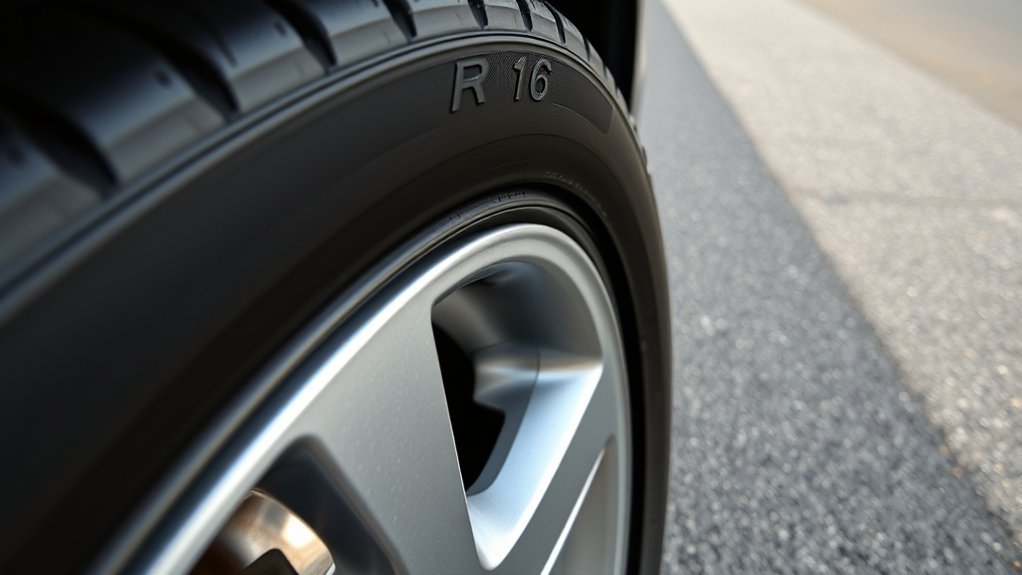
R16 on a tire means the tire uses radial construction and fits a 16-inch wheel rim. That marking is only one part of the full tire size code. To choose the right replacement tire, you also need to read the width, aspect ratio, load index, and speed rating, then match them to your vehicle’s tire placard or owner’s manual.
Quick Answer
R16 means the tire has radial construction and must be mounted on a 16-inch wheel. In a size like P225/60R16 98H, the “R” means radial, “16” is the rim diameter, “98” is the load index, and “H” is the speed rating.
Key Takeaways
- R16 means the tire is radial and fits a 16-inch wheel rim.
- The numbers before R16 show tire width and sidewall height.
- The number and letter after the size, such as 98H, show load index and speed rating.
- The correct tire size is listed on your vehicle’s tire placard and in the owner’s manual.
- Do not change rim size, load index, or speed rating unless your vehicle manufacturer or a tire professional confirms it is safe.
At a Glance
| Time Required | 2 to 5 minutes to read a tire sidewall |
| Difficulty | Easy once you know the code order |
| Tools Needed | Your tire sidewall, driver’s door tire placard, and owner’s manual |
| Cost | Free |
What Does R16 Mean on a Tire?
When you see R16 on a tire, the R means radial construction, and the 16 means the tire fits a 16-inch rim. That rim diameter must match the wheel exactly. A tire marked R16 will not mount correctly on a 15-inch or 17-inch wheel.
In a full size such as P225/60R16 98H, R16 does not describe the whole tire. The “P” means passenger tire when that letter appears, 225 is the section width, 60 is the aspect ratio, R is radial construction, 16 is rim diameter, 98 is load index, and H is speed rating.
Warning: Do not install a tire on the wrong rim diameter. The tire bead is designed for a specific wheel size, and a mismatch can cause mounting failure, air loss, poor handling, or tire damage.
How to Read a Full R16 Tire Size Code
A tire size code looks complicated at first, but each number has a specific job. Use this example: P225/60R16 98H.
| P | Passenger tire class, when shown |
| 225 | Section width in millimeters, measured from sidewall to sidewall |
| 60 | Aspect ratio, meaning sidewall height is 60% of the tire width |
| R | Radial construction |
| 16 | Wheel rim diameter in inches |
| 98H | Service description: 98 is the load index, and H is the speed rating |
This complete code matters more than R16 alone. Two tires can both be R16 but still have different widths, sidewall heights, load capacities, speed ratings, and vehicle fitments.
What Tire Width and Aspect Ratio Mean
You can read tire width from the three-digit number before the slash. In 225/60R16, the width is 225 millimeters. This is the tire’s section width, measured from sidewall to sidewall.
The aspect ratio is the two-digit number after the slash. In 225/60R16, the 60 means the sidewall height is 60% of the tire width. A higher aspect ratio usually gives you a taller sidewall and more cushioning. A lower aspect ratio usually gives you a shorter sidewall and sharper steering response.
Tire Width Basics
A tire’s width affects how it fits the wheel well, how it sits on the rim, and how it contacts the road. A wider tire may improve dry-road grip on some vehicles, but it can also affect steering feel, fuel economy, road noise, and clearance. A narrower tire may help in some wet or winter conditions, but the best choice depends on the vehicle and tire design.
Do not choose width by looks alone. The tire must fit the approved wheel width, avoid rubbing, and meet the vehicle manufacturer’s load and speed requirements.
Aspect Ratio Explained
Aspect ratio tells you the sidewall height compared with tire width. For example, a 225/60R16 tire has a sidewall height that equals 60% of 225 millimeters. A 225/50R16 tire has the same width, but a shorter sidewall.
Changing aspect ratio can change the tire’s overall diameter. That can affect speedometer accuracy, ride comfort, braking behavior, ground clearance, and electronic safety systems. Stay with the size listed on your tire placard unless a trusted tire professional confirms an alternate size.
Reading Sidewall Numbers
Once you know width and aspect ratio, the rest of the tire code becomes easier to read. Break a size like 225/60R16 into four parts:
- 225 is the width in millimeters.
- 60 is the aspect ratio.
- R means radial construction.
- 16 is the wheel rim diameter in inches.
After that size, you may see a service description such as 98H. That is where load index and speed rating appear.
How to Read Tire Load Indexes
The load index is a numerical code that shows how much weight one tire can carry when properly inflated. It usually appears after the tire size as part of the service description. In P225/60R16 98H, the load index is 98.
Load index is not a guess. Each number corresponds to a specific maximum load in a standardized load index chart. Michelin explains that the tire’s load rating must meet or exceed the value specified by the vehicle manufacturer, and you can find that information on the tire sidewall, tire placard, or owner’s manual.
Some tires also show markings such as XL or Extra Load. That means the tire has reinforced construction and can carry more load than a standard-load tire of the same size when used at the correct pressure. If your vehicle came with XL tires, do not replace them with standard-load tires unless the manufacturer allows it.
Note: A higher tire load index does not increase your vehicle’s legal payload or towing capacity. Your vehicle is still limited by its gross vehicle weight rating, axle ratings, suspension, brakes, and manufacturer specifications.
How Tire Speed Ratings Work
A tire speed rating is the letter that appears after the load index. In P225/60R16 98H, the speed rating is H. Michelin describes this letter as the maximum speed at which the tire can carry its maximum load under specified conditions.
Load index and speed rating work together. A tire must carry the right weight and manage heat at the speeds your vehicle was designed to handle.
Do not treat the speed rating as permission to drive faster than posted speed limits. It is a tire design limit under controlled conditions, not a guarantee for damaged, underinflated, overloaded, or worn tires.
- Find the service description after the tire size.
- Read the number as the load index.
- Read the letter as the speed rating.
- Match both to your vehicle placard or owner’s manual.
Replacement tires should generally meet or exceed the original speed rating. A lower speed rating can affect handling, heat resistance, and performance, especially on vehicles designed for higher-speed tires.
Why Radial Construction Matters
The R in R16 tells you the tire uses radial construction. Radial tires use internal ply cords that run across the tire from bead to bead, roughly at a 90-degree angle to the direction of travel. This design is standard on modern passenger tires.
Radial construction helps the tread stay more stable on the road while the sidewall flexes. That design can support better ride comfort, lower rolling resistance, improved tread life, and more predictable handling compared with older bias-ply designs in normal passenger-vehicle use.
The 16 still matters just as much as the R. It tells you the wheel diameter the tire is built to fit. If your vehicle requires a 16-inch tire, the rim diameter on the tire must say 16.
Where to Find the Correct R16 Size for Your Car
The safest place to confirm your tire size is the Tire and Loading Information Label. On most vehicles, you’ll find it on the driver’s side door edge, doorjamb, or door post. You can also check the owner’s manual.
The placard usually lists the approved tire size, load information, and recommended cold tire pressure. If the placard says 225/60R16 98H, match the full code, not just the R16 part.
Pro Tip: Check the placard before shopping online. Many vehicles have different approved tire sizes depending on trim level, wheel package, drivetrain, or model year.
[Products Worth Considering]

Adam’s Pro Tire Hex Grip applicators are molded foam sponges designed for precise, even tire dressing application. The ergonomic grip helps you spread product without overapplying, reducing sling that can splash onto paint and helping keep your hands clean during wheel and trim detailing. They’re durable, washable, and reusable for repeated detailing sessions.

Keep your tires properly inflated with this analog VONDIOR tire pressure gauge, designed for fast, easy readings without batteries. The swiveling, two-axis hose and large glow dial help you measure at any tire angle with instant visibility. Built with a protective rubber shield, it supports durable, low-maintenance use for cars and trucks.

This professional wheel and rim cleaning brush set lifts brake dust, grime, and dirt with soft, scratch-free microfiber and synthetic wool fibers. The rim brush bends up to 360 degrees for easy access to hard-to-reach areas around spokes, lips, and faces. Ideal for thorough cleaning of car, truck, motorcycle, bicycle, RV, and more wheel and tire surfaces.
Max Pressure vs. Recommended Pressure
Some drivers see MAX PRESS on the tire sidewall and think that is the correct daily pressure. It is not. Michelin notes that sidewall maximum load and maximum pressure markings show tire limits, not necessarily the pressure your vehicle manufacturer recommends.
Use the cold tire pressure listed on the vehicle placard or in the owner’s manual. Correct pressure helps the tire carry the intended load, wear evenly, handle properly, and reduce heat buildup.
DOT Date Code and Other Sidewall Markings
Besides the size code, your tire sidewall may show a DOT Tire Identification Number. The last four digits identify the week and year the tire was made. For example, a code ending in 2425 means the tire was manufactured in the 24th week of 2025.
You may also see markings such as M+S, 3PMSF, TUBELESS, treadwear, traction, and temperature grades. These markings tell you more about tire type, winter capability, construction, and government tire grading. They do not replace the need to match the correct size, load index, and speed rating.
How to Choose the Right Tire Size
Start by reading the full tire size code on your current tire, but do not stop there. Tires can be replaced incorrectly before, so your current sidewall may not always match the factory recommendation.
[Products Worth Considering]

This metal-free wheel and tire cleaning brush uses dense, fluffy synthetic wool to safely clean rims, spokes, fenders, and engine areas without worrying about damaging surfaces. Its flexible, comfortable design helps you reach detailed areas while maintaining durability, and the extra absorbent fibers work well with wheel spray cleaners for faster cleanup. Reusable and washable performance helps prevent grime and build-up for cleaner vehicles and easier maintenance at home.

This 3-piece wheel and tire brush set makes it easy to clean light, medium, and heavy dirt from wheels, rims, tires, and exterior surfaces. It includes both soft and stiff bristle options for gentle scrubbing and tough grime removal, helping lift brake dust and road buildup. The long-handle design supports comfortable cleaning across cars, trucks, SUVs, RVs, motorcycles, and more, with simple care instructions to restore brush shape.

This wheel brush kit delivers pro-level cleaning at home, lifting dirt, grime, and brake dust to help restore wheel appearance. It includes multiple brush styles and applicator pads for tackling different wheel surfaces, with gentle, metal-free bristles designed to reduce scratching risk. The flat and double-ended brushes are built for comfort and reach, making wheel care easier for cars, trucks, and RVs.
Read the Tire Size Code
- Find the tire size on the sidewall, such as P225/60R16 98H.
- Confirm the width, aspect ratio, construction, and rim diameter.
- Read the service description after the size.
- Check whether the tire has special markings such as XL, LT, C, or 3PMSF.
Match Vehicle Specifications
Next, compare the full code with the tire placard and owner’s manual. The tire should match the approved size, load index, speed rating, and pressure recommendation. If you want to change from R16 to R17 or R15, you need a matching wheel size and an approved overall tire diameter.
A larger wheel with a lower-profile tire may sharpen steering feel, but it can also make the ride firmer and increase wheel-damage risk on rough roads. A smaller wheel may improve ride comfort if it is approved for your vehicle, but it must clear the brakes and support the correct load. Always confirm fitment before changing wheel diameter.
R16 vs. R17 and R15 Tires
R16, R17, and R15 mainly describe the wheel rim diameter the tire fits. They do not automatically tell you which tire is better. The better choice depends on your vehicle’s approved sizes, driving style, road conditions, and tire model.
An R17 setup often uses a larger wheel and a lower-profile tire. That can improve steering response on some vehicles, but it may reduce ride comfort. An R15 setup often uses a smaller wheel and taller sidewall. That can feel softer, but it may not fit vehicles with larger brakes or different suspension geometry.
Choose the rim diameter your vehicle supports. Then compare tire quality, tread pattern, load index, speed rating, warranty, weather rating, and road-noise performance.
[Products Worth Considering]

The Tymate TM12 RV TPMS delivers real-time tire pressure and temperature monitoring with a stable 433Hz display for safer long-distance driving. It supports simultaneous monitoring across vehicle and trailer zones, includes six alarm modes for pressure, temperature, leakage, battery, and signal loss, and features easy DIY installation with auto calibration. Power is supplied via USB-C charging or solar recharging, with a wide 0–144 PSI range and up to 50 ft signal coverage for RVs and towable trailers.

Clean wheels and rims with soft feathered bristles that safely remove dirt and road grime while helping restore original luster. The short non-slip handle makes it easy to scrub in tight wheel wells, and the brush is suitable for vehicles and hard-to-reach areas. It can also be soaked and rubbed to help restore bristles to their shape after use.

This 15-inch tire spoons kit makes tire removal and installation easier with added leverage, reducing time and effort for everyday repairs. It includes tire spoons, rim protectors, a valve tool, and valve cores/caps, helping protect rims and streamline deflation and re-sealing. Built with durable hardened steel and a non-slip ergonomic grip for confident use on motorcycles, dirt bikes, ATVs, and lawn equipment.
Frequently Asked Questions
Does R16 mean 16 inches?
Yes. The “16” in R16 means the tire fits a 16-inch wheel rim. The “R” means radial construction. You still need to check the full size code, load index, and speed rating before buying a replacement tire.
Which tire is better, R16 or R17?
Neither is automatically better. R16 tires often provide more sidewall cushioning when compared with a similar R17 setup, while R17 tires can offer sharper steering on vehicles designed for them. Use only a tire and wheel size approved for your vehicle.
What does 225/50R16 mean?
225/50R16 means the tire is 225 millimeters wide, the sidewall height is 50% of that width, the tire uses radial construction, and it fits a 16-inch wheel rim. You should also check the load index and speed rating after the size.
Which is better, R15 or R16 tires?
R15 tires may ride softer on some vehicles because they often use a taller sidewall. R16 tires may provide firmer handling if your vehicle is designed for them. The right choice is the size listed on your vehicle placard or an approved alternate size.
Can I replace R16 tires with R17 tires?
Only if your vehicle supports a 17-inch wheel and the replacement tire keeps the correct overall diameter, load index, speed rating, brake clearance, and suspension clearance. Ask a tire professional if you are changing wheel diameter.
Is R16 the same as tire width?
No. R16 tells you radial construction and 16-inch rim diameter. Tire width is the three-digit number before the slash, such as 225 in 225/60R16.
Conclusion
R16 is simple once you break it down: R means radial construction, and 16 means the tire fits a 16-inch wheel. But you should never buy a tire based on R16 alone. Read the full sidewall code, including width, aspect ratio, load index, and speed rating.
Before you replace tires, check your driver’s door tire placard and owner’s manual. Matching the manufacturer’s specifications helps protect handling, load capacity, ride quality, braking performance, and tire life.
Sources
- NHTSA TireWise — supports tire safety, tire placard guidance, UTQG, and maintenance warnings.
- Michelin: Tire Markings Explained — supports tire sidewall code, rim diameter, radial construction, pressure markings, and DOT date code.
- Michelin: Tire Load Rating and Speed Rating — supports load index, speed rating, XL tires, and replacement-rating guidance.
- Acura/Honda: Sidewall Markings — supports P tire class, width, aspect ratio, R construction, rim diameter, load index, speed rating, and DOT/TIN explanation.