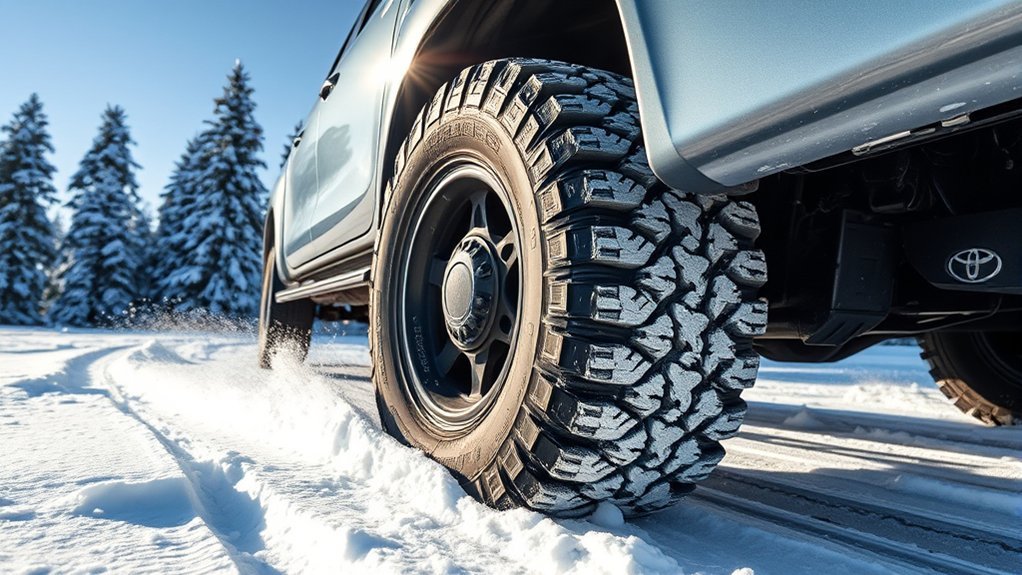
If you drive a Toyota Hilux in regular snow, ice, slush, or sustained cold weather, a proper set of winter tires can make the truck easier to control than all-season tires alone. The key is choosing tires that match your Hilux’s size, load rating, driving conditions, and local winter-road rules.
Quick Answer
Snow tires are worth it for a Toyota Hilux if you regularly drive in snow, ice, slush, mountain roads, or temperatures around freezing. Choose four matching winter tires with the correct Hilux tire size, load rating, and preferably the Three-Peak Mountain Snowflake symbol for severe snow service.
Key Takeaways
- Use winter tires when your Hilux sees regular snow, ice, slush, or sustained cold weather.
- Install four matching winter tires, not just two, to avoid front-to-rear grip imbalance.
- Check the driver-door tire placard or owner’s manual before buying; Hilux tire size and load rating vary by model, trim, market, and wheel package.
- Look for the Three-Peak Mountain Snowflake symbol if you need stronger snow capability than a basic M+S tire.
- Remove winter tires when warm weather returns because they can wear faster on warm, dry pavement.
At a Glance
| Time Required | About 30–60 minutes at a tire shop; less each season if the winter tires are already mounted on a second wheel set. |
| Difficulty | Easy when installed by a tire professional; moderate if you swap a pre-mounted wheel set yourself. |
| Tools Needed | Tire pressure gauge, tread-depth gauge, owner’s manual or tire placard, and a torque wrench if changing wheels yourself. |
| Cost | Varies by Hilux tire size, load rating, brand, mounting/balancing, TPMS needs, and whether you buy a second wheel set. |
Why Choose Snow Tires for Your Toyota Hilux?
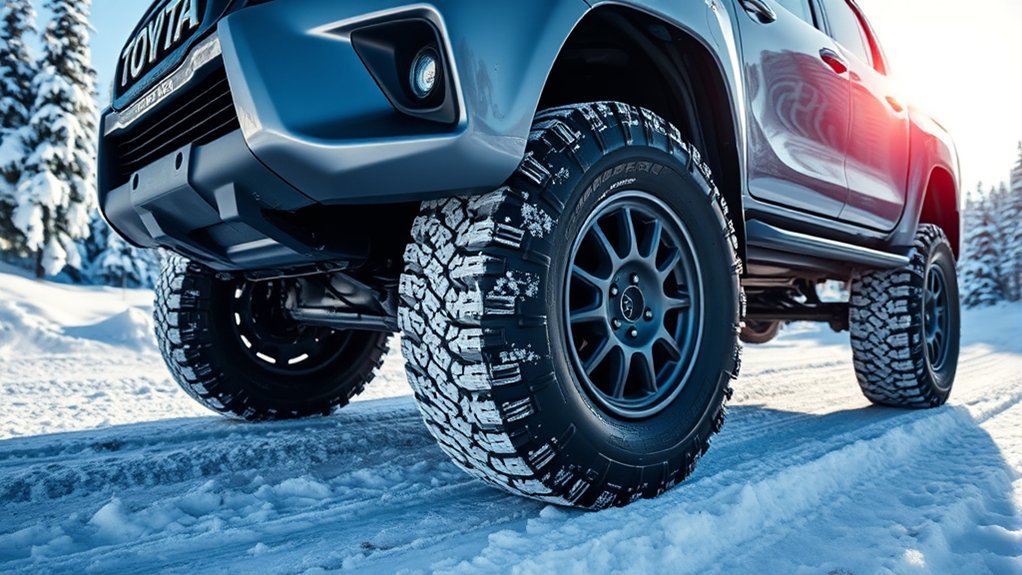
Snow tires, more accurately called winter tires, are designed for the conditions that make winter driving difficult: cold pavement, packed snow, slush, black ice, and repeated freeze-thaw cycles. Compared with basic all-season tires, winter tires use a tread compound and tread design intended to stay more usable in cold weather.
That matters on a Toyota Hilux because the truck may be used for commuting, towing, work sites, mountain roads, dirt tracks, or unplowed rural routes. A 4×4 Hilux can help you get moving, but four-wheel drive does not create extra tire grip when you need to stop, steer, or recover from a slide. Tire choice still matters.
According to NHTSA tire guidance, winter tires are more effective than all-season tires in deep snow. Bridgestone’s winter-vs-all-season guide also explains that all-season tires are a compromise: useful in moderate climates, but not designed for extreme winter driving.
Warning: Do not install only two winter tires on your Hilux. Use four matching winter tires so braking, steering, and cornering grip stay balanced from front to rear.
How Snow Tires Improve Traction in Winter Conditions
Winter tires improve winter control through three main design features: rubber compound, tread depth, and siping. The rubber is made to stay more flexible in low temperatures, while the tread pattern uses grooves and channels to move snow, slush, and water away from the contact patch.
The small cuts in the tread blocks, called sipes, create extra biting edges. These edges help the tire grip snow and ice more effectively than a smooth or stiff tread surface. That does not make the truck immune to sliding, but it gives your Hilux a better chance of accelerating, stopping, and steering predictably in winter conditions.
Winter tires help most when the road is cold and slippery, but safe winter driving still requires slower speeds, longer following distance, and gentle steering and braking.
Toyota Hilux: Comparing All-Season Tires to Snow Tires
All-season tires are convenient, especially if your area gets only light winter weather. But if your Hilux regularly sees ice, packed snow, deep snow, or steep winter roads, dedicated winter tires are the safer and more capable choice.
| Tire Type | Best For | Winter Limitation |
| All-season tires | Mild climates, occasional cold rain, light snow, daily commuting | Not ideal for deep snow, frequent ice, or severe winter roads |
| All-weather tires | Drivers who want one year-round tire with better winter ability than standard all-season tires | Still may not match dedicated winter tires in severe ice and snow |
| Winter / snow tires | Regular snow, ice, slush, mountain roads, rural winter driving | Wear faster in warm weather and should be removed after winter |
[Products Worth Considering]

Monitor tire tread wear with a smart, color-coded depth gauge that shows clear condition ranges at a glance. The bar is range marked for fast, easy readings, helping you maintain safer traction and performance. Each gauge is portable with a pocket clip, and the set includes 20 units for daily use and sharing.

Measure tire tread depth quickly and accurately with this LUMITECO dial gauge that reads in 1/32" increments up to 14/32". The color-coded green/yellow/red zones make it easy to judge tire wear and know when replacement is needed. A rugged, compact design with a protective pouch helps keep the gauge ready for use on cars, trucks, motorcycles, and more.

These universal tire valve stem caps help protect valve cores from dust, debris, and moisture while helping maintain stable tire pressure. The corrosion-resistant metal construction and sealed design provide reliable protection in road grime, mud, and winter conditions. Twist-on installation makes them quick to fit on cars, SUVs, trucks, and motorcycles.
Tire Performance Comparison
For winter driving, the biggest difference is grip. All-season tires are designed to handle a broad range of conditions, so they give up some maximum winter capability. Winter tires focus on cold-weather control, which makes them better suited to snow, slush, and icy roads.
- Traction: Winter tires are designed to bite into snow and maintain grip on cold surfaces.
- Tread design: Deeper grooves and sipes help move slush and create biting edges.
- Rubber compound: Winter tire compounds are made to stay more flexible in cold weather.
- Control: A full set of four winter tires helps balance steering, braking, and cornering grip.
Weather Adaptability Factors
Choose tires based on the worst winter conditions you actually drive in, not just the average day. If your Hilux only sees cold rain and rare flurries, a quality all-season or all-weather tire may be enough. If you drive through snowstorms, mountain passes, frozen work sites, icy rural roads, or unplowed tracks, winter tires are a better fit.
Also consider your payload and use case. A Hilux carrying tools, towing, or driving off-road needs tires with the correct load index and construction. Do not choose a passenger-car winter tire if your Hilux requires a higher load-rated tire.
Cost Considerations and Benefits
The cost of snow tires for a Toyota Hilux depends on tire size, brand, load rating, wheel diameter, local installation rates, balancing, valve stems, TPMS requirements, and whether you buy separate winter wheels. A second wheel set costs more upfront, but it can make seasonal changeovers faster and may reduce repeated mounting and dismounting wear.
When comparing prices, ask for the installed cost of a complete set of four tires, including mounting, balancing, disposal fees, taxes, and any TPMS service. Also check warranty terms and whether the tire is suitable for pickup/SUV use.
How to Choose the Right Snow Tires for a Toyota Hilux
Start with your Hilux’s tire placard, owner’s manual, or VIN-based fitment from a Toyota dealer or qualified tire retailer. Hilux models vary by year, trim, drivetrain, market, and wheel package, so copying another owner’s tire size can lead to poor fitment.
- Match the tire size: Use the size listed on the door placard or an approved alternate size from a tire professional.
- Match or exceed the load index: A pickup needs tires that can safely carry the vehicle, passengers, cargo, and towing load.
- Check the speed rating: Use a speed rating appropriate for your vehicle and local requirements.
- Look for 3PMSF: The Three-Peak Mountain Snowflake symbol indicates a tire tested for severe snow service.
- Consider tread type: Studless winter tires suit many drivers; studdable tires or chains may be useful where legal and conditions demand them.
- Confirm wheel clearance: If you use chains, check the owner’s manual and local rules before installing them.
Note: M+S marking alone does not always mean a tire is a true winter tire. For regular snow and ice, look for the Three-Peak Mountain Snowflake symbol and confirm the tire is appropriate for your Hilux’s load requirements.
[Products Worth Considering]

This roadside assistance kit helps drivers and passengers in urgent situations after an accident or breakdown, providing practical support while waiting for help. It includes a lightweight, compact tire inflator for fast inflation of standard vehicle tires, plus reinforced jumper cable protection for safer handling. Ideal for winter weather, road trips, camping, and travel, with everything stowed neatly in a trunk bag.

This manual duck head tire changer kit makes tire installation and removal simpler by letting you embed the duck head into the tire with applied pressure. The integrated design and durable steel construction help reduce friction and improve efficiency and safety during use. Suitable for 16–21 inch wheels, it’s convenient for cars, trucks, SUVs, and ATV tires, with 24-hour after-sales support.

Milton S-921 pencil tire pressure gauge helps you maintain optimal tire pressure for passenger cars with accurate readings in PSI and kPa. It features a built-in deflator valve for convenient pressure adjustments, plus a single chuck head and nylon indicator bar for easy use on the go. Built from durable plated brass and designed for reliable performance, it’s a practical road trip and cold-weather maintenance tool.
Optimal Timing for Snow Tire Installation?
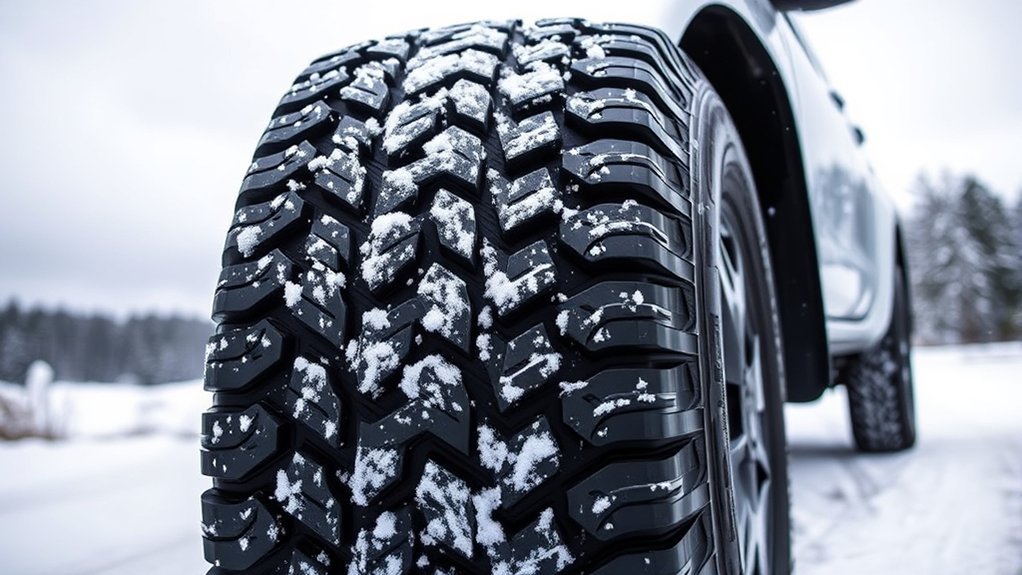
Install snow tires before the first major storm, not during it. A good rule is to schedule the changeover once temperatures are consistently cold and winter weather is likely. Waiting until the first heavy snowfall can leave you competing for tire-shop appointments when everyone else is doing the same thing.
If winter arrives early in your area, install them early enough to drive a short break-in period before severe weather. If your climate has warm spells between storms, avoid installing winter tires too early because warm, dry pavement can accelerate wear.
Pro Tip: If you keep winter tires on a dedicated wheel set, label each wheel position before storage. That makes rotation planning easier next season.
Essential Maintenance Tips for Your Snow Tires
Winter tires need the same basic care as any other tire, plus extra attention to pressure, tread depth, and storage. Cold weather can reduce tire inflation pressure, so do not rely only on how the tires look.
- Check pressure monthly: Use the pressure listed on the Hilux tire placard or owner’s manual, not the maximum pressure printed on the tire sidewall.
- Check pressure cold: For the most accurate reading, measure when the truck has been parked for at least three hours.
- Inspect tread depth: Replace tires at the legal/safety minimum, but plan winter replacement earlier if snow grip noticeably declines.
- Look for damage: Cuts, cracks, bulges, punctures, or uneven wear should be inspected by a tire professional.
- Rotate when appropriate: Follow the Hilux owner’s manual or tire-shop guidance, especially if the truck carries loads or sees rough roads.
- Track tire age: Check the DOT/TIN date code. Some tire and vehicle manufacturers recommend replacement after six to 10 years regardless of treadwear.
- Store correctly: Keep off-season tires in a cool, dry place away from direct sunlight, heat, ozone sources, and petroleum products.
Where to Find Quality Snow Tires for Your Toyota Hilux
You can buy Hilux snow tires from Toyota service centers, tire retailers, pickup/SUV tire specialists, and reputable online tire shops. The safest route is to shop by your exact vehicle details, then confirm the tire size, load index, speed rating, and wheel compatibility before purchase.
When comparing options, ask these questions:
- Does the tire fit my exact Hilux year, trim, drivetrain, and wheel size?
- Does the load index meet or exceed the requirement on my tire placard?
- Is the tire marked with the Three-Peak Mountain Snowflake symbol?
- Is it suitable for pickup/SUV use, towing, and cargo loads?
- Does the quote include mounting, balancing, TPMS service, and disposal fees?
- Can the retailer store my off-season tires or mount winter tires on a second wheel set?
Do not buy tires based only on price. A cheaper tire that lacks the right load rating, winter marking, or fitment can be a poor choice for a pickup like the Hilux.
[Products Worth Considering]

The SAFELIFE dial tire tread depth gauge measures tread depth in 1/32 inch increments with clear, easy-to-read 2-inch dial face. Color zones using a traffic light system help you quickly judge whether tread is low, marginal, or ample for safer driving. Built with a durable zinc cast body and a metal detect probe for precise, comfortable use across cars, motorcycles, trucks, and buses.

These aluminum alloy tire valve stem caps with an O-ring seal help protect valve stems from corrosion while adding a clean, stylish look to your vehicle. The universal fit works across cars, trucks, motorcycles, bicycles, and more, making them an easy upgrade for everyday driving and off-road use. Installation is quick, and the included four-pack keeps all your tires dressed and protected.

Accurately measure tire tread depth with a calibrated gauge marked from 0 to 1 inch in 1/32 inch increments. The color-coded bar helps you quickly identify tread condition ranges, supporting safe driving for trucks, motorcycles, automobiles, and passenger vehicles.
Busting Common Myths About Snow Tires
- Myth: A 4×4 Hilux does not need winter tires. Four-wheel drive helps you move forward, but it does not replace tire grip for braking, turning, or downhill control.
- Myth: All-season tires are always enough. They may be fine in mild climates, but winter tires are better suited to deep snow, ice, and severe cold-weather driving.
- Myth: Two snow tires are enough. Two winter tires can create uneven grip. Install four matching winter tires.
- Myth: Winter tires are only useful during snowfall. They can help in cold, icy, slushy, or packed-snow conditions even after the snow has stopped falling.
- Myth: Winter tires can stay on all year. Winter tires are not designed for warm-weather use and can wear faster on warm, dry pavement.
- Myth: Studded tires are always better. Studs may help on hard ice where legal, but they can be noisy, restricted by law, and unnecessary for many drivers.
Preparing Your Hilux for Winter Driving Conditions
Snow tires are only one part of winter preparation. Before winter starts, inspect the rest of your Hilux so the truck is ready for cold starts, poor visibility, slippery roads, and unexpected delays.
- Check tire pressure and tread: Include the spare if your Hilux has one.
- Inspect brakes: Winter grip is only useful if the braking system is in good condition.
- Test the battery: Cold weather reduces battery performance.
- Top up winter washer fluid: Use fluid rated for freezing temperatures.
- Check wipers and lights: Visibility is critical in snow, sleet, and road spray.
- Pack winter gear: Carry an ice scraper, shovel, gloves, blanket, flashlight, warning triangles, phone charger, water, and basic emergency supplies.
- Know your 4WD system: Practice when and how to engage 4H or 4L according to the owner’s manual before you need it in bad weather.
NHTSA’s winter driving guidance also recommends slowing down, increasing following distance, checking weather and traffic before travel, and stocking the vehicle for emergencies.
Frequently Asked Questions
Can I use snow tires year-round on my Toyota Hilux?
No. Winter tires are designed for cold-weather performance and can wear faster on warm, dry pavement. When winter conditions end, switch back to all-season, all-weather, or summer tires that suit your climate and driving style.
How long do snow tires typically last?
Snow tire life depends on mileage, road surface, alignment, tire pressure, storage, driving style, and how quickly the rubber ages. Inspect tread depth and damage every season, and check the tire date code because some manufacturers recommend replacement after six to 10 years regardless of treadwear.
Are snow tires more expensive than all-season tires?
They can be, but the real cost depends on tire size, load rating, brand, installation, balancing, TPMS service, and whether you buy a second set of wheels. Compare the total installed price for four tires, not just the per-tire price.
Do snow tires require special storage during the off-season?
Yes. Store them in a cool, dry, dark location away from direct sunlight, heat, moisture, petroleum products, and electric motors. Clean and dry the tires before storage, and keep mounted tire/wheel assemblies stacked or hung according to tire-shop guidance.
Can I mix snow tires with all-season tires on my Hilux?
No. Mixing winter tires with all-season tires can create uneven grip between the front and rear axles. For safe, predictable handling, install four matching winter tires of the correct size and load rating.
Do I need snow tires if my Toyota Hilux has 4WD?
If you regularly drive on snow or ice, yes, winter tires are still strongly recommended. Four-wheel drive helps the truck accelerate, but it does not shorten stopping distance or create extra cornering grip by itself.
What should I look for when buying Hilux snow tires?
Look for the correct tire size, load index, speed rating, pickup/SUV suitability, and the Three-Peak Mountain Snowflake symbol. Use the Hilux tire placard or owner’s manual, and confirm fitment with a Toyota dealer or qualified tire retailer.
Conclusion
Snow tires can be a smart upgrade for a Toyota Hilux that regularly faces snow, ice, slush, mountain roads, or sustained cold weather. The best choice is not simply “any winter tire,” but four matching tires that fit your exact Hilux, meet the required load rating, and match the conditions you drive in.
Install them before winter weather arrives, maintain pressure and tread depth through the season, remove them when warm weather returns, and store them properly. With the right tires and sensible winter driving habits, your Hilux will be far better prepared for cold-weather roads.
Sources
- NHTSA TireWise — tire pressure, tread depth, rotation, tire aging, tire size, and tire safety guidance.
- NHTSA Winter Weather Driving Tips — winter driving, cold-weather tire pressure, winter vehicle preparation, and emergency supplies.
- Bridgestone: Winter & Snow Tires vs. All-Season Tires — all-season limitations, winter tire benefits, full-set guidance, and warm-weather wear.
- Bridgestone: Winter and Snow Tires — tread rubber, tread pattern, biting edges, timing, and why four winter tires matter.