Tire Ozone Cracking: What It Looks Like and When to Replace Tires
Last updated: July 7, 2026
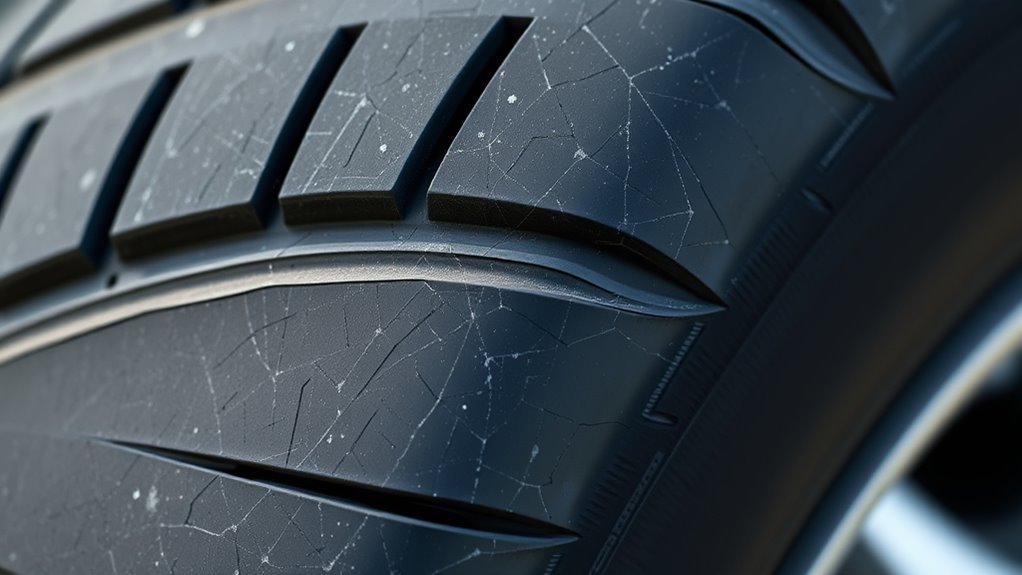
Tire ozone cracking usually looks like fine, shallow lines on the sidewall, shoulder, tread edge, or groove base. Small surface checking does not always mean immediate failure, but deep cracks, bulges, exposed cords, missing rubber, air loss, or vibration mean you should stop driving and have the tire inspected or replaced.
This guide shows you how to spot ozone cracking, separate it from normal aging or cuts, reduce future damage, and decide when a cracked tire is no longer safe to use.
What’s in This Article
- Quick Answer: Is This Tire Safe? What to Check First
- When Should You Replace a Tire With Ozone Cracks?
- How Ozone Damages Rubber
- Which Tire Compounds and Parts Face the Highest Ozone Risk?
- What Does Ozone Cracking Look Like?
- Where Does Ozone Come From, and Why Does Storage Matter?
- How to Inspect, Protect, and Replace Cracked Tires
- How to Tell Ozone Cracking From Normal Aging
- Frequently Asked Questions
- What to Do Next
- References
Quick Answer
Hairline tire cracks often start when ozone attacks vulnerable rubber and weakens the compound. Shallow surface cracks need close checks, but deep cracks, bulges, exposed cords, missing chunks, air loss, or new vibration mean you should stop driving on the tire and get it inspected or replaced.
Key Takeaways
- Check sidewalls, shoulders, tread edges, and groove bases for fine cracks at least once a month.
- Treat deep, widening, or clustered cracks as a safety concern, not a cosmetic flaw.
- Store tires away from sunlight, heat, electric motors, chargers, compressors, and ozone-producing equipment.
- Check the DOT Tire Identification Number when a tire looks old, because age can matter even with usable tread.
- Replace any tire with exposed cords, missing chunks, bulges, persistent air loss, or signs of structural damage.
[Products Worth Considering]

Measure tire tread depth quickly and accurately with this LUMITECO dial gauge that reads in 1/32" increments up to 14/32". The color-coded green/yellow/red zones make it easy to judge tire wear and know when replacement is needed. A rugged, compact design with a protective pouch helps keep the gauge ready for use on cars, trucks, motorcycles, and more.

Monitor tire tread wear with a smart, color-coded depth gauge that shows clear condition ranges at a glance. The bar is range marked for fast, easy readings, helping you maintain safer traction and performance. Each gauge is portable with a pocket clip, and the set includes 20 units for daily use and sharing.

Steelman white tire marking crayons provide high-contrast, semi-permanent marks for repairing and inspecting tires and equipment. They write on wet or dry, smooth or coarse surfaces including rubber, metal, glass, and wood, making them ideal for puncture location and damage outlining. The lead- and zinc-free crayons resist weather and fading yet wipe away when you no longer need the marks.
Quick Answer: Is This Tire Safe? What to Check First
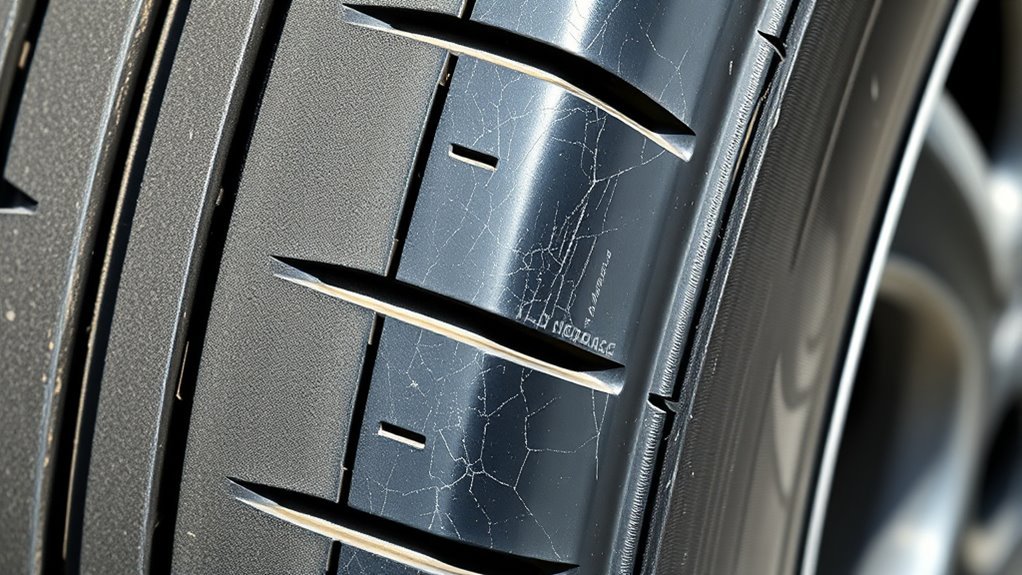
Start with a careful visual inspection under good light. Check the sidewalls, shoulders, tread grooves, tread edges, valve area, and bead area for crack depth, crack pattern, bulges, exposed cords, and missing rubber.
Hairline surface checking can stay shallow for a while, but you still need to track it. Deep cracks in the tread, sidewall, or shoulder can weaken tire integrity and raise the risk of air loss or failure.
Age also matters. Some vehicle and tire manufacturers recommend replacing tires after six to 10 years, regardless of tread depth. Use the DOT Tire Identification Number on the sidewall to check the week and year of manufacture.
Warning: Do not drive on a tire with exposed cords, deep sidewall splits, bulges, repeated pressure loss, or missing chunks of rubber.
If the damage looks more than superficial, stop using the tire until a trained technician checks it. That step gives you a clear answer before a weak tire puts you at risk.
When Should You Replace a Tire With Ozone Cracks?
Replace a cracked tire when the damage goes beyond shallow surface checking. Ozone cracking becomes urgent when cracks deepen, spread across a sidewall or shoulder, expose reinforcement, appear with a bulge, or happen with air loss or vibration.
| What You See | Risk Level | What to Do |
|---|---|---|
| Few shallow hairlines on the sidewall or groove base | Low to moderate | Photograph, monitor monthly, and reduce heat, sun, and ozone exposure |
| Cracks spreading, clustering, or opening when the tire flexes | Moderate to high | Schedule a tire inspection before long or high-speed driving |
| Deep sidewall split, bulge, exposed cords, missing chunk, or air loss | High | Stop using the tire and replace it if a technician confirms structural damage |
| Cracking on a tire six to 10 years old | Age-related risk | Check the DOT date code and ask a tire professional whether replacement is due |
Do not rely on tread depth alone. A tire can have legal tread and still be unsafe if the rubber has aged, cracked, or separated.
[Products Worth Considering]

The SAFELIFE dial tire tread depth gauge measures tread depth in 1/32 inch increments with clear, easy-to-read 2-inch dial face. Color zones using a traffic light system help you quickly judge whether tread is low, marginal, or ample for safer driving. Built with a durable zinc cast body and a metal detect probe for precise, comfortable use across cars, motorcycles, trucks, and buses.

Mount your spare tire off the floor and onto your wall using an e-track spare tire carrier that helps you stay organized in trailers, garages, and warehouses. The upgraded double-fittings design improves stability versus single-fittings and supports greater load bearing. Install by snapping into e-track anchor points and securing the tire with a lug-nut style bolt setup for quick, secure storage.

Rubber Care delivers a beautiful dark black satin/matte finish on tires and other rubber or plastic surfaces, drying to the touch without oily shine. Its ceramic aircraft-grade formula helps repel dirt and brake dust residue, keeping surfaces cleaner longer. Triple nano ceramic polymer technology provides best-in-industry UV protection, restoring and protecting rubber while also working on weather stripping and de-ice boot care.
How Ozone Damages Rubber
Ozone can damage unsaturated rubber because it attacks carbon-carbon double bonds in polymer chains. This reaction breaks long rubber molecules into shorter chains, which makes the rubber less flexible and easier to crack.
The process often starts at the surface. Stress then pulls open tiny cracks, especially where the tire bends or stretches during use.
- Reaction pathway: Ozone reacts with double bonds in rubber and forms unstable compounds that split the polymer chain.
- Mechanical result: Chain breakage lowers strength and stretch, so small cracks can spread under load.
- Visible signs: Cracks often run across the direction of stress and may deepen as the tire flexes.
Natural rubber, polybutadiene, and styrene-butadiene rubber (SBR) contain unsaturated bonds, so they need protection from ozone. Tire makers add antiozonants and waxes to slow this damage, but heat, sunlight, age, and storage conditions can reduce that protection over time.
Which Tire Compounds and Parts Face the Highest Ozone Risk?
Tire compounds that contain unsaturated polymers face the most ozone risk. Natural rubber, polybutadiene, and styrene-butadiene rubber (SBR) can crack faster when ozone, sunlight, heat, and flexing act together.
Focus on high-strain areas during each check. Sidewalls, tread edges, shoulder blocks, groove bases, and bead rub areas flex often and can show early damage.
Protective additives help, but they do not last forever. Antiozonants such as 6PPD and protective waxes move through rubber and form a shield on the surface, but use, storage, ultraviolet (UV) light, and heat can reduce their effect.
Poor storage can speed up cracking. Keep tires in a cool, dry, shaded area, and keep them away from electric motors, battery chargers, compressors, and welding equipment that may produce ozone or electrical discharge.
What Does Ozone Cracking Look Like?
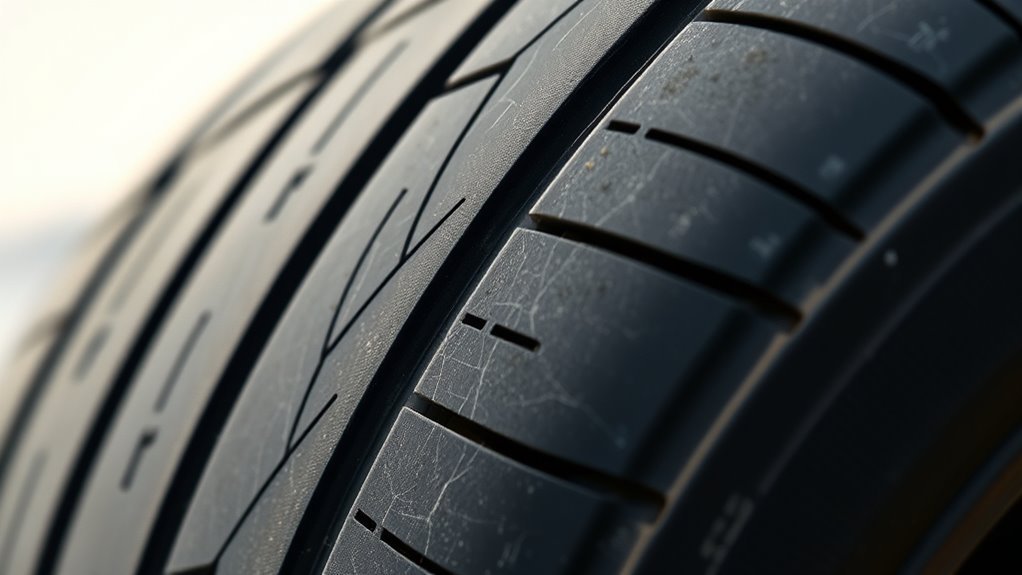
Ozone cracking usually starts as fine surface lines on the sidewall or near tread groove bases. These lines may look like dry skin, weather checking, or small cuts in the rubber.
As damage grows, the cracks can become deeper and wider. Larger transverse cracks, especially near the shoulder or sidewall, can show that the rubber has lost strength.
Early Surface Hairlines
Early surface hairlines often look thin, shallow, and short. They may run across the direction of flex, especially in sidewall areas that bend during driving.
Use three simple steps to track them:
- Inspect: Check sidewalls and tread groove bases for fine cracks every month.
- Document: Take a dated photo so you can compare the crack pattern over time.
- Act: Reduce heat, sunlight, and ozone exposure, and schedule an inspection if cracks spread.
Early checks help you catch damage before it turns into a safety risk. They also help a technician judge whether the tire has aged normally or failed early.
Deep Transverse Cracks
Deep transverse cracks signal more serious damage. You may see them running across the sidewall, tread edge, or shoulder where tension builds during use.
These cracks can open as the tire flexes. They may also wrap around part of the tire, which points to weakened rubber in a stressed area.
Do not treat deep cracks as normal wear. Ask a tire technician to inspect the tire, especially if the cracks appear on a newer tire or grow soon after mounting.
Where Does Ozone Come From, and Why Does Storage Matter?
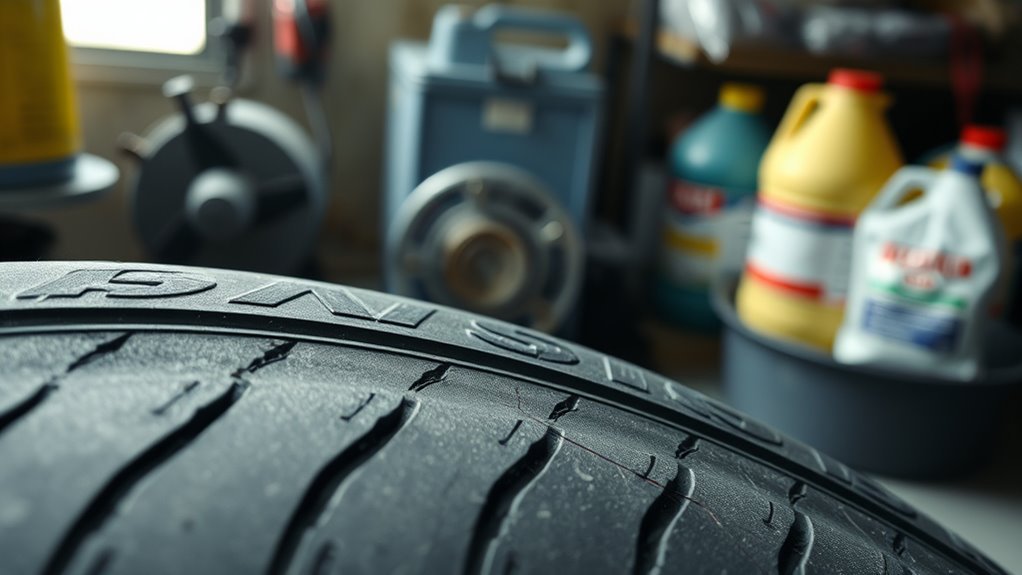
Ozone can form near electrical discharge and in outdoor air when sunlight reacts with nitrogen oxides (NOx) and volatile organic compounds (VOCs). That means both local shop sources and regional smog can affect stored tires.
Control ozone exposure by keeping tires away from sunlight, electric motors, compressors, chargers, and other discharge sources.
Watch for these common exposure risks:
- Local ozone sources: Electric motors, sparking, corona discharge, and some shop equipment can create concentrated ozone.
- Outdoor air pollution: Sunlight, NOx, and VOCs can help form ground-level ozone that reaches stored tires.
- Poor storage: Heat, ultraviolet (UV) light, moisture, and long outdoor storage can speed up rubber aging.
Store tires in a clean indoor space when possible. Use tire covers, avoid direct sun, and separate tires from equipment that produces sparks or electrical discharge.
How to Inspect, Protect, and Replace Cracked Tires
A quick tire check can prevent a small crack from turning into a larger problem. Use a flashlight and inspect the full tire, not just the visible outer sidewall.
Look at the tread grooves, shoulder, sidewall, valve area, and bead area. Also check inflation, because low pressure increases flex and can make cracks spread faster.
| Action | Frequency | Purpose |
|---|---|---|
| Visual inspect grooves and sidewalls | Monthly | Find early cracking |
| Check inflation when tires are cold | Monthly, or before long trips | Reduce strain and heat |
| Rotate tires | Every 5,000 to 8,000 miles when recommended | Promote even wear |
| Store tires properly | Continuous | Limit ozone and UV exposure |
| Get a professional check | As needed | Confirm safety and defects |
Pro tip: Check the inner sidewall too, because it can crack where you cannot see it during a quick walkaround.
Replace the tire if cracks reach deep into the rubber, expose cords, or appear with a bulge. Also replace tires that show missing chunks, severe dry rot, fast crack growth, or recurring pressure loss.
[Products Worth Considering]

Accurately measure tire tread depth with a calibrated gauge marked from 0 to 1 inch in 1/32 inch increments. The color-coded bar helps you quickly identify tread condition ranges, supporting safe driving for trucks, motorcycles, automobiles, and passenger vehicles.

Gently exfoliate and lift away dead skin with jojoba beads while hyaluronic acid and caffeine help moisturize and revive tired-looking skin. This fragrance-free scrub is designed for normal to dry skin types and supports a healthy skin barrier for a refreshed, smoother feel.
Chemical Guys ShineLogic Tire Shine delivers a deep wet black, high-shine finish for rubber tires with a sleek look. It’s designed for durable, one-step application with minimal drips, streaks, or runs, and it helps produce effortless, long-lasting shine. Choose aerosol or trigger spray for easy use on cars, trucks, motorcycles, RVs, and more.
How to Tell Ozone Cracking From Normal Aging
Normal aging can make rubber look dull, stiff, or lightly checked. Ozone cracking often creates fine lines across stressed areas, such as the sidewall or tread edge.
Pattern matters more than one small mark. Many parallel cracks, cracks that run across the strain direction, or cracks that deepen quickly point to active rubber breakdown.
| Condition | Common Look | Best Next Step |
|---|---|---|
| Light weather checking | Fine, shallow, scattered surface lines | Monitor and check tire age |
| Ozone cracking | Parallel or transverse cracks in stressed rubber | Reduce exposure and inspect if cracks spread |
| Cut or road damage | One sharper mark, gouge, puncture, or torn area | Have the tire inspected before further use |
| Structural damage | Bulge, cord exposure, separation, or missing rubber | Stop driving and replace if confirmed unsafe |
Also compare all tires on the vehicle. If one tire has much worse cracking than the others, look for storage damage, mounting age, low pressure, heat exposure, or a possible defect.
Frequently Asked Questions
Why Do My Tires Look Like They Are Cracking?
Your tires may crack because rubber breaks down from ozone, ultraviolet (UV) light, heat, age, and repeated flexing. Poor storage and low tire pressure can make the damage appear sooner or spread faster.
Can You Drive on Tires With Small Cracks?
You may be able to drive on tires with shallow surface checking, but only after you inspect the tire for depth, bulges, air loss, and exposed cords. Get a professional inspection if the cracks spread, deepen, or appear before a long trip.
How Much Cracking in Tires Is Okay?
No cracking counts as ideal, but shallow surface checking does not always mean the tire will fail right away. Get a professional inspection when cracks deepen, spread across the sidewall, reach tread grooves, or appear with bulges or rubber loss.
What Causes Ozone Cracking?
Ozone cracking happens when ozone reacts with double bonds in rubber and breaks polymer chains. Stress then pulls the weakened rubber open, so cracks often show up in areas that flex or stretch.
Is Ozone Harmful to Tires?
Yes, ozone can harm tires because it degrades vulnerable rubber compounds and causes surface cracks. Tire makers use antiozonants to slow damage, but storage, age, and exposure still matter.
Can Tire Dressing Fix Ozone Cracks?
Tire dressing cannot repair cracked rubber or restore lost strength. It may improve appearance, but you still need to inspect crack depth and replace unsafe tires.
Where Is the Tire Date Code?
Look for the DOT Tire Identification Number on the sidewall. The last four digits show the week and year of manufacture, such as 0324 for the third week of 2024. Check both sides of the tire if you cannot find the full code.
Safety Disclaimer: This article is for informational purposes only and does not replace a tire inspection by a qualified technician. Ask a professional to inspect any tire with deep cracks, bulges, exposed cords, repeated air loss, or rapid damage growth before you drive on it.
What to Do Next
Ozone cracking can weaken a tire before the tread looks worn out. Check your tires monthly, confirm tire age with the DOT date code, store spare or seasonal tires with care, and act fast when cracks deepen.
If you see more than light surface checking, ask a trained tire technician to inspect the tire. A clear inspection helps you decide whether to keep driving, repair a related issue, or replace the tire before it fails.
References
- Tires — National Highway Traffic Safety Administration
- Ground-level Ozone Basics — U.S. Environmental Protection Agency
- Tire Safety — U.S. Tire Manufacturers Association
- Protection of Rubber Against Ozone — Rubber Chemistry and Technology