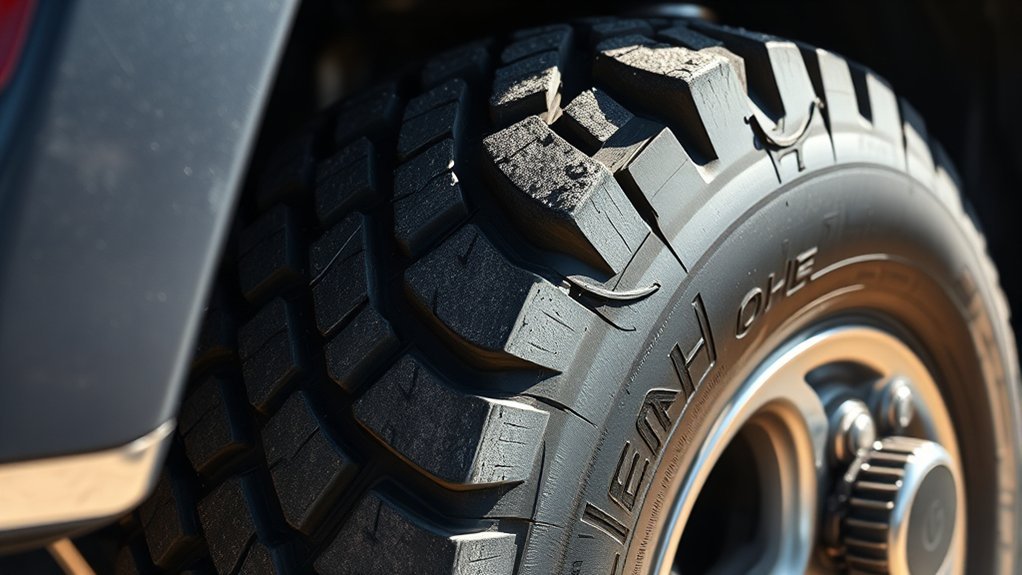
Tire rubbing on a Toyota Tundra can be harmless, annoying, or unsafe depending on where the tire touches, how often it happens, and whether the tire or nearby parts show damage. A light scrub on a plastic liner at full steering lock is very different from rubbing on the frame, upper control arm, brake line, or tire sidewall.
Quick Answer
Tire rubbing is too much when it happens during normal driving, marks or cuts the tire, touches metal parts, affects steering, or causes uneven tire wear. Occasional light contact with a plastic fender liner during full-lock turns is usually less serious, but it still should be inspected and corrected before it gets worse.
Key Takeaways
- Light plastic-liner rub at full lock is common on modified Tundras, but repeated rubbing is still worth fixing.
- Sidewall cuts, exposed cords, bulges, metal contact, brake-line contact, or steering interference are unsafe signs.
- Tire size, section width, wheel offset, backspacing, caster, lift height, worn suspension parts, and vehicle load all affect clearance.
- After changing tires, wheels, or suspension, check clearance at full steering lock and through suspension travel.
- Use your Tundra’s tire placard and owner’s manual for tire pressure, load rating, and inspection guidance.
At a Glance
| Time Required | 20–45 minutes for a basic driveway inspection |
| Difficulty | Beginner for inspection; moderate to professional for alignment, suspension, or metal-clearance work |
| Tools Needed | Flashlight, tape measure or ruler, tire-pressure gauge, chalk or masking tape, and a jack with jack stands if checking suspension travel |
| Cost | $0–$50 for inspection supplies; more if alignment, trimming, wheels, tires, or suspension parts are needed |
What Causes Tire Rubbing on a Tundra?
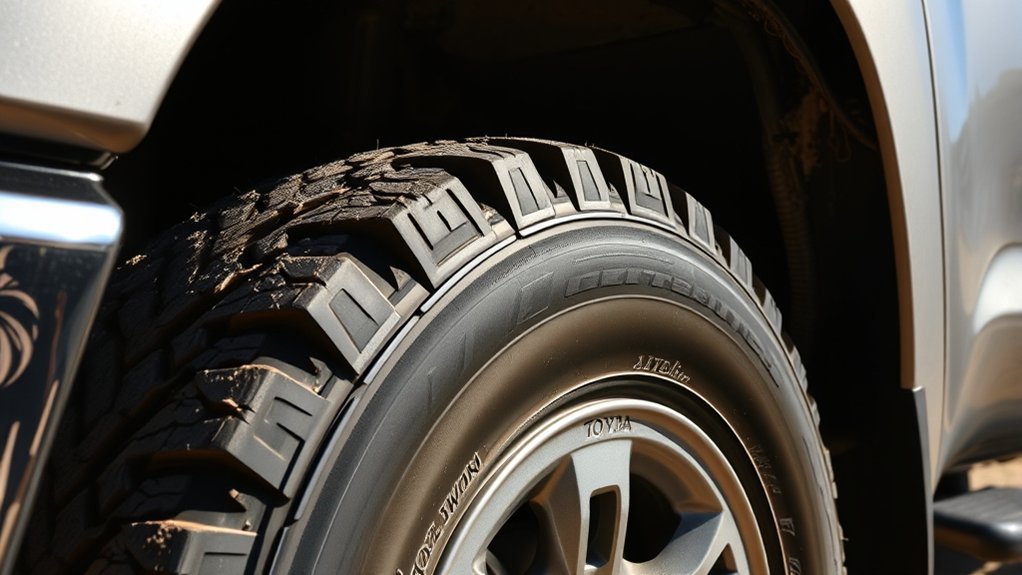
Tire rubbing happens when the tire’s path overlaps with the fender liner, mud flap, body mount area, frame, upper control arm, sway bar, or another nearby part. It often shows up after installing larger tires, wider tires, aftermarket wheels, spacers, a lift kit, or new suspension parts.
On a Tundra, the most common causes are:
- Larger tire diameter: Taller tires can contact the front or rear of the wheel well during turns or suspension compression.
- Wider tire section width: Wider tires can move closer to the upper control arm, fender liner, or body mount area.
- Wheel offset and backspacing: Wheel position changes how far the tire sits inward or outward. Tire Rack notes that wheel offset must allow both tire clearance and suspension clearance while maintaining steering and suspension geometry.
- Alignment and caster: Caster changes can move the front tire forward or rearward in the wheel opening, which may help or hurt clearance.
- Suspension lift or leveling kit: A lift can create space in one area while changing suspension angles and contact points elsewhere.
- Worn components: Sagging springs, worn bushings, loose steering parts, or tired shocks can let the tire move farther than expected.
- Heavy loads or off-road articulation: Towing, hauling, dips, ruts, and bumps compress the suspension and reduce available clearance.
Note: Tundra fitment varies by generation, trim, wheel size, suspension setup, and tire brand. Two tires with the same printed size can have different real-world widths and shoulder shapes, so always test-fit your exact tire and wheel package.
Signs of Excessive Tire Rubbing
Some rubbing is obvious because you hear it. Other rubbing is only visible after you inspect the tire and wheel well. Look for these signs:
| Sign | What It Usually Means | What To Do |
|---|---|---|
| Light scuffing on plastic liner | Minor clearance issue at full lock or compression | Inspect, heat-mold, trim, or adjust alignment if needed |
| Rubbing sound during normal turns | Tire is contacting something too often | Find the contact point before driving aggressively |
| Sidewall scuffs, slices, bulges, or exposed cords | Potential tire safety issue | Stop and have the tire inspected before continued driving |
| Contact with frame, UCA, or body metal | Unsafe or fast-wearing clearance problem | Correct the fitment, alignment, tire size, or suspension setup |
| Uneven tread wear | Possible rubbing, alignment, pressure, or suspension issue | Check pressure, alignment, tire condition, and suspension parts |
Toyota’s Tundra tire guidance says to check tires for treadwear indicators, uneven wear, damage, repeated flats, and tire age, and to consult a Toyota dealer if you are not sure. Toyota’s tire section is a good reference for stock tire inspection basics.
How Much Rubbing Is Considered Normal?
A small amount of tire rubbing can be normal on a modified Tundra, but only in a narrow sense. If the tire barely brushes a flexible plastic liner during a full-lock parking-lot turn, and there is no tire damage, no steering bind, and no metal contact, it is usually a minor fitment issue. It is still worth fixing because rubbing often gets worse with worn suspension parts, a heavy load, or off-road compression.
Rubbing is no longer “normal” when it happens during regular driving, leaves deep marks, cuts the tire, contacts metal, or changes how the truck steers.
| Rubbing Level | Example | Risk |
|---|---|---|
| Usually minor | Brief plastic liner or mud-flap scrub only at full steering lock | Low, but inspect and correct it |
| Needs correction | Rubs on every tight turn, over bumps, or with passengers/cargo | Moderate; can damage liners, tires, or alignment-sensitive parts |
| Unsafe | Sidewall contact, frame contact, control-arm contact, brake-line contact, or steering bind | High; inspect before continued driving |
Warning: Do not ignore tire sidewall cuts, exposed cords, bulges, metal-on-rubber rubbing, brake-line contact, or steering that binds before full lock. These are not normal rubbing symptoms and should be checked by a qualified technician before the truck is driven hard or at highway speed.
How Tire Size Affects Rubbing
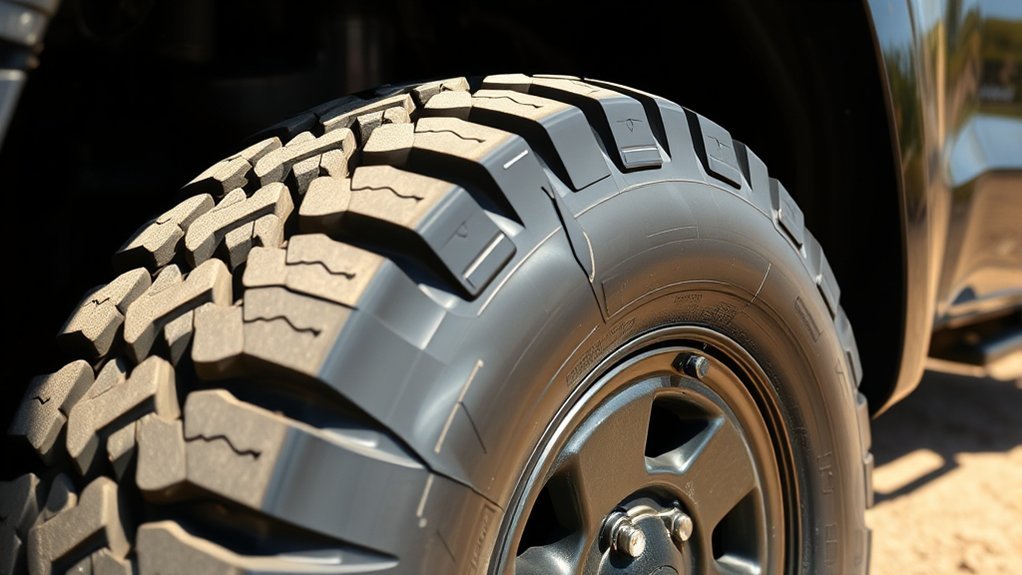
Tire size affects rubbing in three main ways: height, width, and shoulder shape. A taller tire can hit the front or rear of the fender liner as it swings through a turn. A wider tire can sit closer to the upper control arm or fender edge. An aggressive all-terrain or mud-terrain shoulder can rub where a smoother highway tire of the same listed size might clear.
[Products Worth Considering]

Monitor tire tread wear with a smart, color-coded depth gauge that shows clear condition ranges at a glance. The bar is range marked for fast, easy readings, helping you maintain safer traction and performance. Each gauge is portable with a pocket clip, and the set includes 20 units for daily use and sharing.

The Ziopetru adjustable magnetic wheel alignment tool helps you check and restore camber and caster positioning after removing and reinstalling undercarriage components. With a clear leveling/bubble measurement system and an easy zeroing adjustment knob, it supports precise horizontal angle checking. The strong magnetic base mounts to metal surfaces for convenient use at home on cars, motorcycles, trucks, vans, and SUVs.

Measure tire tread depth quickly and accurately with this LUMITECO dial gauge that reads in 1/32" increments up to 14/32". The color-coded green/yellow/red zones make it easy to judge tire wear and know when replacement is needed. A rugged, compact design with a protective pouch helps keep the gauge ready for use on cars, trucks, motorcycles, and more.
Tire Height Impacts Rubbing
Taller tires increase the rolling diameter. That gives more ground clearance, but it also moves the tire closer to the wheel opening. On a Tundra, height-related rubbing often appears at the front fender liner, rear liner, mud flap, body mount area, or bumper-side plastic during turning.
Common larger sizes may fit some Tundras with the right wheel, alignment, and lift, but the same size may rub on another truck. Treat popular sizes such as 285/75R18, 295/65R18, or similar upgrades as examples, not guarantees.
Width Considerations for Clearance
Wider tires can rub inward or outward depending on the wheel. If the wheel tucks the tire inward, the inner shoulder may contact the upper control arm or frame. If the wheel pushes the tire outward, the outer shoulder may hit the fender liner, flare, or bumper area.
Backspacing and offset matter because they place the tire in relation to the hub, suspension, and body. Discount Tire explains that offset and backspacing are two ways to describe how a wheel fits on the vehicle. For a Tundra, the “right” number is the one that clears the suspension and body while keeping safe steering behavior.
Suspension Lift and Modifications
A lift or leveling kit can make room for larger tires, but it does not automatically eliminate rubbing. Suspension geometry, caster, bump travel, shock length, upper control arm shape, wheel width, and tire width all still matter.
After a lift, check clearance with the wheels straight, at full left lock, at full right lock, and while the suspension is compressed. A tire that clears while parked on flat ground can still rub when the truck hits a dip, turns into a driveway, or carries a load.
Suspension Modifications and Their Effects
Suspension changes can move the tire’s path. Leveling kits, lift kits, coilovers, aftermarket upper control arms, and alignment changes can all affect where the tire sits in the wheel well.
Aftermarket upper control arms may improve clearance on some builds, especially when larger tires and more caster are used. However, grinding factory or aftermarket control arms for clearance is not a good first fix. Control arms are structural suspension parts, and removing material can weaken them or create a failure point.
Better solutions include correcting alignment, choosing a wheel with more appropriate offset/backspacing, choosing a tire with a better-fitting width or shoulder shape, trimming plastic liners, or using suspension parts designed for the tire size.
Pro Tip: Mark suspected rub points with chalk or masking tape, drive slowly through the turn or driveway angle that causes rubbing, then recheck the marks. Fresh tire transfer or scraped chalk will show the exact contact point.
How to Check Your Tire Clearance
Check clearance before you assume the fix. The right repair depends on where the tire is touching and when it touches.
1. Inspect the Tire First
Start with the tire, not the fender. Look for sidewall scuffs, cuts, bubbles, exposed cords, shoulder wear, or chunks missing from tread blocks. If the tire is damaged, have it inspected before you keep driving. NHTSA TireWise emphasizes that tires are central to safe driving and provides tire-maintenance guidance for consumers.
2. Check Tire Pressure and Load
Use the cold tire pressure listed on your Tundra’s door placard or owner’s manual, not the maximum pressure printed on the tire sidewall. Toyota warns that improper tire inflation can contribute to excessive wear, uneven wear, poor handling, blowouts, and tire or wheel damage.
If rubbing only happens when towing or hauling, inspect the truck in that loaded condition. Extra weight compresses the suspension and can turn a close fit into contact.
3. Inspect Wheel Arch Space
With the truck parked safely on level ground, use a flashlight to check the front and rear of each front wheel well. Look for shiny spots, torn liner edges, missing plastic clips, polished metal, or rubber transfer. Pay special attention to the mud flap, fender liner, bumper-side plastic, body mount area, frame, and upper control arm.
4. Evaluate Turning Radius
Turn the steering wheel fully left and inspect both front tires. Then turn fully right and inspect again. Check the inside shoulder, outside shoulder, and front and rear edges of the tire. If the tire touches before full lock, do not force the steering wheel harder; that can increase contact and damage.
5. Consider Suspension Travel
Flat-ground clearance is only part of the picture. The tire also moves upward and slightly through an arc as the suspension compresses. If you off-road, tow, or drive rough roads, you need more clearance than a parking-lot check shows.
For a deeper inspection, use proper jack stands and safe lifting points, or ask a shop to check clearance through suspension travel. Never work under a truck supported only by a jack.
Practical Solutions for Minor Tire Rubbing Issues
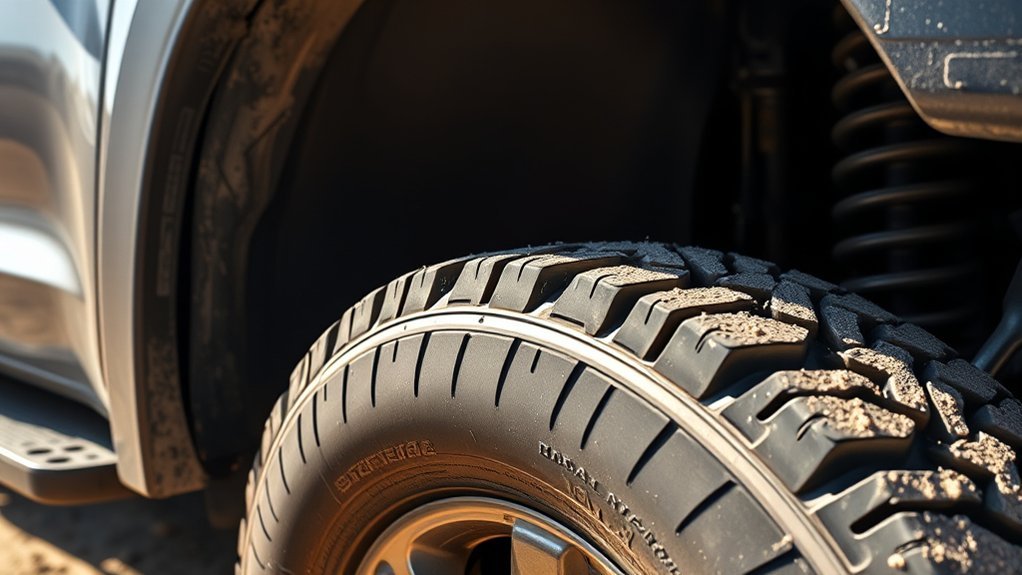
Use the least invasive fix that solves the actual contact point. Do not start with major cutting or metal work if the tire is only brushing a plastic liner.
[Products Worth Considering]

Steelman white tire marking crayons provide high-contrast, semi-permanent marks for repairing and inspecting tires and equipment. They write on wet or dry, smooth or coarse surfaces including rubber, metal, glass, and wood, making them ideal for puncture location and damage outlining. The lead- and zinc-free crayons resist weather and fading yet wipe away when you no longer need the marks.

The Topeak SmartGauge D2 delivers precise digital tire pressure readings for bikes, motorcycles, and sports equipment up to 250 psi (17 bar). Its rotating SmartHead works with both Presta and Schrader valves, so you can check pressure quickly without adapters. The LCD display makes it easy to read results in psi, bar, or kg/cm² with an included CR2032 battery for immediate use.

Vigorder rubber cement glue delivers superior adhesion and cures quickly within about 30 seconds for seamless rubber bonding. Once cured, it helps provide a strong, durable, waterproof seal that holds up to vehicle weight, pressure, and heat. Suitable for cars, motorcycles, trucks, bicycles, and off-road tires, it’s designed for emergency patch and maintenance repairs.
Minor Plastic Liner Rub
If the tire lightly rubs a plastic liner or mud flap, common fixes include resecuring loose liner clips, trimming a small plastic edge, gently heat-forming the liner, or removing an interfering mud flap. Keep cuts smooth so the tire cannot catch a sharp plastic edge.
Alignment and Caster Adjustment
If the tire rubs at the rear of the front wheel well, a qualified alignment shop may be able to adjust caster to move the tire slightly forward. This is build-specific and should stay within safe alignment specs. Misalignment can cause uneven, rapid tread wear, and USTMA recommends checking alignment when there are signs of trouble such as pulling or uneven wear.
Wheel Offset or Backspacing Change
If the tire rubs the upper control arm or frame, a different wheel offset or backspacing may move the tire away from the inner contact point. However, pushing the tire outward can create new rubbing at the fender liner or flare, so test fitment before buying parts.
Tire Size Change
Sometimes the cleanest fix is a slightly narrower or shorter tire. A tire that fits without rubbing is usually better than a larger tire that requires constant trimming, steering-stop changes, or compromises.
Aftermarket Upper Control Arms
Aftermarket upper control arms may help with alignment range and tire clearance on lifted Tundras. Choose parts designed for your generation, lift height, and tire/wheel package. Have them installed and aligned correctly.
Body Mount or Metal Clearance Work
If the tire hits the body mount, cab mount area, frame, or other metal, consider this a more serious fitment issue. Metal trimming, body-mount work, or welding should be handled by a qualified professional because it can affect structure, corrosion protection, and safety.
Signs It’s Time to Upgrade Your Tires or Suspension
Minor liner rub can often be corrected with small adjustments. Larger or repeated problems may mean your tire, wheel, or suspension setup is not right for the truck.
[Products Worth Considering]

This universal wheel alignment tool helps you accurately restore tire tilt angles after tire or suspension repairs using an adjustable camber gauge. It features a powerful magnetic base that firmly attaches to brake rotors for stationary, slip-free readings, improving consistency during measurement. Built from durable PC plastic, it resists wear and corrosion and is compact enough for car, truck, RV, and motorcycle alignment tasks.

The SAFELIFE dial tire tread depth gauge measures tread depth in 1/32 inch increments with clear, easy-to-read 2-inch dial face. Color zones using a traffic light system help you quickly judge whether tread is low, marginal, or ample for safer driving. Built with a durable zinc cast body and a metal detect probe for precise, comfortable use across cars, motorcycles, trucks, and buses.

Accurately measure tire tread depth with a calibrated gauge marked from 0 to 1 inch in 1/32 inch increments. The color-coded bar helps you quickly identify tread condition ranges, supporting safe driving for trucks, motorcycles, automobiles, and passenger vehicles.
Frequent Tire Rubbing
If the tires rub during normal turns, driveway entries, bumps, or light trail use, the setup needs correction. Constant rubbing can wear through liners, damage tires, and hide more serious contact points.
Uneven Tire Wear
Uneven wear can come from rubbing, alignment issues, inflation problems, worn shocks, or worn steering and suspension parts. Toyota tells Tundra owners to inspect for uneven wear, and national tire-safety guidance also recommends checking for irregular wear and damage.
| Tire Condition | Possible Cause | Action Needed |
|---|---|---|
| Wear on one edge | Alignment, caster/camber, or rubbing | Inspect contact points and get alignment checked |
| Sidewall scuffing | Contact with UCA, frame, or body | Stop and inspect before continued driving |
| Cupping or scalloping | Worn shocks, balance, or suspension issue | Inspect shocks, balance, and suspension |
| Center or shoulder wear | Incorrect inflation or load issue | Set cold pressure to the vehicle placard/manual |
Reduced Ride Comfort
Rubbing can come with vibration, harshness, steering pull, or clunking if the underlying issue is alignment or worn suspension. Do not assume every noise is only tire rub. Check lug torque, wheel balance, suspension fasteners, and steering components if the truck recently had tire, wheel, or suspension work.
Why Regular Inspections Matter
Regular inspections help catch rubbing before it becomes tire damage. Make tire checks part of your normal maintenance, especially after installing new tires, wheels, spacers, a lift, shocks, coilovers, or upper control arms.
NHTSA tire-safety guidance says maintaining proper tire pressure, observing load limits, avoiding road hazards, and inspecting tires for cuts and irregularities are key ways to help avoid tire failure. USTMA also lists pressure, tread, rotation, and alignment as core tire-care items.
Use this quick routine:
- Check cold tire pressure at least monthly and before long trips, towing, or hauling.
- Inspect tread and sidewalls for cuts, bulges, exposed cords, and uneven wear.
- Look inside the wheel wells for rubber transfer, shiny metal, or torn plastic.
- Recheck clearance after alignment, suspension changes, or tire rotation.
- Have alignment checked if the truck pulls, the steering wheel is off center, or tread wear changes quickly.
The safest rule is simple: plastic scuffing may be manageable, but tire damage, metal contact, steering bind, or uneven wear means the rubbing is too much.
Real-World Experiences With Tire Rubbing
Tundra owners commonly report rubbing after moving to taller all-terrain tires, wider tire sizes, lower-backspacing wheels, or leveling kits. The fix is not always the same. One truck may need only a small liner trim, while another may need alignment changes, a different wheel offset, or a smaller tire.
The most reliable approach is to inspect before guessing. Identify the contact point, check tire damage, confirm tire pressure, review wheel specs, then choose the least invasive fix. If the tire is touching a structural or safety-related part, involve a professional instead of forcing the fitment.
Frequently Asked Questions
Is slight tire rubbing bad?
Slight rubbing is not always dangerous if it is only a brief brush against plastic at full steering lock. It becomes a problem if it happens often, touches metal, marks the sidewall, causes steering bind, or creates uneven tire wear.
How much tire rubbing is too much on a Tundra?
Any rubbing that damages the tire, contacts the frame or upper control arm, touches brake lines, affects steering, or occurs during normal driving is too much. Occasional light plastic-liner contact during tight parking-lot turns is less serious, but it should still be inspected and fixed.
Can tire rubbing cause a blowout?
Yes, severe or repeated rubbing can damage the sidewall or tread area. Sidewall cuts, exposed cords, bulges, or deep grooves should be treated as tire-safety issues and inspected before continued driving.
Do wheel spacers fix Tundra tire rubbing?
Wheel spacers can move the tire away from inner suspension parts, but they can also create new rubbing at the fender, liner, or flare. If used, they should be high quality, properly installed, and checked for safe fitment and torque. A wheel with the correct offset is often a cleaner solution.
Should I trim the fender liner or get an alignment first?
Find the contact point first. If the tire only hits loose or flexible plastic, minor liner work may solve it. If the tire sits too far rearward or wears unevenly, alignment and caster should be checked before trimming more material.
What’s the worst Tundra year for tire rubbing?
There is no official single “worst year” for Tundra tire rubbing. Rubbing depends more on tire size, wheel width, offset, backspacing, suspension setup, alignment, and load than on model year alone.
Conclusion
Tire rubbing on a Tundra is too much when it damages the tire, touches metal, affects steering, or shows up during normal driving. Light plastic-liner contact at full lock may be a minor fitment issue, but it should not be ignored. Inspect the tire, locate the exact contact point, check pressure and alignment, and choose the least invasive fix that creates safe clearance.
Sources
- Toyota Owners — 2025 Tundra Tires — tire inspection, uneven wear, tire damage, load, and replacement guidance.
- Toyota Owners — 2025 Tundra Tire Inflation Pressure — inflation warnings related to wear, handling, blowouts, and tire/wheel damage.
- NHTSA TireWise — consumer tire-safety information and tire-maintenance guidance.
- NHTSA Tire Safety Brochure — tire pressure, load limits, inspections, and tire-failure prevention.
- USTMA Tire Care Essentials — pressure, tread, rotation, and alignment maintenance basics.
- Tire Rack Fitment Guide — wheel offset, tire clearance, suspension clearance, and steering/suspension geometry considerations.