Toyota Camry Tire Guide for Hot Climates: What Heat Does to Your Tires
Hot weather affects Toyota Camry tires by changing air pressure, increasing heat buildup, and speeding up wear when tires are underinflated, overloaded, damaged, or already worn. The safest habit is simple: check your Camry’s cold tire pressure against the driver-door placard, inspect the tread and sidewalls often, and fix damage before a summer drive turns into a roadside problem.
Quick Answer
Hot weather can raise your Toyota Camry’s tire pressure by about 1 PSI for every 10°F temperature change, while hot pavement, heavy loads, underinflation, and high speeds can increase heat stress. Check PSI when tires are cold, use the door-jamb placard, inspect tread and sidewalls, and replace tires with cracks, bulges, exposed cords, or tread at 2/32 inch.
Key Takeaways
- Heat usually raises measured tire pressure, so check your Camry’s PSI before driving or after the tires have been parked for at least three hours.
- Use the recommended cold PSI on the Toyota tire and loading label, not the maximum PSI molded into the tire sidewall.
- Underinflation is especially risky in hot weather because it creates extra flexing, heat buildup, irregular wear, and internal tire damage.
- Replace damaged tires right away if you see bulges, deep cracks, exposed cords, repeated pressure loss, vibration, or tread worn to 2/32 inch.
At a Glance
| Time Required | 5–10 minutes for a basic pressure and visual check |
| Difficulty | Easy |
| Tools Needed | Tire pressure gauge, air compressor, tread-depth gauge or penny |
| Cost | Usually free to low cost, unless repair or replacement is needed |
According to NHTSA, 511 people died in tire-related crashes in 2024, which is why tire pressure, tread, rotation, and damage checks matter before hot-weather driving.
What Heat Does to Camry Tires
Heat affects your Camry’s tires in two different ways. First, the air inside the tire expands as temperature rises, which can make the pressure reading climb. Second, hot pavement and highway driving can add heat to the tire structure itself, especially if the tire is underinflated, overloaded, worn, or damaged.
That heat stress can make existing problems worse. A tire with low pressure flexes more as it rolls, and that extra flexing creates heat inside the sidewall and tread. A tire with too much pressure can wear more in the center and may be more vulnerable to impact damage from potholes or road debris.
Warning: Do not keep driving on a tire with a sidewall bulge, exposed cords, deep cracking, sudden vibration, or rapid pressure loss. Slow down safely, pull over, and have the tire inspected or replaced.
[Products Worth Considering]

EVOULTES heavy duty tire inflator with an integrated gauge delivers accurate pressure readings from 10–120 PSI, helping you inflate, deflate, and check tires in one tool. The 16.5-inch extended dual-head air chuck with swivel base reaches hard-to-access dual wheel valves on trucks and RVs. A brass trigger core and side-mounted air release valve make operation smooth, with standard 1/4" NPT threading and quick-connect compatibility for easy setup.

This portable cordless tire inflator delivers up to 160 PSI with fast 17 L/min airflow to help you quickly top up tires and get back on the road. It features dual power mode, running on a 21V rechargeable battery or a 12V DC adapter for convenient roadside use. An automatic shut-off with digital pressure gauge helps prevent overinflation, and a built-in LED light improves visibility in low-light conditions.

The JACO FlowPro Tire Inflator measures, inflates, and airs down tires up to 100 PSI with battery-free operation and ±2% accuracy after calibration. It features a glowing pressure dial for night visibility, a heavy-duty steel build with a hybrid hose, and a precision push-to-inflate thumb trigger. The patented Lightning Air Chuck locks on for a secure seal, and the kit includes quick-connect hardware for easy inline use with your air compressor.
How Heat Changes Camry Tire Pressure
Tire pressure rises and falls with temperature. Bridgestone explains that pressure changes by about 1 PSI for every 10°F change in ambient temperature. The U.S. Tire Manufacturers Association gives similar guidance and recommends checking tires cold.
That means a Camry tire set to the correct cold pressure in the morning may read higher in the afternoon or after a highway drive. That hot reading does not automatically mean you should let air out. The correct target is the cold inflation pressure listed on your Toyota tire and loading label or owner information.
Cold Pressure vs. Hot Pressure
A cold tire is one that has not been driven for several hours. The best time to check your Camry’s pressure is before the first drive of the day, before direct sun and road heat raise the reading.
If you check pressure after driving, the reading can be temporarily higher. In that situation, do not bleed air from the tire just because the number is above the placard value. Wait until the tires cool, then check again and adjust to the recommended cold PSI.
Pro Tip: Keep a digital gauge in the glove box and check all four tires before long summer trips. Gas-station gauges are useful in a pinch, but your own gauge gives more consistent readings.
Use the Door-Jamb PSI, Not the Sidewall Number
Your Camry’s recommended tire pressure is shown on the tire and loading information label, usually on the driver’s side door jamb. Toyota’s owner information also points drivers to the tire and loading label for the recommended cold tire inflation pressure.
The number molded into the tire sidewall is usually the tire’s maximum pressure, not the recommended operating pressure for your Camry. Inflating to the sidewall maximum can hurt ride comfort, traction, and tread wear.
Why Hot Roads Wear Camry Tires Faster
Hot pavement does not destroy a healthy tire by itself, but it raises the tire’s workload. On long highway drives, the tire flexes thousands of times per mile. If the tire is low on air, overloaded, misaligned, or already worn, that flexing creates more heat and can speed up internal damage.
Heat can also make uneven wear show up sooner. Overinflated tires often wear faster in the center. Underinflated tires can wear more on the shoulders. Misalignment can create feathering or one-sided wear. These patterns reduce tread life and can lower wet-road grip when summer storms hit.
| Wear Pattern | Likely Cause | What to Do |
|---|---|---|
| Center tread wearing faster | Overinflation or too much pressure for the load | Recheck cold PSI against the door placard |
| Both outer shoulders wearing faster | Underinflation, overloading, or hard cornering | Inflate correctly and inspect for damage |
| One edge wearing faster | Alignment or suspension issue | Schedule an alignment inspection |
| Cupped or scalloped wear | Balance, shocks, struts, or suspension wear | Have the tire and suspension checked |
Signs Your Camry Tires Are Overheating or Heat-Damaged
You may not always see heat damage right away, so pay attention to both the tire and the way the Camry feels on the road. A tire that is unusually hot after normal driving, loses pressure repeatedly, or starts to vibrate should be inspected.
- Cracks or dry rot: Small surface checking can appear with age, sunlight, and heat, but deep cracks need professional inspection.
- Bulges or bubbles: A sidewall bulge can mean internal damage. Do not drive on it except to move to a safe location.
- Uneven tread wear: Center, shoulder, or one-edge wear can point to pressure, load, or alignment problems.
- Road noise or vibration: New humming, thumping, or shaking can signal tire damage, imbalance, or irregular wear.
- Loss of grip: Longer stops or sliding on wet pavement may mean the tread is too shallow or the tire compound is worn or aged.
Note: A tire can be unsafe even if it still holds air. Sidewall bulges, exposed cords, severe cracks, and repeated pressure loss are replacement-level warning signs.
How to Choose Camry Tires for Hot Weather

The best hot-weather tire for your Camry depends on your climate, driving style, and whether you see cold weather. Start with the tire size, load index, and speed rating recommended for your specific Camry. You can find the correct size on the door label, in the owner’s manual, or through Toyota owner information.
Next, look at the tire category. Summer tires can be a strong choice in consistently warm climates because they are designed for warm-weather grip, but they are not meant for freezing temperatures, snow, or ice. All-season tires are usually the better daily-driver choice if your area has mixed weather or occasional cold snaps.
| Tire Type | Best Fit | Hot-Weather Note |
|---|---|---|
| All-season | Most Camry daily drivers | Good balance of tread life, wet grip, and year-round convenience |
| Summer | Warm climates and performance-focused drivers | Strong warm-road grip, but not for freezing temperatures, snow, or ice |
| Touring | Comfort, quiet ride, commuting | Often a good match for Camry owners who want comfort and mileage |
| Performance | Sportier trims or more responsive handling | May trade tread life and ride comfort for grip and steering response |
Check Temperature, Traction, and Treadwear Ratings
NHTSA explains that passenger tires may carry Uniform Tire Quality Grading ratings for treadwear, traction, and temperature resistance. The temperature grade reflects a tire’s resistance to heat, while the treadwear grade is only a relative wear-rate comparison. Do not use the treadwear number as a replacement rule.
For hot climates, look for a tire with the correct Toyota size and load rating, a suitable speed rating, a good temperature grade, and strong wet-traction performance. If you are unsure, ask a tire professional to match the tire to your Camry’s trim, wheel size, and local weather.
How Camry Tire Tread Design Handles Heat and Water
Tread design affects how a tire handles heat, water, and road contact. Grooves help move water away from the contact patch, while tread blocks and sipes influence grip, noise, and wear. A tire with shallow tread has less ability to move water, which raises the risk of hydroplaning during summer rain.
Check tread depth regularly. NHTSA says tires are not safe and should be replaced when tread wears down to 2/32 inch. You can use a tread-depth gauge or the penny test: place a penny upside down in the groove. If you can see the top of Lincoln’s head, replace the tire.
How to Check Camry Tire Pressure Correctly
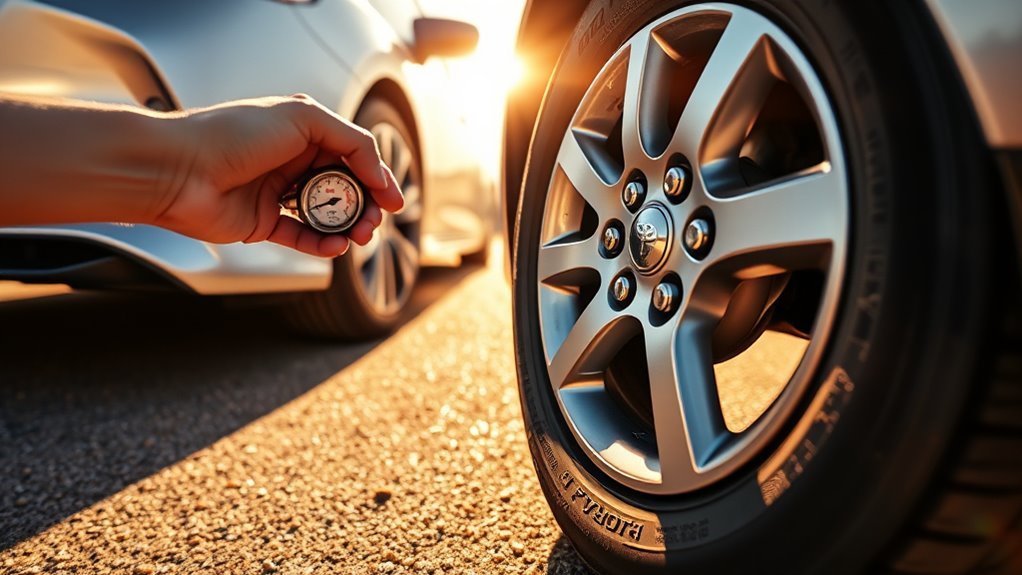
Checking pressure is the most important hot-weather tire habit. It takes only a few minutes, and it helps protect tread life, fuel economy, ride quality, and safety.
[Products Worth Considering]

The Fanttik X10 Pro is a cordless portable tire inflator that reaches up to 150 PSI and can inflate an R15 tire in about 35 seconds for quick roadside or home top-ups. With AccuInFlate auto-stop and smart start/stop controls, it helps maintain accurate pressure and frees your hands once the target is reached. A high-visibility digital display and preset modes make it easy to set and monitor inflation for cars, motorcycles, bikes, and balls.
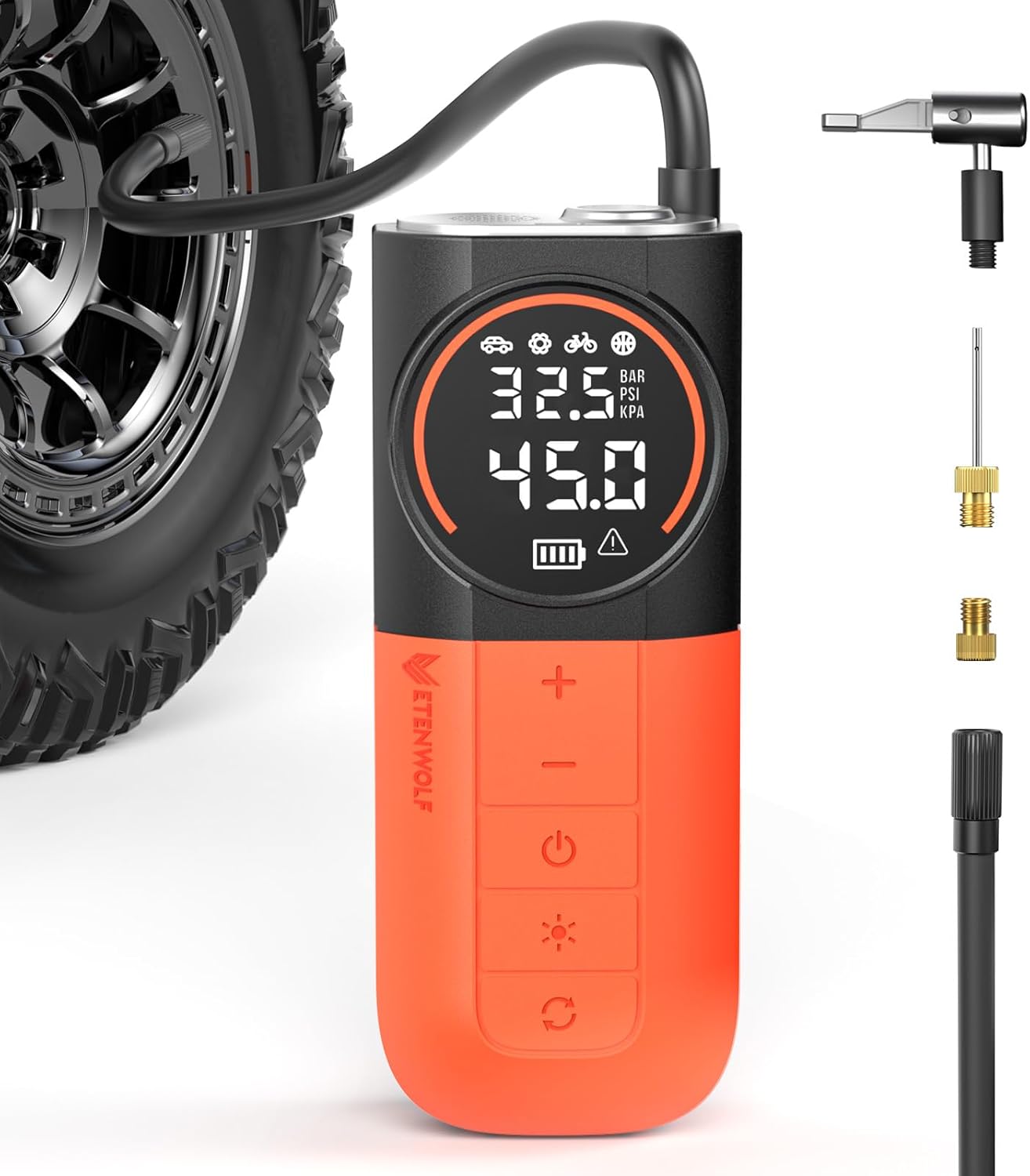
The ETENWOLF S1 cordless tire inflator delivers ultra-fast inflation with up to 160 PSI and a 20 L/min airflow for quicker tire top-offs. Its 5200mAh battery and cooling system support inflating many tires and sports balls on a single charge, while the digital pressure gauge and multi-unit display help you reach the right pressure accurately. With preset modes, pressure memory, an auto-stop feature, and an LED flashlight, it’s built for easy roadside and everyday use.
Step 1: Find Your Camry’s Recommended Cold PSI
Open the driver’s door and look for the tire and loading information label on the door jamb or B-pillar. Match the PSI to your tire size. If the label is damaged or missing, check your owner’s manual or Toyota owner information for your exact model year and trim.
Step 2: Check Pressure Before Driving
Remove the valve cap, press the tire gauge firmly onto the valve stem, and read the pressure. Check all four tires and the spare if your Camry has one. If a tire is low, add air in small amounts and recheck. If it is high when cold, release air slowly until it matches the placard value.
Step 3: Recheck After Adjustments
After adding or releasing air, check the pressure again. Replace the valve cap and listen for leaks. If one tire keeps losing pressure faster than the others, have it checked for a puncture, valve-stem issue, bead leak, or wheel damage.
Step 4: Do Not Rely Only on TPMS
A tire pressure monitoring system is helpful, but it is not a substitute for a gauge. USTMA notes that TPMS warnings may come on only after a tire is significantly underinflated. In hot weather, a tire can be low enough to run hot before the warning light gets your attention.
Summer Tire Maintenance Tips for a Camry
A Camry is easy on tires when everything is maintained, but summer heat makes small problems more expensive. Use this checklist during hot months and before any long road trip.
| Task | How to Do It | Why It Matters |
|---|---|---|
| Pressure check | Use a gauge when tires are cold | Helps prevent underinflation, overheating, and uneven wear |
| Tread check | Use a tread-depth gauge or penny test | Confirms wet-road grip and replacement timing |
| Sidewall inspection | Look for cracks, cuts, bulges, and exposed cords | Catches structural damage before failure |
| Rotation | Follow Toyota’s schedule; if no interval is listed, 5,000–8,000 miles is common guidance | Promotes even tread wear |
| Alignment check | Inspect if the car pulls, the steering wheel is off-center, or one edge wears fast | Prevents rapid, uneven wear |
| Load check | Do not exceed vehicle load limits when packing for trips | Reduces heat buildup and tire strain |
Note: If you store seasonal tires, keep them in a cool, dry place away from direct sunlight, ozone sources, and standing water. Heat and sunlight can speed up tire aging.
When to Replace Heat-Damaged Camry Tires
Replace a Camry tire when tread depth reaches 2/32 inch, when wear bars are flush with the tread, or when the penny test shows the top of Lincoln’s head. Do not wait for the tire to look bald across the whole surface; one dangerously worn area is enough to make the tire unsafe.
You should also replace or professionally inspect a tire if you see:
- Sidewall bulges, bubbles, or separation
- Deep cracks, dry rot, or exposed cords
- Cuts, punctures, or impact damage that cannot be safely repaired
- Repeated pressure loss after inflation
- New vibration, thumping, pulling, or road noise
- Severe uneven wear from alignment, suspension, or pressure problems
Do Not Use Treadwear Rating as a Replacement Rule
A tire’s treadwear rating is not a heat-damage replacement threshold. It is a relative comparison of expected tread wear under test conditions. A tire with a high treadwear number can still be unsafe if it is cracked, bulged, old, punctured, or worn to the legal minimum.
Check Tire Age in Hot Climates
Tire age matters more in warm, sunny climates because heat, sunlight, poor storage, and poor maintenance can contribute to aging. NHTSA says some vehicle and tire manufacturers recommend replacing tires that are six to 10 years old, regardless of treadwear. Check the DOT Tire Identification Number on the sidewall; the last four digits show the week and year the tire was made.
What to Do If a Camry Tire Gets Too Hot on a Trip
If you smell hot rubber, feel vibration, hear thumping, see a TPMS warning, or notice a tire looks low, do not keep driving at highway speed. Slow down gradually, avoid hard braking, and pull over somewhere safe.
- Let the tire cool before touching it closely.
- Look for sidewall bulges, cuts, cracks, exposed cords, or objects in the tread.
- Check pressure with a gauge if it is safe to do so.
- Do not bleed air from a hot tire just to match the placard PSI.
- Use roadside assistance or a spare if the tire appears damaged or will not hold pressure.
After the tire cools, recheck pressure. If the tire was low, damaged, or much hotter than the others, have it inspected before continuing a long drive.
Frequently Asked Questions
Can hot weather affect Camry tire alignment?
Hot weather does not directly change wheel alignment. However, heat can make uneven tire wear show up faster if the alignment, suspension, or tire pressure is already wrong. If your Camry pulls to one side or one tire edge wears faster, schedule an alignment inspection.
Do tire brands matter more in extreme heat?
Brand can matter, but the more important details are the correct size, load index, speed rating, temperature grade, traction rating, tire age, and proper inflation. A premium tire will still fail early if it is driven underinflated, overloaded, or damaged.
Are run-flat tires better for Camry summer driving?
Run-flat tires are not automatically better for hot-weather driving. They can help you keep moving for a limited distance after pressure loss, but they may ride firmer and cost more. For most Camry owners, a quality touring, all-season, or summer tire in the correct size is the better starting point.
Should I adjust tire pressure for highway heat?
Set your Camry’s tire pressure when the tires are cold, using the door-jamb placard. Do not bleed air from a hot tire just because the PSI rose after highway driving. Let the tire cool, then recheck and adjust to the recommended cold pressure.
Can wheel material help tires stay cooler?
Wheel material is not the main factor in tire temperature. Ventilated alloy wheels can help brake heat dissipation in some conditions, but tire pressure, load, speed, tread condition, and alignment matter far more for everyday Camry tire safety.
How often should I check Camry tire pressure in summer?
Check tire pressure at least once a month, before long trips, and whenever temperatures swing sharply. During very hot weather or heavy travel, checking every two weeks is a smart habit.
Is it safe to drive if one tire feels hotter than the others?
No, not until you understand why. One unusually hot tire may be underinflated, overloaded, dragging from a brake issue, damaged, or failing internally. Pull over safely, let it cool, check pressure, inspect for damage, and get professional help if anything looks wrong.
Conclusion
Hot weather can raise your Toyota Camry’s tire pressure reading, increase heat buildup on long drives, and speed up wear when tires are low, overloaded, misaligned, or damaged. The best protection is regular cold-pressure checks, tread-depth checks, sidewall inspections, and timely rotation. Use the Toyota door-jamb PSI, not the sidewall maximum, and never ignore cracks, bulges, vibration, or repeated pressure loss. A few minutes of tire care before a summer drive can protect traction, handling, fuel economy, and your safety.
Sources
- National Highway Traffic Safety Administration: TireWise — tire pressure, tread depth, tire aging, replacement signs, UTQG ratings, and tire-related crash safety context.
- U.S. Tire Manufacturers Association: Tire Care Essentials — pressure, tread, rotation, alignment, cold tire checks, TPMS limits, and 5,000–8,000-mile rotation guidance when no vehicle interval is specified.
- Toyota Owners: Camry Tire Inflation Pressure — Toyota-specific cold tire inflation pressure and tire/loading label guidance.
- Bridgestone Americas: Tire Inflation — tire pressure changes with temperature and cold-pressure checking guidance.

Related Articles

Toyota Camry All-Season Tires Explained: What They Can and Can’t Do
In exploring Toyota Camry all-season tires, discover their benefits and limitations—are they really the right choice for your driving needs?
Read More
Toyota Camry Tire Traction in Ice and Snow: A Practical Winter Driving Guide
Learn essential tips for maximizing tire traction on ice and snow in your Toyota Camry, ensuring your winter driving is safe and confident. Discover more now!
Read More
Do Toyota Camry Tires Need Snow Chains? When They Help and When They Don’t
How do snow chains enhance your Toyota Camry's winter driving safety, and when should you avoid using them? Discover the essential details inside!
Read More