
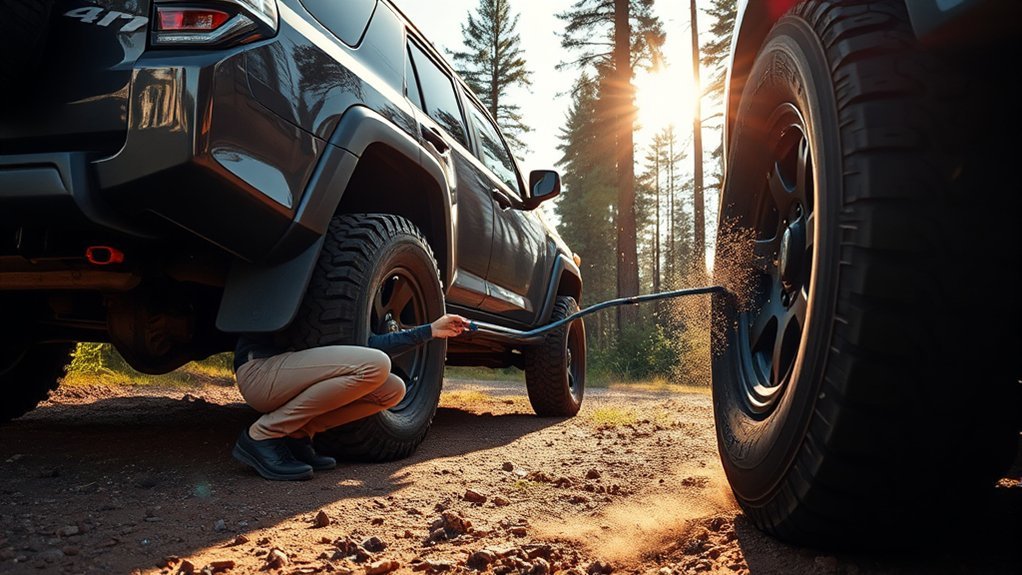
Using a portable air compressor for your 4Runner tires is simple once you know three things: the correct cold PSI for your exact vehicle, how your compressor gets power, and when to stop so you do not overinflate the tire or overheat the compressor. The safest target is always the pressure listed on your driver-side door placard or in your Toyota owner’s manual, especially if your 4Runner has different tires, extra cargo, or aftermarket wheels.
Quick Answer
To use a portable air compressor for 4Runner tires, check the cold PSI on the driver-door placard, connect the compressor to the correct power source, attach the hose firmly to the valve stem, inflate in short intervals, and verify the final pressure with a separate tire gauge before driving.
Key Takeaways
- Use the cold tire pressure on your 4Runner’s door placard or owner’s manual, not the maximum PSI molded into the tire sidewall.
- A 4Runner’s tire pressure can vary by model year, trim, tire size, load, and modifications, so avoid using one universal PSI number.
- Let the compressor rest according to its duty cycle, especially when inflating large SUV or all-terrain tires.
- After airing down for trails, air back up before highway driving and confirm pressure with a reliable gauge.
At a Glance
| Time Required | About 5–10 minutes per tire, depending on tire size and compressor airflow |
| Difficulty | Easy |
| Tools Needed | Portable air compressor, tire pressure gauge, valve-stem caps, power source, gloves if fittings get hot |
| Cost | No added cost if you already own the compressor; portable 12V compressors vary widely by size and duty cycle |
Why You Need a Portable Air Compressor for Your 4Runner
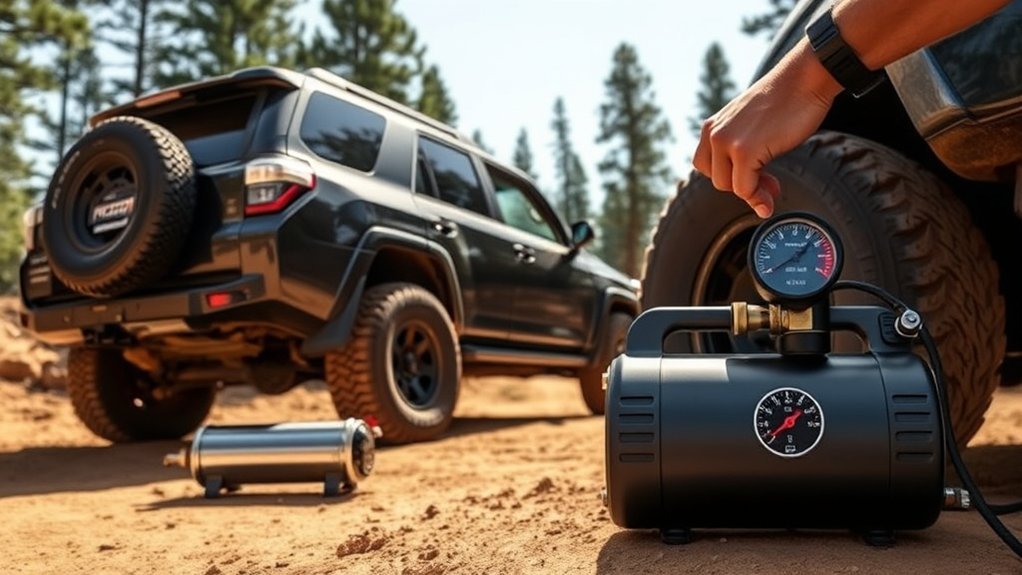
A portable air compressor is useful for routine tire maintenance, roadside emergencies, and off-road trips where you air down for traction and comfort. It lets you bring your 4Runner tires back to the correct pressure without hunting for a gas-station air pump.
The most important rule is simple: inflate to the recommended cold tire pressure for your exact setup. You can find that number on the tire-and-loading placard on the driver-side door jamb or in your Toyota owner’s manual. The Toyota owner’s manual library is the best place to check model-specific information if your printed manual is not handy.
[Products Worth Considering]

This tire inflator with pressure gauge delivers long-lasting performance with a durable rubber-protected gauge and sturdy build. The longer hose and 360 swivel air chuck help you seal the valve securely and keep your hands free while measuring, inflating, or deflating. It’s battery-free for reliable use and provides ±2 PSI accuracy in the mid-range for most typical tires, with universal compatibility for 1/4 NPT compressor outputs.

The Powools cordless tire inflator delivers fast inflation up to 150 PSI with a built-in digital display and auto shut-off to prevent over-inflation. Powered by rechargeable batteries, it works without an external power source and includes multiple preset modes plus a custom mode for different inflatables. A set of interchangeable nozzles and a multi-mode LED light (lighting, alarm, SOS) make it useful for cars, motorcycles, bicycles, and sports balls.
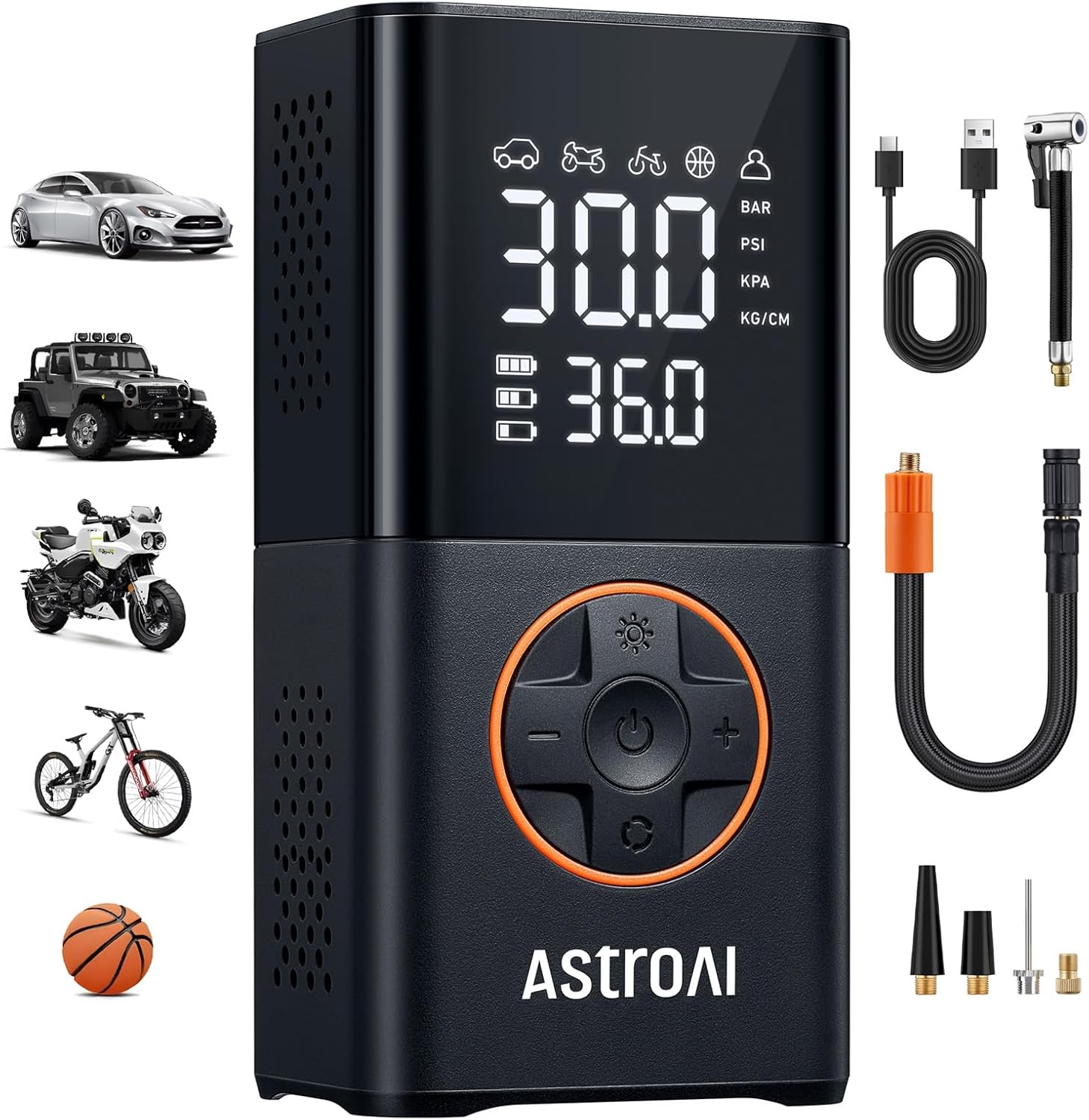
AstroAI L7 provides fast, cordless inflation for cars, motorcycles, bicycles, e-bikes, and sports balls with preset smart modes and a custom pressure option. Its compact design, dual digital display, and built-in auto-off make it easy to use for quick road-trip top-offs and emergency roadside inflation. The unit includes LED lighting and an SOS strobe flashlight for visibility, plus USB-C/USB ports for charging devices.
Before You Start: Find the Right PSI
Do not guess your 4Runner’s PSI from a forum post, a tire sidewall, or a one-size-fits-all number. The sidewall lists the tire’s maximum pressure limit, not the pressure Toyota selected for ride quality, handling, load capacity, and tire wear.
- Open the driver-side door and read the tire-and-loading placard.
- Check whether the listed pressure is for front, rear, and spare tires.
- Measure pressure when the tires are cold, ideally before driving or after the vehicle has been parked long enough for the tires to cool.
- If you run aftermarket tire sizes, LT-rated tires, heavy cargo, towing weight, or beadlock wheels, consult a tire professional or the tire manufacturer’s load-inflation guidance.
Warning: Never inflate past the limit of the tire, wheel, valve stem, or compressor. Overinflation can reduce traction, worsen ride quality, and increase uneven tire wear. Underinflation can create heat buildup and tire damage, especially at highway speed.
Getting Your Compressor Ready to Roll
Set up the compressor before you remove any valve caps. That keeps dirt out of the valve stem and helps you work quickly.
- Confirm the power source. Small inflators may plug into a 12V outlet, while stronger compressors often use battery clamps. AC compressors need a properly rated outlet and extension cord.
- Check the compressor’s maximum PSI and duty cycle. The PSI rating tells you the pressure limit; the duty cycle tells you how long it can run before it needs a rest.
- Inspect the hose and chuck. Look for cracked hoses, loose fittings, damaged seals, or dirt in the tire chuck.
- Keep a separate tire gauge nearby. Built-in gauges can be convenient, but a separate gauge is the best way to verify the final pressure.
Note: The National Highway Traffic Safety Administration recommends using the vehicle manufacturer’s recommended tire pressure and checking tire condition regularly. A tire-pressure monitoring system is helpful, but it does not replace manual pressure checks.
Step-by-Step Guide for Using Your Portable Air Compressor
Follow this process for each tire. Work on level ground, keep the hose away from hot exhaust parts, and avoid standing directly over the hose or chuck while the compressor is running.
1. Check the Cold Tire Pressure
Remove the valve cap and press your tire gauge firmly onto the valve stem. Write down the current PSI if you are inflating multiple tires. This helps you estimate how long each tire may take and prevents accidental overfilling.
2. Connect the Compressor to Power
Connect the compressor exactly as the manual says. For a battery-clamp compressor, attach the positive clamp to the positive battery terminal and the negative clamp to the recommended ground point or negative terminal. For a 12V outlet compressor, make sure the outlet and fuse can handle the compressor’s draw.
3. Attach the Air Hose to the Valve Stem
Push or twist the tire chuck onto the valve stem until it seals. If you hear a steady hiss, stop and reseat the chuck. A poor seal wastes time, heats up the compressor, and gives you a false reading.
4. Inflate in Short Intervals
Turn on the compressor and watch the gauge. If your compressor has an automatic shutoff, set it to the placard PSI. If it does not, pause every minute or two to check pressure. Larger all-terrain tires take longer than smaller stock tires, so be patient and follow the compressor’s duty cycle.
5. Verify and Finish
Turn off the compressor, disconnect the hose, and immediately check the tire with your separate gauge. If the tire is low, add air in short bursts. If it is high, release a little air through the valve stem and recheck. Replace the valve cap when the tire is correct.
Pro Tip: Inflate all four tires in a repeatable pattern, such as driver front, passenger front, passenger rear, driver rear. This prevents skipping a tire when you are tired, dusty, or working in the dark after a trail run.
Airing Up After Off-Road Driving
Many 4Runner owners air down on dirt, sand, rocks, or washboard roads to improve traction and ride comfort. That trail pressure is not meant for normal highway driving. Before you return to pavement speeds, stop in a safe flat area and air the tires back up to the correct road pressure.
- Let the tires cool if they are hot from a long trail or highway run.
- Check for sidewall cuts, nails, bead leaks, or missing valve caps before inflating.
- Inflate gradually and verify every tire with a gauge.
- Drive slowly for the first few minutes and listen for leaks or vibration.
The best trail compressor is not always the one with the highest max PSI. For 4Runner tires, airflow at working pressure, duty cycle, power connection, and hose length usually matter more.
Why Tire Pressure Monitoring Matters
Your 4Runner’s tire-pressure monitoring system can warn you when tire pressure is significantly low, but it is not a precision inflation tool. U.S. FMVSS No. 138 sets requirements for TPMS warnings, but the system may not alert you to smaller pressure differences that still affect ride, handling, and wear.
- Use TPMS as a warning, not your only pressure check.
- Verify tire pressure manually at least monthly and before long trips.
- Check pressure after major temperature swings.
- Reset or recalibrate TPMS only if your owner’s manual calls for it.
Top Mistakes to Avoid When Using Your Portable Air Compressor
A compressor is easy to use, but a few mistakes can damage tires, drain a battery, or overheat the tool.
- Using the tire sidewall as your target PSI. The sidewall shows a maximum rating, not your 4Runner’s recommended road pressure.
- Skipping the cold-pressure check. Hot tires can read higher than cold tires, which can lead to underinflation later.
- Letting the compressor run unattended. Stay nearby so you can stop it if the hose pops loose, the motor overheats, or pressure rises too quickly.
- Ignoring the duty cycle. Compact compressors may need cooling breaks between tires.
- Using a weak power connection. Thin extension cords, overloaded 12V sockets, or loose battery clamps can cause voltage drop and heat.
- Trusting one gauge blindly. If your readings seem strange, compare with another gauge.
Maintenance Tips for Your Portable Air Compressor
A little maintenance keeps your compressor ready for the next trip. After each use, let it cool, wipe off dust, and store it where the hose will not kink.
- Clean the air filter if your compressor has a serviceable filter, especially after dusty trails.
- Inspect hoses and fittings for cracks, melted spots, leaks, or loose threads.
- Check the power cord and clamps for corrosion, fraying, or heat damage.
- Store it dry to reduce corrosion and electrical problems.
- Test it before trips so you are not discovering a bad fuse or hose leak at the trailhead.
[Products Worth Considering]

AstroAI AIRUN H is a compact 12V tire inflator designed for fast, convenient inflation with an easy-to-read digital pressure gauge. Set your target pressure with programmable controls and let the auto shut-off turn off the pump when the preset is reached. It also includes a backlit screen and LED flashlight for nighttime use, with a ToughUltra durability design for longer service life.

The ROCGORLD R8 portable tire inflator delivers fast, reliable inflation with a 40 L/min pump and up to 150 PSI pressure for cars, EVs, motorcycles, and bikes. A dual digital LED display shows real-time and preset pressure with auto-stop for easy one-key operation and safer monitoring. Durable design includes cooling and included accessories, making it a convenient emergency and everyday inflation device.

This portable digital air compressor plugs into your car’s 12V outlet, lets you preset the target tire pressure, and automatically shuts off when it’s reached. It delivers up to 150 PSI with an accurate gauge, plus a bright LED light and digital display for easier night use. With multiple nozzle adaptors and a long power cord, it’s suitable for cars and many inflatables, excluding trucks and motor lorries.
Troubleshooting Common Issues With Your Portable Air Compressor
If the compressor is not working correctly, stop and diagnose the simple problems first. Most issues come from power, leaks, overheating, or gauge error.
Compressor Will Not Turn On
- Check the vehicle outlet, inline fuse, and compressor switch.
- For battery clamps, confirm the clamps are tight and connected to clean metal.
- If the compressor has thermal protection, let it cool before trying again.
- Do not keep cycling the switch if you smell burning plastic or see melted wiring.
Low Air Pressure or Slow Inflation
- Reseat the tire chuck on the valve stem.
- Listen for hose leaks or loose fittings.
- Check whether the compressor is rated for your tire size and pressure.
- Make sure the intake vents are not blocked by dust, a storage bag, or the ground.
Overheating During Use
Warmth is normal, but excessive heat is not. Turn the compressor off if it smells hot, slows down, or becomes too hot to handle safely. Let it cool in open air and continue only after it has rested according to the manual.
Warning: Metal fittings and hoses can get hot during long inflation sessions. Use gloves if needed, keep children away from the compressor, and never pack the unit into a closed bag while it is still hot.
TPMS Light Stays On After Inflation
Drive a short distance and recheck pressure with a gauge. If all tires, including the spare if monitored, are at the correct cold PSI and the light remains on, check your owner’s manual for the reset procedure. A flashing or persistent TPMS light can also mean a sensor or system fault.
How to Choose the Right Compressor for Your 4Runner
The right compressor depends on how you use your 4Runner. A small 12V inflator may be fine for topping off a few PSI at home. For trail use, larger tires, or airing up all four tires from low trail pressure, choose a stronger compressor with better airflow and duty cycle.
- Airflow rating: Look at CFM or LPM at working pressure, not just max PSI.
- Duty cycle: A higher duty cycle means the compressor can run longer before resting.
- Power connection: Battery clamps usually support stronger compressors than small accessory plugs.
- Hose length: Make sure the hose reaches all four tires from the power source.
- Gauge and auto shutoff: Helpful features, but still verify with a separate gauge.
- Storage size: Pick a unit that fits securely in your cargo area without crushing the hose.
[Products Worth Considering]

The JACO FlowPro Tire Inflator measures, inflates, and airs down tires up to 100 PSI with battery-free operation and ±2% accuracy after calibration. It features a glowing pressure dial for night visibility, a heavy-duty steel build with a hybrid hose, and a precision push-to-inflate thumb trigger. The patented Lightning Air Chuck locks on for a secure seal, and the kit includes quick-connect hardware for easy inline use with your air compressor.

This portable tire inflator delivers fast, efficient inflation with a smart cooling design that helps prevent overheating during extended use. It features a digital pressure gauge with ±1 PSI accuracy, four preset modes for quick setup, and auto shut-off at your target pressure. You can power it either with the built-in 6000mAh battery or your vehicle’s 12V outlet for flexible use on the go or at home.

This portable cordless tire inflator delivers rapid inflation up to 150 PSI with a built-in pressure gauge for accurate readings. It offers multiple preset modes for car, bike, motorcycle, and ball inflation, plus an LED light system for visibility in dark conditions. The auto shut-off helps stop pumping when your preset pressure is reached, and it supports several pressure units for convenience.
Frequently Asked Questions
Can I use my compressor for other vehicles or equipment?
Yes, as long as the compressor is rated for the pressure and volume required. It can usually handle other vehicle tires, bike tires, sports balls, and inflatables with the right adapter. Always check the PSI limit of the item you are inflating.
How often should I check my 4Runner tire pressure?
Check tire pressure at least once a month, before long trips, after big temperature changes, and after off-road driving. Use a gauge when the tires are cold for the most accurate reading.
What happens if I overinflate my tires?
Overinflated tires can ride harshly, reduce the contact patch, and wear more in the center of the tread. If you add too much air, release a little through the valve stem and recheck with your gauge.
Is it safe to leave the compressor running unattended?
No. Stay with the compressor while it runs. A hose can loosen, a tire can overinflate, or the compressor can overheat. Turn it off as soon as the tire reaches the correct pressure.
Can I use an extension cord with my compressor?
Only use an extension cord with an AC compressor if the cord is rated for the compressor’s amperage and length. Do not use a light household cord with a high-draw compressor. For 12V compressors, use the manufacturer’s supplied power cord or a properly rated extension made for that compressor.
Should my engine be running while I inflate the tires?
Follow the compressor manual. Many 12V compressors work best with the vehicle running to maintain voltage, but only do this outdoors or in a well-ventilated area. Never run the engine in a closed garage.
Can I drive on aired-down trail pressure?
Drive slowly and cautiously while off-road, but air back up before normal pavement or highway speeds. Low trail pressure can create heat buildup, poor handling, and tire damage on pavement.
Conclusion
A portable air compressor is one of the most useful tools you can keep in a 4Runner, but it works best when you use it carefully. Start with the cold PSI on your door placard or owner’s manual, connect the compressor to the correct power source, inflate in short intervals, and verify the final pressure with a separate gauge. Keep an eye on duty cycle, air back up after trails, and your tires will be ready for the road ahead.
Sources
- Toyota Owner’s Manuals — model-specific owner information and tire-pressure reference location.
- National Highway Traffic Safety Administration: Tires — tire pressure, tire safety, and maintenance guidance.
- 49 CFR § 571.138: Tire Pressure Monitoring Systems — U.S. TPMS requirements for significant underinflation warnings.
- Tire Rack: How Do I Check My Tire Pressure? — cold-pressure checking and tire-pressure best practices.

![[2026NEW] 5000A Jump Starter with Air Compressor (150PSI)](https://m.media-amazon.com/images/I/71oG4PFNsmL._AC_SL1500_.jpg)