Winter tires matter because your Tundra is heavy, powerful, and often used in rough weather. Four-wheel drive can help you get moving, but it does not create extra tire grip when you need to stop or steer on cold pavement, slush, snow, or ice.
Quick Answer
Switch your Toyota Tundra to winter tires when daily temperatures stay near or below 45°F (7°C), or sooner if snow, ice, freezing rain, or mountain driving is expected. Install a matching set of four winter tires with the correct size, load rating, and Three-Peak Mountain Snowflake marking.
Key Takeaways
- The 45°F (7°C) rule is a useful planning point, but snow, ice, local laws, and your driving routes matter too.
- Use four matching winter tires. Mixing winter tires with all-season tires can make the truck harder to control.
- Choose the tire size and load rating from your Tundra’s door placard or owner’s manual, not from guesswork.
- Check pressure monthly when the tires are cold, because cold weather can lower tire pressure.
At a Glance
| Best Switch Time | When temperatures stay near or below 45°F (7°C), or before snow and ice arrive |
| Difficulty | Easy if using a tire shop; moderate if swapping a mounted wheel set at home |
| Tools Needed | Tire pressure gauge, tread-depth gauge, torque wrench if swapping mounted wheels |
| Cost | Varies by tire size, load rating, wheel package, TPMS sensors, mounting, balancing, and storage |
Understanding the Importance of Winter Tires
Winter tires are built for cold-weather grip. Compared with most all-season tires, they use rubber compounds and tread designs that stay more useful in cold, snowy, and icy conditions. The National Highway Traffic Safety Administration notes that all-season tires have some mud and snow capability, but winter tires are more effective in deep snow.
For a Toyota Tundra, that grip matters even more because a pickup has weight, torque, and sometimes cargo or trailer load working against it. If the tires cannot bite into cold pavement, packed snow, or slush, your truck may take longer to stop and may feel less stable when turning, braking, or changing lanes.
Winter tires can improve traction, braking, and handling in cold-weather driving. AP/Edmunds reports that winter tires can provide up to 30% shorter stopping distances in certain snow and ice conditions when compared with all-season tires.
Warning: Winter tires do not make ice safe. Slow down, leave more following distance, avoid sudden steering or braking, and follow local chain or winter-tire rules when road signs require them.
When Are Winter Tires Necessary?
Winter tires are necessary when your Tundra regularly sees cold temperatures, snow, ice, freezing rain, slush, or winter mountain roads. You do not need to wait for deep snow. Cold pavement alone can reduce tire grip, especially early in the morning and at night.
The Temperature Trigger
The common rule is simple: plan the switch when daily temperatures are consistently around or below 45°F (7°C). A good practical version is the “seven and seven” rule: if temperatures are around 7°C for several days in a row, book the tire change before shops get busy.
This rule is a planning guide, not a guarantee. If your area gets an early cold snap, freezing rain, lake-effect snow, or mountain snow, switch sooner. If your climate is mild with little snow, high-quality all-weather tires may be enough for some drivers, but dedicated winter tires still offer the stronger winter setup.
The Snow, Ice, and Slush Trigger
Switch before the first major snowfall if your Tundra is used for commuting, school runs, towing, rural roads, job sites, or long highway trips. Slush and packed snow can make a heavy truck harder to stop, and black ice can appear before the road looks dangerous.
Winter tires use deeper grooves and many small biting edges, called sipes, to help grip snow and push slush away from the tread. That design helps the truck feel more controlled in conditions where all-season tires may feel hard, vague, or slow to respond.
The Local-Law and Travel Trigger
Some regions require winter tires, snow-rated tires, chains, or other traction devices during specific dates or on specific roads. These rules can change by state, province, mountain pass, vehicle type, and weather condition. Before a winter road trip, check the transportation department or road authority for your route.
This matters for Tundra owners because some trims and wheel sizes may have limited chain clearance. Always check your owner’s manual before using tire chains or cable chains.
The 45°F (7°C) Temperature Rule Explained
The 45°F (7°C) rule exists because tire rubber behaves differently as temperatures drop. Winter tire compounds are designed to remain more flexible in the cold. Many all-season and summer-oriented tires can feel firmer as the temperature falls, which can reduce the tire’s ability to conform to the road surface.
| Weather Pattern | Best Tire Choice | Why It Matters |
| Above 45°F with no snow or ice | All-season, all-terrain, or all-weather tire, depending on your use | Winter tires can wear faster in warm weather |
| Near or below 45°F for several days | Winter tires or severe-snow-rated all-weather tires | Cold pavement can reduce grip before heavy snow arrives |
| Snow, ice, freezing rain, or mountain passes | Dedicated winter tires on all four wheels | Best setup for braking, steering, and stability in winter conditions |
Pro Tip: Book your winter tire appointment before the first storm in your area. Tire shops fill up fast once the forecast shows snow.
Signs You Need Winter Tires on Your Toyota Tundra
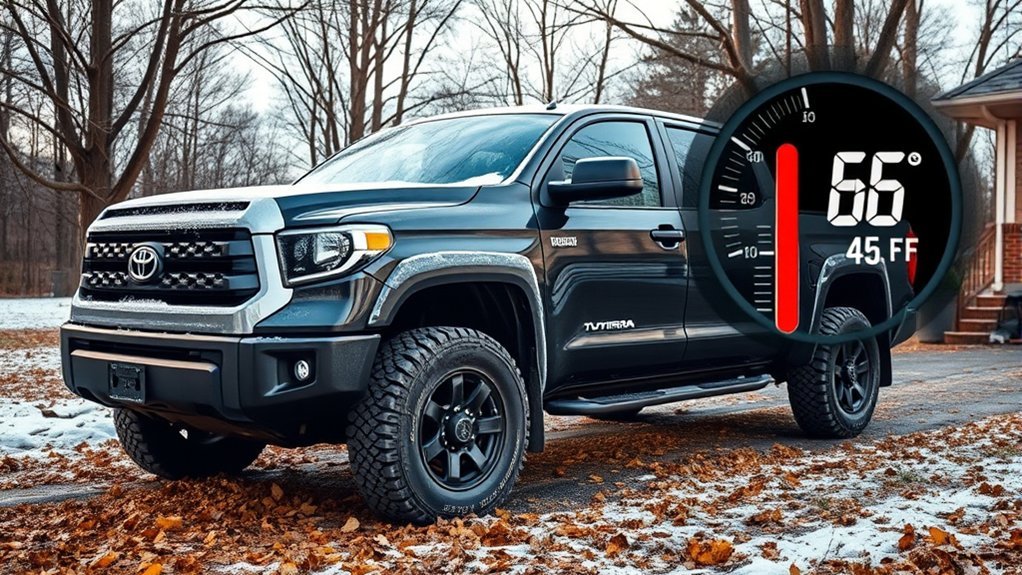
You need winter tires on your Tundra if you notice any of these conditions:
- Morning temperatures stay near freezing. Cold overnight pavement can be slick even when daytime roads look clear.
- Your tires spin when pulling away. This is common on packed snow, icy intersections, and steep driveways.
- Stopping distances feel longer. If the brake pedal feels normal but the truck takes longer to slow, tire grip may be the issue.
- The rear of the truck feels light. An unloaded pickup bed can make traction more challenging on slick roads.
- You tow or carry winter cargo. Extra weight increases the need for proper tire load rating and stable braking.
- You drive rural, mountain, or unplowed routes. Winter tires are especially helpful where plows and salt trucks are delayed.
Four-Wheel Drive Does Not Replace Winter Tires
A 4WD Tundra can move from a stop more easily than a 2WD truck in many slippery situations, but 4WD does not shorten stopping distance by itself. Braking and steering still depend on the four contact patches where the tires meet the road.
That is why winter tires should be installed as a complete set of four. If you put winter tires on only one axle, the front and rear of the truck can grip differently, which may cause poor handling on slick roads.
How Winter Tires Improve Vehicle Safety
Winter tires improve safety by giving your Tundra more usable grip in cold and slippery conditions. That grip helps with three things drivers notice right away: starting, steering, and stopping.
- Cold-weather rubber: Winter tire compounds are made to stay more flexible in low temperatures.
- Deeper tread blocks: Open tread channels help bite into snow and move slush away from the tire.
- Sipes: Small cuts in the tread create extra biting edges for snow and ice.
- Better braking confidence: AP/Edmunds reports winter tires can reduce stopping distances in certain cold-weather conditions compared with all-season tires.
Winter tires do not remove every risk, but they give the truck a better chance to respond when you brake, turn, or avoid a hazard.
Debunking Myths About Winter Tires
Myth: All-Season Tires Are Enough for Every Winter
All-season tires are a compromise. They can work in light winter conditions, but they are not the same as dedicated winter tires in deep snow, packed snow, freezing rain, or icy road conditions. NHTSA notes that winter tires are more effective than all-season tires in deep snow.
Myth: 4WD Means You Do Not Need Winter Tires
Four-wheel drive helps your Tundra use engine power through more wheels, but it does not create more friction between the tires and the road. If the tires cannot grip, 4WD will not solve braking or cornering problems.
Myth: Winter Tires Are Only for Snow
Winter tires also help on cold pavement, icy bridges, slushy roads, and freezing rain. Many winter crashes happen when roads look only wet but are actually icy in shaded areas, on ramps, or on overpasses.
Myth: You Can Use Winter Tires All Year
Winter tires are not ideal for warm weather. Their softer compounds can wear faster on hot pavement, and handling can feel less precise. Switch back to your non-winter tire set once temperatures are consistently above 45°F (7°C) and snow or ice is no longer likely.
How to Select the Best Winter Tires for Your Toyota Tundra
Choosing winter tires for a Toyota Tundra is not just about finding a tire that says “snow” on the sidewall. You need the correct size, load rating, tire type, and winter performance marking.
[Products Worth Considering]

This manual duck head tire changer kit makes tire installation and removal simpler by letting you embed the duck head into the tire with applied pressure. The integrated design and durable steel construction help reduce friction and improve efficiency and safety during use. Suitable for 16–21 inch wheels, it’s convenient for cars, trucks, SUVs, and ATV tires, with 24-hour after-sales support.

These universal tire valve stem caps help protect valve cores from dust, debris, and moisture while helping maintain stable tire pressure. The corrosion-resistant metal construction and sealed design provide reliable protection in road grime, mud, and winter conditions. Twist-on installation makes them quick to fit on cars, SUVs, trucks, and motorcycles.
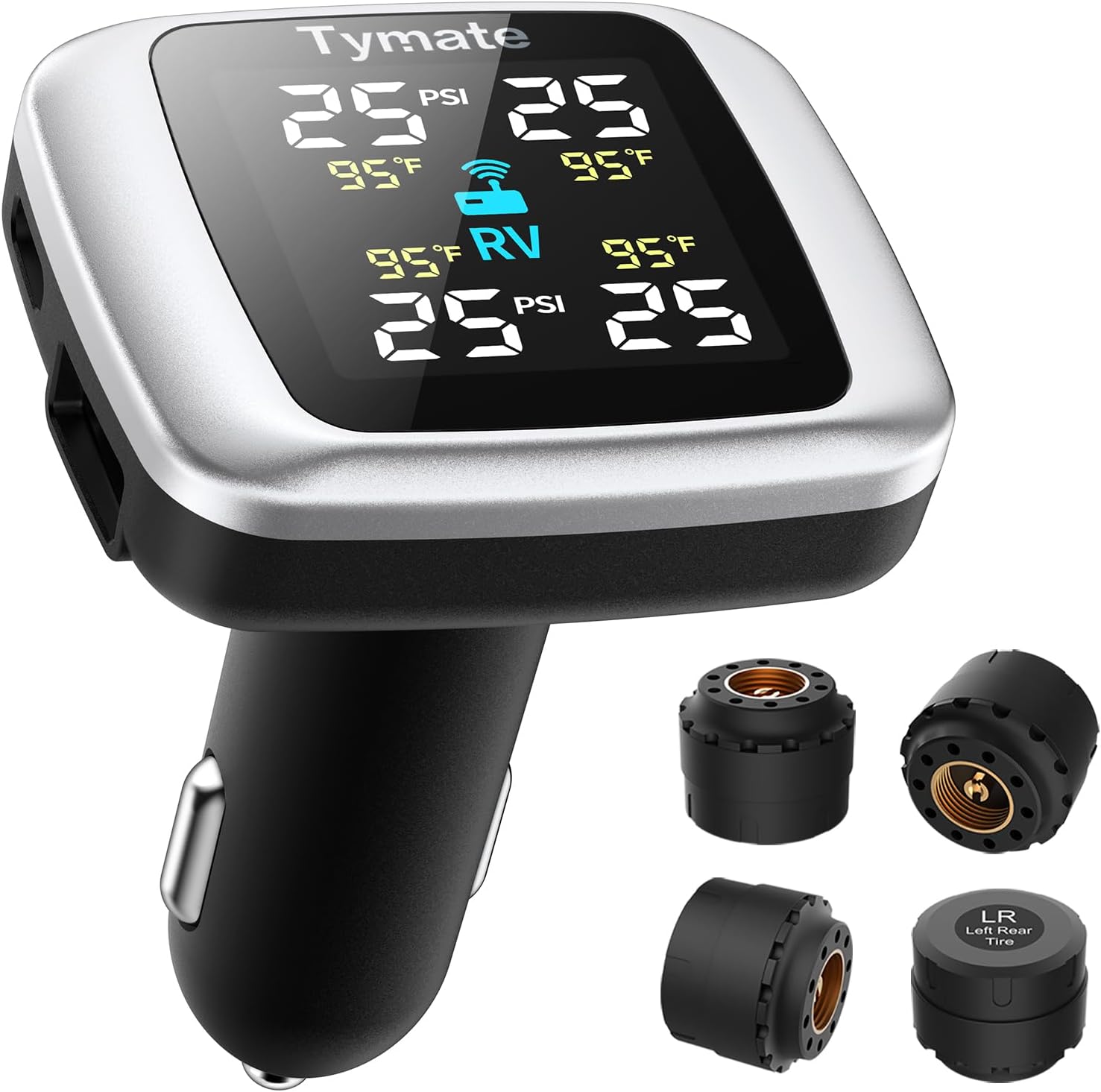
Tymate TM7 is a wireless tire pressure monitoring system that delivers real-time pressure and temperature readings for safer driving. It includes four external sensors, a bright color LCD display with adjustable backlight, and six alarm modes for high/low pressure, fast leakage, high temperature, and sensor signal or battery issues. The system covers a wide 0–144 PSI range and plugs into your vehicle’s cigarette lighter socket for quick DIY setup.
Check the Size, Load Rating, and Placard
Start with the tire and loading information label on the driver-side doorjamb or your owner’s manual. NHTSA recommends using the owner’s manual or tire/loading label to confirm the correct size for your vehicle.
For a Tundra, pay close attention to:
- Tire size: Match the size recommended for your trim and wheel package.
- Load index: Make sure the tire can support the truck, cargo, passengers, and towing load.
- Speed rating: Use a rating appropriate for safe road use and manufacturer guidance.
- TPMS compatibility: If you buy a second wheel set, decide whether to add tire pressure monitoring sensors.
- Wheel clearance: Confirm clearance before using chains or oversized winter tires.
Look for the Three-Peak Mountain Snowflake
For serious winter driving, look for the Three-Peak Mountain Snowflake symbol on the sidewall. This marking shows the tire has met a severe-snow performance standard. M+S markings alone can appear on many all-season or all-terrain tires, but they do not always mean the tire is a dedicated winter tire.
Choose Between Winter, All-Weather, and All-Terrain Tires
A dedicated winter tire is the strongest choice for frequent snow and ice. An all-weather tire with the Three-Peak Mountain Snowflake symbol can be a good year-round compromise in mild climates. A rugged all-terrain tire may look winter-ready, but some all-terrain tires are better in mud and gravel than on ice.
| Tire Type | Best For | Main Tradeoff |
| Dedicated winter tire | Frequent snow, ice, cold highways, mountain driving | Must be removed in warm seasons |
| All-weather tire with 3PMSF | Mild to moderate winter areas | Usually not as strong as a dedicated winter tire on ice |
| All-terrain tire | Dirt roads, gravel, job sites, light snow if properly rated | Can be less predictable on ice unless winter-rated |
What Happens If You Delay Switching to Winter Tires?
Delaying the switch can leave your Tundra on tires that are not matched to the season. That can mean reduced grip, longer stops, more wheelspin, and less confidence on cold roads.
If you wait too long, you may face:
- Longer stopping distances: Cold, wet, icy, or snowy roads need more grip than all-season tires may provide.
- More wheelspin: A powerful truck can spin tires easily on slick intersections and hills.
- Less steering control: Tires that lose grip can make the truck push wide in turns.
- Appointment delays: Tire shops become busy right after the first snow forecast.
- Legal or travel problems: Some winter routes require snow-rated tires or chains.
The safer plan is to switch before winter driving becomes urgent.
How to Switch Your Tundra to Winter Tires
- Check your current tire size and load rating. Use the doorjamb placard and owner’s manual.
- Choose four matching winter tires. Look for the Three-Peak Mountain Snowflake symbol for severe-snow service.
- Decide between tire-only swap or mounted wheel set. A second wheel set costs more upfront but can make seasonal swaps easier.
- Confirm TPMS setup. Ask whether your new wheel set needs sensors and whether they must be programmed.
- Have the tires mounted and balanced. New tires or tires moved onto wheels should be balanced by a qualified shop.
- Set cold tire pressure. Use the pressure on the truck’s tire label, not the maximum pressure printed on the tire sidewall.
- Recheck after the first short drive. If you swapped wheels at home, recheck torque using the correct specification from your manual.
Note: If your Tundra has aftermarket wheels, a lift kit, oversized tires, or a TRD off-road setup, confirm fitment and chain clearance before buying winter tires.
[Products Worth Considering]

Milton S-921 pencil tire pressure gauge helps you maintain optimal tire pressure for passenger cars with accurate readings in PSI and kPa. It features a built-in deflator valve for convenient pressure adjustments, plus a single chuck head and nylon indicator bar for easy use on the go. Built from durable plated brass and designed for reliable performance, it’s a practical road trip and cold-weather maintenance tool.

The TYAMATE TM8 solar-powered wireless TPMS delivers real-time tire pressure and temperature monitoring with six alarm modes for safer driving. A vibrant color LCD display shows readings clearly while windshield mounting keeps it hands-free and easy to read. With a wide 0–87 PSI range, strong 433.92 MHz signal transmission, and quick sensor pairing, it’s ideal for RV, sedan, SUV, MPV, and truck use.

Monitor tire tread wear with a smart, color-coded depth gauge that shows clear condition ranges at a glance. The bar is range marked for fast, easy readings, helping you maintain safer traction and performance. Each gauge is portable with a pocket clip, and the set includes 20 units for daily use and sharing.
Tips for Maintaining Winter Tires
Once your winter tires are installed, maintenance keeps them safer and helps them last longer.
- Check pressure monthly when cold. NHTSA recommends checking tire pressure at least once a month when the tires are cold.
- Use the truck’s recommended pressure. The correct pressure is on the Tire and Loading Information Label or in your owner’s manual.
- Inspect tread depth. NHTSA says tires are not safe and should be replaced when worn to 2/32 inch. For winter driving, replace earlier if traction fades or tread depth is getting low.
- Rotate regularly. Follow your owner’s manual. If the manufacturer recommends it, NHTSA gives a common range of 5,000 to 8,000 miles.
- Watch for age and cracking. Replace tires with sidewall cracks, exposed cords, uneven wear, or poor winter grip.
- Store them correctly. Clean off salt, dry them, and store them in a cool, dark, dry place away from direct sunlight and heat.
When to Remove Winter Tires
Remove winter tires when temperatures are consistently above 45°F (7°C) and snow or ice is no longer likely. Keeping winter tires on through warm weather can wear them faster and may reduce steering precision on hot pavement.
A practical spring rule is to wait until your area has several days above the 45°F mark and the long-range forecast no longer shows freezing nights. If you travel to colder mountain areas, delay the switch until those routes are safe for non-winter tires.
Where to Get Your Winter Tires Installed
You have several good options for winter tire installation:
- Toyota dealership: Good choice if you want vehicle-specific advice, TPMS help, and service records in one place.
- Independent tire shop: Often offers competitive tire pricing, mounting, balancing, storage, and seasonal appointments.
- Mobile tire service: Convenient if you already have winter tires mounted on wheels.
- Home wheel swap: Possible if the tires are already mounted and balanced on wheels, but you need safe lifting equipment, the correct torque spec, and a torque wrench.
If you buy a second wheel set, ask the installer to label each wheel position before storage. This makes the next rotation easier.
[Products Worth Considering]

Upgrade your Toyota’s wheels with durable aluminum alloy valve stem caps that help protect valve cores from corrosion and direct exposure to road grime, clay, water, and snow. Rubber rings improve sealing to help prevent air leakage and maintain stable tire pressure for safer driving. These caps are easy to install or remove without tools and add a unique, stylish look to your car.

The Tymate TM2 RV tire pressure monitoring system keeps you informed with a color LCD display, automatic backlight, and solar charging for dependable operation. It supports up to 10 tire positions with four pre-paired sensors, while offering multiple alarm modes for fast leak detection, pressure extremes, temperature alerts, and low-signal warnings. Built-in monitoring uses accurate readings and reliable 433.92MHz communication to help protect your RV, trailer, truck, or SUV.

These aluminum alloy tire valve stem caps with an O-ring seal help protect valve stems from corrosion while adding a clean, stylish look to your vehicle. The universal fit works across cars, trucks, motorcycles, bicycles, and more, making them an easy upgrade for everyday driving and off-road use. Installation is quick, and the included four-pack keeps all your tires dressed and protected.
Frequently Asked Questions
At what temperature should I start using winter tires on a Toyota Tundra?
Start using winter tires when daily temperatures stay near or below 45°F (7°C), or sooner if snow, ice, freezing rain, or winter travel is expected. The temperature rule is a planning guide, so use your local forecast and road conditions too.
Is mid-October too early for winter tires?
Mid-October is not too early in colder regions, mountain areas, or places with early snow. In mild climates, it may be early if daytime temperatures stay well above 45°F. Watch overnight lows and book before the first major storm rush.
Do I need winter tires if my Tundra has 4WD?
Yes, winter tires can still help a 4WD Tundra. Four-wheel drive helps you accelerate, but braking and steering still depend on tire grip. A 4WD truck on poor tires can still slide on ice or take longer to stop.
Should I install two winter tires or four?
Install four matching winter tires. Using winter tires on only the front or rear can create uneven grip between axles, which can make the truck harder to control during braking, cornering, or sudden maneuvers.
Can I use all-terrain tires instead of winter tires?
Some all-terrain tires work well in light snow, especially if they carry the Three-Peak Mountain Snowflake symbol. For frequent ice, deep snow, freezing rain, or mountain driving, dedicated winter tires are usually the safer choice.
Conclusion
Switching to winter tires on your Toyota Tundra is a safety decision, not just a seasonal chore. Use the 45°F (7°C) rule as your reminder, but also consider snow, ice, towing, mountain roads, local laws, and your daily driving needs.
For the best winter setup, install four matching winter tires with the correct size, load rating, and severe-snow marking. Check pressure monthly, inspect tread, and remove the tires once warm weather returns. Your Tundra may have the strength to handle winter roads, but the tires are what give it the grip to stop and turn.
Sources
- NHTSA TireWise — tire size, pressure, tread, rotation, and winter tire safety guidance
- AP News / Edmunds: Why you need winter tires — winter tire performance, stopping-distance claim, cold-weather tire behavior, and pressure change context
- Toyota Owners Manuals — vehicle-specific tire size, pressure, chain, wheel, and torque guidance