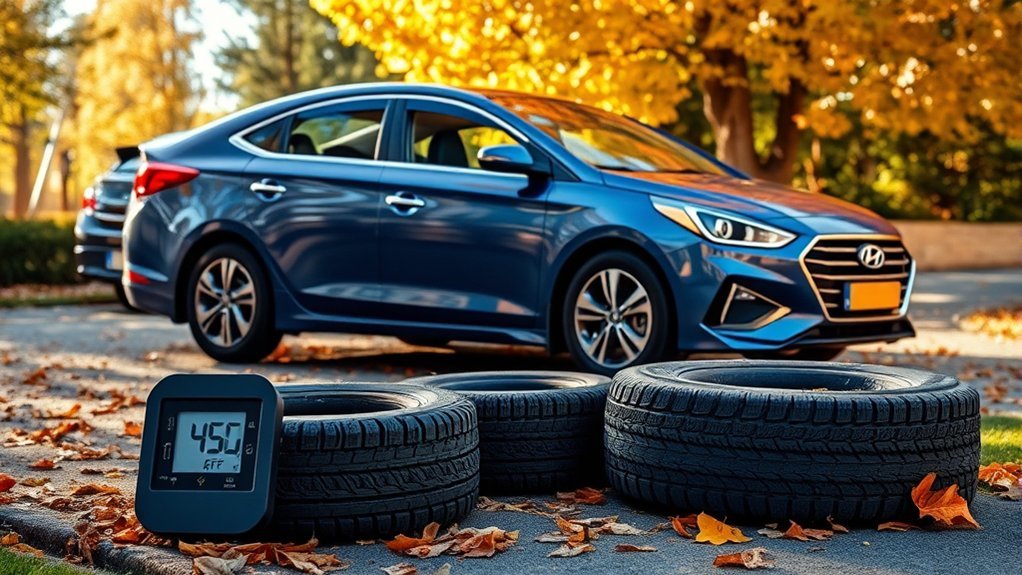
Winter tires are one of the most useful cold-weather upgrades for a Hyundai Sonata, especially if you drive in snow, slush, freezing rain, or icy morning conditions. The best time to install them is based on temperature, not the calendar alone: plan the switch when daily temperatures are consistently near or below 45°F (7°C), and do it before the first major winter storm.
Quick Answer
Put winter tires on your Hyundai Sonata when temperatures consistently drop below 45°F (7°C), especially if overnight or morning temperatures are already below that mark. Install them before the first snowfall so you are not caught on cold, slick roads with tires that were not designed for winter grip.
Key Takeaways
- Use the 45°F (7°C) rule as your main timing guide, not the first snowfall.
- Install a matched set of four winter tires, not just two, to keep braking and handling balanced.
- Choose tires with the three-peak mountain snowflake symbol for severe snow service.
- Snow Mode can help a Sonata manage slippery starts, but it cannot replace the grip of proper winter tires.
- Check tire pressure, tread, and local winter tire or studded tire rules before winter driving.
At a Glance
| Time Required | About 45–90 minutes at a tire shop, or longer if the shop is busy before the first storm. |
| Difficulty | Easy if a shop swaps them; moderate if you already have mounted winter wheels and the right tools. |
| Tools Needed | Tire pressure gauge, tread depth gauge, torque wrench if changing mounted wheels yourself, and the Sonata owner’s manual or driver-door tire placard. |
| Cost | Varies by tire size, brand, wheels, TPMS sensors, and labor. A separate winter wheel set costs more upfront but can make seasonal swaps faster. |
Understanding Why Winter Tires Are Essential for Your Hyundai Sonata
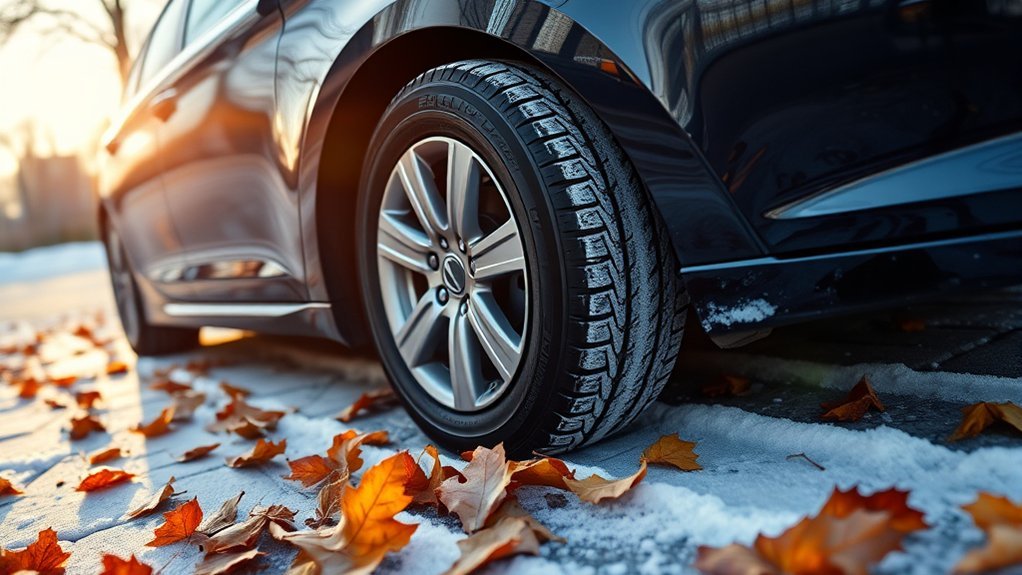
Winter tires are built for cold pavement, snow, slush, and ice. Their rubber compounds stay more flexible in low temperatures, while their tread blocks, grooves, and siping create more biting edges for winter traction.
That matters on a Hyundai Sonata because the tires are the only contact points between the car and the road. Even with traction control, stability control, anti-lock brakes, or Snow Mode on equipped models, the car still needs tire grip to turn, stop, and accelerate safely.
According to Transport Canada, all-season and summer tires begin to lose elasticity below 7°C, while winter tires are designed to keep their elasticity and grip at much lower temperatures. That is why 45°F (7°C) is the better rule of thumb than waiting for freezing temperatures or the first snowfall.
Warning: Winter tires improve grip, but they do not make ice safe or cancel out speed, worn tread, poor visibility, or short following distance. In winter weather, slow down and leave more room to stop.
When to Install Winter Tires Based on Temperature Guidelines
Install winter tires on your Hyundai Sonata when temperatures are consistently around or below 45°F (7°C). Pay special attention to early morning and nighttime temperatures because roads can be colder than the afternoon forecast suggests.
A simple approach is to watch for a week of temperatures near or below 45°F, then book the tire change before the first meaningful snow or ice event. If your area gets sudden early storms, install them earlier rather than waiting for a crowded tire shop.
Pro Tip: Schedule your winter tire appointment when the forecast first shows several cold mornings in a row. Waiting until the first snowfall often means longer shop waits and fewer appointment choices.
In many cold climates, Sonata owners keep winter tires on for roughly four to five months. In milder areas, the season may be shorter. In spring, switch back to all-season, all-weather, or summer tires when temperatures are consistently above 45°F (7°C), because winter tires can wear faster and feel less sharp on warm pavement.
The Risks of Delaying Winter Tire Installation
Delaying winter tire installation can leave your Sonata on the wrong tires during the first cold snap, freezing rain, or snowfall. The risk is not just getting stuck; it is longer stopping distances, reduced steering control, and more stress in emergency maneuvers.
Increased Accident Risk
Snow, sleet, and ice reduce the grip available to every vehicle. The National Highway Traffic Safety Administration advises drivers to prepare the vehicle before winter weather, slow down on slick roads, and increase following distance because it is harder to control or stop on slippery surfaces.
Winter tires cannot prevent every skid, but they give your braking and stability systems more grip to work with. That makes them a major safety upgrade if you regularly drive your Sonata in winter weather.
Reduced Traction Performance
All-season tires are designed to cover a broad range of conditions, but they are not the same as winter tires. When temperatures fall, the rubber can stiffen, and the tread design may not clear snow and slush as effectively.
- Better cold-weather grip: Winter tire compounds are designed to stay flexible in low temperatures.
- More snow traction: Deep grooves and siping help the tire bite into snow and evacuate slush.
- More predictable braking: A full set of winter tires helps the Sonata stop and turn more consistently on winter roads.
The most important timing rule is temperature-based: winter tire season begins when the weather is consistently cold enough, not when the calendar reaches a certain date.
Higher Tire Shop Traffic
Tire shops get busy right before and right after the first snowfall. If you wait until roads are already slick, you may have to drive on tires that are not ideal for the conditions just to get to your appointment.
Booking early also gives the shop time to inspect tread depth, check for uneven wear, verify tire size, reset or service TPMS sensors if needed, and make sure all four tires match.
How to Select the Best Winter Tires for Your Driving Conditions
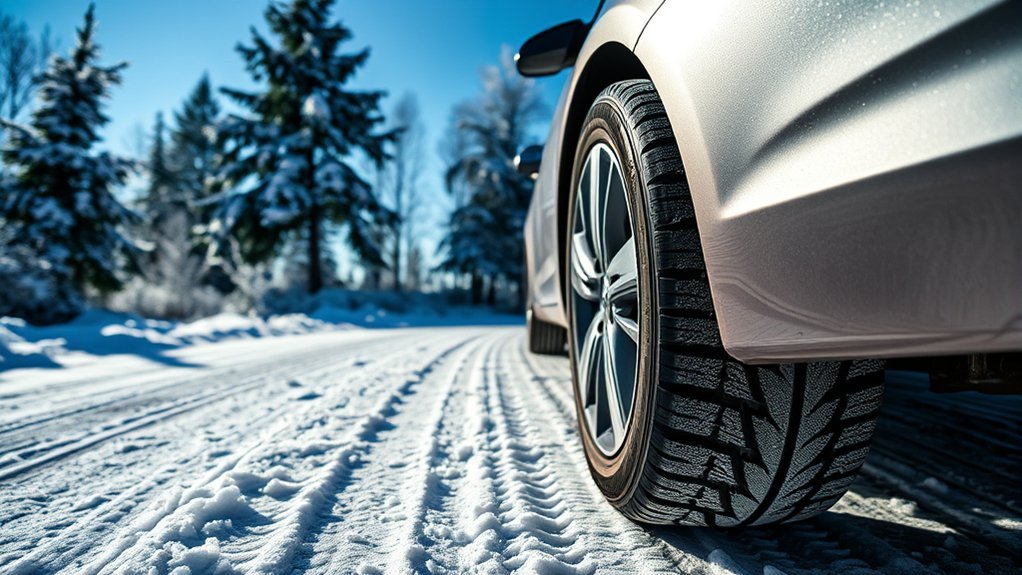
Choosing the best winter tires for a Hyundai Sonata starts with your weather, your commute, and the tire size listed on the driver-side door placard. Do not choose a tire only because it fits the wheel diameter; it also needs the correct load rating, speed rating, and overall fitment for your Sonata.
[Products Worth Considering]

Measure tire tread depth quickly and accurately with this LUMITECO dial gauge that reads in 1/32" increments up to 14/32". The color-coded green/yellow/red zones make it easy to judge tire wear and know when replacement is needed. A rugged, compact design with a protective pouch helps keep the gauge ready for use on cars, trucks, motorcycles, and more.
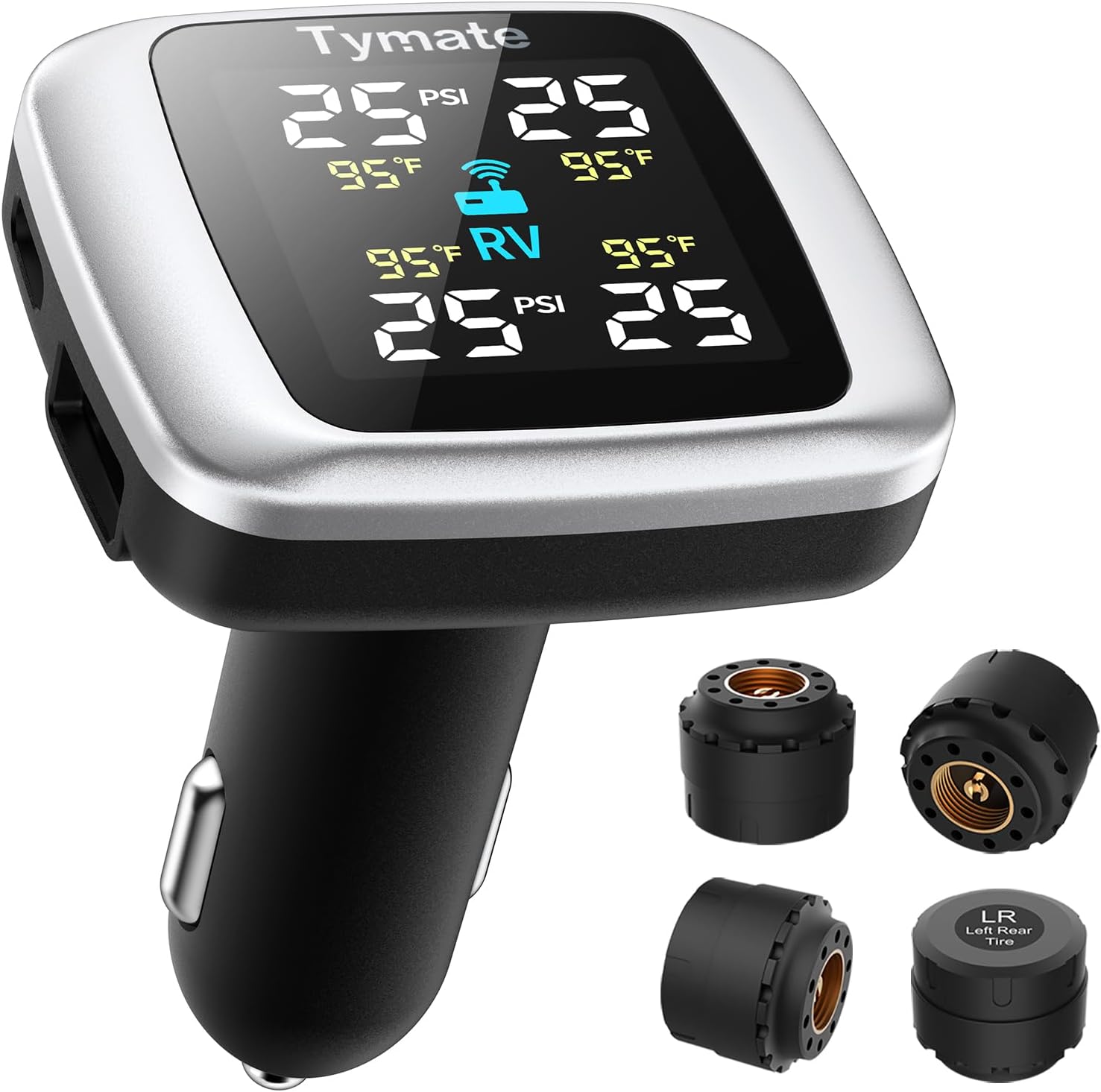
Tymate TM7 is a wireless tire pressure monitoring system that delivers real-time pressure and temperature readings for safer driving. It includes four external sensors, a bright color LCD display with adjustable backlight, and six alarm modes for high/low pressure, fast leakage, high temperature, and sensor signal or battery issues. The system covers a wide 0–144 PSI range and plugs into your vehicle’s cigarette lighter socket for quick DIY setup.

Monitor tire tread wear with a smart, color-coded depth gauge that shows clear condition ranges at a glance. The bar is range marked for fast, easy readings, helping you maintain safer traction and performance. Each gauge is portable with a pocket clip, and the set includes 20 units for daily use and sharing.
Tire Types Comparison
Most Sonata drivers should compare three winter-capable tire categories:
- Studless winter tires: Best all-around choice for most drivers who face cold weather, snow, slush, and occasional ice.
- Studded winter tires: Helpful on hard-packed ice, but they are noisy, can wear roads, and may be restricted or illegal depending on location.
- All-weather tires: A year-round option with winter certification on some models. They can work well in mild winter climates but usually do not match dedicated winter tires in severe snow and ice.
Look for the three-peak mountain snowflake symbol. Transport Canada explains that tires with this symbol meet specific snow traction performance requirements and are designed for severe snow conditions. A tire marked only “M+S” may not offer the same severe-snow capability.
Tread Pattern Importance
The tread pattern affects how the tire grips snow, clears slush, and stays stable on cold pavement. Deeper grooves help evacuate snow and water, while siping creates small biting edges that improve traction on packed snow and slick surfaces.
| Tread Feature | Why It Matters |
|---|---|
| Deep grooves | Help move snow, slush, and water away from the contact patch |
| Siping | Creates extra biting edges for packed snow and slick roads |
| Directional pattern | Often helps with slush evacuation and straight-line winter traction |
| 3PMSF marking | Shows the tire meets severe snow service performance requirements |
Weather Condition Considerations
Match the tire to the worst conditions you regularly face, not just the average day. A Sonata used mostly on plowed city streets may need a different winter tire than one used for rural roads, steep hills, lake-effect snow, or mountain passes.
- Frequent snow: Choose a dedicated winter tire with strong snow traction and the 3PMSF symbol.
- Frequent ice: Consider a top-rated ice-focused winter tire, or studded tires if they are legal and appropriate in your area.
- Mild winters: Consider all-weather tires if you rarely see deep snow or ice, but still want winter certification.
- Long highway commute: Prioritize predictable braking, wet-road control, and low noise along with snow traction.
Note: Some places have winter tire rules or studded tire restrictions. For example, Québec requires winter-ready vehicles from December 1 to March 15. Always check the rules where you live and where you plan to travel.
Why All-Season Tires May Fail in Winter Conditions
All-season tires are convenient, but the name can be misleading in harsh winter weather. They are built as a compromise for dry, wet, and light seasonal conditions. In colder weather, they may not stay as flexible as winter tires, and their tread pattern may not grip snow or ice as well.
| Issue | Impact |
|---|---|
| Cold-stiffened rubber | Less flexibility and less cold-weather grip |
| Less aggressive winter tread | Reduced snow and slush evacuation |
| No severe-snow rating on many models | May not perform well enough in serious winter conditions |
If your area rarely drops below 45°F and sees only light winter weather, a good all-season or all-weather tire may be enough. If your Sonata regularly sees snow, ice, freezing rain, or steep winter roads, dedicated winter tires are the safer choice.
Maintaining Your Winter Tires for Optimal Performance
Winter tires need regular maintenance to work well. Cold air affects tire pressure, winter roads can hide potholes, and road salt can speed up corrosion on wheels and hardware.
- Check pressure when tires are cold: Use the PSI listed on the Sonata’s driver-door placard or in the owner’s manual, not the maximum pressure printed on the tire sidewall. NHTSA recommends checking tires when they have not been driven for at least three hours.
- Inspect tread and sidewalls: Look for cuts, punctures, bulges, cracks, and uneven wear. If you see damage, have a tire professional inspect it.
- Rotate as recommended: Regular rotation helps all four winter tires wear evenly.
- Use four matching tires: A full matching set helps preserve the handling and braking balance engineered into the Sonata.
- Store off-season tires correctly: Keep them clean, dry, cool, and away from direct sunlight, heat sources, and chemicals.
- Plan for TPMS: If you use a second wheel set, ask whether it includes compatible tire pressure monitoring sensors so the warning light works properly.
[Products Worth Considering]

The SAFELIFE dial tire tread depth gauge measures tread depth in 1/32 inch increments with clear, easy-to-read 2-inch dial face. Color zones using a traffic light system help you quickly judge whether tread is low, marginal, or ample for safer driving. Built with a durable zinc cast body and a metal detect probe for precise, comfortable use across cars, motorcycles, trucks, and buses.

This TPMS relearn tool helps you quickly activate, match, and reset GM tire pressure sensors to keep the vehicle monitoring system working properly. It clears tire pressure alarms and dashboard warning lights after sensor replacement or tire rotation, and supports learning for common 315/433 MHz TPMS sensors. Designed for simple one-button operation, it can help you avoid unnecessary trips to repair shops.

This manual duck head tire changer kit makes tire installation and removal simpler by letting you embed the duck head into the tire with applied pressure. The integrated design and durable steel construction help reduce friction and improve efficiency and safety during use. Suitable for 16–21 inch wheels, it’s convenient for cars, trucks, SUVs, and ATV tires, with 24-hour after-sales support.
What Happens When You Change to Winter Tires?
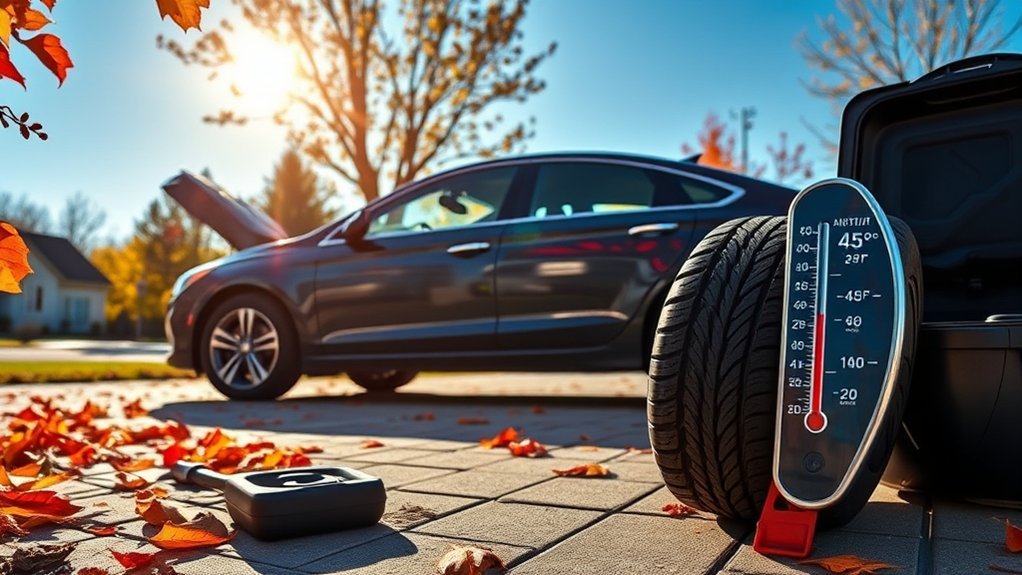
When you switch to winter tires, your Sonata should feel more controlled in cold, snowy, and slushy conditions. The biggest benefits are usually felt during braking, starting from a stop, climbing slick grades, and steering through packed snow.
The difference is not magic. Winter tires simply give the car more usable grip in the conditions they were designed for. Tire Rack notes that winter testing has shown clear traction and handling differences between all-season and winter tires, and that matched tires on all four wheel positions help maintain the vehicle’s intended handling behavior.
You may also notice trade-offs. Winter tires can feel softer on dry roads, may be louder than all-season tires, and can wear faster if used in warm weather. That is why seasonal timing matters both in fall and in spring.
Preparing Your Hyundai Sonata for Winter Weather Challenges
Winter tires are the foundation, but they are only one part of winter preparation. Before the cold season, give your Sonata a full winter check.
- Install four winter tires: Use the correct size, load rating, and speed rating for your Sonata.
- Check battery health: Cold weather reduces battery power, so test the battery and charging system before winter.
- Top off winter washer fluid: Use washer fluid rated for freezing temperatures.
- Inspect wipers and defrosters: Replace worn blades and make sure the windshield clears quickly.
- Check coolant and lights: Confirm the coolant meets manufacturer specifications and that all exterior lights work.
- Pack winter supplies: Carry an ice scraper, small shovel, blanket, phone charger, water, flashlight, and traction aid such as sand or kitty litter.
[Products Worth Considering]

The TYAMATE TM8 solar-powered wireless TPMS delivers real-time tire pressure and temperature monitoring with six alarm modes for safer driving. A vibrant color LCD display shows readings clearly while windshield mounting keeps it hands-free and easy to read. With a wide 0–87 PSI range, strong 433.92 MHz signal transmission, and quick sensor pairing, it’s ideal for RV, sedan, SUV, MPV, and truck use.

Accurately measure tire tread depth with a calibrated gauge marked from 0 to 1 inch in 1/32 inch increments. The color-coded bar helps you quickly identify tread condition ranges, supporting safe driving for trucks, motorcycles, automobiles, and passenger vehicles.

The Tymate TM12 RV TPMS delivers real-time tire pressure and temperature monitoring with a stable 433Hz display for safer long-distance driving. It supports simultaneous monitoring across vehicle and trailer zones, includes six alarm modes for pressure, temperature, leakage, battery, and signal loss, and features easy DIY installation with auto calibration. Power is supplied via USB-C charging or solar recharging, with a wide 0–144 PSI range and up to 50 ft signal coverage for RVs and towable trailers.
When to Use Hyundai Snow Mode
If your Hyundai Sonata is equipped with Snow Mode, use it when starting or driving on slippery snow or ice. Hyundai describes Snow Mode as traction tuning that adjusts wheel-slip control, engine torque, and shift patterns according to available traction levels.
Snow Mode is useful, but it is not a substitute for winter tires. Think of it as a helper system: it can manage power delivery, but the tires still determine how much grip is available.
Frequently Asked Questions
At what temperature should I start using winter tires on a Hyundai Sonata?
Start using winter tires when temperatures consistently drop below 45°F (7°C). This is the point where many all-season and summer tires begin losing cold-weather flexibility, while winter tires are designed to keep working in lower temperatures.
Should I install two or four winter tires?
Install four matching winter tires. Putting winter tires on only one axle can create an imbalance in braking, steering, and stability, especially during lane changes or emergency maneuvers.
When should I use Hyundai Snow Mode?
Use Snow Mode when your Sonata is on snowy or icy roads and you need gentler power delivery and traction tuning. Switch back to normal driving mode when conditions improve. Snow Mode helps the vehicle manage traction, but it does not replace winter tires.
Are all-weather tires enough for a Hyundai Sonata in winter?
All-weather tires with the three-peak mountain snowflake symbol can be a good year-round option in mild winter climates. If you regularly drive through snow, ice, freezing rain, hills, or rural winter roads, dedicated winter tires are usually the better choice.
When should I remove winter tires?
Remove winter tires when temperatures are consistently above 45°F (7°C) and the risk of snow or ice has passed. Keeping winter tires on warm pavement can increase wear and reduce the crisp handling you get from all-season, all-weather, or summer tires.
Conclusion
For a Hyundai Sonata, the best time to install winter tires is when temperatures consistently fall below 45°F (7°C), before the first real snow or ice event. Choose a matched set of four tires with the three-peak mountain snowflake symbol, verify the correct size and pressure for your Sonata, and use Snow Mode only as a helpful supplement. With the right tires and basic winter preparation, your Sonata will be safer, steadier, and easier to control through cold-weather driving.
Sources
- Transport Canada — Using winter tires — supports the 7°C/45°F temperature guideline and three-peak mountain snowflake explanation.
- NHTSA — Winter Weather Driving Tips — supports winter driving, tire pressure, tread inspection, battery, wiper, and emergency-prep guidance.
- NHTSA TireWise — supports general tire safety, maintenance, ratings, and consumer tire guidance.
- Hyundai Owner’s Manual — Snow Mode — supports how Snow Mode adjusts wheel-slip control, engine torque, and shift patterns.
- Tire Rack — Winter tire testing — supports the importance of matched winter tires on all four wheel positions and controlled winter tire comparisons.
- Gouvernement du Québec — Winter tire requirements — provides an example of regional winter tire law and timing requirements.