
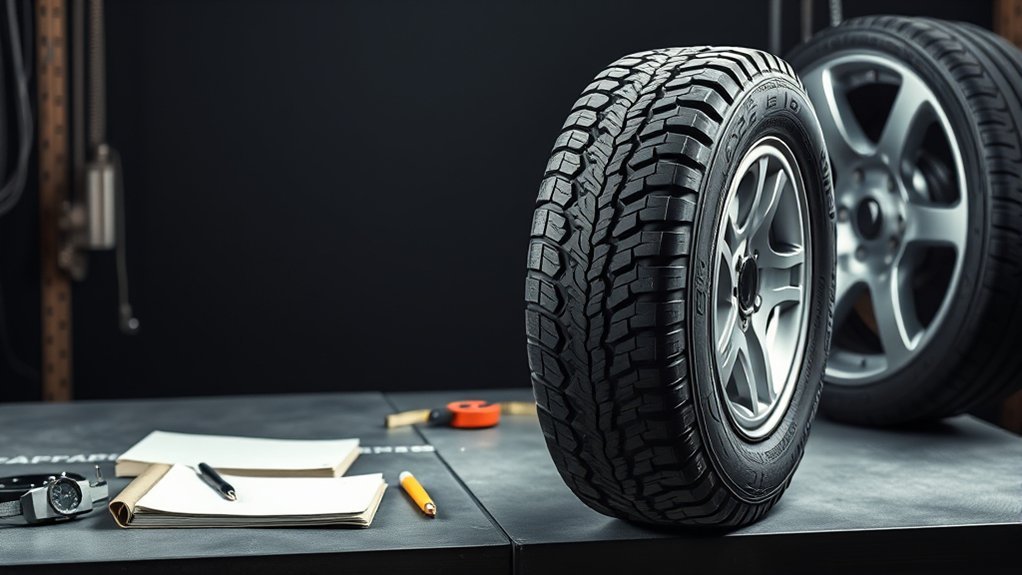
A 33-inch tire is about 838 mm tall, but there is not one perfect metric replacement for every 33-inch setup. The closest metric size depends on wheel diameter, tire width, load rating, and available clearance. For a common 33×12.50R20 tire, the practical comparison is usually 305/55R20 or 325/50R20, not 315/75R16 or 325/70R17.
Quick Answer
A 33-inch tire is about 838.2 mm in overall diameter. Common close metric sizes include 285/75R16, 295/70R17, 275/70R18, 305/55R20, and 325/50R20. A 33×12.50R20 measures about 33.0 inches tall, 12.5 inches wide, and about 611 revolutions per mile.
Key Takeaways
- A 33-inch tire converts to about 838.2 mm in overall diameter.
- A 33×12.50R20 is about 33.0 inches tall, 12.5 inches wide, and approved on many 8.5- to 11-inch-wide wheels, depending on the tire model.
- 305/55R20 is a close 20-inch metric option, while 325/50R20 is wider and slightly shorter.
- 315/75R16 and 325/70R17 are not true 33-inch equivalents; they are closer to 35 inches tall.
- Before buying 33s, check clearance, wheel width, offset, load rating, speedometer error, gearing, and the vehicle tire placard.
At a Glance
| Best Use | Comparing 33-inch tires with metric tire sizes before buying or installing |
| Difficulty | Easy for size comparison; moderate if you need fitment, lift, or gearing checks |
| Tools Needed | Tire size chart, tape measure, owner’s manual, tire placard, and installer fitment check |
| Cost | Free to calculate; added cost may apply for recalibration, trimming, lift parts, wheels, or re-gearing |
What Is a 33-Inch Tire in Metric?
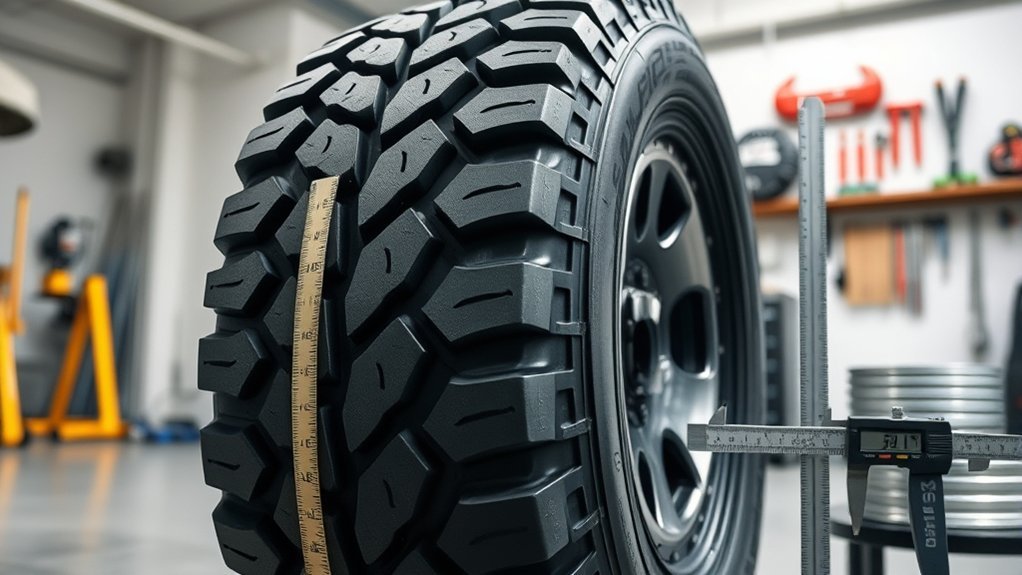
A 33-inch tire is about 838.2 mm in overall diameter because 1 inch equals 25.4 mm. That number refers to the tire’s outside diameter, not the wheel diameter. The wheel diameter is the rim size, such as 16, 17, 18, or 20 inches.
For example, a 33×12.50R20 tire is listed at about 33.0 inches tall, 12.5 inches wide, 20 inches at the wheel, 6.5 inches at the sidewall, and 611 revolutions per mile. Actual tire measurements can still vary slightly by brand, tread design, load range, measuring rim, and inflation pressure.
Note: Tire labels are nominal. Always confirm the manufacturer’s spec sheet for the exact tire you plan to buy, especially if clearance is tight.
How Do You Convert a Metric Tire Size to Inches?
To compare a metric tire with a 33-inch tire, use this formula:
Overall diameter in inches = wheel diameter + 2 × (section width × aspect ratio ÷ 100) ÷ 25.4
For a 305/55R20, the math is:
- Section width: 305 mm
- Aspect ratio: 55%, so sidewall height is 167.75 mm
- Two sidewalls: 335.5 mm
- 20-inch wheel: 508 mm
- Total diameter: 843.5 mm, or about 33.2 inches
That is why 305/55R20 is a close metric comparison for many 33-inch tire shoppers.
What Size Chart Covers 33-Inch Tires?
A good 33-inch tire size chart compares overall diameter, section width, wheel diameter, and revolutions per mile. Do not pick a tire by diameter alone. A narrow 33, a wide 33, and a tall 33-ish tire can behave very differently on the same vehicle.
| Size | Approx. Diameter | Approx. Width | Best Use |
|---|---|---|---|
| 285/75R16 | 32.8 in | 11.2 in | Close 16-inch metric match |
| 295/70R17 | 33.3 in | 11.6 in | Strong 17-inch all-terrain option |
| 275/70R18 | 33.2 in | 10.8 in | Narrower 18-inch 33-inch-style size |
| 305/55R20 | 33.2 in | 12.0 in | Close 20-inch metric match |
| 325/50R20 | 32.8 in | 12.8 in | Wider 20-inch alternative |
| 33×12.50R20 | 33.0 in | 12.5 in | Direct flotation-size reference |
Common Metric Equivalents
The closest metric equivalents for 33-inch tires usually sit between about 32.8 and 33.3 inches in actual listed diameter. Good examples include 285/75R16, 295/70R17, 275/70R18, 305/55R20, and 325/50R20. If you want a wider stance similar to a 33×12.50 tire, look more closely at 305- to 325-mm-wide metric options. If you want easier fitment, a narrower 285- or 295-mm tire may work better.
Wheel Size Chart
Wheel size changes the sidewall you need to reach a 33-inch overall diameter. A 16-inch wheel needs more sidewall than a 20-inch wheel. That is why a 285/75R16 can be close to 33 inches, while a 305/55R20 can also be close even though the aspect ratio is much lower.
For fitment, compare all of these measurements:
- Overall diameter: affects clearance, gearing, and speedometer reading.
- Section width: affects fender, control-arm, frame, and sway-bar clearance.
- Wheel width: must match the tire manufacturer’s approved range.
- Offset and backspacing: change where the tire sits inside the wheel well.
- Load rating: must support the vehicle and how you use it.
What Are the Exact Dimensions of a 33×12.50R20 Tire?
A typical 33×12.50R20 tire is listed at about:
- Overall diameter: 33.0 inches, or 838.2 mm
- Section width: 12.5 inches, or 317.5 mm
- Wheel diameter: 20 inches
- Sidewall height: 6.5 inches, or 165.1 mm
- Circumference: about 103.6 inches
- Revolutions per mile: about 611
- Common approved wheel width: about 8.5 to 11 inches, depending on tire model
This size gives you a wide contact patch and a moderate sidewall for a 20-inch wheel. It can work well on trucks and off-road builds, but it is not a guaranteed fit. The same nominal size may have slightly different real measurements across all-terrain, mud-terrain, hybrid-terrain, and rugged-terrain tires.
How Does 33×12.50R20 Compare to Metric Sizes?
A 33×12.50R20 does not have a perfect metric twin because flotation sizing and metric sizing describe tires differently. The closest practical metric comparison is usually 305/55R20, which is about 33.2 inches tall and 12.0 inches wide. A 325/50R20 is about 32.8 inches tall and 12.8 inches wide, so it is closer in width but slightly shorter.
Here is the key difference:
- 33×12.50R20: direct flotation size; wide 12.5-inch section width.
- 305/55R20: close height, slightly narrower width.
- 325/50R20: close width, slightly shorter height.
- 285/75R16: close height on a 16-inch wheel, much narrower width.
- 295/70R17: close height on a 17-inch wheel with a balanced width.
Pro Tip: If you are replacing a 33×12.50 tire, do not shop by height alone. Match width, wheel width, load range, and clearance too.
Common 33-Inch Tire Conversion Mistakes
Some sizes look close on paper but are not true 33-inch equivalents. These are the most common mistakes:
- 315/75R16: often mistaken for a 33, but it is about 34.6 inches tall.
- 325/70R17: often mistaken for a 33, but it is about 34.9 inches tall and much closer to a 35.
- 318/60R20: not a good theoretical match because that formula produces a tire closer to 35 inches tall.
- 275/70R17: not a 33-inch tire; it is closer to 32.2 inches.
- 285/75R17 and 305/70R17: usable on some builds, but both are about 33.8 inches, so treat them as tall 33s or near-34s.
How Much Bigger Are 33-Inch Tires?
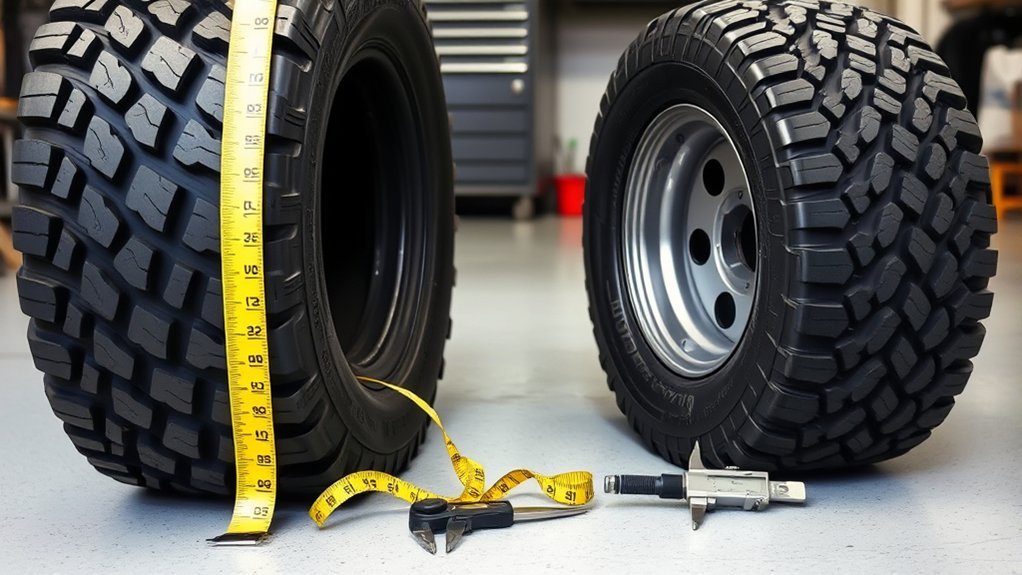
How much bigger a 33-inch tire feels depends on what you have now. Compared with a 31-inch tire, a 33-inch tire adds about 2 inches of total diameter and about 1 inch of extra axle-to-ground clearance. Compared with a 32-inch tire, it adds about 1 inch of total diameter and about 0.5 inch of ground clearance.
The bigger tire also changes the rolling circumference. A 33×12.50R20 has a circumference of about 103.6 inches. That means each wheel rotation covers more ground than a smaller tire, which affects speedometer reading, odometer reading, gearing, braking feel, and acceleration.
How Do 33-Inch Tires Affect Speed and Gears?
A taller tire makes your effective gear ratio numerically lower. That usually softens acceleration, reduces torque multiplication at the wheels, and may cause more downshifting on hills or while towing. At a given true road speed, engine RPM often drops, but the engine may work harder because the drivetrain has less mechanical leverage.
Use this speedometer formula:
Actual speed = indicated speed × new tire diameter ÷ old tire diameter
Example: if your original tire is 31.5 inches tall and you install 33-inch tires, your speedometer may read about 4.8% low. When the gauge shows 60 mph, your actual speed may be about 62.9 mph. If your original tire was already 32 inches tall, the error is smaller.
- Speedometer: may read low unless recalibrated.
- Odometer: may undercount distance.
- Acceleration: may feel slower with stock gearing.
- Transmission: may shift more often under load.
- Fuel economy: can drop because larger tires are often heavier and have more rolling resistance.
Will 33-Inch Tires Fit Your Jeep or Truck?
Some Jeeps and trucks fit 33-inch tires with little work. Others need a lift, different wheels, trimming, steering-stop changes, or suspension upgrades. The answer depends on the exact vehicle, trim, wheel offset, tire width, suspension travel, and how much rubbing you are willing to correct.
Warning: Do not install larger tires based only on internet size charts. Check the owner’s manual, Tire and Loading Information Label, wheel load rating, tire load rating, and a qualified installer’s fitment guidance before driving on public roads.
[Products Worth Considering]

Keep your tires properly inflated with this analog VONDIOR tire pressure gauge, designed for fast, easy readings without batteries. The swiveling, two-axis hose and large glow dial help you measure at any tire angle with instant visibility. Built with a protective rubber shield, it supports durable, low-maintenance use for cars and trucks.

This metal-free wheel and tire cleaning brush uses dense, fluffy synthetic wool to safely clean rims, spokes, fenders, and engine areas without worrying about damaging surfaces. Its flexible, comfortable design helps you reach detailed areas while maintaining durability, and the extra absorbent fibers work well with wheel spray cleaners for faster cleanup. Reusable and washable performance helps prevent grime and build-up for cleaner vehicles and easier maintenance at home.

Upgrade your 2024-2026 Tesla Model 3 Highland with REEVAA all-weather mud flaps designed for seamless fit along the original body lines. The set of four delivers strong splash protection against mud, gravel, and road debris while using OEM-grade durable materials. Installation is non-destructive with original hole positions and snap-in clips, and the aerodynamic design helps minimize impact on efficiency.
Jeep Fitment Factors
For a Jeep, check clearance at full steering lock and during suspension articulation. A tire that clears while parked may still rub off-road or when the suspension compresses. Pay close attention to fender liners, bumper ends, lower control arms, sway-bar links, and pinch seams.
- Stock suspension: may fit narrower 33s on some models, but rubbing is still possible.
- Lift height: helps vertical clearance but does not always fix width or offset issues.
- Wheel offset: changes inner and outer clearance.
- Backspacing: affects control-arm and sway-bar clearance.
- Spare tire carrier: may need reinforcement for a heavier 33-inch spare.
Truck Clearance Checks
For a truck, measure more than wheel-well height. Turn the steering wheel fully left and right, then check the tire path near the bumper, crash bars, mud flaps, fender liner, frame, control arms, and sway bar. Also check compression clearance because the tire moves upward and inward as the suspension cycles.
Before installation, confirm:
- At least 1 to 2 inches of practical clearance where the tire moves under load.
- Wheel width is inside the tire manufacturer’s approved range.
- Offset and backspacing do not create new rubbing points.
- Load index and load range meet or exceed vehicle needs.
- New tire pressure is set from the vehicle/tire guidance, not guessed from the sidewall maximum.
What Are the Best 33-Inch Tire Alternatives?
The best alternative depends on whether you want easier fitment, more width, more sidewall, or more ground clearance. Use these options as starting points:
- 285/75R16: close to 33 inches, narrower than 12.50, and often easier to fit.
- 295/70R17: close to 33 inches with a wider footprint than a 285.
- 275/70R18: a narrow 33-inch-style size for many 18-inch wheels.
- 305/55R20: close height for 20-inch wheels and narrower than 33×12.50.
- 325/50R20: wider 20-inch option, close to a 33×12.50 width but slightly shorter.
- 285/75R17 or 305/70R17: taller 33-ish options that may require more clearance because they are about 33.8 inches tall.
- 35×12.50R20: bigger than a 33 and often requires more lift, gearing, braking, and clearance planning.
[Products Worth Considering]
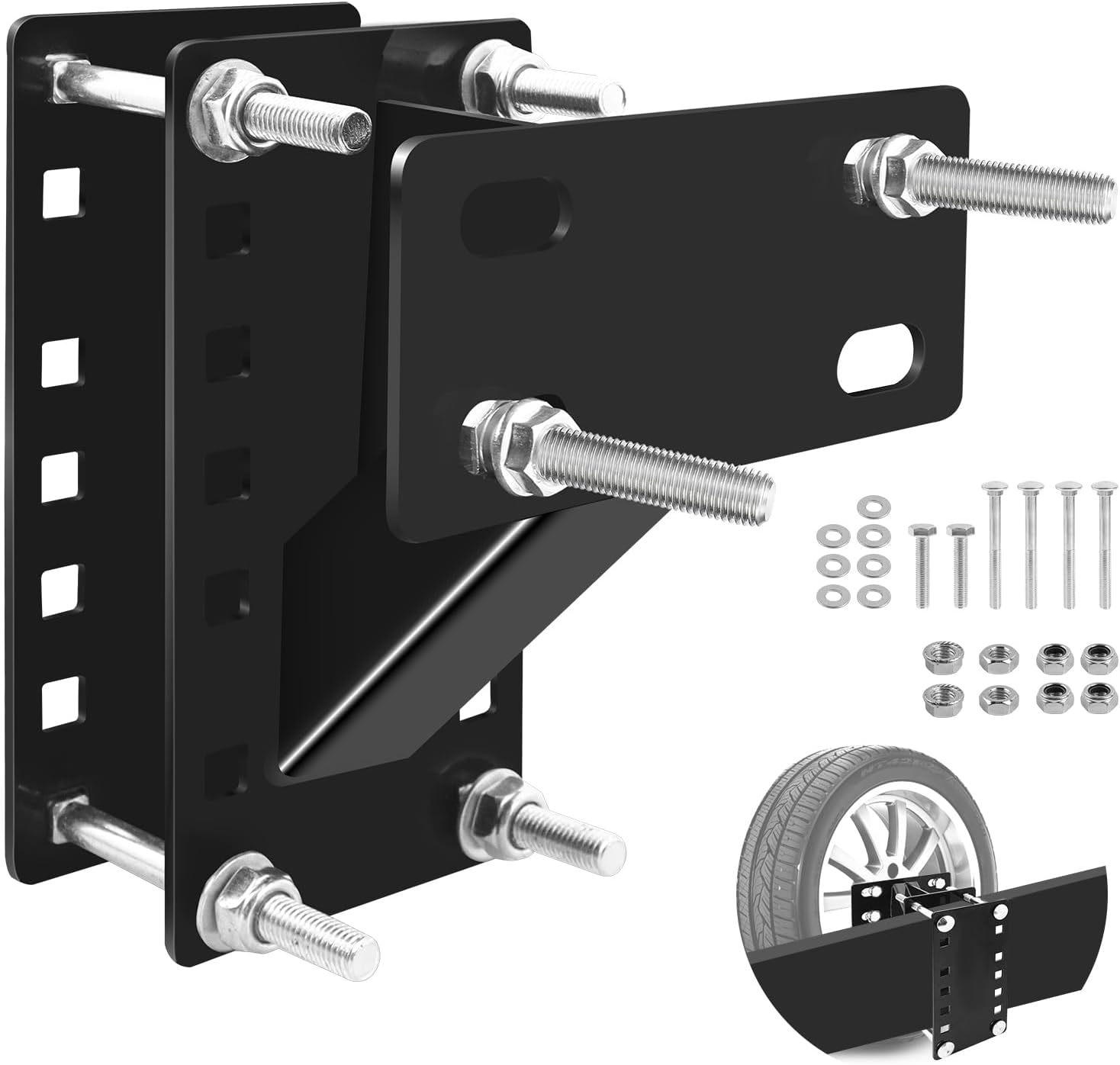
This universal spare tire mount carrier holder is built for utility trailers and boat trailers, offering a secure fit for 4, 5, and 6 lug wheels. It supports multiple bolt pattern sizes and a heavy-duty load capacity while resisting rust with a durable finish. The design allows easy installation and lets you choose the steel beam height for a better fit.

This manual duck head tire changer kit makes tire installation and removal simpler by letting you embed the duck head into the tire with applied pressure. The integrated design and durable steel construction help reduce friction and improve efficiency and safety during use. Suitable for 16–21 inch wheels, it’s convenient for cars, trucks, SUVs, and ATV tires, with 24-hour after-sales support.

The GADFISH spare tire carrier is built for reliable hauling with a reinforced welded triangular structure and a behind plate that securely holds the tire up to 150 lbs. It fits a wide range of trailer wheel lug setups, making it suitable for boat trailers as well, while the sloping design helps reduce wind resistance and provides low-ground clearance. Installation is designed to be straightforward with different length bolts and no drilling required.
What Should You Check Before Buying 33s?
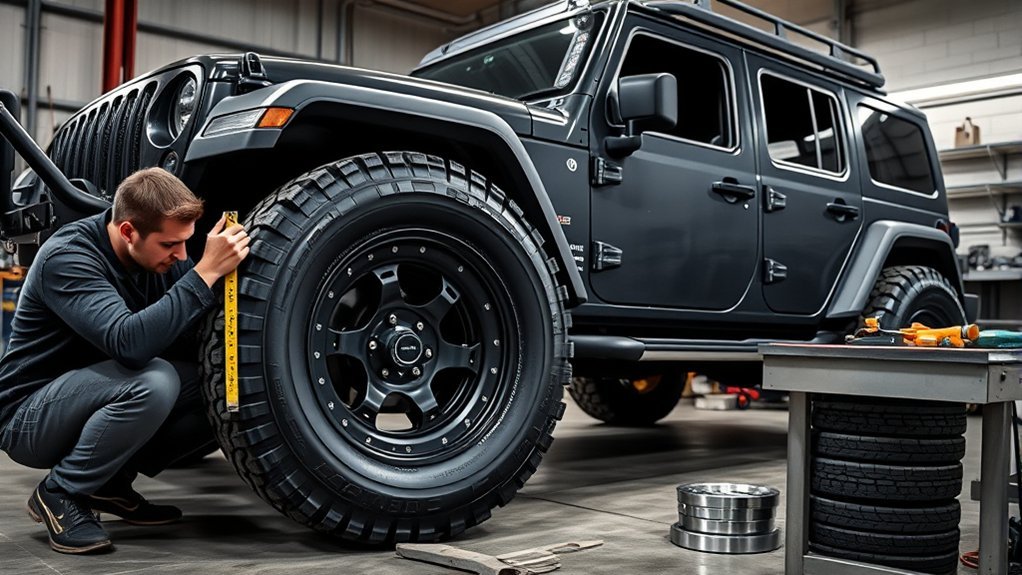
Before you buy 33s, verify that your vehicle can support the tire physically and mechanically. The NHTSA TireWise guidance recommends checking the owner’s manual or Tire and Loading Information Label for the correct tire size and consulting a tire dealer if you are unsure.
| Check | Why It Matters | What to Confirm |
|---|---|---|
| Overall Diameter | Controls clearance, gearing, and speedometer error | Compare actual listed diameter, not only the label |
| Section Width | Affects fender, frame, and control-arm rub | Measure inner and outer clearance |
| Wheel Width | Keeps the tire seated and shaped correctly | Use the tire maker’s approved rim-width range |
| Offset / Backspacing | Moves the tire inward or outward | Check steering lock and suspension compression |
| Load Rating | Must support the vehicle and payload | Match or exceed vehicle requirements |
| Speedometer | Larger tires can make indicated speed read low | Recalibrate when the diameter change is meaningful |
| Gearing | Taller tires reduce torque multiplication | Consider re-gearing if towing, crawling, or power loss matters |
| Tire Pressure | Wrong pressure affects safety, wear, and handling | Use vehicle/tire guidance, not a guess |
[Products Worth Considering]

Switch to tubeless with this Muc-Off rim tape designed to create an airtight seal for smooth-running setups. The pressure-sensitive adhesive offers the right stretch for strength and durability, while the semi-transparent material helps you locate the valve hole quickly. It includes four seal patches for a secure finishing seal after wrapping.

The Big Rig Defense Tire Thumper is a truck tire pressure checker that lets you quickly check multiple tires by giving them a firm whack. Listen for a reassuring thump and feel the stick bounce when a tire is fully inflated, helping you get back on the road safely. It features a comfortable, glove-friendly handle and a secure wrist strap for confident use on busy routes.

Secure a full-size spare on your trailer with this powder-coated steel spare tire mount bracket. It fits most 4-, 5-, and 6-lug wheel bolt patterns and mounts to trailer tongues up to 4 in wide and 5 in tall. Built for reliable carry with a max 150 lb load rating and includes zinc-plated hardware for straightforward installation.
Frequently Asked Questions
Are 33-inch tires the same as 285?
No. A 285 tire is 285 mm wide, but its height depends on the aspect ratio and wheel size. A 285/75R16 is about 32.8 inches tall, so it is close to a 33-inch tire. A 285/70R17 is about 32.7 inches tall, while a 285/75R17 is about 33.8 inches tall.
Is 295 the same as 33?
Not by itself. The number 295 only tells you the section width in millimeters. A 295/70R17 is about 33.3 inches tall, which is close to a 33-inch tire. Other 295 sizes can be shorter or taller depending on aspect ratio and wheel diameter.
What tire size is equivalent to 33s?
Close metric equivalents include 285/75R16, 295/70R17, 275/70R18, 305/55R20, and 325/50R20. The best match depends on whether you are trying to match height, width, wheel diameter, or all three.
Is 275 a 33-inch tire?
Sometimes, but not always. A 275/70R17 is closer to 32.2 inches, so it is not a true 33. A 275/70R18 is about 33.2 inches, and a 275/75R17 is also close to 33.2 inches. Always check the full size, not just the first number.
Is 305/55R20 the same as 33×12.50R20?
It is close in height but not the same in width. A 305/55R20 is about 33.2 inches tall and 12.0 inches wide. A 33×12.50R20 is about 33.0 inches tall and 12.5 inches wide, so the flotation size is usually about half an inch wider.
Are 315/75R16 tires 33-inch tires?
No. A 315/75R16 is about 34.6 inches tall, so it is much closer to a 35-inch tire than a 33-inch tire. It may need more clearance, gearing consideration, and fitment work than a true 33.
Conclusion
A 33-inch tire is about 838.2 mm tall, but the best metric match depends on your wheel size and how much width you need. For many shoppers, 285/75R16, 295/70R17, 275/70R18, 305/55R20, and 325/50R20 are better comparison points than oversized choices like 315/75R16 or 325/70R17. Before installing 33s, confirm the exact tire specs, wheel width, offset, load rating, clearance, gearing, and speedometer calibration.
Sources
- TireSize.com — 33X12.50R20 specifications — supports 33.0-inch diameter, 12.5-inch width, 6.5-inch sidewall, 103.6-inch circumference, 611 revs/mile, and wheel-width range.
- TireSize.com — 305/55R20 specifications — supports the close 20-inch metric comparison.
- TireSize.com — 285/75R16 specifications — supports the close 16-inch metric comparison.
- TireSize.com — 295/70R17 specifications — supports the close 17-inch metric comparison.
- NHTSA TireWise — supports tire placard, owner’s manual, tire pressure, tire maintenance, and buyer safety guidance.


1 thought on “What Is a 33-Inch Tire in Metric? Full Conversion Chart”