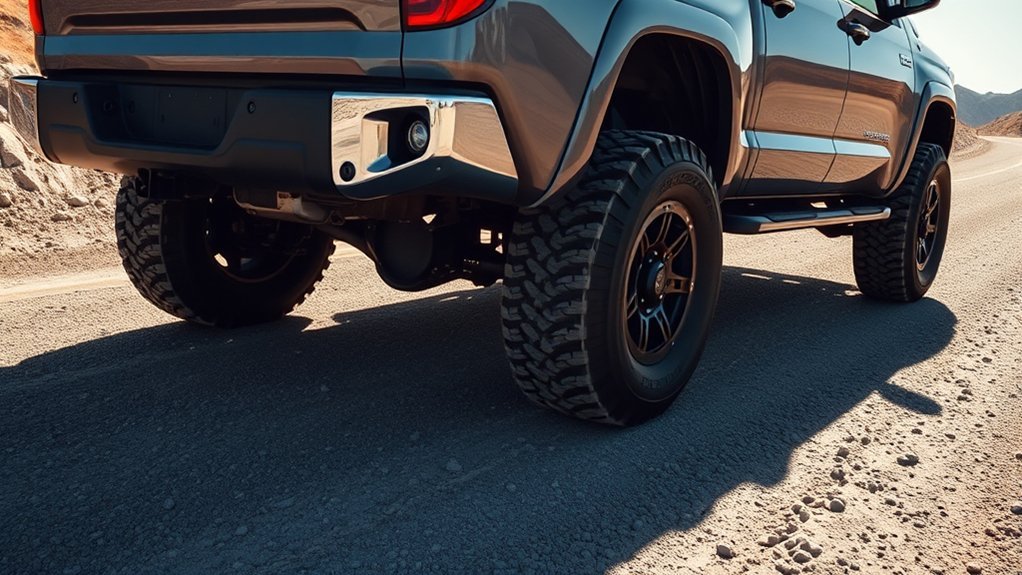
Oversized tires can change how your Toyota Tundra brakes, especially if the new wheel-and-tire setup is taller, heavier, or more aggressive than stock. The bigger the change from the factory setup, the more attention you should give to stopping distance, pedal feel, brake heat, tire pressure, and load rating.
Quick Answer
Yes, oversized tires can increase Toyota Tundra braking distance because taller and heavier tires add rotating mass and can reduce the brake system’s effective leverage. Mild upsizing may only need careful inspection and testing, but heavy off-road tires, towing, mountain driving, or repeated brake fade may justify upgraded pads, fluid, rotors, or a big brake kit.
Key Takeaways
- Larger tires do not follow one universal braking formula, but taller and heavier setups can make your Tundra harder to stop.
- Tire weight, overall diameter, tread compound, road surface, cargo load, and brake heat all matter.
- Check tire size, load rating, tire pressure, brake pad condition, rotor condition, and brake fluid before installing oversized tires.
- A big brake kit is not always required, but it can help when larger tires cause fade, long stops, or weak pedal feel.
Warning: Do not test a new oversized tire setup with hard stops in traffic. Use a safe open area, keep speeds low at first, and have a qualified brake or tire shop inspect the setup if the pedal feels soft, the truck pulls, the brakes smell hot, or stopping distance feels longer.
How Oversized Tires Affect Tundra Braking Distance
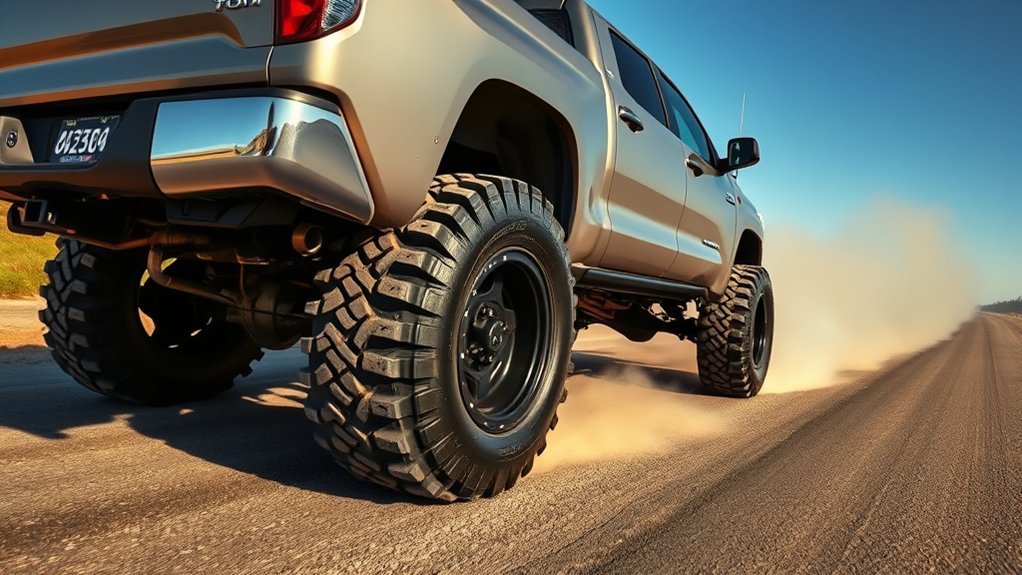
When you install oversized tires on a Toyota Tundra, the brakes may have to manage more work than they did with the factory wheel-and-tire setup. That does not mean every larger tire automatically makes the truck unsafe, but it does mean you should treat braking as part of the tire upgrade, not as an afterthought.
A taller tire increases the rolling radius. That can reduce the brake system’s effective mechanical advantage at the road because the brake has to slow a larger rotating assembly. A heavier tire and wheel package also adds rotating mass. The brake pads and rotors must turn that motion into heat every time you slow down.
Physics matters here. The work-energy theorem explains that stopping a moving object requires removing its kinetic energy, and kinetic energy rises with mass and speed. That is why a heavy Tundra with heavier tires, cargo, passengers, or a trailer can feel very different from the same truck on lighter stock tires. You can read the basic physics in the OpenStax work-energy theorem.
The safest way to think about it is simple: the farther your tire setup moves away from stock, the more carefully you need to check braking performance.
Why Diameter, Weight, and Tire Type All Matter
Larger Diameter Changes Brake Leverage
A larger tire diameter can make the truck travel farther per wheel rotation. That can affect speedometer accuracy, shift behavior, and how the truck feels under braking. It may also affect how driver-assistance systems interpret wheel-speed data if the tire size is far outside the expected range.
Before changing tire size, compare the new diameter against the factory tire size on your driver-side Tire and Loading Information Label. The National Highway Traffic Safety Administration advises drivers to buy tires that match the original size or another size recommended by the vehicle manufacturer.
Heavier Tires Add Rotating Mass
Two tires can be the same height but weigh very different amounts. An aggressive all-terrain or mud-terrain tire may be much heavier than a highway tire. A heavy aftermarket wheel can add even more weight.
This added mass can make the truck feel slower to accelerate and harder to slow down. It can also increase brake heat during repeated stops. That heat is where brake fade can appear, especially when towing, descending long grades, or driving off-road with frequent low-speed braking.
Tread Compound and Traction Can Help or Hurt
Oversized does not always mean worse grip. A wider or more aggressive tire may improve traction in some off-road situations. On wet pavement, though, tread design, tire compound, tread depth, and inflation pressure matter more than looks.
NHTSA notes that tire traction grades indicate a tire’s ability to stop on wet pavement. That is a useful reminder: a larger tire with poor wet traction can still stop worse than a smaller tire with a better road compound.
Note: Toyota lists several factory wheel sizes on the 2026 Tundra, including 18-inch, 20-inch, and 22-inch wheels depending on trim. Factory wheel size is not the same as overall tire diameter, so compare the full tire size printed on your tire sidewall and door placard.
Brake System Checklist Before Installing Larger Tires
Before you install larger tires, inspect the braking system while the truck is still on its current setup. This gives you a baseline and helps you avoid blaming the new tires for a brake problem that was already there.
| Item to Check | Why It Matters |
|---|---|
| Brake pad thickness | Thin pads heat up faster and can reduce stopping confidence. |
| Rotor condition | Grooved, warped, cracked, or heavily rusted rotors can cause vibration and weak braking. |
| Brake fluid age | Old fluid can absorb moisture, lowering boiling resistance during hard use. |
| Calipers and slide pins | Sticking calipers can overheat one wheel and cause pulling or uneven pad wear. |
| Tire load index | A Tundra needs tires rated for the truck’s weight, payload, and towing use. |
| Cold tire pressure | NHTSA says proper tire pressure affects safety, durability, and fuel use. |
Also check the wheel offset and clearance. A wheel that changes offset too much can affect scrub radius, steering feel, wheel-bearing load, and brake clearance. If you plan to install a big brake kit later, make sure the wheel design has enough spoke and barrel clearance for the larger caliper and rotor.
[Products Worth Considering]

These M14x1.5 closed-end chrome lug nuts are a one-piece replacement designed for secure fitment on compatible GM, Ford, and select Chrysler/Dodge models. Featuring a 60-degree conical seat and anti-rust chrome plating, they help resist corrosion and maintain a bright look for everyday driving. Built for long-term durability, they include OEM-style part references and are backed by 12 months of support.

Accurately measure tire tread depth with a calibrated gauge marked from 0 to 1 inch in 1/32 inch increments. The color-coded bar helps you quickly identify tread condition ranges, supporting safe driving for trucks, motorcycles, automobiles, and passenger vehicles.

Monitor tire tread wear with a smart, color-coded depth gauge that shows clear condition ranges at a glance. The bar is range marked for fast, easy readings, helping you maintain safer traction and performance. Each gauge is portable with a pocket clip, and the set includes 20 units for daily use and sharing.
Signs Your Tundra Needs Better Brakes for Larger Tires
After installing oversized tires, pay close attention to how your Tundra stops in normal driving. These warning signs suggest the brake system needs inspection or upgrades:
- Longer stopping distance: You need noticeably more room to stop than before the tire change.
- Brake fade: The first stop feels normal, but repeated stops feel weaker or require more pedal pressure.
- Soft or spongy pedal: The pedal sinks or feels vague, which may point to air, old fluid, or a hydraulic issue.
- Pulling under braking: The truck drifts left or right when you brake.
- Vibration or pulsing: The steering wheel or pedal shakes during braking.
- Hot brake smell: A sharp burning smell after normal driving means the system may be overheating or dragging.
- Uneven pad wear: One side wearing faster than the other can point to caliper or slide-pin problems.
If any of these symptoms appear, do not assume a big brake kit is the first fix. Start with a full inspection. Worn pads, old fluid, sticking calipers, poor tire pressure, or incorrect tire load rating can all make braking worse.
What Brake Upgrades Should You Consider?
The best brake upgrade depends on how much larger the tires are and how you use the truck. A daily-driven Tundra with a mild tire increase may only need healthy stock brakes. A Tundra on heavy off-road tires that tows, hauls, or drives mountain roads may need more.
[Products Worth Considering]

These aluminum alloy tire valve stem caps with an O-ring seal help protect valve stems from corrosion while adding a clean, stylish look to your vehicle. The universal fit works across cars, trucks, motorcycles, bicycles, and more, making them an easy upgrade for everyday driving and off-road use. Installation is quick, and the included four-pack keeps all your tires dressed and protected.

The Trivd Frol 1/2" air impact wrench delivers high performance torque up to 1500 ft-lbs with a twin hammer impact mechanism for strong, balanced blows. It features an ergonomic grip, compact lightweight design, and quick-stop control with 3 forward speeds up to 8000 RPM plus a reverse speed. Built for demanding automotive repair and tire shop work, the rear exhaust helps keep debris away from the surface.

The SAFELIFE dial tire tread depth gauge measures tread depth in 1/32 inch increments with clear, easy-to-read 2-inch dial face. Color zones using a traffic light system help you quickly judge whether tread is low, marginal, or ample for safer driving. Built with a durable zinc cast body and a metal detect probe for precise, comfortable use across cars, motorcycles, trucks, and buses.
High-Quality Brake Pads
Better pads are often the first practical upgrade. Choose pads designed for trucks, towing, or severe-duty use if your Tundra carries weight or runs heavy tires. The right pad can improve heat resistance and pedal confidence without the cost of a full brake kit.
Fresh High-Temperature Brake Fluid
Fresh brake fluid is easy to overlook. If your brake fluid is old or contaminated, the pedal can feel soft when the brakes get hot. Replacing old fluid with the correct specification for your Tundra can improve consistency.
Rotors and Brake Lines
Quality rotors can help manage heat when paired with the right pads. Some owners also upgrade to stainless braided brake lines to reduce hose expansion and improve pedal feel. These upgrades should be installed correctly and checked for leaks, rubbing, and proper routing.
Big Brake Kits
A big brake kit can be useful when your truck has heavy oversized tires and you regularly tow, haul, drive steep grades, or experience brake fade. A good kit usually uses larger rotors, larger or multi-piston calipers, and pads matched to the system.
However, a big brake kit is not automatically better for every Tundra. It must fit your wheels, preserve proper brake balance, work with ABS, and match your real driving needs. Cheap or mismatched parts can create more problems than they solve.
Pro Tip: Weigh the complete new wheel-and-tire setup before installation and compare it with the stock setup. The total weight difference tells you more than tire diameter alone.
How to Test Braking Safely After the Tire Change
Once the oversized tires are installed, start with slow, controlled checks. Do not begin with emergency stops on public roads.
- Check tire pressure cold. Use the placard or a qualified tire shop’s pressure recommendation for the new load-rated tire.
- Verify lug torque. Use the correct torque specification and recheck after the first short drive if the wheel maker recommends it.
- Listen and feel. At low speed, check for rubbing, grinding, pulling, vibration, or ABS warning lights.
- Do gentle stops first. Make several normal stops in a safe area and compare pedal feel to the old setup.
- Test moderate stops only when safe. If the truck stays straight and the pedal feels firm, gradually test stronger stops in a controlled open area.
- Inspect afterward. Look for brake smell, hot spots, fluid leaks, rubbing tires, or uneven rotor marks.
If the Tundra feels unstable, takes too long to stop, or shows warning lights, have it inspected before continuing normal driving.
Maintenance Tips for Enhanced Braking Performance
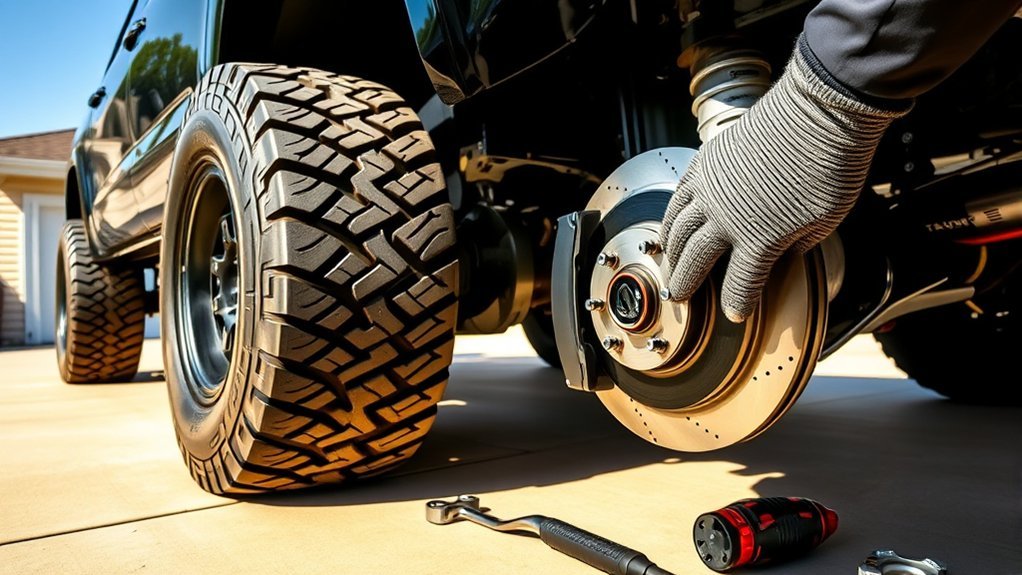
Oversized tires make routine brake maintenance more important. The brakes may work harder, especially if the tires are heavier than stock or the truck is used for towing and hauling.
| Component | Maintenance Tip | When to Check |
|---|---|---|
| Brake pads | Inspect thickness and wear pattern. | At every tire rotation or sooner if braking changes. |
| Rotors | Check for grooves, cracks, rust, heat spots, or vibration. | During pad inspection. |
| Brake fluid | Replace old or contaminated fluid with the correct type. | Follow Toyota service guidance or inspect more often under severe use. |
| Calipers | Check for sticking, leaks, and uneven pad contact. | If the truck pulls, smells hot, or wears pads unevenly. |
| Tires | Check pressure, tread depth, damage, and load rating. | Monthly and before towing or long trips. |
NHTSA recommends checking tire pressure at least once a month when tires are cold. That is especially important after changing tire size because tire pressure affects tread contact, heat, tire life, and braking feel.
Stock Brakes vs. Big Brake Kits
Stock Tundra brakes are designed around Toyota’s intended tire sizes, payload ratings, towing limits, and normal driving conditions. They can work well when the truck is maintained properly and the tire change is mild.
A big brake kit is more useful when the new setup creates repeated heat or stopping confidence problems. Larger rotors can add heat capacity and leverage. Larger calipers and properly matched pads can improve clamping force and pedal feel. The main benefit is not just one dramatic stop; it is more consistent stopping when the brakes are hot.
| Setup | Best For | Main Limitation |
|---|---|---|
| Healthy stock brakes | Mild tire upsizing, normal commuting, light loads. | May fade sooner with heavy tires, towing, or mountain driving. |
| Pads, fluid, and quality rotors | Moderate tire upgrades, towing, better heat resistance. | Still limited by rotor size and caliper design. |
| Big brake kit | Heavy oversized tires, frequent towing, repeated hard braking, off-road builds. | Higher cost, wheel-clearance requirements, and installation complexity. |
Before buying a big brake kit, confirm wheel clearance, replacement pad availability, parking brake compatibility, ABS compatibility, and whether the kit is intended for your Tundra generation and trim.
[Products Worth Considering]

These pre-assembled 15x6.00-6 front tire and wheel assemblies are designed for quick replacement on riding lawn mowers and lawn tractors. Built with natural rubber pneumatic tires and turf-friendly tread for solid traction and improved shock absorption. A thickened welded rim and 3/4" sintered iron bushing help provide stable, heavy-duty support for everyday mowing use.

The Big Rig Defense Tire Thumper is a truck tire pressure checker that lets you quickly check multiple tires by giving them a firm whack. Listen for a reassuring thump and feel the stick bounce when a tire is fully inflated, helping you get back on the road safely. It features a comfortable, glove-friendly handle and a secure wrist strap for confident use on busy routes.

Malco tire mounting and demounting lubricant is a ready-to-use tire lube formulated to reduce friction during tire installation for passenger cars, light trucks, farm tires, and heavy-duty equipment. It provides rust-inhibiting protection to help reduce corrosion on rims and wheels, and helps support proper tire bead seating during inflation to reduce air leakage. The silicone-free, soap-free formula is whitewall safe to help prevent discoloration on whitewall tires and sensitive sidewall markings.
Frequently Asked Questions
Does tire size affect braking on a Toyota Tundra?
Yes. Tire size can affect braking because taller tires change the brake system’s effective leverage at the road, and heavier tires add rotating mass. The actual change depends on tire weight, tread compound, road surface, load, tire pressure, and brake condition.
Can I put bigger tires on my Tundra without upgrading the brakes?
Sometimes, yes. A small increase from stock may be fine if the tires are properly rated, the brakes are healthy, and the truck stops confidently. Larger, heavier tires are more likely to need better pads, fresh fluid, upgraded rotors, or a big brake kit.
Are 35-inch tires enough to require a big brake kit?
Not automatically. Some Tundra owners run 35-inch tires with well-maintained stock brakes, while others need upgrades because they tow, haul, drive steep grades, or use heavy wheels. Judge by total tire-and-wheel weight, braking symptoms, and how you use the truck.
What is the first brake upgrade to make after oversized tires?
Start with inspection and maintenance. If everything is healthy but braking still feels weaker, high-quality truck-rated pads and fresh brake fluid are often the first sensible upgrades. Move to rotors, lines, or a big brake kit if heat and fade remain problems.
Conclusion
Oversized tires can affect Toyota Tundra braking, but the impact is not defined by one simple percentage rule. Tire diameter, tire weight, tread design, load rating, pressure, brake condition, towing, and driving terrain all matter. If your tire upgrade is mild and your brakes are in excellent shape, stock brakes may be enough. If the truck feels harder to stop, fades on repeated braking, or carries heavy loads, brake upgrades become a smart safety step.
The best approach is to inspect first, install carefully, test safely, and upgrade based on real braking behavior. Your Tundra should not just look ready for bigger tires. It should stop confidently with them.
Sources
- NHTSA TireWise — tire size, tire pressure, tread, traction, and tire maintenance safety guidance.
- Toyota 2026 Tundra official page — factory Tundra wheel sizes, trim context, towing, and payload information.
- OpenStax College Physics 2e: Work-Energy Theorem — explains kinetic energy, work, mass, speed, and stopping-energy concepts.