
Preventing Dry Rot on Honda Accord Tires: What Works
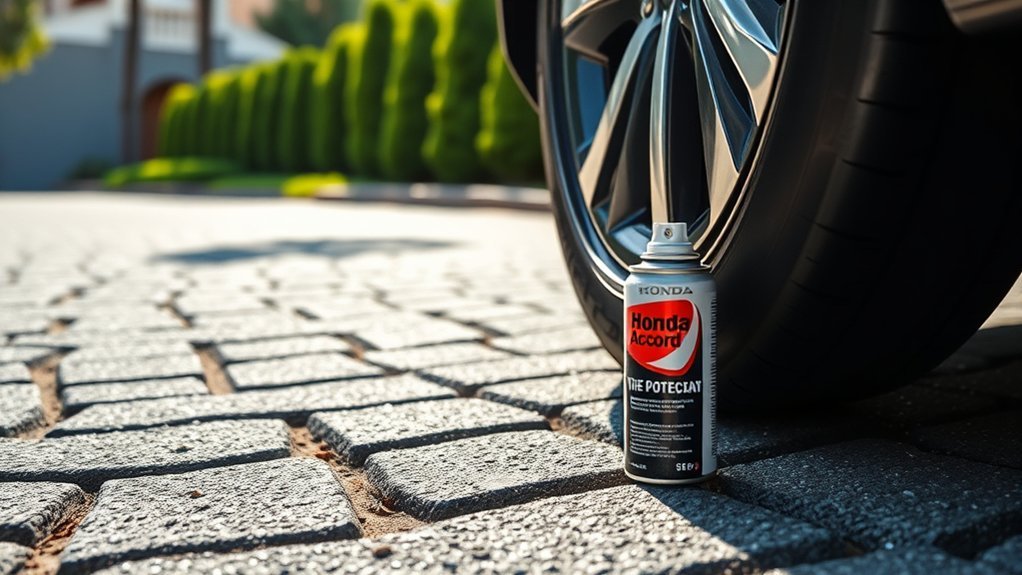
To prevent dry rot on your Honda Accord tires, regularly inspect them for cracks and discoloration. Maintain proper tire pressure and clean them with a medium bristle brush and mild soap. Store tires in a cool, dry place away from UV exposure, and consider using tire covers. Applying UV-protective tire shine products can also help. By being proactive, you guarantee your tires last longer and stay safe. Discover effective strategies and products to enhance your tire maintenance.
Understanding Tire Dry Rot: What It Is and Why It Matters
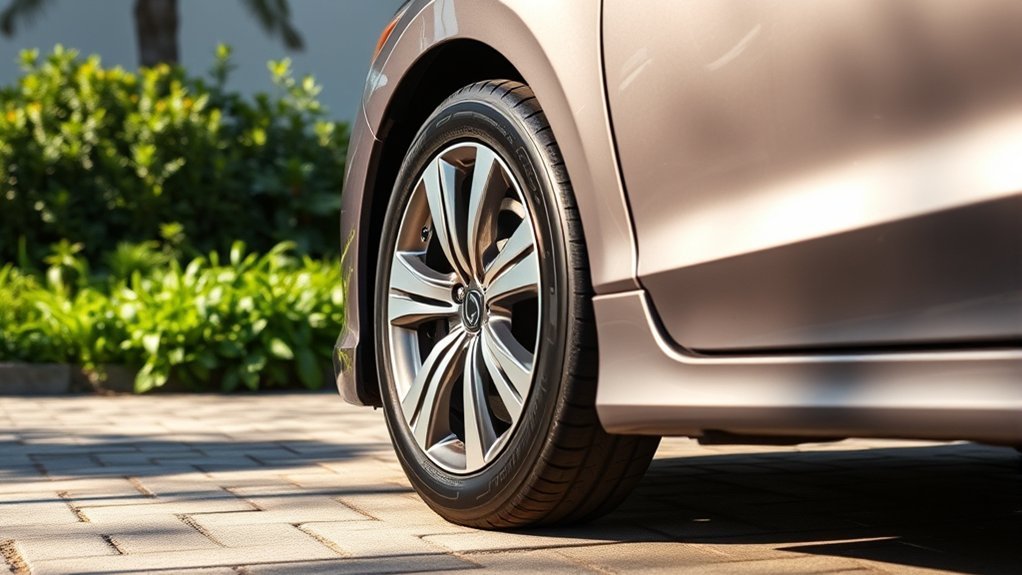
Understanding tire dry rot is vital for maintaining vehicle safety, as it directly impacts tire integrity. Tire dry rot refers to the degradation of rubber caused by UV radiation and ozone exposure, leading to brittleness and cracks in the tire structure. This deterioration shortens the tire lifespan, making regular inspections important. Signs of dry rot include decolorization, brittleness, and large cracks on the sidewalls, all of which indicate that the rubber composition has weakened. Driving on dry rotting tires is unsafe; it can result in pressure loss and potential tire failure. To prevent dry rot, avoid harsh chemicals, maintain proper tire pressure, and regularly drive your vehicle to prevent tires from sitting idle. Additionally, storing tires in a cool environment can further enhance their longevity and performance. By understanding these factors, you can take proactive measures to extend your tires’ life and guarantee safer driving conditions.
What Causes Dry Rot in Your Honda Accord Tires?
Dry rot in your Honda Accord tires mainly stems from prolonged exposure to UV radiation, which deteriorates the rubber compounds over time. Understanding the factors that contribute to this issue can greatly enhance tire longevity. Here are the main causes:
- UV Radiation: The sun’s rays break down the rubber compounds, making your tires more susceptible to drying and cracking.
- Chemical Exposure: Some tire cleaning products contain abrasive or corrosive chemicals that accelerate the degradation of rubber.
- Extreme Temperatures: High heat and cold snaps can harden the rubber, leading to cracks that promote dry rot.
Maintaining proper tire pressure is essential, too. Low pressure can cause flexing and stress on the tires, increasing the risk of dry rot. Regularly driving your Accord helps keep tires in good condition, preventing them from sitting idle and exposed to environmental elements. Additionally, checking tire pressure regularly can help mitigate stress on the tire components and promote overall tire health.
Maintenance Tips to Avoid Tire Dry Rot
To prevent dry rot on your Honda Accord tires, regular inspections are crucial for identifying issues early. Proper tire storage and UV protection measures can greatly prolong tire life and maintain rubber integrity. By following these maintenance tips, you can guarantee your tires remain in ideal condition. Additionally, extreme temperatures and inactivity can accelerate rubber breakdown, so ensure your tires are regularly used and stored in appropriate conditions.
Regular Tire Inspections
- Check for Cracks and Decolorization: Inspect tires every six months for early signs of deterioration.
- Monitor Tire Pressure: Keep your tires inflated to the recommended level, as low pressure can accelerate wear and contribute to dry rot.
- Clean Regularly: Use a medium bristle brush and Dawn dish soap to eliminate harmful residues that can degrade rubber.
Proper Tire Storage
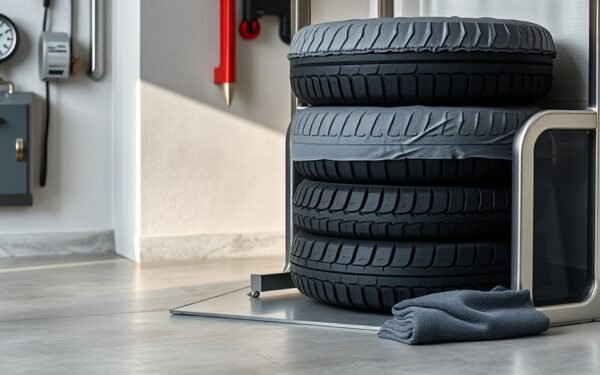
Proper tire storage is essential for preserving the lifespan and performance of your tires. Store your tires in a cool, dry location, away from direct sunlight and heat sources to minimize the risk of dry rot. Elevate tires off the ground using tire racks or wooden pallets; this prevents moisture accumulation and contact with corrosive surfaces. Consider using tire covers or bags to shield them from dust, dirt, and harmful chemicals that can degrade rubber compounds over time. Regularly inspect your stored tires for signs of dry rot, such as cracks and brittleness, ensuring you catch deterioration early. Don’t forget to rotate your tires periodically to prevent flat spots and maintain even pressure distribution throughout the storage duration.
UV Protection Measures
While proper tire storage considerably reduces the risk of dry rot, implementing UV protection measures is equally important for maintaining tire integrity. Here are three effective strategies to enhance tire longevity:
- Use Tire Shine Products: Regularly apply tire shine products with UV protection, like Optimum Opti-Bond Tire Gel, to shield your tires from harmful sun exposure.
- Store in Shade: Keep your Honda Accord in a garage or shaded area to minimize direct sunlight, which accelerates rubber degradation.
- Utilize Tire Covers: During long periods of inactivity, use tire covers to protect against UV rays that can damage the tire surface.
Recognizing Tire Dry Rot: Signs to Watch For
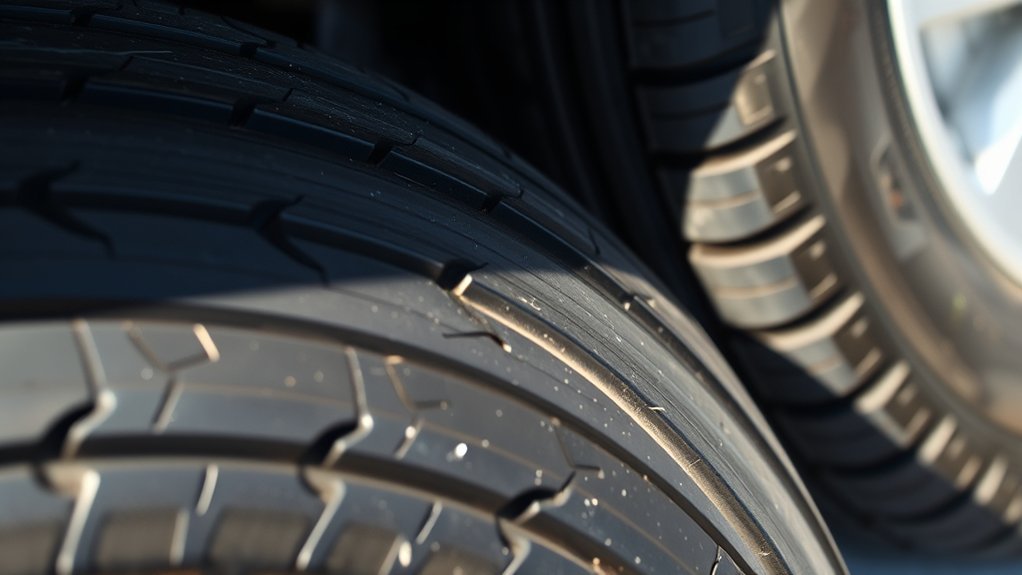
To recognize tire dry rot, you need to watch for specific visual and physical changes. Look for decolorization and cracks on both the sidewalls and tread surface, as these indicate significant deterioration. Additionally, if your tires feel brittle or rigid, it’s a clear sign that they’re losing elasticity and may pose safety risks. Regular inspections are vital for identifying ozone cracking that can further compromise tire integrity.
Common Visual Indicators
Recognizing tire dry rot is essential for maintaining vehicle safety, as several visual indicators can signal deterioration. Keep an eye out for these common signs of tire aging:
- Decolorization: If your tires lose their black hue, it may indicate potential dry rot.
- Brittleness: A hard or rigid feel to your tires suggests they’re deteriorating, impacting safety and performance.
- Cracks: Look for large cracks on the sidewalls or tread surface; these can expose steel cords and require immediate attention.
Regularly comparing your tires to new ones can help you spot visible deterioration early, ensuring you’re aware of any safety implications. Stay vigilant to keep your Honda Accord in prime condition.
Physical Tire Changes
Tire dry rot manifests through several physical changes that can greatly impact performance and safety. You should look for visible cracks on the sidewalls and tread, which indicate degradation of the tire materials. Brittleness and a fading black color are also signs to watch for, as these changes compromise tire integrity. Large cracks exposing steel cords present a serious risk, jeopardizing your safety on the road. Regular inspections for decolorization and rigidity will help you catch early signs of dry rot before they escalate. Compare your tires to new ones to monitor any deterioration in tread patterns. Acting promptly on visible signs is essential, as driving on affected tires can lead to pressure loss and potential accidents.
Effective Cleaning Techniques and Protection Strategies for Your Tires
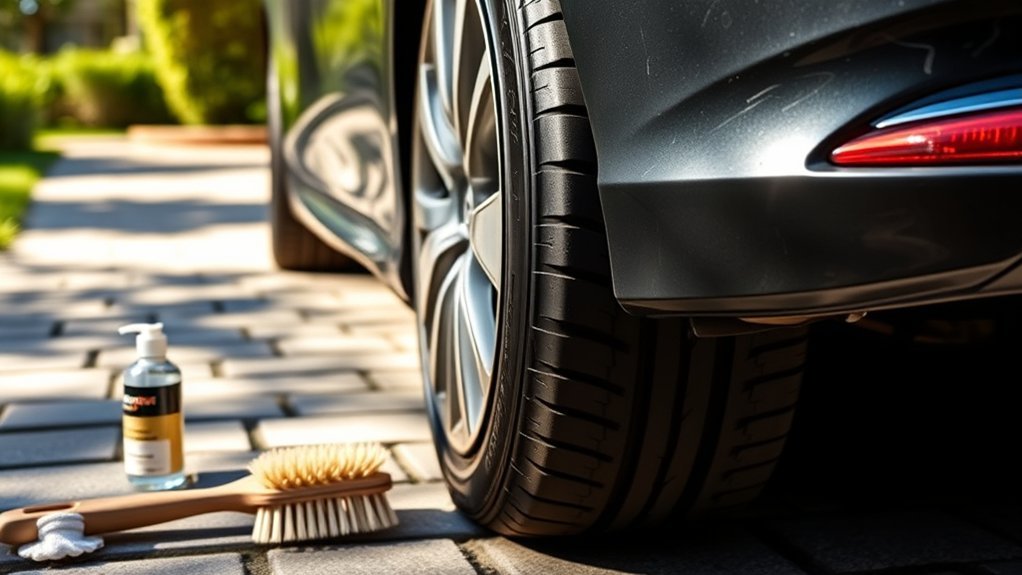
Cleaning and protecting your tires is essential for maintaining their integrity and prolonging their lifespan. Here are some effective techniques to keep your Honda Accord tires in top shape:
- Tire Cleaning: Use a medium bristle brush and Dawn dish soap to remove grease and prevent buildup of harmful substances. Regular cleaning stops dry rot before it starts.
- Protective Coatings: Apply tire shine products like Optimum Opti-Bond Tire Gel. This provides UV protection, shielding your tires from sun damage.
- Inflation and Rotation: Verify your tires are properly inflated to avoid low pressure, which leads to increased wear. Regularly rotate and drive your vehicle to prevent tires from sitting idle, reducing dry rot risk. Additionally, regular cleaning helps identify cracks or damage early, avoiding blowouts.
Choosing Effective Tire Shine Products for Your Honda Accord
When you’re looking to protect your Honda Accord’s tires, choosing the right tire shine product is essential for preventing dry rot. Opt for tire shine types like Optimum Opti-Bond Tire Gel, which offers UV protection to shield against degradation. Avoid products with petroleum distillates, as they can accelerate tire damage.
Aerosol tire shines are often preferable to liquids or gels, producing less sling and keeping your vehicle’s paint safe. When applying, make sure your tires are clean, as dirt and grease can hinder effectiveness and contribute to deterioration. Use proper application techniques by applying the dressing evenly and allowing it to dry before driving. This step is vital for preventing slinging and ensuring a uniform finish. By selecting the right products and following these techniques, you can greatly extend the life of your tires and mitigate the risk of dry rot. Additionally, using water-based products helps maintain rubber elasticity and prevents damage over time.
When to Replace Tires: Signs of No Return
While regular maintenance can extend the life of your tires, certain signs indicate that replacement is unavoidable. Recognizing these signs is essential for your safety and performance.
- Cracks and Dry Rot: Significant cracks, especially on the sidewalls, signal potential structural failure. Discoloration and brittleness are also red flags.
- Tread Depth: If the tread depth falls below 2/32 of an inch, it’s time for new tires. Tread wear affects grip and handling.
- Tire Lifespan: Tires should generally be replaced every six years, regardless of tread wear or mileage, due to natural degradation. Regular monitoring of tread depth and wear patterns can help identify issues before they become critical.
Regular inspections help catch these issues early, allowing you to replace tires before safety becomes compromised. By staying vigilant and proactive, you can guarantee a smoother ride and maintain peak vehicle performance.
Frequently Asked Questions
Why Do My Tires Keep Getting Dry Rot?
Your tires keep getting dry rot due to inadequate tire maintenance and harmful environmental factors. Prolonged UV exposure, low pressure, and localized stress can all accelerate degradation, leading to premature tire deterioration. Regularly check and rotate tires.
Can Dry Rot Be Prevented in Tires?
Yes, dry rot can be prevented in tires. For instance, regular tire maintenance, like checking pressure and applying rubber protection products, keeps them flexible and resilient against UV damage, greatly reducing the risk of decay.
Conclusion
So, if you want your Honda Accord tires to age like fine wine and not like last week’s salad, keep an eye out for dry rot. Regular maintenance and proper cleaning can save you from the dramatic tire blowout scene you didn’t audition for. Remember, investing a little time and effort now means steering clear of costly replacements later. After all, no one wants to be stranded on the side of the road, contemplating life choices while waiting for a tow truck.

Related Articles
How to Store Honda Accord Tires Between Seasons
When storing your Honda Accord tires, discover essential tips to ensure they remain in top condition for the next season. Don't risk tire damage!
Read More
How to Stop Honda Accord Tire Sidewalls From Cracking
In order to prevent your Honda Accord's tire sidewalls from cracking, discover essential maintenance tips that could save you from costly repairs.
Read More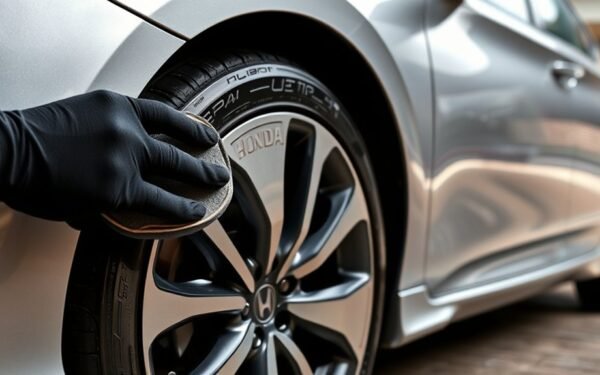
Honda Accord Tire Dressing: How to Do It the Right Way
Transform your Honda Accord's tires with expert dressing techniques that enhance performance and shine—discover the secrets to a flawless finish!
Read More