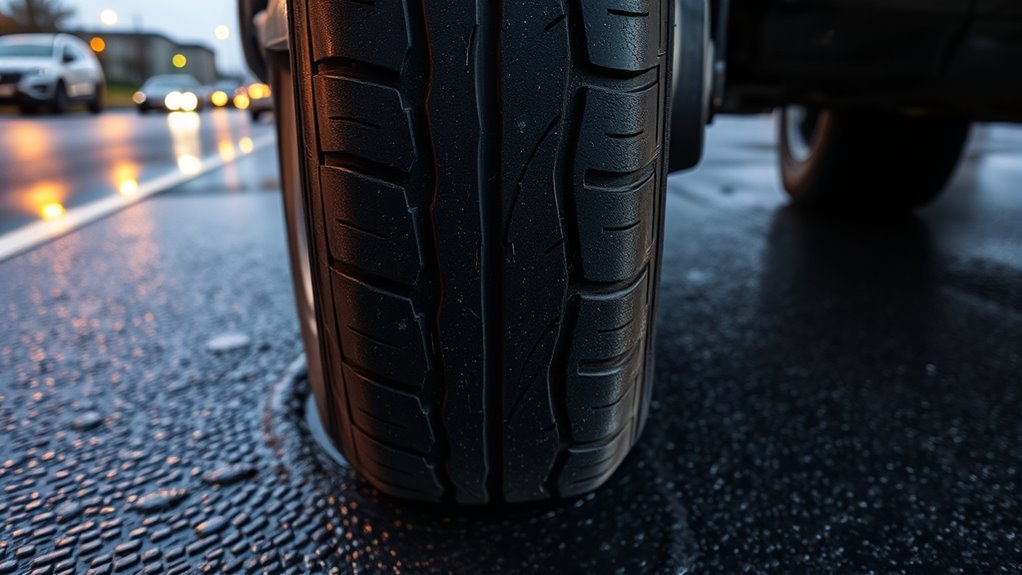
You need new tires when tread depth, sidewall condition, tire age, or driving behavior shows the tire can no longer grip, hold air, or carry the vehicle safely. A quick driveway inspection can catch most warning signs: low tread, visible wear bars, cracks, bulges, cuts, exposed cords, uneven wear, vibration, pulling, and repeated pressure loss.
Quick Answer
Replace tires immediately if tread is at or below 2/32 inch, wear bars are flush with the tread, cords are exposed, the sidewall has bulges or deep cracks, or the tire keeps losing air. For safer wet-road control, start shopping around 4/32 inch, especially if you drive often in rain.
Key Takeaways
- Use the penny test or, better, a tread-depth gauge. If you can see the top of Lincoln’s head, the tire is at about 2/32 inch and should be replaced.
- Do not wait for bald tires in rainy climates. Wet braking and hydroplaning resistance can drop noticeably before the legal minimum.
- Sidewall bulges, exposed cords, tread separation, and deep cuts are replacement signs even if the tread still looks good.
- Uneven center, edge, or one-sided wear usually means inflation, alignment, suspension, or rotation problems need correction.
- Check the DOT Tire Identification Number. Some tire and vehicle makers recommend replacing tires after 6–10 years, regardless of tread depth.
At a Glance
| Time Required | 5–10 minutes |
| Difficulty | Easy |
| Tools Needed | Penny, tread-depth gauge, tire pressure gauge, flashlight |
| Cost | Free with a penny; usually under $10 for a tread-depth gauge |
How to Tell If You Need New Tires: Penny Test, Gauge, and Limits
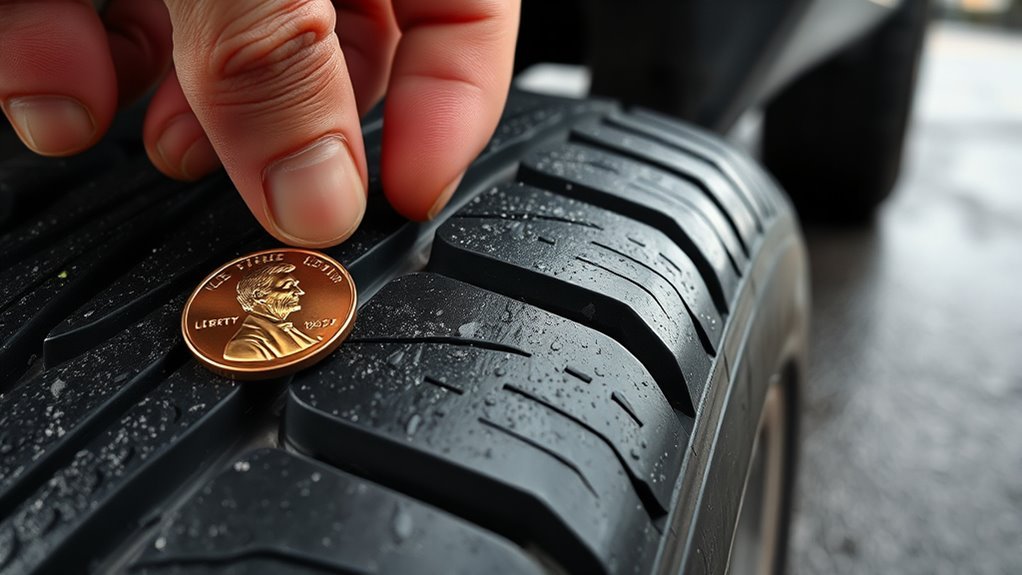
The fastest way to check tire tread is the penny test. Insert a penny into a main tread groove with Lincoln’s head upside down and facing you. If you can see the top of his head, your tread is around 2/32 inch, which the National Highway Traffic Safety Administration says means the tire is not safe and should be replaced.
A tread-depth gauge is more accurate than a coin and costs very little. Measure each tire in several places: inner edge, center, outer edge, and at more than one point around the tire. A single good reading does not make the tire safe if another groove is worn out.
- 2/32 inch: replace immediately. This is the common minimum wear limit for passenger tires and the point where wear bars become flush.
- 4/32 inch: plan replacement if you drive in rain, because wet stopping and water evacuation are already reduced.
- 5/32–6/32 inch: consider replacement for regular snow or slush driving, where deeper tread is important for traction.
Note: Legal minimums are not the same as best safety practice. A tire can be technically legal at 2/32 inch and still perform poorly in heavy rain.
[Products Worth Considering]

Milton S-921 pencil tire pressure gauge helps you maintain optimal tire pressure for passenger cars with accurate readings in PSI and kPa. It features a built-in deflator valve for convenient pressure adjustments, plus a single chuck head and nylon indicator bar for easy use on the go. Built from durable plated brass and designed for reliable performance, it’s a practical road trip and cold-weather maintenance tool.

Monitor tire tread wear with a smart, color-coded depth gauge that shows clear condition ranges at a glance. The bar is range marked for fast, easy readings, helping you maintain safer traction and performance. Each gauge is portable with a pocket clip, and the set includes 20 units for daily use and sharing.

Measure tire tread depth quickly and accurately with this LUMITECO dial gauge that reads in 1/32" increments up to 14/32". The color-coded green/yellow/red zones make it easy to judge tire wear and know when replacement is needed. A rugged, compact design with a protective pouch helps keep the gauge ready for use on cars, trucks, motorcycles, and more.
Spot Wear Bars: Why They Matter
Wear bars are small raised ribs molded across the tread grooves. When the surrounding tread wears down until it is level with these bars, the tire has reached its minimum usable tread depth and needs replacement. The U.S. Tire Manufacturers Association explains that when wear bars are flush with the tread, it is time to replace the tire.
Check more than one groove. If wear bars are visible only on the inner or outer shoulder, the tire may have an alignment or suspension issue. Replacing the tire without fixing the cause can make the next tire wear out early too.
Pro Tip: Turn the steering wheel fully left and right when parked so you can inspect the front tires’ inner shoulders. That is where hidden alignment wear often shows first.
Recognize Sidewall Damage: Cracks, Bulges, Cuts, and Dry Rot
Sidewall damage is more serious than normal tread wear because the sidewall flexes and carries load every time the tire rolls. Replace the tire or have it inspected immediately if you see any of these signs:
- Bulges or blisters: often indicate internal cord or ply damage. Do not keep driving on a bulging tire.
- Deep cracks or dry rot: aging rubber can lose flexibility and strength, especially after years of heat, sunlight, ozone, or poor storage.
- Cuts, tears, or exposed cords: visible body ply, belt material, or sidewall separation means the tire is unsafe.
- Repeated air loss: a slow leak can come from a puncture, valve stem, bead leak, cracked wheel, or internal tire damage.
Warning: Do not try to patch a sidewall bulge, sidewall cut, or sidewall puncture. Sidewall and shoulder damage usually requires tire replacement, not repair.
Sidewall Cracks Explained
Fine surface checking can happen as rubber ages, but deeper cracks are a warning sign. If cracks spread, expose cords, appear with brittleness, or show up on an older tire, have the tire inspected by a professional. Cracking is especially concerning on vehicles that sit for long periods, trailers, RVs, collector cars, and spare tires.
Bulges, Blisters, and Dry Rot
A bulge means the tire’s internal structure may no longer be holding its shape. That can lead to rapid air loss or a blowout. Dry rot is different: it is rubber deterioration that may appear as cracking, stiffness, discoloration, or rough-looking sidewalls. Either condition is a strong reason to stop relying on the tire.
Read Tread Patterns: Uneven, Center, and Edge Wear Causes
The shape of the wear pattern tells you what the tire has been experiencing. Use the table below to match the pattern to the likely cause and next step.
| Wear Pattern | Likely Cause | What to Do |
|---|---|---|
| Center tread worn faster | Overinflation or too much pressure for the load | Set cold pressure to the door placard or owner’s manual, not the number molded on the tire sidewall. |
| Both outer edges worn faster | Underinflation, overloading, or hard cornering | Check cold pressure monthly and inspect for heat damage or sidewall cracking. |
| One edge worn faster | Alignment, camber, toe, or suspension issue | Get an alignment and suspension check before or during tire replacement. |
| Cupping or scalloped dips | Worn shocks/struts, imbalance, or suspension movement | Have the suspension and balance checked; replacement may be needed if the tire is noisy or damaged. |
| Patchy or irregular wear | Lack of rotation, imbalance, alignment, or mixed tire condition | Rotate on schedule, balance as needed, and replace tires that are too uneven to recover. |
Uneven wear is not just cosmetic. It reduces the contact patch, creates noise, and can make the vehicle pull or vibrate. Fix the cause so the next set of tires lasts longer.
Performance Clues: Vibration, Pulling, and Noisy Driving

Your tires can tell you something is wrong before you see obvious damage. Pay attention to changes in how the vehicle feels, sounds, and tracks on a straight road.
Steering Wheel Vibrations
Vibration through the steering wheel, seat, or floor can come from tire imbalance, a bent wheel, uneven wear, a separated belt, or suspension problems. If the vibration appears suddenly after hitting a pothole or curb, inspect the tire and wheel right away. A rhythmic thump can point to a flat spot, broken belt, or tread separation.
Vehicle Pulling Right or Left
If the vehicle consistently drifts or pulls on a flat road, check tire pressure first. A low tire can pull the car to one side. If pressure is correct, the likely causes include alignment problems, uneven tire wear, brake drag, or suspension wear. A technician can check alignment, balance, and tire condition together.
Pressure Loss and TPMS Warnings
A Tire Pressure Monitoring System warning means at least one tire may be significantly underinflated, but TPMS is not a replacement for monthly pressure checks. NHTSA recommends checking tires when they are cold, meaning the vehicle has been parked for at least three hours. Always use the vehicle manufacturer’s recommended pressure on the door placard or in the owner’s manual.
Wet-Weather Risks: Hydroplaning, Poor Stopping, and Traction Loss
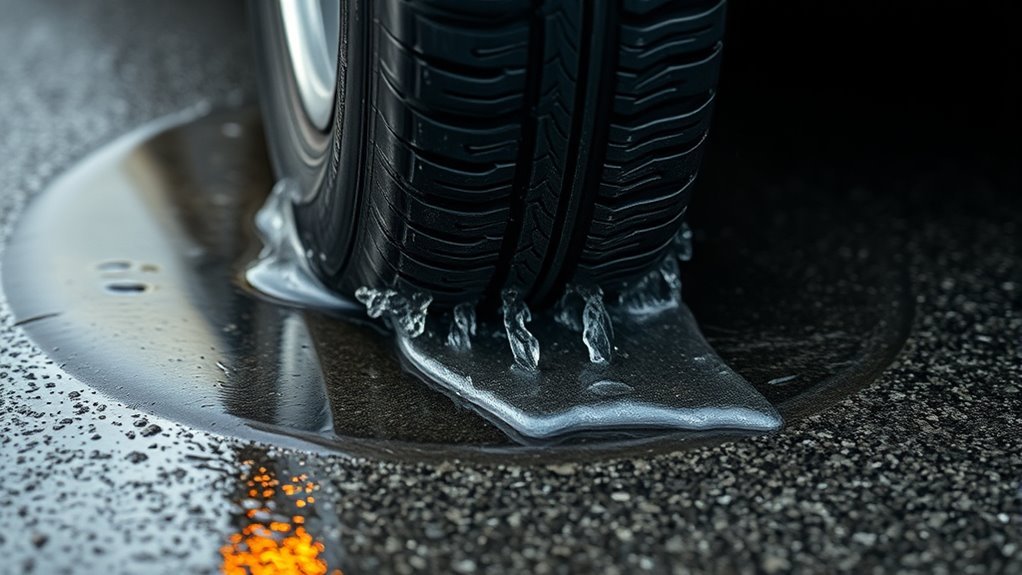
Tread channels water away from the contact patch. As tread gets shallow, the tire has less room to move water, which increases hydroplaning risk and lengthens stopping distance on wet roads.
AAA testing found that tires worn to 4/32 inch increased average wet stopping distance by 87 feet for a passenger car compared with new tires.
That is why many safety-focused drivers replace tires before they reach 2/32 inch. If you regularly drive in rain, start planning at 4/32 inch. Until replacement, reduce speed, increase following distance, avoid cruise control in heavy rain, and make smooth steering and braking inputs.
Tire Age and Replacement: When Tread Is Not the Only Factor
Tires age even when they are not driven much. Heat, sunlight, storage conditions, underinflation, and overloading can all speed up rubber deterioration. NHTSA notes that some vehicle and tire manufacturers recommend replacing tires that are 6–10 years old, regardless of treadwear.
To check tire age, find the DOT Tire Identification Number on the sidewall. The last four digits show the week and year the tire was made. For example, a code ending in 0324 means the tire was manufactured in the third week of 2024. Check both sides of the tire, because the full code may appear on only one side.
Do not forget the spare. Spare tires often age out before they wear out, especially if they sit under the vehicle or in a hot trunk for years. A full-size spare should not become a permanent replacement for a worn tire unless the vehicle and tire manufacturer allow it and the tire is the right size, age, and condition.
Repair or Replace After a Nail or Puncture?
A puncture does not always mean you need a new tire, but the repair must be done correctly. The U.S. Tire Manufacturers Association’s tire repair guidance says repair should be considered only when the damage is limited to the tread area and the puncture is no larger than 1/4 inch, or 6 mm. The tire should be removed from the wheel so the inside can be inspected.
Replace the tire instead of repairing it if the puncture is in the sidewall or shoulder, the hole is larger than 1/4 inch, the tire is worn to 2/32 inch, repairs would overlap, cords are exposed, the bead is damaged, or there is internal damage from driving while underinflated.
Warning: A plug-only or patch-only repair may not meet industry repair guidance. A qualified tire professional should inspect the tire from the inside and use an approved repair method.
[Products Worth Considering]

Accurately measure tire tread depth with a calibrated gauge marked from 0 to 1 inch in 1/32 inch increments. The color-coded bar helps you quickly identify tread condition ranges, supporting safe driving for trucks, motorcycles, automobiles, and passenger vehicles.

The SAFELIFE dial tire tread depth gauge measures tread depth in 1/32 inch increments with clear, easy-to-read 2-inch dial face. Color zones using a traffic light system help you quickly judge whether tread is low, marginal, or ample for safer driving. Built with a durable zinc cast body and a metal detect probe for precise, comfortable use across cars, motorcycles, trucks, and buses.

Measure tyre tread depth precisely with a digital gauge that reads in both MM and inches, helping you monitor safe driving conditions. The large LCD screen is easy to operate, and the compact tool fits for cars, trucks, and motorcycles. It provides high accuracy with a 0-25.4mm range and includes a 1-year warranty for added peace of mind.
What to Check Before Buying New Tires
When replacement is needed, do not buy by tread depth alone. Match the tire to the vehicle and your driving conditions.
- Size: use the tire size listed on the driver’s door placard or in the owner’s manual.
- Load rating: choose a tire that meets or exceeds the required load rating for the vehicle.
- Speed rating: follow the vehicle manufacturer’s minimum requirement, especially for performance vehicles.
- Weather needs: all-season, summer, winter, all-weather, and all-terrain tires behave differently.
- Replacement pattern: replacing all four tires is often best. At minimum, replace tires in axle pairs unless your vehicle manufacturer says otherwise.
- AWD vehicles: many all-wheel-drive systems require closely matched tread depths across all four tires. Check the owner’s manual before replacing only one tire.
[Products Worth Considering]

This universal wheel alignment tool helps you accurately restore tire tilt angles after tire or suspension repairs using an adjustable camber gauge. It features a powerful magnetic base that firmly attaches to brake rotors for stationary, slip-free readings, improving consistency during measurement. Built from durable PC plastic, it resists wear and corrosion and is compact enough for car, truck, RV, and motorcycle alignment tasks.

TireJect Off-Road Tire Sealant Kit provides 5-in-1 sealing to help fix tread punctures up to 3/8", sidewall punctures up to 3/8", bead leaks, slow leaks, and minor dry rot on low-speed tires. It permanently seals with liquid rubber, recycled tire particles, and Aramid fibers, making it ideal for flats caused by thorns, nails, and screws. The included dispensing cap attaches to the valve stem for a no-mess installation, along with a metal valve core remover tool and valve stem cap. This kit is for off-road use only.

The Milton S-693 straight foot dual head air chuck is designed for accurate tire pressure checks and quick, secure valve-core engagement with lock-on threads on both ends. With a 1/4" FNPT connection and a maximum 150 PSI rating, it’s built for use on inner duals and common vehicle tires, including trucks and RVs.
When to See a Tire Professional
Have a qualified tire technician inspect the tire if you see bulges, exposed cords, sidewall cuts, severe cracking, tread separation, repeated air loss, vibration, pulling, cupping, or uneven wear. Also get help if the tire is old and you are unsure how to read the DOT code.
A professional inspection is especially important after a hard pothole hit, curb impact, long drive on a low tire, or any situation where the tire overheated. Some internal damage is not visible from outside the vehicle.
Frequently Asked Questions
What is the 7/7 rule for tires?
The 7/7 rule is not an official federal tire standard. Some shops use it as a conservative reminder to inspect or replace tires when tread is around 7/32 inch or age reaches seven years, but the stronger safety checks are tread depth, visible damage, driving symptoms, tire age, and the tire or vehicle manufacturer’s guidance.
When should I replace performance tires?
Replace performance tires when they reach the wear bars or 2/32 inch, and consider replacing them earlier if wet grip, braking, or handling has declined. Also replace them for sidewall damage, bulges, cracking, uneven wear, repeated pressure loss, or age-related deterioration.
Is 4/32 inch tread still safe?
A tire at 4/32 inch may still be above the common legal minimum, but wet-weather performance is already reduced. If you drive often in rain, start shopping at 4/32 inch instead of waiting for 2/32 inch.
How often should I check tire tread and pressure?
Check tire pressure and tread at least once a month and before long trips. Measure pressure when tires are cold, inspect all four tires, and include the spare if your vehicle has one.
Can I replace just one tire?
Sometimes, but it depends on tread depth, tire type, axle position, and drivetrain. Many vehicles handle best with matching tires on the same axle, and many AWD vehicles need closely matched tread depths on all four tires. Check the owner’s manual or ask a tire professional.
Does a TPMS light mean I need new tires?
Not always. A TPMS light usually means one or more tires are significantly underinflated, but the cause could be temperature change, a puncture, a valve leak, a wheel leak, or tire damage. Check pressure immediately and inspect the tire if the warning returns.
Conclusion
Tire care is nonnegotiable because your tires are the only parts of the vehicle touching the road. NHTSA reported 511 traffic fatalities in tire-related crashes in 2024, which is a clear reminder that worn, damaged, underinflated, or aged tires are not small problems. Use the penny test, measure tread depth, inspect sidewalls, watch for wear bars, listen for vibration or thumping, and take pulling seriously. Replace tires promptly when the signs point to reduced safety.
Sources
- National Highway Traffic Safety Administration TireWise — tire tread limits, penny test, tire aging, DOT Tire Identification Number, pressure checks, TPMS, and tire-related crash data.
- U.S. Tire Manufacturers Association Tire Care Essentials — tire pressure, monthly checks, tread depth, wear bars, rotation, and alignment guidance.
- U.S. Tire Manufacturers Association Tire Repair Basics — puncture repair limits and professional inspection requirements.
- AAA Worn Tire Testing — wet-road stopping distance and handling loss at 4/32 inch tread depth.
- Michelin Tire Wear Indicator Guide — wear bars, sidewall damage signs, tread-depth checks, and common wear causes.