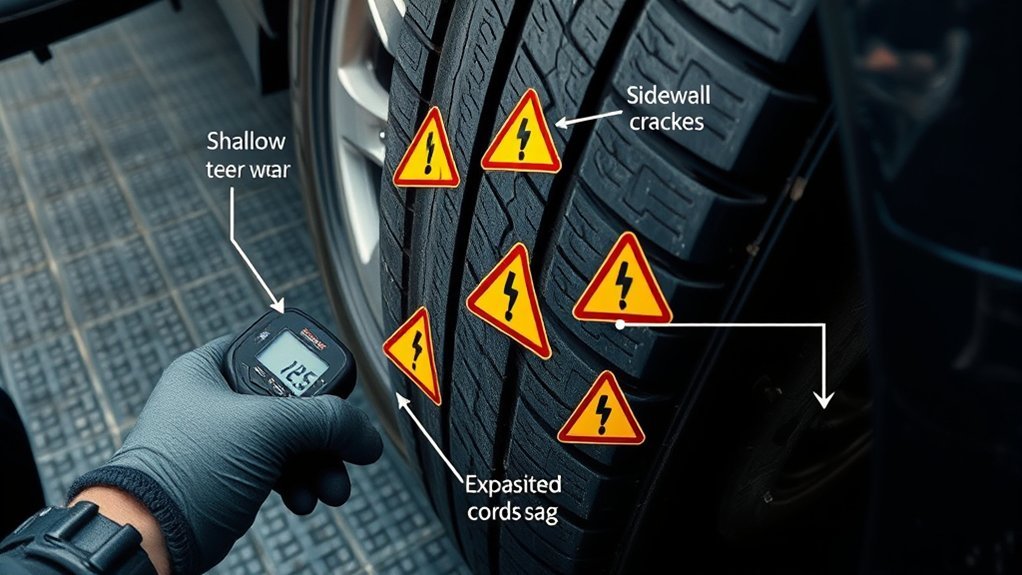
You can tell your tire is bad by checking the tread, sidewalls, tire pressure, tire age, and how the vehicle feels while driving. A tire may need replacement if it has tread worn to 2/32 inch, exposed cords, cracks, cuts, bulges, uneven wear, repeated pressure loss, vibration, or rhythmic thumping. Check these signs early so you can replace a weak tire before it fails on the road.
Quick Answer
A tire is bad if the tread is at or below 2/32 inch, the wear bars are flush, the sidewall has cracks, cuts, bulges, or exposed cords, or the tire keeps losing air. Vibration, thumping, pulling, poor wet traction, or uneven tread wear also mean the tire needs inspection or replacement.
Key Takeaways
- Replace a tire when tread is at or below 2/32 inch or the tread wear bars are flush with the tread.
- Do not drive on tires with bulges, exposed cords, severe cracking, deep cuts, or repeated pressure loss.
- Check pressure when tires are cold and use the pressure on the driver-door placard or owner’s manual, not the sidewall maximum.
- Uneven wear often points to alignment, suspension, rotation, or inflation problems.
- Tire age matters, especially on spares and low-mileage vehicles, but condition and manufacturer guidance matter more than age alone.
At a Glance
| Time Required | 5–10 minutes per tire |
| Difficulty | Easy for a basic check; professional inspection needed for internal damage |
| Tools Needed | Penny, tire pressure gauge, tread depth gauge, flashlight, gloves |
| Cost | Free with a penny; usually under $15 for a gauge; tire replacement cost varies by size and type |
Signs Your Tire Is Bad
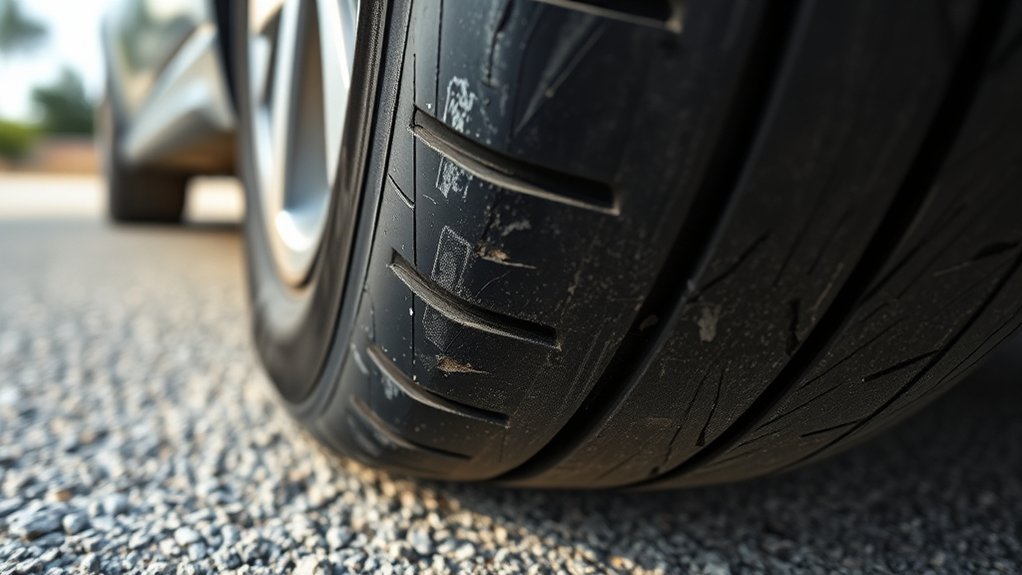
The clearest signs of a bad tire are low tread, exposed wear bars, sidewall cracks, cuts, bulges, exposed cords, uneven tread wear, repeated air loss, vibration, thumping, and poor traction. If you see structural damage, do not treat it as normal wear. A tire’s sidewall and internal belts help carry the vehicle’s weight, and visible damage can mean the tire is already weak.
Warning: Do not keep driving on a tire with a sidewall bulge, exposed cords, severe cracking, a deep cut, or sudden vibration. Slow down carefully, avoid sharp braking or turning, pull over safely, and install the spare or call for roadside help.
A quick visual check can catch many tire problems before they become roadside emergencies. Look across the tread face, both shoulders, and the sidewall. Then check pressure and tread depth. If the tire looks damaged or the vehicle feels different while driving, have the tire inspected by a qualified tire professional.
How to Check If a Tire Is Bad
Use this simple inspection order so you do not miss the most common warning signs.
- Park safely on level ground. Let the tires cool before checking pressure.
- Check the tread depth. Use a tread depth gauge or the penny test.
- Look for wear bars. If the bars are flush with the tread, the tire is worn out.
- Inspect the sidewalls. Look for cracks, cuts, bulges, bubbles, scrapes, or exposed cords.
- Check tire pressure. Use the cold inflation pressure listed on the driver-door placard or owner’s manual.
- Look for uneven wear. Compare the inner edge, center, outer edge, and both shoulders.
- Check the tire date code. Read the last four digits of the DOT tire identification number to find the week and year of manufacture.
- Pay attention during the drive. Vibration, thumping, pulling, or poor wet grip can point to tire damage, imbalance, alignment issues, or suspension trouble.
Check Tread Depth and Wear Bars
Tread depth is one of the easiest ways to tell if a tire is unsafe. The National Highway Traffic Safety Administration recommends making sure tread is at least 2/32 inch. When tread reaches that depth, replacement is needed.
Use the penny test if you do not have a tread depth gauge. Place a penny into the tread groove with Lincoln’s head upside down. If you can see the top of Lincoln’s head, the tread is too shallow and the tire should be replaced. For a more accurate check, use a tread depth gauge and measure several grooves across each tire.
Most tires also have tread wear indicator bars molded into the grooves. These bars look like narrow strips of rubber running across the tread. When they sit flush with the surrounding tread, the tire is worn out and needs replacement.
Pro Tip: Check more than one spot on each tire. A tire can have legal-looking tread in the center but unsafe wear on the inner shoulder because of poor alignment or worn suspension parts.
[Products Worth Considering]

The SAFELIFE dial tire tread depth gauge measures tread depth in 1/32 inch increments with clear, easy-to-read 2-inch dial face. Color zones using a traffic light system help you quickly judge whether tread is low, marginal, or ample for safer driving. Built with a durable zinc cast body and a metal detect probe for precise, comfortable use across cars, motorcycles, trucks, and buses.

Measure tire tread depth quickly and accurately with this LUMITECO dial gauge that reads in 1/32" increments up to 14/32". The color-coded green/yellow/red zones make it easy to judge tire wear and know when replacement is needed. A rugged, compact design with a protective pouch helps keep the gauge ready for use on cars, trucks, motorcycles, and more.

Monitor tire tread wear with a smart, color-coded depth gauge that shows clear condition ranges at a glance. The bar is range marked for fast, easy readings, helping you maintain safer traction and performance. Each gauge is portable with a pocket clip, and the set includes 20 units for daily use and sharing.
Look for Cracks, Cuts, and Bulges
Cracks, cuts, bubbles, and bulges are serious tire damage signs. Check the full sidewall on both sides of the tire when possible. Also check the tread grooves for cuts, embedded objects, and exposed steel or fabric cords.
[Products Worth Considering]

The TYAMATE TM8 solar-powered wireless TPMS delivers real-time tire pressure and temperature monitoring with six alarm modes for safer driving. A vibrant color LCD display shows readings clearly while windshield mounting keeps it hands-free and easy to read. With a wide 0–87 PSI range, strong 433.92 MHz signal transmission, and quick sensor pairing, it’s ideal for RV, sedan, SUV, MPV, and truck use.

Accurately measure tire tread depth with a calibrated gauge marked from 0 to 1 inch in 1/32 inch increments. The color-coded bar helps you quickly identify tread condition ranges, supporting safe driving for trucks, motorcycles, automobiles, and passenger vehicles.

The 22800 wheel stud installer makes replacing wheel studs quick and secure, saving time and effort during tire service. It uses a ratchet or impact wrench to pull new studs firmly into place, helping when existing studs are too long. Compatible with most automotive wheels and light-duty truck wheel studs, it’s designed for easy, tool-assisted installation.
Cracks and Cuts
Small surface cracks can appear as rubber ages, but deep cracks, long splits, or cuts that expose cord material mean the tire is no longer safe. Cracks can come from age, sunlight, heat, underinflation, overloading, chemical exposure, or long periods of parking.
Replace the tire if the cracking is deep, widespread, or paired with air loss. A cut in the tread area may be repairable only after the tire is removed from the wheel and inspected from the inside. Sidewall cuts are usually not repairable.
Sidewall Bulges
A sidewall bulge or blister usually means the tire’s internal structure has been damaged. This can happen after hitting a pothole, curb, debris, or other road hazard. A bulge can fail suddenly, especially at highway speed.
If you see a bulge, replace the tire immediately. Do not try to “watch it for a few days.” The tire has a weak spot, and the safest move is to install the spare or have the vehicle towed to a tire shop.
Watch for Vibration and Thumping
Unusual vibration, shaking, or rhythmic thumping can be a sign of a bad tire, a wheel balance issue, a bent wheel, internal tire damage, or alignment trouble. A vibration that appears suddenly is more urgent than a mild vibration that has slowly developed.
If the steering wheel shakes at speed, a front tire or wheel may be involved. If the seat or floor shakes, the issue may be coming from the rear. A steady thump can point to a flat spot, separated belt, tire out-of-round condition, or internal damage that is not visible from the outside.
When vibration starts suddenly, slow down gradually, avoid abrupt braking or sharp turns, and pull over when safe. Inspect the tires. If one is flat, underinflated, bulging, or visibly damaged, do not keep driving on it.
Spot Uneven Wear and Poor Traction
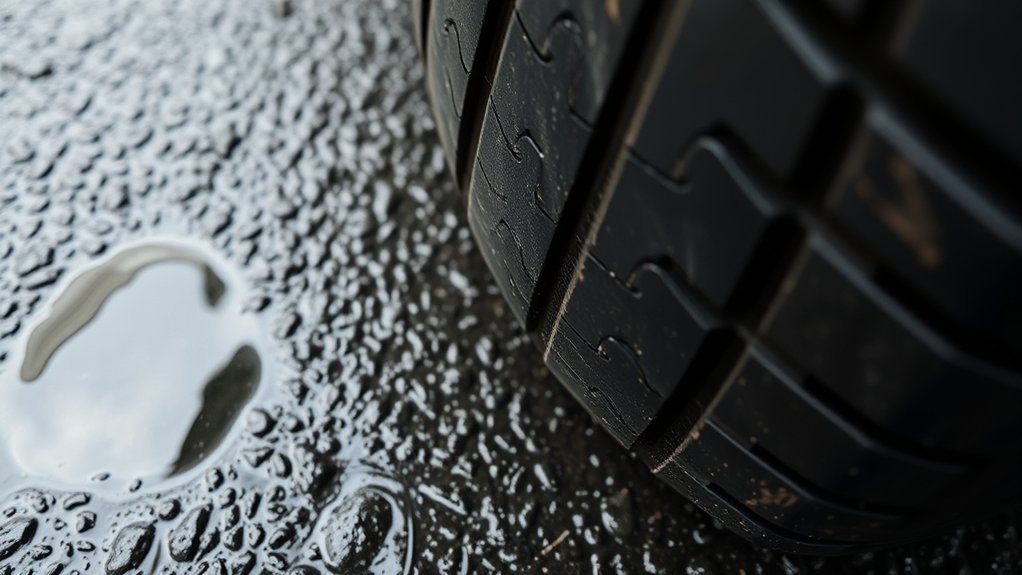
Uneven wear is one of the most useful clues because it tells you how the tire is meeting the road. Look across the entire tread, not just the center. Compare the inside edge, outside edge, center rib, and shoulders.
| Wear Pattern | What It May Mean |
| Center tread worn faster | Possible overinflation or too much pressure for the load |
| Both shoulders worn faster | Possible underinflation, overloading, or hard cornering |
| One edge worn faster | Possible alignment issue or worn suspension part |
| Cupping or scalloped dips | Possible worn shocks, struts, wheel balance issue, or suspension problem |
| Bald spot in one area | Possible locked brake event, belt issue, flat spot, or internal tire problem |
Poor traction is another sign the tire is no longer doing its job. Watch for longer stopping distances, sliding on wet roads, delayed cornering response, or traction-control lights that appear more often than usual. Low tread cannot move water away as well, so wet-road grip drops as the tire wears.
Check Tire Age and Tire Pressure
Tire pressure and tire age are easy to overlook because the tire may still look normal. Both matter. Underinflation creates extra heat and internal stress, while aging rubber can crack or weaken even if the tread still looks usable.
[Products Worth Considering]

Milton S-921 pencil tire pressure gauge helps you maintain optimal tire pressure for passenger cars with accurate readings in PSI and kPa. It features a built-in deflator valve for convenient pressure adjustments, plus a single chuck head and nylon indicator bar for easy use on the go. Built from durable plated brass and designed for reliable performance, it’s a practical road trip and cold-weather maintenance tool.
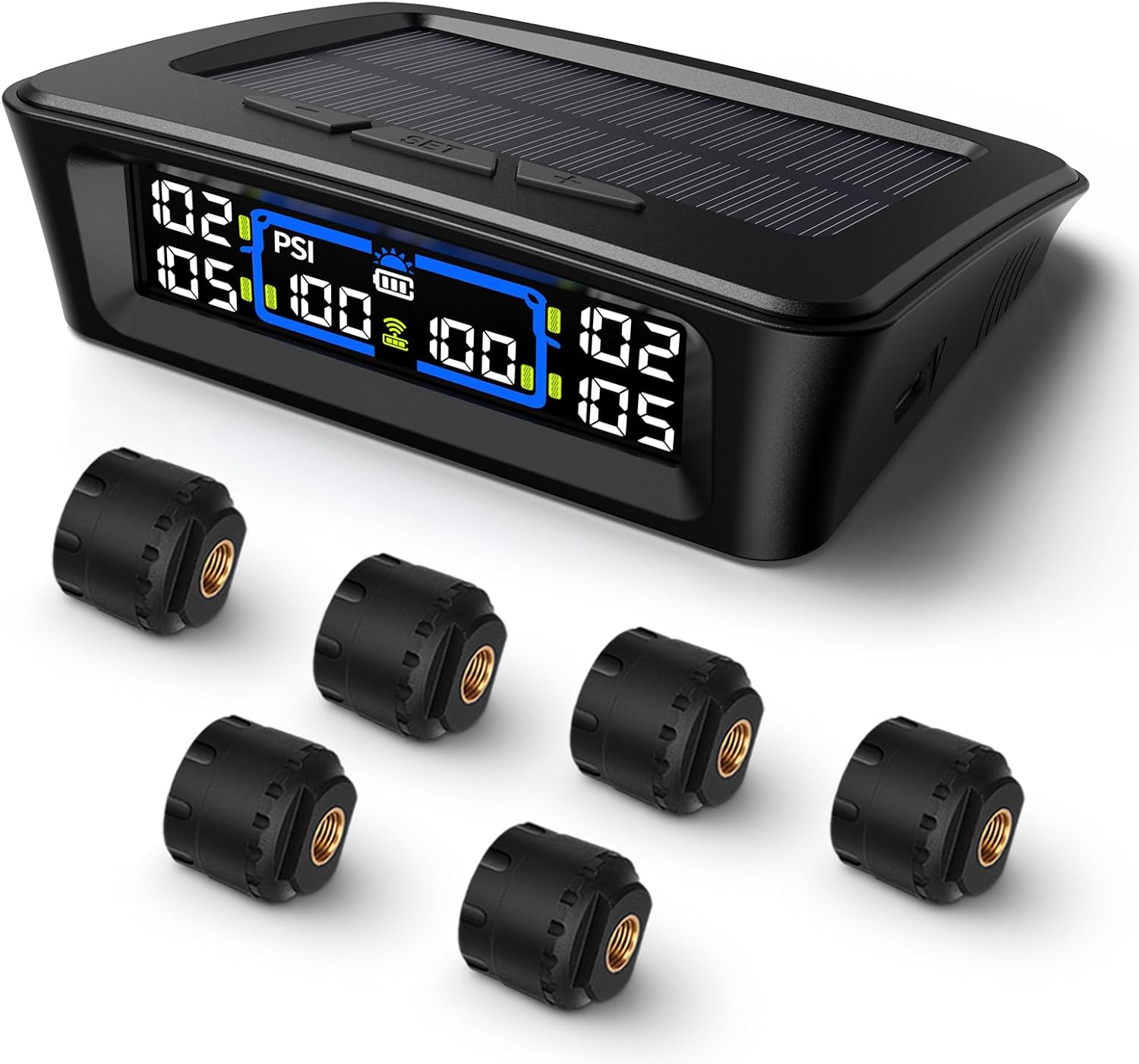
The Tymate TM12 RV TPMS delivers real-time tire pressure and temperature monitoring with a stable 433Hz display for safer long-distance driving. It supports simultaneous monitoring across vehicle and trailer zones, includes six alarm modes for pressure, temperature, leakage, battery, and signal loss, and features easy DIY installation with auto calibration. Power is supplied via USB-C charging or solar recharging, with a wide 0–144 PSI range and up to 50 ft signal coverage for RVs and towable trailers.

TireJect Off-Road Tire Sealant Kit provides 5-in-1 sealing to help fix tread punctures up to 3/8", sidewall punctures up to 3/8", bead leaks, slow leaks, and minor dry rot on low-speed tires. It permanently seals with liquid rubber, recycled tire particles, and Aramid fibers, making it ideal for flats caused by thorns, nails, and screws. The included dispensing cap attaches to the valve stem for a no-mess installation, along with a metal valve core remover tool and valve stem cap. This kit is for off-road use only.
Check Tire Date Code
Find the DOT tire identification number on the sidewall. The last four digits show the week and year the tire was made. For example, a code ending in 0324 means the tire was made in the third week of 2024.
There is no single age limit that fits every tire, climate, and vehicle. Follow the tire maker’s and vehicle maker’s service-life guidance. The U.S. Tire Manufacturers Association explains that service life depends on storage, use, inflation pressure, load, temperature, impacts, and road hazards, not calendar age alone. Still, older tires, full-size spares, and tires on low-mileage vehicles deserve closer inspection.
Monitor Monthly Tire Pressure
Check tire pressure at least once a month and before long trips. Check when tires are cold, which usually means the vehicle has been parked for at least three hours or driven less than one mile at moderate speed.
Use the recommended cold tire pressure on the driver-door placard, certification label, or owner’s manual. Do not use the number molded on the tire sidewall as your normal inflation target; that number is the tire’s maximum pressure, not the vehicle’s recommended pressure.
Note: A tire pressure monitoring system is helpful, but it does not replace monthly checks with a gauge. A tire can be low before the dashboard warning appears, and a spare tire may not be monitored at all.
Replace Aging Underinflated Tires
A tire that is old, cracked, and repeatedly underinflated should be treated as a safety risk. Passenger and light-truck tires can lose about 1–2 psi per month under normal conditions, and pressure can also drop with colder temperatures. If one tire keeps needing air, have it inspected for a puncture, leaking valve stem, bead leak, wheel damage, or internal damage.
Do not keep using a tire that has been driven while seriously underinflated. Internal damage may not be visible from the outside, so a tire professional should remove the tire from the wheel and inspect it before deciding whether repair is safe.
Replace a Tire Before It Fails
Replace a tire before it fails if you see any of these warning signs:
- Tread depth at or below 2/32 inch
- Tread wear bars flush with the tread
- Exposed steel belts, fabric, or cords
- Sidewall bulge, bubble, or blister
- Deep sidewall cut or severe cracking
- Repeated pressure loss after inflation
- Unrepairable puncture or puncture in the sidewall/shoulder area
- Strong vibration, thumping, or pulling that appears suddenly
- Uneven wear caused by alignment or suspension problems
If only one tire is damaged, ask the tire shop whether replacing one tire is safe for your vehicle. Some all-wheel-drive and four-wheel-drive vehicles need closely matched tread depths to protect the drivetrain. When replacing two tires, many tire and vehicle guidelines recommend placing the newer pair on the rear axle for better wet-road stability, unless the vehicle manufacturer says otherwise.
What About Flat Tires and Punctures?
A tire with a simple tread puncture may be repairable, but only after a proper internal inspection. A safe repair usually requires removing the tire from the wheel, inspecting the inside, filling the injury, and sealing the inner liner. Plug-only repairs made from the outside are not the best fix for long-term safety.
Replace the tire instead of repairing it if the puncture is in the sidewall or shoulder, the injury is too large, the tire has been driven flat, the cords are exposed, the tire has a bulge, or the inner liner is damaged. When in doubt, treat the tire as unsafe until a professional checks it.
Your tires are the only parts of the vehicle touching the road. Low tread, poor inflation, and hidden damage can reduce braking, handling, and stability before a tire fully fails.
Frequently Asked Questions
What are the warning signs of a failing tire?
The biggest warning signs are tread at or below 2/32 inch, flush wear bars, sidewall bulges, cracks, cuts, exposed cords, repeated air loss, uneven wear, vibration, thumping, pulling, and poor wet traction. A bulge, exposed cord, or sudden vibration means you should stop driving as soon as it is safe.
Is a 7 on tires good?
If “7” means 7/32 inch of tread depth, that is generally usable tread for many passenger tires. It is not new, though, so keep checking pressure, age, cracks, and uneven wear. If “7” means something else, such as a tire age or a shop rating, ask the shop what measurement they used.
What are the three major indicators of tire failure?
The three major indicators are low tread, structural sidewall damage, and abnormal driving symptoms. Low tread includes worn-out tread or flush wear bars. Structural damage includes bulges, deep cracks, cuts, and exposed cords. Driving symptoms include sudden vibration, thumping, pulling, or loss of traction.
What are four common symptoms of tire problems?
Four common symptoms are uneven tread wear, sidewall damage, low tire pressure, and vibration while driving. Other signs include noisy thumping, poor wet traction, longer stopping distance, pulling to one side, and a tire that keeps losing air after being inflated.
Can I drive on a tire with a small bulge?
No. A tire bulge usually means the internal structure is damaged. The tire can fail suddenly, especially at speed. Install the spare or have the vehicle towed to a tire shop for replacement.
Can a tire be bad even if it has good tread?
Yes. A tire can have usable tread and still be unsafe because of sidewall damage, internal belt damage, age-related cracking, repeated pressure loss, puncture damage, or vibration. Tread depth is important, but it is only one part of the inspection.
Conclusion
If you are checking whether your tire is bad, start with tread depth, wear bars, sidewall condition, pressure, age, and how the vehicle feels on the road. Replace the tire if the tread is at or below 2/32 inch, the wear bars are flush, cords are exposed, or the sidewall has a bulge, deep cut, or severe cracking. If the tire keeps losing air or the vehicle starts vibrating or thumping, stop guessing and get the tire inspected before it fails.
Sources
- NHTSA TireWise — tire safety, maintenance, labeling, aging, recalls, and tire-related crash safety context.
- NHTSA Summer Driving & Road Trip Tips — cold tire pressure checks, tread inspection, penny test, tire damage signs, and 2/32-inch tread guidance.
- U.S. Tire Manufacturers Association Tire Facts — tire service life and age-related guidance.
- USTMA Care and Service of Passenger and Light Truck Tires — pressure loss, tread wear indicators, inspection guidance, vibration response, and replacement factors.
- NHTSA Tire Pressure Maintenance Statistical Investigation — underinflation research and tire-pressure safety context.