
For your Toyota Camry, replace or swap tires by looking at three things together: season, tread depth, and tire condition. Winter tires make sense when temperatures stay near or below 45°F and snow or ice is likely. Any tire should be replaced when it reaches the wear bars, shows unsafe damage, or no longer has enough tread for the weather you drive in.
Quick Answer
Swap your Toyota Camry to winter tires in late fall when temperatures consistently approach 45°F, then switch back in spring once cold snaps and snow risk pass. Replace tires at 2/32 inch tread at the latest, sooner for rain or snow, and immediately for bulges, deep cracks, exposed cords, or sidewall damage.
Key Takeaways
- Use winter tires when cold weather is steady, especially if you drive on snow, ice, slush, or freezing morning roads.
- Treat 2/32 inch as the minimum replacement point, but plan earlier around 4/32 inch for wet roads and around 5/32 inch when snow traction matters.
- Check tire pressure cold and use the Tire and Loading Information label on the driver’s door jamb, not the maximum PSI printed on the tire sidewall.
- Inspect tread, sidewalls, DOT date code, and wear patterns before each seasonal change.
- Store off-season tires clean, dry, cool, dark, and in the correct position for mounted or unmounted tires.
At a Glance
| Time Required | 10–15 minutes for inspection; 45–90 minutes for a careful DIY wheel swap; longer if tires must be mounted and balanced. |
| Difficulty | Easy inspection; moderate DIY changeover if the tires are already mounted on wheels. |
| Tools Needed | Tread depth gauge or penny, tire pressure gauge, flashlight, air compressor, gloves, and for DIY wheel swaps: wheel chocks, jack stands, and a torque wrench. |
| Cost | Inspection is usually free if you do it yourself. Professional seasonal changeover cost varies by shop, wheel setup, tire size, TPMS needs, and whether mounting/balancing is required. |
When Should Camry Tires Be Replaced Seasonally?

You should replace Toyota Camry tires seasonally when tread depth, damage, age, or weather conditions show the current tires are no longer the right fit for the road. The biggest seasonal change is the fall switch to winter tires if you drive in regular cold, ice, slush, or snow. Winter tires are usually worth considering when temperatures stay consistently near or below 45°F because their rubber compounds are designed to stay more flexible in cold weather.
Use this simple seasonal schedule:
- Late fall: Install winter tires before the first major snow or before morning and evening temperatures stay near 45°F.
- Winter: Check cold tire pressure at least monthly and before long trips. Cold weather lowers inflation pressure, and underinflation can hurt braking, handling, tread life, and fuel economy.
- Early spring: Switch back to all-season, summer, or all-weather tires when temperatures are consistently above 45°F and the risk of ice or snow has passed.
- Any season: Replace tires immediately if you see a sidewall bulge, exposed cords, deep cracking, severe uneven wear, or damage that a tire professional says is unsafe.
For maintenance timing, follow the Toyota maintenance guide for your Camry model year. Toyota’s 2025 Camry guide recommends scheduled maintenance every 5,000 miles or six months, whichever comes first, and its maintenance log includes tire rotation at each 5,000-mile interval. You can review Toyota’s official tire guidance in the Toyota Camry owner’s manual tire section and the 2025 Toyota Camry Warranty & Maintenance Guide.
Note: The 45°F rule is a practical tire-switching guideline, not a law. Your best timing depends on your local climate, commute time, elevation, and whether your roads get snow, ice, slush, or freezing rain.
[Products Worth Considering]

The 22800 wheel stud installer makes replacing wheel studs quick and secure, saving time and effort during tire service. It uses a ratchet or impact wrench to pull new studs firmly into place, helping when existing studs are too long. Compatible with most automotive wheels and light-duty truck wheel studs, it’s designed for easy, tool-assisted installation.

Measure tire tread depth quickly and accurately with this LUMITECO dial gauge that reads in 1/32" increments up to 14/32". The color-coded green/yellow/red zones make it easy to judge tire wear and know when replacement is needed. A rugged, compact design with a protective pouch helps keep the gauge ready for use on cars, trucks, motorcycles, and more.

Monitor tire tread wear with a smart, color-coded depth gauge that shows clear condition ranges at a glance. The bar is range marked for fast, easy readings, helping you maintain safer traction and performance. Each gauge is portable with a pocket clip, and the set includes 20 units for daily use and sharing.
Signs Your Camry Tires Need Swapping
Your Camry tires need swapping or replacement when the tread is too shallow for the season, the sidewall is damaged, the tire is aging, or the wear pattern shows a mechanical problem. Do not wait for a tire to look completely bald. Wet roads, standing water, snow, and ice all require more tread than dry pavement.
| Condition | Action |
|---|---|
| Tread at 2/32 inch or wear bars showing | Replace now; this is the minimum wear-out point. |
| Around 4/32 inch before rainy season | Plan replacement because wet traction is reduced. |
| Around 5/32 inch before snow season | Plan replacement if you need dependable snow traction. |
| Bald spots, cupping, or one-edge wear | Inspect alignment, suspension, tire pressure, and rotation history. |
| Sidewall bulge, blister, exposed cord, or deep cut | Replace immediately; do not keep driving on it. |
| Tire is six years old or older | Have it inspected carefully and follow the tire and vehicle manufacturer’s service-life guidance. |
NHTSA explains that treadwear indicators are molded at 2/32 inch and that tires rapidly lose traction characteristics at that depth. You can review the federal tire-safety guidance on NHTSA’s TireWise tire safety page.
Warning: A sidewall bulge, blister, deep sidewall cut, exposed cord, or tire that has been driven flat is a serious safety issue. Replace the tire or have it inspected by a tire professional before driving farther.
Should Your Camry Use Winter, All-Season, or All-Weather Tires?
Your Camry should use the tire type that matches the coldest and worst road conditions you actually drive in. Many Camry drivers use all-season tires for year-round commuting, but all-season tires are a compromise. They can handle moderate weather and light snow, but they do not match dedicated winter tires on regular ice, packed snow, deep snow, or long cold seasons.
- Choose winter tires if your area has regular snow, ice, freezing rain, steep winter roads, or weeks of temperatures near or below 45°F.
- Choose all-season tires if your winters are mild, roads are usually clear, and you mainly drive in rain or dry conditions.
- Consider all-weather tires if you want one tire set year-round but still need better cold-weather capability than a standard all-season tire. Look for the three-peak mountain snowflake symbol if snow traction is important.
Whatever you choose, use the correct tire size, load rating, and speed rating for your Camry. NHTSA advises checking the owner’s manual or the Tire and Loading Information label on the driver’s side door edge or post for correct tire size and pressure information. You can review NHTSA’s tire buying guidance in its Tire Buyers’ FAQ.
[Products Worth Considering]

The Kurgo Seasonal Tire Tote helps protect your car interior, clothes, and garage from tire grime, brake dust, and residue during seasonal tire changes. Its universal design fits most passenger tires between 22" and 31" in diameter, making storage and transport simpler with less mess. Built for rugged, repeated use, it’s machine washable for easy care and comes with a lifetime warranty.

Keep your tires properly inflated with this analog VONDIOR tire pressure gauge, designed for fast, easy readings without batteries. The swiveling, two-axis hose and large glow dial help you measure at any tire angle with instant visibility. Built with a protective rubber shield, it supports durable, low-maintenance use for cars and trucks.

Steelman white tire marking crayons provide high-contrast, semi-permanent marks for repairing and inspecting tires and equipment. They write on wet or dry, smooth or coarse surfaces including rubber, metal, glass, and wood, making them ideal for puncture location and damage outlining. The lead- and zinc-free crayons resist weather and fading yet wipe away when you no longer need the marks.
Why 45°F Matters for Tire Changes

Once temperatures consistently fall to about 45°F, tire behavior changes in ways you can feel. Summer tires can harden in cold weather, and standard all-season tires may not deliver the same braking and cornering confidence on icy or snow-covered roads. Winter tires use cold-weather compounds and tread designs that help them stay flexible and bite into snow, slush, and ice.
Continental explains that winter tires can be a good choice when winter temperatures stay consistently below 45°F and that all-season tires are not designed exclusively for winter conditions. You can compare that guidance in Continental’s winter tire FAQ.
Temperature also affects tire pressure. A common rule is that tire pressure changes by about 1 PSI for every 10°F change in ambient temperature. Bridgestone explains this pressure change in its tire inflation guidance. That is why your Camry’s tire pressure light may appear on a cold morning even if the tire is not punctured.
Legal tread depth is not the same as best seasonal traction. A tire at 2/32 inch may be worn out legally, but rain and snow performance can decline well before that point.
Check Tread and Tire Condition First
Before you replace or swap Toyota Camry tires, inspect every tire in daylight or with a flashlight. Check tread depth in several grooves, look across the full tread width, and inspect both sidewalls. Seasonal tire changes are also a good time to look for alignment problems, punctures, cracking, and uneven wear.
Tread Depth Check
A tread depth gauge is the best tool because it gives an actual measurement. If you do not have one, use the penny test as a quick screen: insert a penny into a tread groove with Lincoln’s head facing down. If you can see all of Lincoln’s head, the tread is around 2/32 inch and the tire should be replaced.
| Check | Spec or Guideline | Action |
|---|---|---|
| Minimum tread depth | 2/32 inch | Replace at the latest. |
| Wet-road planning point | Around 4/32 inch | Plan replacement before heavy rain season. |
| Snow traction planning point | Around 5/32 inch | Plan replacement before winter if snow traction matters. |
| Penny test | Full Lincoln head visible | Replace the tire. |
| Rotation interval | Follow your Camry maintenance guide; many schedules use 5,000-mile/6-month service intervals. | Rotate to reduce uneven wear. |
Tire Rack recommends replacing tires around 5/32 inch for snow-covered roads, 4/32 inch for wet roads, and 2/32 inch for dry-road minimum replacement. You can review its guidance on when tires should be replaced and how much tread depth is enough.
Check Tire Age and DOT Date Code
Tread depth is not the only replacement clue. Rubber ages from heat, sunlight, ozone, storage conditions, and time. Find the DOT Tire Identification Number on the sidewall and look at the last four digits. The first two digits show the week, and the last two show the year the tire was made. For example, “2619” means the tire was made in the 26th week of 2019.
Have tires inspected carefully when they are six years old, even if they look good, and follow the tire maker’s and Toyota’s guidance for your exact tires. Replace sooner if you see cracking, bulges, flat-spot vibration, exposed cords, repeated air loss, or damage that cannot be safely repaired.
Sidewall Damage Signs
After you’ve checked tread depth and age, inspect the sidewalls closely. Look for cracks, cuts, punctures, scuffing, abrasion, bubbles, and bulges. A compromised sidewall can fail even if the tread still looks usable. Uneven wear across one edge can also point to alignment, suspension, or inflation problems that should be corrected before new tires wear out the same way.
If your Camry vibrates after a tire impact, pulls to one side, or makes a new thumping noise, have the tire and wheel inspected. A bent wheel, belt separation, sidewall injury, or alignment issue can hide behind what looks like normal tread.
Tire Pressure and Rotation During Seasonal Changes
Season changes are the right time to reset tire pressure and confirm rotation timing. Check pressure when the tires are cold, meaning the car has been parked for at least three hours. Use the cold PSI on your Camry’s driver-door Tire and Loading Information label or the owner’s manual. Do not inflate to the maximum PSI printed on the tire sidewall; that number is not your Camry’s recommended operating pressure.
Rotate tires according to your Camry maintenance schedule and your tire warranty requirements. On many current Camry schedules, tire rotation appears at 5,000-mile service intervals. If you use dedicated winter tires on separate wheels, mark each tire’s last position before storage so the set can be rotated correctly at the next installation.
Pro Tip: After a wheel swap, recheck lug-nut torque after the short break-in distance recommended by your installer or wheel/tire shop. If you do not have a torque wrench and safe lifting equipment, schedule professional installation.
How to Store and Maintain Off-Season Tires
Once you remove your off-season tires, clean and dry them before storage. Rinse off brake dust, salt, mud, and grit, then let each tire dry completely. Moisture, petroleum products, direct sun, heat, and ozone sources can speed rubber aging.
Store tires indoors in a cool, dry, dark place. Use tire bags or covers to limit dust and UV exposure. Keep tires away from electric motors, generators, solvents, gasoline, oil, and heat sources. Michelin recommends storing tires indoors in a clean, cool, dark location away from direct sunlight, heat, and ozone sources, and it gives different positioning guidance for mounted and unmounted tires in its tire storage guide.
- Tires mounted on wheels: stack them flat or hang them. Do not store mounted tires standing upright for long periods.
- Tires without wheels: stand them upright on the tread. Do not stack or hang unmounted tires because the bead and sidewall can distort.
- Before reinstalling: inspect for cracks, bulges, flat spots, punctures, and uneven wear, then set pressure to the Camry’s cold PSI specification.
[Products Worth Considering]

The SAFELIFE dial tire tread depth gauge measures tread depth in 1/32 inch increments with clear, easy-to-read 2-inch dial face. Color zones using a traffic light system help you quickly judge whether tread is low, marginal, or ample for safer driving. Built with a durable zinc cast body and a metal detect probe for precise, comfortable use across cars, motorcycles, trucks, and buses.
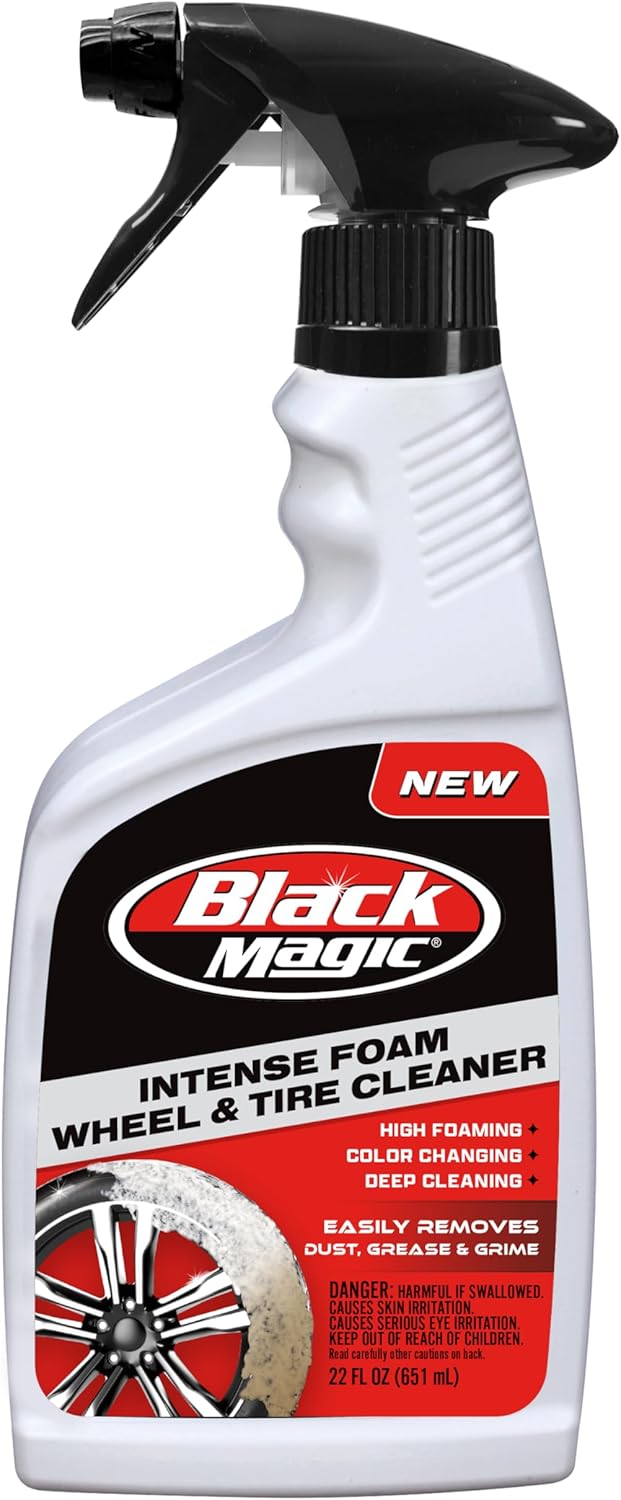
Black Magic Intense Foam Wheel & Tire Cleaner uses a high-foaming action to lift away dirt, grime, and brake dust without scrubbing. The color-changing formula helps show contaminants being dissolved as foam turns from white to brown. Safe for all wheel types and even wheel wells, it leaves a like-new, slick finish with a fresh cherry scent.

The UYYE TPMS relearn tool helps activate and relearn tire pressure monitor sensors quickly, typically in minutes. It supports TPMS learn mode resetting using a simple three-step process: enter learn mode, position the tool near the valve stem, and press the learn button. Designed for specific GM models, it streamlines sensor programming and reduces trips to dealers or tire shops.
Frequently Asked Questions
How often should I replace my Camry tires?
Replace your Camry tires when they reach 2/32 inch tread at the latest, when damage makes them unsafe, or when age and condition show the rubber is no longer reliable. Many tires last around 40,000–60,000 miles, but actual life depends on tire model, alignment, pressure, rotation, climate, road surfaces, and driving habits.
Do I need winter tires on a Toyota Camry?
You need winter tires if you regularly drive in snow, ice, slush, freezing rain, or long stretches of temperatures near or below 45°F. If your winters are mild and roads are usually clear, all-season or all-weather tires may be enough.
Can I use winter tires all year on my Camry?
You should not use winter tires all year unless the tire manufacturer specifically allows it. Winter tires are built for cold conditions, and warm pavement can wear their softer compound faster and reduce handling response. Switch back once temperatures stay above winter-tire range and snow risk has passed.
Where do I find the correct tire pressure for my Camry?
Find the correct cold tire pressure on the Tire and Loading Information label on the driver’s door jamb or in your owner’s manual. Do not use the maximum PSI molded into the tire sidewall as your normal inflation target.
Should I replace all four tires at once?
Replacing all four tires is best when the set is worn, aged, mismatched, or changing tire type for the season. If only one or two tires are being replaced, match size, type, load rating, speed rating, and tread pattern as closely as possible, and ask a tire professional about safe placement and tread-depth differences.
Conclusion
Replace or swap your Toyota Camry tires before the season exposes weak traction. Use winter tires when temperatures stay near 45°F and snow or ice is likely, then return to all-season, all-weather, or summer tires once spring conditions are steady. Check tread depth, pressure, sidewall condition, and tire age before every changeover. Store the off-season set correctly so the rubber stays ready for the next season.
Sources
- NHTSA TireWise — tire pressure, tread, placard, and general tire safety guidance.
- NHTSA Tire Buyers’ FAQ — tire size label, tire type basics, and DOT tire date code guidance.
- Toyota Camry Owner’s Manual: Tires — Toyota-specific tire inspection and treadwear indicator guidance.
- 2025 Toyota Camry Warranty & Maintenance Guide — maintenance timing and tire rotation schedule.
- Continental Winter Tires FAQ — 45°F winter tire guidance and all-season vs winter tire differences.
- Michelin Tire Storage Guide — correct off-season tire cleaning, storage location, and mounted/unmounted tire positioning.