For your Toyota Camry, summer tires become the wrong choice once cold weather is routine, not just when snow starts falling. A practical rule is to plan the switch when average daily temperatures stay below 45°F (7°C). Near 40°F and below, many summer compounds feel stiffer, grip less predictably, and take longer to stop, especially on wet, frosty, snowy, or icy roads.
Quick Answer
Summer tires are too cold for a Toyota Camry when temperatures consistently stay below 45°F (7°C). They may still roll on dry pavement, but grip, braking, and steering response drop as the rubber stiffens. If snow, ice, frost, or near-freezing rain is possible, switch to winter or suitable all-weather tires before driving.
Key Takeaways
- Use 45°F (7°C) as the main switch point for summer tires on a Camry.
- Below about 40°F (4°C), summer tires can feel noticeably harder and less responsive.
- Do not rely on summer tires for snow, ice, frost, or slush; they are not built for those surfaces.
- Choose winter tires, or all-weather tires with the three-peak mountain snowflake symbol, if your Camry sees real winter roads.
- Store removed summer tires clean, dry, cool, dark, and away from heat, sunlight, chemicals, and ozone sources.
At a Glance
| Time Required | 5 minutes to check the forecast and tire markings; 30–90 minutes for a typical shop tire changeover. |
| Difficulty | Easy decision; moderate DIY work if you are swapping mounted wheel-and-tire sets yourself. |
| Tools Needed | Weather forecast, tire pressure gauge, tread-depth gauge or penny, your Camry owner’s manual, and the tire sidewall size/load/speed rating. |
| Cost | Checking is free. Mounting, balancing, storage, or buying a second tire set varies by tire size, shop, and region. |
When Are Summer Tires Too Cold for a Camry?
Summer tires on a Toyota Camry start losing their best performance when temperatures drop below the range they were built for. Michelin recommends installing winter tires when daily temperatures consistently fall below 45°F, and Continental gives the same 45°F (7°C) switch point because summer and all-season compounds begin to harden in cold weather.
That does not mean your Camry instantly becomes uncontrollable at 44°F. It means the tire is moving out of its ideal operating range. On dry pavement, you may only notice a duller steering feel. On wet pavement, frost, bridge decks, shaded roads, or sudden cold rain, the loss of grip can matter quickly.
Warning: Do not use summer tires as a substitute for winter tires on snow or ice. Summer tread patterns and rubber compounds are not designed to bite into frozen surfaces, and stopping distance can grow dramatically.
Temperature Guide for Summer Tires on a Camry
Use the forecasted daily average and morning lows, not just the afternoon high. Cold pavement, shaded roads, and bridges can stay slick even when the air temperature rises later in the day.
| Temperature | What It Means | Best Action |
| Above 50°F (10°C) | Summer tires are generally in their normal warm-weather range. | Keep using them if roads are dry or wet but not icy. |
| 45–50°F (7–10°C) | This is the transition zone. Grip may be acceptable on dry roads but less predictable in cold rain. | Plan your tire switch if lows are trending down. |
| Below 45°F (7°C) | The summer compound is outside its ideal range. Braking and cornering can weaken. | Switch to winter tires or suitable all-weather tires. |
| Near 40°F (4°C) | Some summer-tire guidance treats about 40°F as the lower useful range for warm-weather grip. | Avoid hard braking, fast cornering, and cold wet roads until you switch. |
| Freezing, frost, snow, or ice | Summer tires are the wrong tire for the surface, even if tread depth looks good. | Do not drive unless necessary. Use winter tires and slow down. |
How Summer Tires Lose Grip Below 45°F
Summer tires are built for warm dry and wet pavement. Their tread rubber is designed to stay stable and responsive in heat. When temperatures fall, that same compound becomes less flexible, so the tire cannot conform to the road surface as well.
Rubber Hardening and Traction
Below about 45°F, your Camry may feel less sharp during lane changes, turns, and stops. The change is not only about snow. Cold dry pavement can reduce the tire’s ability to create grip, and cold wet pavement makes the problem more noticeable.
Some high-performance summer tires are also vulnerable to cold-related compound damage. Tire-industry guidance notes that near- or below-freezing exposure can cause tread compound cracking or block chipping on some summer performance tires. If your Camry has ultra-high-performance summer tires, check the tire maker’s temperature warning before cold storage or cold driving.
Braking, Cornering, and Wet Roads
The first thing most drivers notice is not dramatic sliding. It is a longer stop, a vague steering feel, or a small loss of confidence during a quick lane change. That matters because a Camry is often used for commuting, school runs, and highway driving where sudden stops happen.
Note: Tire pressure also drops as temperatures fall. Check pressure when the tires are cold and inflate to the pressure listed on the driver-door placard, not the number molded on the tire sidewall.
What Happens to Summer Tires in Freezing Weather
In freezing weather, summer tires lose the flexible feel they need for predictable grip. Steering response can feel dull, braking distances can grow, and the car can slide sooner on frost, slush, snow, or ice. The colder the tire and road surface get, the less margin you have.
- On cold dry pavement, summer tires may feel hard and less responsive.
- On cold wet pavement, braking and cornering grip can fall quickly.
- On frost, snow, slush, or ice, summer tires should be treated as unsafe for normal driving.
- On some performance summer tires, cold exposure or cold use can lead to compound cracking or chipping.
NHTSA reported an estimated 101,390 police-reported crashes in 2023 when snow or sleet conditions were present. Winter tire choice is only one part of safety, but it is a major part of preparing the vehicle.
Why Summer Tires Are Unsafe on Ice and Snow
Summer tires are unsafe on ice or snow because their rubber and tread pattern are designed for warm pavement. They usually have fewer biting edges than winter tires, and the rubber does not stay as pliable in cold conditions. That means the tire has less ability to grip packed snow, cut through slush, or hold a line on icy pavement.
NHTSA winter-driving guidance warns that snow, sleet, and ice can create extremely dangerous road conditions and that it is harder to control or stop a vehicle on slick or snow-covered surfaces. If your Camry is still on summer tires when winter weather arrives, the safest move is to delay the trip, use another vehicle with winter-ready tires, or switch tires before driving.
Pro Tip: Do not wait for the first snowstorm to book a tire appointment. Shops get crowded once the forecast shows snow, so schedule the switch when daily temperatures first start staying below 45°F.
Summer Tires vs. Winter Tires for a Camry

For a Toyota Camry, the best tire depends on the road temperature and surface. Summer tires give the sharpest warm-weather response. Winter tires are built for cold, snow, and ice. All-season tires are a compromise for mild climates. All-weather tires can be a better one-set option if they carry the severe-snow symbol.
- Summer tires: Best for warm dry and wet pavement, usually above the 45°F transition range.
- All-season tires: Useful for moderate weather, light cold, and light snow, but not equal to a dedicated winter tire in real winter conditions.
- All-weather tires: A year-round option when marked with the three-peak mountain snowflake severe-snow symbol.
- Winter tires: Best for repeated cold, snow, slush, ice, and winter commuting.
If your Camry regularly sees below-freezing mornings, untreated roads, mountain passes, lake-effect snow, or icy bridges, winter tires are the safest seasonal choice. If your winters are cold but mostly clear, an all-weather tire with the three-peak mountain snowflake symbol may be a practical compromise.
[Products Worth Considering]

Milton S-921 pencil tire pressure gauge helps you maintain optimal tire pressure for passenger cars with accurate readings in PSI and kPa. It features a built-in deflator valve for convenient pressure adjustments, plus a single chuck head and nylon indicator bar for easy use on the go. Built from durable plated brass and designed for reliable performance, it’s a practical road trip and cold-weather maintenance tool.

Monitor tire tread wear with a smart, color-coded depth gauge that shows clear condition ranges at a glance. The bar is range marked for fast, easy readings, helping you maintain safer traction and performance. Each gauge is portable with a pocket clip, and the set includes 20 units for daily use and sharing.
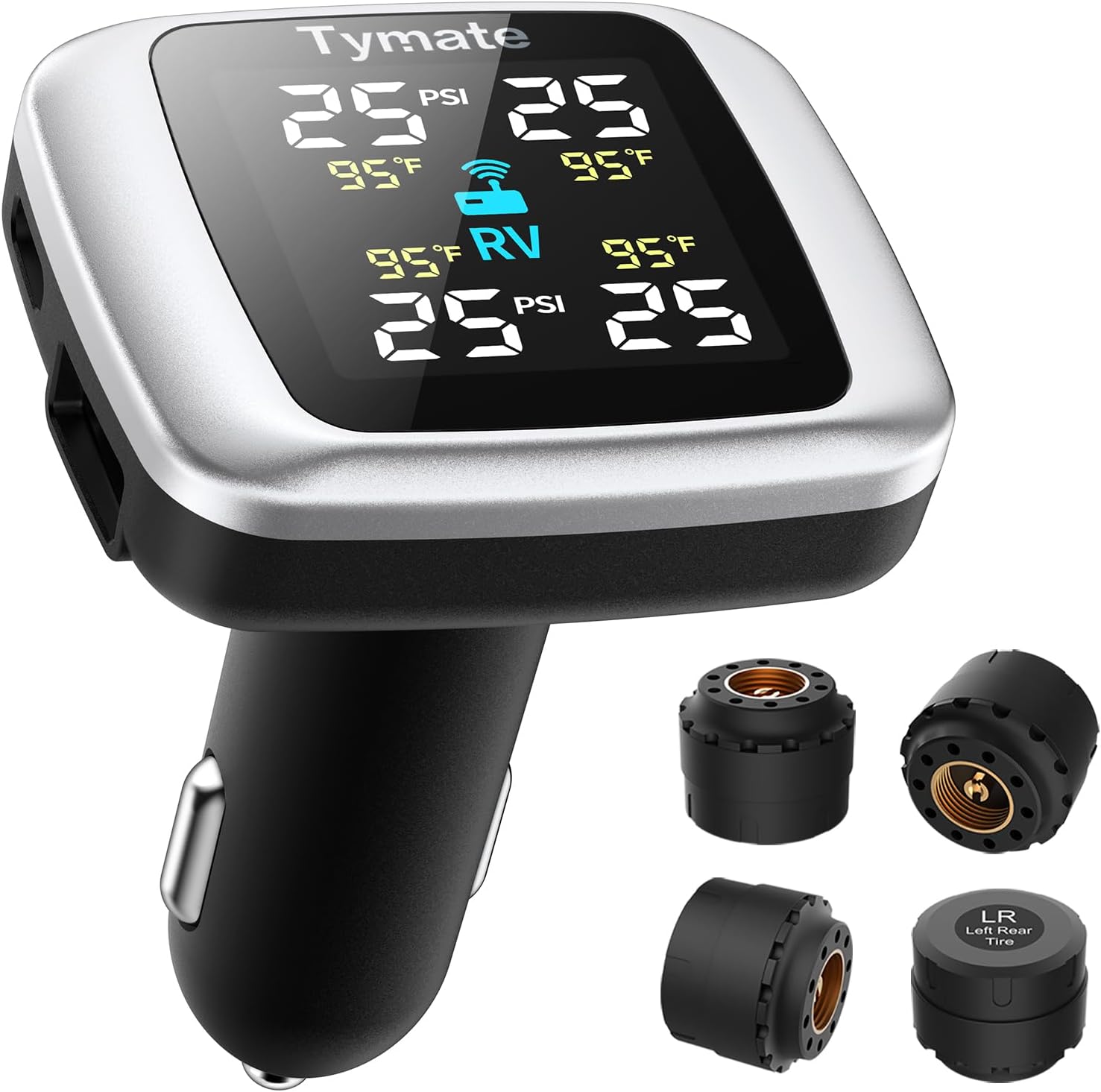
Tymate TM7 is a wireless tire pressure monitoring system that delivers real-time pressure and temperature readings for safer driving. It includes four external sensors, a bright color LCD display with adjustable backlight, and six alarm modes for high/low pressure, fast leakage, high temperature, and sensor signal or battery issues. The system covers a wide 0–144 PSI range and plugs into your vehicle’s cigarette lighter socket for quick DIY setup.
Camry-Specific Tire Checks Before You Switch
Before replacing or storing tires, check the details for your exact Camry model year and trim. Toyota Camry tire sizes and equipment can vary, and your safest reference is the driver-door tire placard plus the Toyota owner’s manual for your model year.
- Match the tire size: Use the size on the door placard or owner’s manual, not a guess from another Camry trim.
- Match load and speed ratings: Replacement tires should meet or exceed the required ratings for your car.
- Use four matching tires: Do not mix summer and winter tires on the same Camry. Mixed grip can make emergency handling unpredictable.
- Check TPMS after the swap: After installation, confirm the tire pressure monitoring system is reading correctly and the pressures match the placard.
- Read chain/cable rules: Toyota says tire chains or cables should generally go on the drive wheels, but you should follow the vehicle-specific owner’s manual for your Camry.
[Products Worth Considering]

The SAFELIFE dial tire tread depth gauge measures tread depth in 1/32 inch increments with clear, easy-to-read 2-inch dial face. Color zones using a traffic light system help you quickly judge whether tread is low, marginal, or ample for safer driving. Built with a durable zinc cast body and a metal detect probe for precise, comfortable use across cars, motorcycles, trucks, and buses.

The TYAMATE TM8 solar-powered wireless TPMS delivers real-time tire pressure and temperature monitoring with six alarm modes for safer driving. A vibrant color LCD display shows readings clearly while windshield mounting keeps it hands-free and easy to read. With a wide 0–87 PSI range, strong 433.92 MHz signal transmission, and quick sensor pairing, it’s ideal for RV, sedan, SUV, MPV, and truck use.

Steelman white tire marking crayons provide high-contrast, semi-permanent marks for repairing and inspecting tires and equipment. They write on wet or dry, smooth or coarse surfaces including rubber, metal, glass, and wood, making them ideal for puncture location and damage outlining. The lead- and zinc-free crayons resist weather and fading yet wipe away when you no longer need the marks.
What to Do If You Are Caught in Cold Weather on Summer Tires
If temperatures drop before you can switch tires, drive as if you have much less grip than usual. This is a short-term caution, not a long-term plan.
- Postpone the trip if roads are snowy, icy, frosty, or untreated.
- Reduce speed and leave extra following distance.
- Avoid hard braking, sudden steering, and quick throttle inputs.
- Stay off steep hills and shaded back roads when possible.
- Check tire pressure before driving, because cold air can lower PSI.
- Schedule the tire switch as soon as cold weather becomes routine.
When to Switch and Store Summer Tires
Switch your Camry off summer tires when daily temperatures consistently stay below 45°F (7°C), or sooner if snow, ice, or frequent frost is in the forecast. Plan the change before sustained cold arrives, not after the first slippery commute.
After removal, store the tires correctly so they are ready for warm weather again. Michelin recommends cleaning and drying tires, noting their vehicle position, inspecting them, and storing them indoors in a clean, cool, dark location away from sunlight, heat, and ozone sources. The U.S. Tire Manufacturers Association also publishes tire storage recommendations.
- Mark tire positions: Label front left, front right, rear left, and rear right before removal.
- Clean the tires: Use water and mild soap, then dry them completely.
- Inspect tread and sidewalls: Look for cuts, cracks, bulges, uneven wear, punctures, and flat spots.
- Store indoors: Choose a cool, dry, dark place away from direct sun, heaters, electric motors, chemicals, gasoline, and ozone sources.
- Protect from moisture: If bagging tires, make sure they are dry first.
- Check before reinstalling: Recheck tread depth, age, sidewall condition, and pressure before spring installation.
[Products Worth Considering]

The Continental Grand Prix 5000 is an allround road bike tire engineered for faster rolling, improved ride comfort, and enhanced puncture protection. It features a Vectran Breaker cut-protection layer, Lazer Grip micro-profile tread for confident cornering control, and Active Comfort Technology to damp vibration for smoother rides. BlackChili compound optimizes grip and speed for everyday performance and long-lasting confidence.

Get precise tire readings with the ETENWOLF T300 Plus digital gauge, calibrated to ANSI B40.7 Grade 2A for reliable accuracy. It measures across a wide 3–200 PSI range and includes thermal compensation for dependable performance from extreme cold to heat. The bright LED display, LED illumination, and replaceable AAA batteries make it easy to check pressures quickly, even in low light.

The 22800 wheel stud installer makes replacing wheel studs quick and secure, saving time and effort during tire service. It uses a ratchet or impact wrench to pull new studs firmly into place, helping when existing studs are too long. Compatible with most automotive wheels and light-duty truck wheel studs, it’s designed for easy, tool-assisted installation.
Frequently Asked Questions
Is October too early for winter tires on a Camry?
October is not too early if your area is already seeing consistent lows near or below 45°F. If temperatures are still mostly above 45°F and no snow or frost is expected, you can wait, but book early before tire shops fill up.
What happens to summer tires under 40 degrees?
Under about 40°F, many summer tires feel harder and less responsive. Braking, cornering, and wet-road grip can suffer because the rubber compound is outside its preferred warm-weather range. Snow and ice make the problem much worse.
Can I drive summer tires in 45°F weather if the road is dry?
A short dry-road drive around 45°F is usually not the same risk as driving on snow or ice, but the tires are leaving their ideal range. Avoid aggressive driving, watch for cold rain or frost, and switch if those temperatures are becoming normal.
Are all-season tires good enough for a Camry in winter?
All-season tires can work in mild winter areas with mostly clear roads and light snow. For repeated freezing temperatures, packed snow, ice, mountain roads, or long winter commutes, winter tires or severe-snow-rated all-weather tires are safer.
How do I know if my tire is a winter or all-weather tire?
Look on the sidewall. A true severe-snow-rated tire has the three-peak mountain snowflake symbol. “M+S” or “M/S” alone means mud and snow marking, but it does not prove the tire meets the severe-snow performance definition.
Can cold weather damage summer tires while they are stored?
It can, depending on the tire type and storage conditions. Some performance summer tires are more sensitive to near- or below-freezing exposure. Store summer tires indoors in a cool, dry, dark place, away from sunlight, heat, chemicals, and ozone sources.
Conclusion
For your Toyota Camry, summer tires are too cold once temperatures consistently stay below about 45°F (7°C). Around that point, the rubber starts moving out of its ideal range, grip becomes less predictable, and braking can suffer. Near freezing, and especially on snow or ice, summer tires are the wrong tool for the road. Switch to winter tires or severe-snow-rated all-weather tires before cold weather becomes routine, then clean, inspect, and store the summer tires properly until warm weather returns.
Sources
- Michelin — Winter Tire Timing & PSI Tips — supports the 45°F winter-tire switch point and cold-weather rubber behavior.
- Continental — Tires for Winter — supports switching to winter tires below 45°F and explains compound flexibility.
- NHTSA — Winter Weather Driving Tips — supports winter-road safety guidance and snow/sleet crash context.
- U.S. Tire Manufacturers Association — Severe Snow Conditions Definition — supports the three-peak mountain snowflake explanation.
- Michelin — How to Store Tires — supports cleaning, inspection, and cool/dry/dark tire storage guidance.
- Toyota Owners — Camry Manuals and Warranties — supports checking the model-specific owner’s manual for tire and winter-driving details.