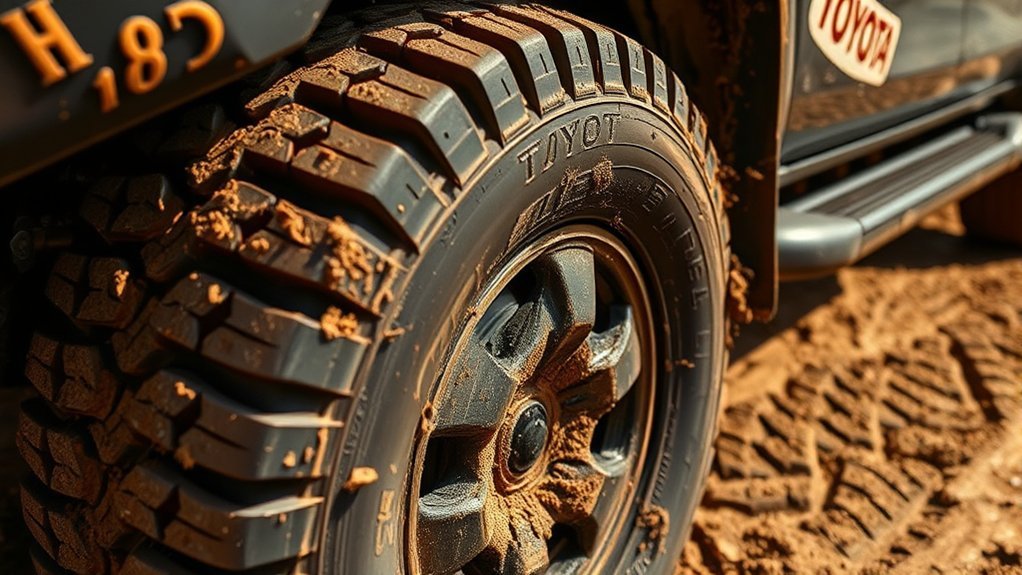
Mud terrain tires can make a Toyota Hilux far more capable in mud, ruts, clay, loose dirt, and rocky tracks, but they are not the best choice for every driver. The right set depends on your Hilux model, factory tyre placard, wheel size, load rating, how often you drive on pavement, and whether you plan to tow, carry weight, or upsize.
Quick Answer
Mud terrain tires are a good choice for a Toyota Hilux that regularly drives through mud, loose dirt, ruts, rocks, or overlanding tracks. Choose the factory-approved size where possible, match or exceed the original load rating, expect more road noise, and always confirm tyre pressure on the door placard or owner’s manual.
Key Takeaways
- Mud terrain tires give the Hilux stronger bite in mud and loose terrain because of their deep, high-void tread blocks.
- They usually create more road noise and may wear faster on pavement than all-terrain or highway tires.
- Common modern Hilux tyre sizes include 265/65R17 and 265/60R18, but the correct size is the one on your tyre placard, owner’s manual, or approved fitment list.
- If you upsize to larger tires, check clearance, offset, lift requirements, speedometer accuracy, load rating, local regulations, and insurance rules.
- Check pressure, tread depth, cuts, bulges, and uneven wear regularly, especially after off-road trips.
At a Glance
| Time Required | 15–30 minutes to check tyre size, load rating, pressure, and fitment before buying. |
| Difficulty | Easy if staying with factory size; moderate if upsizing or changing wheels. |
| Tools Needed | Owner’s manual, door tyre placard, tyre pressure gauge, tread depth gauge, and a trusted tyre fitter for clearance checks. |
| Cost | Varies by brand, size, load range, and market. Upsizing may add costs for alignment, wheels, lift, trimming, or speedometer correction. |
What Are Mud Terrain Tires and How Do They Work?
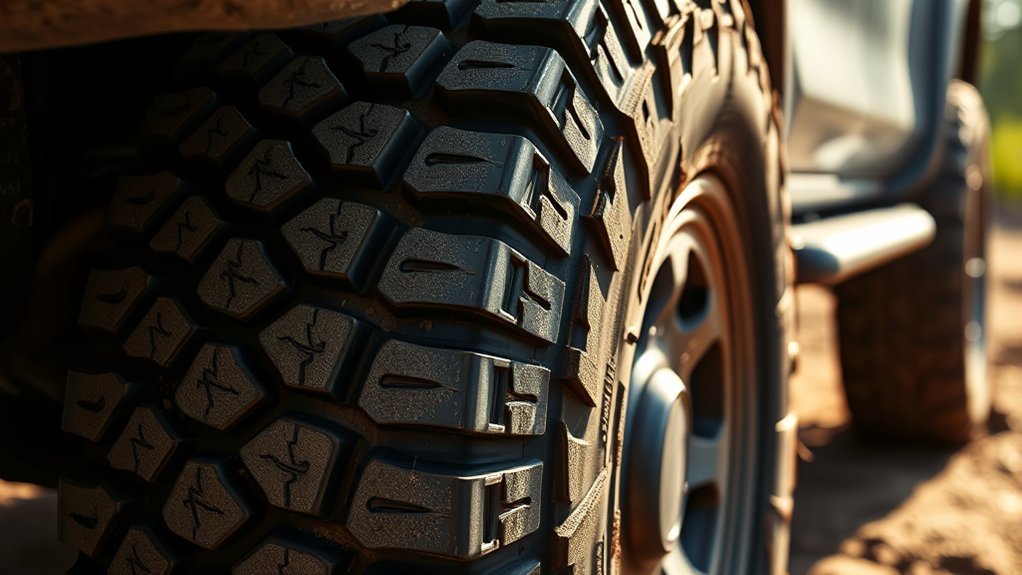
Mud terrain tires, often marked as M/T tires, are off-road-focused tires built with deep tread blocks, large voids, strong shoulder lugs, and tougher casing designs. On a Toyota Hilux, their job is to dig into soft ground and throw mud, dirt, and loose material out of the tread so the tire can keep finding grip.
Compared with highway tires, M/T tires usually have:
- Larger tread blocks for bite in mud, clay, and loose dirt.
- Wide tread voids to help eject mud and stones.
- Stronger shoulders and sidewalls on many light-truck versions.
- More aggressive sidewall lugs for grip in ruts and low-pressure off-road driving.
- Higher road noise and a firmer ride than touring or highway tires.
For example, Nitto describes the Trail Grappler M/T as a mud-terrain tire with an aggressive mud tread design, 3-ply sidewall construction on most sizes, and tread features designed to remove mud and dirt. Firestone also describes the Destination M/T2 as a max-traction tire with mud and stone rejector technology and 3-ply sidewall construction.
Note: “Mud terrain” does not mean every M/T tire fits every Hilux. Always match the tire size, load index, speed rating, and wheel fitment to your exact vehicle.
Advantages of Mud Terrain Tires for the Toyota Hilux
A Toyota Hilux is already a capable work and off-road vehicle, especially in 4×4 form. Mud terrain tires can improve that capability when the surface is soft, loose, or heavily rutted.
- Better grip in mud: Deep, open tread blocks can dig into soft ground and clear mud more effectively than road-focused tires.
- Improved traction in ruts: Strong shoulder blocks and sidewall lugs can help the tire bite when the Hilux is leaning into a rut.
- More resistance to trail damage: Many LT mud-terrain tires use reinforced casings, thicker sidewalls, or 3-ply sidewall construction.
- More confidence on mixed tracks: On loose dirt, clay, gravel, and rocky trails, M/T tires can feel more controlled than highway tires.
Mud terrain tires are best for Hilux owners who spend real time off-road. If most of your driving is city, highway, or wet sealed roads, all-terrain tires may be the better daily choice.
Are Mud Terrain Tires Right for Your Hilux?
Choose mud terrain tires if your Hilux regularly sees deep mud, farm tracks, forest roads, ruts, rocky climbs, work sites, or overlanding trails. Choose all-terrain tires if you want a quieter daily ride with occasional off-road ability.
| Choose mud terrain tires if… | Choose all-terrain tires if… |
| You often drive in mud, clay, ruts, rocks, or loose tracks. | You mostly drive on pavement with weekend trail use. |
| You can accept more noise, vibration, and fuel use. | You want better comfort and lower road noise. |
| You value off-road traction more than wet-road refinement. | You need balanced wet-road, highway, and off-road manners. |
How Mud Terrain Tires Enhance Off-Road Performance
Mud terrain tires improve off-road performance by increasing mechanical grip. The tread blocks act like small paddles and edges, biting into soft surfaces instead of simply sliding over them. Wide voids help the tire clear sticky mud, while shoulder lugs add side grip when the Hilux is driving through ruts or off-camber tracks.
On the trail, this can help with:
- Mud: Open tread voids help clear sticky material from the tire.
- Rocks: Stronger sidewalls and shoulder lugs can reduce damage risk and improve grip at low speeds.
- Sand and loose dirt: A larger footprint can help, especially when pressure is adjusted carefully for off-road use.
- Ruts: Sidewall lugs and shoulder blocks help the tire climb out of grooves.
Warning: Do not drive at highway speeds on aired-down tires. If you lower tire pressure off-road, reinflate to the pressure listed on your Hilux tyre placard or owner’s manual before returning to sustained pavement driving.
Top Features to Evaluate When Selecting Mud Terrain Tires
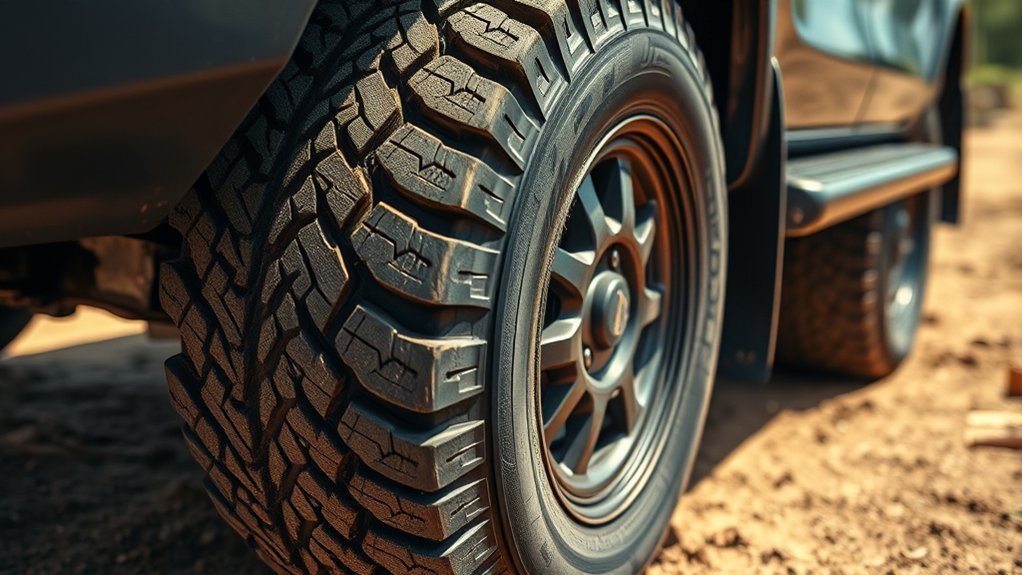
When comparing mud terrain tires for a Toyota Hilux, do not shop by tread pattern alone. The best tire is the one that fits your vehicle, load, terrain, and road use.
- Correct size: Start with the tyre placard and owner’s manual. The NHTSA tire guide recommends checking the owner’s manual or Tire and Loading Information Label for the correct size and pressure.
- Load index: Match or exceed the original load index, especially if you tow, carry tools, use a canopy, or load camping gear.
- Speed rating: Make sure the tire’s speed rating is legal and appropriate for your region and use.
- LT construction: LT-rated tires can offer stronger construction, but they may ride firmer and weigh more.
- Sidewall strength: Look for reinforced sidewalls if you drive in rocks, ruts, or work sites.
- Tread void and shoulder design: Wider voids help clear mud; shoulder lugs help in ruts and loose edges.
- Wet-road behavior: More aggressive is not always safer on wet pavement. Check manufacturer ratings and independent testing where available.
- Noise and comfort: If the Hilux is your daily driver, choose a mud tire known for better road manners.
[Products Worth Considering]

Monitor tire tread wear with a smart, color-coded depth gauge that shows clear condition ranges at a glance. The bar is range marked for fast, easy readings, helping you maintain safer traction and performance. Each gauge is portable with a pocket clip, and the set includes 20 units for daily use and sharing.
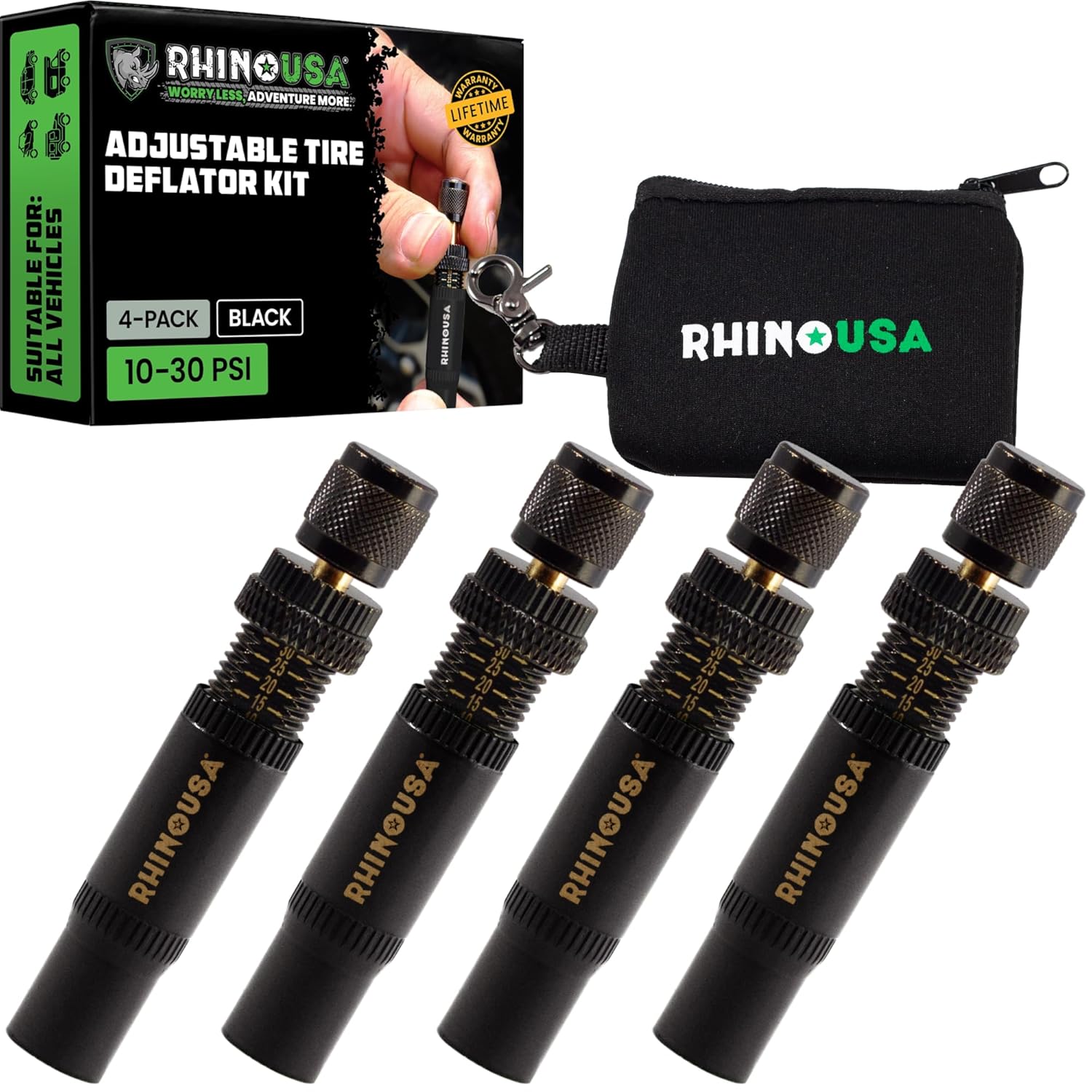
Use the Rhino USA adjustable tire deflators to air down all four tires at once by screwing one deflator onto each valve stem, letting you step away while the tires reach your preset pressure. Each deflator independently adjusts across a 10–30 PSI range with laser-etched indicators for quick setup and verification, making it ideal for beach, sand, and rocky off-road trails.

Keep your tires properly inflated with this analog VONDIOR tire pressure gauge, designed for fast, easy readings without batteries. The swiveling, two-axis hose and large glow dial help you measure at any tire angle with instant visibility. Built with a protective rubber shield, it supports durable, low-maintenance use for cars and trucks.
Popular Mud Terrain Tires for the Toyota Hilux
The tires below are common mud-terrain options for pickups and 4×4 vehicles, but availability and fitment depend on your wheel size, market, load rating, and Hilux setup. Always confirm the exact size before buying.
| Tire | Why Hilux owners consider it | Best for |
| Nitto Trail Grappler M/T | Aggressive mud tread, 3-ply sidewall on most sizes, mud evacuation features, and a focus on quieter road manners than Nitto’s Mud Grappler. | Mixed off-road use with some pavement driving. |
| Firestone Destination M/T2 | Mud and stone rejector technology, aggressive tread pattern, debris shield, and 3-ply sidewall construction. | Mud, rocks, snow-prone trails, and tough off-road use. |
| Milestar Patagonia M/T-02 | 3-ply sidewall, cut-and-chip-resistant compound, cross-directional siping, and an off-road-focused tread design. | Budget-conscious off-road builds and rocky/muddy trails. |
| Nitto Mud Grappler | Very aggressive tread and sidewall styling, but usually louder and less refined on-road. | Drivers who prioritize extreme mud traction over daily comfort. |
Pro Tip: Before choosing a tire, ask the fitter to confirm load index, rim width range, wheel offset, clearance at full steering lock, and clearance when the suspension compresses.
[Products Worth Considering]

The SAFELIFE dial tire tread depth gauge measures tread depth in 1/32 inch increments with clear, easy-to-read 2-inch dial face. Color zones using a traffic light system help you quickly judge whether tread is low, marginal, or ample for safer driving. Built with a durable zinc cast body and a metal detect probe for precise, comfortable use across cars, motorcycles, trucks, and buses.

Measure tire tread depth quickly and accurately with this LUMITECO dial gauge that reads in 1/32" increments up to 14/32". The color-coded green/yellow/red zones make it easy to judge tire wear and know when replacement is needed. A rugged, compact design with a protective pouch helps keep the gauge ready for use on cars, trucks, motorcycles, and more.

Measure tyre tread depth precisely with a digital gauge that reads in both MM and inches, helping you monitor safe driving conditions. The large LCD screen is easy to operate, and the compact tool fits for cars, trucks, and motorcycles. It provides high accuracy with a 0-25.4mm range and includes a 1-year warranty for added peace of mind.
Why Tread Patterns Matter for Mud Terrain Tires
Tread pattern is the main reason mud terrain tires behave differently from all-terrain or highway tires. A good M/T tread needs to bite into soft material, clean itself, and still remain stable enough for controlled driving.
- Traction edges: Large blocks create biting edges that help the Hilux move through mud and loose ground.
- Self-cleaning voids: Open spaces between blocks allow mud, stones, and dirt to escape.
- Shoulder lugs: Aggressive shoulders add grip in ruts and when the tire sidewall contacts the trail.
- Siping: Some mud tires include sipes to improve wet grip, but heavy mud performance still depends mostly on void and block shape.
- Block stability: Strong tread blocks reduce squirm, chunking, and uneven wear.
For the Hilux, the best tread pattern depends on your terrain. Deep clay and wet farm tracks need open voids. Rocky touring needs stronger sidewalls and cut resistance. Mixed commuting and camping trips may be better with a quieter hybrid or all-terrain tire.
Maintenance Tips for Mud Terrain Tires
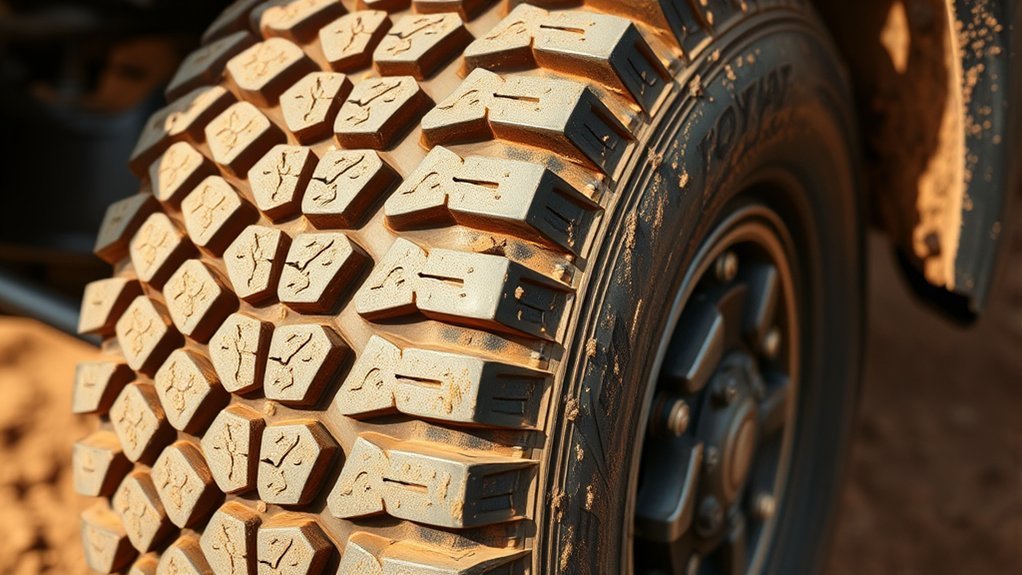
Mud terrain tires work hard, so they need regular checks. Poor pressure, poor alignment, and ignored trail damage can shorten tire life and reduce safety.
Regular Inspections Required
Inspect your tires before and after off-road trips. Look for:
- Cuts, tears, or exposed cords.
- Bulges in the sidewall.
- Rocks or debris stuck in the tread.
- Uneven shoulder wear.
- Missing tread chunks after rocky tracks.
- Nails, screws, or puncture marks.
The NHTSA tire safety guide recommends checking tire pressure and tread regularly. It also states that tires are not safe and should be replaced when tread is worn to 2/32 inch.
Proper Tire Inflation
For normal road driving, use the cold tyre pressure listed on your Hilux tyre placard or owner’s manual. The tire sidewall usually shows maximum pressure, not the recommended pressure for your vehicle.
For off-road driving, some drivers reduce pressure to improve the tire’s footprint and comfort over rocks, corrugations, sand, or mud. This should be done carefully and only at low speeds. Too little pressure can cause bead unseating, sidewall damage, poor steering response, and heat buildup if you drive fast.
Warning: If your Hilux is carrying heavy tools, towing, or loaded for touring, do not copy another driver’s PSI. Load changes tire pressure needs. Use the placard/manual for road pressure and get off-road pressure advice from a qualified tire professional for your setup.
Rotation, Alignment, and Balancing
Mud terrain tires can develop uneven wear if they are not rotated or if the Hilux alignment is out. Follow the rotation interval in your owner’s manual or tire warranty booklet. Also check alignment after hard impacts, suspension changes, lift kits, or repeated rough-track driving.
- Rotate regularly: Helps even out shoulder and block wear.
- Balance after fitting: Reduces vibration and steering shake.
- Check alignment: Important after lifts, new wheels, or uneven wear.
- Clean after mud: Packed mud can hide cuts and cause vibration.
How to Choose the Right Size for Your Hilux
The safest starting point is the factory tyre size. Modern Hilux grades commonly use sizes such as 265/65R17 and 265/60R18 depending on market and trim. For example, Toyota UK technical specifications list 265/65R17 for some grades and 265/60R18 for others, while Toyota Australia’s current Hilux specification sheet lists 265/65R17 and 265/60R18 across different grades.
Because Hilux specifications vary by year, country, trim, drivetrain, cab type, and wheel package, do not rely on a single online answer. Check your exact vehicle first.
Tyre Size Compatibility
Use this order when choosing mud terrain tire size:
- Check the tyre placard: Usually on the driver’s door opening, door jamb, or similar location depending on market.
- Check the owner’s manual: Confirm approved size, load rating, speed rating, and pressure.
- Read the current tire sidewall: Note width, aspect ratio, rim size, load index, and speed rating.
- Confirm wheel width: Make sure the tire is approved for your rim width.
- Check clearance: Turn full lock both ways and check suspension compression clearance.
- Confirm legality: Local road rules may limit diameter increase, tread protrusion, and speedometer error.
Measuring Tyre Dimensions
A size such as 265/65R17 means:
- 265 = tire width in millimeters.
- 65 = sidewall height as a percentage of width.
- R = radial construction.
- 17 = wheel diameter in inches.
A 265/60R18 tire has the same nominal width but a lower sidewall percentage and fits an 18-inch wheel. Both can appear on modern Hilux grades, but your exact Hilux may have a different approved size.
Ideal Size Recommendations
For most Hilux owners, the best mud terrain tire size is the factory-approved size shown on the placard. Staying close to factory size helps preserve steering feel, braking, speedometer accuracy, gearing, fuel economy, and legal compliance.
If you want larger tires, treat it as a vehicle modification rather than a simple tire swap. You may need:
- Suspension lift or body clearance changes.
- Different wheel offset.
- Guard trimming or mud flap changes.
- Speedometer recalibration.
- Engineering approval or inspection, depending on local law.
- Insurance notification.
Note: A tire that fits one Hilux may rub on another because of generation, suspension height, wheel offset, bull bar weight, cab style, or aftermarket accessories.
When Should You Replace Mud Terrain Tires on Your Vehicle?
Replace mud terrain tires when they are worn, damaged, aged, or no longer safe for the way you drive. Do not rely only on mileage because mud tires can wear very differently depending on road use, pressure, alignment, rotation, vehicle weight, and terrain.
Replace or professionally inspect the tire if you see:
- Tread worn to the legal minimum or wear bars.
- Sidewall cuts, cracking, or bulges.
- Exposed cords.
- Repeated air loss.
- Uneven wear caused by alignment or suspension problems.
- Chunked tread blocks after rocky driving.
- Vibration that remains after cleaning mud and balancing.
For safety, check tread depth with a gauge. NHTSA states that tires are not safe and should be replaced when tread is worn to 2/32 inch. In wet climates or heavy off-road use, many drivers replace earlier because traction drops before the legal minimum.
How Do Mud Terrain Tires Compare to All-Terrain Options?
Mud terrain and all-terrain tires are both popular for the Toyota Hilux, but they solve different problems. Mud terrain tires focus on maximum off-road grip in soft and loose conditions. All-terrain tires aim for a better balance between road comfort and off-road capability.
[Products Worth Considering]

These aluminum alloy tire valve stem caps with an O-ring seal help protect valve stems from corrosion while adding a clean, stylish look to your vehicle. The universal fit works across cars, trucks, motorcycles, bicycles, and more, making them an easy upgrade for everyday driving and off-road use. Installation is quick, and the included four-pack keeps all your tires dressed and protected.

This ALL-TOP auto-stop tire deflator valve kit lets you air down off-road tires quickly without watching pressure, automatically stopping when your preset PSI is reached. Each valve is individually calibrated for reliable performance with an acceptable +/- 2 PSI tolerance. The adjustable deflator range covers 10 to 30 PSI and includes four valves plus valve caps and a zipper pouch for easy setup on trucks, SUVs, RVs, UTVs, and powersports.

Accurately measure tire tread depth with a calibrated gauge marked from 0 to 1 inch in 1/32 inch increments. The color-coded bar helps you quickly identify tread condition ranges, supporting safe driving for trucks, motorcycles, automobiles, and passenger vehicles.
Performance Differences
| Category | Mud Terrain | All-Terrain |
| Mud traction | Best choice for deep mud, ruts, and loose clay. | Good for light mud, but can clog sooner. |
| Road noise | Usually louder. | Usually quieter. |
| Wet pavement | Can be less refined; check tire-specific ratings. | Often better for daily wet-road driving. |
| Comfort | Firmer, especially in LT construction. | More comfortable for commuting. |
| Best use | Serious off-road, work sites, mud, rocks, overlanding. | Daily driving, touring, gravel roads, light-to-medium trails. |
Tread Design Variations
Mud terrain tires use larger voids and more aggressive shoulders. This helps in mud, but it also means less continuous rubber touching the road. All-terrain tires use smaller voids and more closely spaced blocks, which usually improves road feel, noise, and wear.
If your Hilux is a daily driver that only sees mild dirt roads, a strong all-terrain tire may be more practical. If your Hilux works in mud, farms, forests, rocky tracks, or deep ruts, a mud terrain tire makes more sense.
Common Mistakes When Buying Mud Terrain Tires for a Hilux
- Buying by looks only: The most aggressive tread is not always the best tire for your driving.
- Ignoring load rating: A Hilux used for towing or tools needs the right load capacity.
- Assuming 33s fit without work: Larger tires may rub or require lift, trimming, offset changes, and legal approval.
- Using the wrong pressure: Road pressure should come from the placard/manual, not another driver’s setup.
- Skipping alignment: Mud tires can become noisy and uneven quickly with poor alignment.
- Forgetting the spare: A mismatched spare can be a problem off-road, especially far from help.
Frequently Asked Questions
Is the Toyota Hilux good for off-road driving?
Yes, especially in 4×4 form. The Hilux is widely used for work, touring, and off-road driving. Mud terrain tires can improve its ability in mud, ruts, and loose terrain, but tire choice should still match the exact model, load, and driving conditions.
What is a good all-terrain tire for mud?
A good all-terrain tire for mud should have open shoulder blocks, enough tread void to clear loose material, and the correct load rating for your Hilux. All-terrain tires work well for light mud and touring, but deep clay and heavy ruts usually favor a true mud terrain tire.
Are mud-terrain tires good for everyday driving?
They can be used every day, but they are not ideal for every daily driver. Expect more road noise, a firmer ride, heavier steering feel, and potentially faster wear on pavement. If most of your Hilux driving is highway or city use, all-terrain tires may be easier to live with.
Can you fit 33s on a Hilux?
Sometimes, but it depends on the Hilux generation, suspension, wheel offset, tire width, trim, and local road rules. Many setups need a lift, trimming, or offset changes to avoid rubbing. Always confirm clearance, legality, speedometer accuracy, load rating, and insurance requirements before fitting 33-inch tires.
What tyre pressure should I run in mud terrain tires on a Hilux?
For road driving, use the cold pressure listed on your Hilux tyre placard or owner’s manual. Off-road pressure depends on tire size, load, wheel type, terrain, and speed. If you air down off-road, drive slowly and reinflate before returning to highway speeds.
Do mud terrain tires reduce fuel economy?
They can. Mud terrain tires are often heavier and have more aggressive tread than road tires. That can increase rolling resistance, noise, and fuel use, especially with larger-than-standard sizes.
Conclusion
Mud terrain tires can transform a Toyota Hilux off-road, especially in mud, ruts, rocks, and loose tracks. The trade-off is that they are usually louder, heavier, and less comfortable on pavement than all-terrain or highway tires. For the best result, start with the factory tyre placard, choose the correct load rating, check legal fitment before upsizing, and maintain pressure, rotation, alignment, and tread condition. If your Hilux spends more time on trails than highways, the right mud terrain tire is a strong upgrade. If it spends most of its life on-road, a quality all-terrain may be the smarter choice.
Sources
- Toyota UK Hilux Technical Specifications — backs up common Hilux tyre sizes by grade.
- Toyota Australia HiLux Specification Sheet — backs up current Hilux wheel and tyre specifications by grade.
- NHTSA Tire Safety — backs up tyre placard, pressure, tread depth, rotation, and safety guidance.
- Nitto Trail Grappler M/T — backs up mud-terrain tread, sidewall, and mud evacuation feature claims.
- Firestone Destination M/T2 — backs up mud/stone rejector, aggressive tread, and 3-ply sidewall feature claims.
- Milestar Patagonia M/T-02 — backs up 3-ply sidewall, tread compound, and mud-terrain construction claims.