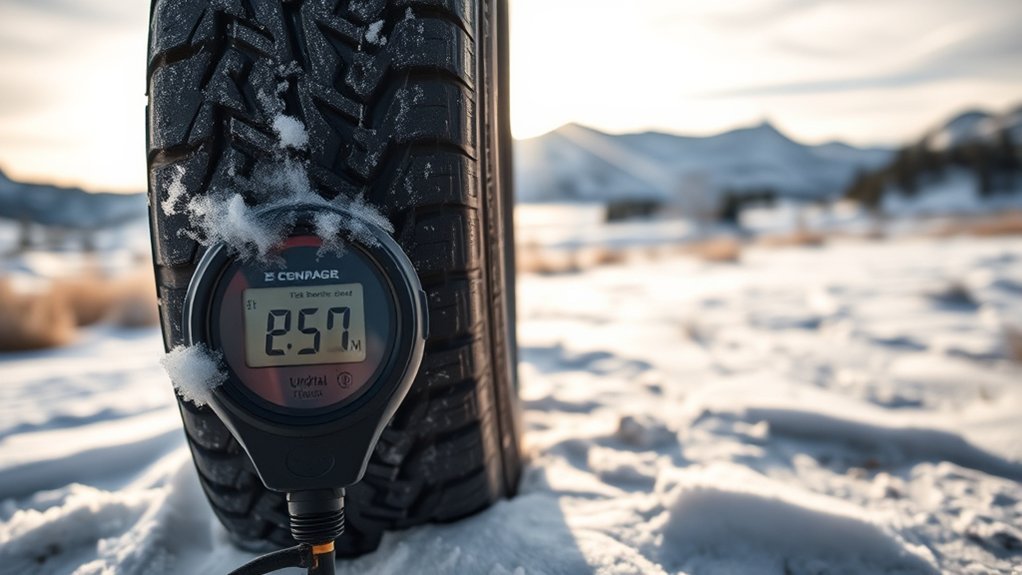
Cold weather can lower the pressure shown on your tire gauge even when the tire has no puncture. As the air inside a tire cools, its pressure falls—often by about 1 PSI for each 10°F drop in temperature. That change can trigger the tire-pressure warning light and leave a tire below the vehicle maker’s recommended cold pressure. A quick gauge check and proper inflation can restore safe, predictable performance.
Quick Answer
Tire pressure usually drops about 1 PSI for every 10°F decrease in air temperature. Check all tires when they are cold, compare the readings with the pressure on the driver-side door placard, and add air as needed. Do not use the maximum pressure molded on the tire sidewall as your target.
Key Takeaways
- A temperature drop changes tire pressure; it does not normally mean the tire itself has shrunk.
- Use the vehicle’s door-jamb placard or owner’s manual—not the tire sidewall—to find the correct cold PSI.
- Check pressure at least monthly, before long trips, and after a major temperature swing.
- TPMS is a warning system, not a substitute for checking pressure with a gauge.
- Repeated or rapid pressure loss can signal a puncture, valve leak, wheel problem, or tire damage.
At a Glance
| Time Required | About 5–10 minutes |
| Difficulty | Easy |
| Tools Needed | Accurate tire-pressure gauge and an air compressor or inflator |
| Cost | Usually free if you already have a gauge and access to an air pump; otherwise, the cost of a basic gauge or inflator |
Understanding Tire Pressure Dynamics
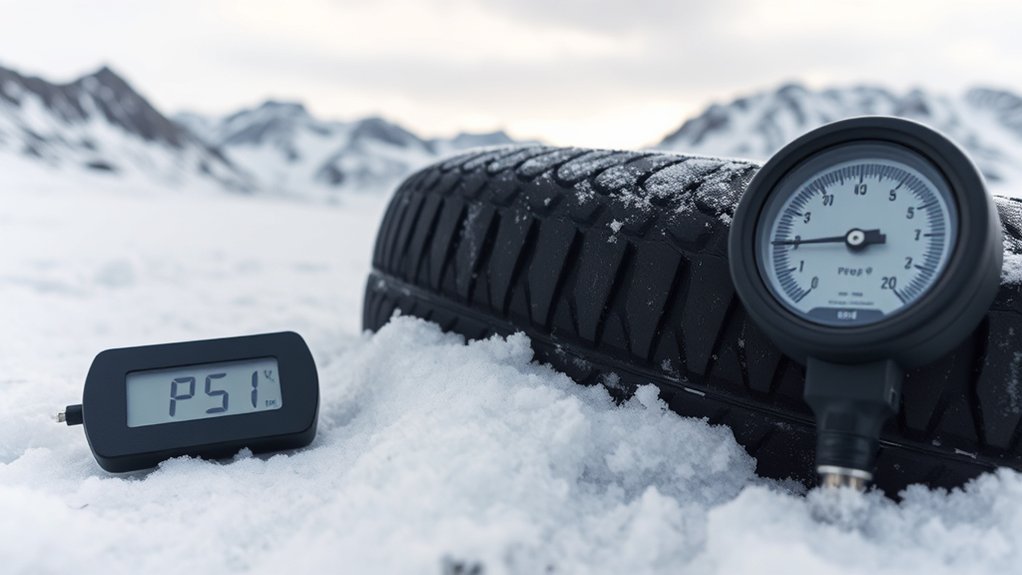
Tire pressure changes with temperature because the gas inside the tire responds to heat and cold. When the gas cools, its molecules move more slowly and the pressure against the inside of the tire decreases. The tire’s internal volume stays nearly the same during a normal weather change, so describing the tire as losing volume is misleading.
A useful rule of thumb is that pressure changes by about 1 PSI for every 10°F change in temperature. For example, a tire set to 35 PSI at 70°F may read close to 31 PSI after the temperature falls to 30°F, assuming there is no leak. Michelin gives the same approximate relationship in its current winter tire-pressure guidance.
A 30°F temperature drop can lower the gauge reading by roughly 3 PSI, even when no air has escaped through a puncture.
How Cold Weather Affects Tire Air Density
Cold air is denser than warm air, but density alone is not the most useful way to explain what happens inside a mounted tire. The key point for drivers is simpler: lower gas temperature produces lower pressure in the tire’s nearly fixed space. The colder reading is real and should be corrected if it falls below the vehicle maker’s recommended cold PSI.
Air Density Changes
As air cools, its molecules move more slowly and sit closer together. In a sealed tire, this lowers pressure. A 30°F drop will commonly reduce the reading by about 3 PSI, although the exact change can vary with the starting temperature, gauge accuracy, tire construction, and whether the tire has also lost air through normal permeation or a leak.
Ordinary compressed air is already about 78% nitrogen. Pure nitrogen may escape through tire materials a little more slowly and contains less moisture, but nitrogen follows the same temperature-pressure relationship as other gases. It does not prevent winter pressure loss.
Temperature and PSI Loss
Use temperature-based PSI estimates only as a reminder to check the tires—not as a substitute for a gauge. A move from 40°F to 0°F may reduce a tire’s reading by about 4 PSI. Whether that reduction triggers TPMS depends on the vehicle’s placard pressure, the starting pressure, the type of monitoring system, and its calibration.
Pressure may rise again when the day warms or after the tire heats while driving. That does not mean a low cold reading should be ignored. Tire inflation specifications are normally based on a cold tire, so the correct comparison is a cold gauge reading against the placard value.
Impact on Tire Performance
Underinflation lets the tire flex more than intended. That can dull steering response, increase heat buildup and rolling resistance, and promote irregular shoulder wear. The U.S. Tire Manufacturers Association notes that underinflated tires can develop excessive heat, stress, internal damage, and uneven wear in its tire-care guidance.
Do not intentionally lower road-tire pressure for winter traction unless the vehicle manufacturer gives a specific instruction. On-road tires should be maintained at the vehicle maker’s recommended cold pressure.
Impact of Temperature on PSI Levels
The examples below show the approximate pressure change from temperature alone. They assume the tire started at the correct pressure and has no puncture or leak:
- 10°F colder: about 1 PSI lower
- 20°F colder: about 2 PSI lower
- 30°F colder: about 3 PSI lower
- 40°F colder: about 4 PSI lower
A TPMS warning cannot be predicted from a certain outside temperature, such as 25°F, because vehicles use different placard pressures and monitoring strategies. Check the tires whenever the light appears and after a sharp cold snap, even if the light later turns off.
Note: One PSI equals about 6.9 kPa. Your placard may list both units, and the front and rear tires may have different recommended pressures.
Signs Your Tire Pressure Is Low in Winter
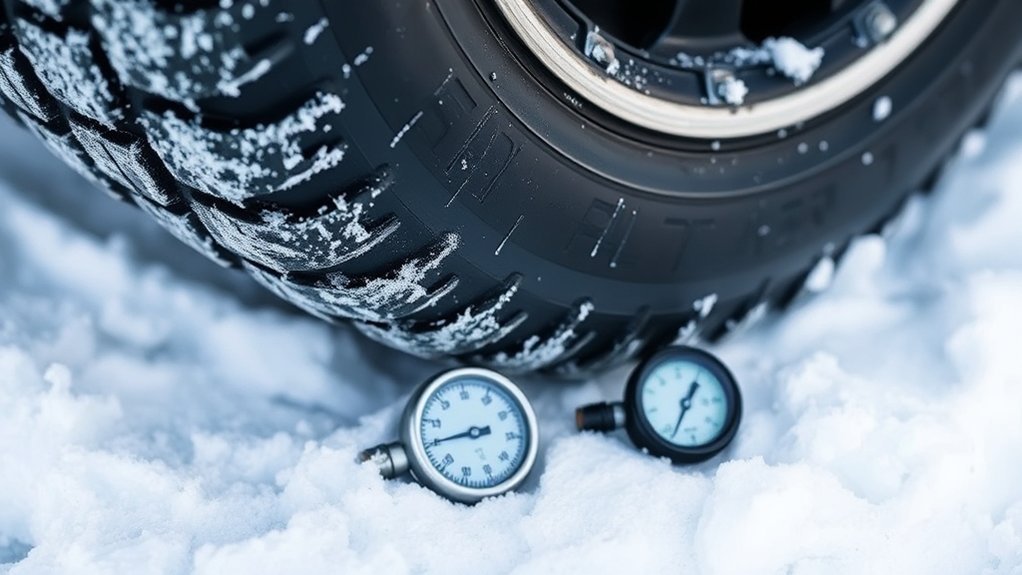
The best way to identify low pressure is with a gauge. A dashboard warning, unusual handling, or visible tire damage should prompt an immediate check, but appearance alone cannot confirm whether a tire is at the correct PSI.
Common Warning Lights
- Steady TPMS light: At least one tire may be significantly underinflated. Stop in a safe place and check all tires.
- Light that appears on a cold morning: The overnight temperature drop may have pushed one or more tires below the warning threshold.
- Light that turns off after driving: Tire heat may have raised pressure above the warning threshold, but the cold pressure may still be below the placard value.
- Flashing light that later stays on: Many vehicles use this pattern to report a TPMS malfunction. Check the owner’s manual and arrange service.
Federal TPMS requirements are designed around significant underinflation, not small deviations from the placard pressure. NHTSA therefore advises drivers to continue monthly manual checks even when a vehicle has TPMS in its TireWise safety guidance.
Changes in Ride Quality
A tire that is well below its target pressure may cause slower steering response, more body movement in turns, vibration, pulling, or a soft and unstable feel. These symptoms can also come from alignment, suspension, wheel, or tire-damage problems, so check the pressure first and seek professional inspection if the behavior continues.
Visual Tire Inspection Tips
- Look for a visibly low tire: A severely underinflated tire may appear flatter than the others, but many low tires look normal.
- Inspect the tread: Uneven shoulder wear can be associated with long-term underinflation, although alignment and rotation issues can cause similar patterns.
- Inspect the sidewalls: Look for cuts, cracks, bulges, bubbles, exposed cords, or impact damage.
- Check for foreign objects: A nail or screw in the tread can cause slow or rapid leakage. Do not pull it out before a tire professional evaluates the tire.
- Use a gauge: Never judge a tire’s PSI by the gap between the tire and the ground.
Warning: Do not drive on a visibly flat tire or one with a bulge, exposed cords, rapid pressure loss, or other serious damage. Use roadside assistance or a properly inflated spare and have the tire inspected by a qualified professional.
How to Check Tire Pressure Regularly
NHTSA recommends checking all tires, including the spare, at least once a month when they are cold. “Cold” generally means the vehicle has been parked for at least three hours. The correct pressure is on the Tire and Loading Information label on the driver-side door edge or door jamb, or in the owner’s manual—not on the tire sidewall. See NHTSA’s official tire-pressure instructions.
- Park and let the tires cool. Check before driving or after the vehicle has been parked for at least three hours.
- Find the target pressure. Read the driver-side placard or owner’s manual. Note any different front, rear, loaded, or spare-tire specifications.
- Remove the valve cap. Put it somewhere clean so it does not get lost.
- Press the gauge firmly onto the valve stem. Reseat it if you hear continuous hissing.
- Read and compare. Check every road tire and the spare.
- Add air if the reading is low. Inflate in short bursts, then recheck with the gauge.
- Release a small amount if it is high. Recheck until the cold reading matches the recommended value.
- Replace the valve cap. Repeat for every tire.
- Confirm the warning light resets. Some vehicles reset after a short drive; others require a procedure in the owner’s manual.
Pro Tip: Keep a reliable handheld gauge in the vehicle. Gas-station pump gauges can be worn or inaccurate, so use your own gauge to confirm the final pressure.
How to Fix Low Tire Pressure
Start with a cold reading whenever possible. Inflate each low tire to the vehicle manufacturer’s recommended cold PSI, then check it again. If the pressure falls repeatedly, do not keep topping it off without finding the cause.
[Products Worth Considering]

Monitor tire tread wear with a smart, color-coded depth gauge that shows clear condition ranges at a glance. The bar is range marked for fast, easy readings, helping you maintain safer traction and performance. Each gauge is portable with a pocket clip, and the set includes 20 units for daily use and sharing.

Milton S-921 pencil tire pressure gauge helps you maintain optimal tire pressure for passenger cars with accurate readings in PSI and kPa. It features a built-in deflator valve for convenient pressure adjustments, plus a single chuck head and nylon indicator bar for easy use on the go. Built from durable plated brass and designed for reliable performance, it’s a practical road trip and cold-weather maintenance tool.

Keep your tires properly inflated with this analog VONDIOR tire pressure gauge, designed for fast, easy readings without batteries. The swiveling, two-axis hose and large glow dial help you measure at any tire angle with instant visibility. Built with a protective rubber shield, it supports durable, low-maintenance use for cars and trucks.
Regular Pressure Checks
- Check at least monthly and before long trips.
- Check again after a major temperature change or when TPMS activates.
- Include the spare tire, which may use a much higher pressure than the road tires.
- Record readings if one tire repeatedly loses more pressure than the others.
- Have a tire professional inspect any continuing loss, puncture, damaged valve, bead leak, or wheel problem.
Inflate to the Recommended PSI
Use the placard pressure for cold tires. The number molded into the sidewall is a maximum tire specification, not the normal target for your vehicle. NHTSA’s winter driving guidance specifically warns drivers not to inflate tires to the pressure listed on the tire itself.
If you must add air after driving, do not bleed a warm tire down to the cold placard value. A warm tire normally reads higher. Add enough air to avoid significant underinflation, then check and fine-tune the pressure when the tire is cold, following the vehicle maker’s instructions.
Proactive Tire Pressure Maintenance in Winter
- Check before the season changes: Set all tires to the placard pressure before the first sustained cold spell.
- Check after sharp temperature drops: A fast 30°F decline can reduce the reading by about 3 PSI.
- Inspect monthly: Check pressure, tread, sidewalls, valve stems, and the spare.
- Keep basic tools in the vehicle: Carry a gauge and, when practical, a portable inflator.
- Use valve caps: Caps help keep dirt and moisture away from the valve core.
- Watch one tire that loses pressure faster: A repeated difference usually points to a leak or damage rather than temperature alone.
The U.S. Department of Energy reports that a 1 PSI drop in average pressure across all four tires can reduce fuel economy by about 0.2%, making correct inflation useful for safety, tire life, and efficiency.
[Products Worth Considering]
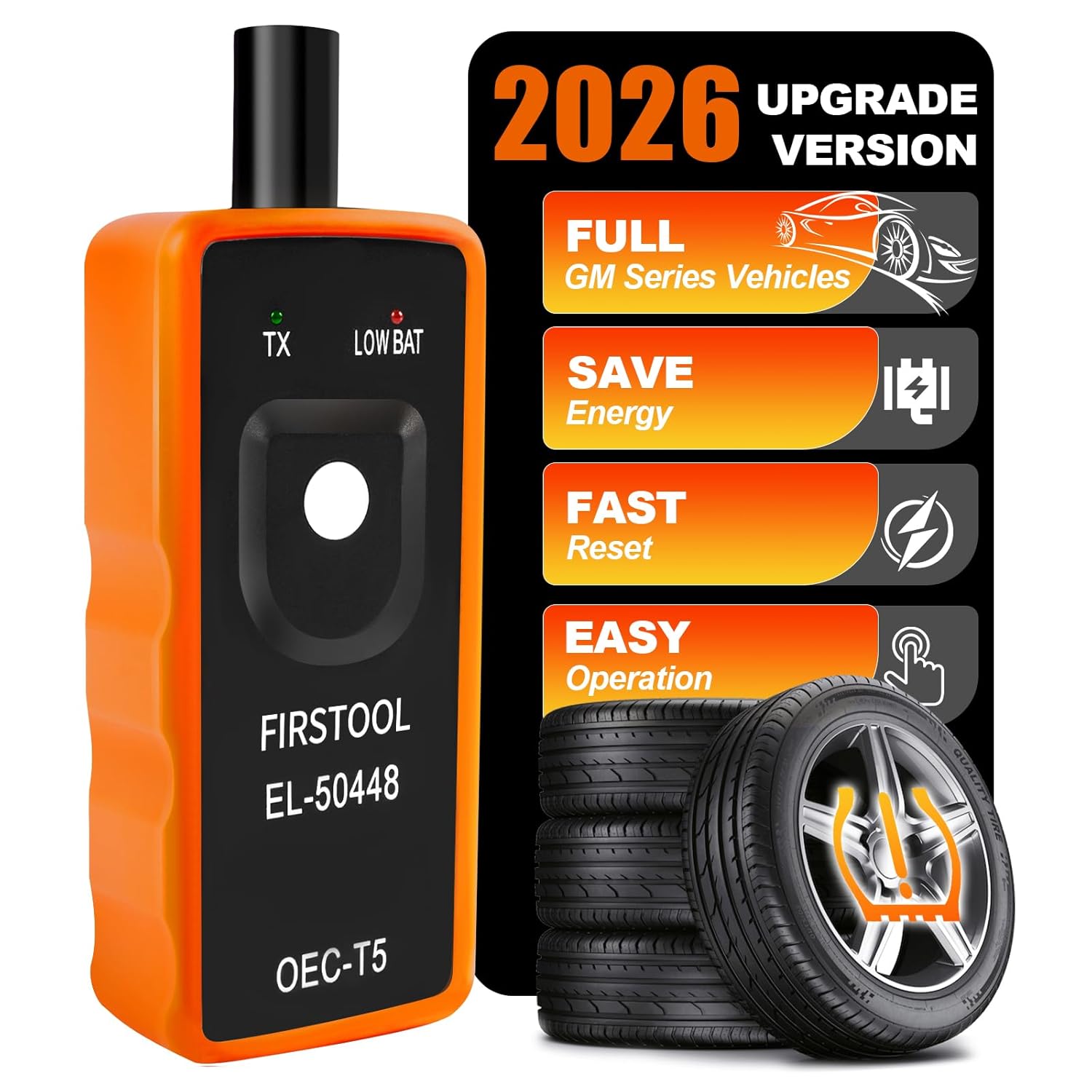
This TPMS relearn tool helps you quickly activate, match, and reset GM tire pressure sensors to keep the vehicle monitoring system working properly. It clears tire pressure alarms and dashboard warning lights after sensor replacement or tire rotation, and supports learning for common 315/433 MHz TPMS sensors. Designed for simple one-button operation, it can help you avoid unnecessary trips to repair shops.

Upgrade your Toyota’s wheels with durable aluminum alloy valve stem caps that help protect valve cores from corrosion and direct exposure to road grime, clay, water, and snow. Rubber rings improve sealing to help prevent air leakage and maintain stable tire pressure for safer driving. These caps are easy to install or remove without tools and add a unique, stylish look to your car.

This Dr.Roc tire valve stem puller tools set helps install or remove snap-in tubeless valve stems safely and efficiently. It includes ozone-resistant EPDM snap-in valve stems, a valve stem installer, and a valve core remover for quick core removal or installation during tire service. Designed for reliable tubeless tire repair on motorcycles, ATVs, lawn equipment, cars, and trucks.
Why Relying Solely on TPMS Isn’t Enough
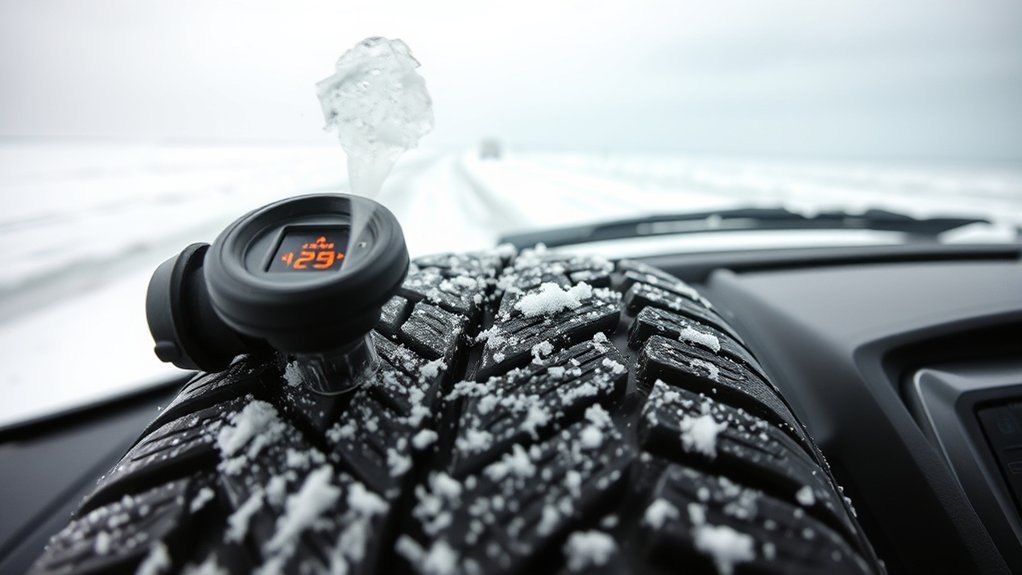
TPMS is designed to warn about significant underinflation, not to maintain each tire at the exact placard pressure. Under the federal performance standard, the warning threshold is tied to a tire reaching about 25% below the vehicle’s cold placard pressure under specified test conditions. NHTSA explains that threshold in its FMVSS No. 138 interpretation.
This means a tire can be several PSI low before the warning appears. A light may also turn off after the tire warms above the warning threshold even though the cold pressure remains below the placard value. Direct and indirect TPMS designs work differently, and a flashing warning may indicate a system fault rather than low pressure. Use the system as an alert, then confirm every tire with a gauge.
Benefits and Limits of Nitrogen in Tires
Nitrogen can have practical value in specialized uses where dry gas and very consistent service procedures matter. For most passenger vehicles, however, the difference from ordinary compressed air is small:
- Slower permeation: Nitrogen may pass through tire materials more slowly than oxygen, so natural pressure loss can be slightly slower.
- Low moisture: Properly supplied nitrogen is dry, which can be useful in demanding motorsport, aviation, industrial, or fleet settings.
- Same temperature effect: Nitrogen pressure still rises and falls with temperature.
- No exemption from checks: Punctures, valve leaks, bead leaks, and wheel damage affect nitrogen-filled tires too.
- Air can be added: If a nitrogen-filled tire is low, adding ordinary air is safer than driving underinflated.
Continental states that there is no discernible everyday performance, fuel-economy, rolling-resistance, or tire-aging benefit over air and still calls for regular pressure checks in its nitrogen-in-tires guidance. Nitrogen should never be presented as a replacement for routine maintenance.
[Products Worth Considering]

AstroAI AIRUN H is a compact 12V tire inflator designed for fast, convenient inflation with an easy-to-read digital pressure gauge. Set your target pressure with programmable controls and let the auto shut-off turn off the pump when the preset is reached. It also includes a backlit screen and LED flashlight for nighttime use, with a ToughUltra durability design for longer service life.

This multi-function tire valve stem removal tool set makes it fast to remove, install, bleed, and clean valve cores for easier tire maintenance. It includes valve core removers, a 4-way spool tool, replacement valve caps, and spare cores to handle replacements and repairs with confidence. Universal compatibility suits cars, trucks, motorcycles, bicycles, and more for roadside convenience.

Upgrade your Toyota tire setup with these corrosion-resistant, leak-proof valve stem caps designed to help protect the valve core from water, snow, and road grime. The caps feature a snug rubber seal and durable copper alloy construction to resist rust and oxidation while maintaining stable tire pressure. Ideal for replacing worn original caps and keeping your wheels looking clean and stylish.
Safety Risks of Driving With Low Tire Pressure in Cold Conditions
Driving with a tire below its recommended pressure can reduce steering precision, increase flex and heat, raise rolling resistance, and cause irregular wear. In winter, those problems add to already difficult conditions such as snow, slush, ice, potholes, and reduced visibility.
There is no universal PSI number at which every vehicle becomes unsafe. A reading of 25 PSI may be far below specification for one vehicle and close to specification for another. Always compare the reading with the vehicle’s placard. If the tire is visibly low, losing pressure quickly, damaged, or causing unstable handling, stop safely and arrange assistance.
When Low Pressure Means a Leak or Tire Damage
Temperature affects all tires in a similar way. If only one tire loses much more pressure than the others, or the same tire needs air repeatedly, suspect a leak or damage. Common causes include:
- A nail, screw, or other tread puncture
- A leaking valve core or damaged valve stem
- Corrosion or damage where the tire seals against the wheel
- A bent, cracked, or corroded wheel
- Sidewall, tread, or impact damage
- A previous repair that is leaking
Have the tire inspected promptly. Some tread-area punctures can be repaired from the inside by a qualified professional, but sidewall and shoulder damage generally cannot be repaired safely. NHTSA recommends professional attention for cuts, punctures, bulges, cracks, scrapes, or other tire damage in its winter vehicle checklist.
Frequently Asked Questions
Is it normal for tire PSI to decrease in cold weather?
Yes. A common estimate is about 1 PSI for each 10°F temperature drop. Check the tires cold and add air when the reading is below the vehicle’s placard pressure.
Is 25 PSI too low in winter?
It depends on the vehicle. Compare 25 PSI with the cold pressure on the driver-side door placard or in the owner’s manual. If the placard calls for 32, 35, or 38 PSI, then 25 PSI is clearly too low.
Should I add air when the TPMS light comes on during a cold snap?
Check all tires with a gauge as soon as it is safe. If a cold reading is below the placard pressure, add air to the recommended level. Do not wait for warmer weather to correct a low cold reading.
Why does the TPMS light turn off after I drive?
Driving warms the tires and raises their pressure. The reading may move above the TPMS warning threshold, but the tires can still be below the correct cold PSI. Recheck them after the vehicle has been parked for at least three hours.
Does nitrogen stop tire pressure from dropping in winter?
No. Nitrogen may leak through tire materials a little more slowly, but its pressure still changes with temperature. Nitrogen-filled tires need the same regular gauge checks as air-filled tires.
Conclusion
Cold weather normally lowers tire pressure by about 1 PSI for every 10°F temperature drop. The safest response is simple: check every tire cold, use the vehicle placard as the target, and add air when needed. TPMS is helpful, but it may not warn about smaller pressure losses. Repeated loss, visible damage, or unstable handling calls for professional inspection rather than another routine top-off.
Sources
- NHTSA TireWise: Tire Safety Ratings and Awareness — cold-pressure checks, placard pressure, monthly inspection, TPMS limits, and tire safety.
- NHTSA Winter Weather Driving Tips — sidewall-pressure warning, cold-tire definition, spare-tire checks, and damage inspection.
- Michelin: How to Check Tire Pressure — current pressure-check procedure, placard guidance, and nitrogen limitations.
- U.S. Tire Manufacturers Association: Tire Care Essentials — effects of underinflation and routine maintenance.
- U.S. Department of Energy: Fleet Management Best Practices — fuel-economy effects of proper inflation.
- Continental Tires: Nitrogen in Tires — temperature behavior and the limited everyday benefit of nitrogen.