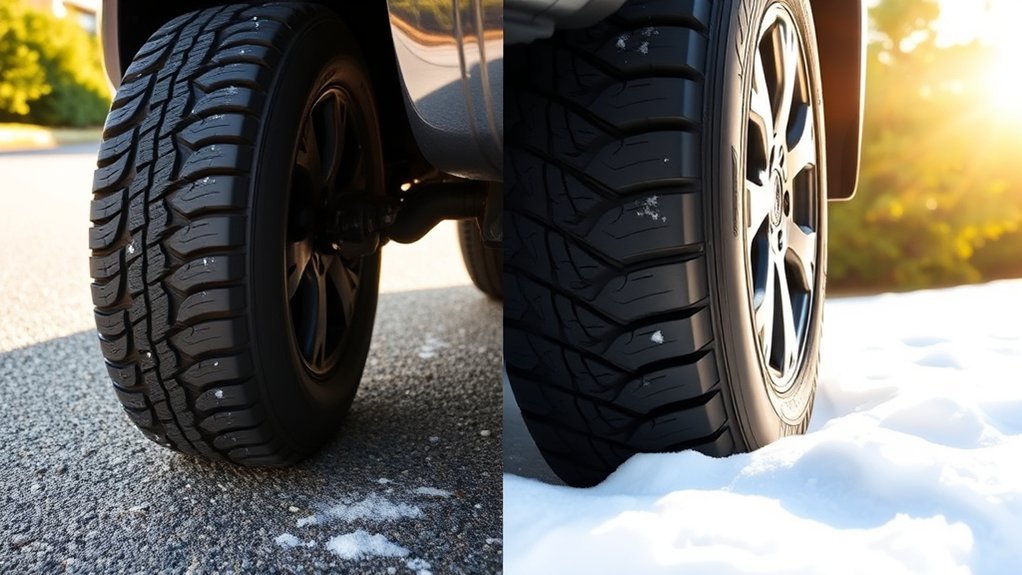
Quick Answer
For a Toyota Tundra, check tire pressure when the tires are cold and inflate to the PSI shown on the driver-side Tire and Loading Information label or your owner’s manual. Recheck during big temperature swings, before long trips, and before towing. Do not use the sidewall maximum as your normal driving pressure.
Key Takeaways
- Your exact Tundra PSI depends on year, trim, tire size, tire type, and load, so start with the door label or owner’s manual.
- Check pressure when tires are cold, ideally before driving or after the truck has been parked for at least three hours.
- Cold weather usually lowers tire pressure, while heat and driving can raise a temporary reading.
- TPMS is helpful, but it is not a replacement for a monthly manual check with a reliable gauge.
- Towing, heavy payload, aftermarket tires, and off-road driving may require extra care and professional guidance.
At a Glance
| Time Required | 5 to 10 minutes |
| Difficulty | Easy |
| Tools Needed | Tire pressure gauge, air compressor, valve-stem caps, flashlight if needed |
| Cost | Usually free if you already have a gauge; a basic gauge is inexpensive |
Find the Correct Tire Pressure for Your Toyota Tundra

The right PSI for your Tundra is the cold tire inflation pressure listed by Toyota for your exact truck. You can usually find it on the Tire and Loading Information label on the driver-side door jamb. You can also check your printed manual or the official Toyota Owners manuals page.
This matters because Tundra trims, wheel sizes, tire load ratings, and tire options are not all the same. A Tundra SR, Limited, Platinum, TRD Off-Road, TRD Pro, Capstone, or hybrid model may not use the same tire setup. If your truck has aftermarket wheels, larger tires, LT tires, or a towing setup, confirm the correct pressure with Toyota, your tire manufacturer, or a qualified tire shop.
Warning: Do not use the maximum PSI printed on the tire sidewall as your normal driving pressure. That number is a tire limit, not Toyota’s recommended pressure for your truck. Use the door label or owner’s manual unless a qualified tire professional gives you a load-specific recommendation.
What PSI Means and Why It Matters
PSI means pounds per square inch. In simple terms, it tells you how much air pressure is inside each tire. Correct tire pressure helps your Tundra steer, brake, carry weight, and wear its tires evenly.
The National Highway Traffic Safety Administration says proper tire pressure affects safety, tire durability, and fuel use. Low pressure can cause heat buildup, poor handling, uneven wear, and a higher chance of tire failure. Too much pressure can reduce ride comfort, shrink the contact patch, and cause uneven center tread wear.
NHTSA reported 511 traffic fatalities in tire-related crashes in 2024. Tire pressure is a simple check, but it is part of real road safety.
How Temperature Changes Affect Tundra Tire Pressure
Tire pressure changes because air expands when it warms and contracts when it cools. That is why your Tundra’s TPMS light may appear on a cold morning, then disappear later as the tires warm up while driving.
Cold Weather Effects
In winter, pressure can drop as outside temperatures fall. If your tires were correct during mild weather, they may become underinflated after a strong cold snap. Check them with a gauge before driving, then add air to match the cold PSI on your Tundra’s label.
Do not guess by looking at the tire. Modern truck tires can look normal even when pressure is low. A manual reading is safer than a visual check.
Hot Weather Effects
In summer, heat from the road and driving can raise the pressure reading. This does not always mean your tires were overinflated when cold. If you checked and set the tires correctly before driving, avoid bleeding air from hot tires just because the number is higher after a trip.
Note: A warm tire reading can be higher than a cold reading. For the cleanest result, check pressure in the morning before the truck has been driven or after it has been parked long enough for the tires to cool.
How to Check and Adjust Tundra Tire Pressure
Checking tire pressure is quick, but the order matters. Use the same process for daily driving, seasonal changes, and pre-trip checks.
- Park on a level surface. Choose a safe spot away from traffic.
- Let the tires cool. For the most accurate reading, check before driving or after the truck has been parked for at least three hours.
- Find the recommended PSI. Use the driver-side Tire and Loading Information label or your Toyota owner’s manual.
- Remove the valve cap. Keep it in your pocket so it does not roll away.
- Press the gauge straight onto the valve stem. A hiss means the seal is not tight. Re-seat the gauge and check again.
- Compare the reading to the recommended cold PSI. If it is low, add air. If it is high during a cold check, release a small amount and recheck.
- Repeat for all tires. Check every tire, including the spare if your Tundra has one that requires inflation.
- Replace the valve caps. Caps help keep dirt and moisture out of the valve stem.
Pro Tip: Keep a small tire gauge in your glove box or center console. Gas station gauges can be useful, but your own gauge makes it easier to compare readings consistently each month.
[Products Worth Considering]
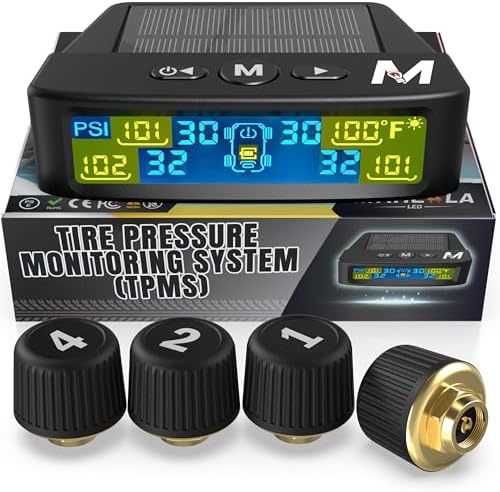
Marcala’s TPMS set of four sensors helps you monitor tire pressure and temperature in real time while driving, with updates every second. The bright color LCD uses auto-dimming for easy viewing, powered by dual solar and USB charging, and offers six alarm modes. Built for trailers, RVs, campers, trucks, and towing setups, the sensors support monitoring 1-4 wheels up to 98 PSI with IP67 waterproof protection.
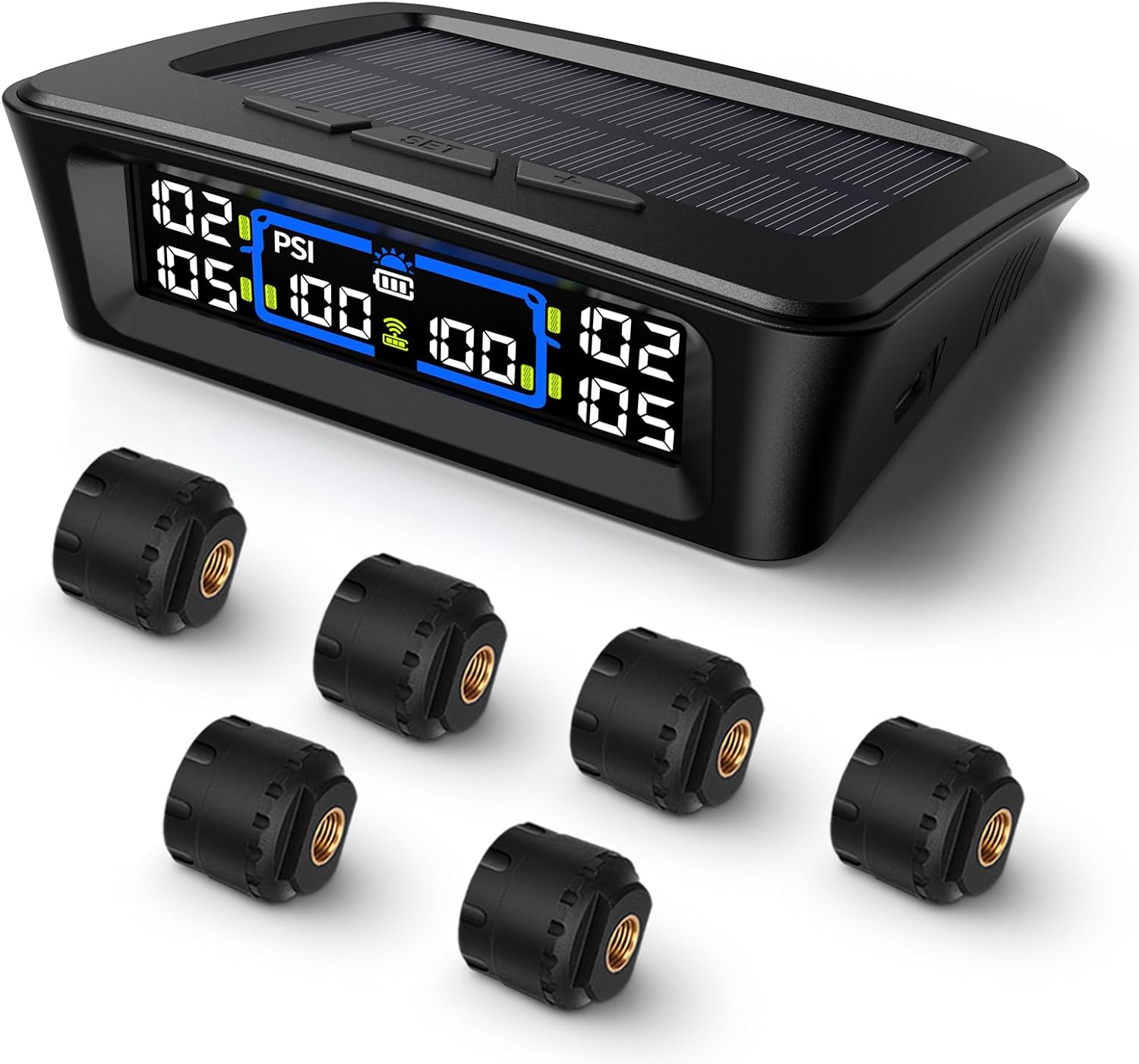
The Tymate TM12 RV TPMS delivers real-time tire pressure and temperature monitoring with a stable 433Hz display for safer long-distance driving. It supports simultaneous monitoring across vehicle and trailer zones, includes six alarm modes for pressure, temperature, leakage, battery, and signal loss, and features easy DIY installation with auto calibration. Power is supplied via USB-C charging or solar recharging, with a wide 0–144 PSI range and up to 50 ft signal coverage for RVs and towable trailers.

These universal tire valve stem caps help protect valve cores from dust, debris, and moisture while helping maintain stable tire pressure. The corrosion-resistant metal construction and sealed design provide reliable protection in road grime, mud, and winter conditions. Twist-on installation makes them quick to fit on cars, SUVs, trucks, and motorcycles.
Winter Tire Care: How to Adjust Pressure for Cold Weather
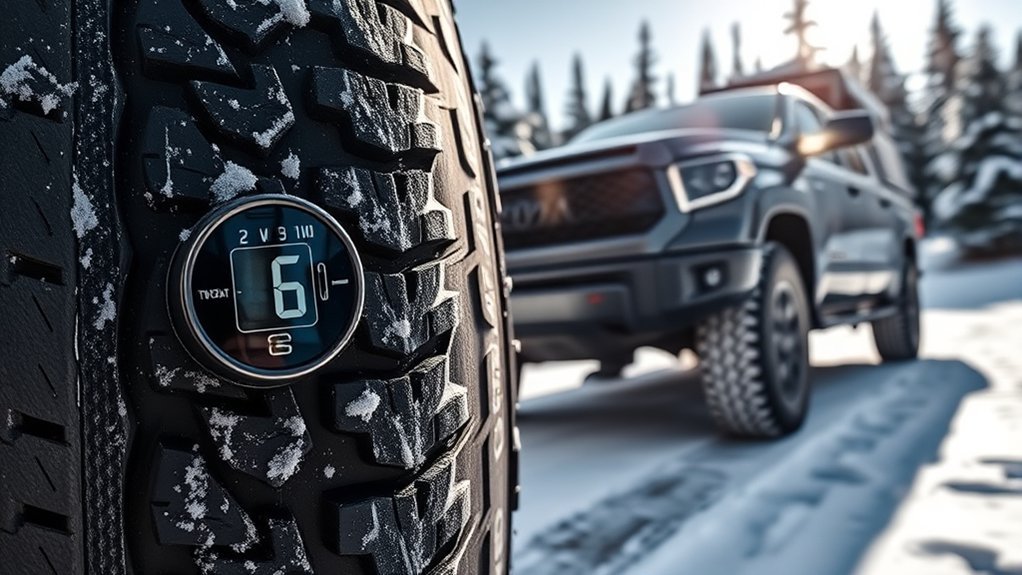
Winter is when many Tundra owners notice low tire pressure warnings. The fix is not to use one winter PSI number for every truck. The safer rule is to check pressure cold and return each tire to the PSI listed for your exact Tundra.
If you switch to dedicated winter tires, confirm the correct pressure with the tire installer, tire manufacturer, or Toyota guidance for your truck. Winter tires may have different load ratings or construction than the original tires, so avoid copying a random pressure from an online forum.
Winter Checklist
- Check pressure at least once a month and after major temperature drops.
- Check before long winter drives, mountain trips, or towing.
- Inspect tread depth, sidewalls, and valve stems.
- Do not ignore a TPMS light, even if it turns off later in the day.
- Keep a portable inflator in the truck if you drive in remote areas.
Signs Your Tundra Tires May Be Underinflated
Underinflation can show up in how the truck feels and how the tire wears. Do not wait for every sign to appear. If something feels off, check pressure as soon as it is safe.
- TPMS warning light: At least one tire may be significantly underinflated or the system may need service.
- Soft steering response: The truck may feel less sharp, especially during turns or lane changes.
- Longer braking feel: Low pressure can reduce stability and traction.
- Outer-edge tread wear: Both outer shoulders wearing faster can point to chronic low pressure.
- Heat smell or visible damage: Stop driving if you see bulges, cracks, cords, deep cuts, or a tire that looks unsafe.
Warning: Do not keep driving on a tire with a bulge, exposed cords, deep sidewall cut, or repeated pressure loss. Install the spare if safe to do so and have the tire inspected by a qualified professional.
Preparing Tires for Summer: Key Adjustments
Summer heat can hide pressure problems. A tire that is low when cold can become hotter during highway driving, especially when the truck is loaded. On the other hand, a tire that was set correctly when cold may read higher after driving because the air inside has warmed.
Before hot-weather road trips, check the cold PSI, inspect tread and sidewalls, and make sure the truck is not overloaded. If you tow a trailer, check both the Tundra tires and the trailer tires before leaving.
Essential Maintenance Tips for Summer Tires
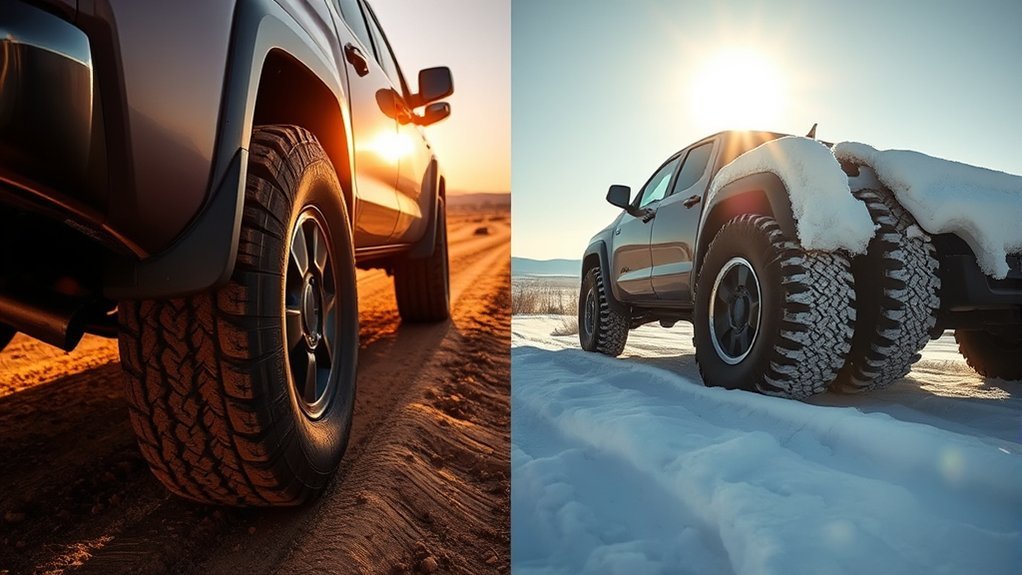
Summer tire care is about pressure, heat, tread, and load. Proper inflation can also help fuel economy. FuelEconomy.gov says keeping tires properly inflated can improve gas mileage by 0.6% on average and up to 3% in some cases.
- Check cold tire pressure before long drives.
- Inspect for nails, screws, cracks, and uneven wear.
- Rotate tires according to your Tundra manual or tire shop guidance.
- Do not overload the truck beyond payload limits.
- Give tires a break on long, hot drives by stopping safely when needed.
Towing, Payload, and Heavy Cargo Considerations
A Tundra used for commuting does not place the same demand on tires as a Tundra pulling a trailer or carrying heavy cargo. Before towing, check your owner’s manual, tire placard, payload rating, trailer tongue weight, and tire load rating.
If your label or manual lists different guidance for load conditions, follow that guidance. If you have LT tires, upgraded wheels, larger tires, a camper shell, or frequent towing loads, ask a qualified tire shop or Toyota dealer to confirm the correct cold pressure for your setup.
Note: Tire pressure does not increase your truck’s legal payload or towing capacity. It only helps the tire carry the load it is rated to carry when used correctly.
[Products Worth Considering]

Keep your tires properly inflated with this analog VONDIOR tire pressure gauge, designed for fast, easy readings without batteries. The swiveling, two-axis hose and large glow dial help you measure at any tire angle with instant visibility. Built with a protective rubber shield, it supports durable, low-maintenance use for cars and trucks.

The TYAMATE TM8 solar-powered wireless TPMS delivers real-time tire pressure and temperature monitoring with six alarm modes for safer driving. A vibrant color LCD display shows readings clearly while windshield mounting keeps it hands-free and easy to read. With a wide 0–87 PSI range, strong 433.92 MHz signal transmission, and quick sensor pairing, it’s ideal for RV, sedan, SUV, MPV, and truck use.

Milton S-921 pencil tire pressure gauge helps you maintain optimal tire pressure for passenger cars with accurate readings in PSI and kPa. It features a built-in deflator valve for convenient pressure adjustments, plus a single chuck head and nylon indicator bar for easy use on the go. Built from durable plated brass and designed for reliable performance, it’s a practical road trip and cold-weather maintenance tool.
Off-Road Tire Pressure: Be Careful With Airing Down
Some Tundra owners air down tires for sand, rocks, or rough trails. That can improve comfort and traction in specific off-road situations, but it also increases sidewall flex and heat if you drive too fast or stay aired down on pavement.
If you air down off-road, use a gauge, drive slowly, avoid sharp sidewall impacts, and reinflate before returning to normal road speeds. Never use off-road pressure as your highway pressure.
[Products Worth Considering]

The Big Rig Defense Tire Thumper is a truck tire pressure checker that lets you quickly check multiple tires by giving them a firm whack. Listen for a reassuring thump and feel the stick bounce when a tire is fully inflated, helping you get back on the road safely. It features a comfortable, glove-friendly handle and a secure wrist strap for confident use on busy routes.
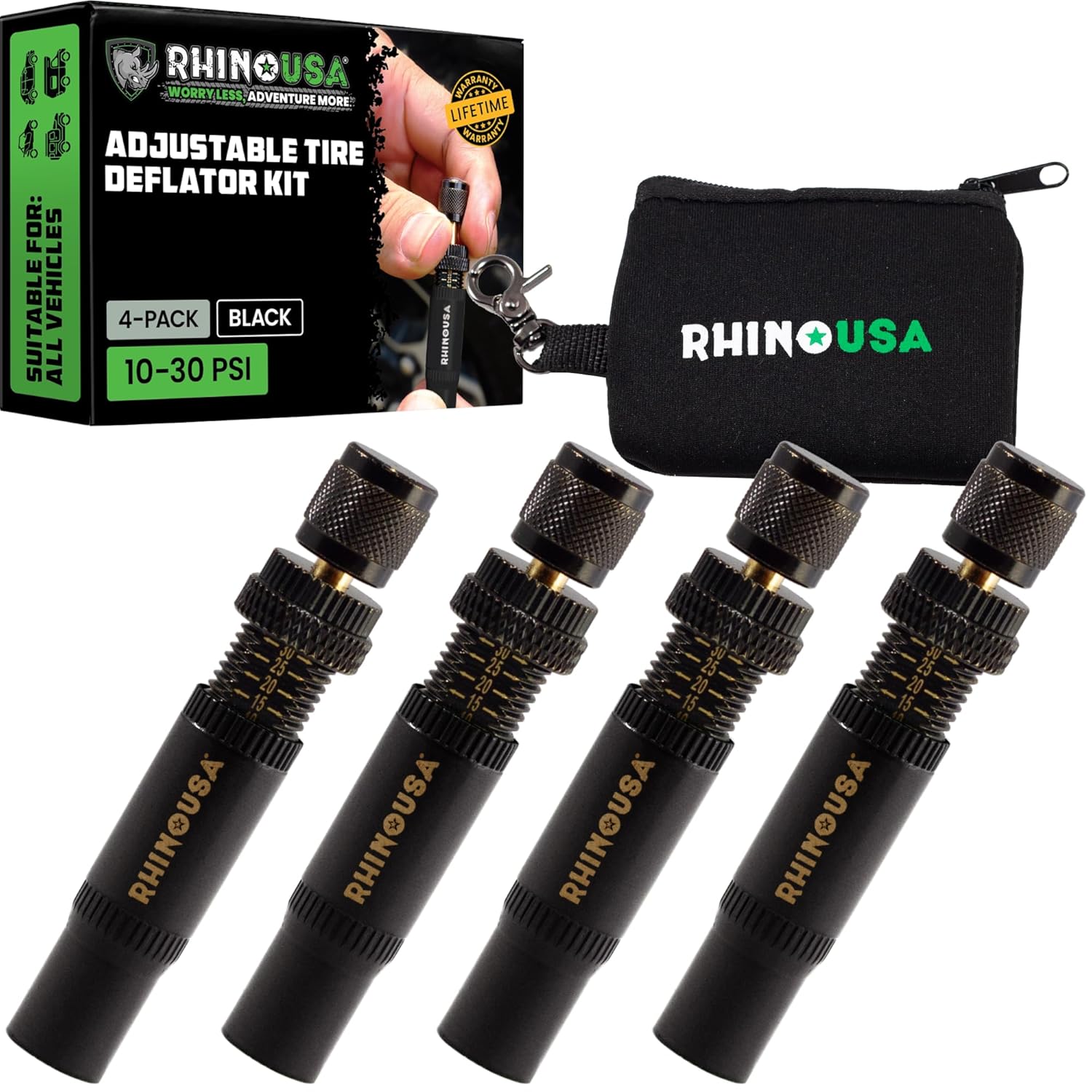
Use the Rhino USA adjustable tire deflators to air down all four tires at once by screwing one deflator onto each valve stem, letting you step away while the tires reach your preset pressure. Each deflator independently adjusts across a 10–30 PSI range with laser-etched indicators for quick setup and verification, making it ideal for beach, sand, and rocky off-road trails.

Measure tire tread depth quickly and accurately with this LUMITECO dial gauge that reads in 1/32" increments up to 14/32". The color-coded green/yellow/red zones make it easy to judge tire wear and know when replacement is needed. A rugged, compact design with a protective pouch helps keep the gauge ready for use on cars, trucks, motorcycles, and more.
What TPMS Can and Cannot Tell You
Your Tire Pressure Monitoring System is a useful warning tool, but it should not be your only pressure check. NHTSA explains that newer passenger cars, light trucks, and vans have TPMS, but the system is not meant to replace regular tire maintenance.
- Solid TPMS light: Check tire pressure as soon as possible.
- Light on cold mornings that later turns off: Pressure may be near the warning threshold. Check with a gauge.
- Flashing TPMS light: The system may have a malfunction and should be inspected.
- No TPMS light: Your tires can still be slightly low, uneven, or damaged, so do monthly checks.
Common Myths About Tundra Tire Pressure
Tire pressure advice can get confusing because truck owners compare different trims, tires, and driving habits. These myths are the ones most likely to cause problems.
Myth: The sidewall PSI is the best pressure
The sidewall number is not your normal driving target. Use Toyota’s cold PSI from the label or manual.
Myth: You only need to check pressure when the TPMS light comes on
TPMS usually warns only after pressure is already significantly low. Check manually each month.
Myth: Summer always means you should remove air
If the tire was set correctly when cold, a higher hot reading after driving may be normal. Recheck when cold before removing air.
Myth: Winter always requires the same extra PSI
Cold weather often means you need to add air to return to the recommended cold PSI. It does not mean every Tundra needs the same fixed winter increase.
Best Practices for Monitoring Tire Pressure Year-Round
The easiest routine is simple: check your Tundra’s tires once a month, before long trips, before towing, and after major temperature swings. Use the same gauge when possible so your readings stay consistent.
- Check when tires are cold.
- Use the driver-side label or owner’s manual for the correct PSI.
- Check all tires, not just the one that looks low.
- Record pressure if one tire keeps losing air.
- Inspect tread and sidewalls while you are checking pressure.
- Have repeated pressure loss inspected instead of topping off forever.
Frequently Asked Questions
How often should I check my Toyota Tundra tire pressure?
Check it at least once a month, before long trips, before towing, and after major temperature changes. Always check when the tires are cold for the most accurate reading.
What tools do I need to measure tire pressure?
You need a tire pressure gauge and access to an air compressor. A digital, dial, or stick gauge can work, but use one you trust and keep it clean. A portable inflator is helpful if you drive in remote areas or tow often.
Can I rely on my Tundra’s tire pressure monitoring system?
No. TPMS is a warning system, not a replacement for manual checks. It may not warn you until a tire is already significantly underinflated, and it cannot replace tread, sidewall, valve-stem, and spare-tire inspections.
What is the recommended PSI for my Tundra tires?
Use the cold PSI listed on your driver-side Tire and Loading Information label or in your Toyota owner’s manual. Do not rely on a universal PSI number, because the correct pressure can vary by year, trim, tire size, tire type, and load.
Should I change tire pressure for winter?
You should recheck it more often in winter because cold air can lower pressure. Add air as needed to bring each tire back to the recommended cold PSI for your truck. Do not use a fixed winter number unless your manual, installer, or tire maker recommends it for your setup.
Should I let air out in summer?
Do not let air out just because a hot tire reads higher after driving. Let the tires cool and check again. If the cold reading is above the recommended PSI, then release air slowly and recheck with a gauge.
Do larger or aftermarket tires need different pressure?
They might. Larger tires, LT tires, different load ratings, and aftermarket wheels can change the correct pressure calculation. Ask your tire manufacturer, installer, or Toyota dealer before using the original placard pressure with a very different tire setup.
Conclusion
Your Tundra’s tire pressure should be simple: find the cold PSI on your driver-side label or Toyota manual, check with a reliable gauge, and adjust when the tires are cold. Seasonal changes matter because temperature can move PSI up or down, but they do not replace the factory recommendation for your exact truck.
Make pressure checks part of your monthly routine, especially before towing, hauling, road trips, winter cold snaps, and summer heat. The few minutes you spend with a gauge can improve handling, tire life, fuel economy, and safety.
Sources
- NHTSA TireWise — tire pressure, tread, TPMS, tire safety, and monthly cold-pressure check guidance.
- Toyota Owners Manuals and Warranties — official Toyota manual lookup for model-specific guidance.
- FuelEconomy.gov: Keeping Your Vehicle in Shape — fuel economy effects of proper tire inflation and warning not to use sidewall max pressure.
- Toyota Tire Center — Toyota tire safety and performance information.